
Coffee Machine Care
Discover K Cups Alternatives for Better, Cheaper Coffee In

Jul
About 30 million plastic K-Cups go to landfills every day, and the total trashed is now large enough to wrap around Earth more than 10 times, according to Best Self Media's summary of pod waste. That number changes the conversation. This isn't just about whether your coffee is convenient. It's about paying for a system that often gives you a weaker cup, creates a lot of trash, and locks you into a format that limits your options.
The good news is that there's no need to abandon fast, single-cup coffee to get a better result. The practical middle ground is real. You can keep your machine, cut waste, lower your annual spend, and improve taste if you choose the right alternative and set it up properly.
The Hidden Cost of Your Morning Coffee
A pod machine saves time in the moment. It can cost more than people expect over the course of a year, and the trade-off is not just financial.
If you want a quick refresher on how the format works, this guide to what K-Cups are explains why single-serve pods create so much packaging and limit how much control you have over the brew itself.

Convenience gets expensive fast
The biggest hidden cost is how easy pods are to buy without noticing the running total. A single pod feels cheap. A few boxes tossed into a grocery cart feel manageable. Then you compare that habit with a bag of ground coffee that can produce far more cups for the same money, often with better flavor.
That value gap gets harder to ignore if the coffee in the cup is only passable.
A lot of Keurig owners run into the same frustration after the novelty wears off. The brew can come out thin at larger cup sizes, stale from older pre-ground coffee, or bitter in a way that feels more like overextraction than strength. You are paying for portioning, packaging, and speed, but not always getting a cup that tastes fresh or full-bodied.
Practical rule: If your coffee only tastes decent on the smallest brew setting, the pod is probably the bottleneck.
Waste and quality are connected
The packaging problem gets most of the attention, but it is tied to coffee quality too. Standard pods are designed for shelf life and convenience first. That format limits dose size, grind flexibility, and freshness. Those limits show up in the cup.
This is also where many people hesitate. They assume the only way to get better coffee and less waste is to accept a slower, messier routine every morning. In practice, the better alternatives solve different problems at different levels of effort. Some keep your current machine and fix the worst part of the system. Others ask for a little more work and pay you back with lower cost, less trash, and a noticeably better cup.
If you are worried that switching from K-Cups will turn your morning coffee into a project, that concern is fair. Some alternatives are fussy. Some have compatibility issues. Some make weak coffee if they are set up poorly. The good options do not. They let you keep convenience where it matters and regain control over taste, cost, and waste.
The Easiest Switch Reusable and Compostable Pods
If you still like your Keurig and want the lowest-friction change, start with pod-based alternatives. You keep the machine, keep the one-cup workflow, and swap out the disposable part.
The two practical categories are reusable pods and compostable pre-filled pods. They solve different problems, and they don't have the same trade-offs.
Reusable pods make the biggest difference
Reusable pods are the cleanest answer if your priorities are cost, waste reduction, and stronger coffee. You buy ground coffee you like, fill the pod yourself, brew, empty, rinse, and repeat.
Material matters more than most buyers expect. Generic plastic reusable pods can work, but they often feel like a compromise. Some users notice lingering odor, staining, or a slightly less clean flavor over time. Stainless steel versions avoid most of that. They also tend to feel sturdier in daily use.
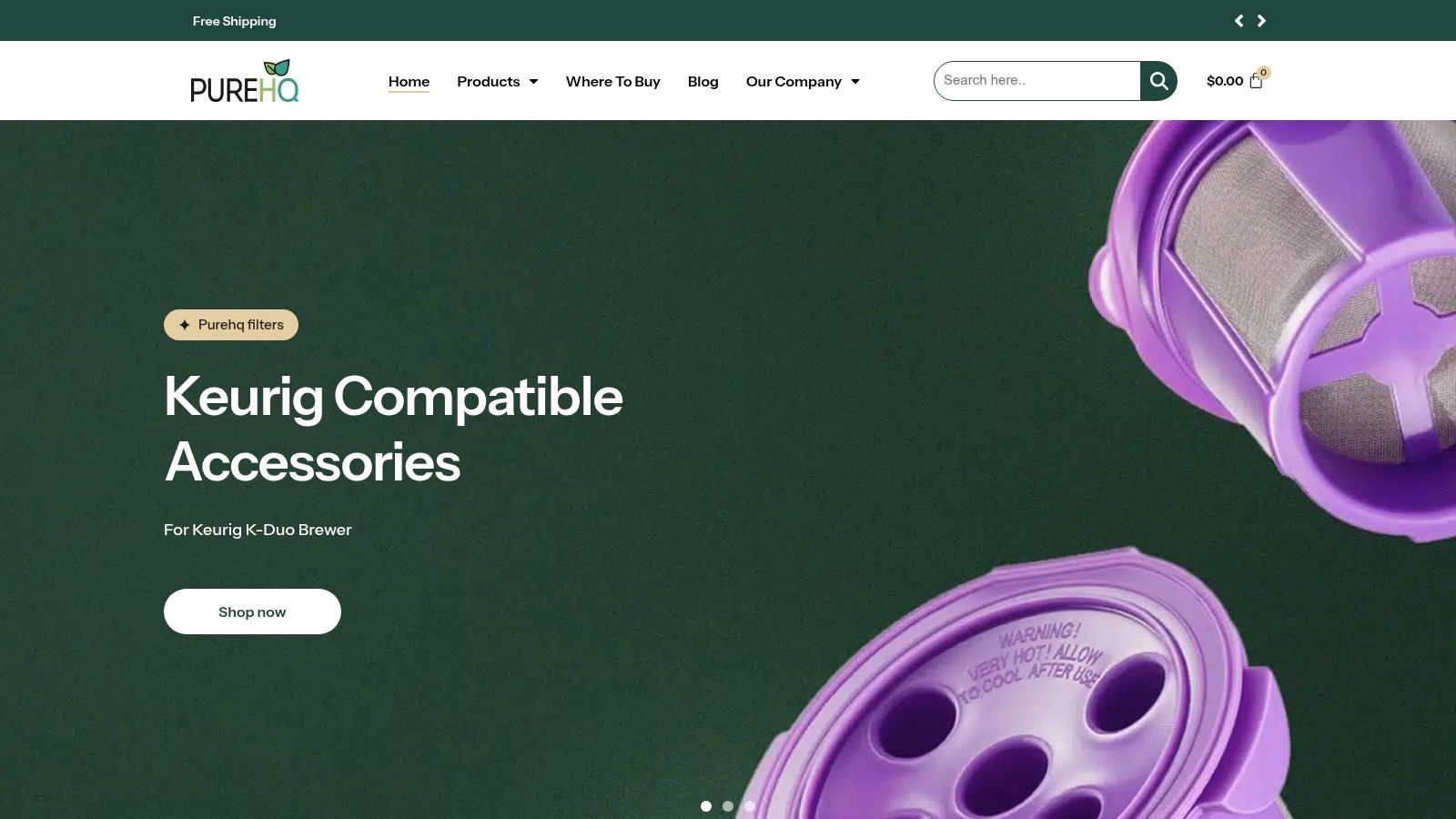
One example is a stainless steel reusable K-Cup from PureHQ Inc., which is designed as a refillable option for compatible Keurig models. That kind of metal pod appeals to people who want a plastic-free insert and a simpler rinse-clean routine.
Stainless steel vs generic plastic
Here's the practical difference that often matters most:
| Type | What works | What gets annoying |
|---|---|---|
| Generic plastic reusable pod | Usually cheaper to buy, familiar shape, easy first step | Can stain, may hold odors, durability can feel inconsistent |
| Stainless steel reusable pod | Cleaner taste profile, durable build, easy to rinse, no plastic cup body | Higher upfront cost, still requires cleanup after brewing |
| Compostable pre-filled pod | Very convenient, no filling required | Costs more per pod and may still go to landfill if local composting can't process it |
Cleaning is the biggest objection. That's fair. Nobody wants to scrape wet grounds out of a tiny filter basket before leaving for work.
Two fixes help:
- Use a knock-and-rinse routine: Tap the used grounds into the trash or compost right after brewing, then rinse before they dry.
- Add paper liners when you want less mess: Disposable liners inside reusable pods can make cleanup much faster, and they're a sensible accessory if convenience is the only thing keeping you from switching.
A quick machine descale also helps. If your brewer has scale buildup, even a good reusable pod won't rescue the flavor. That's one of those maintenance tasks people skip, then blame the pod.
Compostable pods sound perfect, but the reality is mixed
Compostable pods attract people who want the convenience of pre-filled coffee without the plastic waste. That demand is real, but the practical downside matters.
Compostable pre-filled pods often cost more per pod, at $1.10 to $1.30 versus $0.68 for standard pods, and many municipal waste streams can't process them, which means they may still end up in landfills, as discussed in this Zero Waste community thread on K-Cup alternatives. If you're comparing formats, this overview of eco-friendly coffee pods is useful because it frames the difference between good intentions and actual disposal outcomes.
That doesn't make compostable pods useless. It just means they work best when you already know your local composting system can handle them.
Compostable pods only deliver on their promise when the disposal system matches the packaging.
A lot of people start with compostable pods because they feel easiest. In practice, reusable pods usually become the longer-lasting solution because they cut recurring waste and give you much more control over the cup.
After you've seen the workflow once, this walkthrough is worth a look:
Beyond the Pod Rediscovering Classic Coffee Brewing
Some people don't just want a replacement pod. They want better coffee, full stop. That's where classic brewing methods earn their place.
You don't need to become a hobbyist to use them. You need a simple setup, a decent coffee, and a few extra minutes. In return, you get more control over strength, texture, and clarity than any sealed pod system can offer.

French press for a heavier richer cup
French press coffee suits people who like body and texture. It leaves more of the coffee's natural oils in the cup, so the result feels fuller and deeper.
If standard pods taste watery to you, this method often feels like a correction. It's straightforward, forgiving, and easy to repeat once you learn your preferred steep time. If you want a primer on the gear itself, this explanation of what a French press coffee maker is covers the basics clearly.
Pour-over for clarity and brightness
Pour-over is the opposite direction. It highlights clean flavor and sharper detail. If you drink lighter roasts or enjoy noticing origin differences, pour-over does that better than pod coffee.
This method asks for a little more attention because you control the pour. But it isn't fussy once you get used to it. A simple dripper, filters, and a kettle are enough to start.
AeroPress for speed and flexibility
AeroPress sits in a very practical middle lane. It's fast, compact, and forgiving. You can brew a smooth mug quickly, and you can also adjust the recipe without much trouble.
For many former Keurig owners, AeroPress becomes the method they keep for weekdays because it doesn't dominate the morning. Cleanup is also unusually easy compared with other manual brewers.
If you want the biggest flavor upgrade with the smallest learning curve, start with French press or AeroPress.
Which method fits your taste
A simple flavor map helps:
- Choose French press if you want a bold, rounded cup that feels substantial.
- Choose pour-over if you want cleaner flavors and more brightness.
- Choose AeroPress if you want speed, flexibility, and easy cleanup.
- Stay with a reusable pod if convenience still matters most and you mainly want a better version of what you already do.
Classic brewing doesn't replace pod coffee for everyone. But if taste is your main complaint, these methods solve that problem more directly than any single-serve system can.
Comparing Your Options Cost Taste and Environmental Impact
Once you line up the choices side by side, the decision gets easier. The typical consumer isn't asking for a perfect coffee setup. They want something realistic that improves at least two of these three things: cost, taste, and waste.
Reusable pods usually hit that balance better than the other pod-based options.
K-Cup alternatives at a glance
| Method | Avg. Cost Per Cup | Flavor Control | Convenience | Environmental Impact |
|---|---|---|---|---|
| Standard K-Cups | Higher long-term cost than reusable options | Limited | Very high | High single-use waste |
| Reusable K-Cup adapter | Lowest long-term cost among pod options | High | Moderate | Low ongoing pod waste |
| Compostable pre-filled pod | Higher than standard pod pricing in many cases | Limited to moderate | High | Mixed, depends on local composting |
| French press | Low with bagged coffee | High | Moderate | Low packaging waste |
| Pour-over | Low with bagged coffee | Very high | Moderate to lower | Low packaging waste |
That table leaves out one emotional factor: fear of messing up your machine. A lot of Keurig owners stick with proprietary pods because they assume any third-party insert creates a warranty problem.
It doesn't work that way.
The warranty fear is mostly a myth
Using reusable K-cup adapters does not void Keurig warranties under the U.S. federal Magnuson-Moss Warranty Act of 1975, and long-term cost analysis shows annual coffee costs dropping from $220 for bulk K-cups to as low as $80 when switching to reusable adapters, according to PureHQ's summary of reusable cups for Keurig.
That doesn't mean any accessory can never cause a problem. If a badly made insert physically damages the machine, that specific damage matters. But the broad idea that a reusable pod automatically voids coverage is incorrect.
Where each option wins
Here's the practical read on what works in daily life:
- Standard K-Cups win on speed alone. They lose ground when you care about price, waste, or cup quality.
- Reusable adapters win for people who still want the machine experience but want more control and lower ongoing cost.
- Compostable pods work for convenience-first buyers who dislike cleanup, but the disposal reality and per-pod cost weaken the value.
- French press and pour-over win on flavor. They ask for a bit more attention and a willingness to change your routine.
If you still prefer pre-filled convenience, choosing better coffee inside the pod helps. For example, some people improve the experience by switching to fresh roasted coffee pods instead of default grocery-store options. That doesn't solve the single-use format issue, but it can raise the quality of the cup for people who aren't ready to refill their own pods.
Better coffee and lower waste don't always come from the same product. Reusable pods are one of the few options that can deliver both at once.
The practical winner for most Keurig owners is still the reusable route. It keeps the machine you already own, lowers recurring spend, and gives you the freedom to use coffee that tastes the way you want.
How to Make the Switch A Practical Guide
Switching away from standard pods goes smoothly when you treat it like a setup problem, not a willpower problem. Bad first results usually come from a dirty machine, the wrong grind, or overfilling the pod.
That's fixable.

Start with the machine not the pod
If your brewer has mineral buildup or old coffee residue, every alternative will taste worse than it should.
Use this order:
- Empty and rinse removable parts so stale oils don't carry into the next brew.
- Descale the machine to remove mineral buildup that can affect temperature and flow.
- Run a plain-water brew cycle after cleaning so the next cup starts clean.
This is the right place to keep a descaling solution or cleaning tablets on hand. It's not glamorous, but maintenance has more effect on flavor than many pod swaps do.
Dial in the reusable pod correctly
The biggest quality advantage of reusable pods is capacity. Reusable K-cup adapters with stainless steel micro-mesh filtration can hold 12 to 13 grams of ground coffee, nearly double the 6 to 7 grams in a standard K-cup, enabling deeper flavor saturation and a stronger extraction, according to Menehune Coffee's review of reusable K-Cup filters.
That matters because a lot of bad pod coffee is under-dosed.
A simple setup that works
Use this as your default starting point:
- Choose a medium grind: Too fine can slow the flow and leave sediment. Too coarse can taste weak.
- Fill, don't pack: Add coffee to the fill line, then level it lightly. Don't tamp hard.
- Brew a smaller cup first: If you want a stronger mug, start with the smaller brew setting before assuming the pod failed.
- Adjust one thing at a time: Change grind or dose first. Don't change everything at once.
Troubleshooting the common complaints
Most first-time frustration falls into a few predictable categories.
| Problem | Likely cause | Practical fix |
|---|---|---|
| Weak coffee | Grind too coarse, underfilled pod, oversized brew setting | Use a slightly finer grind, fill properly, brew less water |
| Grounds in the cup | Grind too fine or filter not seated well | Coarsen grind slightly and check pod fit |
| Slow brewing | Overpacked pod or scale buildup | Reduce fill pressure and descale machine |
| Messy cleanup | Wet grounds sticking inside pod | Empty immediately after brewing or use paper liners |
Clean the machine first, then judge the pod. A scaled-up brewer makes every alternative look worse than it is.
Keep the switch easy enough to stick with
The best alternative is the one you'll use on a rushed Monday, not just on a calm Saturday.
If you hate cleanup, pair a reusable pod with paper liners. If you care most about flavor, buy coffee in smaller amounts so it stays fresher after opening. If your first brew disappoints, change the grind before abandoning the idea.
A good switch should feel like a small routine change, not a kitchen project. Once the pod, grind, and machine are working together, the process often becomes automatic.
Your K-Cup Alternative Questions Answered
The last hesitation usually comes down to four things: compatibility, cleaning, grind size, and whether another pod material would be smarter.
Will a reusable pod damage my Keurig or cancel my warranty
The warranty concern has already been addressed earlier, and it's one of the biggest myths around this topic. In normal use, a compatible reusable pod is an accessory. The important part is buying one that fits your model correctly and using it without overpacking it.
If your machine uses sensors or a specific pod holder style, check compatibility before ordering. Fit matters more than brand loyalty here.
What grind works best for reusable pods
Start in the middle. A medium grind is the safest place for most reusable K-Cup setups. If the cup tastes thin, move a little finer. If the machine struggles or you get sediment, move a little coarser.
Don't chase espresso-fine grounds in a Keurig-style brewer. That usually creates more problems than flavor.
Is cleaning a reusable pod a hassle
It can be if you let wet grounds sit. It usually isn't if you empty and rinse the pod right after brewing.
The easiest routine is simple:
- Knock out the grounds while they're still warm.
- Rinse the filter before residue dries.
- Deep-clean the pod occasionally so coffee oils don't build up.
That's also why some people add paper liners. They cut mess without giving up the reusable format.
Are aluminum pods better than plastic pods
For single-use systems, aluminum has a stronger environmental case than plastic. NPR reports that aluminum pods are infinitely recyclable and require 95% less energy to recycle than producing new aluminum, which is one reason many buyers see the material as a better choice than plastic in pod formats, even though the broader emissions debate around coffee pods is still contested in the same NPR discussion of pod sustainability.
That doesn't automatically make aluminum pods the right answer for every kitchen. Reusable options still remove the need to keep buying single-use containers at all. But if you're comparing disposable formats, material choice matters.
The short version is this: if you want the easiest meaningful upgrade, switch to a reusable pod and dial it in properly. If you want the biggest flavor jump, move to French press, AeroPress, or pour-over. If you want to keep pre-filled convenience, choose better coffee and pay attention to the material and disposal reality.
If you're ready to cut waste and get better coffee from the machine you already own, shop practical brewing accessories from PureHQ Inc.. Their lineup includes reusable K-Cup options, paper liners, water filters, and descaling supplies that help Keurig and similar brewers make a cleaner, better-tasting cup with less ongoing waste.

