
Coffee Machine Care
Shade Grown Arabica Coffee: A Guide to a Better Brew
Jun
Nearly 20% of the world's share of shade-grown coffee land has disappeared since 1996, falling from 43% to 24% of total coffee cultivation area as sun-grown systems expanded, according to the University of Texas at Austin report on the decline of shade-grown coffee. That sounds distant until you connect it to your countertop brewer. The bag or pod you grab on autopilot each morning can support either a forest-like farming system or a stripped-down production model that often trades resilience and flavor complexity for speed.
For home brewers, this matters twice. First, bean quality starts on the farm. Second, better beans only pay off if your Keurig, Ninja, or drip setup lets those flavors come through cleanly. Shade grown Arabica coffee sits right at that intersection of taste, sustainability, and daily practicality.
The Hidden Problem in Your Morning Coffee
The farming system behind a cup of coffee is usually invisible to the drinker. What you see on the shelf is roast level, origin, and tasting notes. What you do not see is whether that coffee came from a farm built around long-term soil health and tree cover, or from a stripped-down production model focused on output first.
That distinction matters every time you restock pods, whole beans, or pre-ground coffee.
What sun-grown coffee often gets wrong
Sun-grown coffee can be well produced. The problem is the pressure the system creates. In many cases, removing canopy trees leaves coffee plants more exposed to heat, heavy rain, and temperature swings. Farms then have fewer natural buffers and often rely more heavily on outside inputs to manage weeds, pests, and stressed plants.
For a home brewer, the hard part is simple. Packaging rarely explains any of that clearly.
Coffee labels often sell a mood, not a farming system.
Buyers frequently encounter a stumbling block. A bag can talk about bold flavor, mountain air, or artisan roasting while saying very little about how the coffee was grown. If you use a Keurig or Ninja every morning, those repeat purchases add up. Convenience does not cancel out impact. It just makes your buying pattern more automatic.
Why this lands in your cup
Farm design affects flavor, not just ecology. Coffee grown in a more exposed, high-throughput system can taste flatter or harsher in the cup, especially after dark roasting or pod packaging compresses what character the bean had to begin with. You may notice bitterness, sharp edges, or a generic roast taste that overwhelms everything else.
That is why better brewing technique only fixes part of the problem.
Clean water and a maintained machine still matter, and this coffee maker water filter replacement guide is more useful than many people realize. But no filter can turn low-character coffee into a nuanced cup. The upstream choice still matters most.
A better default
Shade grown Arabica coffee gives you a stronger starting point because it asks a better question. Not just where was this coffee grown, but how was it grown?
That question helps you avoid a common marketing trap. Terms like "rainforest friendly," "bird friendly," or even "sustainably sourced" can sound reassuring without telling you much on their own. If you brew at home and want coffee that tastes better and aligns with a lower-impact farming model, learning to spot credible shade-grown claims is practical, not ideological.
And yes, you can taste the difference in an everyday machine when the bean quality is there.
What Makes Shade Grown Coffee Different
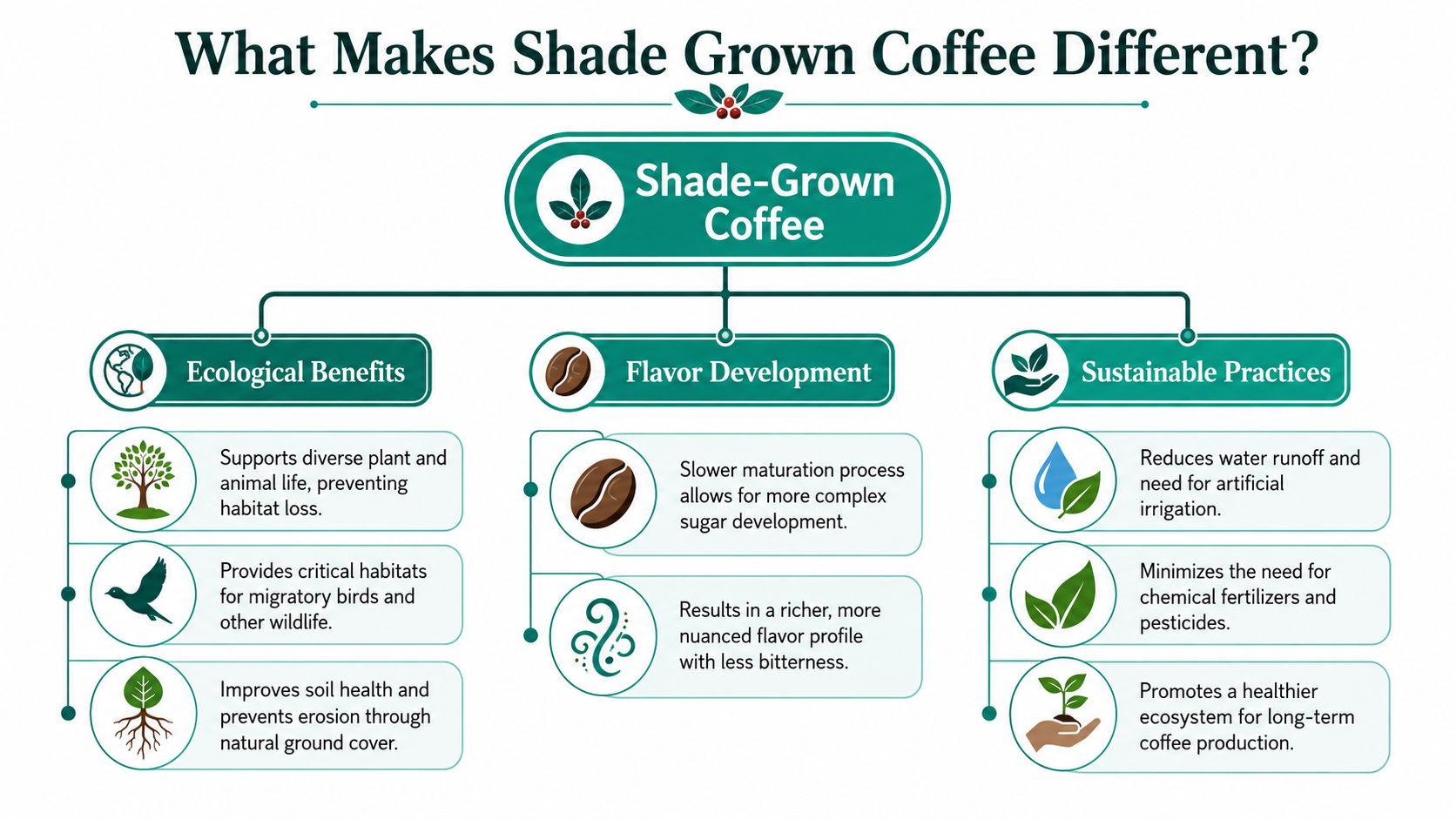
Shade grown coffee isn't just coffee with a few trees nearby. The serious version is an agroforestry system, where coffee plants grow under a canopy that behaves more like a layered ecosystem than a monocrop field.
Think forest floor, not factory floor
In practical terms, shade trees do several jobs at once. They buffer temperature, slow direct sun exposure, add leaf litter, support roots that hold soil in place, and create habitat for birds and insects. That last point isn't decorative. On a working farm, biodiversity can reduce pest pressure and make the whole system less dependent on brute-force intervention.
The best way to picture the difference is simple:
- Shade-grown system. A layered farm where coffee shares space with trees and other life.
- Sun-grown system. A more exposed planting where coffee production is the dominant goal and ecological complexity is reduced.
- Home-brewing effect. One system tends to support slower development and nuanced beans. The other often prioritizes output and uniformity.
The measurable environmental gap
The ecological benefits aren't vague. The shade-grown coffee overview cited here notes that shade-grown agroforestry systems can sequester up to 53 additional tons of carbon per hectare compared to unshaded systems, while also reducing erosion by 40 to 60% and improving water retention by 30% compared to full-sun cultivation.
Those numbers matter because coffee farming doesn't happen in isolation. Soil that stays put keeps farms productive. Water that stays in the system helps plants handle stress. Carbon stored in trees and biomass changes the climate math of the crop itself.
Field reality: A farm with canopy cover solves several problems at once. It doesn't need to force every outcome through exposure and inputs.
Why biodiversity isn't a side benefit
One of the common mistakes in coffee buying is treating sustainability as an add-on, as if flavor sits in one box and ecology sits in another. On coffee farms, those boxes overlap.
More plant and animal diversity can mean more stable growing conditions and better long-term farm health. That's one reason shade systems keep coming up in serious coffee conversations. They don't just preserve scenery. They help preserve a production environment that can keep making good coffee over time.
For buyers, that translates into a simple filter: if a coffee brand talks a lot about ethics but can't explain the farming conditions with any clarity, keep digging.
How Shade Growing Creates Superior Flavor
Flavor is where shade grown Arabica coffee stops sounding abstract. The difference starts with cherry development.
The Espresso Coffee Guide explanation of shade-grown coffee notes that Arabica grown beneath a canopy of mixed native trees develops 2 to 3 weeks more slowly than coffee in sun-grown systems. That slower pace produces higher bean density, around 1.15 to 1.20 g/cm³, and a greater concentration of organic acids and sugars that can show up as smoother acidity and fruity or floral character.
Slow development usually tastes better
The easiest analogy is cooking. Slow-cooked food often develops deeper flavor than food pushed fast with high heat. Coffee cherries behave in a similar way. A steadier microclimate gives the fruit more time to build compounds that later shape aroma, sweetness, and structure in the cup.
That doesn't mean every shade-grown lot tastes identical. Tree species, altitude, processing, roasting, and brewing still matter. Some shade systems produce excellent coffee. Some don't. But the underlying mechanism is sound: slower ripening gives Arabica more opportunity to develop complexity.
What you notice in the mug
For home brewers, the payoff often appears in a few specific ways:
- More layered sweetness instead of a simple roast-forward profile
- Smoother acidity rather than a harsh edge
- Better aromatics, especially in floral, fruit, or cocoa-driven coffees
- More satisfying structure, because denser beans often hold up well in careful roasting
The same source on bean quality and development is worth reading if you're trying to connect farm practices with what you taste at home.
Better coffee doesn't start with the machine. It starts with a bean that had enough time to mature properly.
A caution that matters
The popular version of this topic gets one thing wrong. It treats shade as an automatic flavor upgrade. It isn't. Shade quality matters, tree mix matters, and farm management matters. A bad roast can flatten a great shade-grown coffee, and a poorly designed shade system can still disappoint in the cup.
Still, when a producer combines strong agronomy with careful processing, shade grown Arabica coffee gives roasters and home brewers more to work with. That's why so many standout coffees feel vivid rather than merely strong.
Shade Grown vs Sun Grown Coffee Compared
Buying coffee gets easier when you stop treating all Arabica as interchangeable. Farming method changes both cup character and what sits behind it.
The Biodynamic Coffee discussion of shade-grown coffee states that shade-grown Arabica cherries can ripen 2 to 4 weeks longer than sun-grown varieties, giving sugars and acids more time to develop and producing cupping scores averaging 3 to 5 points higher than sun-grown equivalents. That's a meaningful sensory gap for anyone who tastes what they're brewing.
Shade-Grown vs. Sun-Grown Coffee
| Attribute | Shade-Grown Arabica | Sun-Grown Coffee |
|---|---|---|
| Flavor Profile | Often more layered, with smoother acidity and more nuance | Often more direct, simpler, or harsher depending on roast and processing |
| Environmental Impact | Supports a tree-canopy system with stronger ecological function | Commonly relies on more exposed production with lower habitat value |
| Chemical Use | Can work with more natural ecosystem support | Often depends more heavily on intervention to manage weeds and pests |
| Cost | Usually priced at a premium | Often cheaper and easier to find |
| Bean Quality | Longer ripening can support higher cup quality | Faster development can limit complexity |
The price objection is fair
A lot of buyers hesitate here, and the objection is legitimate: shade-grown coffee often costs more.
There are practical reasons for that. Complex farms are harder to manage than stripped-down systems. Careful harvesting and sourcing also tend to push prices up. From a home-brewing perspective, though, the better question is whether you're paying more per satisfying cup or just more per bag.
If a coffee tastes richer, brews cleaner, and makes you want to finish the mug instead of doctoring it with sugar and flavored creamer, the premium can make sense quickly.
What works and what doesn't
What works:
- Buying whole beans from a transparent roaster
- Choosing coffees with clear sourcing language
- Brewing smaller, fresher batches
- Using reusable pods or proper baskets instead of stale prefilled pods
What doesn't:
- Assuming “Arabica” alone signals quality
- Assuming a dark roast can hide weak green coffee
- Paying premium prices for vague sustainability claims
- Expecting a pod packed months ago to show the same clarity as freshly ground beans
If you're upgrading beans but keeping every other shortcut, you'll only taste part of what you paid for.
How to Buy Authentic Shade Grown Coffee
Many buyers are often misled. “Shade-grown” isn't a tightly enforced consumer term across the market. A bag can suggest forest-friendly farming without proving much.
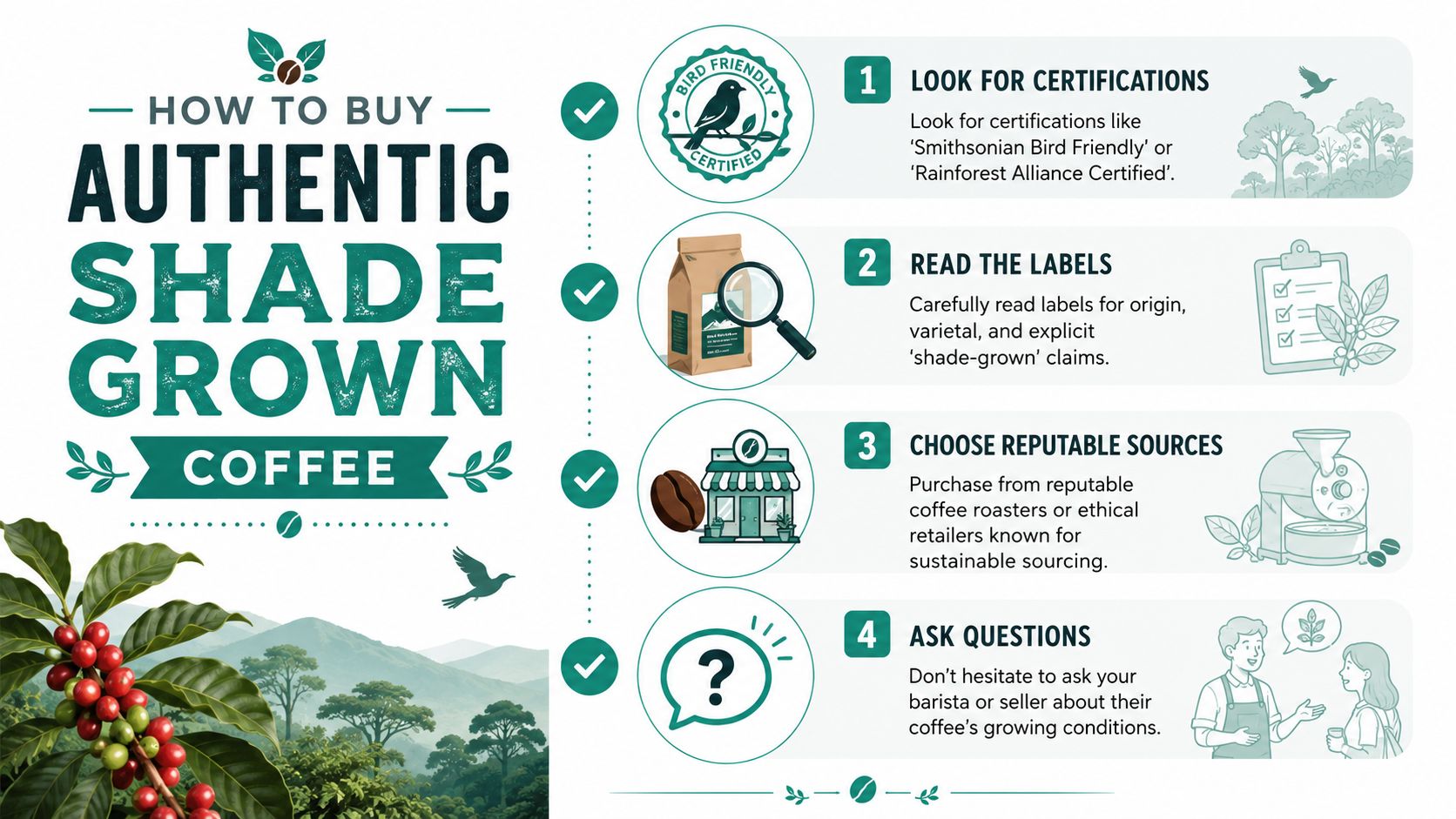
The clearest benchmark comes from Root Capital's explanation of shade-grown coffee standards, which notes that the lack of a standardized definition creates confusion, while Smithsonian Bird Friendly remains the only true standard, requiring at least 40% shade cover and 11 tree species.
What to look for on the bag
Start with certification language, then read the rest of the label like a skeptic.
- Bird Friendly is the strongest signal for true diverse shade.
- Rainforest Alliance can still be meaningful, but it doesn't function as the same strict shade guarantee.
- USDA Organic may matter for chemical practices, but it doesn't automatically confirm a well-developed shade system.
If a bag says “shade-grown” with no certification, no farm detail, and no explanation of canopy or sourcing, treat it as a marketing claim until proven otherwise.
A practical buying checklist
Use this when you're shopping online or in person:
- Look for Bird Friendly first if your goal is verified shade.
- Check origin detail. Colombia, Mexico, and parts of Central America often show up in conversations about quality shade-grown Arabica, but origin alone isn't proof.
- Read the roaster's sourcing page. Good sellers usually explain farm relationships, processing, and certifications clearly.
- Ask direct questions. A reputable roaster should be able to explain what “shade-grown” means for that coffee.
- Use a trusted retailer list if you're still learning. A roundup of premium coffee brands can help narrow the search before you compare certifications.
The safest buying habit is simple. Trust specific farming detail more than front-of-bag storytelling.
Common marketing traps
A few terms sound responsible without telling you much:
- Forest blend
- Eco coffee
- Sustainably sourced
- Nature friendly
None of those phrases guarantees true shade management. They're not useless, but they aren't enough on their own.
A better buyer asks, “Who verified this, and what standard did they use?” That single question cuts through most of the haze in this category.
Brewing Tips for the Best Possible Cup at Home
Once you've bought a good coffee, your machine can preserve that quality or flatten it. Shade grown Arabica often carries more nuance than commodity coffee, so weak technique shows up fast in the cup.
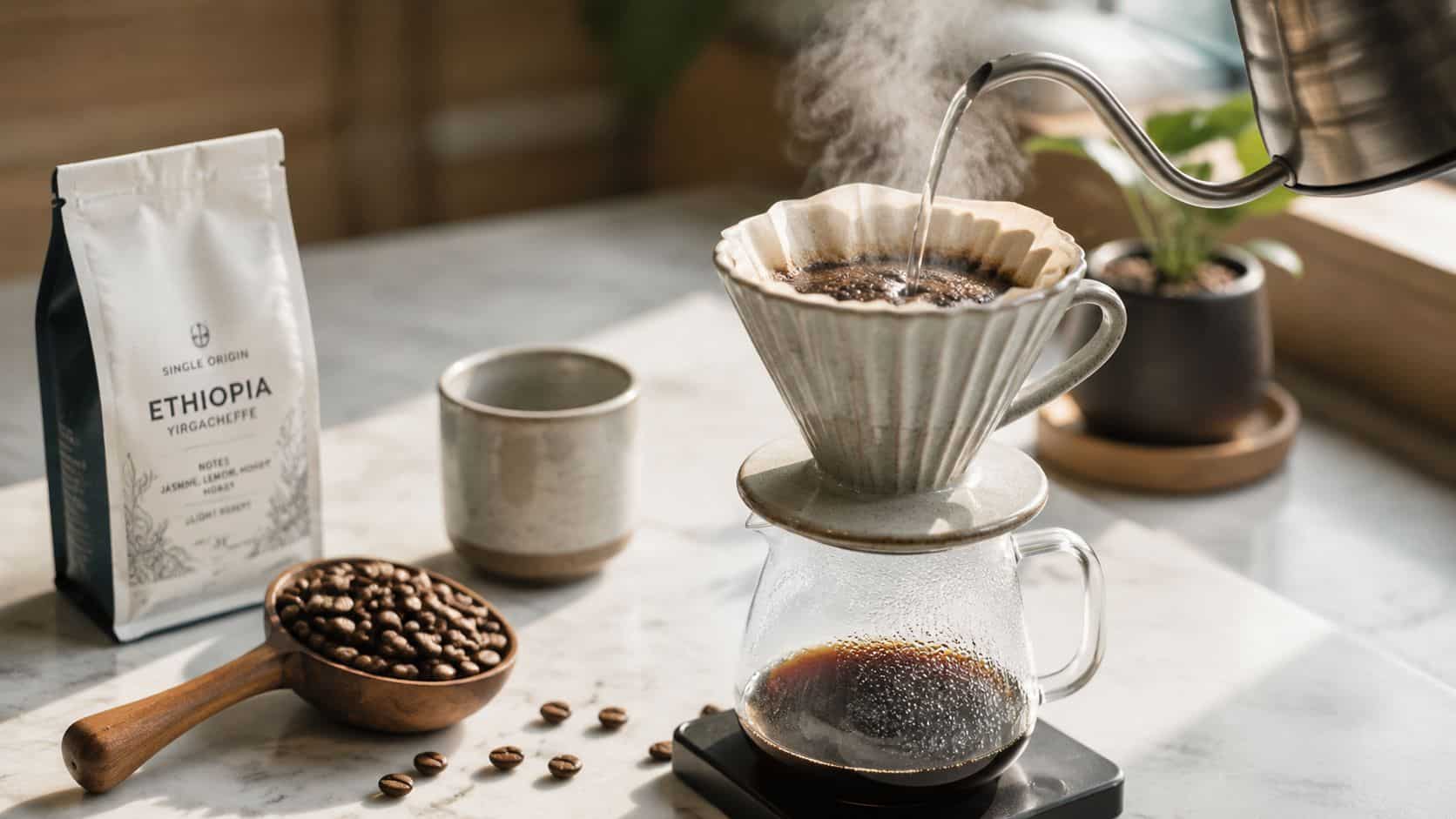
Keurig and Ninja users need a different mindset
A Keurig or Ninja can make good coffee, but it rewards practical choices more than premium branding. If you load high-quality shade-grown beans into a system built around convenience, the goal is simple. Protect freshness, control dose, and keep extraction consistent.
The biggest mistake is expecting a generic prefilled pod to show what the coffee can do. Most sealed pods trade clarity for shelf life and speed. If you paid more for verified shade-grown Arabica, that trade-off matters.
A better setup is straightforward:
- Use freshly ground coffee whenever possible
- Match grind to brewer so extraction doesn't run thin or muddy
- Brew into a preheated mug if your machine tends to cool fast
- Keep your water clean because off-tasting water will bury delicate notes
Reusable pods help because they put the coffee choice back in your hands. You can use fresher beans, adjust dose, and avoid the stale, anonymous profile common in mass-market pods.
Addressing a common objection
A common objection to reusable pods is a bad first experience. Grounds leaked into the cup, cleanup was annoying, or the pod fit poorly and brewed unevenly.
That concern is fair. Cheap reusable pods can be messy, and fit matters more than many buyers realize. Choose one made for your exact Keurig or Ninja model, not a universal version that sort of fits. If cleanup is the sticking point, paper liners usually make the routine faster and keep sediment down.
Water and maintenance matter
Better beans expose water problems fast. Chlorine, old reservoir water, and scale buildup can strip sweetness and make acidity taste sharper than it should.
For home brewers, two maintenance habits do the heavy lifting:
- Water filters help keep the cup cleaner and more consistent
- Descalers or cleaning tablets help the machine brew at the right flow and temperature
If your Keurig or Ninja starts producing dull, hollow, or uneven coffee, check the brewer before blaming the beans. Shade-grown coffee is often marketed on farming and certifications, but your daily result still depends on basic machine care. Sustainability at purchase only pays off if the cup at home is good enough that you keep buying with intention.
A quick visual walkthrough helps if you're dialing in technique at home:
Simple brew advice that works
For most home setups, keep the routine disciplined:
- Buy smaller amounts of coffee so it stays fresh.
- Grind just before brewing if you can.
- Store beans sealed, dry, and away from heat.
- Clean pod holders, baskets, and carafes regularly.
- If the coffee tastes flat, change one variable at a time.
Shade grown Arabica can shine in a pour over, but it can also taste very good in a Keurig or Ninja with the right setup. The goal is not to own the fanciest brewer. The goal is to stop wasting carefully grown beans with stale coffee, poor water, or a dirty machine.
If you're ready to brew better coffee at home, shop PureHQ Inc. for reusable K-Cups, water filters, paper liners, and descaling essentials that help Keurig and Ninja brewers get more out of high-quality beans.

