
Coffee Machine Care
Single Serve Coffee Makers Reviews: The 2026 Buying Guide
Jul
You're probably doing this search with a stale pod in the trash, three tabs open, and no clearer sense of which machine will make your mornings better. That's the problem with most single serve coffee makers reviews. They obsess over flashy features, then skip the part that matters after week two: brew quality, recurring cost, cleanup, and whether the machine still feels like a good buy a year later.
A single-serve machine can be brilliant. It can also lock you into expensive pods, inconsistent cups, and a maintenance routine you didn't factor into the purchase. The good news is that the trade-offs are predictable once you know where to look.
The Search for the Perfect Single Cup
The pitch is easy to love. Push a button, get fresh coffee, move on with your day. Then reality shows up. One machine brews fast but tastes thin. Another makes a better cup but eats counter space. A third looks affordable until you start buying branded pods every week.
That frustration isn't niche. In the United States, single-serve pod and capsule machines held a 54.10% revenue share of the household coffee machine market in 2025, and 40% of American coffee drinkers already owned a single serve machine in 2020, according to Mordor Intelligence's U.S. household coffee machine market analysis.
Why so many reviews miss the real problem
Most reviews treat these machines like gadgets. Buyers live with them like appliances. That difference matters.
A good review should answer practical questions:
- Will it brew coffee you want to drink every morning, not just on the first test cup?
- Will it cost too much to feed, especially if it depends on proprietary pods?
- Will it fit your habits, whether that means fast weekday coffee, back-to-back office brewing, or occasional espresso-style drinks?
- Will it stay reliable and easy to clean, or will buildup and fiddly accessories ruin the experience?
Buy the machine for your routine, not for the feature list on the box.
I've found that buyers usually get disappointed for one of three reasons. They bought for speed and ignored flavor. They bought for flavor and ignored mess. Or they bought for convenience and ignored long-term cost.
What a smarter pick looks like
The right machine isn't the one with the most settings. It's the one whose compromises you can live with. If you want compact convenience, a tiny Keurig may be perfect. If you care more about temperature stability and flexibility with grounds, a Ninja-style machine often makes more sense. If you want a stronger, more espresso-like profile, pod format matters as much as the machine itself.
That's also why the best single serve coffee makers reviews need to go beyond the brewer. Pods, reusable capsules, filters, and descaling products shape the day-to-day experience as much as the machine.
Here's the short version. You're not just choosing a coffee maker. You're choosing a system.
Which Coffee Drinker Are You
Before you compare machines, figure out what kind of coffee drinker you are. The category keeps expanding. The global single serve coffee maker market is projected to grow from US$ 867.5 million in 2026 to US$ 1,477.1 million by 2033, with a 7.9% CAGR, according to Persistence Market Research. More choice sounds great, but it also means more ways to buy the wrong thing.
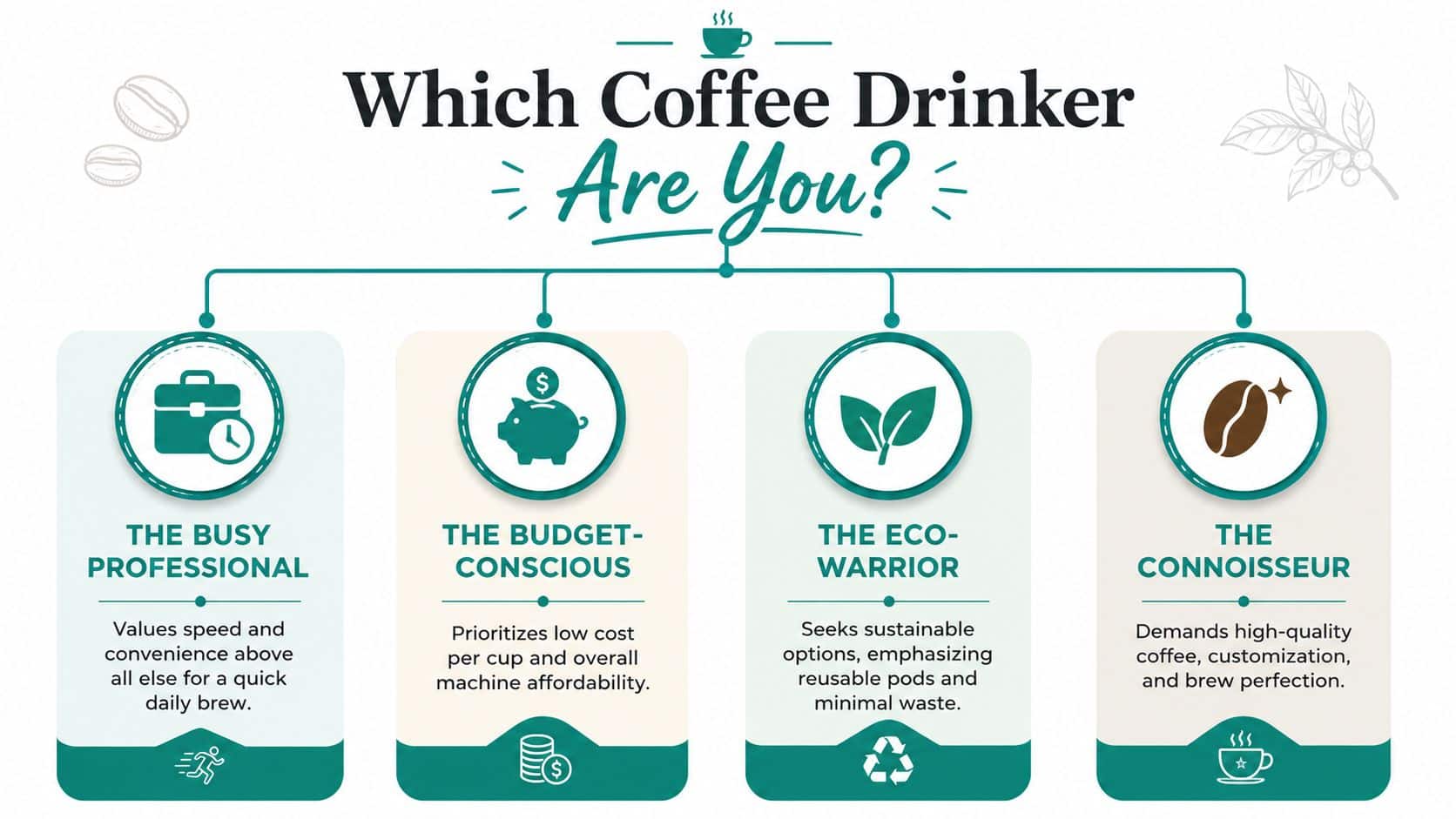
The Busy Professional
You care about one thing first. Speed.
You want a machine that heats quickly, starts reliably, and doesn't ask for much attention before caffeine happens. You'll forgive a little less nuance in the cup if the workflow is dead simple and the machine fits a rushed morning. This buyer usually does best with a pod-forward system that has a small footprint and a straightforward interface.
The Budget-Conscious
You're looking past sticker price. Good. That's where a lot of people go wrong.
This buyer should focus on compatibility with reusable pods or ground-coffee options. A machine can look affordable on day one and become expensive fast if every cup depends on branded capsules. Budget buyers also tend to care about easy cleaning because fiddly brewing systems often get abandoned.
The Eco-Warrior
You want convenience without the mountain of waste. That usually points away from a locked-down pod ecosystem and toward a machine that plays nicely with reusable capsules or direct ground-coffee brewing.
Compatibility matters more here than extra brew presets. A machine can be excellent on paper and still be a poor fit if reusable options leak, fit badly, or create a mess. The best sustainable setup is the one you'll keep using.
The Connoisseur
You're chasing cup quality, not just speed. You care about extraction, temperature, texture, and whether the coffee tastes distinct instead of flat.
This buyer should look hard at brew consistency and how the machine handles different cup sizes. If you enjoy testing your palate, it's also fun to test your beverage knowledge between brews and get clearer on the styles and flavor profiles you naturally prefer.
The biggest upgrade for most people isn't buying a more expensive machine. It's buying the machine that matches how they actually drink coffee.
The mistake I see most often is people shopping by brand loyalty instead of drinking habits. Start with the person, not the logo.
Head to Head Single Serve Machine Comparisons
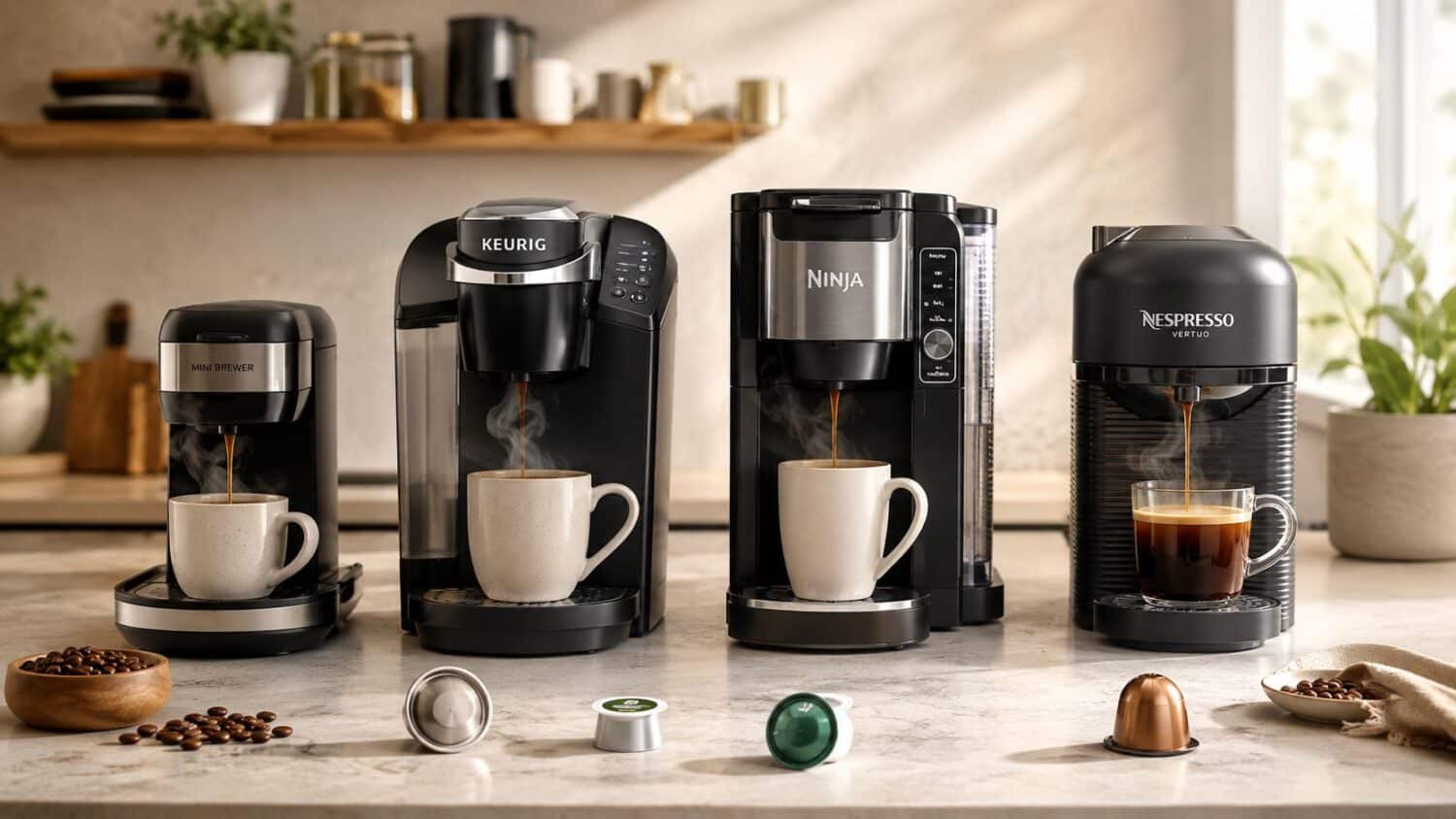
Readers don't need a giant shortlist. They need four clear options and honest trade-offs. The machines below cover the main use cases I see most often: upgrading from a basic pod brewer, saving counter space, serving multiple tastes, and getting a richer espresso-style cup.
Single-Serve Coffee Maker Feature Comparison
| Model | Best For | Brew Quality | Avg. Cost Per Cup (Pod) | Reusable Pod Friendly |
|---|---|---|---|---|
| Keurig K-Supreme Plus SMART | Busy Professional who wants an upgrade | Convenient, customizable, strongest appeal for classic pod coffee drinkers | Pod-dependent unless you add a reusable option | Yes, if you choose a well-fitted reusable pod |
| Keurig K-Mini Plus | Space-Saver | Good for simple daily coffee, less room for experimentation | Pod-dependent unless you add a reusable option | Yes, but fit matters more in compact brewers |
| Ninja Single-Serve Pods and Grounds Specialty Coffee Maker | Office Hero | Best all-around flexibility for pods and grounds | Lower ongoing cost if you use grounds often | Very friendly to reusable and grounds-first brewing |
| Nespresso VertuoPlus | Espresso Enthusiast | Richer texture and more espresso-style appeal | Pod system is the trade-off | Limited compared with open ground-coffee systems |
Keurig K-Supreme Plus SMART
This is the model I'd put in front of someone who already owns an older Keurig and wants more control without changing habits too much. It keeps the basic pod workflow intact, which is the whole point for a lot of buyers. You still get convenience first.
The catch is familiar. If you stay all-in on disposable pods, the machine remains easy but expensive to run. This is also where buyers start caring about third-party compatibility. A premium machine doesn't feel premium if it locks you into one costly brew path.
Keurig K-Mini Plus
The K-Mini Plus solves one problem better than almost anything else in the category. It takes up very little room and doesn't ask for much thought.
That makes it great for dorms, apartments, break rooms, and secondary coffee stations. The trade-off is that compact brewers tend to reward simple habits. If you want deeper customization, more brewing flexibility, or frequent back-to-back cups, a larger machine often feels less cramped in use.
Small machines save space, but they usually give up some flexibility to do it.
Ninja Single-Serve Pods and Grounds Specialty Coffee Maker
This is the most practical choice for people who want a machine to adapt to different drinkers. It handles pods and grounds, which changes the economics immediately. It also tends to satisfy the person who wants regular coffee in one cup and a stronger specialty-style option in the next.
There's a reason this machine gets attention for cup quality. In controlled feature comparison evaluations, the Ninja Single-Serve Pods and Grounds Specialty Coffee Maker outperformed 13 other tested models in brew temperature consistency and held an average brew temperature of 195°F±2°F across multiple cup sizes, according to Taste of Home's tested roundup.
That kind of consistency shows up in the cup. Coffee tastes more stable, especially when you switch between brew sizes.
Nespresso VertuoPlus
If your idea of a satisfying single-serve cup includes body and a more espresso-like experience, Nespresso's system still fills a distinct role. It doesn't brew like a standard Keurig-style pod machine, and that difference is why some people love it.
The objection is obvious. You're buying into a more closed pod format. If your priority is flexibility with your own beans or broad reusable options, this probably isn't the best fit. If your priority is texture and a more café-style profile with minimal effort, it can be.
Standard alternatives versus premium picks
| Category | Premium machine approach | Standard or generic alternative |
|---|---|---|
| Build and workflow | Better fit and finish, cleaner daily use | More plastic feel, rougher user experience |
| Brew flexibility | Multiple sizes, stronger consistency, more drink styles | Fewer options, narrower sweet spot |
| Long-term satisfaction | Better chance of staying enjoyable with regular use | More likely to feel limiting after the novelty wears off |
| Reusable compatibility | Usually workable, though model fit still matters | Hit or miss, often where leaks and weak brews show up |
One customer objection comes up constantly with reusable accessories: Will it leak or fit badly? That concern is valid. A bad reusable pod can cause overflow, weak extraction, or grounds in the cup. The fix isn't avoiding reusable pods altogether. It's choosing machine-compatible accessories and filling them correctly instead of packing them like espresso baskets.
What works and what doesn't
What works:
- Match format to taste. Pod coffee for speed, grounds for flexibility, Nespresso-style systems for richer texture.
- Prioritize repeat use. A machine that shines in a review but annoys you daily won't stay on your counter.
- Think about accessory support. Reusable pods, water filters, and descalers matter more than people expect.
What doesn't:
- Buying the “best” machine without a use case
- Assuming all reusable pods fit equally well
- Ignoring recurring cost because the machine itself looked affordable
Unlock Savings and Sustainability with Reusable Pods
The machine is only half the financial decision. The other half sits in the pod drawer.
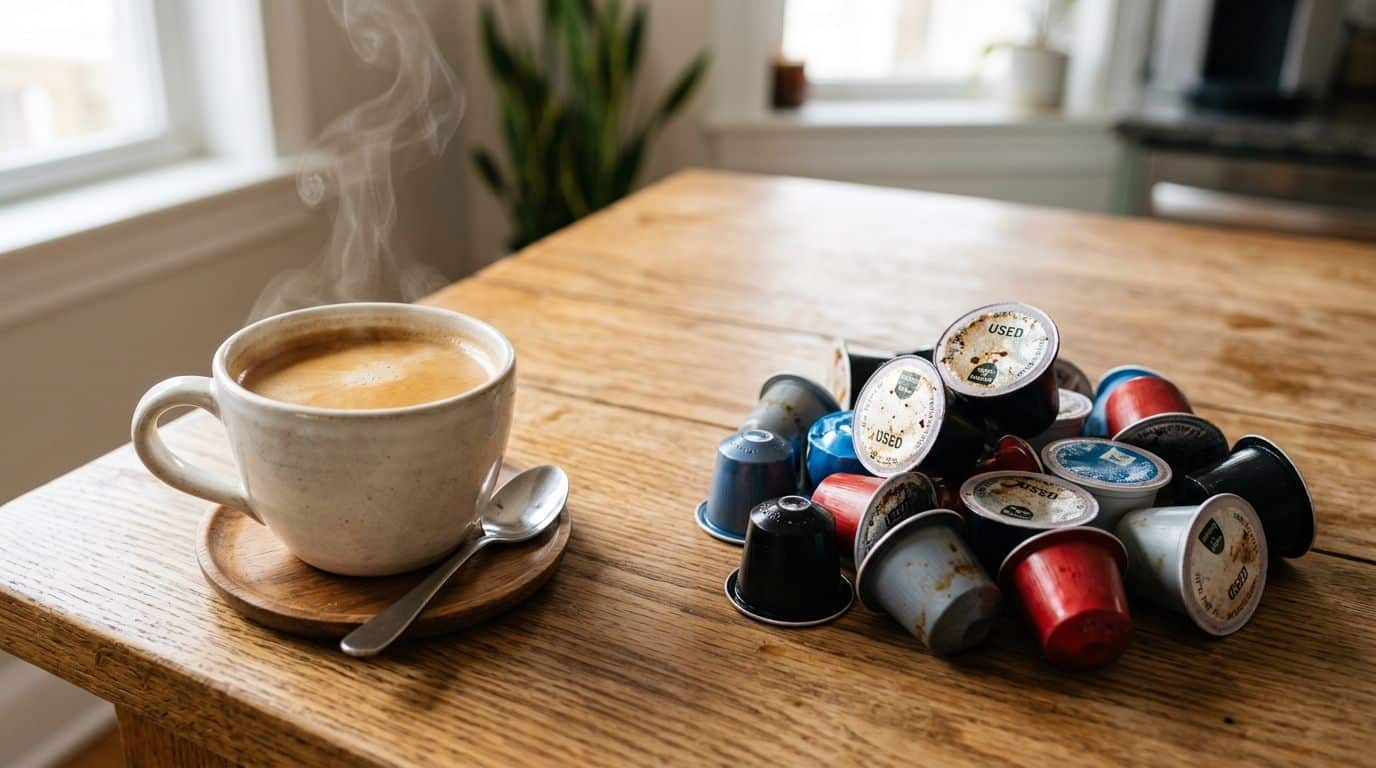
If you use a Keurig-style brewer every day, disposable pods feel cheap one box at a time and expensive over time. They also leave you with a steady stream of packaging waste that many buyers start resenting long before the machine wears out.
The long-term math is why I push people to think beyond the brewer. A 2025 consumer economy study cited by Ratio Coffee's guide to whether single-serve coffee makers are worth the hype found that maintenance and supply costs over 3 to 5 years average $85 annually for Keurig users relying on disposable pods, versus $22 for reusable pod adopters.
Why reusable pods fail for some people
Reusable pods aren't automatically better. Cheap ones can be annoying.
The usual complaints are familiar:
- Leaks happen when the lid seal is poor or the pod doesn't seat cleanly.
- Weak coffee happens when the grind is wrong or the basket is underfilled.
- Messy cleanup happens when the pod design traps grounds in corners.
- Compatibility issues show up when buyers assume one reusable capsule works across every Keurig or Ninja variant.
Those aren't reasons to avoid reusables. They're reasons to buy the right style for your machine and use it with a little discipline.
Practical rule: Fill reusable pods for drip-style extraction, not for pressure-packed density. Overfilling causes more problems than underfilling.
Premium reusable pods versus generic ones
| Feature | Premium reusable pod | Generic reusable pod |
|---|---|---|
| Fit | Designed for closer model compatibility | More likely to wobble or seal poorly |
| Cleanup | Smoother interior and easier rinse-out | Grounds often get trapped in seams |
| Brew result | More consistent when filled properly | Greater risk of weak or uneven cups |
| Durability | Better lid, hinge, and mesh longevity | More likely to warp or wear out early |
A good reusable setup also lets you use better coffee. That sounds obvious, but it changes the experience more than another brew button ever will. Fresh ground coffee in a well-fitted reusable pod usually beats stale pod coffee on aroma alone.
For a deeper look at fit, cleanup, and compatibility by machine type, this guide on reusable coffee pods is worth reading before you buy accessories.
How to make reusable pods actually work
Use this sequence and most of the common complaints disappear:
- Choose the right grind. Medium to medium-fine usually works better than very fine coffee in drip-style single-serve machines.
- Fill without packing. Level the grounds instead of tamping them hard.
- Check lid closure. A partial seal is one of the fastest ways to create leaks.
- Rinse right away. Dried grounds make every reusable pod seem harder to clean than it is.
A simple accessory note belongs here because it changes both taste and upkeep. Charcoal water filters can help reduce off-flavors from tap water, and a proper descaler prevents the machine from struggling as scale builds inside the heating system.
Here's a quick visual walkthrough before you buy into the disposable-pod habit for another year:
For buyers who care about long-term satisfaction, this is the upgrade that pays off fastest. Not the flashier machine. The better brewing system around it.
Protect Your Investment with Proper Maintenance
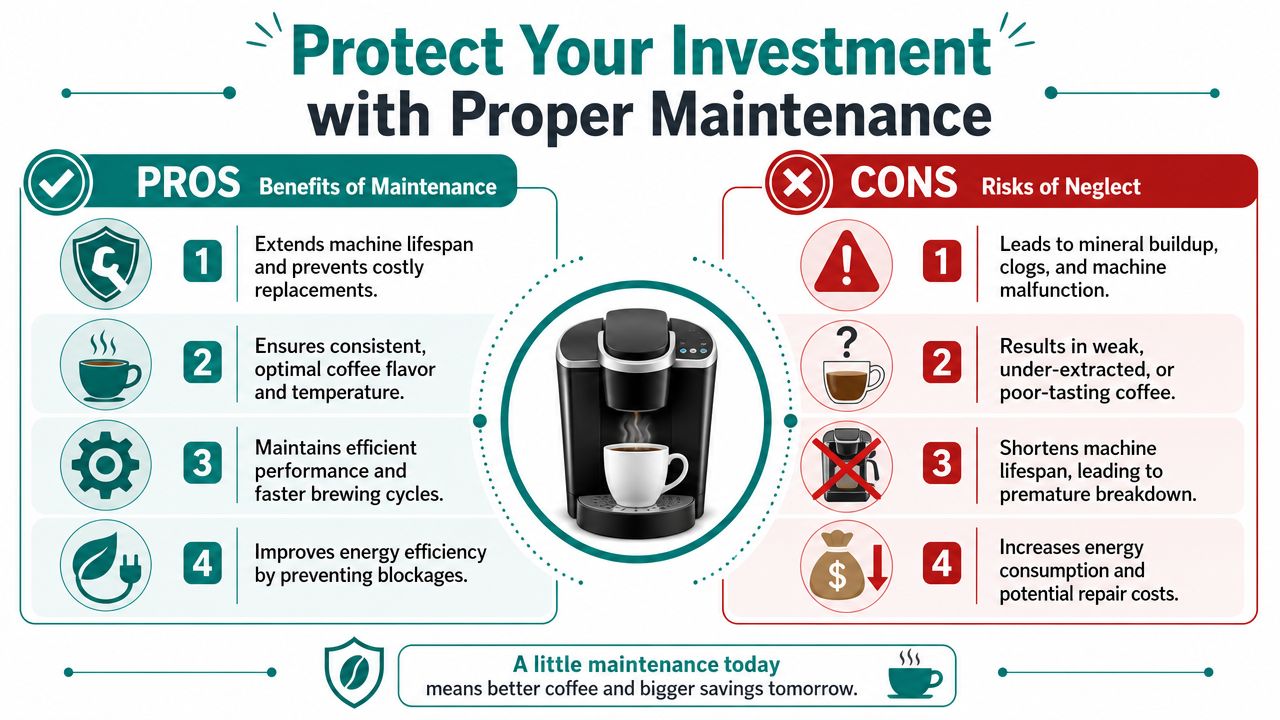
The fastest way to make a good machine feel cheap is to ignore maintenance. Coffee starts tasting dull, brew times drag, and then people blame the brewer when mineral buildup is doing most of the damage.
Consumer Reports noted that a first cup on a clean machine such as the Keurig K-Café Smart can brew in under 90 seconds, and that brew time can climb as scale builds up in the heating element, according to its coffee maker benchmark testing.
What neglect looks like in the cup
A neglected machine usually tells on itself in small ways first.
- Slower brews often point to scale in the heating path.
- Flat or harsh flavor often starts with poor water quality or dirty internal parts.
- More noise and sputtering can show up before a machine fully struggles.
- Inconsistent cup size can signal brewing path issues or clogs.
None of that is mysterious. Water leaves minerals behind. Coffee leaves oils behind. Machines need both cleaned out.
The two-part routine that matters
You don't need an elaborate maintenance ritual. You need two habits.
First, descale on a regular schedule that fits your water and usage. Vinegar can work in some situations, but many owners dislike the smell and residue risk. A purpose-made descaling solution is easier to rinse clean and less likely to turn the next few brews into a science experiment.
Second, use fresh water filtration where your machine supports it. Better water improves taste and reduces what the machine has to fight internally. If you want a model-specific walkthrough for common Keurig upkeep issues, this guide to Keurig coffee maker maintenance lays out the routine clearly.
Clean machines brew faster, taste better, and stay less annoying to own.
A smart maintenance kit usually includes two things only: a descaler and replacement water filters. Those aren't glamorous purchases, but they do more for long-term satisfaction than most upgrade accessories.
What to avoid
A few habits shorten machine life faster than people realize:
- Skipping descaling because the machine still runs
- Letting used pods or grounds sit inside the brewer
- Ignoring the water filter for too long
- Treating weak coffee as a bean problem when the machine is overdue for cleaning
Single-serve machines aren't fragile, but they are narrow-path brewing systems. Once scale and residue build up, they lose performance quickly.
Your Perfect Single Serve Setup
The best setup depends on what you value most. The machine handles the brew. The accessories decide whether you keep loving it.
Four setups that make sense
If you're the Busy Professional, go with a Keurig K-Supreme Plus SMART and pair it with a reusable pod plus a descaling routine you'll follow. You keep the push-button convenience, but you gain the option to use your own coffee when pod costs start to annoy you.
If you're the Space-Saver, a Keurig K-Mini Plus makes the most sense with a compact reusable pod and a small stash of maintenance basics. Tiny machines benefit from regular care because any slowdown feels bigger in a minimalist setup.
If you're the Office Hero, the Ninja Single-Serve Pods and Grounds Specialty Coffee Maker gives you the most flexibility. It suits mixed preferences well because one person can use pods while another uses grounds. Add water filtration and keep descaler nearby because shared machines get neglected fast.
If you're the Espresso Enthusiast, the Nespresso VertuoPlus remains the easiest route to richer, more textured single-serve drinks. Just go into it with open eyes. You're paying for a distinct pod system and a particular cup style, not maximum flexibility.
The part most reviews leave out
A brewer rarely disappoints because of one bad spec. It disappoints because the whole setup wasn't considered. Reusable pods affect cost and waste. Water filters affect taste. Descalers affect speed and machine life. Storage and countertop organization affect whether the station feels easy or cluttered.
For ideas on building a cleaner, more functional station around your brewer, this roundup of coffee bar accessories for home is useful.
The strongest single serve coffee makers reviews don't stop at “buy this machine.” They answer the more important question. “What will make this machine satisfying to live with?”
If you already know your machine, shop the accessories that fix the expensive, wasteful, and high-maintenance parts of the experience.
PureHQ Inc. makes the practical add-ons that turn a decent single-serve machine into a better long-term setup. Shop reusable K-Cups, compatible water filters, and descaling supplies to cut waste, lower ongoing cost, and keep your brewer performing the way it should.

