
Coffee Machine Care
Coffee Accessory Material Selection: Taste, Health &
Jun
About a third of coffee drinkers now use pod machines in some form, and that has created a flood of reusable accessories that look sustainable at first glance. The catch is simple. A reusable pod only reduces waste if it survives heat, pressure, cleaning, and daily use long enough to replace a lot of disposables.
I have tested cheap plastic pods, thin stainless capsules, silicone seals, and mesh baskets that were sold as eco-friendly upgrades. The pattern is consistent. The products that fail early are usually built from materials chosen for low cost or easy marketing, not for repeated contact with near-boiling water and acidic coffee compounds.
That is why material selection matters to ordinary coffee drinkers, not just engineers.
A pod, filter, gasket, or scoop can look fine out of the box and still become the weak point in your setup a few months later. Lids loosen. Rims distort. Fine mesh clogs or tears. Surfaces hold onto old oils and stale aromas. Once that happens, the “sustainable” choice starts creating more waste, more replacements, and often a worse cup.
If you are still sorting through the different types of coffee pods, material is one of the first things to check after compatibility. The greenest option on the label is not always the better long-term buy. In coffee gear, real sustainability usually comes from durability, cleanability, heat stability, and a material that keeps performing year after year.
Is Your Reusable Coffee Pod Secretly Unhealthy
You switched to a reusable pod for a good reason. Less waste, lower long-term cost, more control over your beans. On paper, that's a smart move.
The problem starts when the pod material doesn't match the job. Hot water, repeated brew cycles, and constant contact with coffee oils create a harsh test for any accessory. If the body warps, if the lid stops sealing, or if the surface starts retaining residue, your “better” choice stops being better.

Why good intentions go wrong
A lot of buyers compare size and compatibility, then stop there. They don't ask what happens when that pod sits under repeated heat, or whether the mesh, hinge, and body were chosen for food contact and long-term dimensional stability.
That's where material selection stops being an engineering term and becomes a daily-use issue. A poor choice can lead to:
- Off flavors: Surfaces that hold onto oils or residues can affect later brews.
- Leaks and weak extraction: A distorted rim or tired seal changes how water moves through the grounds.
- Short lifespan: Early cracking or warping turns a reusable product into another disposable item.
- False sustainability: Replacing a “green” accessory over and over creates more waste, not less.
A reusable pod only earns the word reusable if it stays safe, stable, and functional over time.
If you're still sorting through different types of coffee pods, the useful question isn't just which format fits your machine. It's which material keeps tasting clean after months of brewing.
What to look for instead
Start with the assumption that heat changes everything. Materials that seem fine on day one can behave very differently after repeated brewing and cleaning. For coffee accessories, the safest buying habit is simple: choose materials with a clear reason for being there.
Look for food-contact materials with a track record in heated, wet environments. Be skeptical of vague labels. “Eco,” “reusable,” and “BPA-free” don't tell you enough on their own. The material still has to resist heat, stay dimensionally stable, and avoid changing the taste of your coffee.
Understanding Material Selection for Coffee Accessories
A chef doesn't use the same pan for every job. Cast iron, stainless steel, and nonstick all behave differently under heat, with acidity, and during cleanup. Coffee accessories work the same way. The right material for a water filter housing isn't automatically the right material for a pod hinge or a group-head gasket.
That choice process has a name: material selection. In engineering, it means matching a material's actual properties to the function it must perform.
The engineering idea behind it
Professor Mike Ashby established a major milestone in this field in 1992 by introducing a systematic approach that uses performance indices to rank material families for specific functions, and that framework became foundational in engineering design according to Eastern Mediterranean University's overview of Ashby's method.
That sounds academic, but the practical meaning is straightforward. Engineers shouldn't pick materials by habit or by sticker price alone. They define what the part must do, compare candidate materials against those demands, and narrow the choice based on performance and manufacturability.
What that means in your kitchen
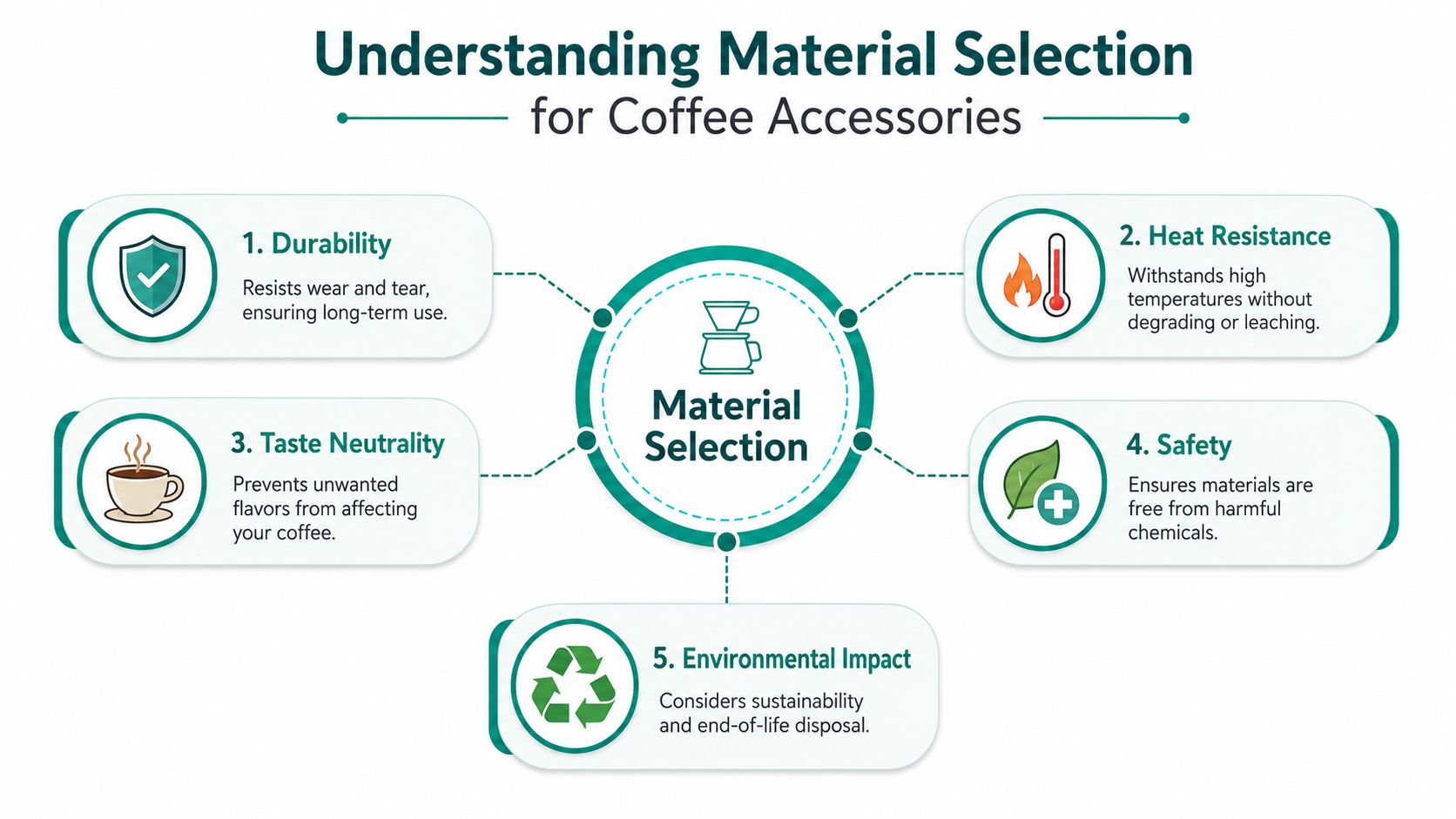
For coffee accessories, the balancing act usually comes down to a few recurring questions:
- Safety under heat: Will the material stay stable during brewing?
- Taste neutrality: Will it keep coffee tasting like coffee?
- Durability: Can it survive repeated use, cleaning, and handling?
- Corrosion resistance: Will moisture and coffee oils damage it?
- Manufacturing reality: Can the part be made well at the intended shape and cost?
- Long-term sustainability: Will it last long enough to justify reuse?
A material can score well in one category and still be the wrong choice overall. That's why the “greenest” sounding option often disappoints in real life. If a bio-based or lightweight alternative can't hold shape, resist staining, or survive regular use, then it fails the actual job.
Practical rule: Don't judge a coffee accessory by origin story alone. Judge it by how it behaves after heat, moisture, oils, and cleaning have had time to work on it.
Shape matters too
Material selection isn't only about chemistry. Geometry changes performance. A mesh screen, a thin molded wall, and a hinged lid all put different stresses on the same base material. That's why two pods made from similar-looking material can behave completely differently in use.
This is also why marketing shortcuts are so misleading. “Made from premium materials” doesn't tell you whether the mesh is fine enough, whether the rim stays flat, or whether the hinge will loosen after repeated cycles. Good accessories come from matching material, shape, and manufacturing process to one clear outcome: stable brewing.
The Six Key Properties That Define Quality
The best coffee accessories don't succeed by accident. They work because the material matches the environment. In brewing gear, six properties decide whether an accessory stays clean-tasting and dependable or turns into a constant source of leaks, odors, and frustration.
Food safety
Food safety starts with material stability, not with a buzzword printed on packaging. A part that touches hot water and coffee oils should remain inert in normal use and clean up without breaking down into rough, residue-holding surfaces.
“BPA-free” gets too much attention because it's only one narrow claim. It doesn't tell you whether the whole accessory is appropriate for repeated hot brewing, whether the mesh edge is well finished, or whether the body keeps its shape after washing.
Heat resistance
Heat resistance is what prevents a reusable pod from turning into a bad seal. If the rim distorts or the walls soften, water won't move through the grounds the way the machine expects. That usually shows up as weak coffee, overflow, or grounds slipping into the cup.
This is one reason cheap accessories often disappoint. They may fit when new, then lose consistency after enough brew cycles.
Corrosion resistance
Coffee is harder on materials than many buyers assume. Manufacturers typically use food-safe stainless steel in coffee machines to prevent corrosion caused by heat cycles between 90-96°C, constant moisture exposure, and acidic coffee oils with a pH of 5.0-5.5, according to Hotean's explanation of corrosion in coffee machine metal parts.
That same logic applies to accessories. If a material can't handle heat, moisture, and acidity together, it won't stay neutral for long.
Taste neutrality
Taste neutrality is the property many people notice first, even if they don't have a name for it. Some materials hold onto coffee oils more aggressively, which can make tomorrow's brew taste like yesterday's dark roast. Others stay cleaner and rinse out more fully.
Anyone comparing beverage packaging can see the same trade-off in choosing takeaway coffee cups, where liner choice and material contact affect both heat handling and flavor experience.
Clean flavor usually comes from materials that resist absorption, corrosion, and residue buildup at the same time.
Mechanical durability
Handles, hinges, clips, rims, and mesh joints fail before a product's marketing claims do. Mechanical durability matters because coffee accessories are handled constantly. You open them, close them, tap them out, rinse them, scrub them, and store them.
A pod body can be technically food-safe and still be a poor product if the hinge loosens, the latch wears down, or the mesh separates from the frame.
Cleanability and inspection
A coffee accessory should make it easy to see what's happening. Smooth surfaces, accessible seams, and stable mesh designs are easier to inspect and clean thoroughly. That's one reason practical buyers should pay attention to testing and maintenance practices, not just materials. The review process outlined in these coffee accessory testing procedures is useful because it focuses attention on fit, repeat use, and visible wear.
Here's the simple filter I use when evaluating a part at home:
- Can I clean it fully: Hidden cavities and rough edges are warning signs.
- Does it stay flat: A pod rim that won't stay true won't brew consistently.
- Does it keep taste clean: If flavors linger, the material or design is probably wrong.
- Would I trust it after months, not days: Early impressions matter less than repeat performance.
A Head-to-Head Comparison of Common Materials
Walk through any coffee accessory category and you'll see the same shortlist repeatedly: stainless steel, plastic, silicone, and ceramic. None of them is perfect for every job. Some excel in contact with hot water. Others work better as seals, housings, or exterior parts.
For reusable pods and filter-related components, stainless steel usually sets the standard. In water filtration housings and reusable pod components, 304 or 316 stainless steel is the industry benchmark for chemical resistance and structural durability, and it helps prevent leaching that can alter taste, as described by Appliance Spares.
Stainless steel
For brew-contact parts, stainless steel is often the easiest recommendation. It resists corrosion well, stays structurally stable, and doesn't absorb flavor the way many lower-cost materials can over time.
Between the common grades, 304 is widely used and practical for coffee accessories. 316 adds stronger corrosion resistance, which can matter in harsher environments or premium filtration applications. For most home users, both grades signal a more serious material choice than generic metal mesh with no specification.
Food-grade plastic
Plastic isn't automatically bad. In the right application, a well-chosen food-grade polymer can be light, affordable, and perfectly serviceable. But the practical problem is inconsistency. Many buyers can't verify the exact polymer, wall thickness, or how it behaves after repeated heat cycles.
That uncertainty is why “plastic reusable pod” is a category I treat cautiously. Some hold up well enough. Some stain, retain odors, or lose fit faster than expected.
For a deeper look at this exact trade-off, this comparison of stainless steel vs plastic reusable K-Cups is worth reading.
Silicone and ceramic
Silicone shines in one role: sealing. It's not your brew basket material, but it's often the right answer for gaskets and flexible contact points because it handles heat and compression well.
Ceramic has a lot going for it in mugs and some manual-brew accessories because it's taste-neutral and comfortable in use. It makes less sense for parts that need hinges, mesh, clips, or thin structural sections. One drop can end the discussion.
Coffee Accessory Material Comparison
| Material | Heat Resistance | Durability | Food Safety | Typical Cost | Best For |
|---|---|---|---|---|---|
| Stainless steel 304 | High | High | Strong choice for hot brew contact | Higher | Reusable pods, mesh filters, water-contact parts |
| Stainless steel 316 | High | High | Strong choice where corrosion resistance matters most | Higher | Premium filtration parts, demanding wet environments |
| Food-grade plastic | Varies by polymer and design | Varies | Can be suitable, but depends heavily on formulation and build quality | Lower | Housings, lightweight accessories, budget options |
| Silicone | High in sealing applications | Good in the right use | Commonly suited for flexible food-contact seals | Moderate | Gaskets, seals, flexible rings |
| Ceramic | Good for beverage contact | Good until impact damage occurs | Taste-neutral in normal use | Moderate to higher | Mugs, some manual-brew components |
The cheapest material often costs more once you factor in bad brews, early replacement, and the irritation of troubleshooting a part that should've worked in the first place.
Premium versus generic in practical terms
If you compare a premium reusable pod to a generic one, the biggest differences usually aren't visible in a product thumbnail. They show up in the mesh quality, the rim flatness, the hinge strength, and whether the material was chosen for repeated brewing instead of just low-cost manufacturing.
A generic part might still function. But when consistency matters, stable materials usually win.
Why Generic Pods Fail and Premium Pods Last
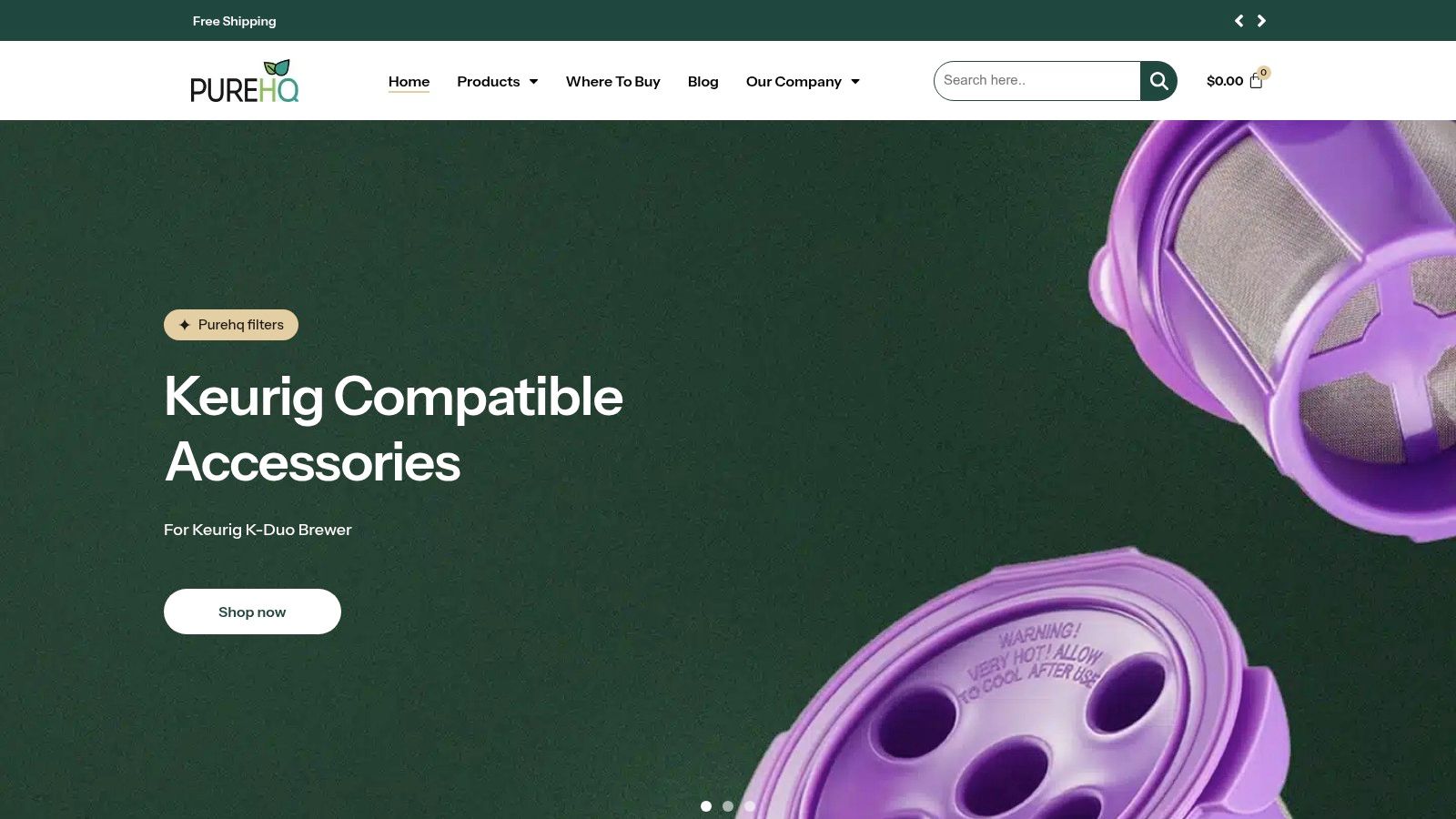
A reusable pod can look fine on day one and still be headed for early failure. In my testing, the difference usually shows up after a few weeks of heat cycles, rinsing, opening and closing the lid, and tapping out wet grounds. That is where cheap material choices stop being invisible.
Cheap isn't simple
Low-cost pods rarely fail because of one dramatic mistake. They fail because several small decisions stack up. Thin walls save material. Loose tolerances save manufacturing effort. A weak hinge survives the first few uses, then starts flexing out of alignment. Mesh that was barely secured at the start loosens after repeated heating and cleaning.
The user notices the symptoms, not the cause.
- Leaking around the rim: the lid or sealing edge no longer sits flat against the brewer.
- Warping after repeated use: heat and pressure expose a body that cannot hold its shape.
- Broken closures: the hinge, tab, or latch gives out at the highest-stress point.
- Messy cleanup: sharp corners, folded seams, and rough interiors trap oils and grounds.
Premium pods cost more because they are usually built around repeat use, not just first-sale appearance. The body stays rigid. The mesh is better supported. The closure area is reinforced instead of treated like an afterthought. Those details affect cup quality every morning.
Durability is the true test of sustainability
A lot of coffee gear gets sold on material origin alone. That is only part of the story. A pod made from a supposedly greener material is not a better environmental choice if it warps, leaks, or gets replaced after a short run of use.
Early failure has consequences people overlook. You buy a replacement. More packaging shows up. More manufacturing energy gets spent. The broken part often ends up in the trash long before it delivered the reuse benefit promised on the box.
For coffee gear, long service life is what makes reuse matter.
If you are comparing permanent options with disposables, this breakdown of reusable coffee filters versus paper filters is a useful companion read. Freshness matters too, because even a well-built pod cannot rescue stale beans. This ultimate guide to coffee freshness covers storage basics that directly affect brew quality.
If you want to see the fit and construction issues that separate well-made accessories from forgettable ones, this short video gives useful visual context:
Why leaks keep happening
Buyers who say reusable pods leak are often reporting a real design problem, not user error. A pod has to survive heat, pressure, fine coffee particles, and constant handling. If the body softens slightly, if the rim is not flat, or if the latch loses tension, the seal degrades fast.
Good material selection reduces that risk in practical ways:
- A shape-stable body keeps the pod sealing evenly after repeated brews.
- Well-supported mesh filters more consistently and resists bowing or separation.
- Stronger closure points hold up better under daily opening and closing.
- Cleaner internal geometry rinses faster and leaves fewer grounds behind.
That last point gets underestimated. A pod that is annoying to clean often gets cleaned poorly, and trapped residue turns into stale flavors and extra wear. Premium pods usually last longer because the material and the design were chosen together, with repeated brewing in mind.
Choosing the Right Material for Each Accessory
Once you stop treating all coffee accessories as interchangeable, shopping gets easier. Different parts need different material strengths. The right choice for a reusable pod isn't the right choice for a gasket, and the right choice for a mug isn't the right one for a water-contact seal.
Best matches by accessory
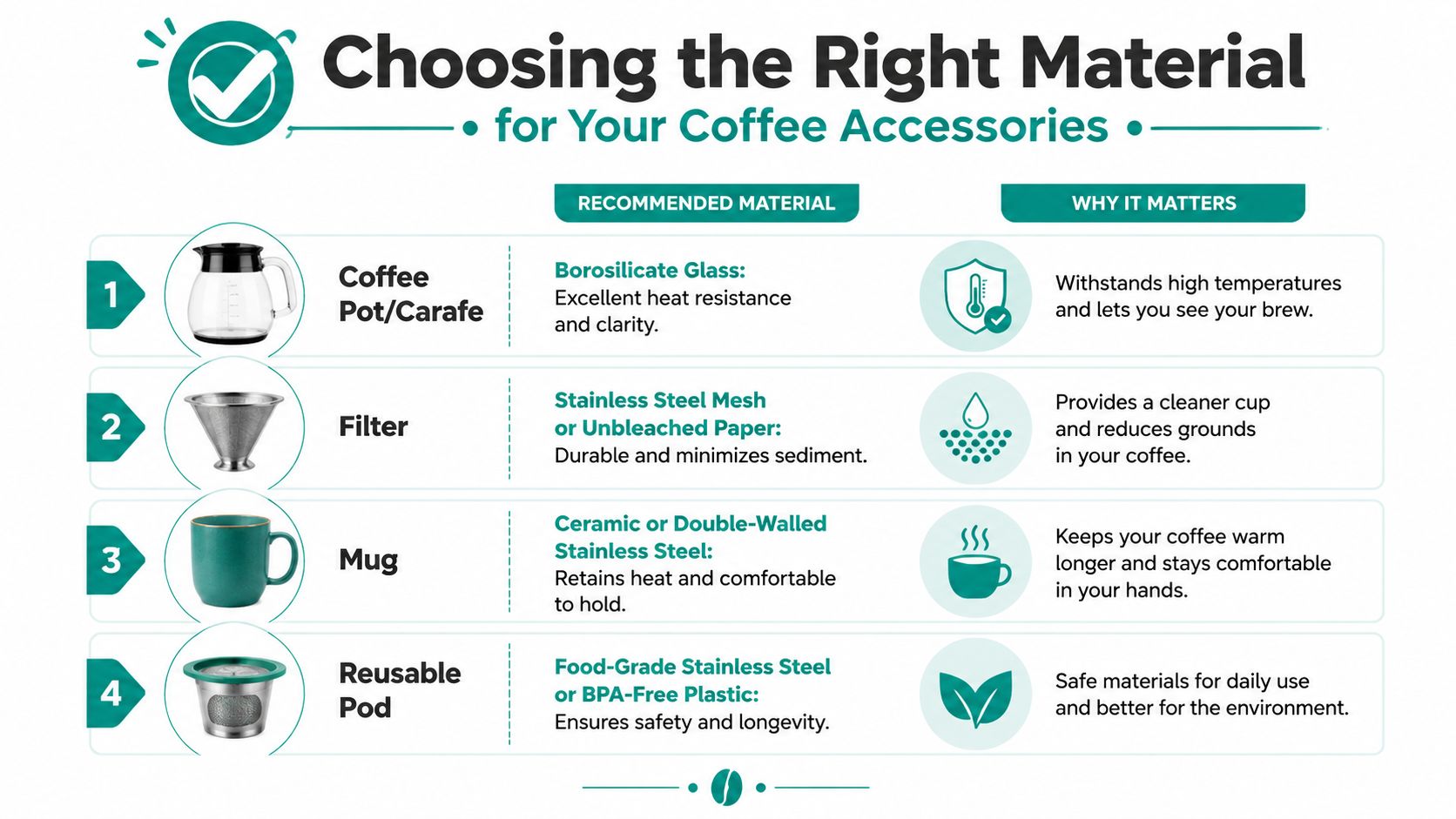
Here's the practical shortlist I'd use.
- Reusable pod: Food-grade stainless steel is the safest bet when you want long service life, shape stability, and clean flavor. A well-made BPA-free plastic option can work, but only if build quality is high and the design avoids weak hinges and thin sealing edges.
- Water-contact filter housing: Stainless steel makes sense where durability and chemical resistance matter most. It's one of the few materials that keeps earning trust after repeated wet use.
- Carafe basket or permanent filter: Metal mesh with stable framing works well when it's easy to clean and doesn't shed flavors into the next brew.
- Gaskets and seals: Silicone is the right material to look for in heat-exposed flexible parts.
Silicone gaskets outperform rubber in heat resistance and durability for high-performance espresso machines, and industry guidance recommends inspecting and replacing them every 3-6 months to maintain pressure, according to Coffee Sensor.
Small choices that improve the whole setup
Material selection works best when you think in systems, not isolated parts. A good pod won't do its best work if stale coffee is going in, hard water is scaling the machine, or old seals are already compromising pressure and flow.
That's why maintenance accessories deserve a place in the conversation. If you're dialing in storage as well as brewing, this ultimate guide to coffee freshness is a useful companion because bean quality and accessory quality affect the same cup. And if you're weighing reusable mesh against paper support options, this guide to a reusable coffee filter vs paper helps clarify when each makes more sense.
Replace seals on time, descale on schedule, and store coffee properly. Good materials can't rescue a neglected brew system.
One overlooked part of durability
Descaling matters because scale changes heat transfer and water flow, which puts extra stress on components that already live in a harsh environment. Even a strong material performs better when it isn't buried under mineral buildup. If you invest in better accessories, protecting them with routine cleaning is part of the value.
Invest in a Better Brew and a Healthier You
The material in your coffee accessory decides more than most packaging copy admits. It affects flavor, cleanup, fit, lifespan, and whether a product that looks sustainable reduces waste in real use.
That's the core lesson behind material selection. The smartest choice usually isn't the cheapest part or the one with the most eco-friendly label. It's the accessory built from materials that stay stable under heat, resist corrosion, clean up easily, and keep doing the job month after month.
For coffee drinkers, that means looking past vague claims and checking what each part is made from, how it handles repeated brewing, and whether its design supports the material instead of fighting it. Stainless steel often earns its reputation because it solves several problems at once: taste, durability, and resistance to the wet, acidic conditions coffee creates. Silicone earns its place in seals for the same reason. Good material selection isn't abstract engineering. It's better coffee with fewer compromises.
If you care about your brew and your health, buy accessories that prove themselves in use, not just in marketing.
If you're ready to replace flimsy pods, worn filters, or tired maintenance supplies, shop PureHQ Inc. for reusable K-Cups, water filters, descalers, carafe baskets, and other coffee accessories built for cleaner brewing and longer-lasting performance.


Pingback: Coffee Plastic Filter Guide: Safety, Taste, and Care
Pingback: Stainless Steel Rod Pods: How to Use and Care