
Coffee Machine Care
Coffee Quality Standards: Ensure a Perfect Brew
Jun
A 2023 study linked to the National Institute of Standards and Technology found that 68% of consumer product labels overstate “quality” because third-party testing protocols are inconsistent. If you've ever bought a reusable pod that leaked on day three, a filter that changed the taste for the worse, or a carafe basket that warped after a few hot cycles, that number feels believable.
Most coffee accessory failures don't start in your kitchen. They start much earlier, when a seller treats “quality” like a slogan instead of a testable standard. In coffee gear, that gap shows up fast. Grounds slip past poor mesh. Plastic parts pick up odor. Lids stop sealing. Fit varies just enough to cause drips, pressure problems, or weak extraction.
That's why quality standards matter. Not as abstract factory language, but as the difference between clean coffee and muddy coffee, between a pod that fits and one that floods, between a filter that protects your machine and one that just takes up space.
Why Your Cheap Coffee Accessories Keep Failing
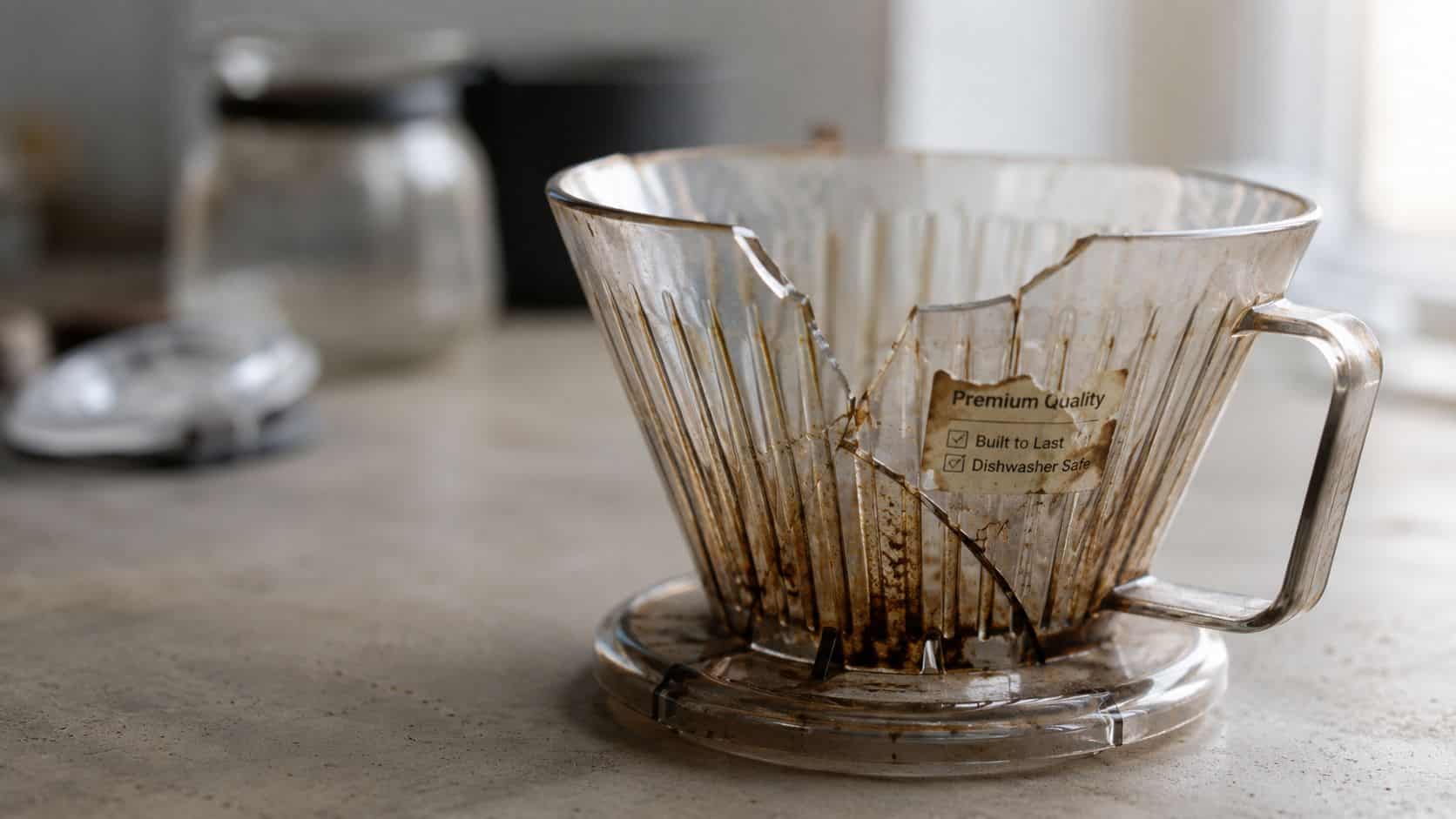
Cheap coffee accessories usually fail in predictable ways. The pod looks fine out of the package, then the hinge loosens, the rim distorts, or the mesh starts letting fines through. A generic water filter may fit loosely, leave gaps, or use media that doesn't support consistent brewing results.
Where the trouble starts
The biggest problem is that many low-cost accessories are sold with broad claims and almost no useful specifics. “Premium.” “High quality.” “Universal fit.” Those phrases don't tell you what the part is made from, how the seal was tested, or whether the dimensions stay stable under repeated heat.
That matters because coffee brewing is repetitive stress. Hot water, pressure, oils, mineral exposure, and frequent cleaning punish weak materials quickly. If the pod wall is too thin, it deforms. If the lid latch is sloppy, it leaks. If the mesh is poorly joined, coffee fines end up in the cup.
Practical rule: If a listing talks more about being “premium” than about materials, fit, cleaning, or testing, it usually doesn't have much to stand on.
What failure looks like in daily use
Most customers don't complain about “manufacturing variance.” They complain about morning problems:
- Leaking around the rim: Water bypasses the grounds instead of flowing through them.
- Sediment in the cup: Mesh and seam quality aren't controlling fines well.
- Off taste: Lower-grade materials can hold odors and old residue more stubbornly.
- Short service life: Tabs, hinges, and seals wear out before the product has earned its keep.
One bad accessory can also make you blame the brewer. People often assume the Keurig or Ninja machine is acting up when the actual issue is a pod that doesn't seat correctly or a filter setup that disrupts flow.
Why “quality” needs a real definition
In a small brand, you learn quickly that quality standards aren't decorative. They're the only way to produce the same result batch after batch. Without them, one shipment fits tightly, the next runs loose, and support inboxes fill up with issues that should've been caught before sale.
That's the part cheap accessories skip. They sell the claim, not the control.
Decoding Quality Standards for Your Kitchen
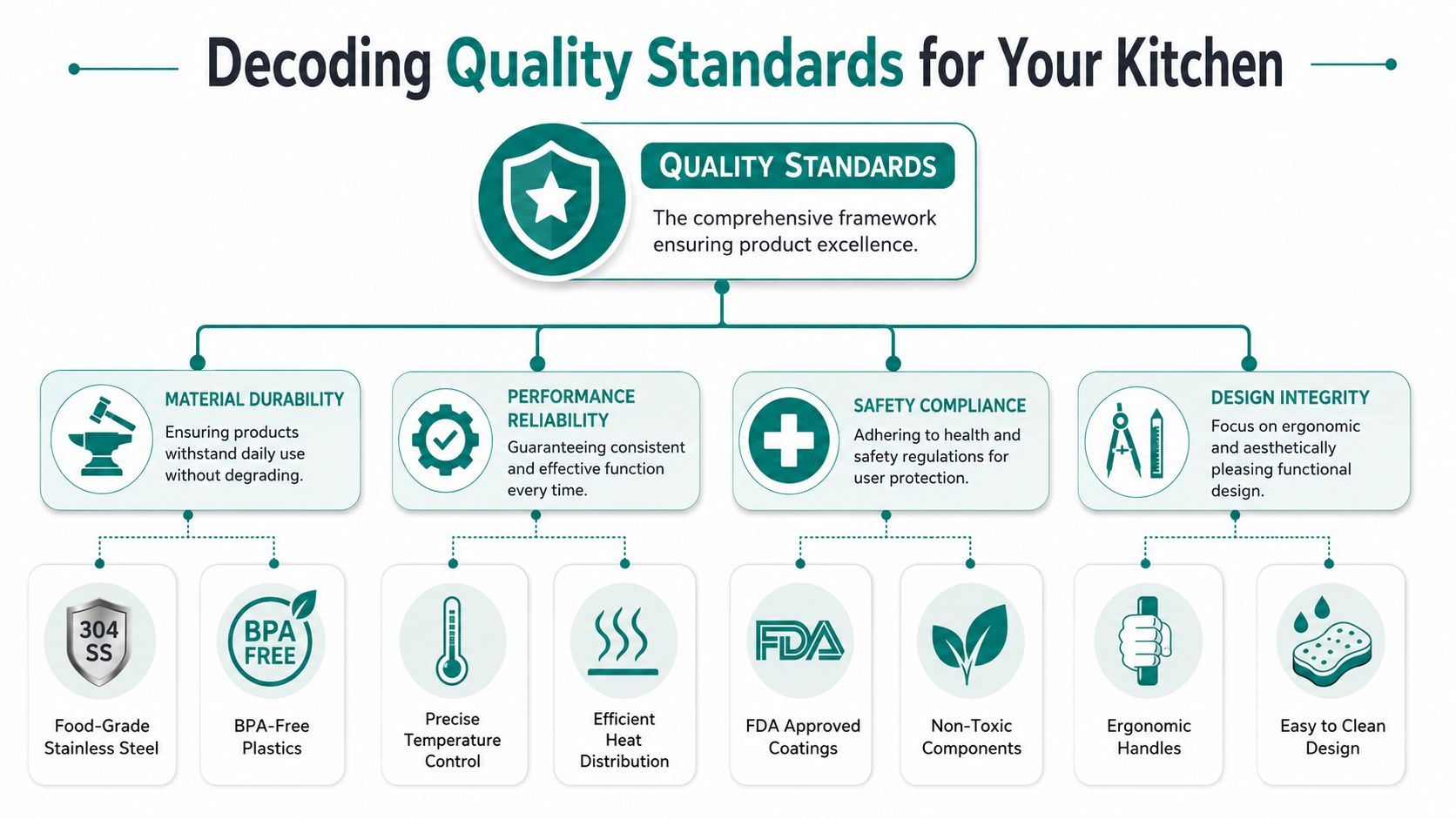
“Quality standards” are frequently associated with paperwork. In practice, they're closer to a documented promise. They define what a product must do, what it must survive, and what it must not do, such as leak, crack, contaminate taste, or create a safety issue.
Three layers that actually matter
A useful way to think about quality standards is as three layers working together.
International process standards
The broadest layer covers how a company runs production and quality control. The clearest example is ISO 9001, which the International Organization for Standardization describes as the world's most recognized quality management standard for consistently meeting customer and regulatory requirements. That doesn't guarantee a coffee pod is excellent by itself, but it tells you the manufacturer should be operating with a defined system instead of improvising.
For buyers, this matters because bad products often come from bad process discipline. If a factory doesn't control incoming materials, inspection routines, or corrective action, defects slip through.
Industry performance standards
The next layer is more specific. Coffee has its own performance realities, and good accessory design respects them. Water quality, extraction behavior, filter flow, temperature handling, and cleaning all affect the final cup.
Here, standards stop sounding abstract. If a filter changes water chemistry in an unhelpful way, or if a reusable pod disrupts flow, the drinker notices immediately.
Internal brand standards
The last layer is the one customers rarely see, but it's often the most decisive. Responsible brands define their own acceptance rules for fit, finish, sealing, cleaning ease, and consistency. That internal bar is what separates a product that merely functions from one that keeps functioning.
A useful standard should answer a simple question: what must be true every time the customer uses this product?
What these standards mean in plain English
Here's how I translate them when evaluating kitchen accessories:
- Durability means repeatability: The product should survive normal brewing and cleaning without changing shape or performance.
- Performance means consistency: It should produce the same general result tomorrow that it produced today.
- Safety means suitable materials and controlled construction: The user shouldn't have to guess what touches hot water.
- Design integrity means the part works with the machine as intended: Close-enough fit usually isn't close enough in coffee equipment.
A vague product page won't tell you any of this. A serious one usually will. It may mention material grade, compatibility scope, cleaning instructions, or how the product is tested before shipment. Those details aren't filler. They're evidence that the seller knows what can go wrong and has tried to prevent it.
From Raw Materials to Your Morning Brew
The easiest way to understand quality standards is to trace one cup of coffee backward. Start with the taste in the mug. If it's flat, sour, bitter, silty, or inconsistent, the cause often sits in a very ordinary accessory.
Water quality changes flavor first
Water hits the coffee before any other accessory variable matters. The Specialty Coffee Association ties water chemistry directly to extraction and notes that water with Total Dissolved Solids below 75 ppm can cause sour, under-extracted flavors. That's a useful benchmark because it reminds people that “clean water” and “good brewing water” aren't always identical ideas.
A brewer filter isn't just there to catch visible impurities. It affects scale buildup, heating performance, and flavor consistency. If the filter media is weak, inconsistent, or poorly fitted to the holder, the machine may still run, but the brew won't be as stable from cup to cup.
That's one reason machine maintenance accessories deserve more scrutiny than they usually get. If you're evaluating suppliers or private-label manufacturing, this guide for retail brands is useful because it focuses on the supplier relationship side of consistency, which is where many accessory problems begin.
Material choices show up in taste and cleanup
For reusable pods, raw material decisions affect more than durability. They affect heat behavior, residue retention, and how easy the pod is to rinse clean after brewing. Thin, low-grade plastic often shows its weaknesses quickly in coffee applications because coffee oils cling to it and repeated heat cycles expose every shortcut in the design.
By contrast, better material choices usually support three things:
- Stable brewing geometry: The pod keeps its shape under heat.
- Cleaner flavor transfer: Surfaces are less likely to hold stale residue.
- Faster maintenance: Users can clean the part without fighting corners and trapped grounds.
The same logic applies to carafe baskets, pod lids, and charcoal filter housings. If the accessory is awkward to clean, users clean it less thoroughly. Then old coffee oils build up, and flavor suffers.
Precision fit matters more than marketing copy
A reusable pod can look excellent in photos and still fail in the brewer because the tolerance is off by a small amount. In real use, tiny errors become obvious. The lid doesn't close evenly. The puncture needle engagement feels wrong. Water bypasses the coffee bed instead of moving through it predictably.
That's why testing has to include actual machine fit, not just bench inspection. It also helps to understand coffee quality more broadly, because the accessory and the coffee work together. This guide to coffee bean quality is a helpful reminder that even a well-made pod can't rescue stale or poorly chosen beans.
If the accessory changes flow, temperature handling, or cleanup effort, it changes the coffee. That's the practical meaning of quality standards in this category.
The Real Difference Between Premium and Generic
Price objections are fair. Plenty of expensive accessories are mediocre, and plenty of inexpensive ones are usable. The key question isn't “Which costs less today?” It's “Which holds fit, flavor, and cleaning performance over time?”
One hard difference is heat behavior. Thermal testing data found that stainless steel reusable K-Cups retain heat 2–3°C better than plastic alternatives during brewing. In practice, that can support more consistent extraction and a fuller flavor profile.
Premium vs Generic Reusable Pods
| Feature | PureHQ Premium Accessory | Generic Alternative |
|---|---|---|
| Main body material | Stainless steel construction designed for repeated hot brewing use | Often thin plastic or mixed materials with less stable heat behavior |
| Heat retention | Benefits from the stronger thermal performance associated with stainless steel reusable pods | Tends to lose heat faster during brewing |
| Fit and seal | Built around compatibility-specific design priorities to reduce bypass and leaks | Often marketed as “universal,” which can mean looser tolerances |
| Mesh and cup clarity | Aims for balanced flow and cleaner cups with fewer fines | Mesh quality and seam consistency are more likely to vary |
| Cleaning | Smooth metal surfaces are generally easier to rinse thoroughly after oily dark roasts | Plastic can hold odor and residue more stubbornly |
| Durability | Better suited to repeated opening, closing, and washing | Hinges, tabs, and rims often wear sooner |
| Long-term value | Higher upfront cost, but fewer replacements and fewer frustrating brews | Lower entry price, but more trial-and-error and replacement risk |
The common objection about leaks
The most common customer objection isn't really about price. It's about trust. People want to know whether a reusable pod will leak, throw grounds into the cup, or fit their specific brewer.
That's a legitimate concern, because “compatible” isn't always precise. A pod can be physically insertable and still perform badly. The fit has to work with the machine's closing pressure, puncture geometry, and brew path.
A few buying rules help:
- Check machine-specific compatibility: Don't assume one pod suits every Keurig-style brewer.
- Look for material details: “Stainless steel” is more meaningful than “durable metal.”
- Read cleanup comments carefully: Reviews that mention trapped grounds usually point to design shortcuts.
Premium accessories still need a clean machine
Even a well-made pod won't perform properly in a scaled-up brewer. Mineral buildup affects heating and flow, which then gets blamed on the accessory. Keurig's machine care guidance says filtered water can help prevent clogs in the heating element and maintain optimal brewing temperature, and the company recommends descaling every 3–6 months depending on water hardness.
That's where a good descaling routine and fresh water filters matter. If you're already investing in a reusable pod, maintenance products aren't an upsell for the sake of it. They protect the conditions the pod needs to work properly.
How We Uphold Our Quality Promise
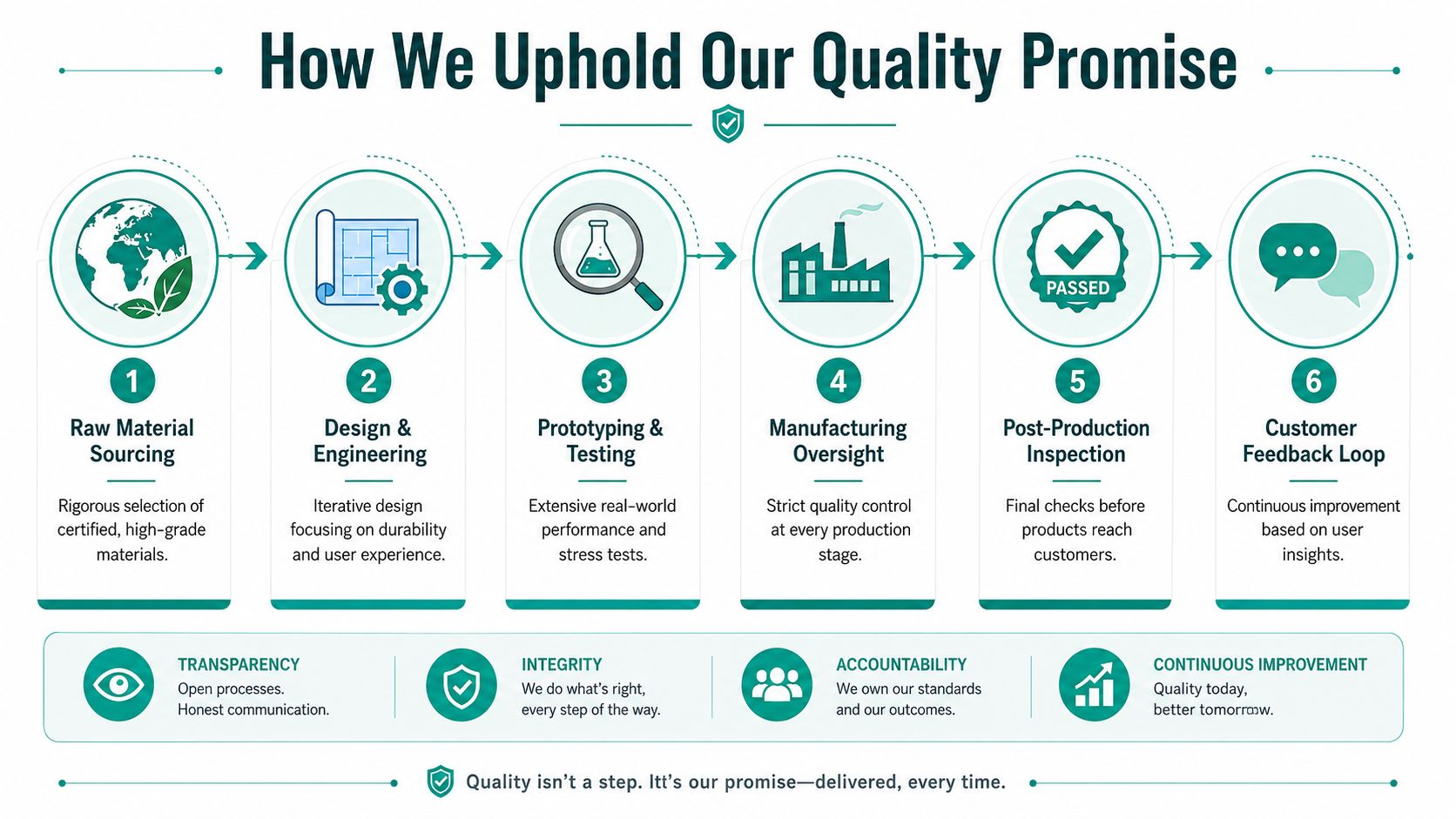
A small brand can't hide behind volume. If a batch is inconsistent, customers feel it immediately, and support sees it before marketing does. That's why quality control has to start before production and continue after delivery.
Supplier discipline comes first
The first step is supplier selection. Factories can make a sample look good. The harder question is whether they can make the same item consistently, with traceable materials and a repeatable inspection routine. ISO 9001 has over 1.2 million certifications issued globally, which shows how widely companies use it as a quality management framework, as noted earlier.
That matters because process discipline is what prevents the annoying failures customers see: drifting dimensions, inconsistent mesh attachment, rough edges, and variable fit from one batch to the next.
For brands selling through marketplaces as well as direct channels, quality work also has a reputation layer. Clear documentation, predictable packaging, and issue resolution all shape customer trust. Teams working on that side of the business may find this resource on optimizing marketplace reviews and listings useful because product quality and listing clarity feed each other.
Internal checks have to be specific
General claims don't help in quality control. Checklists do. Good internal QC asks narrow questions that can produce a pass or fail result.
Examples include:
- Incoming material review: Are the parts, finish, and dimensions consistent with the approved sample?
- Fit testing: Does the accessory seat correctly in the intended brewer models?
- Use testing: After repeated brew and cleaning cycles, does anything loosen, warp, or trap residue excessively?
For a practical example of how a coffee accessory brand can approach that work, PureHQ documents its testing procedures in a way that connects fit, safety, and consistency to actual product checks rather than generic promises.
Better quality systems don't eliminate every issue. They catch preventable ones before the customer has to.
Feedback closes the loop
The final part of quality assurance isn't factory-side. It's post-sale listening. Customers will always surface edge cases faster than internal teams can simulate them all. The key is whether a brand treats those reports as noise or as input for design revision, packaging updates, and clearer compatibility guidance.
That loop is what turns standards from a document into a habit.
How to Spot a Genuinely High-Quality Product
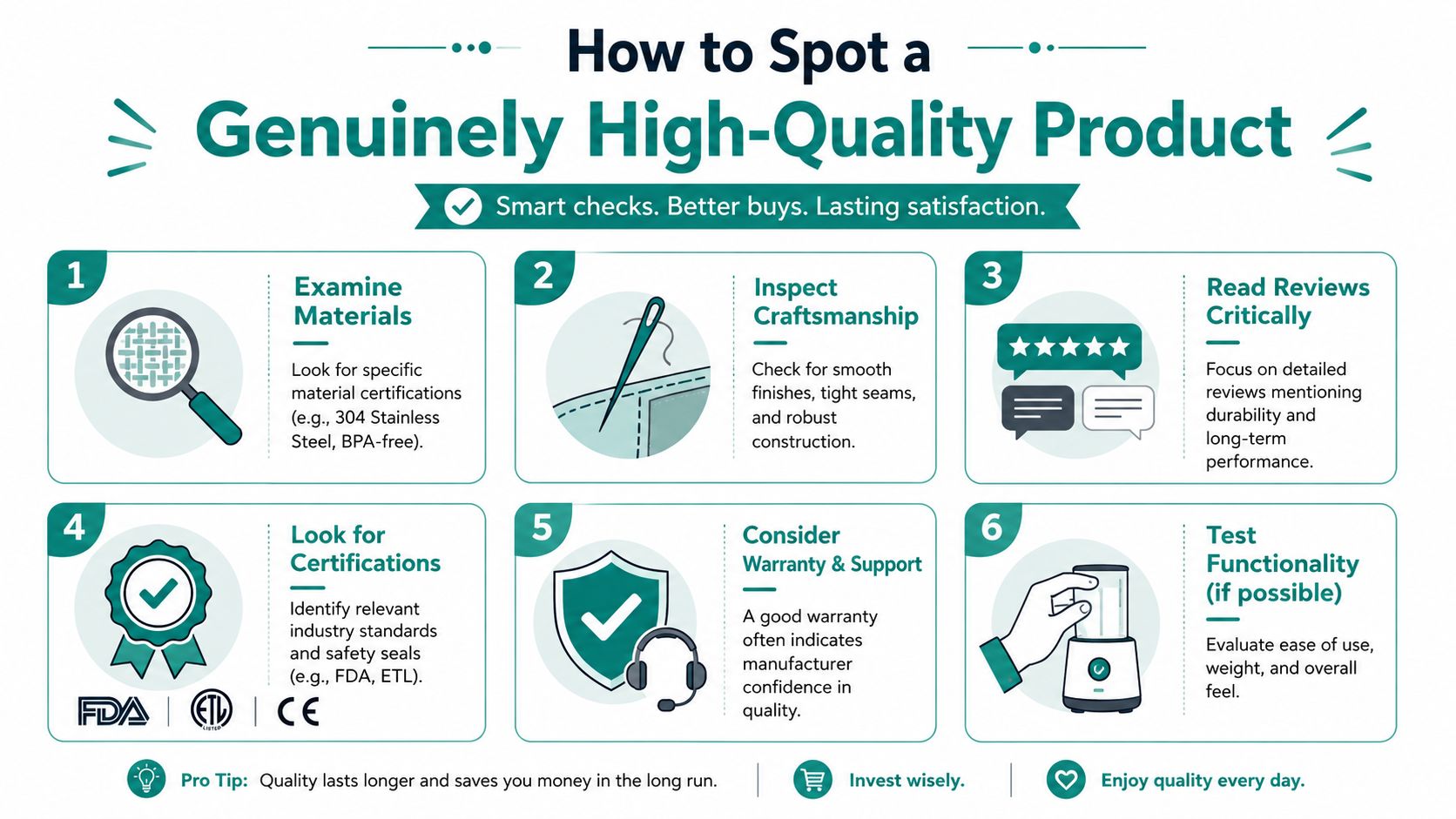
Most shoppers don't need a lab report. They need a fast way to separate a serious product from a polished listing. The good news is that quality standards leave clues if you know where to look.
Start with specifics, not slogans
A trustworthy product page usually names materials, machine compatibility, and cleaning expectations. A weak one leans on mood words. If a listing says “high quality metal mesh” but won't say what the body is made of or which brewers were tested, that's a warning sign.
Look for concrete details such as:
- Named materials: “304 stainless steel” or “BPA-free” tells you more than “premium build.”
- Compatibility limits: Brands that know their tolerances usually state where the product fits and where it doesn't.
- Care guidance: Serious sellers explain rinsing, descaling, replacement timing, or how to avoid clogging.
Read reviews like a product developer
Star ratings help, but the useful reviews are the detailed ones. You're looking for patterns around fit, seal quality, cleanup, and repeat use. One complaint about user error is noise. Repeated comments about warped rims or grounds in the cup point to design or manufacturing weakness.
A few review phrases are especially revealing:
- “Worked once, then started leaking” often signals heat-related deformation or latch wear.
- “Hard to clean completely” usually means the geometry traps residue.
- “Fits my machine, but coffee is weak” can mean poor flow control rather than bad beans.
The best review is the one that describes month-two performance, not just day-one excitement.
Check whether the brand behaves like it expects scrutiny
Good brands make it easier to verify what you're buying. They provide support, explain returns, and don't bury compatibility information. They also tend to have supporting educational content because they understand that informed customers make fewer bad purchases.
If you want a practical example of what to examine, this guide to product authenticity is worth reading before you buy any coffee accessory through a marketplace listing.
One more practical point. Even the best reusable pod still depends on water quality and machine condition. If your coffee tastes inconsistent, replacing a worn filter or descaling the brewer may solve more than swapping coffee alone.
If you're done guessing and want coffee accessories built around fit, filtration, and repeatable everyday use, shop PureHQ Inc.. Their lineup includes reusable K-Cups, water filters, descalers, and related maintenance accessories for Keurig and other home brewing setups, with product details that make it easier to buy the right part the first time.

