
Coffee Machine Care
How to Make French Vanilla Hot Chocolate at Home
Jun
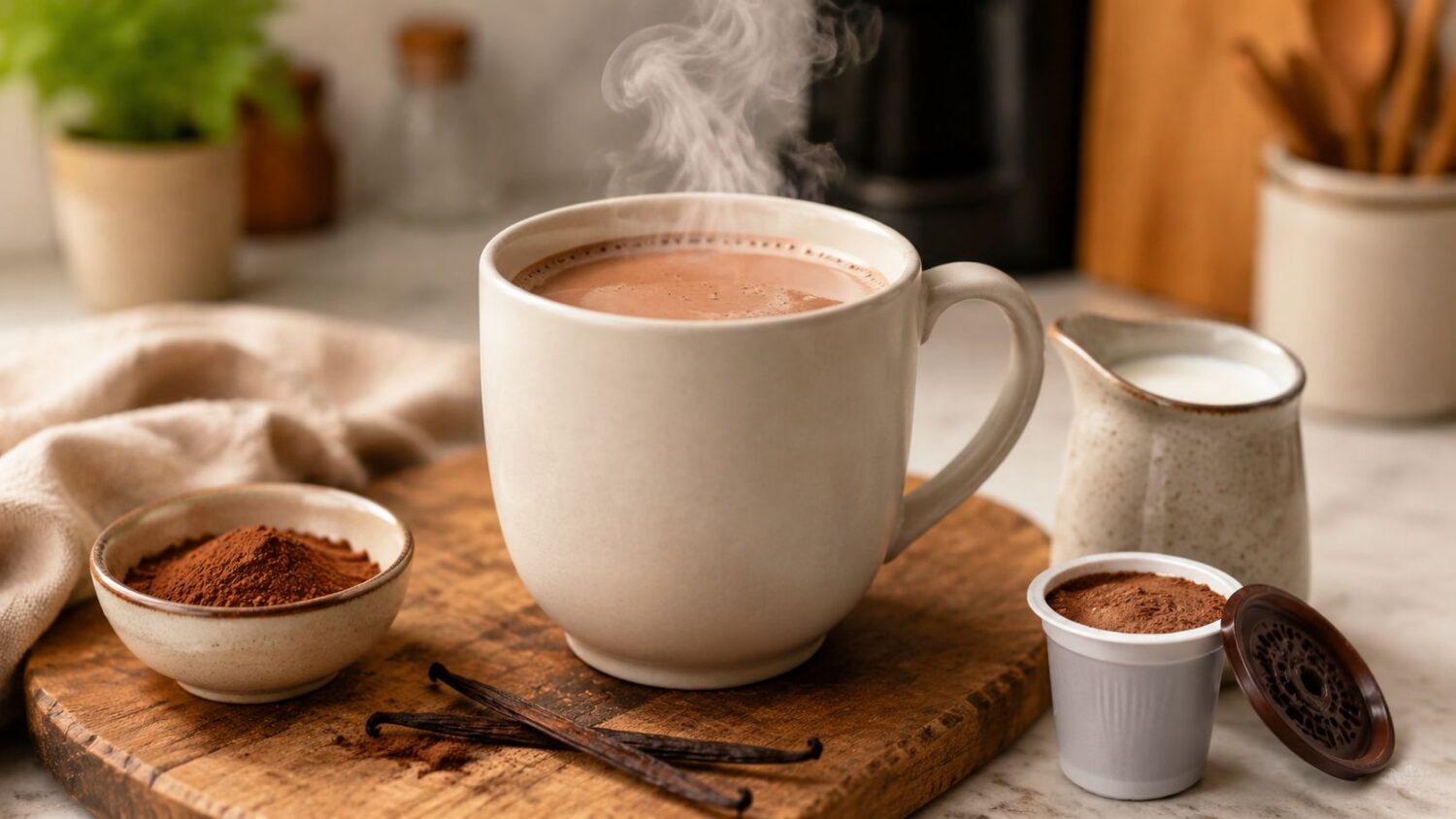
Cold morning, rushed schedule, one clean mug left, and a craving for something better than flat packet cocoa. That's when French Vanilla Hot Chocolate sounds perfect and also slightly unrealistic.
The desired experience is a cup that tastes rounded, chocolatey, and softly vanilla-forward, with enough body to feel comforting instead of watery. What is often served instead is a drink that's sweet first, chocolate second, and creamy only on the label. The good news is that you don't need a café setup to fix that. You need a better method, and you need to know where convenience helps and where it undermines the cup.
The Craving for Real French Vanilla Hot Chocolate
Some cravings are specific. You do not want generic cocoa. You want a mug that tastes creamy, properly chocolatey, and rounded out with vanilla that reads warm instead of artificial.
That is why French vanilla hot chocolate keeps sounding better than the versions many people drink. The promise is comfort with a little polish. It often features thin texture, sugar-heavy flavor, and a vanilla note that sits on top of the cup instead of blending into it.

What French vanilla actually means
French vanilla usually describes a flavor direction, not a strict old-country recipe. In practical terms, it points to a richer, softer vanilla profile, the kind of taste people associate with custard, cream, and a fuller dessert-style finish.
That distinction is freeing, because it lets you aim for the cup in front of you instead of chasing a questionable idea of authenticity. A good French vanilla hot chocolate needs three things to line up: enough cocoa to taste like chocolate first, enough dairy richness to avoid a watery sip, and enough vanilla to smooth the edges.
The best part is that this works for both approaches. A stovetop version gives you maximum control. A Keurig version can still get surprisingly close if you build it with better ingredients and realistic expectations.
Why the easy versions fall short
Convenience products are designed to dissolve fast and please a wide range of tastes. That usually pushes them toward sweetness, light chocolate flavor, and a vanilla aroma that smells stronger than it tastes.
I run into the same trade-off with single-serve drinks all the time. The quick cup wins on speed and cleanup, but it loses body unless you give it some help. The fix is not to give up on convenience. The fix is to stop expecting a plain pod or packet to do all the work.
French vanilla hot chocolate gets better the moment you treat it like a short build instead of a one-step product. A stronger base, a small dairy upgrade, or a better vanilla component can turn a forgettable mug into something you would gladly make again on a busy morning.
If you like little dessert cues with your drink, a few premium car-shaped treats on the side do not hurt either.
Mastering the Classic Stovetop Method
The stovetop cup is still the one to beat. If you want a French vanilla hot chocolate that tastes rounded instead of flat, this method gives you the control that pods and packets rarely do on their own.
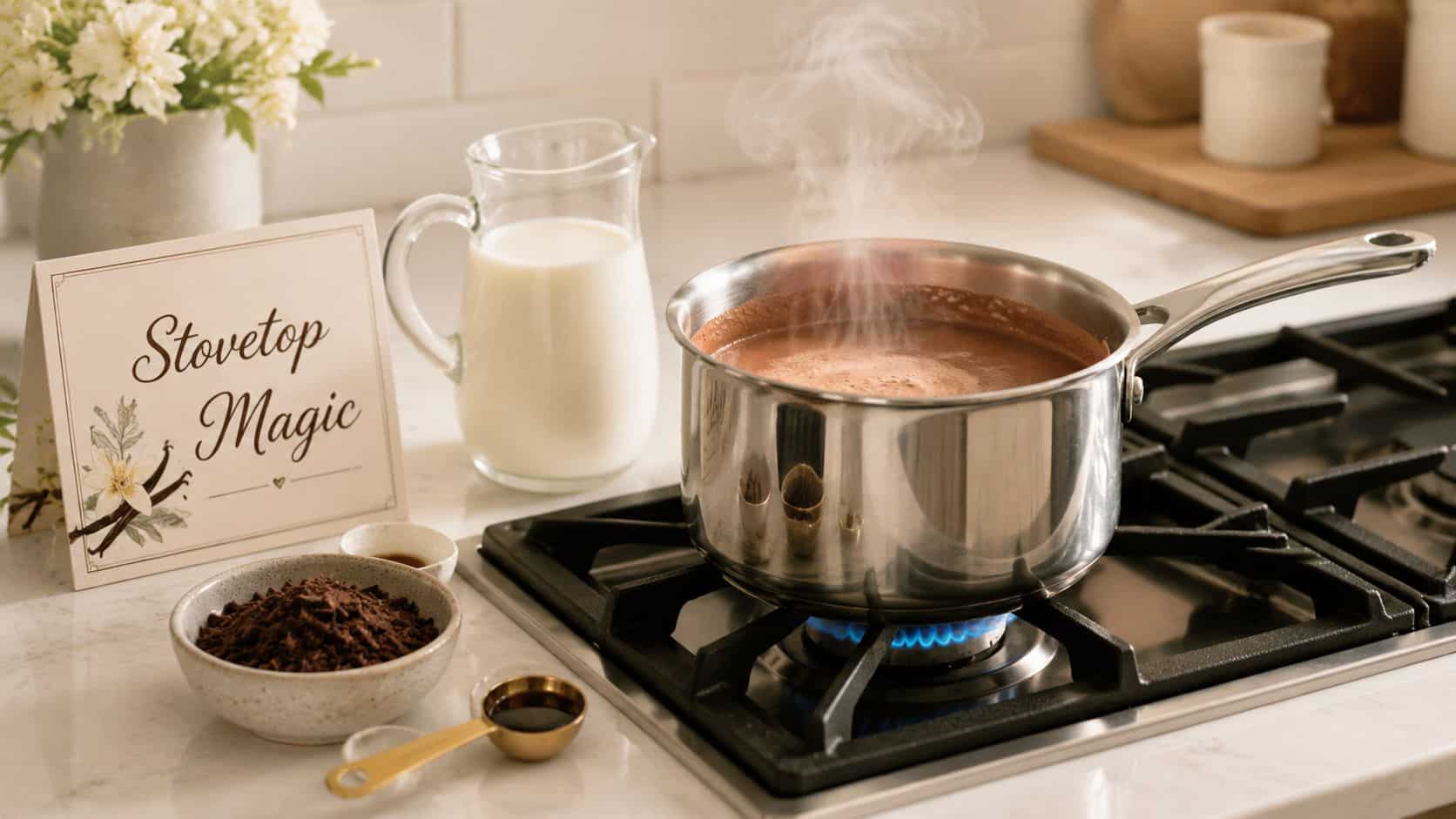
A good saucepan version also teaches you what the quick Keurig version is trying to imitate later: fuller body, a cleaner vanilla finish, and chocolate that tastes melted into the milk rather than stirred on top of it.
The ingredient profile that gives real flavor
French vanilla hot chocolate does not need many ingredients, but each one has a job.
Whole milk gives the drink weight and a softer texture. Unsweetened cocoa powder keeps the chocolate flavor clear instead of candy-like. Light brown sugar brings a mild caramel note that fits French vanilla better than plain white sugar, which can make the sweetness feel more one-dimensional. Pure vanilla extract gives a cleaner finish than imitation vanilla, especially in a drink this simple.
A small pinch of salt is useful too. It does not make the drink salty. It tightens the chocolate flavor and keeps the sweetness from drifting too far.
If you already enjoy dessert-style coffeehouse drinks, the same flavor logic shows up in recipes like peppermint mocha K-Cups made with stronger add-ins. Better ingredients do more work than extra sweetness.
The no-boil rule
Heat matters as much as ingredients.
French vanilla hot chocolate should get hot enough to dissolve the cocoa and sugar fully, but not so hot that the milk starts to scald. Once the surface gets aggressive bubbles around the edges, the texture can turn slightly rough and the vanilla loses some of its charm. Keep the pan at a gentle medium heat and whisk often. The goal is a smooth, glossy mixture with light steam, not a rolling boil.
I treat this as the biggest trade-off in the stovetop method. You get the best texture and aroma, but you do have to stay present for a few minutes.
A simple stovetop workflow
- Add milk, cocoa, brown sugar, and a pinch of salt to a small saucepan. Hold the vanilla back for the end if you want the freshest aroma.
- Warm over medium heat. Stir or whisk steadily so the cocoa hydrates instead of floating in dry specks.
- Watch for steam, not bubbles. If the edges start simmering, lower the heat.
- Add vanilla once the mixture is hot and smooth. This keeps the flavor more noticeable in the finished mug.
- Pour and serve right away. Stovetop hot chocolate is at its best while the texture is silky and the vanilla is still lifting from the cup.
For an even thicker result, swap a small portion of the milk for half-and-half. It tastes richer, but it can mute the cocoa if you go too far. I usually keep it to a splash, not a full replacement.
If you like serving hot chocolate with a little flair, a small plate of premium car-shaped treats makes sense beside a richer stovetop cup, especially when you want something playful but still chocolate-forward.
A visual walkthrough can help if you want to see the texture cues in motion.
Your Quick and Creamy Keurig Hot Chocolate
The stovetop method is satisfying when you have the time. Busy weekdays are different. You still want a good cup, but you don't want a saucepan, a whisk, and a sink project before work.
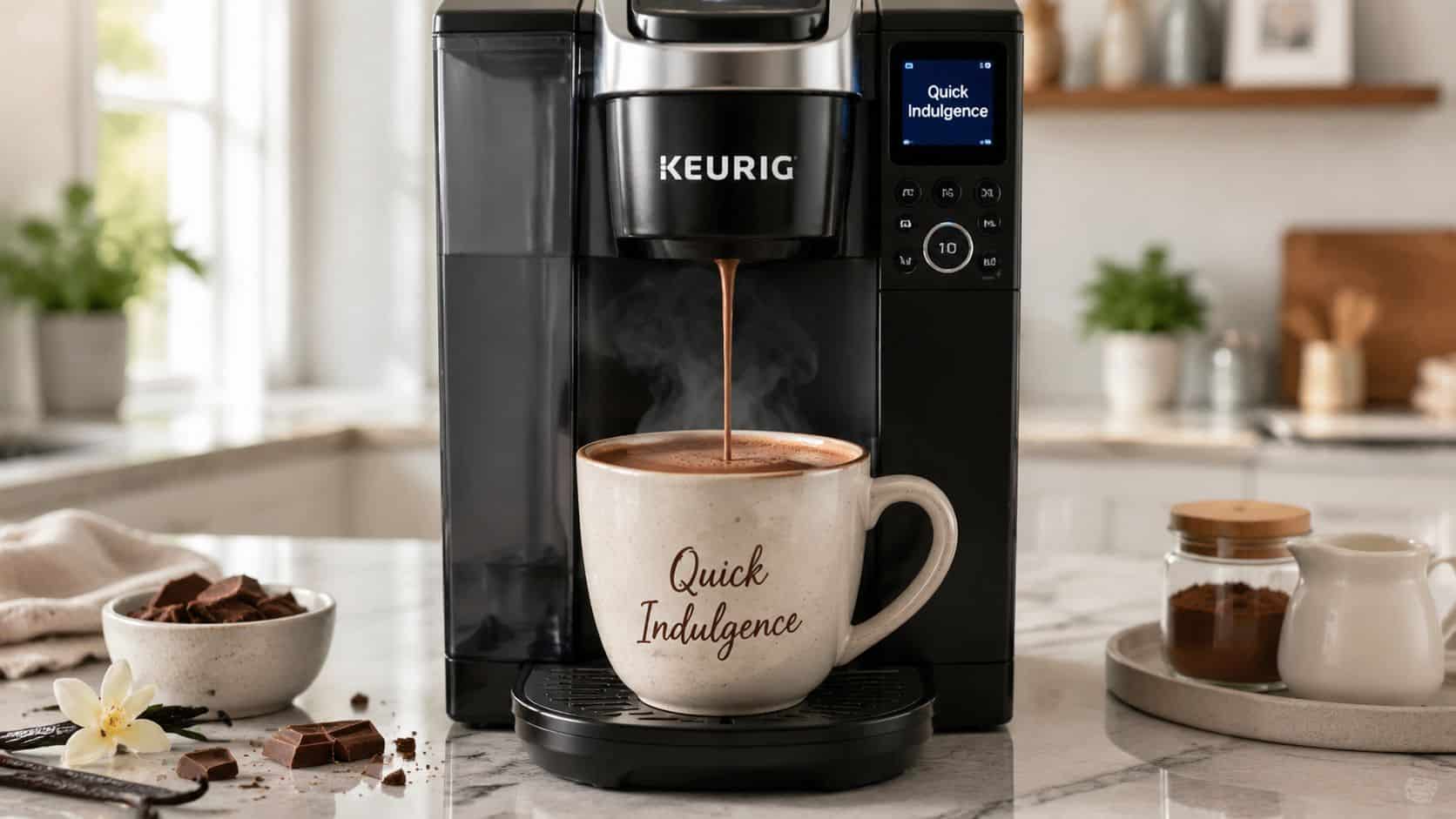
That's where a reusable K-Cup setup earns its keep. It won't mimic every detail of stovetop hot chocolate, but it can get you much closer than generic pods if you build the cup in layers and stop expecting the machine to do all the flavor work on its own.
The best way to use a Keurig for this drink
A Keurig works best here as a hot water delivery system, not as a complete hot chocolate chef. Cocoa powder can clump, and richer ingredients don't always dissolve perfectly in the pod alone. The trick is to use the machine for the brew, then finish the drink in the mug.
This is the method I recommend for speed and consistency:
- Fill a reusable pod lightly: Add unsweetened cocoa powder and a small amount of sugar. Don't pack it tightly.
- Add vanilla outside the pod: Put vanilla extract or French vanilla creamer directly into the mug so the aroma stays present.
- Use milk in the mug: Warm milk separately if you want a creamier body, then let the Keurig top it off.
- Brew a smaller cup size: Less water gives you a stronger, less washed-out base.
- Whisk or stir right away: A mini whisk or milk frother fixes texture fast.
A practical mug-first recipe
For a fast homemade cup, build the mug first, then brew into it:
- Add warm milk to your mug.
- Stir in cocoa and sugar until mostly smooth.
- Add your vanilla component.
- Brew a short cycle from the Keurig into the mug.
- Stir again until the texture evens out.
That method gives you much more control than relying on a prefilled disposable pod. If you enjoy experimenting with flavored single-serve drinks, this guide to peppermint mocha K-Cups is useful for the same reason. It shows how small changes in flavoring and brew style can make quick drinks taste less generic.
Practical rule: If your Keurig hot chocolate tastes weak, the fix usually isn't more syrup. It's less brew water and better mixing.
Two trade-offs to expect
The biggest objection to reusable pods is hassle. People assume filling and rinsing them is messy. In practice, if you keep a spoon, a small jar of cocoa mix, and a quick-rinse routine near the machine, the process feels more like making a decent drink than doing kitchen labor.
Water quality matters too. Even a good cocoa mix tastes dull if the brewing water tastes off. A fresh filter helps the chocolate taste cleaner, and regular descaling helps the machine keep brewing at the right flow and temperature. Those are maintenance details, but they show up clearly in the cup.
Customizing Your Perfect Cup
Once your base is solid, French Vanilla Hot Chocolate becomes a flexible drink. Here, you can make it lean silkier, darker, sweeter, less sweet, or more aromatic without losing the point of the drink.
The easiest mistake is changing too many things at once. Adjust one variable, taste, then decide what the next cup needs.
If you want a more luxurious texture
The richest versions usually come from real chocolate plus full-fat dairy. The technique described in Mad About Macarons' French hot chocolate recipe recommends 65 to 70% cacao dark chocolate with whole milk for a velvety, custard-like viscosity. It also points to a useful finishing move: whisking for 5+ minutes after melting creates a micro-foam that boosts body and even makes the drink taste sweeter without needing as much extra sugar.
That's a good option when your cup tastes flat rather than being bitter. More sugar isn't always the answer. Better aeration often is.
Smart ways to personalize the cup
- For extra body: Use whole milk. It stays closer to the French vanilla profile than thinner milk options.
- For a darker edge: Add a little chopped dark chocolate to a stovetop batch.
- For softer sweetness: Keep the sugar modest and let the vanilla do more of the rounding.
- For a café feel: Top with whipped cream and a dusting of cocoa.
- For a cozier finish: Add a tiny pinch of cinnamon or sea salt.
If you already enjoy vanilla-forward coffee drinks, the flavor logic is similar to what people like in vanilla latte K-Cups. The difference is that hot chocolate needs more attention to texture because cocoa is less forgiving than coffee.
What usually doesn't work
Low-fat milk often leaves the drink feeling thin. Too much vanilla can make the cup smell better than it tastes. And if you dump sweetener in before checking the texture, you can end up with a drink that's sugary but still unsatisfying.
A better cup often comes from thicker texture and stronger cocoa presence, not from piling on sweetness.
Homemade Quality vs Generic Pods and Mixes
Convenience isn't going away. It's getting bigger. The hot chocolate category was valued at about $1.4 billion in 2023 and is projected to reach roughly $2.3 billion by 2030, according to Cocoa Runners' overview of drinking chocolate history and market context. That same source ties modern demand to at-home convenience and notes the long shift from elite drink to mass-market mix.
That explains why generic pods and mixes are everywhere. It doesn't mean they're the best choice for flavor.
Where homemade pulls ahead
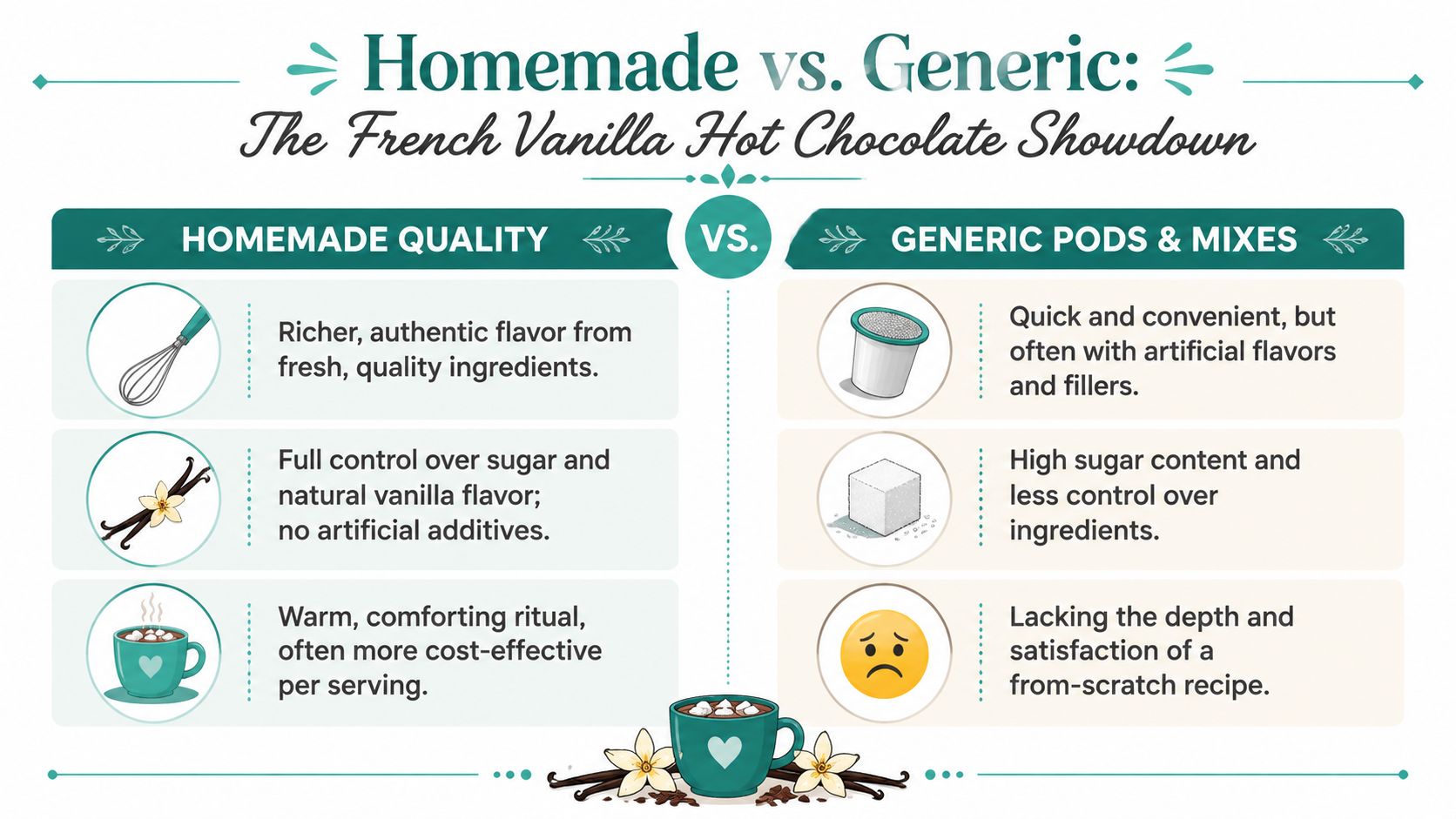
Homemade French Vanilla Hot Chocolate gives you control over the two things that matter most: texture and flavor balance. You decide how much cocoa goes in, how sweet the cup gets, and whether the vanilla tastes like custard or candy.
Disposable pods and generic mixes still win on speed. But they often lock you into someone else's ratio, and that ratio usually favors shelf stability and broad sweetness over depth.
Homemade Hot Chocolate vs Store-Bought
| Factor | Homemade (Stovetop/Reusable K-Cup) | Store-Bought (Mix/Disposable Pod) |
|---|---|---|
| Taste | Fuller chocolate flavor and better control over vanilla | Often sweeter and flatter |
| Texture | Can be creamy, thick, and tailored to preference | Usually thinner |
| Ingredient transparency | You choose the milk, cocoa, and sweetener | Limited control once purchased |
| Convenience | Stovetop takes effort, reusable pod takes a short setup | Fastest option |
| Waste | Reusable method reduces single-use waste | More packaging and pod waste |
| Flexibility | Easy to adjust sweetness and richness | Hard to customize beyond toppings |
The common objection about reusable pods
The usual pushback is simple: reusable pods seem annoying to fill and clean. Fair objection. If you hate extra steps, even good extra steps can feel like friction.
In daily use, though, the trade-off is smaller than people expect. A reusable pod takes a quick fill, a short rinse, and gives you far more say over the final drink. If you're sending a cozy gift to someone who'd appreciate the ritual more than the shortcut, curated options that send chocolate gifts across the USA can complement the homemade route nicely.
For a broader look at the practical side of this switch, this guide to reusable coffee pods is useful if you're weighing cleanup and compatibility against the benefit of controlling what goes into the cup.
Perfect Serving Storing and Simple Cleanup
Serving matters more than people think. A good mug, a spoon that reaches the bottom, and a topping that fits the drink can turn a weekday cocoa into something that feels considered.
Finishing touches that help
A richer French vanilla profile pairs well with restrained toppings. Whipped cream works. Chocolate shavings work. A light dusting of cocoa works. What usually doesn't help is piling on too many sweet toppings and burying the vanilla.
Try one finishing element, not five:
- Whipped cream: Best for stovetop versions with deeper cocoa.
- Chocolate shavings: Adds aroma without changing the drink much.
- Caramel drizzle: Use lightly so the cup still tastes like chocolate.
- Pinch of cinnamon: Good when the vanilla feels a little too soft.
Storing leftovers without ruining them
If you have extra stovetop hot chocolate, let it cool, cover it, and refrigerate it. Reheat gently in a saucepan and stir well before serving. That preserves texture better than blasting it too hard and hoping it comes back together.
Container choice affects storage convenience too. If you're deciding what type of container fits your fridge habits and cleanup routine, this article on comparing food storage options is a practical read.
Cleanup that stays easy
For saucepans, rinse soon after pouring. Cocoa residue is much easier to remove before it fully dries. For reusable pods, empty grounds or cocoa mix right away, rinse the mesh thoroughly, and let the parts dry before the next use.
That's the pattern for better homemade drinks: make a smarter cup, clean right after, and tomorrow's version feels easy instead of fussy.
Ready to upgrade your daily cup without relying on bland disposable pods? Shop PureHQ Inc. for reusable K-Cups, Keurig-compatible water filters, and cleaning essentials that help your machine brew cleaner, better-tasting coffee and hot chocolate at home.


