
Coffee Machine Care
Coffee Machine Cleaning Kit: A Complete 2026 Guide
Jun
You brew the same beans, use the same mug, and hit the same button. Yet the coffee suddenly tastes flat, bitter, or oddly stale. Many often blame the roast or the grinder first. In many kitchens, the actual problem is the machine.
A good coffee machine cleaning kit fixes a problem that builds slowly and then shows up all at once. Coffee oils cling to brew paths. Minerals from water tighten inside channels and heaters. Milk residue can dry inside steam parts. By the time you notice bad flavor or weak flow, the machine usually needs more than a quick rinse.
Why Your Morning Coffee Tastes Wrong
That disappointing first sip is frustrating because it feels random. One day your brewer tastes balanced, the next day it tastes harsh, hollow, or dirty. If you've already checked your beans and brew settings, the machine itself is the next place to look.

A lot of home brewers go down the wrong path here. They change to a darker roast, grind finer, or start comparing burr and blade performance when the actual issue is residue inside the machine. Grinder choice still matters, and this guide on understanding burr and blade grinders is useful if your grounds are inconsistent, but stale-tasting coffee often comes from buildup after the grind stage, not before it.
What usually builds up inside
Inside any frequently used coffee maker, you're dealing with a few different messes:
- Coffee oils that stick to brew chambers, showerheads, pod needles, and espresso parts
- Mineral scale from water that narrows passages and reduces heating efficiency
- Old residue in removable parts that keeps reintroducing off flavors
Retail assortments across the category show why dedicated cleaners exist in the first place. Cleaning products are routinely made for drip coffee makers, espresso machines, and single-cup brewers, which reflects the shift from occasional hand-cleaning to scheduled maintenance for machine life and beverage quality, as shown in Williams Sonoma's coffee and espresso machine cleaner assortment.
Old oils make coffee taste dirty. Scale makes machines act old before they actually are.
If your cup leans bitter, this can overlap with brew temperature, extraction, or over-concentrated coffee too. PureHQ has a useful breakdown of why coffee tastes bitter that helps separate recipe issues from machine-maintenance issues.
Why rinsing alone doesn't solve it
Water removes loose debris. It doesn't reliably cut through oily film, and it won't handle mineral scale once it has formed. That's why a proper coffee machine cleaning kit matters. It gives you the right chemistry for the actual problem instead of asking one rinse cycle to solve everything.
Decoding Your Cleaning Kit What's Inside
A lot of frustration starts with the label. “Cleaning kit” sounds simple, but the parts inside often do different jobs. If you don't know what each item is for, it's easy to use the wrong product and then assume the kit failed.
Cleaner and descaler are not the same thing
The most important distinction is this:
- Cleaning tablets or detergents remove coffee oils and brew residue
- Descaling solution or tablets remove mineral buildup from water
Those are different maintenance tasks. If your coffee tastes rancid or leaves an oily smell in the machine, detergent is the fix. If the machine runs slow, sounds strained, or shows scale-related symptoms, descaler is the fix.
A lot of buyers expect one bottle to solve flavor, hygiene, and scale at once. That mismatch is one reason the category stays confusing. PureHQ's guide to coffee machine cleaning tablets is useful here because it helps clarify what tablets are meant to clean and what they aren't.
What common kit components actually do
A practical kit may include some or all of these parts:
| Component | What it targets | Best use |
|---|---|---|
| Cleaning tablet | Coffee oils and brew residue | Brew groups, coffee paths, some auto-clean cycles |
| Descaling solution | Limescale and mineral deposits | Water tanks, internal lines, heating systems |
| Blind basket detergent | Espresso backflush cleaning | Semi-automatic espresso machines with a 3-way valve |
| Brush or small tool | Grounds and visible residue | Group heads, seals, pod holders |
| Milk system cleaner | Dried dairy residue | Steam wands and automatic milk circuits |
Where many people waste money
They buy a generic all-purpose cleaner without matching it to the machine. A drip brewer has different needs than a semi-automatic espresso machine. A single-serve pod brewer has a narrow brew path that benefits from targeted cleaning around puncture areas and pod contact points.
You can see the same principle in beverage equipment outside coffee. A product listing like the Urban Man Caves premium kegerator includes a cleaning kit because residue control and line maintenance are equipment-specific, not optional add-ons. Coffee machines work the same way. The right cleaner depends on what passes through the machine and where buildup occurs.
Practical rule: If the problem comes from beans, use a cleaner. If the problem comes from water, use a descaler. If you use milk, you may need a separate milk-system product too.
One smart preventive add-on is a water filter. A filter won't replace descaling, but it can reduce how aggressively mineral buildup starts in the first place.
How to Choose the Right Kit for Your Machine
The wrong kit usually fails for a simple reason. It solved a different problem than the one your machine has.
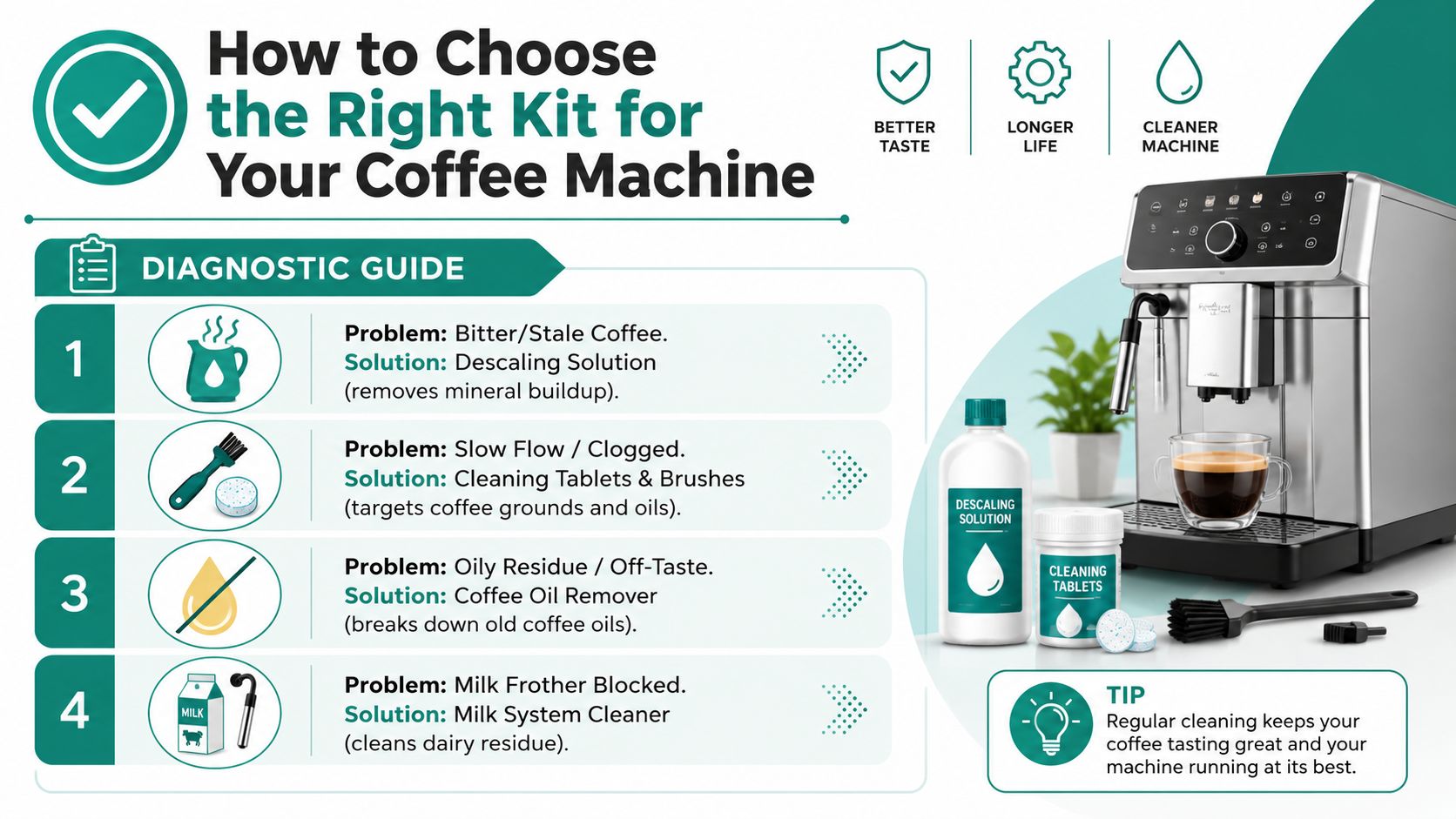
Authoritative guidance treats oil removal and descaling as separate tasks, and one of the biggest gaps for buyers is choosing between cleaning-only kits and descale-and-clean kits based on water hardness, machine type, and symptom, as explained in PureHQ's guide to espresso machine cleaning kits.
Start with the symptom, not the label
Ask what changed first.
If the coffee tastes bitter, stale, or greasy, you're often dealing with oil buildup. If the machine takes longer, dispenses unevenly, or struggles to push water through, scale is a more likely culprit. If the steam wand sputters or smells sour, milk residue may be the main issue.
Use this symptom-based shortcut:
Bitter or stale flavor
Prioritize a cleaner that targets coffee oils.Slow flow or reduced output
Prioritize descaling.Visible residue around brew parts
Use a cleaner, plus manual brushing where appropriate.Blocked milk frother
Use a milk-system cleaner made for dairy residue.
Match the kit to the machine style
A basic drip coffee maker is forgiving. It usually needs brew-basket washing, periodic oil cleanup, and regular descaling through the water path. A single-serve brewer needs attention in the pod holder and brew needle area. An espresso machine may require backflushing, group-head brushing, detergent, and descaling depending on the design.
Here's where many “universal” kits fall short. They may be universal in chemistry, but not in tools or instructions.
Semi-automatic espresso machines
These machines often need more than one product. Coffee oils collect at the group head and in the shower screen area. If the machine supports backflushing, a blind basket detergent matters. Descaling is separate and should be chosen with care, especially if your water is hard.
Super-automatic machines
These usually automate parts of cleaning, but they still need the right consumables. Tablets are often useful for brew-unit residue, while descaler handles the water system. If the machine has a milk circuit, that's another maintenance lane.
Pod and capsule brewers
These machines hide residue well. The brew path is small, so a little buildup affects taste fast. Cleaning products that target the brew chamber make more sense than a broad “kitchen descaler” approach.
Water hardness changes the answer
Soft water and hard water don't treat machines the same. If you know your water is hard, a descale-and-clean kit usually makes more sense than a cleaning-only kit. If your main complaint is taste and your water is relatively gentle, a cleaning-focused solution may solve more than you expect.
If your machine is slow, don't keep buying better beans. Fix the water-side problem first.
A useful pairing is a descaler plus replacement water filters. Filters reduce what enters the system, and descaler removes what still accumulates.
Cleaning Procedures for Popular Coffee Makers
Bad coffee in the morning usually comes from one of two places. Coffee oils have turned rancid in the brew path, or mineral scale has narrowed the water path and changed extraction. The cleaning routine should match the problem. If you use an oil cleaner for a scale problem, or descaler for oily residue, you waste time and the next cup still tastes wrong.
Manufacturer guidance often treats these as separate jobs. Caffenu's descaling and cleaning kit guidance lays out a regular tablet-cleaning schedule alongside a less frequent descaling interval. That split makes sense in real use. Coffee residue builds with every brew. Scale buildup depends more on your water.
Single-serve brewers
Single-serve machines collect a lot of trouble in a small brew path. If the coffee tastes bitter, stale, or oddly sharp, start by asking which symptom fits better. Brown film and lingering odor point to oil residue. Slow flow, sputtering, or repeated maintenance alerts point to scale.
A solid routine looks like this:
- Remove and wash detachable parts such as the drip tray and pod holder
- Use a brew-path cleaner when the issue is coffee residue around the pod area or chamber
- Run descaler through the reservoir and brew cycle when flow drops or the machine signals for maintenance
- Finish with fresh-water rinse cycles until there is no cleaner smell left
Many owners assume a descaling run cleaned the whole machine. It only addressed mineral deposits. If the machine still brews dull or leaves a stale smell, the brew chamber needs an oil-focused product. For a step-by-step reference, see this guide on how to clean a coffee maker.
Drip coffee makers
Drip machines usually give you warnings before they fail. Brew time gets longer. The basket drains unevenly. The carafe smells clean after washing, yet the coffee still tastes flat.
Start with the obvious contact points, because old residue on removable parts keeps contaminating fresh coffee.
- Wash the carafe, lid, and basket on a regular schedule
- Use a cleaning tablet or detergent if you see brown film or smell stale coffee oils
- Run a descaling cycle if the machine is brewing slowly or your tap water leaves chalky deposits elsewhere in the kitchen
- Rinse thoroughly before the next brew
Clean the parts you can touch, then treat the water path and brew path based on the symptom.
If your machine uses a water filter, replace it on schedule. It will not remove existing scale, but it can slow future buildup.
Espresso machines
Espresso machines show neglect faster than most brewers. A dirty group head changes flavor fast. Scale inside the boiler or thermoblock can cut flow, reduce temperature stability, and make the pump sound strained.
For semi-automatic machines, split the routine by residue type:
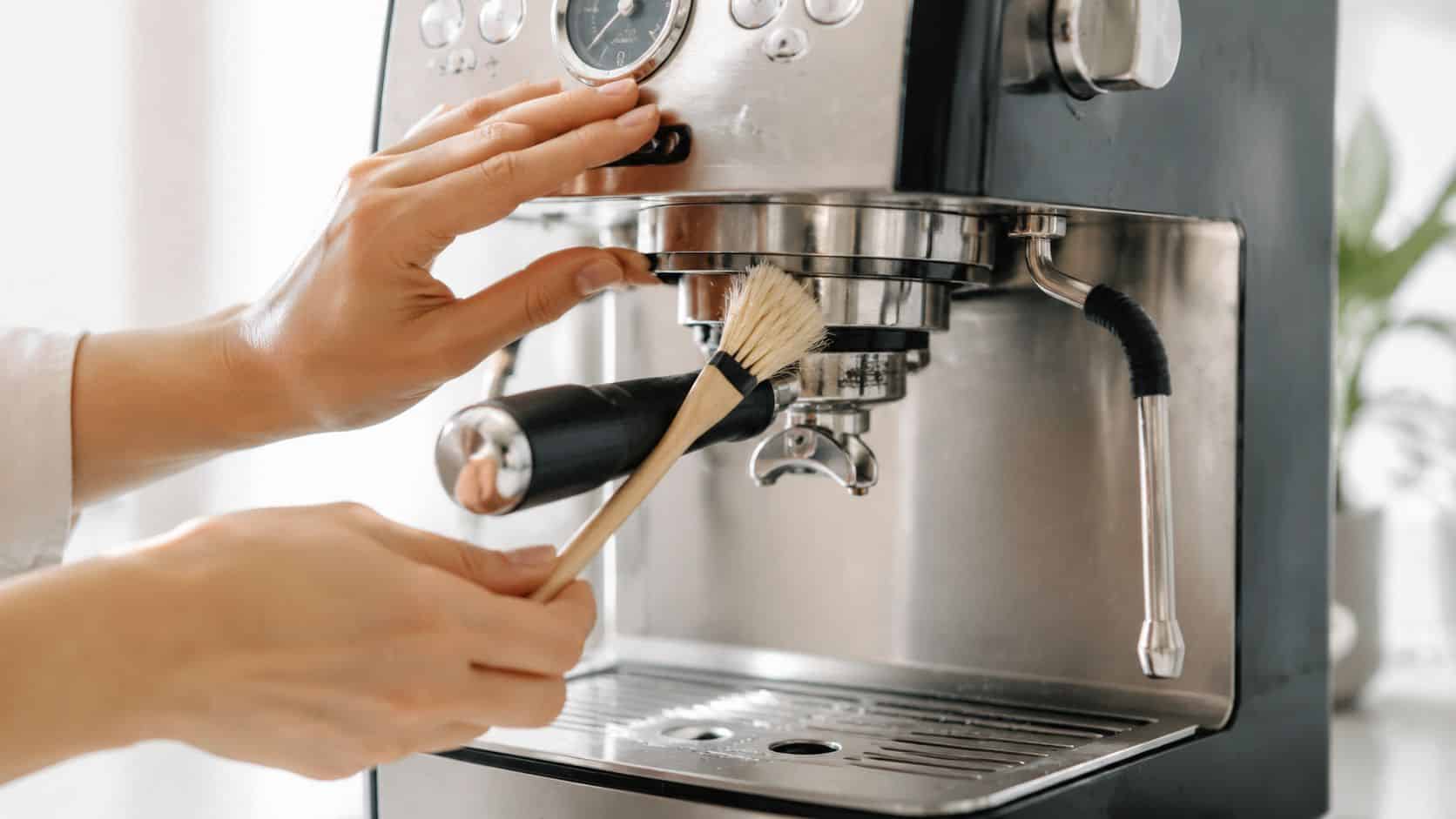
- Brush the group head after brewing to remove trapped grounds
- Use the proper detergent with a blind basket if the machine supports backflushing
- Wipe and purge the steam wand after every milk drink
- Descale with a product that suits the machine's materials and the manufacturer's guidance
This video is a useful visual reference for the process and rhythm of maintenance:
Super-automatic machines follow the same logic, even if the screen walks you through the steps. Use the machine's cleaning cycle for brew-unit residue. Use descaling when the water system needs it. If milk drinks are part of your routine, clean that circuit separately and often.
What doesn't work well
A few shortcuts cause repeat problems:
- Using only hot water for oily residue
- Using only descaler when old coffee buildup is causing bitterness
- Skipping rinse cycles after treatment
- Using a harsh generic chemical without checking compatibility with seals, valves, and internal metals
What matters is not the brand name, but whether the kit matches your machine and the problem you're fixing. Choose by symptom first, then by machine type. That approach saves the most frustration.
PureHQ Kits Versus Generic Alternatives
Generic kits look appealing because the packaging often promises universal compatibility. Sometimes they work fine. Sometimes they solve only half the problem. The difference usually shows up in clarity, fit, and confidence.
The real trade-off
The cheap option can be enough for a simple drip machine with light use. It becomes riskier when you're maintaining a more expensive brewer, especially an espresso machine or a single-serve system with small internal passages.
The usual objections are fair:
- Will it fit or work correctly with my machine?
- Will it leave residue or odor?
- Is the formula too harsh for seals or internal parts?
- Are the instructions clear enough to avoid mistakes?
Those concerns matter more than the label “universal.”
PureHQ vs Generic Cleaning Kits
| Feature | PureHQ Cleaning & Descaling Kit | Generic Marketplace Alternative |
|---|---|---|
| Problem coverage | Typically positioned as a combined maintenance option for scale and coffee residue across common home machine categories | Often varies by listing, and some products lean heavily toward only descaling or only surface cleaning |
| Compatibility focus | Designed around compatibility with common home brewing systems and supported by brand-specific accessory knowledge | Often marketed as universal, but machine-specific guidance may be limited |
| Instruction clarity | Usually paired with a dedicated brand support ecosystem and educational content | Instructions can be brief, inconsistent, or copied across multiple machine types |
| Quality consistency | More likely to come from a brand that oversees a defined accessory lineup | Can vary widely between sellers and batches |
| Buyer confidence | Better fit for shoppers who want one source for filters, pods, descalers, and maintenance items | Better fit for bargain-first shoppers willing to do more compatibility checking |
When generic is fine and when it isn't
Generic is often acceptable when the machine is basic, the chemistry is clearly labeled for the task, and you understand exactly what you're buying.
Generic becomes less attractive when:
- You own a higher-end machine and don't want to guess
- You need multiple maintenance products, not just one
- You want instructions that map to real home-use scenarios
- You care about buying filters and maintenance items from the same ecosystem
The lower-priced kit isn't always cheaper if it misses the actual problem and forces you to buy a second product.
If your objection is compatibility, that's the right objection to have. A cleaner that works in one machine category may be incomplete for another. The safer move is to buy based on machine design and symptom, not just package claims.
Troubleshooting and Your Next Steps
You finish the cleaning cycle, brew a cup, and the result still isn't right. That doesn't always mean the kit failed. It often means the machine had more than one type of buildup, or some residue still needs to flush out.
Common post-cleaning issues
A few problems show up often after maintenance:
The first cup still tastes odd
Run additional fresh-water cycles. Residual cleaner or loosened debris may still be in the system.Small flakes appear in water or the reservoir
That can happen when descaling loosens mineral deposits. Rinse removable parts and flush the machine again.Flow improves only a little
The machine may need a second treatment if buildup was heavy, or the issue may be a blocked brew component rather than scale alone.Milk texture is still poor
Check the steam wand or milk circuit separately. Coffee cleaners and descalers don't automatically solve dairy residue.
A better long-term routine
The easiest way to avoid deep-clean frustration is to stop treating maintenance as a rescue job. Treat it like normal ownership. Clean visible parts often. Use an oil-focused cleaner when flavor goes stale. Descale based on your water and machine behavior. Replace filters if your setup uses them.
That saves more than taste. It saves time, cuts down on troubleshooting, and lowers the odds that a good machine starts acting worn out long before it should.
If your coffee tastes wrong, don't guess. Diagnose the symptom, choose the right chemistry, and clean the right path.
A coffee machine cleaning kit is worth buying when it helps you solve the actual cause. Not all bad coffee comes from bad beans, and not all machine cleaners do the same job.
If your brewer is running slow, tasting bitter, or showing clear signs of buildup, shop maintenance products from PureHQ Inc. and choose the cleaner, descaler, or filter setup that matches your machine and water conditions.

