
Coffee Machine Care
Choosing Organic Coffee Filters: A 2026 Guide
Jun
You're standing in front of a shelf full of coffee filters, trying to buy the “better” option. One box says bleached. Another says unbleached. A third says organic, often with a higher price and greener packaging. If you brew every morning, that choice can feel bigger than it should. You want clean-tasting coffee, less waste, and something that fits your brewer without turning a simple cup into a research project.
That confusion is reasonable. Filter brands often sell a feeling first and useful information second. Most shoppers don't need another vague promise about purity or sustainability. They need to know what changes in the cup, what changes in cleanup, and what turns into a hassle after a week of use.
The Hidden Questions in the Coffee Filter Aisle
A lot of people start with the same assumption. If a filter says organic, it must be healthier, cleaner, and better for the planet than the regular brown paper filters next to it.
Sometimes that's partly true. Sometimes it's mostly branding.
A significant problem is that coffee filter packaging rarely answers the questions people frequently ask at home. Will this affect flavor? Will it fit my brewer? Will it fall apart? If it's reusable, am I signing up for another thing to wash and dry every day?
What buyers usually mean when they ask for organic
When someone says they want organic coffee filters, they're usually trying to solve one of these problems:
- They want fewer chemicals involved in the part of brewing that hot water passes through.
- They want less waste than tossing a paper filter every morning.
- They want a cleaner cup with less grit and less oil.
- They want an easy routine that doesn't add maintenance before work.
Those goals don't always point to the same product.
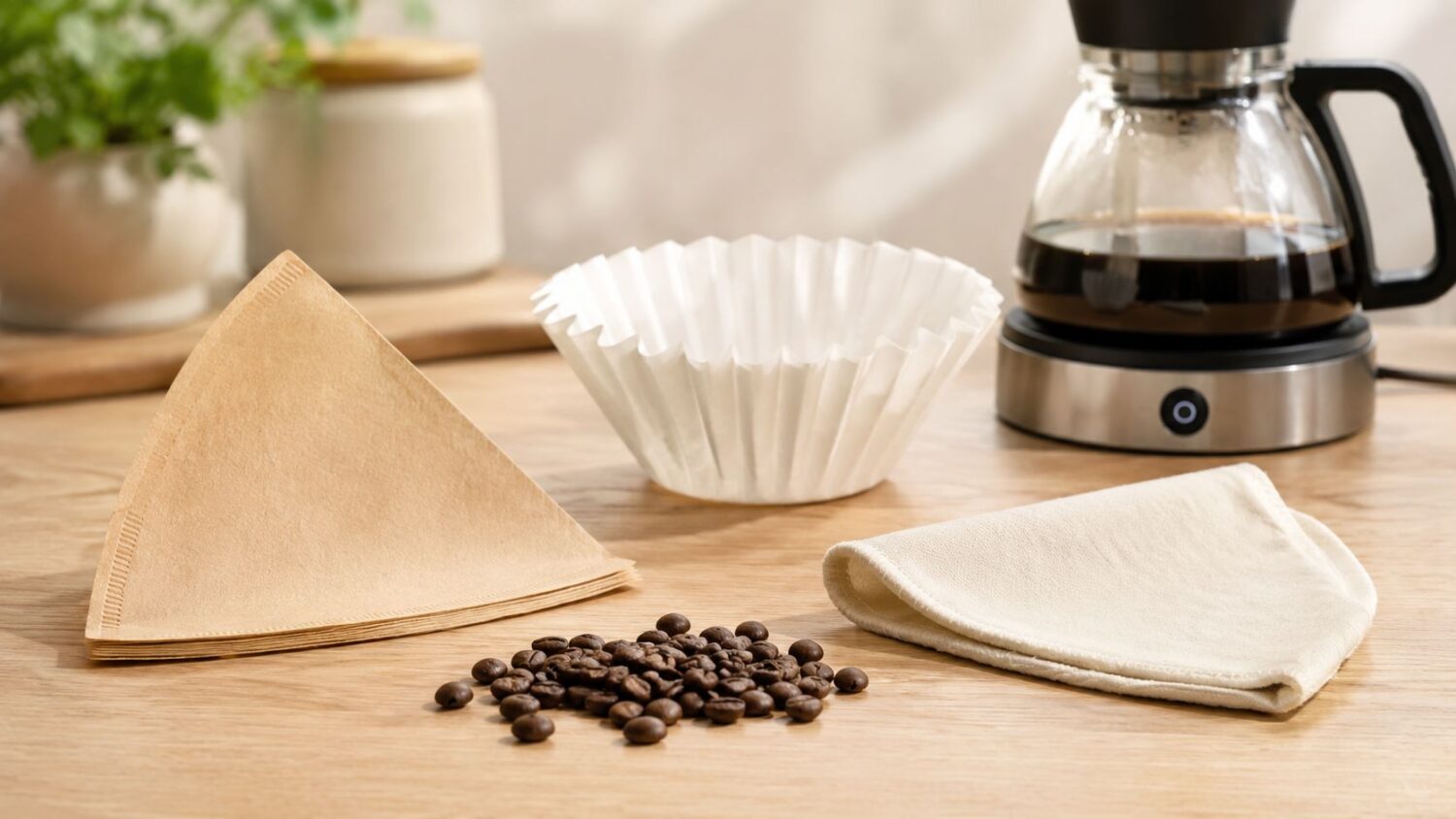
A disposable unbleached paper filter might be the easiest low-fuss option. A reusable organic cloth filter might reduce throwaway waste, but it also asks more from you. A premium organic paper filter might feel like the safest middle ground, yet in practice the biggest difference may come from how the filter was bleached, or whether it was bleached at all, rather than the word organic on the box.
Most bad filter purchases happen because people buy the label they like, not the filter that matches how they actually brew.
Why the wrong choice gets annoying fast
The downside isn't dramatic. It's daily.
You taste paper flavor because you skipped rinsing a thick paper filter. You get sediment because your reusable cloth filter flows differently than your old paper one. You buy a cone size that almost fits, then wonder why the brew drains unevenly. Or you stop using a reusable cloth filter entirely because it stays damp on the counter and starts to smell off.
That's why the best filter isn't the most virtuous one on paper. It's the one you'll use consistently, clean properly, and trust in your own brewer.
Decoding the Organic Label on Coffee Filters
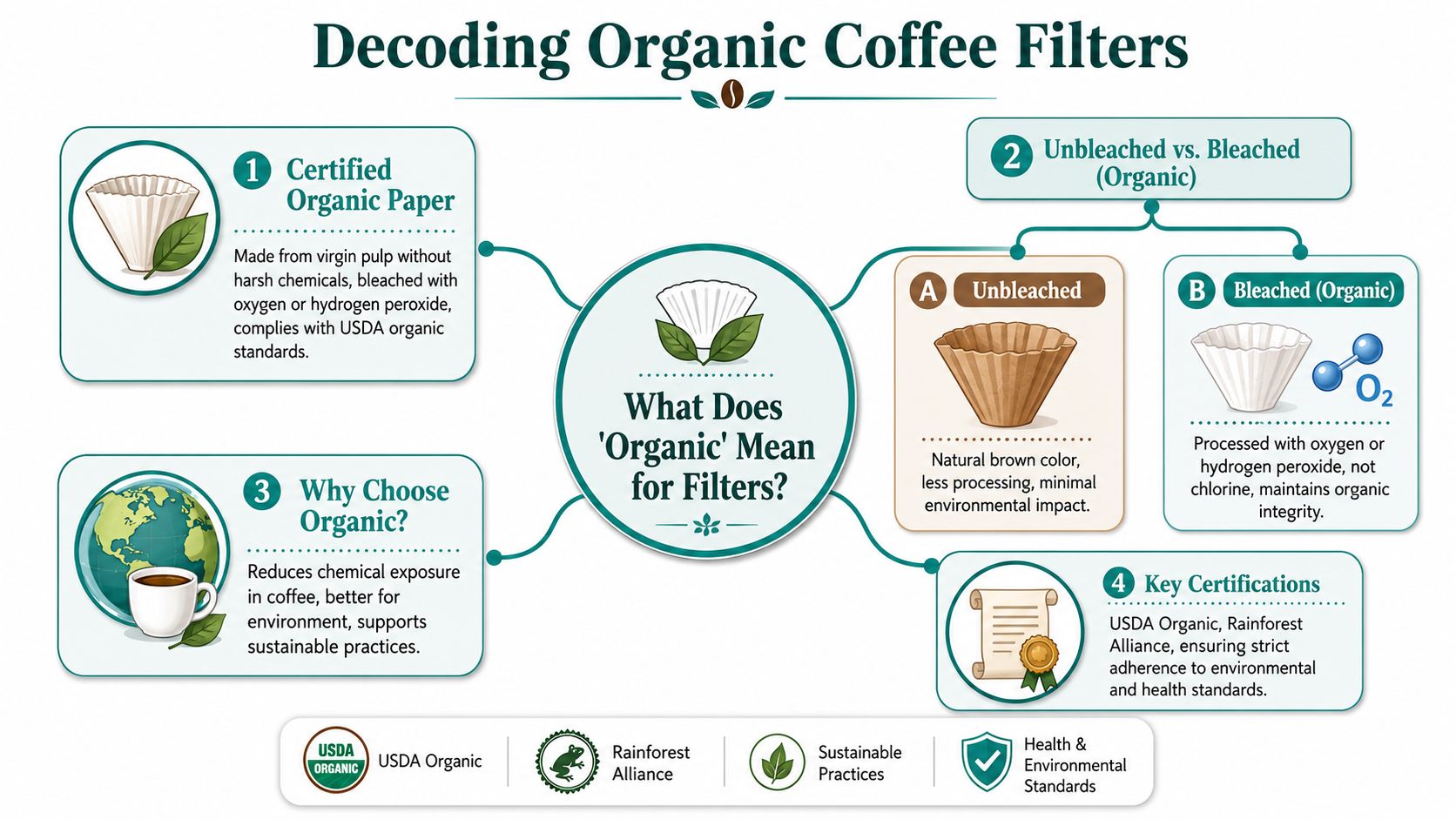
Organic can mean different things depending on the filter type. With paper filters, it usually points to the source and processing of the pulp. With cloth filters, it usually refers to the fabric itself, such as organic cotton or organic linen.
That distinction matters because the brewing job stays mostly the same. The sourcing story changes more than the filtration science.
What organic changes and what it doesn't
It's similar to produce. Organic tells you something about how the raw material was grown or processed. It doesn't automatically mean the final product performs differently in every practical way.
For coffee filters, “organic” usually does not mean a radically different extraction method. Standard paper filters and organic paper filters still work on the same baseline principle. Paper coffee filters remove oily compounds called diterpenes, including cafestol and kahweol, and typical paper filter structure is around 100 g/m² with pores that allow particles through only below roughly 10 to 15 micrometres. That's why paper-filtered coffee tends to taste cleaner and carry less sediment than coffee brewed through mesh-style filters.
The two main categories
A straightforward way to consider this is:
- Organic paper filters are disposable. Their appeal is usually material sourcing and lower concern about processing inputs.
- Organic cloth filters are reusable. Their appeal is lower throwaway waste, but they need routine care.
- Unbleached paper filters often sit in the middle. They may not carry an organic claim, but many buyers choose them because they're simple, compostable, and easy to use.
If you care about low-intervention materials beyond coffee, the same question shows up in tea as well. The discussion around Jeeves & Jericho organic teas is useful because it highlights a similar buyer concern: people often want cleaner materials in contact with hot water, not just a nicer marketing word.
The label that gets too much attention
The word organic often grabs more attention than the factors that change daily use. In real kitchens, buyers usually notice these differences first:
- Bleaching method
- Flavor clarity
- Cleanup
- Compostability or reusability
- How well the filter holds up in the brewer
Practical rule: Organic tells you more about material sourcing. It doesn't guarantee a better cup than a well-made unbleached paper filter that fits your brewer properly.
That's why “organic” should be one input in your decision, not the whole decision.
Organic Paper vs Reusable Cloth A Practical Comparison
If you strip away the packaging language, the comparison becomes simpler. You're usually choosing between easy cleanup and repeat use, between a cleaner paper-filtered profile and a fuller cloth-filtered profile, and between throwing something away now or taking on maintenance later.
One of the most useful points from public guidance is that the biggest practical difference often comes from bleaching method and reusability, not from the organic claim alone. Guidance on pour-over paper choices often frames the primary decision around chlorine-bleached, oxygen-bleached, unbleached, and reusable cloth options, while also noting that reusable cloth needs care such as boiling and proper drying to prevent spoilage, as explained in this discussion of paper filter choices for pour-over coffee.
Coffee Filter Comparison Paper vs Reusable Cloth
| Feature | Standard Unbleached Paper | Organic Paper (Disposable) | Organic Cloth (Reusable) |
|---|---|---|---|
| Flavor Impact | Usually clean, light body, low sediment | Similar clean cup when well made | Often allows more body and some extra fines compared with paper |
| Upfront and Long-Term Cost | Low upfront, ongoing repeat purchase | Higher upfront than standard paper, ongoing repeat purchase | Higher upfront, spread across repeated use if maintained well |
| Daily Convenience | Very easy, use and discard | Very easy, use and discard | Less convenient, needs rinsing and drying |
| Environmental Footprint | Disposable, but commonly chosen for compostability and simple disposal | Disposable, with appeal tied to material sourcing | Lower throwaway waste if you keep using it and care for it properly |
| Required Maintenance | Minimal | Minimal | Highest maintenance of the three |
What works well in real use
Standard unbleached paper works well for people who want the least friction. It's easy to store, easy to toss into compost where appropriate, and easy to replace. If your priority is convenience with a lower-processing feel than bright white filters, it's a strong default.
Organic paper makes sense for buyers who want that same disposable convenience but prefer the sourcing story and material positioning. The trade-off is that some shoppers pay more without noticing a meaningful difference in the cup compared with a solid unbleached paper filter.
Reusable organic cloth is the most appealing in theory for low-waste brewing, but it's also the easiest to abandon. It can be excellent for people who enjoy hands-on coffee routines and don't mind cleaning gear. It's a poor fit for anyone who already knows they'll forget to rinse and dry it right away.
The safer or cleaner question
People often overestimate the label.
If you're trying to avoid the options that raise the most concern, the practical conversation usually centers on chlorine bleaching versus oxygen bleaching or unbleached paper, not on organic certification alone. If you're trying to reduce trash, reusability matters more than the package language. If you care about taste, your brewer and your workflow matter just as much as the material.
Matching the Right Filter to Your Coffee Maker
A filter can be high quality and still brew badly if it doesn't fit your machine. This is one of the most common causes of weak coffee, overflow, or stray grounds in the cup.
Independent brewing guidance makes this point clearly. The filter's shape and size need to match the brewer, and using a #2 cone filter in a #4 dripper can cause bypass and a weak, under-extracted cup. That same fit issue applies whether you're using paper, cloth, or a reusable basket.
For cone drippers and standard drip machines
If you brew with a classic pour-over or drip machine, start with the brewer's required shape.
- Cone brewers need the correct cone size, such as #1, #2, #4, or #6.
- Basket brewers need basket-style filters, not cones pressed into place.
- Reusable cloth versions should match the exact brewer shape just as closely as paper does.
A near fit isn't good enough. Water follows the path of least resistance. If the filter collapses, gaps, or sits too low, water can run around the grounds instead of through them.
For a quick refresher on size matching, this guide to coffee maker cone filter sizing is useful when you're checking whether your current filter shape is the source of inconsistent brews.
For Keurig users with reusable pods
Keurig owners have a slightly different decision. Many people want less waste than single-use pods but still prefer the cleaner profile that paper gives. A practical middle ground is using a paper liner inside a reusable pod.
That setup can help in a few ways:
- Cleaner cleanup because the grounds lift out more easily
- Less sediment than brewing straight through some reusable mesh pods
- Lower waste than fully disposable pod brewing, while keeping the convenience of pre-measured grounds
It also helps to remember that filter choice isn't the whole taste equation. Scale buildup changes flavor and flow too. If your coffee starts tasting dull or your machine runs inconsistently, descaling and routine cleaning matter just as much as swapping filters.
A short visual walkthrough helps if you're troubleshooting fit and pod setup:
The leak and overflow objection
People often blame the filter when the underlying issue is a mismatch between grind size, fill level, and fit.
If your filter overflows, check three things before blaming the material: brewer size, filter shape, and whether you've overfilled the coffee bed.
Cloth and paper can both fail in the wrong setup. The right filter is the one designed for your brewer, seated correctly, and used within the coffee dose that machine can handle.
How to Clean and Compost Your Coffee Filters
Eco-friendly filters only stay eco-friendly if you handle them well after brewing. Reusable cloth filters lose their appeal fast when they pick up stale oils, dry unevenly, or develop off smells. Paper filters lose some of their appeal if they end up treated like mixed trash when they could have been composted.
The good news is that the routine is simple once you separate reusable care from disposable disposal.
Cleaning reusable cloth filters
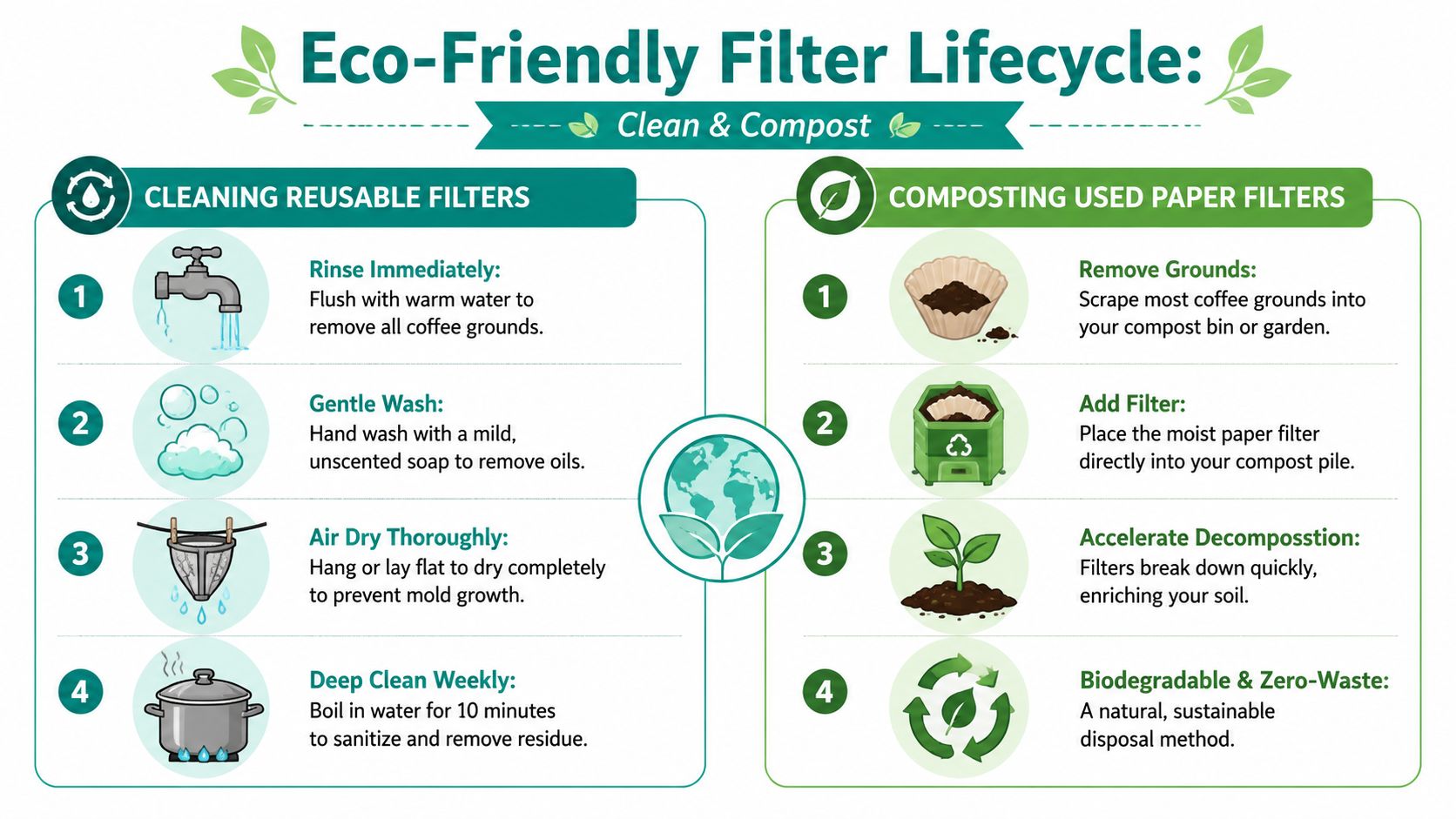
Guidance for reusable linen and cotton filters emphasizes the same basic routine. Rinse after each use, dry thoroughly to prevent spoilage, and deep clean periodically to avoid changes in extraction speed or taste.
A workable cloth-filter routine looks like this:
- Rinse right away while the grounds are still soft and easy to remove.
- Flush with warm water until you don't see coffee residue clinging to the fabric.
- Dry completely before storage. Damp folded cloth is where trouble starts.
- Deep clean regularly if you notice slower drawdown, heavier coffee oils, or a stale smell.
If you know you rush out the door after brewing, be honest with yourself. Cloth filters reward consistent care. They punish neglect.
Composting paper filters
Paper filters are easier. If you use unbleached or similar disposable paper options, many coffee drinkers pair them with grounds for composting as part of a lower-waste routine.
This article on how to compost coffee grounds gives practical context for handling the spent grounds that come out with the filter. Keeping those materials together usually makes cleanup simpler than separating them.
Here's the most practical way to handle paper filters:
- Let them cool first so cleanup stays tidy and safe.
- Move grounds and filter together when possible instead of dumping grounds separately.
- Avoid letting used filters sit wet indoors too long because old coffee odor builds quickly.
- Choose paper when convenience matters most and cloth maintenance doesn't fit your routine.
A reusable filter only reduces waste if you keep using it. A compostable paper filter only feels convenient if disposal stays easy.
The maintenance trade-off most people underestimate
The hardest part of cloth isn't the brewing. It's the boring middle step after brewing, every single time.
If you enjoy ritual, that's fine. If coffee needs to be fast on workdays, paper often wins because it asks almost nothing from you after the cup is made.
Choosing the Best Eco-Friendly Filter for You
The best choice usually becomes obvious when you stop asking which filter is most virtuous and start asking which one fits your mornings.
If you want the cleanest workflow, disposable paper is still hard to beat. If you want less trash and don't mind upkeep, reusable cloth can make sense. If you want a middle path, choose the option that gives you dependable brewing without turning cleanup into another chore.
A simple decision guide
Choose based on your real habits, not your ideal habits.
- Pick unbleached paper if you want a straightforward, lower-fuss option that's easy to use and easy to discard responsibly.
- Pick organic paper if material sourcing matters to you and you still want paper convenience.
- Pick organic cloth if you're committed to rinsing, drying, and deep cleaning on schedule.
- Pick a paper-lined reusable pod setup if you use a Keurig and want cleaner brewing with less mess than many mesh-only setups.
Where the market is moving
This isn't a tiny fringe category anymore. The broader coffee filter paper market was valued at USD 2.2 billion in 2026 and is projected to reach USD 3.8 billion by 2036, with the U.S. projected to grow at 5.6% CAGR from 2026 to 2036. The same market outlook projects bleached filter paper at 52% of the market in 2026, which tells you many buyers still choose conventional options even as interest in alternatives grows.
That matters for one reason. You have more choices now, but the better choice still comes down to fit, flavor, and maintenance, not trend language.
The most balanced answer for everyday brewing
For most home brewers and small offices, the smartest setup isn't extreme. It's practical.
Use a reusable system where it makes sense. Add paper where it improves cleanup or cup clarity. Keep your brewer clean so the filter can do its job properly. If you're trying to cut waste without adding friction, that's usually a better long-term strategy than chasing the most aggressively marketed eco label.
For a broader look at the logic behind reusable brewing, this piece on sustainable reusable coffee filters is a helpful companion if you're weighing convenience against lower waste.
The short version is simple. Buy the filter you'll use well. A great morning cup depends more on consistency than on packaging claims.
If you want a cleaner, lower-waste brewing setup without making your routine harder, shop PureHQ Inc. for reusable K-Cups, paper liners, and coffee machine accessories built for daily use. Their lineup makes it easier to balance taste, cleanup, and compatibility across Keurig and other home brewing systems.

