
Coffee Machine Care
What Is a Gold Tone Coffee Filter? Your 2026 Guide
Jun
A gold tone coffee filter is a reusable, permanent filter made of fine stainless-steel mesh designed to allow more natural coffee oils into your cup for a richer, fuller-bodied flavor. In practical terms, one reusable filter can replace roughly 300 paper filters a year and avoid the waste from about 30 boxes over 10 years.
That simple swap changes more than cleanup. It changes taste, daily routine, and the long-term cost of brewing at home. If you use a drip machine, a Keurig K-Duo, or another brewer that accepts a permanent basket, the filter isn't just a small accessory. It directly affects body, sediment, maintenance, and even whether your coffee tastes a little flat or pleasantly rounded.
Many often start with paper because that's what came with the machine. Then the annoyances stack up. You keep buying filters. You keep throwing them away. And if you like a richer cup, paper often strips out part of what you wanted to taste in the first place.
The Hidden Cost of Your Daily Paper Filter
A paper filter costs very little on its own. The expense shows up in repetition, restocking, and the fact that you keep buying the same disposable part for years.
Capresso notes that a household brewing coffee most days may use about three 100-count boxes of paper filters per year, which means one reusable gold filter can replace roughly 300 paper filters annually and avoid the manufacture and shipment of about 30 boxes over a conservative 10-year lifespan.
That matters in real ownership terms. Paper adds a small recurring cost, a small recurring errand, and a small recurring pile of waste. None of those feels serious on one morning. Over months and years, they become part of the price of brewing at home.
Taste is part of that cost too.
Paper filters catch fine particles well, and many people like the cleaner cup that comes with that. They also absorb a share of the coffee's natural oils, which can leave the brew a little lighter in body. For some drinkers that is a benefit. For others, especially anyone trying to get more depth out of a standard drip machine or a Keurig K-Duo permanent basket, it can make the coffee feel flatter than the beans deserve.
Paper solves cleanliness, but adds recurring friction
Daily use makes the trade-off obvious:
- You have to keep buying filters. Running out usually happens right before the first cup, not when it is convenient.
- You throw away part of your brew setup every day. That waste feels minor until you look at the habit over a full year.
- You get a cleaner cup, but often less body. That is a real sensory trade-off, not just a preference on paper.
A reusable metal filter changes the routine. You buy it once, rinse it after brewing, and accept the cleanup that comes with keeping more oils and a little more sediment in the cup.
That last point gets ignored too often. Those oils carry flavor and body, which is one reason many coffee drinkers prefer metal filters. Some people also choose paper specifically because it traps more of those oils. If you are comparing filters for health reasons as well as taste, that trade-off belongs in the decision, not in the fine print after you buy.
For a closer look at the waste, cost, and flavor trade-offs, PureHQ has a useful comparison of reusable coffee filter vs paper.
What a Gold Tone Filter Is Actually Made Of
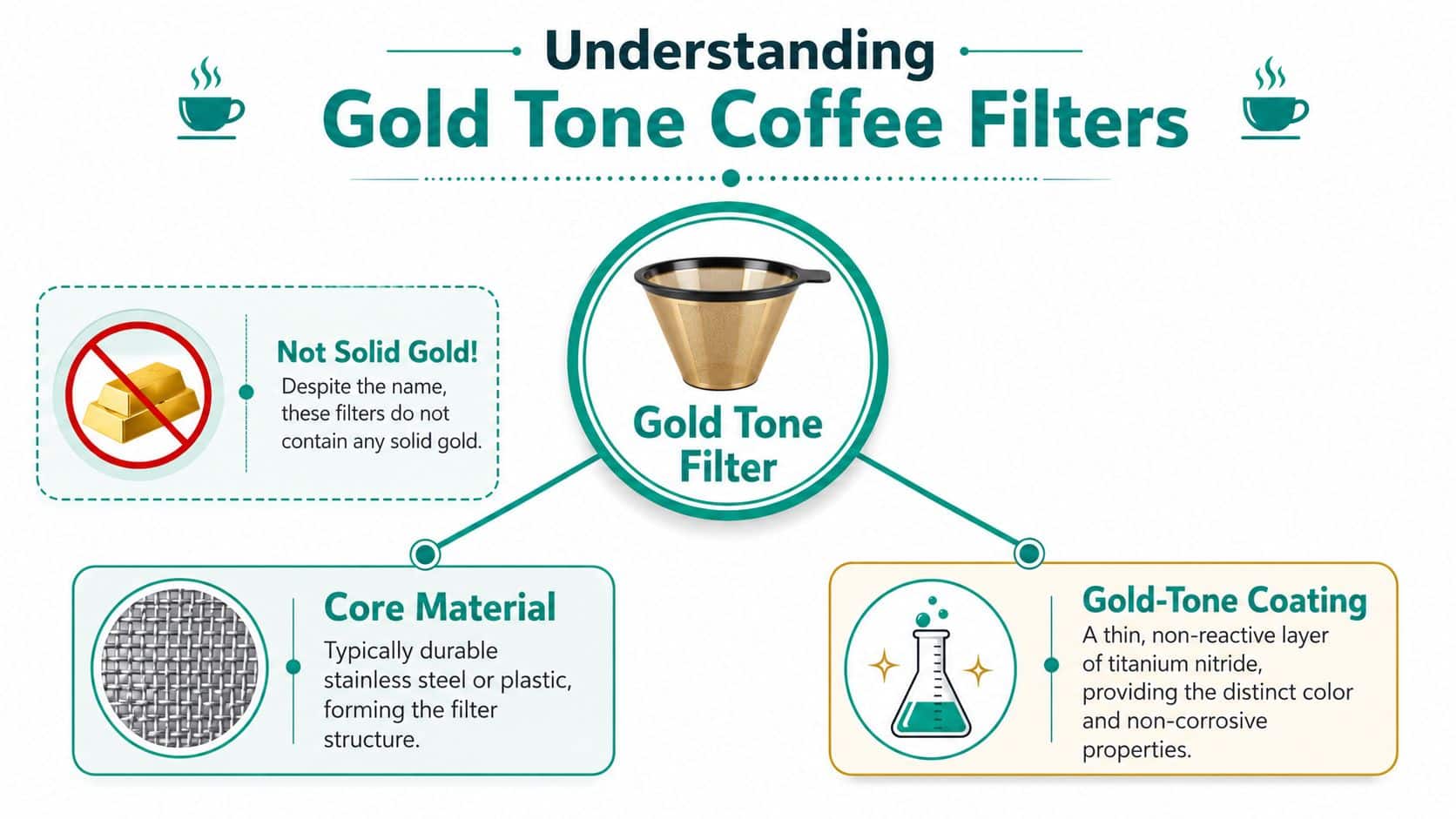
The name confuses a lot of buyers. A gold tone filter usually isn't made of solid gold.
AeroPress product guidance describes this category as generally gold-plated or gold-tone stainless steel, and it also states that you should use either a paper filter or the gold tone permanent filter, but not both together. They're alternatives, not a stacked system.
What the filter is made to do
In most home brewers, a gold tone filter has three practical parts:
- A fine metal mesh that separates grounds from liquid coffee
- A rigid frame that helps the filter keep its shape during brewing
- A tab or handle that makes removal easier when the basket is hot
The “gold” part usually refers to the finish, coating, or tone of the metal, not to a precious-metal brewing surface. What matters in use is the mesh quality, how evenly it's made, and whether the basket fits your machine correctly.
Why material matters in everyday brewing
A flimsy mesh filter can warp, leak fines, or sit badly in the brew basket. A better-made stainless steel filter stays stable, cleans up more easily, and holds its shape after repeated rinsing and dishwasher cycles if the manufacturer allows it.
That's also why combining paper and metal usually doesn't make sense. The machine is designed for one filtration method at a time. Adding both can restrict flow, change extraction, and create the kind of messy overflow people often blame on the wrong thing.
Gold tone doesn't mean luxury for its own sake. It usually signals a reusable metal filter built for repeated contact with hot coffee and daily cleanup.
If you're asking what is a gold tone coffee filter in the simplest possible terms, it's a reusable metal brewing filter that replaces disposable paper and changes the cup profile by letting more oils pass through.
How Metal Mesh Unlocks a Richer Coffee Flavor
The fastest way to understand the taste difference is this. Paper absorbs. Metal strains.
A paper filter acts a bit like a paper towel. It catches grounds, but it also absorbs oils. A metal mesh filter works more like a screen. It blocks the larger particles while letting more of the coffee's oils move into the carafe or mug.
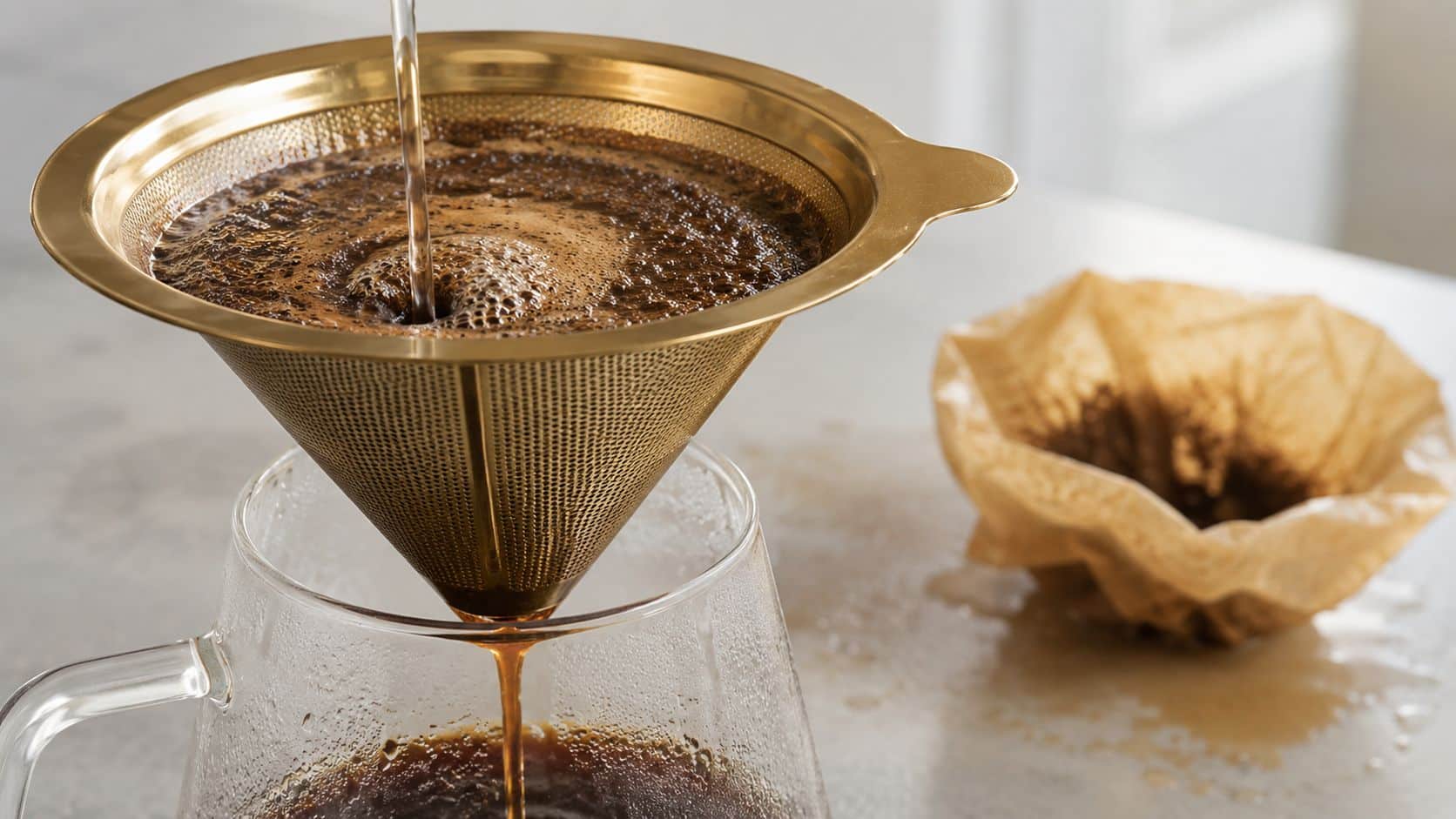
AeroPress describes premium gold-tone filters as premium-grade 316 stainless steel with a super-fine filtration design that lets more coffee oils pass through while still blocking grit. That mechanism is the reason metal-filtered coffee is often described as fuller-bodied.
What you'll notice in the cup
If you brew the same coffee with paper and then with a gold tone filter, the differences usually show up in three places:
- Body gets heavier. The coffee feels thicker on the tongue.
- Aroma can seem more present because more of the coffee's natural compounds remain in the brew.
- Sediment may increase slightly, especially near the bottom of the cup.
That last point matters. A gold tone filter doesn't create a dirty cup if it's made well and used with the right grind. But it also won't produce the same ultra-clean finish as paper.
What works and what doesn't
Gold tone filters work well when you want more character from everyday drip coffee. They're especially useful with medium grinds and brewers that otherwise produce a somewhat thin cup.
They work less well if you insist on a paper-clean profile or if you grind too fine. Fine grinds can push more sediment through the mesh and can also slow the brew down.
A metal filter can improve flavor, but it won't rescue stale beans or a bad grind. It reveals your coffee more honestly.
In practice, that honesty is part of the appeal. With a gold tone filter, more of the bean reaches the cup. If you buy good coffee, that's usually a win.
Gold Tone vs Paper and Cloth Filters Compared
Filter choice changes more than flavor. It affects what ends up in the cup, how much cleanup you accept, and what the brewer costs to run over time.
Paper still makes the cleanest cup of the three. It also traps more of the oils that give coffee weight and aroma. That matters for taste, and it matters for drinkers who prefer to limit those oils for health reasons. Gold tone keeps more of them in the brew. Cloth usually lands in the middle, though the result depends heavily on how well the cloth is washed and stored.
Filter Comparison Gold Tone vs. Paper vs. Cloth
| Feature | Gold-Tone Filter | Paper Filter | Cloth Filter |
|---|---|---|---|
| Flavor profile | Heavier body, more oils, more texture | Cleaner cup, clearer notes, lighter body | Rounded cup with good body and less grit than metal |
| Sediment level | Low to moderate, depending on grind and mesh quality | Very low | Low to moderate |
| Ongoing cost | One-time purchase, then years of use if maintained | Repeating cost with every brew | Reusable, but shorter lifespan than metal in many kitchens |
| Daily effort | Empty, rinse, and deep-clean occasionally | Easiest, discard and replace | Highest maintenance, needs careful washing and drying |
| Health trade-off | More oils remain in the cup | Removes more oils than metal | Sits between paper and metal |
| Best fit | Daily drinkers who want fuller flavor and lower long-term filter spend | Drinkers who value clarity, convenience, and the least sediment | Enthusiasts willing to maintain the filter closely |
The practical split is simple. Gold tone usually wins on body and long-term value. Paper wins on clarity and convenience. Cloth can make excellent coffee, but in a busy home kitchen it often loses on upkeep.
That upkeep is not a small detail. Cloth filters can hold onto oils and odors fast, and once that happens, the cup starts tasting stale even with fresh beans. Paper avoids that problem, but you keep buying boxes of filters. If you brew every day on a machine like the Keurig K-Duo, a reusable metal basket often feels better over months of use than it does on day one.
Sediment is a key trade-off with gold tone. Some drinkers barely notice it. Others dislike any trace of fines at the bottom of the mug. Grind size and brewer fit matter here. A well-matched filter in a popular drip machine will usually give a clean enough cup for everyday brewing, but it will not mimic the polished finish of paper.
Waste is part of the ownership decision too. Paper can be a reasonable choice if you prioritize a bright, tidy cup, and broader low-waste habits in coffee now include areas like NZ sustainable coffee packaging. But if you want to cut recurring filter purchases without giving up drip convenience, metal is often the more practical upgrade.
If you want another side-by-side look at daily use, flavor, and replacement costs, this guide on reusable coffee filter vs paper is a useful comparison.
Cleaning and Maintaining Your Reusable Filter
The biggest reason people give up on reusable filters isn't taste. It's maintenance.
A gold tone filter is easy to live with if you keep oils from building up in the mesh. Ignore it for too long and the filter can clog, drip unevenly, or make the coffee taste harsher than it should.
A routine that actually works
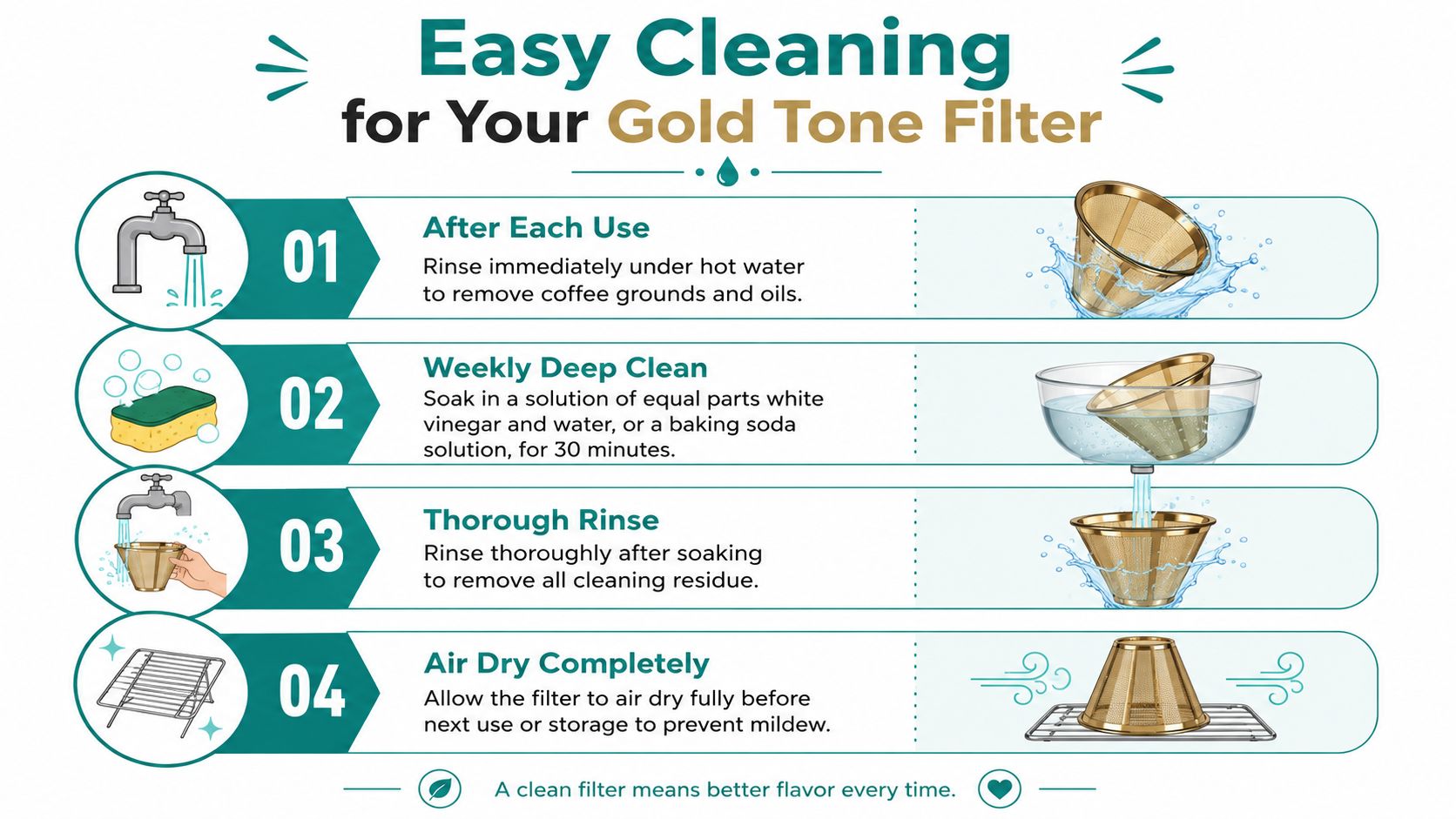
- After each brew. Knock out the grounds and rinse the filter under hot water right away. Fresh residue comes off easily. Dried coffee oils don't.
- Every week. Wash the filter with warm water and mild soap. Pay attention to the seams and the lower mesh where fines tend to collect.
- Occasionally. If flow starts slowing down, soak the filter to loosen oil buildup, then rinse thoroughly before brewing again.
What causes problems
Most “bad filter” complaints come from one of three issues:
- Oil buildup blocks part of the mesh and slows extraction
- Very fine grounds lodge in the screen and increase sediment
- Poor drying habits leave the filter stale-smelling between brews
Clean mesh matters as much as fresh coffee. A clogged permanent filter changes flavor before most people realize what happened.
If you're already maintaining a Keurig or drip brewer, this is also the point where a descaling product makes sense. A universal descaling solution or cleaning tablet can help keep the machine's internal water path clean while you keep the filter itself free of residue. That combination usually gives more reliable flavor than focusing on the basket alone.
Finding the Right Filter for Your Coffee Maker
Fit matters more than often realized. A gold tone filter that almost fits can leak grounds, sit crooked in the basket, or brew unevenly.
That's especially true with popular machines that have model-specific baskets, including Keurig K-Duo brewers, some Ninja DualBrew systems, and other drip-plus-single-serve designs. Basket shape, rim depth, and handle placement all affect whether the filter seals properly and whether water flows through the grounds the way the brewer expects.
Match the shape before you buy
Look at the filter you're replacing, not just the machine brand.
- Cone filters fit many traditional drip brewers
- Flat-bottom basket filters are common in carafe machines
- Reusable pod or basket formats are common in dual-use brewers
If you use a Keurig K-Duo, don't assume any generic basket will work just because the diameter looks close. A proper fit reduces leaks and makes cleanup easier.
A practical buying checklist
Before ordering, check these details:
- Machine compatibility: model family matters, especially with Keurig and Ninja brewers
- Basket style: cone, flat-bottom, or pod-specific
- Handle clearance: the filter should be easy to lift out safely
- Mesh quality: finer mesh usually gives a better balance of body and sediment control
For readers comparing options, this guide to the permanent coffee filter helps explain the shape and compatibility side. One option in this category is PureHQ Inc., which offers gold-tone mesh filters for brewers including certain Keurig K-Duo-style machines and related coffee accessories.
If you want the shortest answer to what is a gold tone coffee filter, here it is. It's a reusable metal filter that trades some cup clarity for more body, less paper waste, and a more durable daily setup. That trade is excellent for many home brewers, but it only pays off if the filter fits your machine and you're willing to rinse it consistently.
If you're ready to replace paper filters with a reusable setup that fits your brewer, shop PureHQ Inc. for gold-tone coffee filters, reusable pods, and maintenance accessories that support cleaner, more consistent brewing.

