
Coffee Machine Care
Reusable Coffee Cup Reviews The Ultimate 2026 Guide
May
A coffee habit can feel cheap and harmless because each cup or pod is small. The routine adds up fast. Once you start paying attention, you notice two separate problems hiding under the same “reusable coffee cup” label.
One is the cup you carry out the door. The other is the reusable pod or brewing cup that stays at home and has to work with a Keurig or Ninja machine. Reviews often mash those products together, which is how people end up buying a great commuter mug when what they needed was a pod that brews cleanly and fits their machine without clogging.
I've tested enough mugs, travel tumblers, and reusable K-Cup style pods to see the same mistake over and over. A good travel mug is about heat retention, leak resistance, lid design, and how it feels in a bag or car cupholder. An at-home reusable cup is about brew strength, filter mesh, fill lines, cleanup time, and whether it works with your brewer every morning without fuss.
If your goal is lower waste and better value, start by separating those jobs. A lot of buyers looking for a smarter home setup are really comparing ways to save money with reusable K-Cups for Keurig, not shopping for another insulated tumbler.
That distinction changes how you read every review that follows.
Why Your Morning Coffee Habit Needs a Rethink
A daily coffee habit looks cheap because each cup, lid, or pod is small. The cost shows up in repetition.
When I test reusable gear, I see the same pattern behind a lot of bad purchases. Buyers lump every product under “reusable coffee cup,” then try to solve two different problems with one item. One problem lives in your bag or car. The other sits inside a Keurig or Ninja and affects how your coffee brews at home.
The real issue is repeat buying
The environmental argument matters, but daily friction is what usually pushes someone to change. Early adopters did not switch only for environmental reasons. They switched because buying, using, and throwing away part of the coffee setup every day starts to feel inefficient.
That is especially obvious at home. A single-use pod keeps the morning simple for a minute, then turns coffee into a recurring purchase with no real control over dose, grind, or brew strength.
A reusable pod changes that routine.
For Keurig owners, the trade-off is straightforward. You spend a little more time filling and rinsing, and in return you stop paying for a pre-portioned pod every time you brew. If you want the cost side explained in practical terms, this guide on saving money with reusable K-Cups for Keurig lays out why many home brewers stop treating reusable pods like a side accessory and start treating them like normal equipment.
One label hides two very different buying decisions
This is the part many reviews miss. A travel mug and an at-home reusable pod do not solve the same problem, so they should not be judged by the same standards.
A mug has to hold temperature, seal properly, and drink cleanly on the move. A reusable pod has to fit the brewer, allow proper water flow, and rinse out without turning cleanup into a chore. If you commute with tea as often as coffee, a good guide to tea travel mugs is useful for the carry side of that decision. It will not tell you whether a reusable pod gives you a fuller cup or a weak one.
That distinction saves money and frustration. I have seen plenty of readers buy a well-reviewed tumbler when the actual problem was their home machine, or buy a reusable pod without checking fit, then blame the brewer when the coffee comes out thin.
A better setup usually removes one daily annoyance
Reusable gear is not automatically better. Some travel mugs leak around the lid gasket. Some reusable pods are fiddly to fill, stain quickly, or brew weak coffee because the mesh and fill line are poorly designed.
The fix is not chasing the product with the highest star rating. The fix is choosing the right category first, then choosing the product that matches your routine. That is what turns a vague plan to “be less wasteful” into a setup you will still use every morning.
Travel Mugs vs At-Home Pods What Reviews Miss
Most reusable coffee cup reviews fail at the first job. They don't separate travel mugs from at-home reusable pods.
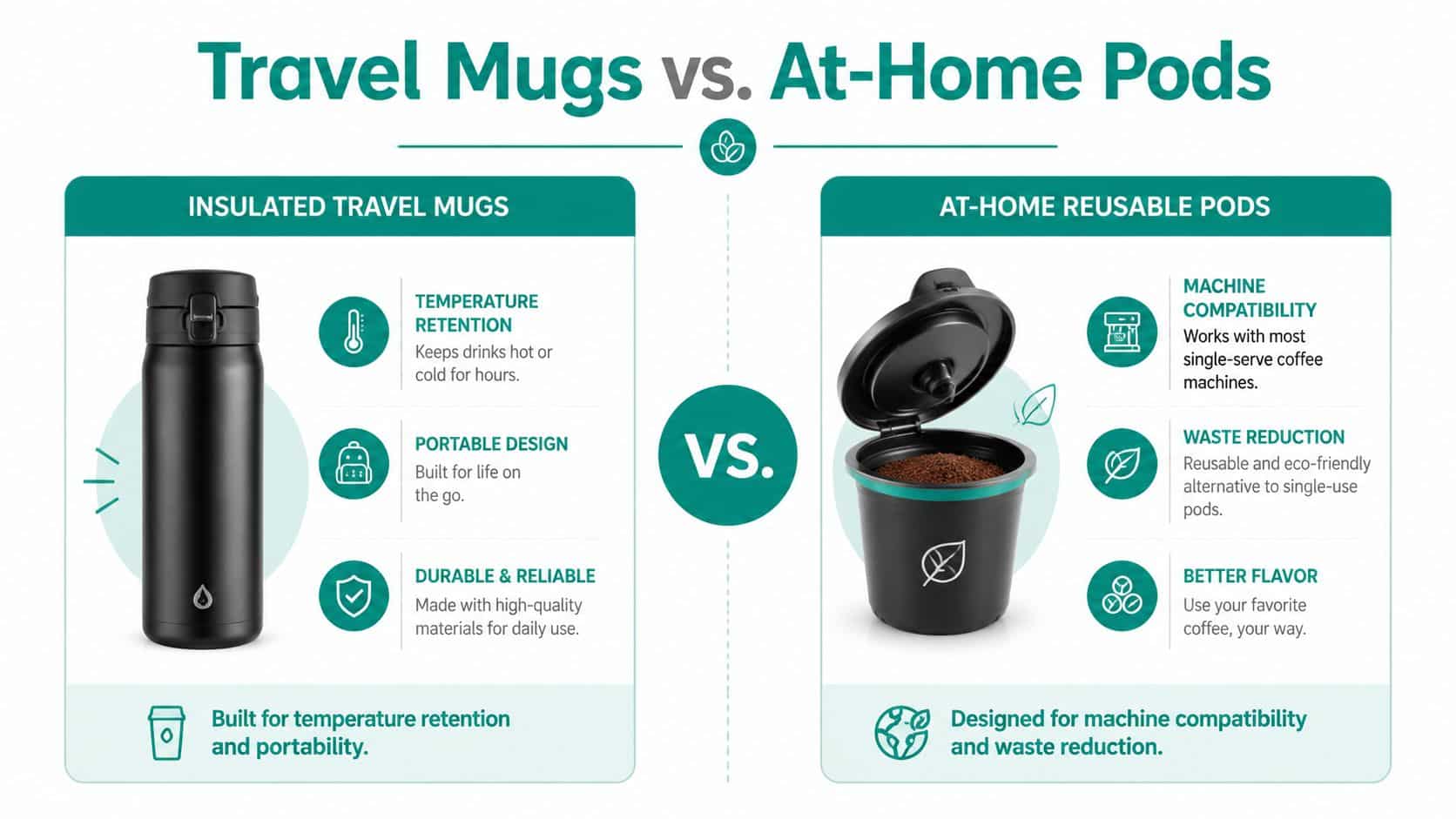
That sounds minor until you buy based on the wrong criteria. A commuter wants insulation, leak resistance, and one-handed drinking. A Keurig or Ninja owner wants pod fit, water flow, easy cleanup, and coffee strength. Those are not the same purchase.
They solve different problems
The clearest explanation comes from Coffee Blog UK's travel mug guide, which says, “They're different products, for different applications.” That single line clears up a lot of bad buying decisions.
A travel mug is built around transport. It needs to stay sealed in a bag or car, and it needs to hold temperature long enough to matter. An at-home reusable pod is built around brewing. It needs to sit correctly in the machine, allow proper extraction, and come clean without a fight.
Here's the simplest breakdown:
| Product type | Main job | What matters most | What matters less |
|---|---|---|---|
| Travel mug | Carry coffee away from home | Insulation, leak resistance, lid design | Pod fit, extraction quality |
| Reusable coffee cup for desk use | Replace disposable takeaway cup | Comfort, drinking experience, easy washing | Extreme heat retention |
| Reusable pod | Brew coffee in a machine | Compatibility, filter design, flow, cleanup | Long-term heat retention |
Why generic rankings mislead home brewers
A top-rated travel mug can still be the wrong answer for a home brewer. If your real problem is that disposable pods are expensive, flimsy, or wasteful, no amount of vacuum insulation fixes that. You still haven't solved the brewing side.
That's why broad “best reusable coffee cup” lists often frustrate Keurig and Ninja users. They review products meant for commuting, camping, or long drives, then barely mention reusable pods at all.
Reviews that treat mugs and pods as interchangeable usually help nobody. They tell commuters too little about lids and tell home brewers almost nothing about extraction.
Use the right review for the right drinker
If you carry tea or coffee on the road and want more travel-specific design ideas, this guide to tea travel mugs is useful because it focuses on portability and drink-carrying needs rather than machine brewing.
If you brew at a desk, in a kitchen, or in a breakroom, use a different filter when reading reviews. Skip the hype around all-day heat retention. Look for comments about fit, brew strength, cleanup, and whether users get grounds in the cup. Those details decide whether a reusable pod becomes part of your routine or ends up in a drawer.
How to Read Reviews Like a Pro A 7-Point Checklist
Most buyers don't need more product lists. They need a way to tell which reviews are useful and which ones are just recycling specs.
The fastest way is to score every product against the same checklist. That matters even more for reusable pods, where a small design flaw can mean weak extraction, grounds in the mug, or a lid that fails after repeated use.
Start with the material
Material isn't just a feel issue. It affects lifespan. Seven Miles' reusable cup comparison notes that stainless steel shows fracture toughness values of 62-280 MPa·m½, while polypropylene sits at 3-4.5 MPa·m½. That gap explains why steel parts usually handle repeated opening, closing, and washing better than thinner plastic builds.
For pods, I treat material as a durability filter. If the body flexes too easily or the hinge feels stressed from day one, I move on.
The seven checks that matter
Material quality
Stainless steel usually makes more sense when you care about repeated use and structural stability. Plastic can work, but cheap plastic often shows its limits at the hinge, rim, or latch.Filter design
Fine enough to control grounds. Open enough to let water pass cleanly. A reusable pod with poor mesh design often brews either muddy coffee or under-extracted coffee.Machine compatibility
A “fits most machines” claim isn't enough. Look for clear compatibility language tied to specific brewer families, especially if you use a Keurig variant or a Ninja system.Brew quality
Read reviews for words like weak, watery, bitter, clogged, or inconsistent. Those terms tell you more than polished product copy.Ease of cleaning
Pods with awkward seams or hard-to-reach mesh are the ones people stop using. If you can't rinse it quickly after brewing, daily use becomes annoying.Lid or hinge design Many low-cost products fail in this specific area. The hinge doesn't need to feel fancy. It needs to close securely and keep closing securely after repeated cycles.
Real cost savings
Savings matter, but only if the product works reliably enough to stay in rotation. A cheap reusable pod that produces bad coffee gets abandoned fast, which wipes out the value.
What I look for first: signs of repeat-use engineering. A clean weld, solid mesh attachment, a lid that aligns properly, and no vague compatibility claims.
Reviews to trust and reviews to skip
Useful reviews usually mention a real brewing context. They tell you what machine they used, what kind of coffee they filled it with, and what went wrong or right after repeated cleaning. Thin reviews usually focus on packaging, color, or first impressions.
A short screening list helps:
- Trust reviews that mention fit: Users who say the pod seated correctly, closed cleanly, or needed a specific fill level are giving you practical data.
- Trust reviews that mention cleanup: Daily gear lives or dies on cleanup.
- Skip reviews obsessed with aesthetics: Color matters less than seal quality and extraction.
- Skip reviews that confuse cups with pods: If a review spends most of its time on heat retention, it may not be relevant to your brewer at all.
The best review question
Ask one thing before you buy: Does this review describe the same job I need this product to do?
That question eliminates a lot of noise. It also stops you from buying a decent product for the wrong use case.
Why Not All Reusable Pods Are Created Equal
A common objection is simple: they all look similar, so why pay more?
That would be fair if reusable pods were interchangeable. They aren't. Small differences in material, mesh precision, lid construction, and fit show up fast in the cup. They also show up in failure points, especially after repeated use and cleaning.
Barista Life's reusable coffee cup review summary ties material quality to performance and notes that stainless steel construction and precise filter design lead to a more reliable brew while reusable pods can save $0.50 to $1.00 per cup. That range is only meaningful if the pod works well enough to replace disposables consistently.
A direct comparison that matters
| Feature | Premium stainless steel pod | Generic plastic pod |
|---|---|---|
| Body material | Stainless steel build focused on repeated use | Plastic body, sometimes with unclear long-term durability |
| Filter behavior | Typically more consistent water flow when mesh is well designed | More prone to inconsistent flow if mesh is coarse or poorly fitted |
| Lid and hinge | Usually sturdier closing action and better alignment | Common weak point, especially around hinge stress |
| Brew result | Better chance of fuller extraction and fewer escaped grounds | More likely to produce weak coffee or sediment when tolerances are loose |
| Cleanup | Smoother interiors and sturdier mesh are usually easier to rinse | Fine corners and flexing plastic can trap grounds |
| Machine fit | Better products tend to state exact compatibility | Generic listings often stay vague |
Why the cheaper option often costs more in practice
The problem with low-cost pods isn't just lifespan. It's inconsistency. One day the coffee tastes fine. The next day the pod doesn't seat quite right, water pressure behaves differently, and the brew comes out weak or messy.
That's why many users eventually stop asking whether a reusable pod is cheaper and start asking whether it's dependable. A reusable pod has to work half-awake at six in the morning. If it needs fussy handling every time, it won't last in your routine.
One practical reference point is this comparison of stainless steel and plastic reusable K-Cups, which looks specifically at the safety and material trade-offs instead of treating all pods as equal.
Better brewing usually comes from boring design choices done well. Tight fit. Stable mesh. A lid that closes squarely. That's what separates a daily-use pod from a drawer filler.
One upgrade people overlook
Filtered water often improves the result of any reusable pod because the coffee bed can only do so much if the brewing water already tastes off. If your brewer hasn't had a fresh filter in a while, replacing that part can make a bigger difference than switching coffees.
PureHQ Inc. sells reusable K-Cups, water filters, paper liners, and descaling supplies for Keurig and compatible systems. That kind of setup makes sense for home users who want one place to handle both the pod and the machine-maintenance side rather than treating them as separate problems.
Getting the Perfect Brew Every Time Maintenance and Troubleshooting
Reusable pods don't fail most often because of bad materials. They fail because people use them like disposable pods and expect the machine to sort everything out.
Brewing with a reusable pod is still easy, but it rewards basic technique. Water flow happens in seconds, and Car and Driver's travel mug testing summary makes the contrast clear: while some mugs are judged by a 44-degree Fahrenheit drop over six hours, reusable pods live or die on immediate extraction, which depends on pod design and user technique, not insulation.
Fix weak coffee first
Weak coffee usually comes from one of three issues: grind, fill level, or poor closure.
- Use a medium grind: Too fine can clog the mesh and slow flow. Too coarse can let water pass too quickly.
- Fill sensibly: Don't underfill and expect a bold cup. Don't overpack and expect smooth flow.
- Close the pod fully: If the lid doesn't seat correctly, extraction suffers and grounds can escape.
I've found that many “bad pod” complaints are really packing errors. People tamp too hard, overfill the chamber, or use espresso-fine coffee in a system that wants freer flow.
Keep the pod clean enough to stay consistent
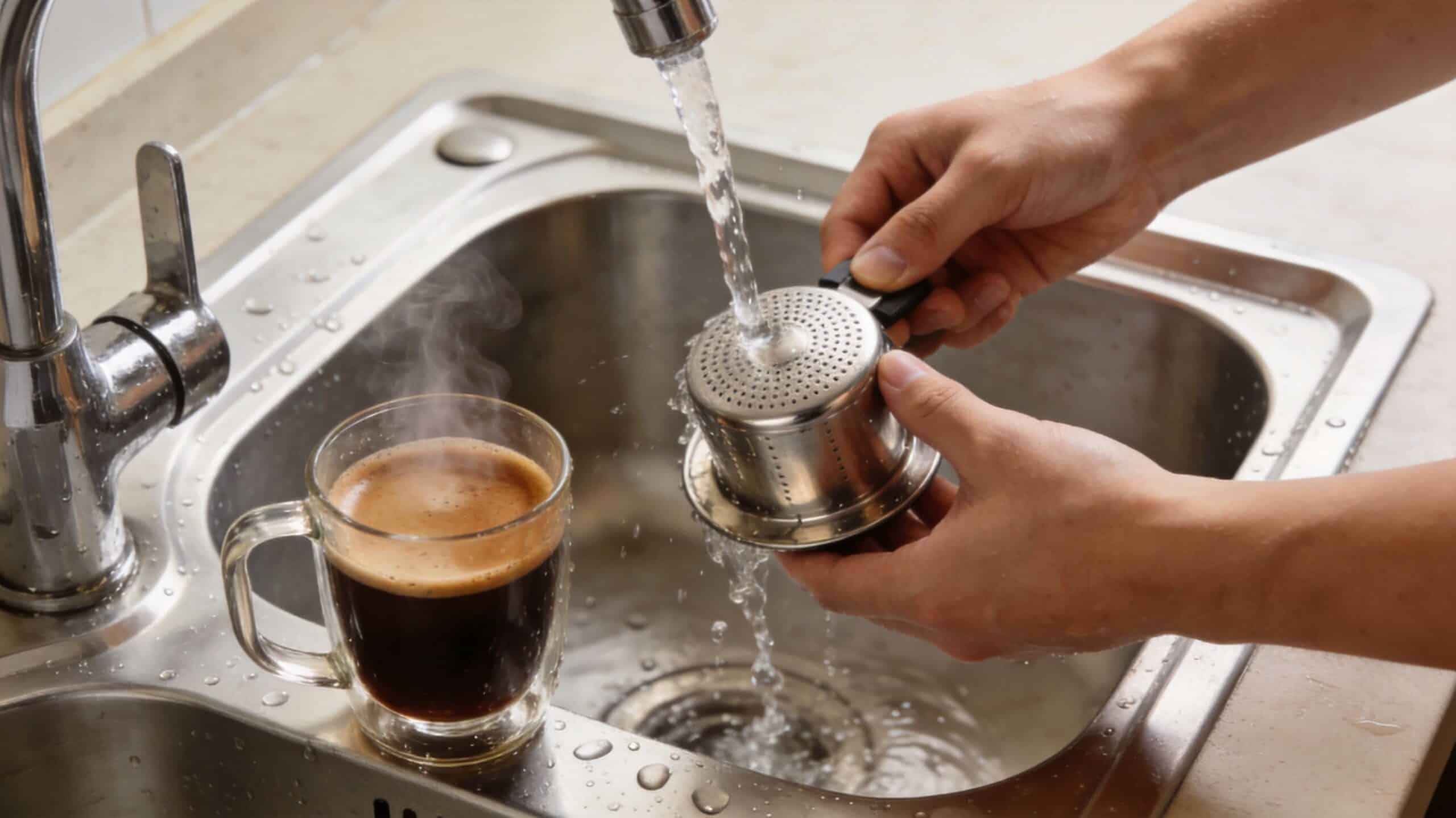
A reusable pod doesn't need a complicated cleaning routine. It needs a consistent one. Rinse it right after brewing so oils and grounds don't dry into the mesh. Then give it a more thorough wash regularly so old coffee residue doesn't affect taste.
If you already clean stainless drinkware, the same habits apply. These pro tips for athlete's bottles are helpful because they focus on removing lingering residue and odors from stainless surfaces without overcomplicating the process.
Coffee oils go rancid faster than most people think. If a pod smells stale when it's dry, your next cup will taste stale too.
Watch the machine, not just the pod
A reusable pod can only perform as well as the brewer feeding it. Mineral buildup changes water flow and brewing temperature. If your machine starts acting inconsistent, don't blame the pod first.
This is also where regular maintenance pays off. A fresh water filter and periodic descaling protect brew quality and help the machine behave predictably. If you want a concise machine-side checklist, these tips for the best taste and performance using reusable K-Cups in Keurig coffee makers cover the practical habits that keep the system running smoothly.
A quick visual guide helps if you're dialing in your routine:
Troubleshooting the common annoyances
| Problem | Likely cause | What to change |
|---|---|---|
| Weak brew | Too coarse or too little coffee | Use a slightly finer grind or increase fill modestly |
| Grounds in cup | Mesh issue or poor lid closure | Check seal, avoid overfilling, inspect filter area |
| Overflow or blowout | Pod packed too tightly | Loosen fill and avoid tamping hard |
| Bitter taste | Grind too fine or stale residue | Coarsen slightly and clean more thoroughly |
| Inconsistent cups | Machine buildup | Check water filter and descale the brewer |
Common Questions About Reusable Coffee Cups
A lot of hesitation comes down to routine. Keurig and Ninja users want to know if a reusable pod will fit the machine they own, whether cleanup will get old fast, and whether a travel mug belongs on the same shopping list.
Will a third-party reusable pod void my brewer warranty
I can't make a legal claim without the manufacturer's wording in front of me, but the practical takeaway is simple. Problems usually come from poor fit, not from the fact that the pod is third-party.
Choose a pod made for your exact brewer line, not a vague “universal” option. If the lid closes cleanly, the pod seats properly, and you are not forcing anything into place, you are already reducing the risk of leaks, weak extraction, and machine errors.
If warranty risk bothers you, keep it conservative. Buy a pod with clear compatibility details and save the packaging so you can verify what you used.
How much money can a reusable pod save
The better question is how to calculate your own savings. Start with what you pay for a disposable pod, subtract the cost of the ground coffee you use in a reusable pod, then multiply that difference by the number of cups you brew each week.
That number changes fast depending on your habits. Someone brewing one cup on weekdays will see a modest payoff. Someone running two or three cups a day at home usually notices the difference much sooner, especially if they already buy whole beans or ground coffee in larger bags.
The catch is consistency. If the pod is fussy, hard to clean, or gives uneven results, many people drift back to disposables and erase the savings.
Can I use a reusable pod for tea
Yes, but coffee and tea do not behave the same way in these pods. Fine tea can clog mesh more easily, and flavored teas leave behind aroma that shows up in the next coffee brew.
A separate pod for tea is the cleaner setup if you drink both often. It saves scrubbing time and avoids the “my coffee tastes faintly like chai” problem.
Are travel mugs part of the same decision
They are a separate purchase, but they often belong in the same routine. First solve brewing at home with the right reusable pod. Then decide how you will carry the drink.
For commuters, the practical test is machine clearance. Some travel mugs are too tall to fit under a Keurig or Ninja spout, which turns a simple morning brew into a two-step pour. If you brew at home and leave right away, check mug height, lid security, and whether it fits your car cup holder. If you mostly drink at a desk, put your effort into the pod first and worry less about insulated carry features.
What's the smartest first upgrade
Start with the weak point in your current setup. If you use a pod brewer every day, that usually means the reusable pod itself.
Get one that fits your machine properly and is easy to rinse. After that, improve the cup you drink from only if your routine calls for it. Home brewers need a better pod before they need a better travel mug.
Do reusable setups take more work
Yes, a little.
The extra work is rinsing the pod, emptying grounds, and giving it a deeper clean once residue starts to build up. In return, you get more control over strength, more flexibility with coffee choice, and less dependence on single-use pods.
For daily coffee drinkers, that trade usually makes sense once the setup matches the routine.
If you're ready to stop guessing and build a cleaner home coffee routine, shop PureHQ Inc. for reusable K-Cups, compatible water filters, and descaling supplies that fit the machines people use every day.

