
Coffee Machine Care
Mr Coffee Basket Filter: Your Guide to a Perfect Brew
Apr
You fill the reservoir, add grounds, press brew, and somehow the cup still comes out weak, bitter, or muddy. Often, the beans are blamed first. In many kitchens, the problem is simpler. The mr coffee basket filter is the wrong type, the wrong fit, or installed just slightly wrong.
That small mistake gets expensive fast. You waste good coffee, scrub overflowed grounds out of the basket, and start guessing at fixes that don't solve the root issue. I've seen the same pattern over and over. People buy a “universal” reusable filter, assume all Mr. Coffee machines work the same way, then fight leaks, poor flow, and cups that taste worse than they should.
A better cup starts with understanding the filter basket itself. Once you know how Mr. Coffee baskets work, which trade-offs matter, and how to match the filter to your brewer, the whole setup gets easier and more consistent.
The Secret to a Perfect Cup Is in Your Filter Basket
A bad morning cup often starts long before the coffee hits your mug. If the brew tastes harsh, has sediment at the bottom, or feels oddly hollow, the filter basket deserves a closer look. It controls how water moves through the grounds and what makes it into the final cup.
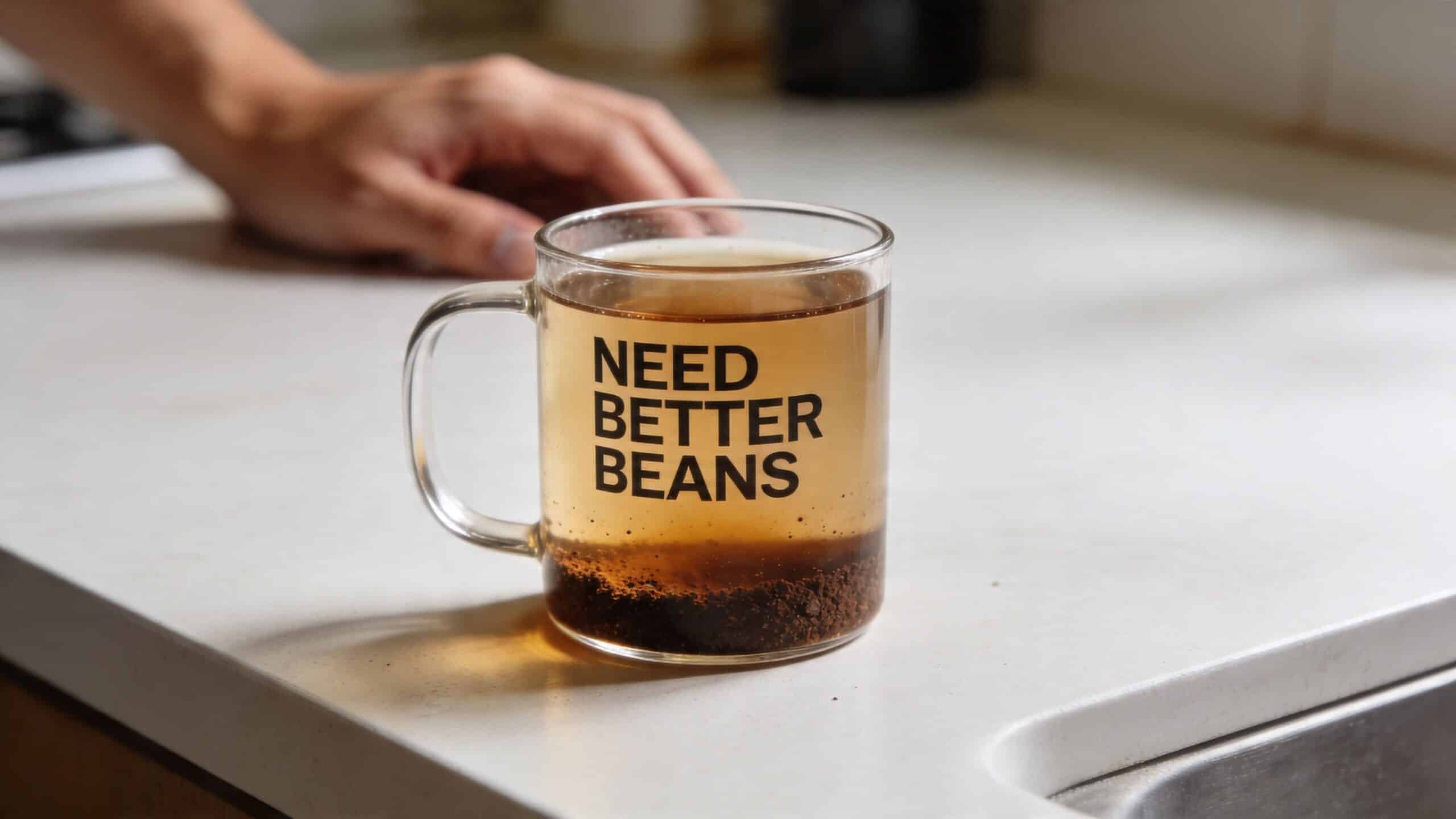
That matters because the basket filter isn't some minor accessory. It sits at the center of the brew path. If it fits badly, collapses, or drains unevenly, you don't just get a mess. You get uneven extraction, wasted grounds, and a cup that never tastes quite right.
Why this little part matters so much
Mr. Coffee changed home brewing when its automatic drip coffeemaker arrived in 1972 and replaced the old percolator habit that often produced bitter coffee. According to Cafe Valet’s history of Mr. Coffee, the machine heated water to 200 degrees Fahrenheit and sent it through a paper-lined filter basket, which helped deliver a smoother cup and made the basket filter the standard for home brewing.
That shift is still relevant now. The basket filter became the reason home users could get repeatable results without watching a stovetop or dealing with boiled grounds. Better brewing came from a better path for water and coffee to meet.
A coffee maker can be working perfectly and still brew bad coffee if the filter basket setup is wrong.
The basket works with your grind, not against it
A lot of people try to fix filter problems by changing coffee first. They buy darker beans, grind finer, or add more scoops. Sometimes that only amplifies the issue. If the basket isn't draining correctly, the brew can still taste off no matter how good the beans are.
That's why a consistent grind matters alongside a proper filter. If you're dialing in your setup, a quality coffee grinder helps keep particle size more even so the basket can do its job cleanly.
What usually goes wrong
Here are the most common basket-related failures I see:
- Poor seating: The filter doesn't sit flat, so water bypasses part of the coffee bed.
- Wrong material choice: Paper and reusable mesh don't brew the same cup.
- Bad fit: A so-called universal basket leaves gaps, leans to one side, or interferes with the lid or plunger.
- Overfilling: Grounds swell during brewing. A basket packed too high invites overflow.
The fix isn't complicated, but it does require paying attention to the basket as a brewing tool, not just a holder for grounds.
Paper Filters vs Reusable Filters The Core Debate
Most Mr. Coffee owners end up choosing between two paths. Use disposable paper filters, or switch to a permanent reusable basket. Both work. Both also create different problems if you choose them for the wrong reasons.
The original Mr. Coffee design leaned heavily on the convenience of the paper basket filter. As noted in Wikipedia’s Mr. Coffee overview, the machine introduced in 1972 used a disposable paper filter basket in a simple automatic drip format, and the brand later reached $174 million in annual revenue by 1995, with filter and accessory sales contributing to that legacy. That tells you something important. The filter was never an afterthought. It was part of the system from the start.
What paper filters do well
Paper is the easiest option for most households. You drop one in, brew, and throw it away. Cleanup is quick, and paper usually gives the cleanest-looking cup because it catches more sediment.
Paper also works well for people who don't want another maintenance task. If you're making coffee before work and want zero fuss, paper is hard to beat.
Still, convenience has a cost. You keep buying replacements, and your cup can taste lighter because paper removes some of what a reusable mesh filter would let through.
What reusable filters do well
Reusable basket filters appeal to people who brew often and hate buying paper over and over. Once you get a good one, daily use feels simple. Rinse it, reuse it, repeat.
They also change the cup. More oils pass through, which usually creates a fuller body and a heavier mouthfeel. Some coffee drinkers love that. Others prefer the cleaner finish of paper.
If you're weighing the trade-offs more broadly, this guide on reusable coffee filter vs paper is a useful companion because it frames the practical differences in everyday use.
The real trade-offs
This choice usually comes down to three things:
- Taste preference: Paper tends to brew a cleaner cup. Reusable mesh tends to brew a fuller cup.
- Daily routine: Paper wins on convenience. Reusable wins if you don't mind rinsing and occasional deep cleaning.
- Long-term habit: If you brew often, reusables feel more sensible. If you brew occasionally, paper may feel easier.
Practical rule: If you hate cleanup, start with paper. If you hate recurring purchases, start with reusable.
What doesn't work
What fails is buying a reusable filter just because it sounds greener, then treating it like paper. Reusable baskets need cleaning. They also need to fit properly. A cheap generic mesh basket that drains badly or doesn't seat correctly can make coffee worse, not better.
On the other side, paper isn't automatically foolproof. A paper filter folded awkwardly or bunched up in the basket can cause channeling and overflow.
The right answer isn't universal. It's the filter that matches your taste, your machine, and the amount of maintenance you'll keep up with.
A Detailed Comparison of Coffee Filter Materials
Not all reusable filters deserve the same reputation. Some are durable and brew beautifully. Others flex too much, trap residue, or fit so loosely that the word “compatible” becomes meaningless. If you're shopping for a mr coffee basket filter, material matters more than most listings admit.
How each material changes the cup
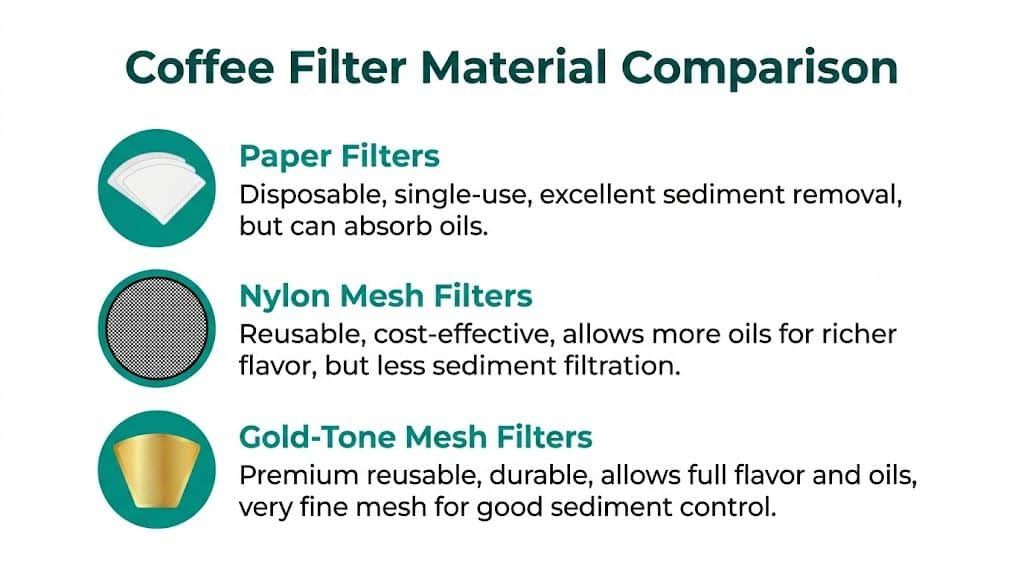
The biggest divide is between paper, generic mesh, and gold-tone stainless steel mesh.
Paper filters absorb oils. That usually produces a cleaner cup with less body and less sediment. A generic reusable mesh filter often lets more through, but build quality can vary a lot. Some are fine enough to brew cleanly. Others allow too many fines or develop odor and staining faster than you'd like.
Gold-tone stainless steel sits in a different category when it's made well. According to the NRP basket filter product specifications, permanent gold-tone basket filters use surgical-grade woven stainless-steel mesh, can retain 15 to 25% more oils than paper, are dishwasher-safe for over 300 cycles, cost around $0.01 per brew versus $0.05 to $0.10 for paper, and can eliminate hundreds of paper filters over their usable life.
That doesn't mean every gold-colored filter is good. It means stainless mesh, when built properly, has a clear technical advantage over throwaway paper and flimsy generic mesh.
Where generic filters usually disappoint
The problem with many generic mesh baskets isn't the idea. It's the execution.
Some common issues:
- Loose rim shape: The basket shifts when water hits the grounds.
- Inconsistent mesh: Fine particles get through too easily.
- Awkward cleaning: Oils cling to the mesh and corners.
- Weak frame: The basket warps after repeated washing.
Those flaws don't always show up on day one. They show up after a few weeks, when the coffee starts tasting dull and the filter no longer sits exactly where it should.
Filter Type Showdown Paper vs Generic Mesh vs PureHQ Gold-Tone
| Feature | Disposable Paper Filter | Generic Reusable Mesh | PureHQ Gold-Tone Filter |
|---|---|---|---|
| Flavor profile | Clean, lighter-bodied cup | Fuller cup, but varies by mesh quality | Fuller cup with better oil passage and more controlled filtration |
| Sediment control | Excellent | Inconsistent across brands | Better balance of body and sediment control |
| Cleanup | Easiest, discard after use | Rinse after every brew | Rinse after every brew, dishwasher-safe design is a plus |
| Durability | Single use | Varies widely | Built for repeated use |
| Long-term cost | Ongoing repeat purchase | Lower over time if the filter lasts | Lower per brew over the filter’s lifespan |
| Waste | Highest | Lower | Lower |
| Fit reliability | Usually good when correctly sized | Often the weak point | Better when engineered for the intended basket shape |
What I recommend for different users
If you care most about cup clarity and easy cleanup, paper still makes sense.
If you want a richer cup and less waste, a stainless reusable basket is the better bet. That's especially true if you brew daily and want the kind of filter you can rinse quickly without babying it.
If you're stuck between the two, ask a simpler question. Do you want more body in the cup, or less maintenance after brewing? That answer usually points to the right material faster than any product description.
Material changes flavor. Fit changes everything else.
How to Choose a Filter That Actually Fits Your Mr Coffee Model
A significant challenge arises when users order a reusable basket labeled “fits most Mr. Coffee machines,” install it, and then face leaks, overflow, or a lid that won't close properly. The compatibility issue is substantial, and numerous buying guides barely acknowledge it.
A video-based source focused on compatibility issues notes that reusable Mr. Coffee basket filters generate an estimated 40% of online complaints around “doesn't fit” or “leaks,” and that the confusion is compounded by 30+ brewer lines and return rates of up to 25% for some generic filters on Amazon, especially when plunger mechanisms and overflow problems enter the picture, as discussed in this Mr. Coffee filter compatibility reference.
That lines up with what users report all the time. “Universal” often means “close enough to sell,” not “shaped correctly for your brewer.”
Why universal fit often fails
Mr. Coffee machines don't all use the same basket depth, rim diameter, or internal clearance. Even when two brewers look similar from the outside, the basket area can differ enough to cause trouble.
The biggest pain points usually come from:
- Height mismatch: The basket sits too tall and interferes with the spray head or lid.
- Rim mismatch: The lip doesn't rest evenly, so water and grounds shift during brewing.
- Plunger or Pause and Brew interference: The filter presses against moving parts and creates drips or backups.
- Capacity mismatch: A small basket in a larger brewer encourages overflow when you make fuller pots.
If you're replacing a filter and want a more practical walkthrough tied to model matching, this Mr. Coffee filter replacement guide is worth reading before you buy.
What to check before you order
Don't shop by product title alone. Check the machine itself.
Use this quick checklist:
- Find the model number on the bottom, side, or back of the brewer.
- Measure the existing basket area if the original filter is missing.
- Look for moving parts such as a plunger, spring, or Pause and Brew valve.
- Match cup class carefully. A compact brewer and a larger programmable brewer should never be assumed to share the same basket.
- Keep the old basket until the new one arrives and test-fits cleanly.
If the basket rocks, leans, or needs force, it's the wrong filter.
A simple fit test beats a product listing
Before your first full brew, do a dry fit with no coffee. Set the basket in place, close the lid, and make sure nothing binds. Then run a water-only cycle. That one test reveals most fit problems before you waste grounds.
Here's a helpful visual reference for installation and basket handling:
The objection I hear most often
People say, “I want a reusable filter, but I don't want leaks.”
That's a fair objection. The answer isn't to avoid reusable filters entirely. The answer is to reject vague compatibility claims. A reusable basket works well when the rim, depth, and internal clearance match the brewer. Most leak problems start before brewing, at the buying stage.
A proper fit should feel boring. No wobble, no forcing, no guesswork.
Proper Installation to Prevent Coffee Ground Overflows
Even a well-made filter can brew a terrible pot if you install it carelessly. Overflow usually isn't random. Something sat crooked, the basket was overfilled, or the filter and machine weren't aligned the way the brewer expects.
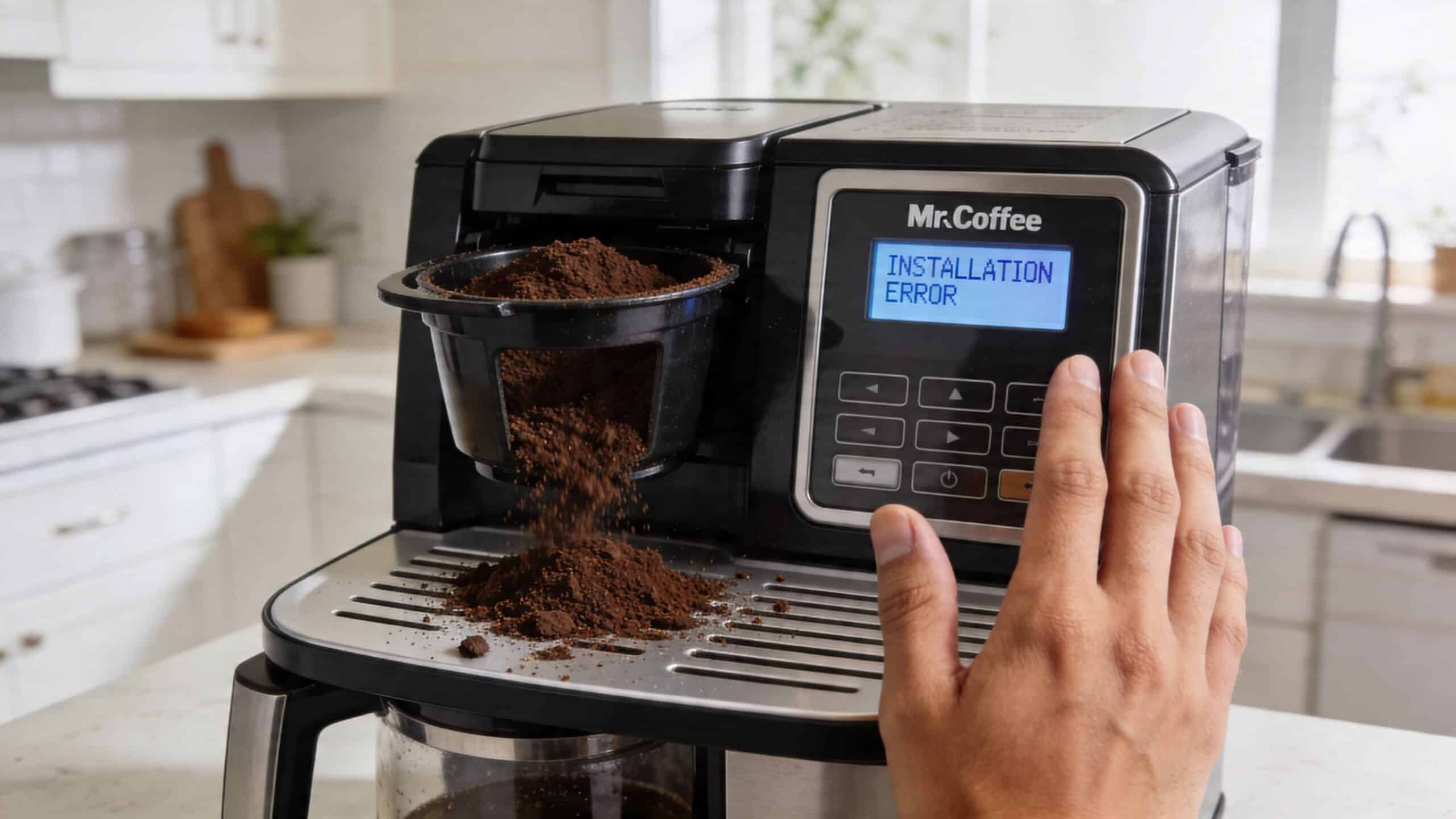
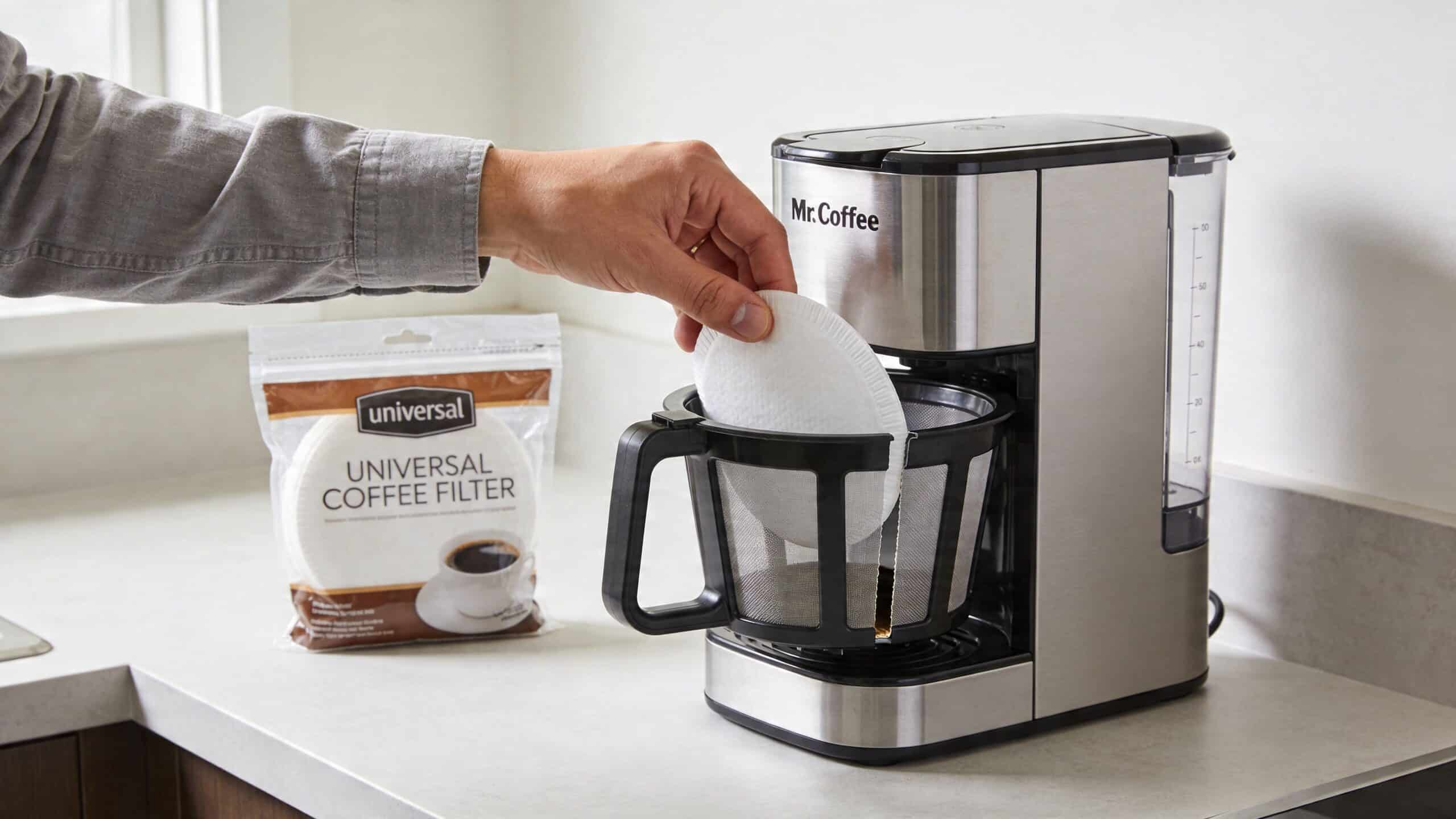
How to install a paper basket filter correctly
Paper seems simple, but I still see the same two mistakes. People press it in too casually, or they overload it with grounds until the top edge curls inward.
Use this routine:
- Open the filter fully so the fluted sides sit naturally against the basket walls.
- Seat it flat against the bottom before adding coffee.
- Check the rim so no part of the paper folds over itself.
- Add grounds below the top edge, leaving room for the bed to expand when water hits it.
- Close the lid gently and make sure the filter doesn't shift.
A paper filter that bunches up on one side can redirect water and cause the brew to pool.
How to install a reusable basket properly
Reusable filters are less forgiving because the basket itself has to align with the machine.
A good install looks like this:
- Set the basket in without force. It should drop into place cleanly.
- Confirm the base sits level. If it tilts, remove it and reseat it.
- Check the top rim. It should rest evenly all the way around.
- Leave headroom for grounds. Reusable mesh drains differently, so overfilling raises the risk of overflow.
- Test the lid and any plunger mechanism before brewing.
Small errors that create big messes
Most overflow issues come from a short list of habits:
- Too much coffee: Grounds swell. Packed baskets overflow fast.
- Fine grind in a slow-draining setup: Water backs up and lifts the bed.
- Crooked basket placement: One side floods before the other.
- Rushed cleanup from the prior brew: Old residue can block flow and push water upward.
Fill for the basket you have, not the biggest pot the machine can brew.
A better first-brew routine
When you're using a new basket filter for the first time, don't start with a full batch. Brew a smaller pot and watch how the water moves through the basket. You're looking for smooth drainage, no leaning, and no grounds washing over the rim.
That first test tells you a lot:
| Check | What you want to see |
|---|---|
| Basket position | Centered and level |
| Water flow | No pooling at the top |
| Grounds after brewing | Even bed, no major blowout on one side |
| Cup result | No sludge, no weak watery finish |
The goal isn't perfection on the first try. The goal is catching installation mistakes before they turn into your daily routine.
Cleaning and Maintaining Your Reusable Filter for Best Taste
A reusable basket filter can brew a great cup for a long time, but only if you keep it clean. Coffee oils cling to mesh. Fine particles hide in seams and corners. Once that buildup starts, the filter drains slower and the coffee begins to taste stale or oddly bitter.
The maintenance part gets skipped because the basket still looks “mostly clean.” That's not enough. A reusable filter works by letting more through than paper, and that same benefit means it holds onto more residue too.
What routine actually works
The most useful maintenance guidance is still the kind people rarely hear. According to Mr. Coffee help content summarized in this filter guidance reference, reusable basket filters can retain 15 to 20% more oils for a bolder cup, but they also need bi-weekly soaks to prevent mold and residue buildup. The same source notes that using paper liners inside reusable filters can reduce clogs by 35% and help extend machine life.
That hybrid approach makes sense in real kitchens. You keep the structure and reusability of the mesh basket, but you cut down on oil buildup and cleanup.
If you want a brand-specific look at reusable care, this Mr. Coffee reusable filter guide adds useful context around upkeep and daily use.
A maintenance rhythm that stays realistic
I recommend a simple three-part routine:
- After every brew: Knock out the grounds and rinse the basket thoroughly.
- Regular deep cleaning: Soak the filter on a repeating schedule so oils don't harden into the mesh.
- Machine cleanup too: The cleanest basket won't fix old scale or stale residue inside the brewer.
For anyone trying to spot when a coffee maker is overdue for cleaning, Signs Your Brewer's Dirty is a handy external reference because it helps connect taste changes with buildup inside the machine.
Why water quality still matters
Filter maintenance doesn't stop at the basket. If your tap water tastes harsh or leaves scale behind, your brewer will show it over time. Rising chlorine concerns make that even more relevant in some areas, and a basket filter alone can't solve water quality problems.
That's why pairing a reusable basket with supporting maintenance items can make a noticeable difference. Paper liners inside the basket can keep residue down, and a dedicated descaling solution can help clean internal mineral buildup without turning maintenance into guesswork.
Clean mesh improves flavor. Clean water protects that flavor.
What not to do
A few habits shorten the life of a reusable filter or make it taste worse over time:
- Don't leave wet grounds sitting in the basket. Residue gets harder to remove and starts affecting flavor.
- Don't rely on rinsing alone forever. Oils need periodic soaking to break loose.
- Don't scrub aggressively with harsh tools if the mesh is fine and tightly woven.
- Don't ignore the brewer itself. A clean basket in a scaled machine still produces disappointing coffee.
If you want the richer cup that reusable filters can deliver, maintenance isn't optional. The good news is that once the routine becomes habit, it only takes a few extra minutes a week.
The Final Verdict on Switching to a Reusable Filter
If your current setup gives you flat coffee, recurring paper costs, or the usual pile of soggy filters in the trash, switching to a reusable mr coffee basket filter makes sense. The key is choosing one for the right reason. Not because it claims to fit everything, and not because it looks cheaper upfront. It has to fit your brewer correctly, brew the flavor you prefer, and be easy enough to maintain that you'll keep using it.
A good reusable basket solves several problems at once. It gives you a fuller cup than paper, cuts repeat purchases, and reduces waste. Done right, it also makes your brewing routine more stable because you're no longer dealing with collapsed paper filters or constant reordering.
When reusable is the better call
A reusable basket is usually the better choice if:
- You brew often and want to stop buying paper constantly.
- You prefer a richer cup with more body.
- You don't mind basic maintenance like rinsing and periodic soaking.
- You care about reducing waste without changing your whole coffee routine.
When paper still makes sense
Paper remains the smarter option if:
- You want the easiest cleanup possible
- You prefer a cleaner, lighter-bodied cup
- You brew less often
- You don't want another item to wash
There's no shame in sticking with paper if that's what fits your routine. The mistake is buying a reusable filter and expecting zero maintenance, or buying a generic one and expecting precise fit across every machine.
My practical recommendation
For most daily brewers, a well-made stainless reusable basket is the strongest long-term choice. It gives you better value over time, keeps more coffee character in the cup, and cuts down on waste. But the phrase that matters most is well-made. Material quality and model fit are what separate a useful upgrade from a frustrating one.
If you remember only one thing, make it this: the best basket filter is the one that fits your exact Mr. Coffee brewer, seats cleanly, drains evenly, and stays easy to maintain.
If you're ready to stop guessing and upgrade your daily brew, shop coffee accessories from PureHQ Inc.. Their lineup includes reusable filters, liners, and maintenance essentials designed to make home brewing cleaner, simpler, and more consistent.

