
Coffee Machine Care
Keurig Universal My K-Cup Guide: Fit, Use, and Care
Sep
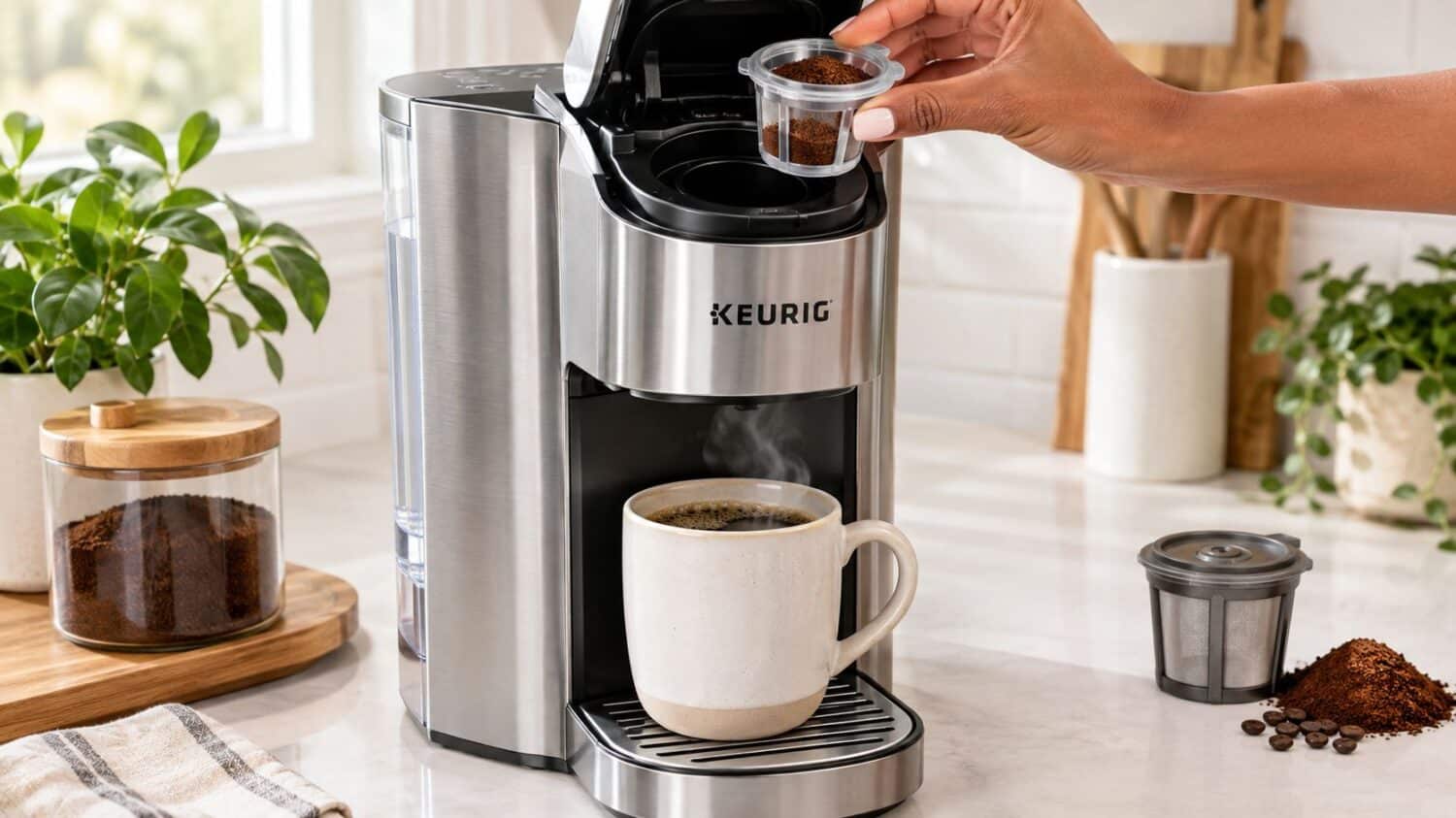
You've bought ground coffee to cut down on disposable K-Cups, dropped a refillable pod into your Keurig, and ended up with coffee grounds in the mug or water around the pod holder. That failure usually isn't your technique. It's a mismatch between the reusable filter, the brewer's internal hardware, the fill level, or the grind.
The Keurig My K-Cup Universal Reusable Coffee Filter solves much of that confusion because Keurig designed it for its home brewer lineup, including models with MultiStream Technology. It still needs to be installed correctly, and “universal” doesn't mean every model uses the same setup. Remove the wrong insert, respect the fill line, and match the filter to the brewer's flow geometry.
The Morning a Reusable Pod Stops Being Optional
The decision usually happens beside the recycling bin. Empty K-Cup plastic has piled up, the cost of using a capsule for every cup feels harder to justify, and the bag of ground coffee in the cupboard looks like the obvious answer.
Then the refillable pod refuses to sit flat.
You press the lid down, close the Keurig, and start the brew cycle. Water appears around the holder. The cup fills with sediment. Maybe the pod fits one machine but jams in another. The frustrating part is that the accessory looked universal on the package, so the failure feels like user error.
It usually isn't. Reusable K-Cup performance depends on physical fit, lid geometry, needle alignment, mesh, and flow design. A filter made for a traditional single-needle brewer may not work correctly in a MultiStream machine, even when the pod appears to fit. The same problem can occur when a brewer's adapter or original K-Cup holder remains in place.
The mechanical gap
Keurig launched the original My K-Cup reusable and refillable pod in late 2005, allowing users to brew any brand of ground coffee instead of relying only on branded capsules. Keurig discontinued it in August 2014 when the Keurig 2.0 system arrived without initial My K-Cup compatibility, then announced its return in May 2015 with compatibility restored for 2.0 brewers. The timeline is documented in the Keurig product history.
That history matters because it shows the central issue with reusable accessories. The concept is simple, but the brewer ecosystem keeps changing. The Keurig Universal My K-Cup is the sensible starting point for owners who want one Keurig-designed filter rather than a drawer full of generic pods with uncertain fit.
Practical rule: If a refillable pod leaks or leaves grounds behind, check the brewer setup before blaming the coffee.
What the Keurig Universal My K-Cup Actually Is
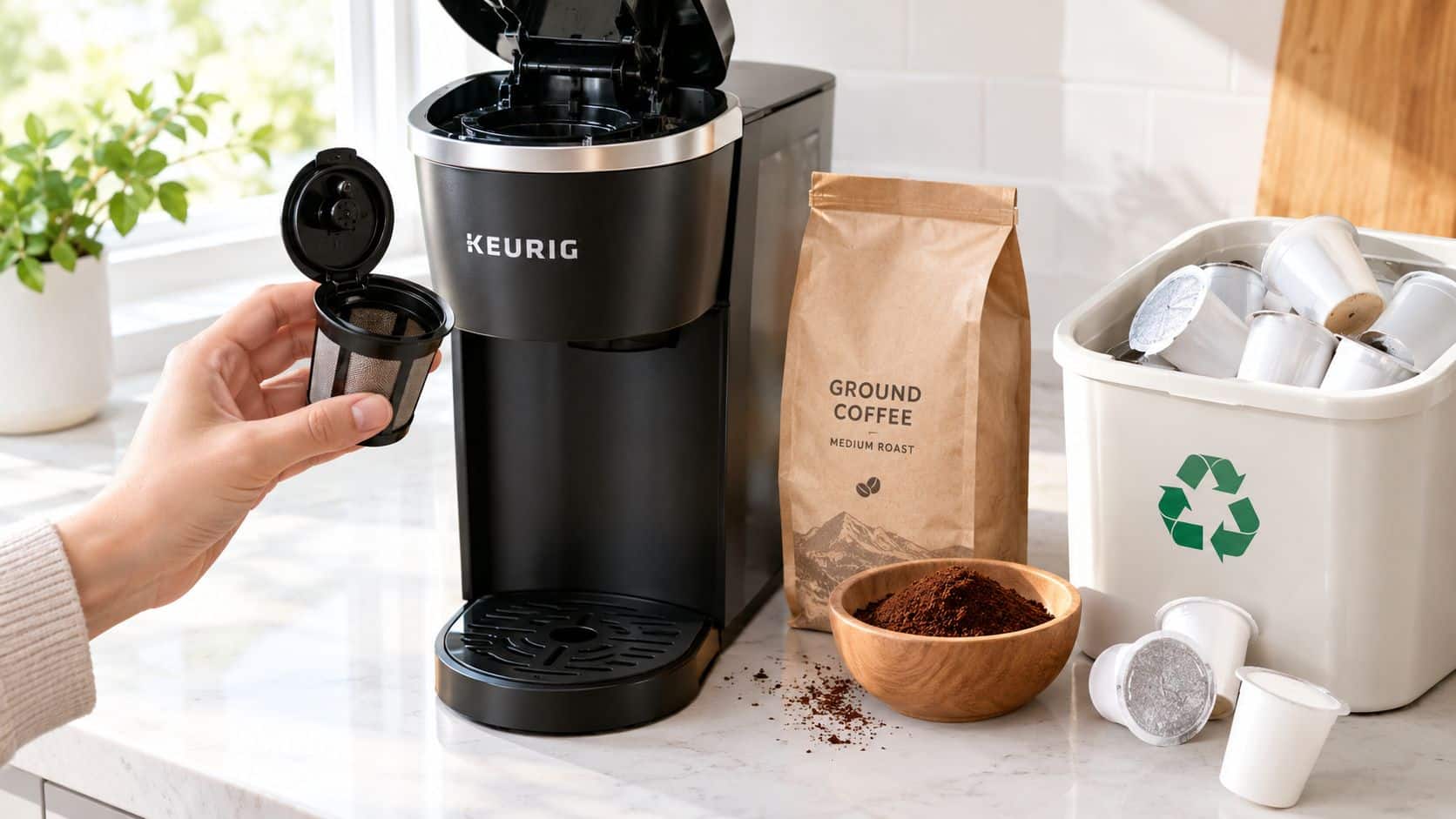
The Universal My K-Cup is a reusable coffee filter insert, not a sealed capsule. You place ground coffee inside a removable basket, close the lid, and let the brewer send hot water through the coffee bed. The filter holds the grounds while the brewed coffee exits through the lower mesh.
The assembly has several parts, and each part has a mechanical job.
The components that matter
- Outer filter holder: This rigid piece gives the insert its shape and lets it sit in the brewer's K-Cup chamber.
- Reusable filter basket: The basket contains the ground coffee and controls how water passes through the coffee bed.
- Lid: The lid closes over the basket and presents the correct surface to the brewer's puncture mechanism.
- Fill marking: The printed cup or travel-mug line limits the amount of coffee inside the basket. Keurig's instructions say to fill only to the marked line, place the filter into the holder, and brew normally, as shown in the official My K-Cup Universal instructions.
The filter isn't a pressurized pod. That distinction explains why grind size and loading technique affect the result. Fine espresso-style grounds can restrict water flow, while an overfilled basket can prevent the lid from sealing correctly. Medium ground coffee and a level bed work better than tightly packed grounds.
Why the brewer setup changes
Some Keurig brewers require removal of the larger outer plastic portion of the original K-Cup holder before the reusable filter can sit correctly. On certain K-Duo configurations, the 2.0 adapter and K-Cup holder may need removal for proper fit, according to retailer specifications for the Universal Reusable Coffee Filter.
MultiStream models introduce another consideration. Their multiple inlet streams distribute water through different points, so the reusable insert must align with that flow geometry. The MultiStream-compatible product listing identifies the Universal filter as compatible with MultiStream Technology.

Which Keurig Models It Really Fits
Keurig positions the My K-Cup Universal as the only Keurig-designed reusable filter approved for all Keurig home coffee makers. That claim applies to home brewers, not commercial Keurig equipment, and it doesn't erase the setup differences between model families. Keurig also warns owners of newer brewers not to use earlier reusable-filter versions because those filters may damage the brewer, as stated on the official My K-Cup Universal product page.
The practical breakdown is more useful than a blanket “fits all Keurigs” claim.
| Keurig Series | Insert Fits | 2.0 Adapter Needed | Notes |
|---|---|---|---|
| K-Classic, K-Select, K-Compact, K-Elite | Yes | No | Traditional home brewer setup |
| K-Cafe and K-Latte | Yes | Usually no | Check the holder and seat the insert fully |
| K-Supreme and K-Supreme Plus | Yes | No | MultiStream flow geometry requires the Universal design |
| K-Duo and K-Duo Plus | Yes | Model-dependent | Some setups require removal of the adapter and K-Cup holder |
| K-Express and K-Iced | Yes | Model-dependent | Compact internal hardware can make installation less obvious |
| K200, K250, K300, K350, K400, K450, K500, K550, K575 | Yes | Follow the brewer setup | The 2.0-era holder and adapter arrangement must be configured correctly |
| Older B40, B60, and B70 models | Yes | No | These discontinued 1.0-era models use the older home-brewer format |
| Commercial Keurig units | No | Not applicable | The Universal filter is approved for Keurig home brewers |
For a visual model check, use this reusable K-Cup compatibility guide. It's especially useful if the machine name includes K-Duo, K-Supreme, or K-Iced, because those families can contain different internal arrangements.
The honest answer: “Universal” means broad Keurig home-brewer approval. It doesn't mean you can leave every adapter and holder component in place.
How to Load, Brew, and Avoid a Messy Cup
Start with the brewer turned off and the pod chamber open. Remove any component that the model-specific instructions identify as incompatible, then place the Universal filter into the holder with the lid hinge facing upward. The filter should sit flat without force.
Use medium ground coffee. Add enough to reach the printed cup or travel-mug line, then tap the basket gently to level the bed. Don't tamp it like espresso. The basket needs open space so water can move through the grounds instead of building pressure against the lid or mesh.
A clean brewing routine
- Remove the adapter when required. Some 2.0 and K-Duo configurations need the adapter or the larger original holder component removed.
- Insert the filter correctly. Keep the lid hinge facing up and confirm that the basket sits evenly.
- Fill to the marked line. Overfilling is one of the fastest ways to force grounds through the filter or prevent a proper seal.
- Close the lid firmly. The brewer must engage the lid and puncture the correct top surface.
- Choose a sensible brew size. Use the smallest setting that matches your desired strength, and avoid exceeding the filter's practical capacity.
Keurig's manual specifically requires filling only to the marked cup or travel-mug line before brewing. For more loading examples and cleanup guidance, follow this guide to using coffee grounds in a Keurig.
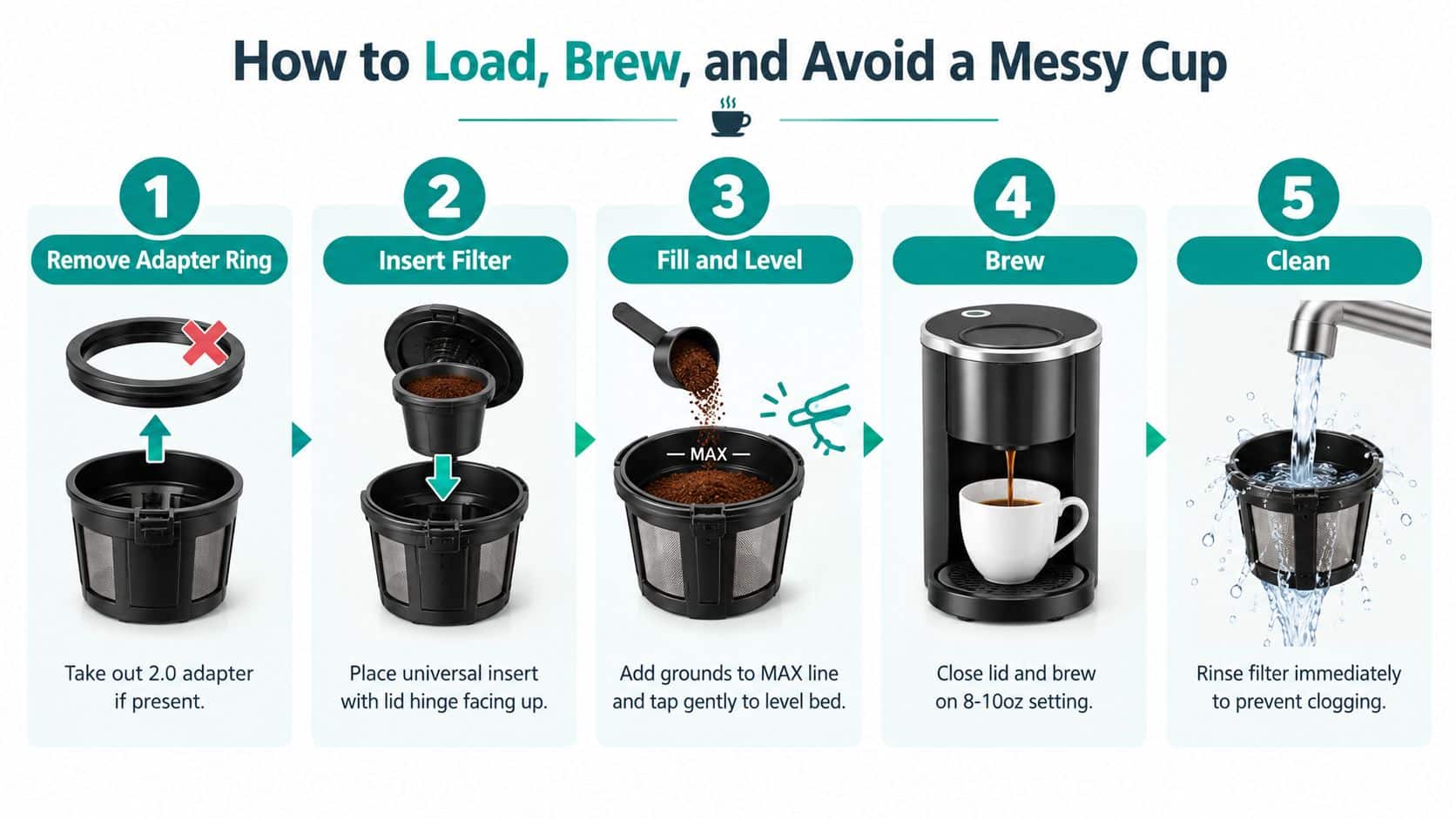
Rinse the basket immediately after brewing. Knock out the spent grounds, flush the mesh under running water, and check the exit area for trapped fines. If the filter brews slowly or retains coffee oils, give it a deeper wash with a soft brush and mild dish soap. A water filter and periodic descaling product can also support cleaner machine operation, but those maintenance items don't replace rinsing the reusable basket.
Universal Insert vs Plastic and Stainless Reusable Pods
The Keurig Universal My K-Cup is not automatically the right choice for every buyer. A generic plastic pod may cost less at checkout, while a stainless-steel filter may appeal to someone who prioritizes rugged construction. The important comparison is fit first, filtration second, and convenience third.
Generic pods often work adequately in traditional Keurig chambers, but their lids and outer dimensions can vary. That variation becomes a problem when the brewer uses an adapter, a different holder, or MultiStream flow. A stainless option can offer a durable mesh body, but it still needs to match the brewer's needle and holder design.
The Universal filter has a different advantage. Keurig designed it for its own home-brewer system, and the manufacturer identifies it as approved across the home lineup, including newer compatibility requirements. That makes it the strongest choice for owners who move between Keurig models or want to avoid guessing from a third-party product photograph.
| Pod Type | Grounds Retention | Keurig Compatibility | Avg. Lifespan | Approx. Cost |
|---|---|---|---|---|
| Keurig My K-Cup Universal | Designed for the Universal holder and compatible home-brewer setup | Broad home-brewer approval, with model-specific installation steps | Not specified by the manufacturer | Varies by retailer |
| Generic plastic reusable pod | Quality varies by mesh and lid design | Often model-dependent | Not specified by verified product data | Varies by retailer |
| Generic stainless reusable pod | Usually rigid and durable, but mesh and lid geometry vary | Must match the brewer's system | Not specified by verified product data | Varies by retailer |
The objection buyers usually raise
“Why not buy the cheapest reusable pod and see if it works?”
Because a pod that physically enters the chamber can still fail during brewing. It may sit too high, miss the intended seal, or conflict with MultiStream water entry. The retailer compatibility listing specifically connects the Universal design with MultiStream Technology, which is the fit detail generic listings often leave vague.
Choose generic plastic when you already know the exact fit and accept replacement uncertainty. Choose stainless when construction is your priority and the product explicitly matches your brewer. Choose the Keurig Universal when compatibility and predictable installation matter more than experimenting.
Common Problems and How to Fix Them
Most failures have a visible cause. Treat the filter like a small brewing system, not a disposable pod, and troubleshoot the coffee bed, seal, and holder in that order.
Grounds in the cup
Coffee grounds usually point to one of three problems: the basket is damaged, the coffee reaches above the fill line, or the grind is too fine. Inspect the mesh against a bright light, empty the basket, and reload it with a medium grind.
Fix: Replace a damaged filter, fill only to the marked line, and stop using espresso-fine coffee.
Water leaks around the holder
A lid that hasn't fully closed can leave a gap. The wrong adapter arrangement can also keep the filter from seating flat, particularly on compatible 2.0 or K-Duo setups. Check the hinge position, reseat the filter, and confirm that the lid clicks shut.
Fix: Remove the required adapter or holder component, then close the lid firmly without forcing it.
Coffee tastes weak or watery
A large brew volume can dilute the coffee bed beyond what the amount of grounds can support. Start with a smaller cup setting and fill to the marked line. If the coffee remains weak, check that the grind isn't excessively coarse and that the basket isn't underfilled.
Fix: Use a smaller brew size and a properly filled basket.
The brewer won't recognize the setup
Keurig 2.0 brewers introduced pod-recognition behavior that created compatibility problems for third-party accessories. The Universal filter is designed for the Keurig system, while generic plastic pods may depend on additional features or fail to register.
Fix: Use the approved Universal filter and configure the 2.0 holder according to the brewer's instructions.

If the brew slows after repeated use, the mesh may be holding coffee oils and fines. Rinse it immediately after each cup and perform a deeper clean when flow changes. This reusable K-Cup troubleshooting guide covers the same failure patterns from a broader accessory perspective.
Why a Refillable Pod Matters More Than Ever in 2026
The strongest case for a refillable pod isn't just convenience. It's control. You choose the coffee, the amount, and the filter routine instead of accepting a sealed capsule for every brew.
That argument has become more complicated because recyclability claims around single-serve pods have faced public scrutiny. In September 2024, NPR reported that the SEC said Keurig had misled the public about K-Cup recyclability claims, while Keurig continued to state that its pods use recyclable polypropylene, identified as #5, and that this material is broadly accepted in curbside programs across North America. The details appear in NPR's report on the Keurig K-Cup recycling controversy.
That doesn't make every disposable pod automatically unrecyclable, and it doesn't make every reusable filter effortless. It does make the waste question harder to dismiss. A reusable insert removes the disposable capsule from the brewing step, provided you use it consistently and clean it properly.
Why the genuine Universal is the safer recommendation
The Keurig-designed filter has three practical advantages:
- It matches the manufacturer's home-brewer ecosystem. Keurig identifies the Universal filter as approved across its home coffee makers.
- It addresses MultiStream fit. The insert is positioned for the flow geometry used by compatible MultiStream brewers.
- It clarifies maintenance. The instructions give a marked fill line and identify when holder components must be removed.
Third-party filters can still work, but compatibility claims deserve scrutiny. A product that fits a K-Classic may not seat correctly in a K-Supreme or a K-Duo configuration. Buyers should match the exact brewer, inspect the holder, and avoid earlier reusable-filter versions when Keurig warns that those versions may damage newer machines.
If you're ready to stop guessing, buy the genuine Keurig My K-Cup Universal Reusable Coffee Filter, verify your brewer's holder setup, and switch from disposable capsules before your next coffee routine locks you into another cycle of waste and cleanup.
PureHQ Inc. offers reusable K-Cup filters, brewer-specific options, water filters, descaling solutions, and cleaning tablets for Keurig systems, including K-Classic, 2.0, K-Supreme, K-Slim, and K-Duo models. Visit PureHQ Inc. to compare compatible reusable filters and maintenance accessories for a cleaner, more consistent home brew.

