
Coffee Machine Care
Master Your keurig k duo essentials: Complete 2026 Guide
Apr
You’re standing in the kitchen, half awake, trying to answer a small question that somehow feels bigger than it should.
Do you make one fast cup and get moving, or brew a full pot because other people might want coffee too?
That’s the daily friction the keurig k duo essentials solves. A single-serve machine is convenient until you’re brewing cup after cup for guests, family, or a work-from-home morning. A standard drip machine is fine until you’re left with a half carafe getting stale on the hot plate. Few consumers want two brewers on the counter to avoid that trade-off.
The appeal of this machine is simple. It gives you a pod side for speed and a carafe side for volume in one footprint. It was launched in 2021 with an MSRP of $99 as the entry-level model in the K-Duo line, which made it the obvious “I want both, but I don’t want to overspend” option for a lot of households, according to the official Keurig product page at keurig.ca.
That doesn’t mean it’s perfect.
This machine is convenient, but it also has quirks that only show up once you live with it. Reusable pod fit matters. Cleaning matters more than many owners expect. Some leaks and error lights need more than the basic manual steps. Those are the parts most quick reviews skip, and they’re exactly the parts that determine whether you enjoy this brewer or regret buying it.
The End of Your Morning Coffee Dilemma
Some coffee makers force you into a routine. The keurig k duo essentials is useful because it doesn’t.
One weekday morning, you want a single mug before a meeting. On Saturday, you want a full pot on the counter while the house wakes up. If your machine only does one job well, you end up wasting coffee, wasting pods, or wasting counter space with a second brewer.
Where most setups go wrong
A basic drip machine works when everyone drinks coffee at the same time. It’s clumsy when only one person wants a cup.
A single-serve pod machine does the opposite. It’s easy for one mug, but not ideal when you need several servings back to back.
That’s why this brewer makes sense for so many kitchens. It combines the quick decision-making of a pod machine with the practical side of a glass-carafe drip brewer.
You don’t buy this machine because it makes coffee in some magical new way. You buy it because it removes a daily hassle.
Why the budget positioning matters
Keurig didn’t place this model at the top of the line. It placed it at the accessible end.
That matters because the buyer for this machine usually isn’t chasing premium extras. They want one appliance that covers solo mornings, shared breakfasts, and occasional guests without pushing the budget too far. The keurig k duo essentials fits that role well.
A few trade-offs come with that lower entry price:
- You get versatility first: It handles both pods and ground coffee, which is the feature many users prioritize.
- You don’t get every premium flourish: If you’re shopping for a thermal carafe or more upscale design touches, this isn’t that machine.
- You need realistic expectations: This brewer works best for people who value convenience and flexibility more than luxury details.
For a lot of homes, that’s the right compromise. The machine earns its spot when it saves you from that repetitive morning debate over whether one cup or one pot makes more sense.
What Is the Keurig K-Duo Essentials Brewer
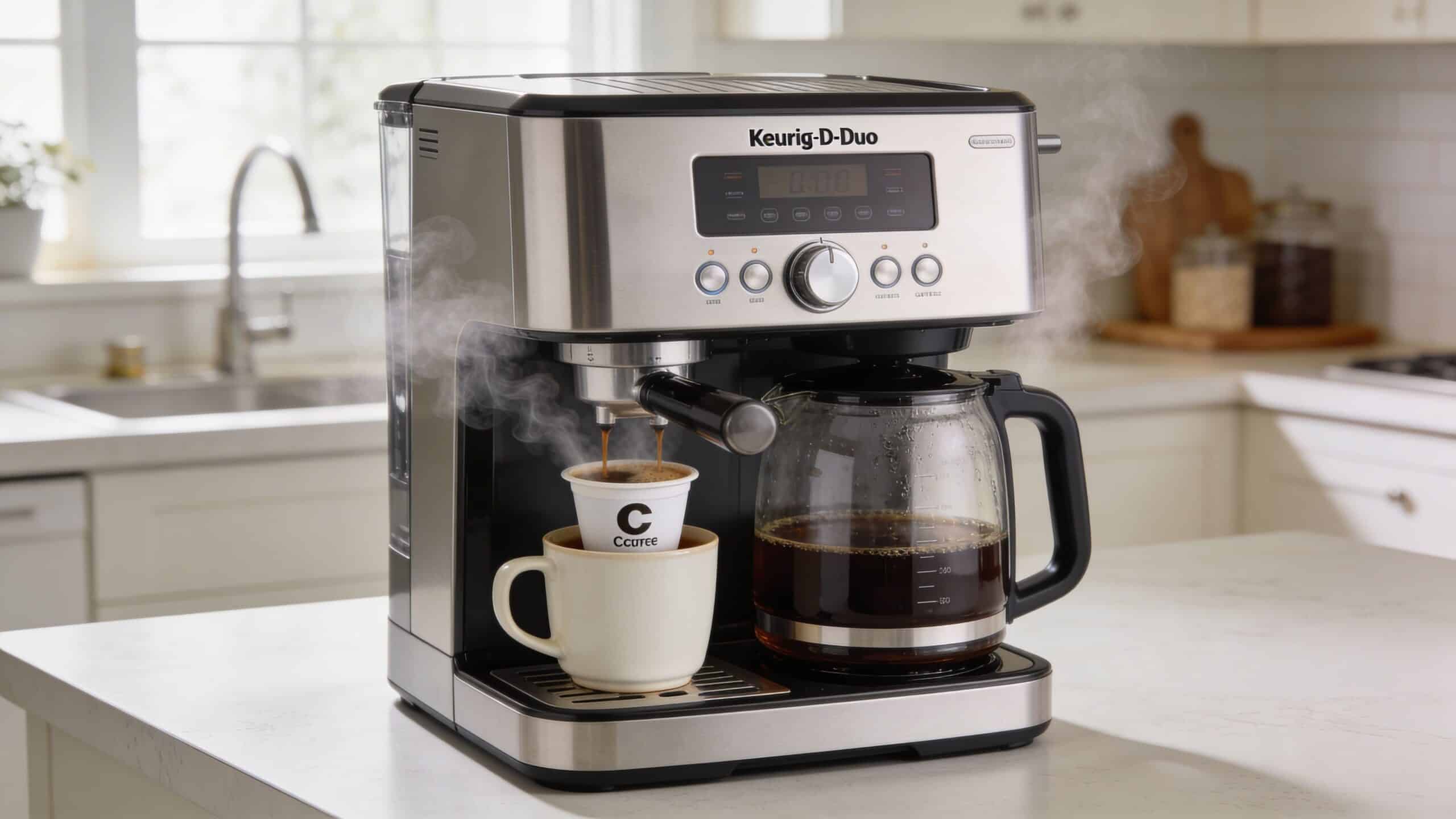
The Keurig K-Duo Essentials is a dual-format home brewer built for two different jobs. It makes single cups with K-Cup pods and full pots with ground coffee, using one machine and one shared water tank.
That setup sounds simple, but the layout is what makes it practical in real kitchens. The pod side handles quick weekday cups. The carafe side covers breakfast for two, guests, or anyone who drinks more than one mug and does not want to restart a single-serve machine over and over.
The core specs that matter
What owners care about day to day is straightforward:
- Single-serve side: Brews standard pod sizes for travel mugs and everyday cups
- Carafe side: Uses ground coffee and brews into a glass carafe
- Water system: One removable reservoir feeds both brewing modes
- Pause & Pour: Lets you grab a cup from the carafe before the cycle fully ends
- Smart Start: Heats and brews in one sequence instead of making you wait through a separate preheat step
The machine sits at the budget end of the K-Duo range, and that matters. You get the feature most households need, which is pod-plus-carafe flexibility, without paying for upgrades like a thermal carafe or extra programming. The trade-off is equally real. This model is more about convenience than refinement, so buyers expecting premium build touches usually end up wanting a higher-tier Duo.
How the machine is laid out
The left-right design keeps the learning curve low. On the pod side, drop in a capsule, set your mug, and brew. On the carafe side, add a paper filter or reusable basket, measure grounds, and start a batch.
The shared reservoir is one of the better parts of this design because it cuts down on the small annoyances that make combo brewers frustrating. There is one fill point, one tank to clean, and less counter clutter than keeping a pod machine and a drip brewer side by side.
It also opens up a useful cost-saving option. If you want to cut pod waste and lower your cost per cup, a coffee maker compatible with K-Cups and reusable pod options is easier to live with long term than a pod-only machine. That matters more after six months of ownership than it does on day one.
What this brewer is like to own
In practice, the K-Duo Essentials works best for households with mixed habits. One person wants a fast pod before work. Another wants a stronger, larger brew from fresh grounds. This machine handles both without forcing a compromise every morning.
It also fits buyers who care about reliability details that do not show up on the box. A shared-water dual brewer has more parts to keep clean than a basic drip machine. If the needle clogs, the pod side suffers. If the carafe basket area is neglected, overflow and messy brewing become more likely. Those are manageable issues, but they are part of owning this style of machine.
Who it fits best
| User type | Why it fits |
|---|---|
| Solo coffee drinker with occasional company | Fast single cups most days, full pot only when needed |
| Couple with different coffee habits | Pods for convenience, grounds for larger or less expensive batches |
| Small office or shared workspace | Individual cups during the day, carafe brewing for group use |
Counter space is usually not the problem. The bigger question is whether you want one flexible machine with a few maintenance quirks, or two separate brewers taking up more room and more outlets.
The K-Duo Essentials is for buyers who want the first option. It is a practical brewer, not a specialty machine, and it does its best work in kitchens where flexibility matters more than premium extras.
K-Duo Essentials vs Other Keurig Duo Models
Most buyer confusion starts with the name.
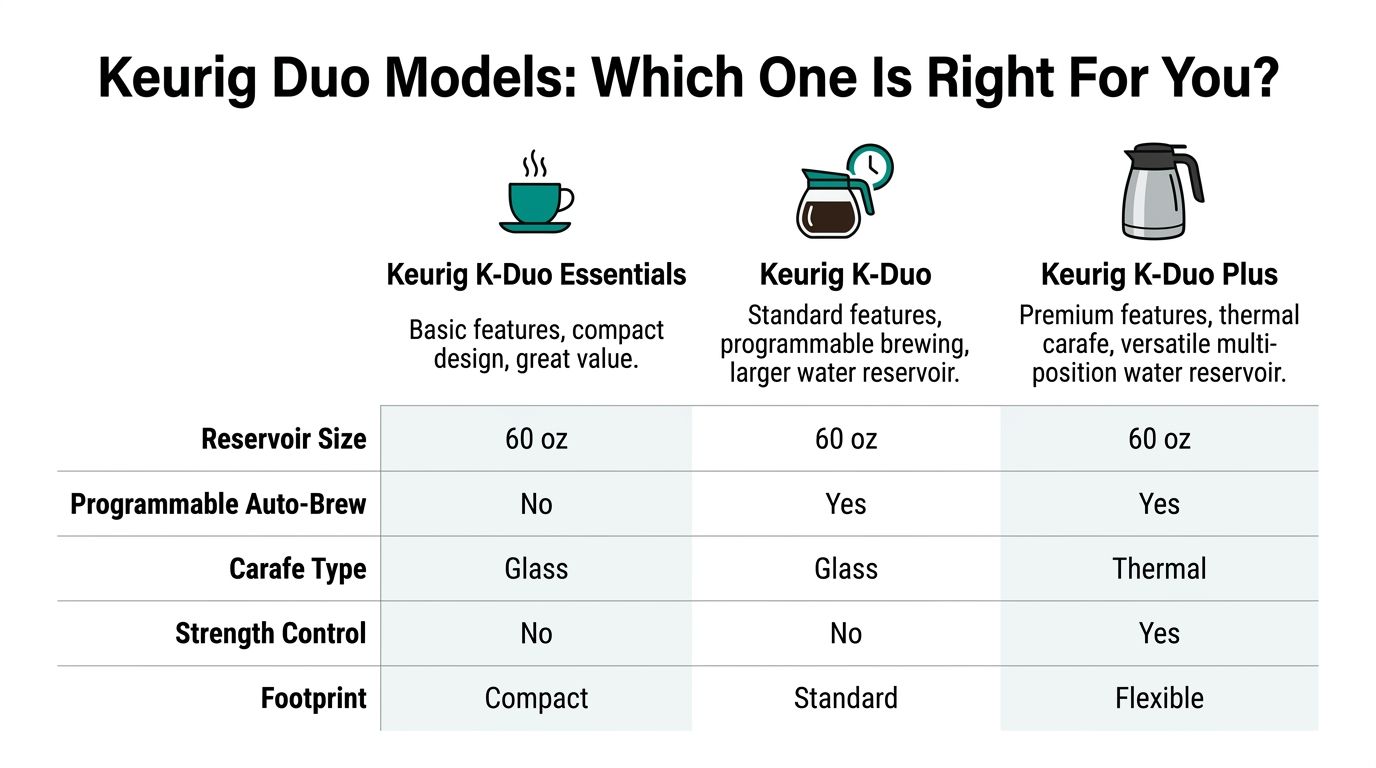
People see K-Duo Essentials, K-Duo, and K-Duo Plus and assume the differences are minor. They aren’t. The right choice depends less on coffee taste and more on how you use your counter space, how much convenience you want, and whether premium features are important to you.
Keurig K-Duo Model Comparison
| Feature | K-Duo Essentials | K-Duo (Standard) | K-Duo Plus |
|---|---|---|---|
| Reservoir Size | 60 oz | 60 oz | 60 oz |
| Programmable Auto-Brew | No | Yes | Yes |
| Carafe Type | Glass | Glass | Thermal |
| Strength Control | No | No | Yes |
| Footprint | Compact | Standard | Flexible |
Which buyer each one fits
The K-Duo Essentials is the value pick. It makes sense for buyers who want dual brewing without paying for upgrades they may never use.
The standard K-Duo suits people who want a step up in convenience, especially if scheduled brewing matters to them.
The K-Duo Plus is for buyers who care about a thermal carafe, stronger premium feel, and a more adaptable layout.
If you’re still sorting out whether a dual brewer is the right category at all, this guide to a coffee maker compatible with K-Cups is useful because it frames the bigger decision beyond just the Keurig family.
Trade-offs that affect daily use
Here’s where the choice becomes practical instead of theoretical.
- Essentials keeps the price and complexity down: Good if you want simple buttons and basic dual-brew capability.
- Standard K-Duo adds convenience features: Better if you care about setting brews ahead of time.
- Plus improves heat retention and flexibility: Better if the carafe sits on the counter for a while after brewing.
Buy the model that matches your routine, not the one with the longest feature list.
The common objection
A lot of shoppers worry that the Essentials will feel “too basic.”
Sometimes that’s true. If you know you want a thermal carafe or more premium controls, skipping straight to the Plus can save you from immediate upgrade regret. But many owners never need those extras. They want coffee, not a feature tour.
For that buyer, the keurig k duo essentials often lands in the sweet spot. It handles the two jobs that matter most and leaves out the things that mainly raise the price.
How to Get the Perfect Brew Every Time
This machine is easy to use badly.
That’s not an insult to the brewer. It is characteristic of any dual machine. Good results depend on matching the brew method to the right coffee, the right fill level, and the right expectations.
For K-Cup brewing
The single-serve side is designed for convenience first. Use it when speed matters or when only one person is drinking coffee.
A few habits make a noticeable difference:
- Choose the cup size on purpose. If a pod tastes too weak at 12 oz, move down to 10 oz or 8 oz.
- Use Strong Brew when you want more body. It’s the better choice for dark roasts that can taste flat at larger cup sizes.
- Keep the pod area clean. Old grounds around the puncture area often show up as bitterness, drips, or debris in the cup.
For carafe brewing
The carafe side rewards a little discipline. Measure the grounds, use an even bed, and don’t guess.
The Walmart listing notes that the 60 oz reservoir serves both brew types and can reduce refill frequency by up to 50% compared with typical 40-oz single-serve machines, and it also states that correct dosing matters, including a max 15 tbsp for carafe when using compatible reusable filtration approaches. That same source adds that following the Specialty Coffee Association’s 1:16 coffee-to-water ratio can improve taste consistency by 15-20% over pre-packaged pods at walmart.com.
That sounds technical, but the practical meaning is simple: if your carafe coffee tastes weak, don’t just blame the machine. Most often, the dose is off.
If you use reusable filters
Reusable brewing is where many owners either love this machine or start fighting with it.
What works:
- Use the correct grind: Medium works better than very fine coffee, which can slow flow and increase sediment.
- Respect the fill line: Overfilling causes sloppy extraction and can contribute to overflow issues.
- Rinse immediately after brewing: Grounds dry fast and become much harder to remove cleanly.
What doesn’t work:
- Packing grounds tightly
- Using espresso-fine coffee
- Assuming all reusable pods fit equally well
If a reusable pod gives you random leaks, weak coffee, or spray, suspect fit first and coffee second.
Features that help in real use
Two convenience features deserve more attention than they usually get.
- Smart Start saves a step. The machine heats and brews in one sequence, so you’re not babysitting a warm-up cycle.
- Pause & Pour helps on rushed mornings. If you absolutely need a cup before the full pot finishes, you can pour mid-brew briefly without creating a huge mess.
For daily use, the winning approach is simple. Use pods when speed matters. Use the carafe side when coffee quality and volume matter more. The machine does both, but it performs best when you don’t force one side to behave like the other.
Essential Maintenance to Prevent Common Failures
A K-Duo Essentials usually gives warning signs before it fails. Brew times get longer. The pod side starts sputtering. The carafe side leaves more water in the basket than it should. Catch those early, and you avoid the leak and clog complaints that send many owners into a cleanup spiral.
The maintenance routine that matters
This machine does not need a complicated care plan. It needs a few habits done on time, especially if you switch between pods and ground coffee.
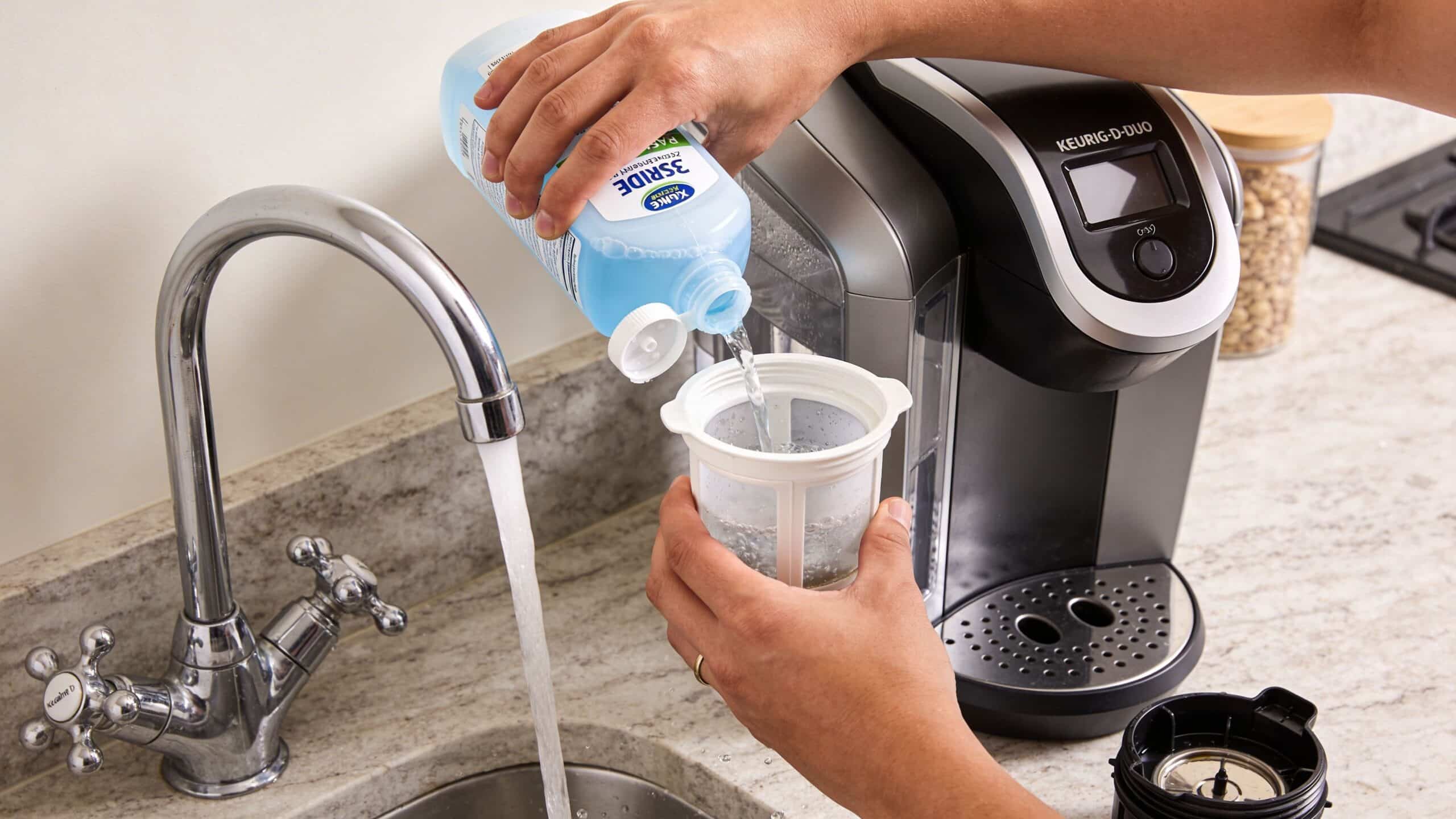
After pod brewing, check the pod holder for loose grounds and coffee spray. After carafe brewing, empty the basket while the grounds are still damp, then rinse it before oils dry onto the mesh and plastic. Wipe the reservoir seat and the area under the brewer head often. That small step prevents false water-reading issues caused by splashes, scale dust, or debris where the tank meets the machine.
Descaling matters more on this model than many owners expect. If you have hard water, every skipped cycle raises the odds of slow flow, temperature inconsistency, and stubborn warning lights. A clear, step-by-step guide on how to descale a Keurig is more useful in real kitchens than relying on memory six months later.
Why hard water causes outsized trouble
Hard water is rough on dual-function brewers because both brew paths depend on steady water movement and clean internal passages. Scale narrows those passages, throws off heating, and can make the machine act unreliable even when nothing is technically broken.
The cheapest fix is prevention. If your sink and kettle already collect mineral residue, your brewer is doing the same thing internally. Using filtered water cuts down on descaling frequency and usually improves taste at the same time. If you are comparing options, this overview of water filtration systems for your home is useful background.
Reusable accessories also affect maintenance more than the manual admits. Third-party reusable pods and permanent filters can save money and reduce waste, but poor-fit versions leave extra grounds behind and create more cleanup around the puncture area and basket. Good accessories make the machine cheaper to own. Bad ones create mystery messes that look like a brewer problem.
Needle cleaning is required
Clogged needles cause a lot of erratic brewing on the pod side.
Clean them gently with the proper tool or the method recommended for the brewer. The goal is to clear packed coffee, not force metal parts out of alignment. If the machine suddenly starts spraying, underfilling, or brewing unevenly after a run of darker or finer-ground pods, I would inspect the needles before assuming a bigger fault.
This video gives a visual sense of the cleaning process and what owners should inspect when flow starts getting erratic.
Clean brewing parts while residue is fresh. Dried coffee oils, damp grounds, and mineral film are what turn a normal machine into an unreliable one.
Troubleshooting Leaks Clogs and Error Lights
This is the part owners usually search for after they’re already annoyed.
The machine says Add Water when the tank is full. Water appears where it shouldn’t. Grounds show up in the cup. You descale, rinse, clean, and the problem still isn’t gone.
According to the Keurig support-related information provided for this model, up to 40% of troubleshooting queries involve persistent “Add Water” errors or leaks not solved by basic cleaning, and the official descaling process takes 75 minutes, yet many users still report unresolved issues at support.keurig.com.
If the Add Water alert won’t clear
Start with the obvious, but don’t stop there.
- Reseat the reservoir: Lift it off, check for debris on the contact area, and place it back firmly.
- Check for trapped air: A machine that sat empty or was moved can behave oddly until water flow normalizes.
- Inspect for scale near water pathways: If the alert persists after basic cleaning, internal mineral buildup is often part of the problem.
If the issue clears briefly and then returns, that usually points to flow inconsistency rather than an empty tank.
If the machine leaks
Leaks need location, not guesswork.
Leak around the pod side
This usually points to one of three issues:
- A pod isn’t seated correctly.
- Grounds or foil fragments are blocking a proper seal.
- A reusable pod doesn’t fit the brewer cleanly.
When the seal is off, pressure sends water sideways instead of through the coffee bed.
Leak around the carafe side
This is often less dramatic and more annoying. Coffee may drip because the basket is overloaded, the carafe isn’t aligned properly, or residue is interfering with the drip-stop behavior.
If you’re seeing overflow with ground coffee, reduce the dose and check the grind. Too fine and too full is a bad combination.
Why clogs are more common than many owners expect
Recent models reportedly have tighter needle tolerances, which can make clogs worse when using ground coffee. That matters most for users of reusable pods or those who grind coffee too fine.
The symptom chain is familiar:
- weak flow
- sputtering brew
- stray grounds
- inconsistent cup volume
When a K-Duo starts brewing unevenly, don’t assume the pump is failing first. Check for a partial clog first.
When descaling doesn’t solve it
When descaling doesn’t solve it, frustration often arises. They complete the full cycle and expect a reset in performance.
Sometimes scale wasn’t the only issue. Sometimes the needle area is still dirty. Sometimes a poor-fitting reusable pod is creating pressure problems that descaling can’t fix. And sometimes the machine has a hardware fault.
A simple decision tree helps:
| Symptom | Most likely first check |
|---|---|
| Add Water with full tank | Reservoir seating and flow path |
| Grounds in cup | Needle clog or overfilled reusable pod |
| Water leaking at pod area | Pod fit and seal cleanliness |
| Slow or partial brew | Scale buildup or clogged puncture area |
If you’ve cleaned the needles, reseated the reservoir, checked pod fit, and run a proper descale, but the machine still behaves unpredictably, stop forcing it through repeated cycles. That usually creates more mess than insight.
The Best Accessories for Your K-Duo Essentials
Accessories for the keurig k duo essentials fall into two camps.
One camp makes the machine easier to own. The other creates problems that look like machine defects but are really accessory defects.
That difference matters most with reusable pods and filtration parts.
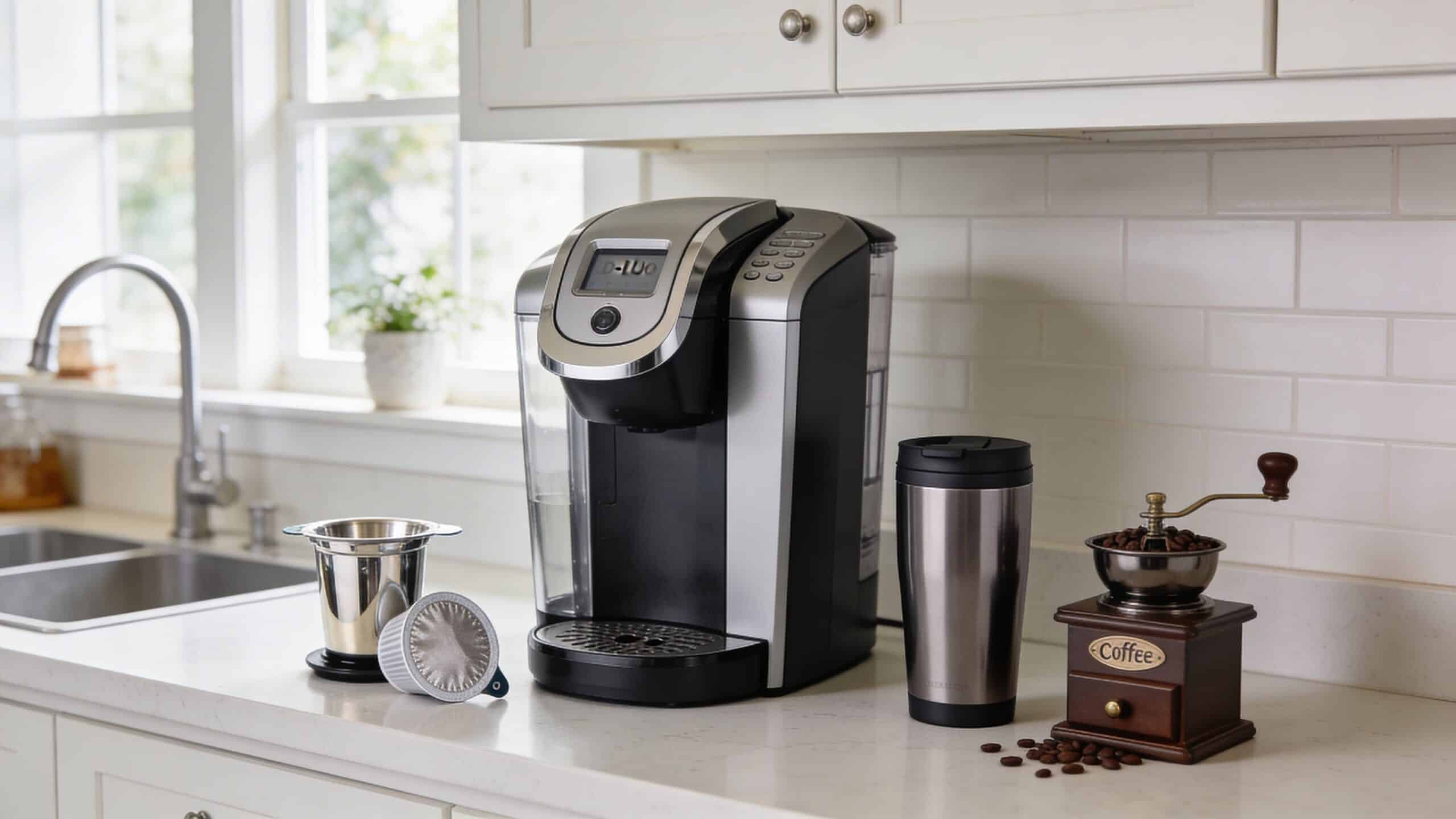
Why generic accessories often disappoint
Official Keurig materials focus mainly on Keurig-branded accessories, but they leave a gap around third-party performance. The K-Duo Essentials use and care documentation also doesn’t give much detail on reusable K-Cups, and reports on similar models show generic pod failure rates as high as 20-30% because of poor seals and incompatibility with Keurig pressure sensors, as noted in the K-Duo Essentials user guide materials.
That matches what owners usually experience in practice. The cheapest reusable pod often looks fine until it starts leaking, spraying, or brewing weak coffee.
Premium product vs generic alternative
| Factor | Tested reusable or model-specific accessory | Generic low-cost alternative |
|---|---|---|
| Fit | More likely to seat correctly | More likely to sit unevenly |
| Seal quality | More consistent | Often the weak point |
| Cleaning | Easier when mesh and seams are well made | Can trap grounds in awkward corners |
| Durability | Better for repeat use | More likely to warp or wear faster |
| Brew consistency | More predictable | More hit-or-miss |
The accessories worth caring about
- Reusable pod or mesh filter: Good for ground coffee, lower waste, and more control over flavor.
- Paper liners for reusable pods: Helpful if you want easier cleanup and fewer loose grounds.
- Water filtration: Useful if your tap water affects taste or scale buildup.
- Descaling products: Necessary ownership item, not an optional extra.
One model-specific option is this reusable mesh coffee filter for Keurig K-Duo Essentials, which is built for the brewer’s compatibility range instead of trying to fit every pod machine on the market.
The objection most buyers have
The usual objection is fair: “Why pay more for a reusable accessory when generics are everywhere?”
Because poor fit causes real problems. If a pod seal fails, the coffee tastes worse and the mess makes you think the brewer is broken. If the mesh is awkward to clean, owners stop using it. If the body flexes, consistency disappears.
The smart buy is the one that fits, seals, and cleans without drama. On this machine, accessory quality isn’t a luxury detail. It has direct impact on leaks, clogs, and whether reusable brewing feels worth it.
Answering Your Top K-Duo Essentials Questions
Can I use any ground coffee in the carafe side
Yes, but grind size matters.
A standard medium grind is the safest starting point. Coffee that’s too fine can slow the brew and increase sediment or overflow risk. Coffee that’s too coarse can taste thin.
Why am I getting coffee grounds in my single cup
Usually one of two things is happening.
The needle area needs cleaning, or the reusable pod is overfilled. Both problems interfere with water flow and can push grounds where they don’t belong.
Can I brew hot water for tea
Yes, but keep the brew path clean if you care about taste.
If you regularly switch between coffee and tea, rinse the relevant parts first. That reduces stale coffee residue in the cup.
Why does my coffee taste weak on this machine
Most weak brews come from a mismatch between brew size and coffee dose.
On the pod side, choose a smaller size if the coffee tastes diluted. On the carafe side, measure your grounds carefully instead of eyeballing it.
Is the glass carafe a problem
Not for everyone.
A glass carafe is perfectly workable if you drink the pot fairly soon after brewing. If you want longer passive heat retention without a warming plate, that’s where a premium thermal-carafe model starts to make more sense.
Is the keurig k duo essentials worth buying
It is for the right user.
If you want one affordable brewer that handles both a quick pod coffee and a larger pot, it’s a practical machine. If you want more premium controls, fewer compromises, or a thermal carafe, one of the higher models will probably fit better.
The bigger point is this: owners usually like this brewer most when they treat it like a versatile kitchen workhorse, keep it clean, and use accessories that fit.
If you want your brewer to run cleaner and make reusable brewing less frustrating, shop compatible accessories from PureHQ Inc.. Focus on the items that solve real problems first, especially reusable K-Cup options, filtration, and descaling supplies made for day-to-day Keurig ownership.

