
Coffee Machine Care
Keurig K Classic K50 Water Filter
Oct
You can stand at the counter with a new or inherited Keurig K-Classic K50, look into the reservoir, and still not know whether you're missing a part or looking at a design you don't need to touch. That confusion is common because the keurig k classic k50 water filter question usually starts with a slot in the tank and ends with conflicting answers about whether the brewer includes a filter at all. The good news is that the answer is simple once you separate the holder from the cartridge, and once you treat filtration as a taste tool rather than a cure-all.
Why the K50 Filter Question Feels More Confusing Than It Should
Lift the lid on a new or inherited brewer, and the reservoir can look like it should contain a filter even when nothing is missing. Some owners assume the machine should have come with one already installed. Others see the open space and think a part has been left out. Retail listings add to the confusion by talking about the holder and cartridge as if they were the same item.
That is why the question feels so frustrating. You are not chasing a hidden feature. You are trying to tell whether you need a part, or just need to understand how the tank is meant to work.
The simple reason the answers conflict
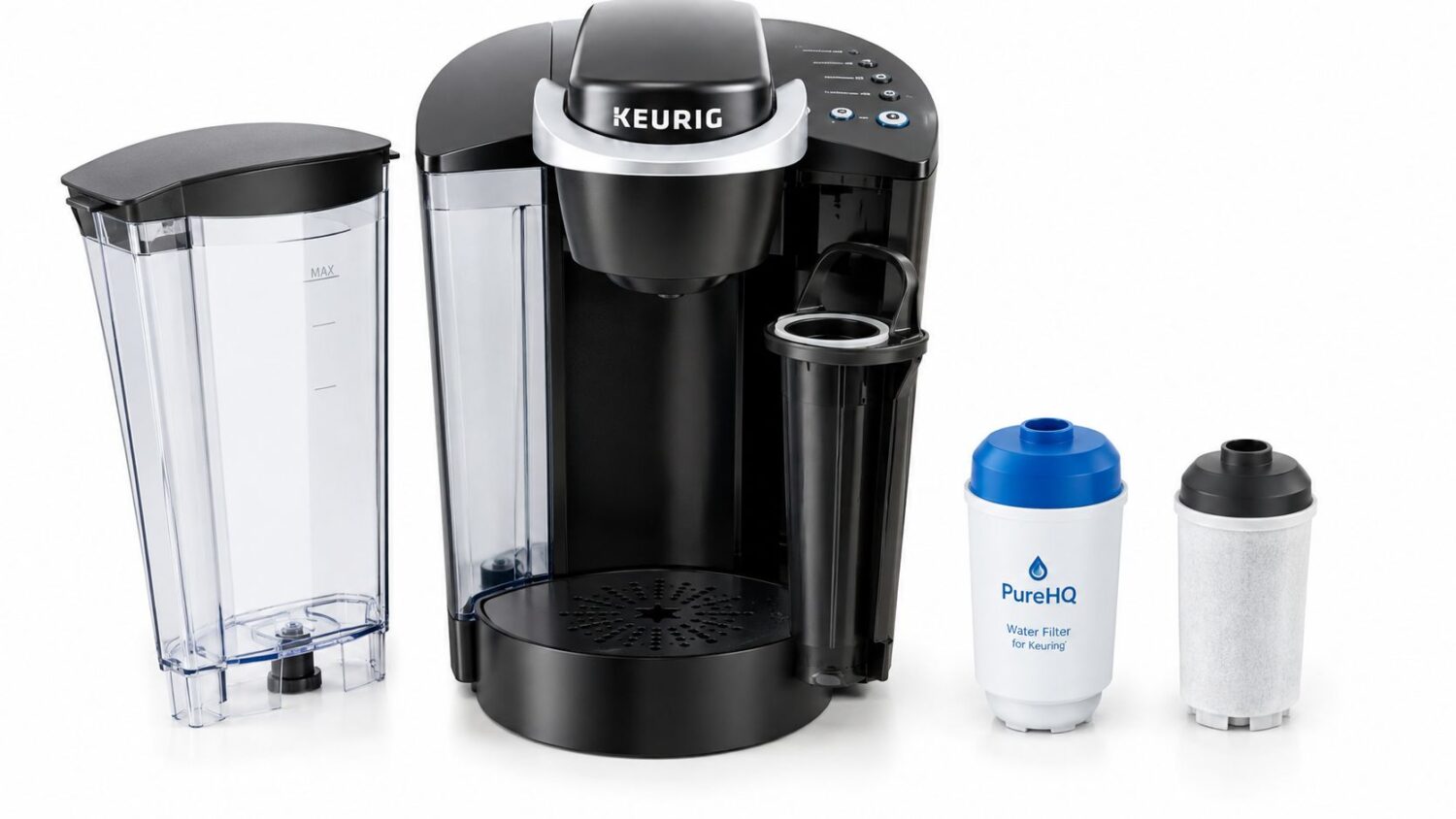
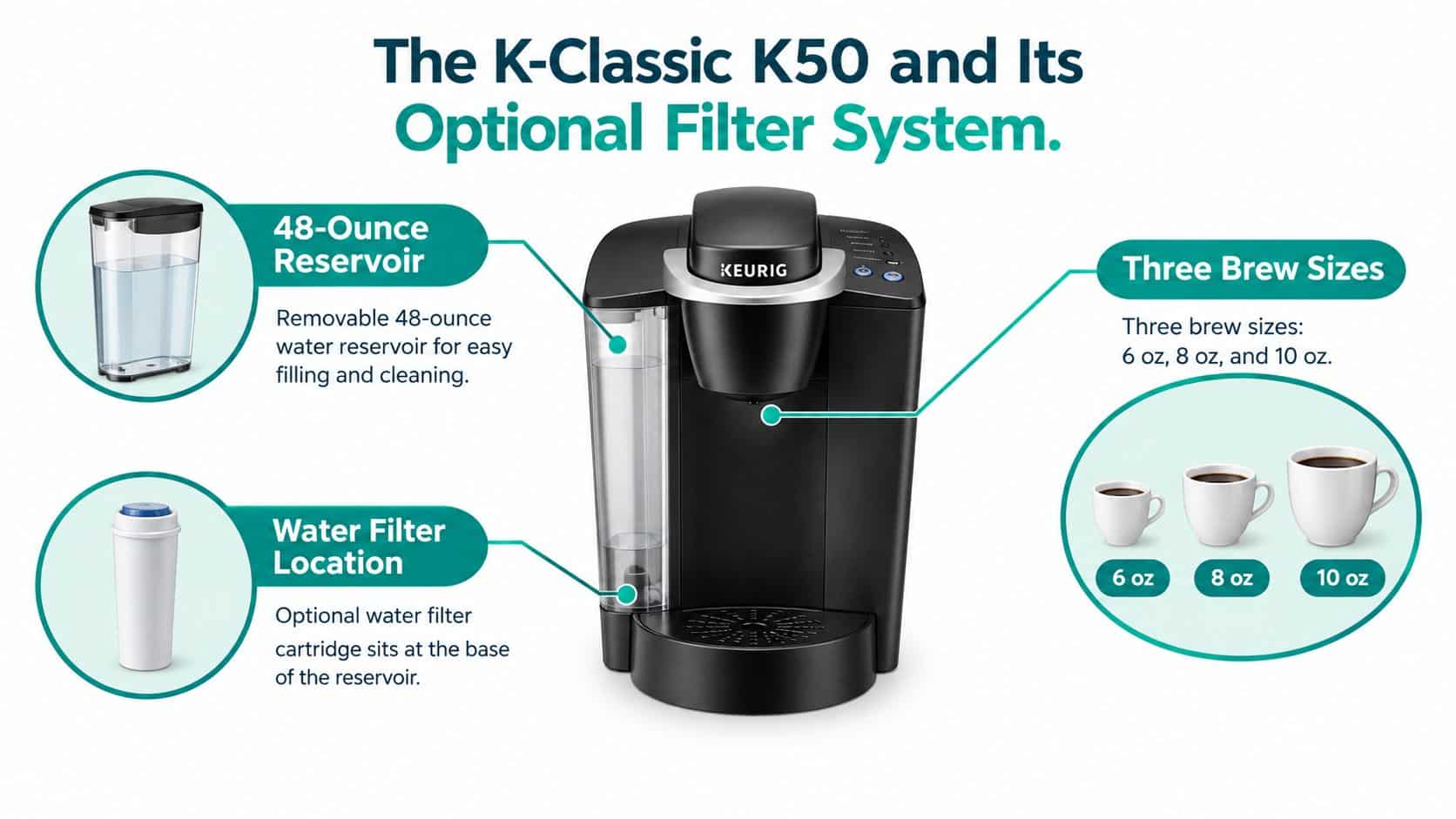
The K-Classic K50 is built around a removable 48-ounce water reservoir, and it offers 6, 8, and 10-ounce brew sizes with 1,500-watt heating for quick use in kitchens and breakrooms, according to the Keurig K-50 Classic coffee maker documentation. Its water-filter setup is not a permanent part of the brewer. Keurig's own care guide says, “If you have a Keurig Water Filter, install it now,” which shows the filter is an optional accessory rather than a fixed internal component (Keurig care guide).
That difference matters because the cartridge alone cannot work by itself. It has to sit inside the correct holder, and the holder has to match the reservoir design. If you bought only a replacement cartridge, but the plastic holder is not already clipped into the tank, there is nowhere for it to go.
Practical rule: if you cannot point to the holder inside the reservoir, you do not have a cartridge problem yet. You have a missing-hardware problem.
Compare your reservoir layout against Keurig's holder diagram before buying a cartridge. A quick setup walk-through is available in Water Filter Advisor's K50 setup guide. For a broader compatibility check, use this model guide on Keurig filter presence to compare the reservoir layout with your own machine.
Understanding the K-Classic K50 and Its Optional Filter System
A K-Classic K50 is easier to understand if you follow the water path. Water enters the 48-ounce removable reservoir, passes through the optional filter holder if one is installed, then travels into the brew path for one of the three serving sizes. That layout keeps the machine compact and leaves enough tank capacity for several cups before a refill.
The filter sits at the bottom of the reservoir, not inside the brew chamber. That is why it gets overlooked so often. People look for a visible slot on the body of the brewer and miss the fact that the system lives inside the tank.
Holder first, cartridge second
The holder is the plastic frame that clips into the reservoir. The cartridge is the activated-carbon insert that fits inside that frame. If you have only one of those pieces, you do not have a complete setup.
As the Keurig care guide cited earlier states, the filter is installed only if the owner already has the system. That wording makes the setup clear. The brewer does not come with a built-in filter hidden somewhere in the base.
For replacements, the question is not whether the package says coffee filter. It is whether the cartridge fits the tall-handle holder used in the K-Classic reservoir. That compatibility check matters because the holder and cartridge have to match before water can pass through the carbon bed the way it should.
A loose fit can let water bypass the cartridge.
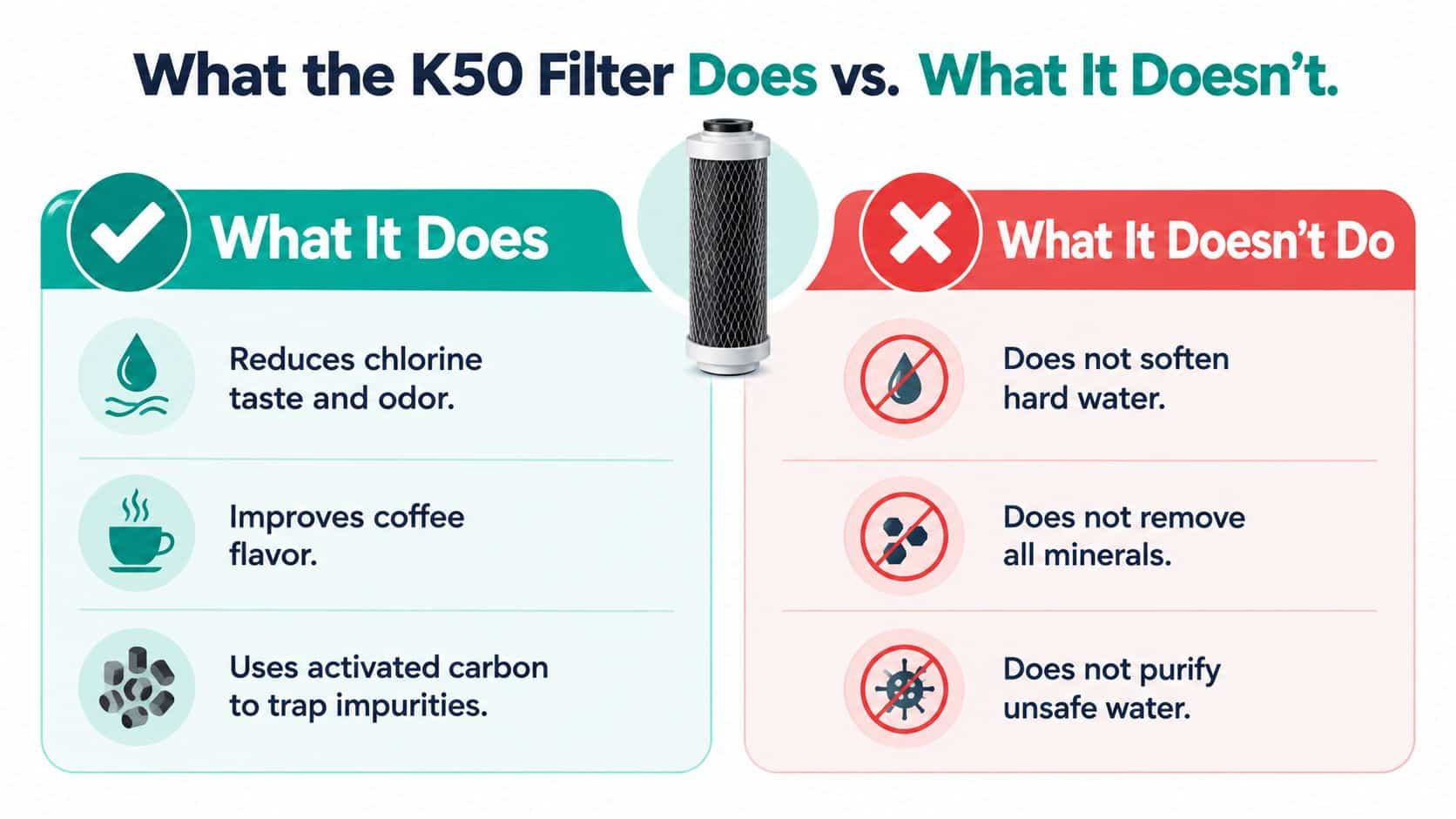
You can also compare your reservoir layout with Water Filter Advisor's K50 setup guide if you want a visual walkthrough, and PureHQ's Keurig filter compatibility article shows the holder layout side by side. The comparison chart below also helps separate what the cartridge does from what it does not do.
What a Keurig K-Classic K50 Water Filter Does to Your Water
A K50-compatible cartridge is a small activated-carbon treatment stage, not a universal purifier. Its role is narrow, but useful. It targets the taste and smell issues that can make coffee seem flat, metallic, or harsh even when the pod is fine.
Activated carbon works by adsorption and catalytic reduction, and independent water-treatment evidence reports free-chlorine removal commonly above 94% under evaluated conditions, though performance depends on carbon quality, contact time, flow, and incoming water chemistry (water-treatment evidence). In plain terms, the filter can make tap water taste cleaner before it reaches the coffee grounds.
What it improves, and what it doesn't
The first change you usually notice is flavor. Chlorine-related odor drops, and the coffee tastes closer to what you expected from the pod. That is the main benefit in a home or breakroom brewer.
Carbon filtration has limits. The same body of water-treatment evidence is clear that carbon alone does not address hardness minerals or dissolved salts. It also should not be treated as a guarantee against every microbial contaminant. A cartridge can improve taste without changing the mineral load in the water.
That distinction matters because taste and scale are separate problems. You can brew a smoother cup after changing the filter and still need descaling later, especially if your water is hard. Filtration helps the water that goes into the cup, while descaling handles the mineral buildup that stays behind.
For a closer look at how filtered water changes the cup itself, this Keurig water-quality guide explains the flavor side in practical terms.
Useful mental model: the filter improves what goes into the cup, but it does not erase what hard water leaves behind.
That is why a new cartridge can make coffee taste smoother while the brewer still needs descaling later. Filtration and descaling work on different parts of the problem, so one does not replace the other.
Installing and Replacing the K50 Filter Step by Step
Start with the reservoir, not the cartridge. If the tank is empty and you only see smooth plastic, the tall-handle holder is missing, and that is different from a worn filter insert. If the holder is present, you should see a plastic frame that sits near the base of the reservoir.
A new cartridge should be soaked in fresh water for the time printed on its package before installation. That first rinse helps prepare the carbon and clears loose particles before the brewer sees any water. After soaking, seat the cartridge fully in the holder so it sits straight and snug.
How to install it without guessing
Place the loaded holder back into the reservoir so it rests below the waterline. If it wobbles or floats out of alignment, water can slip around the filter media instead of moving through it. Fit matters here more than the label on the box.
Per the Keurig care guide quoted earlier, remove the filter assembly before cleaning the brewer or reservoir. After washing or descaling, put the holder and cartridge back in place before refilling.
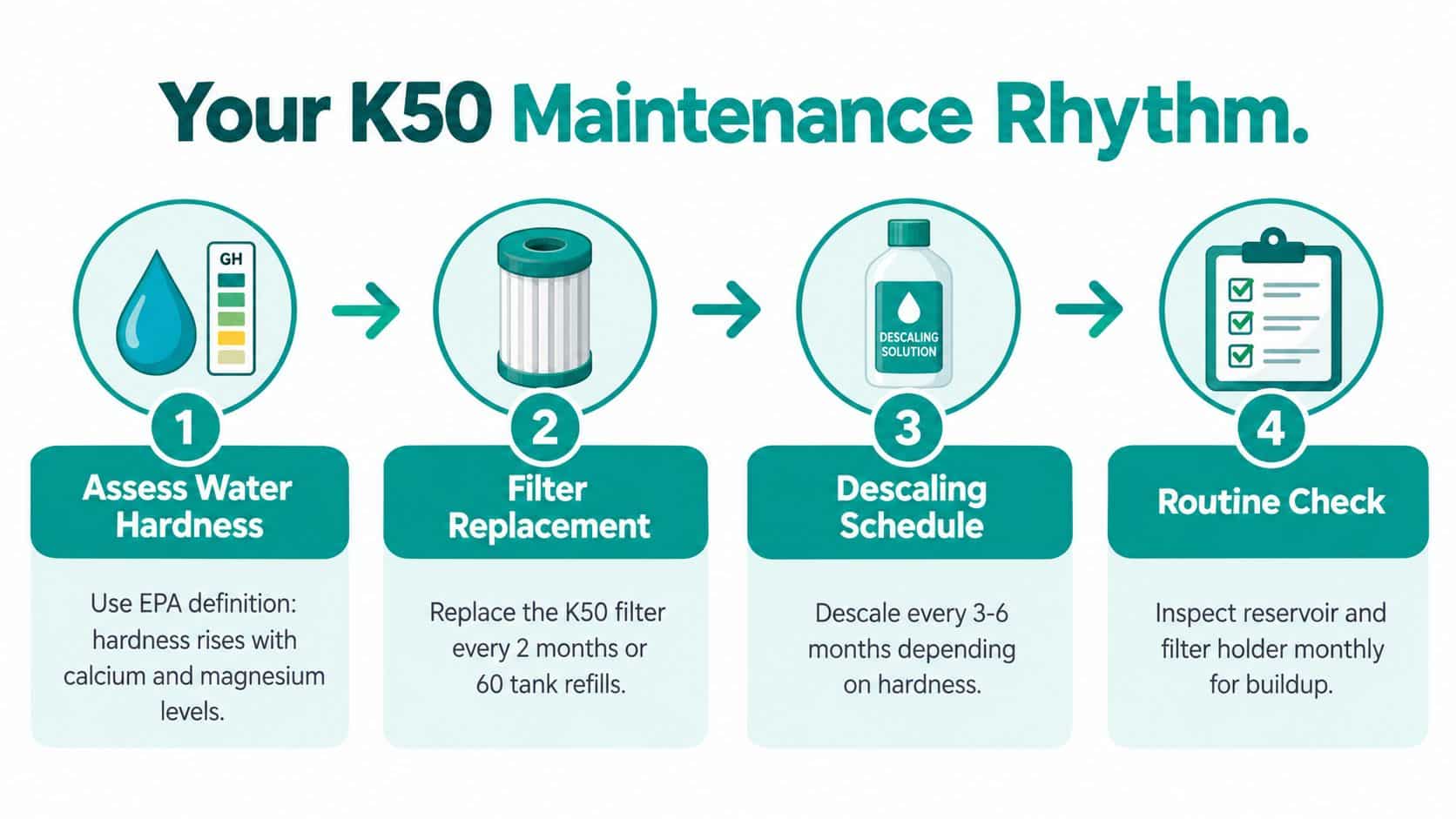
Replacement timing should follow use, not just the calendar. The usual rule for this style of filter is every two months or about 60 reservoir refills, whichever comes first (Keurig support on water filter replacement). A home brewer that sees a few cups a day ages the cartridge differently from a busy office, so refill count often gives a clearer cue than the month alone.
A small household may reach the calendar limit first. A small workplace can hit the refill count sooner, which means the filter can wear out even if only a short time has passed.
PureHQ-Compatible Filters vs Generic K50 Cartridges
A compatible cartridge should fit the holder cleanly, move water through the carbon evenly, and stay physically stable in the reservoir. That sounds simple, but it's where cheaper replacements often show their weaknesses. The most common objection is valid, a buyer worries the cartridge won't seat properly or will leak around the sides.
The comparison below focuses on what affects a K50 owner.
| Criteria | PureHQ-Compatible Cartridge | Generic Cartridge |
|---|---|---|
| Fit in tall-handle holder | Designed to seat securely in compatible K50 holder systems | May feel loose or require repeated adjustment |
| Carbon consistency | Built for even water contact through the cartridge bed | Can vary more in media packing and water flow |
| Housing durability | Sturdy enough to keep shape in repeated removal and cleaning | Thinner housings can flex or warp more easily |
| Leak resistance | Better chance of a snug seal when matched to the correct holder | More risk of bypass if the fit is inconsistent |
| Taste performance over time | More consistent chlorine-taste reduction when installed correctly | Taste can return early if water channels around the media |
Why fit matters as much as filter media
A cartridge with decent carbon still fails if water slips around it. That's the main risk behind a loose fit. The holder can be correct, the brewer can be correct, and the water can still bypass the media if the housing doesn't sit tightly in place.
For a K50 owner, that kind of shortcut usually shows up in two ways. The first is a chlorine taste that returns sooner than expected. The second is a cartridge that feels wobbly every time the reservoir is lifted for cleaning or refilling.
A well-made compatible filter behaves like an original by matching the holder dimensions closely enough to create a stable seal. That doesn't make it magical, it just means the water is more likely to pass through the carbon instead of around it. A generic cartridge can still work if it fits well, but the buyer has less reason to expect consistency from batch to batch.
PureHQ sells compatible activated-carbon water filters for Keurig brewers, including the K-Classic K50, and also offers descaling supplies that fit the same maintenance routine. The pairing makes sense because the filter handles taste, while the descaler handles the scale already formed in the machine.
A filter choice should answer one question first, will it stay seated under real use, not just in the box.
Building a K50 Maintenance Rhythm That Combines Filtration and Descaling
A K50 brewer can taste fine at first and still need two different kinds of care. Filtration handles what you drink. Descaling handles what has already settled inside the machine.
Water hardness sets the pace. The U.S. Environmental Protection Agency says hardness comes from calcium and magnesium, and Virginia Cooperative Extension uses below 7 grains per gallon, or 120 mg/L, as a rough point where treatment is generally not needed (Virginia Cooperative Extension hardness guide). That makes the filter question easier to sort out, because you can judge the water itself instead of guessing from taste alone.
Soft water usually means the cartridge can do most of the flavor work. Harder water can still leave mineral scale in the heated water path even when the cup tastes better. The EPA home water treatment guide notes that scale can build up in plumbing fixtures and appliances, which is why a cleaner-tasting brewer may still need descaling (EPA home water treatment guide).
A simple schedule you can actually follow
For a typical household, a new filter on the two-month or 60-refill rhythm is a practical starting point, with descaling added when the brewer shows mineral buildup. A small office that runs the K50 more often should watch refill count more closely, because usage matters more than the calendar.
The filter and the descaler solve different problems. The cartridge improves taste at the water entry point, while the descaler clears mineral residue already inside the brewer. If you want a plain-language reference for the second job, this Keurig descaling guide follows the same basic maintenance logic.
- Weak or thin brews: Check for scale in the water path before blaming the filter alone.
- Slow flow: Mineral buildup can narrow passages and make the brewer work harder.
- Recurring descale lights: The machine is signaling that the internal path needs attention, even if the water tastes fine.
Get the Right K50 Filter and Keep Your Brewer Brewing
If you own a Keurig K-Classic K50 and want cleaner-tasting water, the right setup is a compatible cartridge matched to the correct tall-handle holder, replaced on the two-month or 60-refill rhythm. That gives you the taste benefit the filter can deliver without expecting it to solve mineral scale on its own.
If your water is hard, pair the cartridge with a descaler so you're handling both jobs separately. That combination is what keeps the brewer tasting right and running smoothly instead of treating one maintenance step like a substitute for the other.
PureHQ Inc. offers compatible Keurig water filters and descaling supplies for owners who want to keep a K-Classic K50 working cleanly without guesswork. If you're ready to match the right filter to your brewer and add a descaler to the routine, visit PureHQ Inc. and shop the compatible options.

