
Coffee Machine Care
How to Clean Breville Coffee Maker: A Step-by-Step Guide for Flawless Espresso
Jan
Did you know that over 70% of high-end espresso machine failures can be traced back to one simple thing? Neglected cleaning. It’s a shocking statistic, especially when you’ve invested in a premium Breville machine expecting years of café-quality coffee, only to have it fail from a preventable issue.
The problem starts silently. First, it’s a subtle bitterness that creeps into your morning shot, making your expensive, freshly roasted beans taste disappointingly flat. Then you notice the flow seems weaker, the crema isn't as rich, and you're constantly fiddling with the grind settings, trying to recapture that perfect extraction you used to nail every time. The joy of your coffee ritual slowly turns into a frustrating daily battle.
This isn't a problem with your beans or your technique. It’s a direct result of two invisible enemies building up inside your machine: rancid coffee oils and rock-hard mineral scale. But there's a straightforward solution. By adopting a simple, tiered cleaning schedule, you can eliminate both of these flavor-killing culprits, protect your machine from catastrophic failure, and guarantee that every single cup you brew tastes as amazing as the first.
The Hidden Reason Your Coffee Tastes Bitter
Ever pull a perfect-looking shot from your Breville, only to find it tastes sour or just… off? You used fresh, high-quality beans, your grind was dialed in, but the result is disappointing. The culprit is almost always an invisible buildup of gunk inside your machine.
It’s shocking, but rancid coffee oils can start to degrade the flavor of your brew in as little as seven days. That leaves a foul aftertaste that no amount of expensive coffee beans can cover up.
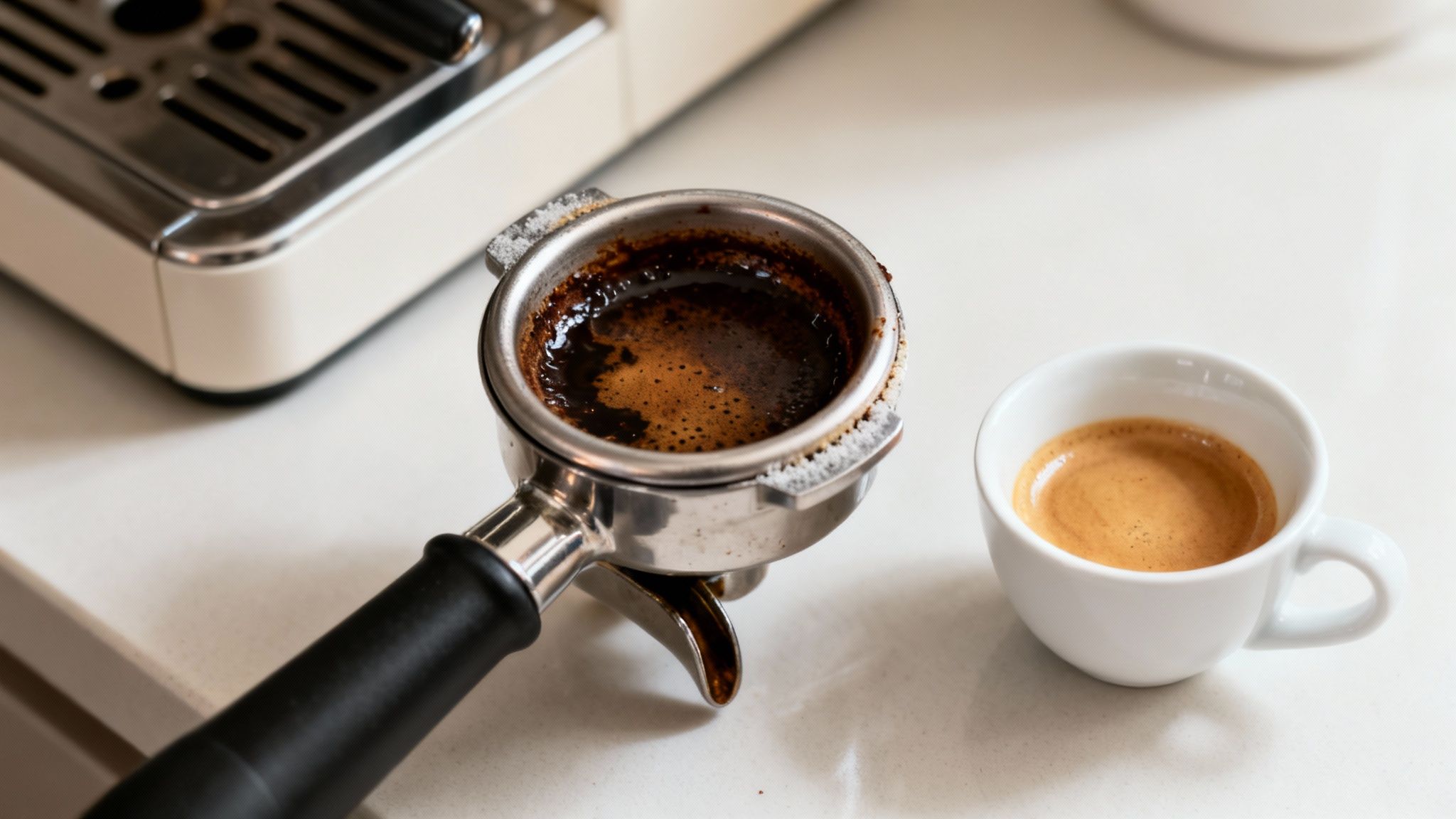
But this isn't just about taste. It's about protecting your investment. Over time, mineral deposits from your water—also known as limescale—slowly coat the internal heating elements and pipes. This buildup forces the machine to work harder and harder, which eventually leads to weak water flow, fluctuating brew temperatures, and even catastrophic (and expensive) pump failures.
Why a Quick Rinse Just Won't Cut It
A lot of people think running some hot water through the group head is enough. Unfortunately, it’s not. Water alone simply can't dissolve the sticky, oily film that coffee grounds leave behind.
On the flip side, some folks reach for household cleaners like vinegar. While it might seem like a good idea, vinegar's acidity can be too harsh for the sensitive internal seals and aluminum components inside a Breville, potentially causing corrosion and leaks down the road. This is where products designed specifically for coffee machines really shine.
| Feature | PureHQ Machine Care Products | Standard/Generic Alternatives |
|---|---|---|
| Formula Efficacy | Formulated to dissolve coffee oils and mineral scale without harming internal parts. | May contain harsh acids (like vinegar) that can corrode seals and aluminum. |
| Component Safety | Tested for compatibility with Breville's sensitive components, ensuring no damage. | Often unverified, risking leaks or long-term damage to the machine. |
| Taste Preservation | Leaves no chemical residue, resulting in a cleaner, purer coffee flavor. | Can leave behind a chemical or vinegary aftertaste that ruins your coffee. |
We hear it all the time: "Why spend money on special cleaning supplies?" But think about it this way: a single repair for a scale-damaged water pump can easily cost over $200. A full year's supply of high-quality descaler and cleaning tablets is just a fraction of that, making it a pretty smart investment to keep your machine out of the repair shop.
At the end of the day, cleaning your Breville isn't a chore—it's the secret to unlocking that consistently amazing cup you bought the machine for in the first place. Once you get into a simple rhythm with the right tools, it becomes an effortless habit.
The absolute cornerstone of any deep clean is using the best descaler for your coffee machine. To keep every other part of your machine in top shape, you'll also want to have cleaning tablets and fresh water filter replacements on hand.
This guide will walk you through exactly how to make cleaning a quick and simple part of your coffee ritual.
Your Essential Breville Cleaning Schedule
Here’s a stat that might make you wince: over 70% of espresso machine failures can be traced back to one thing—skipping the cleaning routine. It’s a staggering figure, especially when you’ve invested in a premium machine like a Breville expecting café-quality coffee. But slowly, an invisible enemy starts sabotaging every single shot.
This enemy is a one-two punch of rancid coffee oils and stubborn mineral scale. The oils turn bitter, tainting your beautiful, fresh beans with a foul, stale taste. At the same time, limescale is silently choking the internal pipes and heating elements. This is what causes temperature instability and that weak, sad-looking water flow you might have noticed.
Suddenly, you’re constantly fiddling with your grind settings and troubleshooting shots, frustrated that you can't pull that perfect extraction you used to nail every time. The joy of your morning ritual gets replaced by a sense of dread. You start wondering if today’s the day your expensive machine finally gives up.
But the solution isn't to spend an hour every day scrubbing your machine like you're prepping a commercial café for opening. The real key is a simple, tiered schedule that makes maintenance feel effortless. By breaking down the process into quick daily habits, a weekly reset, and a monthly deep clean, you can protect your investment and ensure every cup tastes exactly as it should.
Daily Tasks in Under Two Minutes
Think of this as basic kitchen hygiene for your coffee maker. These aren't chores; they are tiny habits that stop major buildup before it ever gets a foothold.
- Wipe and Purge the Steam Wand: As soon as you're done steaming milk, wipe the wand with a damp cloth and then purge it for a second or two. This tiny step prevents milk residue from hardening into a nasty crust that’s a pain to remove and can harbor bacteria.
- Rinse the Portafilter: Once you’ve knocked out the used coffee puck, give the portafilter and basket a quick rinse with hot water. This washes away leftover grounds and oils. If you let them sit, those oils will literally bake onto the metal.
Honestly, these two steps combined take less time than grinding your next shot, but they make a world of difference in keeping funky flavors out of your cup.
The Weekly Backflush Ritual
This is your most powerful weapon against the gunk—the built-up coffee oils—hiding inside the group head. That's the heart of your machine. Backflushing forces water and a cleaning solution back through the system, dissolving and flushing out the residue that a simple rinse just can't touch.
| Feature | PureHQ Cleaning Tablets | Standard Alternatives |
|---|---|---|
| Formula | Concentrated, food-safe formula specifically designed to dissolve stubborn coffee oils and residue from group heads and portafilters. | Generic formulas that may be less effective, requiring multiple cycles, or may leave a chemical aftertaste. |
| Compatibility | Precisely sized and formulated for a perfect fit and optimal performance in Breville's backflush cleaning cycle. | Often inconsistently sized, leading to poor dissolution or getting stuck in the blind filter basket. |
| Residue | Rinses completely clean, leaving zero aftertaste and ensuring the pure flavor of your coffee shines through. | Can leave soapy or chemical residues that taint the taste of your next several espresso shots. |
A common customer concern is that compatible cleaning tablets might not dissolve properly or could damage their machine. We engineered PureHQ tablets to dissolve at the exact temperature and pressure of a Breville cleaning cycle. This ensures a thorough flush without leaving any sediment behind, which is critical for protecting your machine’s delicate internal solenoids.
For more general tips, our comprehensive guide on how to clean any coffee maker has you covered.
The Monthly Deep Clean
Once a month, it's time to tackle limescale and refresh your water filtration. This boils down to two key tasks: descaling the machine to remove mineral buildup from the boiler and pipes, and replacing the water filter to prevent new scale from forming in the first place.
Using a quality descaler and regularly swapping out your water filters are absolutely crucial for extending the life of your machine. It’s the difference between a machine that lasts a few years and one that lasts a decade.
By following this simple tiered schedule, you turn maintenance from a daunting chore into a manageable and rewarding routine.
A simple calendar can make all the difference between remembering your maintenance and forgetting until it's too late. Here's a quick look at how to break it down.
Your Breville Cleaning Calendar At a Glance
| Frequency | Key Tasks | Why It's Important |
|---|---|---|
| Daily | Purge/wipe steam wand, rinse portafilter. | Prevents immediate milk and oil buildup. Keeps daily flavor pure. |
| Weekly | Backflush with a cleaning tablet. | Deep cleans the group head of hidden, rancid coffee oils. |
| Monthly | Descale the machine, replace the charcoal water filter. | Removes internal limescale and prevents new scale from forming. |
Sticking to a schedule like this means your machine is always ready for you, not the other way around. No more surprise off-flavors or weak shots—just consistently great coffee.
Mastering the Deep Clean: Descaling and Backflushing
That little "Clean Me" light on your Breville isn't just a friendly suggestion. Think of it as a desperate plea from your machine's internal components. When you ignore it, you're creating a perfect storm for bad coffee and eventual disaster.
Inside the group head, stale, rancid coffee oils are building up, tainting every single shot with a bitter, foul taste you just can't seem to diagnose. It's frustrating. You're left wondering why your expensive beans suddenly taste so off.
But an even worse menace is forming inside the boiler and pipes. Limescale, the chalky mineral deposit left behind by heated water, is slowly constricting your machine's arteries. This forces the pump to work harder and harder, leading to weak steam pressure, unstable brew temperatures, and eventually, a catastrophic failure that turns your beloved coffee station into a very expensive paperweight.
This is the point where many owners either pay for a costly repair or, even worse, give up on their machine entirely. The solution, however, is a straightforward monthly deep clean that tackles both of these issues head-on, preserving your machine's health and your coffee's flavor. This visual guide breaks down the essential cleaning rhythm for your Breville, from daily touch-ups to monthly deep cleans.
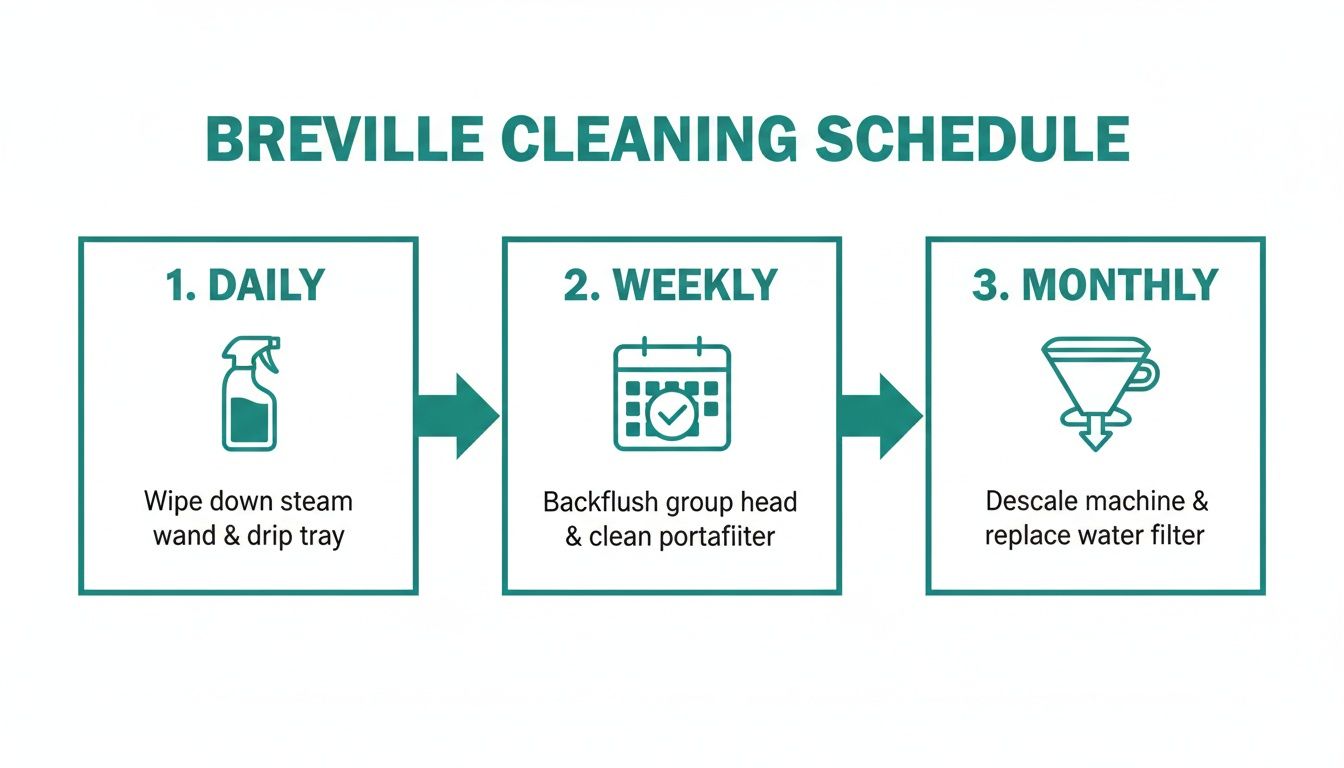
As you can see, combining small daily habits with more intensive weekly and monthly tasks creates a sustainable maintenance routine that prevents major issues before they start. To fully equip your cleaning station, consider a complete kit including our powerful descaler and premium cleaning tablets.
Conquering the Backflush Cycle
Backflushing is essentially flossing for your machine. It purges the group head—the part where the portafilter locks in—of all that nasty, built-up coffee oil. It's incredibly simple and makes a huge difference in taste.
- First, pop the single-shot filter basket into your portafilter.
- Next, insert the small, grey silicone cleaning disc that came with your machine right into that basket.
- Place one cleaning tablet on top of the disc.
- Lock the portafilter into the group head just like you're pulling a shot.
- Now, press and hold the 1-cup and 2-cup buttons simultaneously, then press the power button to kick off the cleaning cycle.
Your machine will run a series of pressure cycles for about five minutes, dissolving and flushing out all the gunk. It’s a crucial step that directly impacts how clean and pure your coffee tastes. For a more detailed look, check out our full guide on using cleaning tablets for coffee machines.
The Non-Negotiable Descaling Process
Descaling is, without a doubt, the single most important task for ensuring your Breville’s longevity. It involves running a special solution through the machine to dissolve the limescale that chokes its internal components. Ignoring this isn't just a bad idea; it’s a direct path to machine failure.
To effectively tackle mineral buildup, you'll want to use a high-quality special descaler for espresso machines and coffee makers. A well-formulated solution is tough on scale but gentle on your machine's delicate seals and metal parts.
| Feature | PureHQ Universal Descaler | Standard Vinegar Solution |
|---|---|---|
| Formula | Formulated with food-grade acids that target limescale without corroding sensitive aluminum and rubber parts. | Contains acetic acid, which can be too aggressive for internal seals, leading to leaks and permanent damage over time. |
| Effectiveness | Highly effective at removing even stubborn scale in a single cycle, ensuring optimal water flow and temperature. | Often requires multiple, lengthy cycles and may not fully dissolve heavy scale deposits, leaving harmful blockages behind. |
| Rinsing & Taste | Rinses cleanly from the system, leaving zero chemical or flavor residue behind to taint your next brew. | Can leave a strong, lingering vinegar taste and smell that is difficult to flush out completely, ruining your coffee's flavor. |
One concern we hear is the fear of using a non-Breville product. Some users worry a universal descaler might not be "strong enough" or could cause leaks. But a premium descaler like PureHQ's is specifically engineered to be safe and effective across a wide range of machines. Its balanced formula dissolves mineral scale without being corrosive, protecting the very components that vinegar can harm.
Maintaining Your Grinder Hopper and Water Filter
It's a frustratingly common story. You descale your Breville religiously, backflush the group head, and polish the portafilter until it shines. Yet, your espresso still tastes… off. Bitter, flat, or just plain disappointing.
You could have the cleanest machine in the world, but if you're ignoring the grinder and the water filter, you're only fighting half the battle. Stale, oily coffee grounds clinging to the burrs will instantly taint your expensive fresh beans. Meanwhile, hard water is silently suffocating your machine from the inside out.
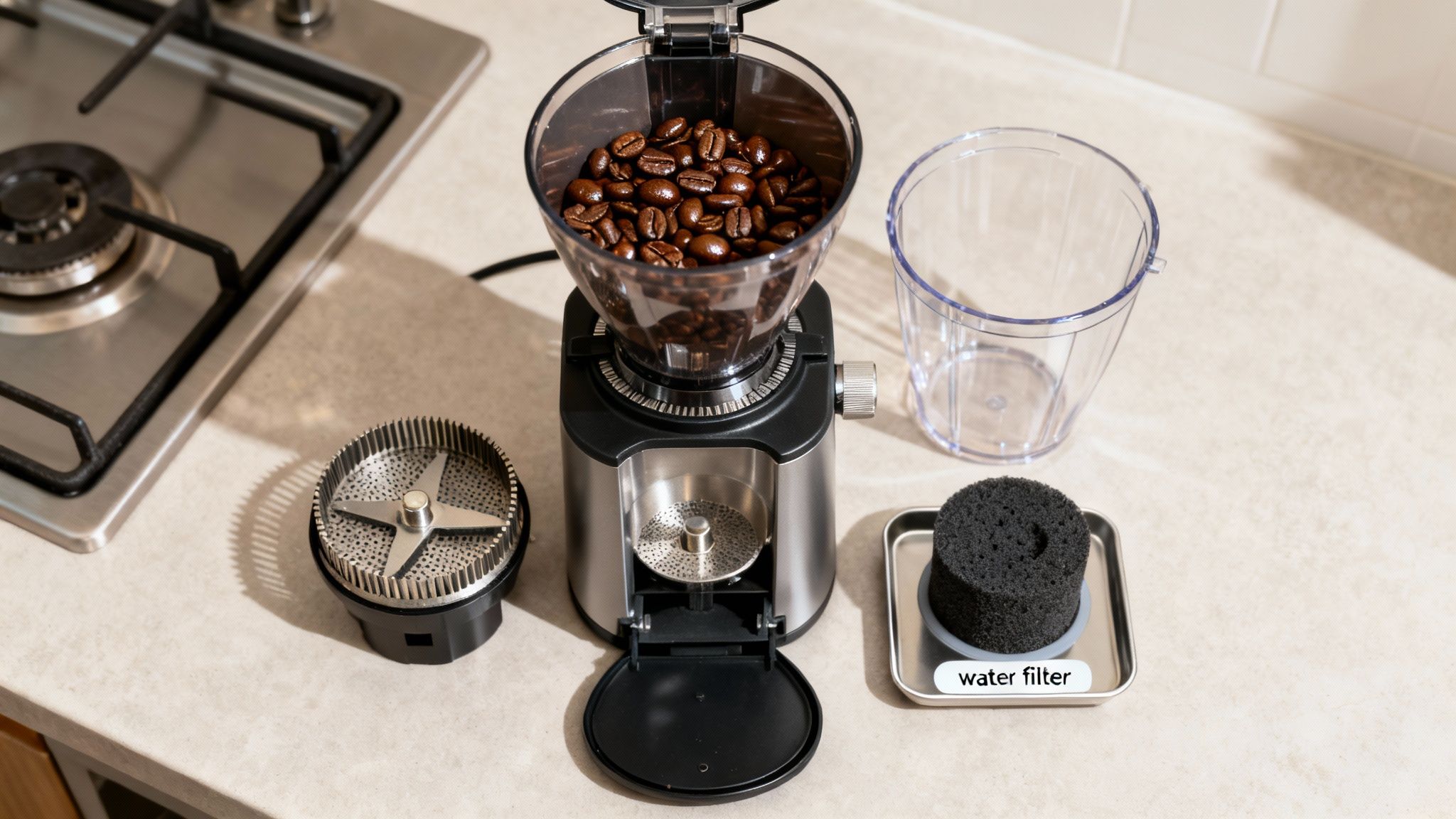
This is where people start blaming their beans, their tamping technique, or the machine itself. The real culprit is often the very first place your coffee touches: the grinder.
The fix is to treat your grinder and water filter with the same importance as the rest of your cleaning routine. A quick monthly grinder cleanout and a disciplined filter replacement schedule are what separate good home espresso from a truly exceptional cup.
Keeping Your Grinder and Hopper Pristine
Don't worry, this is simpler than it sounds. First, make sure your machine is unplugged. Then, just empty out the bean hopper.
Grab a dry cloth and wipe out any lingering oils left behind by the beans. Next, use a small brush or even a vacuum with a hose attachment to clear out any leftover grounds from the grinder chute itself. That’s it. This small step prevents the gunk that leads to inconsistent grinds and stale, rancid flavors.
According to one espresso machine expert, unfiltered water is responsible for over 50% of machine leak problems. Minerals build up and wreck internal gaskets, o-rings, and connections, making a quality water filter a non-negotiable part of your maintenance routine.
The Critical Role of Water Filtration
If there’s one thing you can do for your machine's longevity, it's consistently replacing the charcoal water filter. This is your single best defense against the limescale that causes catastrophic failures in pumps and heating elements.
It's not just about flavor; it's about protecting your investment. Breville’s own guidelines confirm that regular descaling is crucial for preventing a 40% pressure drop in hard-water areas. You can discover more insights on why this maintenance is so critical from a leading coffee expert.
| Feature | PureHQ Compatible Water Filters | Standard/Generic Filters |
|---|---|---|
| Filtration Media | Made with high-purity, food-grade activated charcoal for maximum impurity removal. | Often use lower-grade materials that are less effective at filtering out chlorine and minerals. |
| Fit and Seal | Engineered for a precise, leak-proof fit in Breville water filter holders. | May have inconsistent sizing, leading to poor seals that allow unfiltered water to bypass the filter. |
| Longevity | Provides consistent filtration performance for the full recommended 2-3 month cycle. | Can lose effectiveness quickly, requiring more frequent and costly replacements. |
A common worry is that a compatible filter won’t fit right, leading to leaks or letting unfiltered water sneak past. That's a valid concern. PureHQ filters are designed with precision-molded casings to guarantee a snug, secure fit every single time. You get a perfect seal, peace of mind, and pure, clean water for your coffee.
Common Breville Maintenance Questions Answered
It’s one of the most common frustrations we hear about: you’ve spent your time cleaning your machine, only for that stubborn "Clean Me" light to stay on, glaring at you. Or maybe you've heard a rumor that a splash of vinegar is a cheap and easy way to descale, but you’re worried it might wreck your Breville’s delicate internals.
These little bits of uncertainty can make routine maintenance feel like a guessing game. Are you doing it right? Could a simple mistake lead to an expensive repair down the line? It's enough to make you want to put off cleaning altogether, which, ironically, is the fastest way to cause damage from scale and oil buildup.
Let's clear the air and get you some straight answers. Knowing exactly what your machine needs—and why—is the key to cleaning with confidence and protecting your investment.
Can I Use Vinegar to Clean My Breville?
This is a hard no. While it seems like a clever DIY hack, using vinegar is one of the worst things you can do to your Breville espresso machine.
The acetic acid in vinegar is just too harsh for the machine's internal components, especially the soft seals and aluminum parts. Over time, it will cause corrosion, leading to leaks and permanent damage that isn't covered by your warranty. Always, always stick to a descaling solution specifically formulated to be tough on mineral scale but gentle on your machine.
"I’ve seen it countless times in repair shops: machines that failed prematurely due to vinegar use. The internal damage is unmistakable. A proper descaling solution is formulated to target mineral scale without eating away at the machine itself." – Veteran Espresso Machine Technician
My Clean Me Light Won't Turn Off. What's Going On?
This is probably the most frequent question we get, and the answer is simpler than you think. The 'Clean Me' light on a Breville isn't a smart sensor that detects grime; it’s just a simple shot counter.
Think of it like the oil change light in your car. It automatically comes on after a set number of uses—typically every 200 cycles—no matter how clean the machine actually is.
The only way to reset this counter is to run the official backflush cleaning cycle using a cleaning tablet. Even if you just wiped everything down, if that light is on, the machine needs you to complete that specific electronic cycle to turn it off.
Our premium cleaning tablets are designed to dissolve completely during the cycle, ensuring a thorough flush that clears out oily residue and resets the light. For ultimate maintenance, combine them with our powerful descaler and precision-fit water filters.
Stop the guesswork and give your machine the expert care it deserves. PureHQ offers a complete range of cleaning and filtration products to keep your Breville running flawlessly.
Shop the PureHQ Machine Care Collection Now


Pingback: Your Guide to Breville Coffee Machine Water Filters