
Coffee Machine Care
French Press Coffee Ratio Tablespoons: Your Guide to a Perfect Brew
Mar
Is your French press coffee a daily gamble, tasting weak one day and brutally bitter the next? It's a frustratingly common problem for home brewers. You follow the steps, scoop your coffee, and still, that perfect, full-bodied cup from your favorite café feels impossible to replicate, turning your morning ritual into a guessing game of wasted beans and disappointing results. This inconsistency isn't just annoying; it means you're not getting the rich, flavorful experience your coffee beans are capable of delivering.
The solution is simpler than you think and doesn't require a new machine. Mastering the correct french press coffee ratio tablespoons method provides a reliable foundation, putting you in control and transforming your brew from unpredictable to perfect, every single time.
The Golden Ratio for French Press Coffee
For a consistently balanced and flavorful cup, the go-to starting point recommended by coffee professionals is 1 tablespoon of coarsely ground coffee for every 4 ounces of water.
This simple formula is the key to unlocking the deep, rich flavors that make the French press a beloved brewing method. According to the National Coffee Association, proper brewing technique, including the right ratio, is essential for extracting the desired flavor compounds. This ratio ensures you extract just the right amount of goodness without tipping the scales into bitterness.
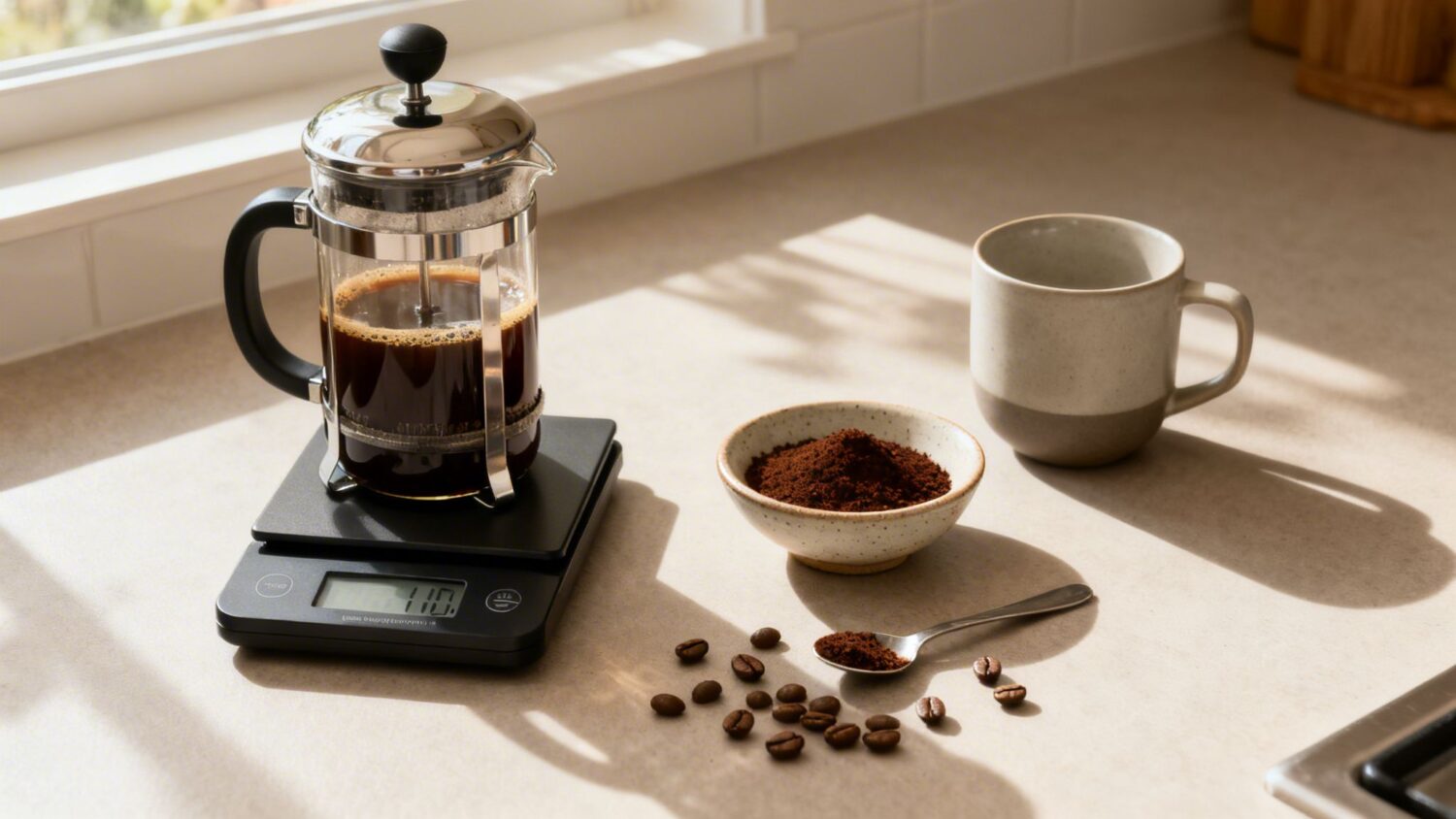
This visual shows just how simple it is for a single serving.

Think of this as your reliable baseline. From here, you can easily tweak things to match your personal taste.
Quick Guide to French Press Ratios By Volume
To make things even easier, here's a quick reference table for common French press sizes. It’s the perfect starting point to get you brewing without having to do any math before you’ve had your coffee.
| Serving Size | Coffee (Level Tablespoons) | Water (Ounces) | Water (Milliliters) |
|---|---|---|---|
| 1 Cup (8 oz Press) | 2 tbsp | 8 oz | 237 mL |
| 2 Cups (16 oz Press) | 4 tbsp | 16 oz | 473 mL |
| 4 Cups (34 oz Press) | 8 tbsp | 32 oz | 946 mL |
| 8 Cups (51 oz Press) | 12 tbsp | 48 oz | 1420 mL |
Just remember, these are starting points! Don't be afraid to add or subtract a tablespoon of coffee on your next brew to see how it changes the taste. You're the one drinking it, after all.
Why This Simple Ratio Works
This classic tablespoon-based method has been a staple for home brewers for decades, and for good reason. The French press uses immersion brewing—where the coffee grounds and water steep together for about four minutes. This process is fantastic at capturing the coffee's natural oils and fine sediments.
By mastering this one simple ratio, you gain complete control over your brew. No more weak, disappointing coffee. No more bitter, over-extracted messes. Just a perfect, repeatable cup every single time. And if you want to learn more about the mechanics, our guide on what a French press coffee maker is is a great place to start.
Why Measuring by the Spoon Can Ruin Your Coffee
Have you ever followed a french press coffee ratio with tablespoons religiously, only to find your coffee is a total gamble? One morning it’s perfect; the next, it’s weak and watery or so bitter it makes you wince. That maddening inconsistency isn’t your fault. It's the inherent flaw in using a spoon for measurement, which leads to wasted beans and a frustrating start to your day.
The hard truth is that a "tablespoon" of coffee is not a precise unit of measurement. It’s a volume-based guess that changes with every scoop. A slightly rounded scoop of a dense light roast bean can weigh significantly more than a level scoop of a fluffy dark roast. That tiny, unseen difference is enough to completely throw off your brew, pushing it into over-extracted, bitter territory or leaving it disappointingly weak.

The solution adopted by every coffee professional is to measure by weight, not volume. Investing in a simple digital kitchen scale is the single biggest upgrade you can make to your coffee game. It cuts through all the guesswork of bean density and scoop size, guaranteeing that 15 grams of coffee is always, without fail, 15 grams of coffee. This precision allows you to lock in that perfect brew and replicate it day after day. For a truly flawless process, using a quality scale alongside a good universal descaling solution to keep your gear clean is the secret to café-quality coffee at home.
Comparison: Tablespoons vs. a Digital Scale
Some users worry that a digital scale overcomplicates the simple process of making French press coffee. However, the opposite is true: it simplifies the path to a perfect cup by eliminating the primary source of inconsistency.
| Feature | Measuring by Tablespoon (Standard Method) | Measuring by Digital Scale (Premium Method) |
|---|---|---|
| Consistency | Low; results vary brew to brew. | High; allows for perfect replication every time. |
| Accuracy | Poor; affected by grind, roast, and scoop shape. | Excellent; provides an exact weight measurement. |
| Control | Minimal; difficult to make precise adjustments. | Maximum; allows you to fine-tune your ratio to perfection. |
| Waste | Higher; leads to bad batches and wasted beans. | Lower; eliminates inconsistent, undrinkable brews. |
Take the guesswork out of your morning ritual. Shop our collection of premium coffee accessories and start brewing with precision today!
Brewing A Flawless French Press Cup

Knowing the right french press coffee ratio tablespoons is a great start, but the real magic happens in the details of brewing. It’s that all-too-familiar moment of frustration when you do everything almost right, only to end up with a cup that’s sour, bitter, or full of sludge. You've invested in good coffee, but the final product is a letdown, making you question your equipment or your skills.
The solution isn't a fancier press. It's about nailing a few key fundamentals that turn the art of a great brew into a simple, repeatable science. By controlling grind, water, and time, you can consistently produce a clean, rich, and delicious cup.
The Foundation Of A Great Brew
Getting these three fundamentals right is non-negotiable for a truly memorable cup.
- A Coarse, Even Grind: Your coffee grounds should look and feel like coarse sea salt. If the grind is too fine, it’ll sneak past the filter, over-extract, and leave you with a bitter, muddy mess. We go deep into this in our guide to the best grind for French press.
- The Right Water Temperature: The Specialty Coffee Association states the ideal water temperature for brewing is between 195°F and 205°F (90°C to 96°C). Pouring boiling water directly onto your coffee will scald the grounds and create a burnt taste. To hit this sweet spot without a thermometer, bring your water to a full boil, take it off the heat, and let it stand for about 30 to 60 seconds before you pour.
- Pure, Filtered Water: According to the EPA, contaminants in tap water can impart undesirable tastes and odors. Since your coffee is over 98% water, its quality makes a huge difference. Using filtered water removes chlorine and other impurities that can flatten the complex flavors of your beans. Learning how to purify your tap water is a game-changer for your brew’s flavor profile.
Mastering The Four-Minute Steep And Plunge
With your grind and water sorted, the final step is about timing and patience.
Once you pour the hot water over the grounds, give it a gentle stir, place the lid on top, and set a timer for exactly four minutes. This is the classic steep time that hits the sweet spot for flavor extraction without venturing into bitter territory. The global French press market, expected to grow significantly, is built on the effectiveness of this simple immersion method, as you can see if you read the full research about the French press market.
When your timer dings, plunge slowly and steadily. Rushing stirs up fine particles at the bottom, forcing them into your cup. A slow, gentle press keeps your final cup clean, rich, and sludge-free. For an even cleaner cup, consider adding a secondary paper filter to your press before brewing.
Ready to perfect your brew? Shop our premium coffee accessories now!
Dialing In Your Perfect Cup: How to Adjust Strength
You followed the recipe, but the coffee in your mug still isn't quite hitting the spot. It's either weak and underwhelming or so strong it's overpowering. This is that final, frustrating hurdle between a good cup of French press coffee and your perfect cup. You're so close, yet the ideal flavor seems just out of reach, leading to more trial-and-error brewing.
The secret isn't a new recipe. It’s a simple technique the pros use called "dialing in." By making small, methodical adjustments, you can become your own personal barista and tune the flavor until it’s exactly where you want it. The key is to change only one variable at a time so you can clearly taste the result and learn exactly what you like.

Your Three Levers for Flavor
To find your signature brew, think of your process as having three main control levers. To avoid confusion, only adjust one lever per brew. This isolates the impact of each change, helping you zero in on the perfect taste.
For a Stronger, Bolder Brew
- Add More Coffee: The most direct route to a stronger cup. Start by adding one extra tablespoon to your usual french press coffee ratio tablespoons while keeping the water volume the same.
- Go a Bit Finer on the Grind: A slightly finer grind exposes more coffee surface area to the water, increasing extraction for a richer flavor. Be careful—go too fine and you risk a bitter, sludgy cup.
- Steep a Little Longer: Try letting it brew for an extra 30-60 seconds. More time in hot water pulls more deep, complex flavors from the grounds.
For a Milder, Lighter Brew
- Use a Little Less Coffee: It’s that simple. Reduce your coffee grounds by one tablespoon to dial back the overall intensity.
- Go Coarser on the Grind: A coarser grind means less surface area, which slows down extraction and results in a lighter-bodied, less intense cup.
- Shorten the Steep Time: Cut your brew time down to three minutes. This is a fantastic way to reduce any aggressive bitterness you might be tasting.
As coffee experts often advise, it's best to start with a recommended ratio and then tweak from there. This methodical approach takes all the guesswork out of the equation and puts you in complete control, turning your kitchen into your favorite coffee spot.
Shop our premium coffee accessories to start dialing in your perfect cup!
Comparing Measurement Methods and Maintaining Your Press
The debate between the tablespoon scoop and the digital scale persists in every coffee lover's kitchen. You want great coffee, but you also want to keep things simple. The problem is that the convenient scoop is secretly costing you consistency and quality, leading to wasted beans and unpredictable flavor. A "scoop" isn't a standard unit; the amount of coffee varies wildly with roast density and scoop level, which is why your brew is perfect one day and an undrinkable mess the next.
The fix is surprisingly simple: trade that unreliable spoon for the dead-on precision of a digital scale. It’s the single best step you can take to guarantee your french press coffee ratio is identical every single time. It's the difference between guessing and knowing. For a deeper dive, check out our guide on the general water to coffee ratio for more details.
Tablespoons vs Digital Scale: A Head-to-Head Comparison
Some customers feel a scale is an unnecessary complication, but it actually simplifies the process by removing the biggest variable. Here’s a quick look at why nearly every coffee professional insists on measuring by weight.
| Feature | Measuring by Tablespoon (Standard Method) | Measuring by Digital Scale (Premium Method) |
|---|---|---|
| Consistency | Low. Every brew is a bit of a gamble. | High. Allows for perfect, repeatable results every time. |
| Accuracy | Poor. A heaping scoop can easily contain 50% more coffee. | Excellent. 15 grams is always 15 grams. |
| Taste Control | Minimal. It's nearly impossible to make precise adjustments. | Maximum. You can fine-tune your brew down to the gram. |
Ultimately, a scale removes guesswork, empowering you to make tiny, intentional changes until your recipe is perfect—and then repeat that perfection every morning.
Keep Your Press Performing Its Best
Now, let's talk about maintenance. Over time, coffee oils and mineral buildup from your water can create funky flavors and hinder your press's performance. To keep every cup tasting fresh, rinse all parts with warm water immediately after use. For a deeper clean, using a high-quality universal descaler periodically is a game-changer. It gets rid of stubborn mineral deposits that soap and water can't, ensuring your press operates smoothly for years to come.
Shop our coffee descalers and accessories to ensure a perfect, clean brew every time!
French Press Ratio FAQs
You’ve got the basics down, but your French press is still giving you trouble? That’s a common frustration. You followed the guide, but your cup is sludgy, or you're not sure how to handle that oddly-sized press you received as a gift. It can feel like you’re just guessing, and the promise of a perfect brew remains unfulfilled.
Let's clear the air. These are the most common hurdles we see, and the fixes are refreshingly simple, putting you back on the path to a great cup of coffee.
Can I Use Pre-Ground Coffee for My French Press?
Using standard pre-ground coffee in a French press is a recipe for a muddy, bitter cup. Most pre-ground coffee is ground too fine for a press, meaning it slips right through the mesh filter. The result is sludge at the bottom of your mug and a harsh, over-extracted flavor. If you must use pre-ground coffee, hunt for a bag specifically labeled "coarse grind" for percolators or French presses. Even then, you’ll want to cut your steep time by 30-60 seconds to avoid bitterness.
How Does Roast Level Affect My Ratio?
This is where measuring by scoops can really trip you up. A dark roast bean is physically larger and less dense than a light roast bean. That means a tablespoon of dark roast coffee actually weighs less than a tablespoon of light roast. If you’re only using the french press coffee ratio tablespoons method, you might find yourself needing an extra scoop of dark roast to get the same strength. This is precisely why a kitchen scale is superior: 15 grams of coffee is always 15 grams, regardless of roast, eliminating all guesswork.
What if My French Press Is an Odd Size?
Got a press that isn't a standard 8-cup or 3-cup size? No problem. The beauty of a ratio is that it scales to fit any container perfectly. Just go back to the foundational guideline: 1–2 tablespoons of coffee for every 6 ounces of water. Figure out your press's total capacity in ounces (it's often stamped on the bottom or listed in its manual), and do the math from there. For a small 12-ounce press, you'd start with 2-4 tablespoons and then adjust until it tastes just right to you.
Keep all your coffee equipment in top shape with PureHQ Inc.'s premium cleaning and maintenance accessories.
Shop our full collection to ensure a perfect brew every time!

