
Coffee Machine Care
Coffee Makers for Ground Coffee: Your 2026 Guide
May
You bought a bag of ground coffee because you wanted more flavor, more choice, and less waste. Then you looked at your counter and hit the usual wall. One machine takes pods. Another friend swears by a French press. Every product page claims café-quality results. None of that helps when you just want a reliable cup before work.
That confusion is real. I see it all the time with home brewers and small office setups. People don't need more hype. They need a coffee maker that fits how they drink, how much cleanup they'll tolerate, and whether they want one mug or a full carafe.
Your Guide to Choosing a Coffee Maker for Ground Coffee
You're probably in one of two situations. You already have a machine and want to stop being locked into pods, or you're shopping for one of the many coffee makers for ground coffee and don't want to waste money on the wrong setup.
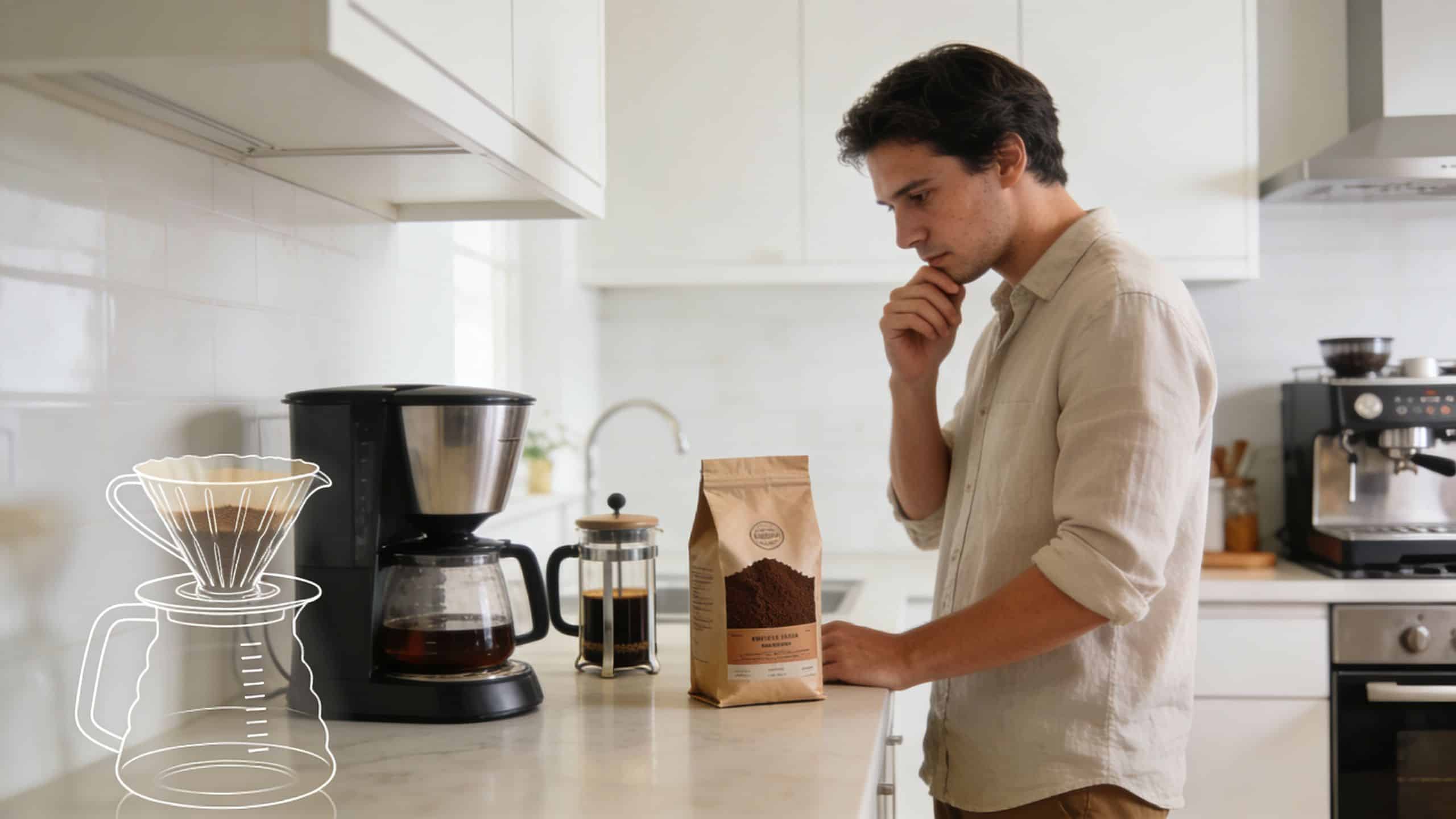
That's why drip brewers still matter. In the U.S. and Canadian markets, traditional drip coffee makers for ground coffee reached 62% household penetration in 2025, compared with 42% for pod-based single-serve systems, according to National Coffee Association data cited by Mordor Intelligence. People keep choosing drip because it handles everyday coffee well without forcing them into a closed system.
The problem most buyers are actually trying to solve
The fundamental concern isn't "Which machine is fanciest?" It's this:
- Cost pressure: Pods add recurring expense and limit what coffee you can use.
- Waste frustration: Disposable capsules create more trash than many people want in a daily routine.
- Choice overload: Drip, pour-over, French press, espresso, and hybrid brewers all promise something different.
- Compatibility worry: If you own a Keurig or Ninja, you might assume ground coffee means buying a whole new machine.
Practical rule: Start with the coffee you want to drink, then choose the brewer that makes that cup easy to repeat.
If you like batch brewing and low effort, a drip machine makes sense. If you like control, pour-over may suit you better. If you already own a single-serve brewer, a reusable pod can open up your options without replacing the machine.
Understanding the Main Types of Ground Coffee Brewers
Brand names distract people. Brew style matters more. Once you understand how each type works, choosing among coffee makers for ground coffee gets easier.
Drip coffee makers
A drip machine heats water and showers it over a basket of grounds. Gravity does the rest. That's why drip brewers are the workhorse in homes, breakrooms, and small shops that need repeatable coffee with minimal fuss.
They're usually the easiest fit for people who want a pot ready in the morning, especially if the machine includes programming, strength control, or a thermal carafe. The trade-off is that cheap models can brew too cool or distribute water poorly, which flattens flavor.
Best match: medium grind
Cup character: balanced, familiar, clean when paired with a paper filter
Good for: households, offices, anyone who wants multiple cups at once
Pour-over brewers
Pour-over is manual drip brewing. You control the pour speed, the bloom, and how the water moves through the bed of coffee. That extra control can produce a cleaner and more expressive cup, but it also means your technique matters every time.
I usually tell people to choose pour-over only if they enjoy the ritual. It's not hard, but it is less forgiving than pushing one button on an automatic machine.
- Use it when: you want to taste more of a coffee's nuance
- Skip it when: you need speed before a commute
- Watch for: uneven pouring, which can lead to weak and strong spots in the same brew
A good pour-over feels like cooking from scratch. A good drip machine feels like meal prep done right. Both can be excellent. The difference is how much hands-on work you want every morning.
French press
French press uses immersion. Coffee grounds sit in hot water for several minutes, then a metal mesh plunger separates the brew from the grounds. Think of it more like steeping tea than percolating water through a filter.
That immersion creates body. You get heavier mouthfeel and more coffee oils in the cup. Some people love that richness. Others don't like the sediment that can slip through the mesh.
Best match: coarse grind
Cup character: full-bodied, heavier, richer
Good for: people who like bold texture and don't mind a little more cleanup
What doesn't work well is using too fine a grind. That usually gives you sludge in the cup and a plunger that resists on the way down.
Espresso machines
Espresso machines push hot water through finely ground coffee under pressure. The result is concentrated coffee with a thicker texture and a very different flavor profile than drip or press brewing.
Espresso gives you the base for lattes, cappuccinos, Americanos, and straight shots. It also asks more from the user. Grind size, dose, tamping, and machine behavior all matter. If you want convenience above all else, espresso is often more machine than you need.
Hybrid and pod-based brewers with reusable filters
This is the category many people overlook. If you already own a single-serve brewer, you may be able to brew your own ground coffee with a reusable pod or filter basket. That won't turn a pod machine into a full drip brewer or a true espresso setup, but it does give you more freedom with the machine you have.
Quick fit guide
| Brewer type | Typical strength | Cleanup feel | Who it suits |
|---|---|---|---|
| Drip | Balanced | Easy | Daily drinkers, families, offices |
| Pour-over | Clean and expressive | Moderate | Hobbyists, slower mornings |
| French press | Heavy and bold | Moderate to messy | Rich-cup fans |
| Espresso | Concentrated | Involved | Milk drink lovers, tinkerers |
| Pod brewer with reusable filter | Convenient and flexible | Easy to moderate | Existing pod-machine owners |
Comparing Brewing Methods for Ground Coffee
If you compare brewers by marketing alone, drip can look boring. In real kitchens, boring is often exactly what works. Drip machines keep winning because they balance convenience, consistency, and enough capacity for actual daily life.
That broad appeal shows up in the market. Drip filter coffee machines held 54.1% of global coffee machine revenue share in 2022, and the overall market was valued at $6.41 billion in 2022, with a projection of $9.26 billion by 2030, according to Grand View Research's coffee machine market analysis.
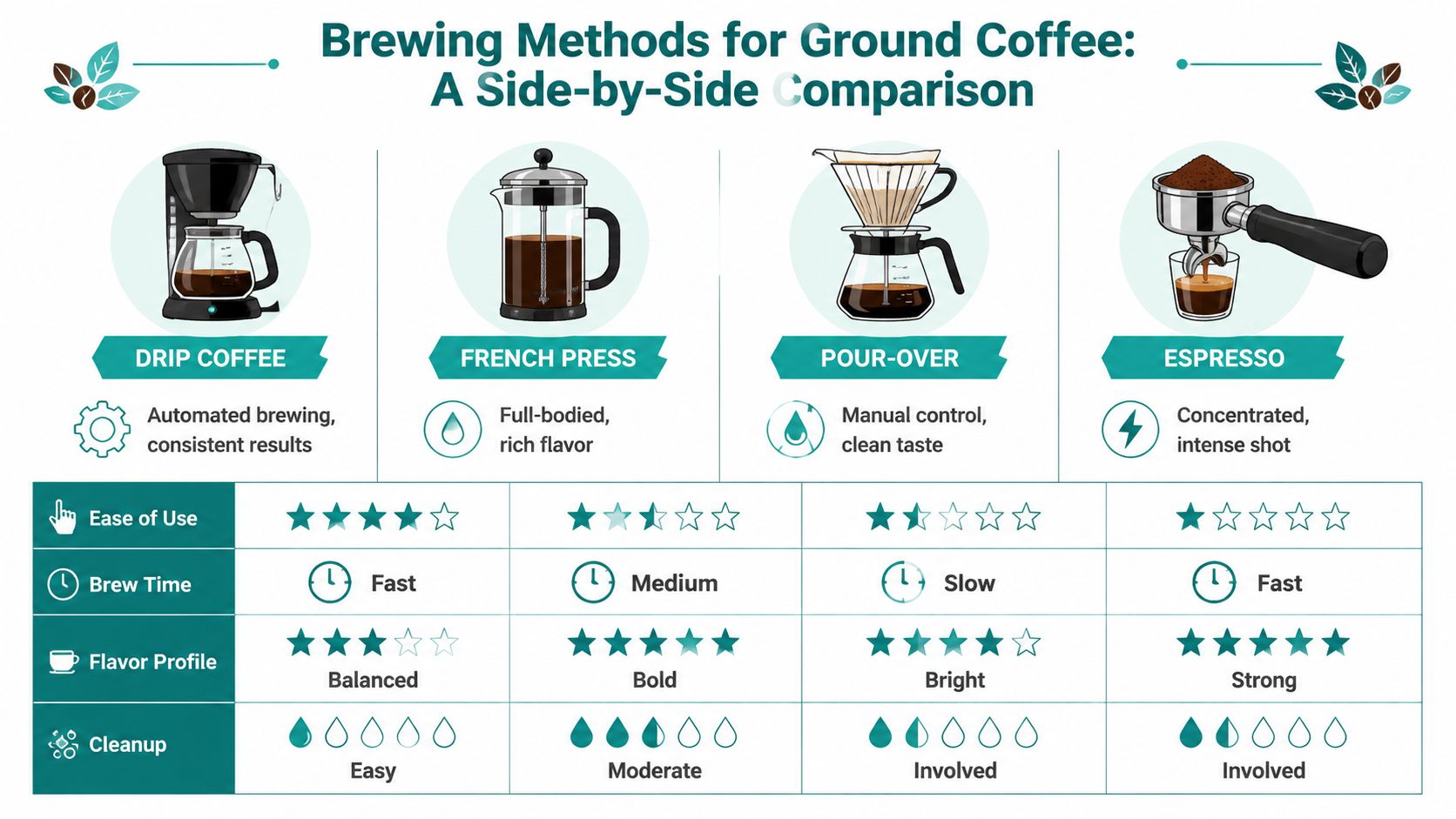
Ground Coffee Brewer Comparison
| Brew Method | Best For | Flavor Profile | Ease of Use | Cost per Cup |
|---|---|---|---|---|
| Drip | Households, batch brewing, routine mornings | Balanced and clean | Easy | Low |
| Pour-over | Flavor control and manual brewing | Clean and nuanced | Moderate | Low |
| French Press | Rich texture and heavier body | Bold and full | Moderate | Low |
| Espresso | Concentrated coffee and milk drinks | Strong and intense | Advanced | Moderate to high |
Where each method wins
Drip wins when you want coffee to fit your schedule instead of the other way around. You add water, add grounds, press brew, and move on. Cleanup stays manageable, especially with a removable basket or reusable carafe filter.
Pour-over wins on control. If you buy coffees with distinct roast or origin character, this method lets you shape the cup more actively. The catch is consistency. If your pour changes, your cup changes.
French press wins on body and simplicity of equipment. It loses points for grit, slower cleanup, and the fact that old grounds left in the beaker can make tomorrow's brew taste stale.
Espresso wins if your daily drink is a cappuccino, latte, or Americano. It's the least forgiving method in this group. A machine can be expensive, but the larger cost is attention. Espresso asks you to care.
The premium-versus-generic trade-off
A decent brewer doesn't need luxury branding. It does need competent design.
| Category | Premium or well-designed option | Generic or poorly designed option |
|---|---|---|
| Drip machine | Even water distribution, stable brewing behavior, durable basket | Hot spots, weak extraction, flimsy lids |
| Reusable filter | Better seal, easier cleanup, sturdier mesh | Warping, leaks, trapped grounds |
| French press | Better screen fit and smoother plunger travel | Loose mesh, muddy cup, rough plunge |
| Espresso setup | Predictable workflow and better control | Inconsistent results, more frustration |
Buy for repeatability. A machine that makes a good cup every day beats a complicated machine that makes one impressive cup on Sunday.
How to Use Ground Coffee in Single-Serve Brewers
If you own a Keurig or a similar single-serve brewer, you may not need a new machine at all. You can often get the freedom of ground coffee by switching from disposable pods to a reusable filter pod.
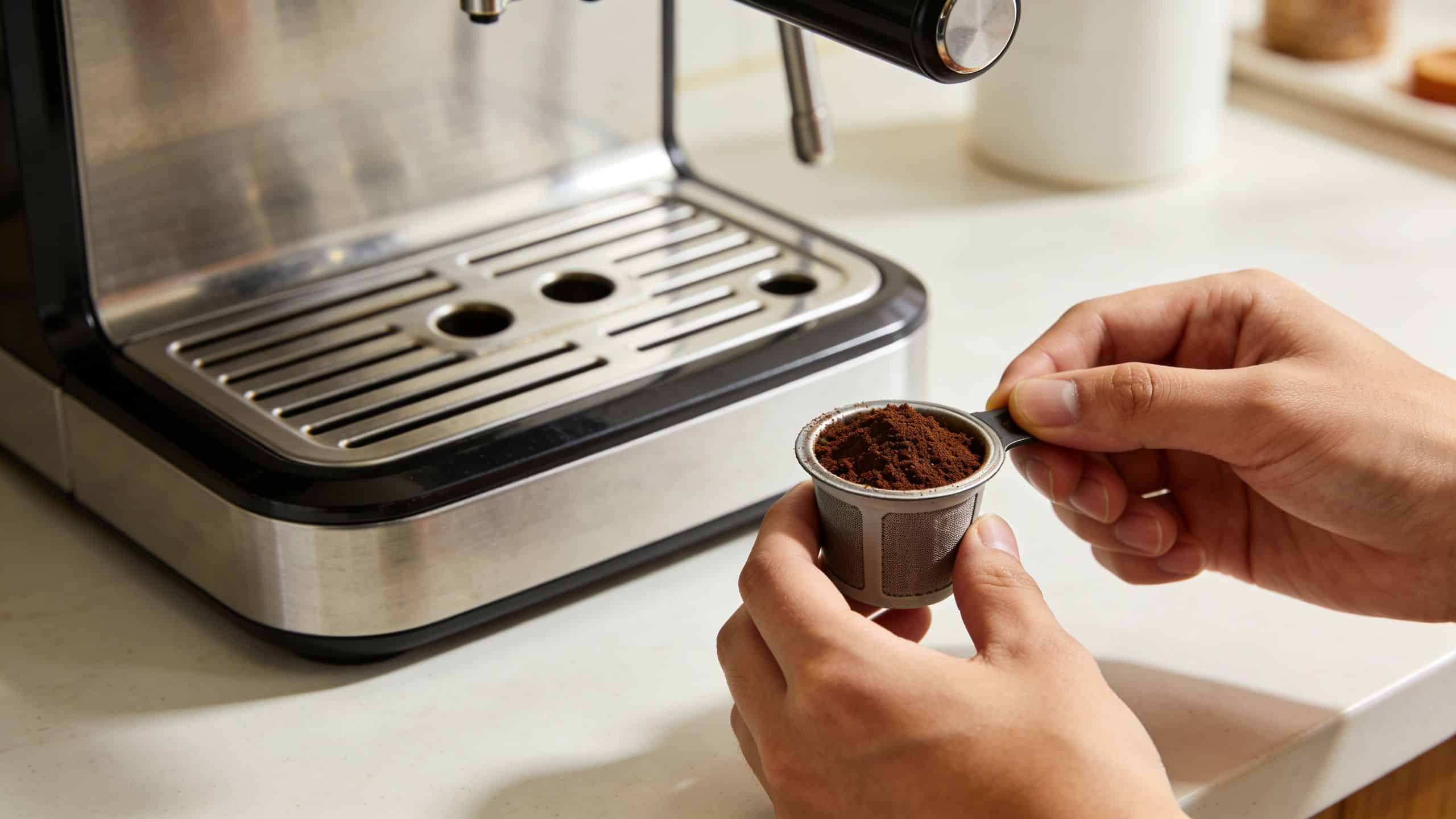
That matters because convenience is only half the story. Plenty of pod owners like the speed of single-serve brewing but dislike being locked into limited coffee choices, recurring pod purchases, and the extra trash that follows.
What actually works in a pod brewer
A reusable pod works best when you treat it like its own brewing system, not like a tiny trash can for random scoops of coffee.
Start with these basics:
- Use the right grind: Too fine can clog the mesh or slow the brew. Too coarse can taste weak.
- Don't overfill: Grounds need room for water to move through them.
- Level the bed: A flat fill helps water contact the coffee more evenly.
- Check fit before brewing: The lid and seal need to close cleanly.
- Rinse immediately after use: Old oils and trapped fines make the next cup worse.
A lot of frustration blamed on reusable pods comes from overpacking them. People assume more coffee means more flavor. In small pod chambers, it often means restricted flow, drips, or grounds in the cup.
A common objection about leaks and compatibility
Product quality matters for reusable pods. A generic plastic reusable pod can work, but it often fails in predictable ways. The hinge loosens, the seal doesn't seat well, or the mesh design encourages channeling and overflow.
A better reusable pod usually gives you:
- A more secure fit: Better alignment inside the brewer
- A cleaner seal: Less chance of leakage around the lid
- More durable materials: Better resistance to wear from daily use
- Easier cleaning: Less trapped coffee residue in corners and seams
That's why some users prefer a stainless reusable K-Cup. For example, PureHQ Inc. sells stainless reusable pods for Keurig-style brewers that are designed for brewing ground coffee with less dependence on disposable capsules. It's one option in a category where fit and build quality matter more than flashy packaging.
Standard pod versus premium reusable pod
| Feature | Generic plastic reusable pod | Better-built reusable pod |
|---|---|---|
| Seal | Can be inconsistent | Usually more reliable |
| Durability | More likely to crack or warp | Better long-term wear |
| Cleanup | Coffee can stick in seams | Often easier to rinse clean |
| Brew flow | Can be uneven | Often more stable |
For a step-by-step walkthrough, this guide to using coffee grounds in a Keurig shows the practical setup and filling process in more detail.
Practical setup tips for Keurig and Ninja-style brewers
Use coffee that's ground for drip or just a touch finer than standard drip, then adjust by taste. If the machine sputters, drips slowly, or leaves a puddle on top of the grounds, back off the fill level or move slightly coarser.
This visual walkthrough helps if you want to see the workflow in action:
Reusable pods work well when you respect their limits. They're for flexible single cups, not for cramming in espresso-fine coffee and hoping the machine figures it out.
One more practical add-on. If you use reusable pods often, paper liners made for reusable baskets can simplify cleanup, and regular reservoir filtration can help keep flavors cleaner from cup to cup.
Achieving the Best Flavor From Your Grounds
A good machine can still make disappointing coffee if your technique is off. Most flavor problems come from three places: water temperature, grind size, and water quality.
Temperature decides extraction
For auto-drip coffee makers using ground coffee, water temperature stability between 195–205°F (90.5–96°C) is critical for optimal extraction, and Counter Culture Coffee notes that SCA certification benchmarks confirm compliant machines maintain this range, producing 20-30% higher flavor intensity scores in cupping tests compared with machines that brew cooler.
That's why some inexpensive drip machines taste flat even when you use excellent beans. They do not brew hot enough, or they don't hold temperature consistently through the cycle.
Grind size has to match the brewer
A mismatch between grind and machine is one of the fastest ways to waste good coffee.
- Drip machine: medium grind usually works best
- Pour-over: medium to medium-fine, depending on brewer style
- French press: coarse grind
- Reusable single-serve pod: often medium or slightly finer than drip
- Espresso machine: fine grind
If your coffee tastes sour or thin, the grind may be too coarse for the brewer. If it tastes harsh, muddy, or stalls the machine, you may be too fine.
Coffee makers for ground coffee don't fix the wrong grind. They only reveal it.
Water quality changes both taste and maintenance
Tap water with off flavors can flatten good coffee fast. Chlorine, stale-tasting reservoir water, and mineral buildup all work against you. Filtered water usually improves cup clarity and also reduces the scale that slowly coats heating elements and internal passages.
A reservoir charcoal filter is one of those small accessories that earns its place. It helps the machine brew with cleaner-tasting water while reducing some of the buildup that leads to extra maintenance. If you want a practical starting point for ratios too, this water-to-coffee ratio guide is a useful reference.
A simple flavor checklist
| If your coffee tastes | Likely issue | First adjustment |
|---|---|---|
| Weak or sour | Under-extraction | Finer grind or hotter, more capable brewer |
| Bitter or rough | Over-extraction | Slightly coarser grind |
| Flat or dull | Poor water or low brew temp | Filter water and check machine performance |
| Muddy | Grind too fine for brew method | Coarsen grind |
One final habit matters more than people expect. Use fresh water each time. Water that sat in the tank too long won't help flavor, even if the coffee itself is good.
Your Decision Checklist and Machine Maintenance Plan
Buying the right brewer gets you started. Keeping it clean is what preserves flavor and protects the machine.
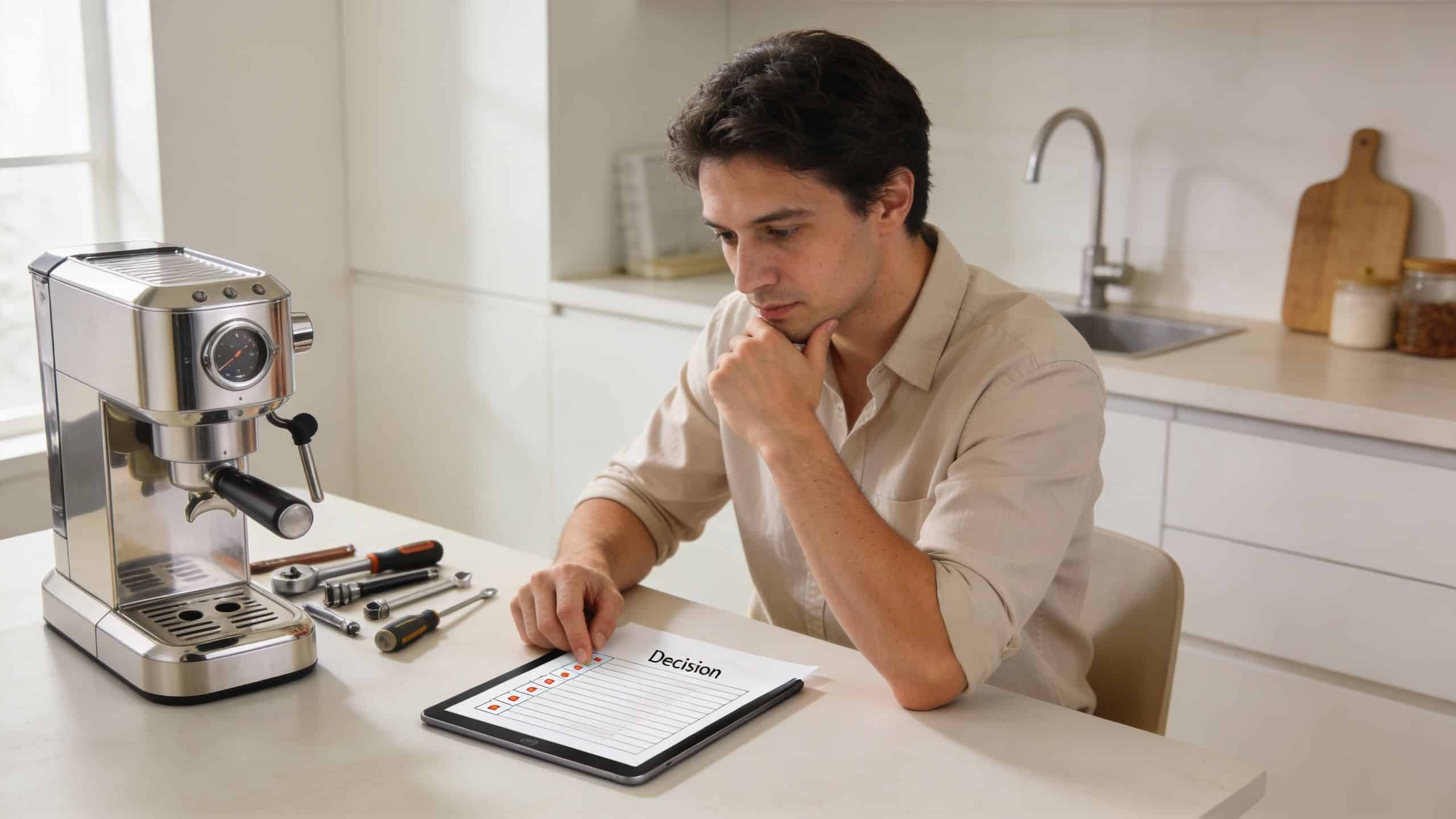
Choose based on your real routine
Some buyers need a brewing ritual. Others need coffee with as little friction as possible. Those are different jobs.
- Busy weekday drinker: Choose drip or a single-serve brewer with a reusable pod.
- Weekend coffee hobbyist: Choose pour-over if you enjoy adjusting and experimenting.
- Bold coffee fan: Choose French press if you like body and don't mind sediment.
- Milk-drink household: Choose espresso if you'll use its strengths.
- Already own a pod machine: Try adapting it before replacing it.
The maintenance plan most people skip
Coffee oils go stale. Mineral deposits build up. Seals collect residue. Machines rarely fail all at once. They lose performance gradually, then people blame the coffee.
A practical routine looks like this:
- After each brew: Empty used grounds, rinse removable parts, and wipe spills.
- Every few days: Wash reusable baskets or pods thoroughly so old oils don't stay behind.
- Regularly: Clean the reservoir and brew area.
- As needed: Descale the machine with a descaling solution made for coffee equipment.
If you brew with filtered water, maintenance gets easier. It doesn't disappear. It just gets less punishing.
Repair, replace, or adapt
If your current machine still heats, seals, and brews predictably, adaptation usually makes more sense than replacement. A reusable pod, a fresh water filter, or a proper descale can fix a surprising number of “my machine isn't making good coffee anymore” complaints.
If the brewer leaks, brews inconsistently, or has failing parts that affect safety or function, replacement is the smarter path.
For a straightforward cleaning routine, this coffee maker cleaning guide is a solid reference. Descaling solution and replacement filters are the two accessories I'd keep on hand for almost any home setup.
You don't need the most complicated brewer on the market. You need one that matches your mornings, uses the coffee you want to buy, and stays easy to maintain.
If you want to get more out of your current brewer, shop PureHQ Inc. for reusable K-Cups, water filters, carafe baskets, and descaling supplies that help you brew your own ground coffee with less waste and less guesswork.

