
Coffee Machine Care
Coffee and Conservation: Your Sustainable Guide for 2026

Jul
One cup doesn't feel like an environmental decision. It feels like a routine. But for every cup of coffee consumed, approximately one square inch of rainforest is destroyed.
That number alters perceptions of coffee and conservation. Your mug isn't just connected to flavor, caffeine, or convenience. It's connected to forests, birds, farmlands, packaging waste, and the future of coffee itself.
The good news is that this isn't a guilt trip. It's a practical problem with practical choices. The beans you buy, the way they're grown, the pod or filter you use, and how you maintain your brewer all shape your footprint at home. Small kitchen habits won't solve everything on their own, but they do move your coffee routine in the right direction.
Your Morning Coffee Has a Hidden Cost
More than 12.5 million hectares of land are used to grow coffee worldwide. That scale is easy to miss when coffee shows up as a small scoop of grounds or a single pod on your kitchen counter. But every daily brew is tied to real farms, real habitats, and real waste.
Coffee becomes a conservation issue when demand pushes farming toward systems that produce more beans by simplifying the growing environment. On many conventional farms, shade trees are removed, plant diversity drops, and the space starts working more like a factory floor than a living habitat. Birds lose nesting spots. Insects lose food sources. Soil gets less protection from heat and heavy rain.
Why a simple cup can drive habitat loss
A healthy coffee farm can work like a layered apartment building for wildlife. Tall trees form the roof. Coffee shrubs fill the middle level. Leaf litter and roots support life below. Remove those layers, and the farm still grows coffee, but it supports far less life.
That loss matters because coffee is often grown in places with rich biodiversity. The more farms shift toward stripped-down, sun-heavy production, the less room remains for the species that once shared that space.
Practical rule: If your coffee depends on farming that removes tree cover and simplifies the growing environment, wildlife usually pays the price first.
The pressure does not end at the farm. It follows coffee into kitchens, offices, and trash bins. Single-use brewing systems add their own footprint through plastic, foil, and mixed materials that are hard to recover. If you brew with pods now, it helps to understand K-Cup recycling options and limits before assuming they disappear neatly after one use.
This is the part many readers find confusing. Conservation can sound like a distant issue, the kind discussed in reports or on hiking trails. But the same logic in HikeTee's wilderness guide applies at home too. Small repeated actions shape the places we depend on.
Your coffee routine is one of those repeated actions. The beans you choose and the brewing format you bring into your kitchen both support one kind of system or another.
The Unseen Threat to Coffee and Ecosystems
Coffee doesn't just affect ecosystems. Environmental damage is starting to threaten coffee itself.
At the center of that problem are wild coffee species. They don't fill supermarket shelves, but breeders depend on them because they hold the genetic traits needed to develop future coffee plants that can handle disease, heat, and shifting rainfall. According to a Science Advances study on wild coffee extinction risk, at least 60% of all wild coffee species are at risk of extinction, and 45% aren't secured in any germplasm collections. If those species disappear, the safety net for future coffee breeding shrinks with them.

Why wild coffee matters to your next bag of beans
Many readers get stuck on this point because wild coffee sounds distant. It isn't. Wild relatives are the backup library for cultivated coffee. When breeders need traits for resilience, they often look beyond today's commercial varieties.
If that genetic library thins out, coffee farmers get fewer options when weather patterns shift or pests spread. That makes the future supply of good coffee more fragile, not more secure.
Here's the plain-language version:
- Wild species store resilience: They hold traits that cultivated coffee may need later.
- Conservation supports farming: Protecting habitat today protects breeding options tomorrow.
- Loss becomes permanent: Once a species disappears, breeders can't recover its genetics from memory or marketing claims.
Coffee and conservation meet at a very practical point. If the genetic diversity behind coffee collapses, farmers lose tools they may need to keep coffee viable.
Climate pressure makes the problem harder
The pressure doesn't stop with species loss. Coffee also faces direct climate stress in the places where it grows. An All About Birds event summary on coffee, communities, and conservation notes that climate models predict up to 70 to 80% of globally suitable coffee land could be lost by 2050, with projected reductions in key Arabica-growing regions. That same source explains that Arabica has a narrow thermal sweet spot, so rising temperatures can reduce quality and make pest pressure worse.
That's why coffee and conservation isn't just about protecting animals in faraway forests. It's also about protecting the conditions that make coffee possible.
If you spend time outdoors, the same logic applies beyond farms. Low-impact habits matter because natural areas absorb cumulative pressure. Hikers who want a broader conservation mindset may appreciate HikeTee's wilderness guide on Leave No Trace principles. It's a useful reminder that everyday recreation and everyday consumption both leave marks.
Farming in Harmony with Nature
Not all coffee farms push nature out. Some are designed to keep more of it in.
That's where people usually hear terms like shade-grown and Bird-Friendly. The simplest way to understand them is this. A sun-grown monoculture acts like a food desert for wildlife. A more diverse shade system can act more like a busy neighborhood, with layers of trees, plants, insects, and shelter that support more life.

What shade-grown actually means
Shade-grown coffee grows under tree cover instead of in fully exposed fields. That tree cover can create habitat and reduce some of the ecological stress linked to bare, simplified farms. A coffee habitat resource focused on Bird-Friendly certification reports that shade-coffee agroforestry can support 30 to 50% higher bird species richness compared with sun-grown monocultures.
That matters, but shade alone doesn't answer every question.
A Knowable Magazine analysis of shade coffee and biodiversity makes an important point that marketing often skips. Biodiversity is richest when coffee farms sit within a larger patchwork that includes intact forests, and reducing agrochemical use can matter even more for species richness than shade density alone.
What to look for on a coffee bag
The most useful labels are the ones that tell you something concrete about farm conditions, not just the brand's mood board. When you scan a bag, look for signals that the coffee comes from a farm system that protects habitat and limits ecological simplification.
A helpful checklist:
- Shade-focused claims with real standards: Look for language tied to recognized certification or clear farming practices.
- Habitat context: A farm near or within a healthier forested area usually offers more conservation value than an isolated green-looking plot.
- Lower chemical pressure: If a brand explains how it reduces agrochemical use, that's often more meaningful than vague nature imagery.
A shade canopy can help, but a living landscape around the farm matters just as much.
Gardeners already understand this idea. A productive plot does better when it fits into a wider system of timing, soil, and surrounding plant life. That's one reason a practical resource like SteadStack's harvest planning guide feels relevant here. It shows how planning for productivity works best when you think in systems, not single variables. Coffee farms work the same way.
Your Kitchen Counter Conservation Plan
Global coffee problems can feel too big to touch. Your kitchen is where they become manageable.
I like to keep coffee and conservation at home very simple. Choose, reduce, reuse. If you follow that order, your routine gets better without turning into a full-time project.
Choose better beans
Start with the coffee itself. Look for beans that give you real information about how they were grown. Shade-oriented certifications, Bird-Friendly labeling, and brands that explain their farming practices are easier to trust than bags covered in vague words like “natural” or “eco.”
If you're unsure where to begin, use one rule. Prefer coffee that tells you something specific about habitat or farming methods over coffee that only tells you a story about lifestyle.
Reduce what you throw away
The next step is cutting waste in the kitchen. That can mean buying whole bean or ground coffee in formats with less packaging, brewing only what you'll drink, and finding a second life for spent grounds where possible. Many households also save waste by learning how to compost coffee grounds safely and effectively, especially if they already compost food scraps.
A few easy habits help:
- Brew with intent: Make one mug or one pot you'll finish, instead of extra coffee that ends up in the sink.
- Use grounds twice when practical: Spent grounds can move from brewer to compost instead of trash.
- Skip one-time extras: Disposable accessories add up quickly when they become part of a daily habit.
Reuse the parts that matter most
Single-serve machines create a convenience trap. They're fast, tidy, and familiar, but they can lock you into repeated packaging waste. Reusable brewing parts change that equation because they let you keep the machine while dropping the throwaway cycle.
That's the core idea. You don't need a perfect zero-waste kitchen to make progress. You need a few durable habits that fit the way you already make coffee.
Why Reusable Pods Are the Sustainable Choice
Single-serve coffee solves one problem and creates another. It makes brewing fast, but it turns every cup into a packaging event.
That waste adds up on a huge scale. Earth.org's reporting on coffee capsule waste notes that single-use coffee pods send billions of units to landfills each year, and the global footprint of coffee capsule waste is estimated at 576,000 metric tons annually, roughly the weight of over 4,000 school buses.
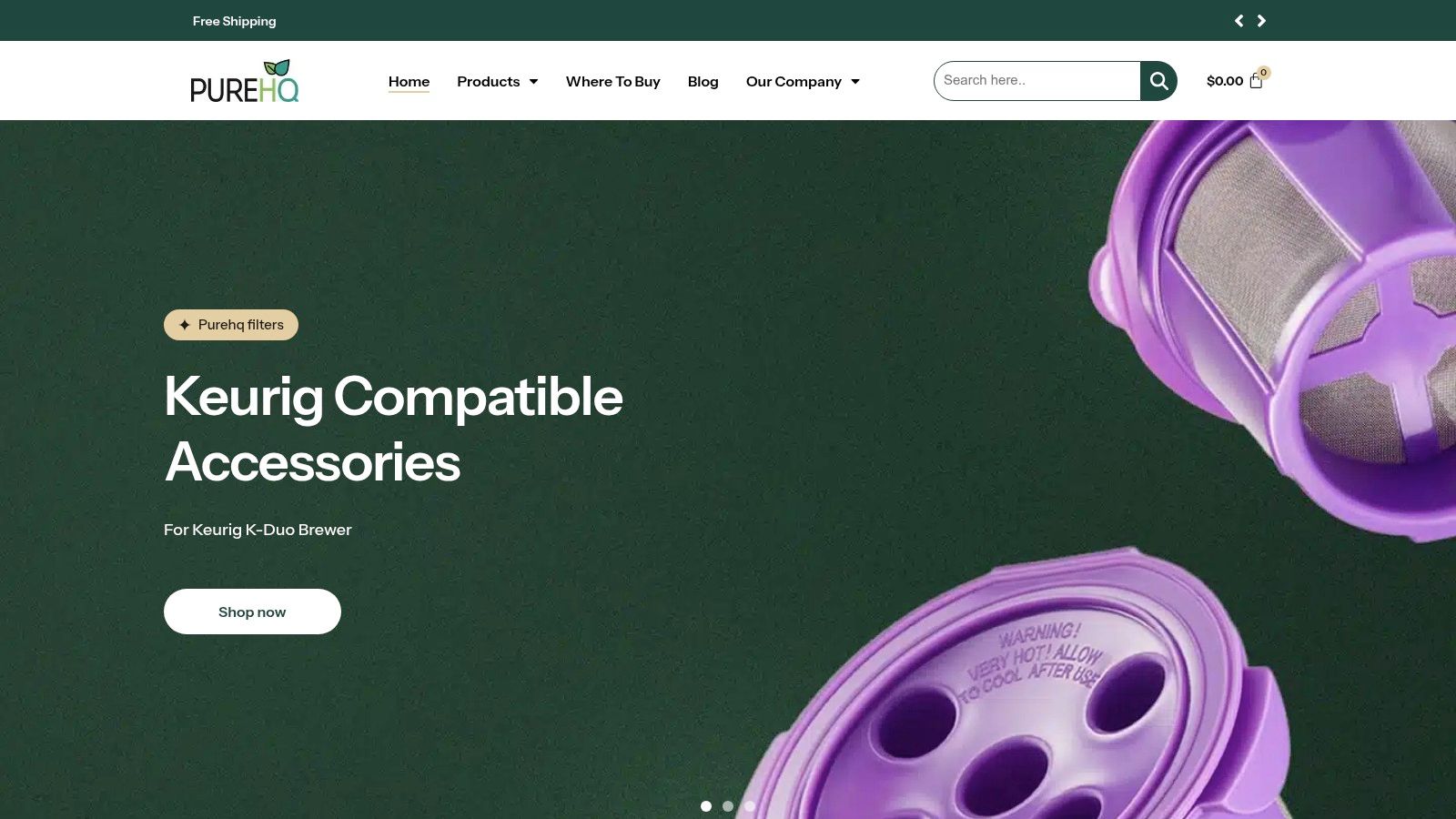
Comparing pod options at home
Not every reusable option performs the same. Some save waste but create new annoyances, like poor fit, weak extraction, staining, or difficult cleanup. That's usually where people give up and return to disposables.
Here's a practical side-by-side look.
| Feature | Disposable K-Cup Pods | Generic Plastic Reusable Pods | PureHQ Stainless Steel Reusable Pod |
|---|---|---|---|
| Waste per cup | High, because each brew uses a new pod | Lower, because the pod is reused | Lower, because the pod is reused |
| Durability | Single-use by design | Often less durable over time | Built for repeated use with stainless steel construction |
| Brew flexibility | Limited to prefilled options | Lets you choose your own grounds | Lets you choose your own grounds |
| Cleanup | Easy to toss, but creates waste | Can stain and hold odors | Easier to rinse clean than many plastic alternatives |
| Fit and stability | Made for the machine | Compatibility can be inconsistent on some generic models | Designed around compatibility-focused accessory use |
| Long-term value | Ongoing repeat purchases | Reusable, but quality varies | Reusable with a premium build for repeated brewing |
| Coffee quality control | Fixed by manufacturer fill and grind | User controls fill and grind | User controls fill and grind with a sturdier basket design |
The most common objection
The usual complaint is simple. Reusable pods can feel messy, or the coffee comes out weak.
That objection is real. A poor reusable pod can underperform if the fit is sloppy, the mesh is poorly made, or the basket shape doesn't allow consistent extraction. A better stainless steel design solves part of that problem by holding its shape, resisting odor retention, and cleaning up more easily than many generic plastic versions.
The best reusable pod is the one you'll keep using. If it leaks, fits badly, or makes thin coffee, convenience wins and the disposable habit comes back.
For people who want less mess during filling and cleanup, paper liners can make the routine faster and cleaner. They're especially helpful in busy kitchens or small offices where multiple people use the same machine. If you also want to improve flavor consistency, matching the grind size to your pod and brewer matters just as much as the pod itself.
A quick visual helps if you're new to the format:
Reusable pods won't fix the farming side of coffee and conservation. But they do address a very specific problem in your own kitchen. They remove a stream of repeat waste at the exact point where many people have the most control.
Keep Your Brewer Running and Out of Landfill
Conservation doesn't stop with the coffee and the pod. It also includes the machine.
A brewer that lasts longer stays out of the waste stream longer. That makes maintenance an environmental habit, not just a housekeeping chore. If your machine clogs, scales up, overheats, or starts brewing poorly, replacement becomes more likely. Keeping it clean reduces that risk.

Two maintenance jobs matter most
Water quality comes first. Filters help reduce the mineral and taste issues that make coffee dull and can leave buildup behind in the machine. Good filtration supports better flavor and gives internal parts an easier job.
Descaling comes next. Hard water leaves deposits behind, and those deposits can interfere with heating and flow. A universal descaling solution is one of the simplest tools for protecting a brewer you already own, especially in homes with mineral-heavy tap water.
If you want a practical routine, a coffee machine maintenance checklist for home brewers is useful because it turns vague reminders into repeatable steps.
Why maintenance is part of conservation
A lot of waste comes from a throwaway mindset, not just from obviously disposable items. If you've ever looked at broader consumer habits, you'll recognize the pattern. Pieces on waste culture, like myhalo's article on Singapore's throwaway habits, are a helpful reminder that convenience often pushes people to replace what they could maintain.
Try this simple routine:
- Clean on schedule: Remove coffee residue before it turns into performance problems.
- Replace filters when needed: Better water supports both flavor and machine health.
- Descale before performance drops: Don't wait for obvious problems if your water is hard.
- Store with care: A protected machine lasts longer than one left dusty, damp, or neglected.
A sustainable coffee setup isn't only about using less. It's also about keeping what you already own working well for longer.
Start Your Sustainable Brew Today
Coffee and conservation becomes much easier once you stop treating it like a giant abstract issue. It's a chain of choices. Farms can protect habitat or erase it. Buyers can reward better growing practices or ignore them. Home brewers can keep feeding disposable systems, or they can cut waste where they have direct control.
That's why your daily routine matters. You can choose coffee grown with more respect for living ecosystems. You can reduce kitchen waste by composting grounds and skipping unnecessary disposables. You can reuse brewing components instead of buying another pile of single-serve trash. You can maintain your machine so it lasts.
None of that requires perfection. It just requires intention.
If you want your next cup to do less harm and make more sense, start with the part of the process you control most. Your kitchen counter is a good place to begin.
If you're ready to make your daily brew more sustainable, shop PureHQ Inc. for reusable coffee pods, water filters, paper liners, and descaling supplies that help cut waste, improve taste, and keep your brewer working longer.

