
Coffee Machine Care
A Guide to the Best Grind for French Press Coffee
Mar
Is your morning French press consistently gritty? Do you take that last sip, only to get a mouthful of bitter, sludgy sediment? A 2022 poll revealed that this exact problem turns off nearly 40% of home brewers from even using their French press. If you're constantly fighting a battle against murky, disappointing coffee, you're not alone, and it's not the brewer's fault.
This frustrating experience stems from one common mistake: an incorrect coffee grind. When grounds are too fine, they compact at the bottom, clogging the filter and forcing tiny, bitter particles—known as "fines"—through the mesh as you plunge. This not only creates sludge but also leads to over-extraction, where harsh, astringent flavors overwhelm the delicate notes of your beans. It’s a vicious cycle that ruins an otherwise perfect coffee ritual, leaving you with a cup that’s both heavy on the tongue and unpleasantly bitter.
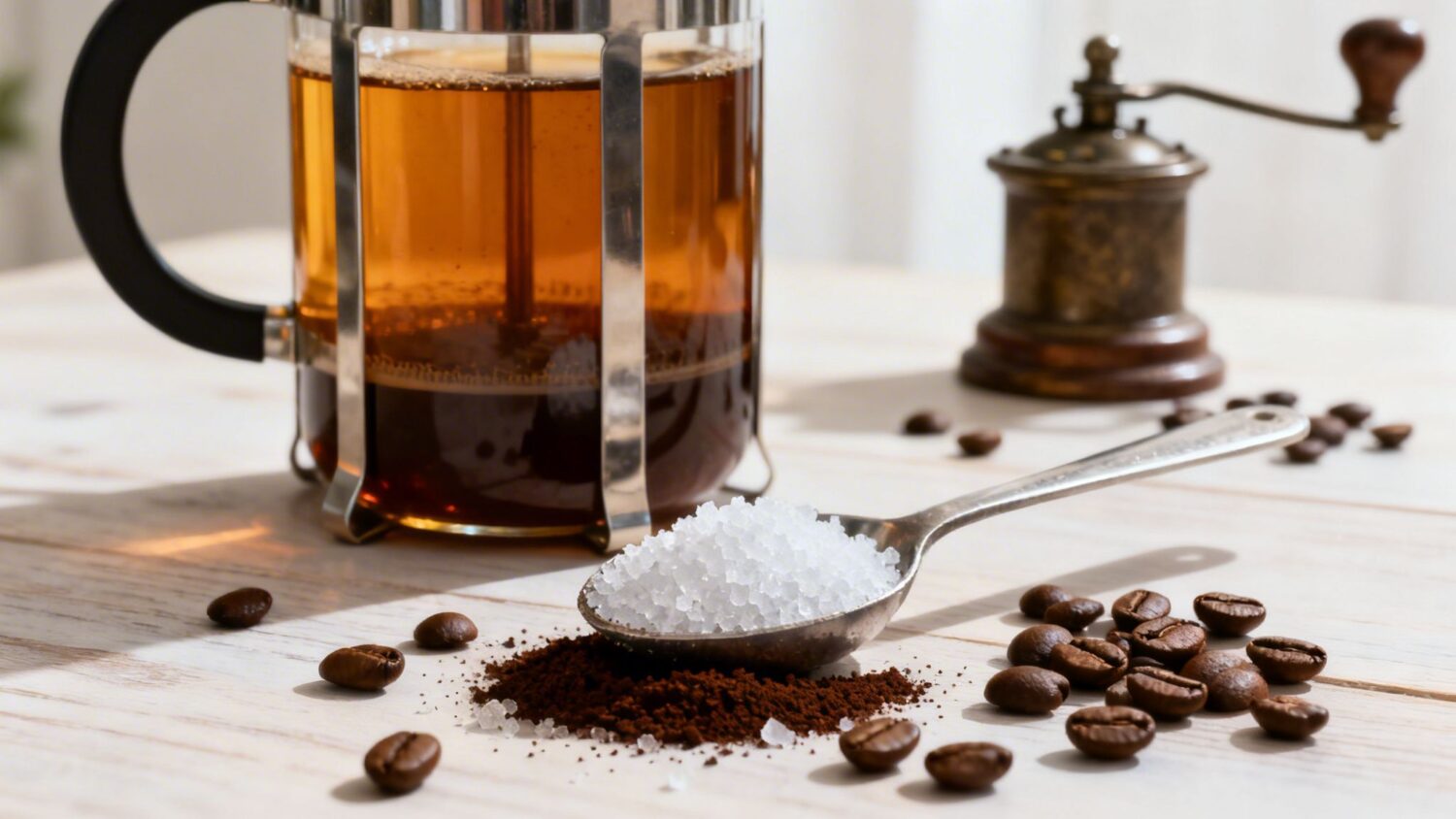
The solution is surprisingly simple: switch to a uniform, coarse grind. Aim for a texture resembling coarse sea salt or rough breadcrumbs. This larger particle size allows water to flow freely and extract flavor evenly, preventing bitterness while significantly reducing sediment. Mastering this one element is the key to unlocking the rich, clean, and full-bodied cup of coffee your French press was designed to deliver. For a deeper dive, check out this in-depth coffee grind size analysis.
The Secret to Eliminating Gritty French Press Coffee

We've all been there. You brew a beautiful-looking French press, pour a cup, and that last sip is a mouthful of grit. It’s enough to ruin an otherwise perfect morning. If your coffee is consistently muddy, bitter, or full of that unpleasant sediment, you're not alone. But this isn't a flaw in the French press itself—it’s a direct result of one very common mistake.
The problem almost always comes down to your coffee grind. When the grounds are too fine, they create a dense, compact layer at the bottom of the carafe. This clogs the delicate metal mesh filter, forcing you to push the plunger down with all your might. All that pressure squeezes tiny coffee particles, or "fines," right through the filter and into your cup.
The result? A murky, heavy brew that coats your tongue. At the same time, those fine grounds extract way too quickly, releasing harsh, bitter flavors that completely overwhelm the delicious notes of your coffee beans. It's a lose-lose situation that leaves you with a disappointing cup.
How to Get a Cleaner, Smoother Brew
Luckily, the fix is much simpler than you think. You don't need a complicated new technique or fancy equipment. The key is switching to a uniform, coarse grind. Aim for a texture that reminds you of rough breadcrumbs or coarse sea salt. This one change does two crucial things:
- It lets the water flow freely: A coarse grind creates space between the particles, allowing hot water to gently and evenly pull out all the rich oils and aromatic compounds you actually want to taste.
- It stops over-extraction: The larger particle size naturally slows down the extraction process. This is perfect for the standard four-minute steep time, preventing those bitter compounds from ever making it into your cup.
This simple adjustment makes a massive difference in the clarity and flavor of your coffee. By mastering this one element, you can finally say goodbye to gritty, frustrating coffee and hello to a consistently smooth and flavorful brew. To learn more about the brewer itself, take a look at our guide on what a French press coffee maker is and how it works.
Your Quick Guide to the Perfect French Press Grind
To make things simple, here's a quick cheat sheet. If you nail these three attributes, you're already 90% of the way to a perfect cup of French press coffee.
| Attribute | Ideal Specification | Why It Matters for Your Coffee |
|---|---|---|
| Grind Size | Coarse, like coarse sea salt | Prevents clogging the mesh filter and slows down extraction, reducing the chances of a bitter, over-extracted taste. |
| Grind Texture | Uniform and Consistent | Ensures all coffee particles extract at the same rate. Inconsistency leads to a muddled flavor with both sour and bitter notes. |
| Amount of Fines | Minimal (as few as possible) | "Fines" are tiny coffee dust particles that sneak through the filter, creating that unpleasant sludge at the bottom of your mug. |
Getting your grind right is the foundation of good French press coffee. It ensures the water can do its job properly, extracting only the good stuff while leaving the grit and bitterness behind.
Why a Coarse and Consistent Grind Is So Important

Have you ever brewed a cup of coffee that was somehow both sour and bitter? This frustrating flavor collision isn't a problem with your beans; it’s a sign of an inconsistent grind. When your coffee grounds are a chaotic mix of large "boulders" and fine "dust," your brew is doomed before you even add water.
This unevenness creates a tug-of-war in your mug. The large particles don't have enough time to extract fully, contributing a weak, sour, acidic taste. Meanwhile, the fine dust extracts almost instantly, flooding your coffee with harsh, bitter compounds and creating that dreaded sludge at the bottom of the press. It’s a muddled, unbalanced mess that fails to capture the true potential of your coffee.
The solution lies in a grind that is both coarse and, just as critically, consistent. The French press is a full-immersion brewer, where grounds steep for several minutes. A coarse grind, with its lower surface area, ensures a slow, gentle extraction, preventing bitterness. Consistency ensures that every particle extracts at the same rate, resulting in a balanced, clean, and richly flavored cup.
The Problem with an Uneven Grind
But just grinding coarse isn’t enough. You could have the perfect coarseness on average, but if the particle sizes are all over the place, your coffee will suffer. Consistency is just as critical.
Imagine you're dicing potatoes for a roast. Your knife skills are a little wild, and you end up with a mix of huge chunks and paper-thin slivers. By the time the big chunks are finally cooked through, those tiny bits have disintegrated into mush. An inconsistent coffee grind does the exact same thing to your brew, creating a muddled cup that’s somehow both sour and bitter at the same time.
It’s a frustrating tug-of-war in your mug.
- Large "Boulders" Under-Extract: The biggest particles don't get enough contact time with the water to release their sugars and flavors. They contribute a weak, sour, acidic taste to the final cup.
- Fine "Dust" Over-Extracts: The tiny particles, on the other hand, extract almost instantly. They flood your coffee with bitter compounds and create that dreaded sludge at the bottom of your press.
This is where having the right tool for the job makes all the difference. Blade grinders are chaotic, chopping beans into a random mess of boulders and dust. A burr grinder, however, mills the beans between two revolving abrasive surfaces, producing remarkably uniform particles. This significant improvement in consistency is why a quality burr grinder is the single best investment you can make for your French press. Learn more about the impact of grind consistency on coffee extraction.
While a coarse grind is the rule for French press, it’s helpful to know how other methods differ. You can check out our guide on what a drip grind is to see how grind size changes with your brewer. And don't forget, the journey to a perfect cup always starts with great water—using a high-quality filter ensures that no off-flavors from your tap will interfere with your carefully crafted brew.
Choosing the Right Tool: Burr Grinder vs. Blade Grinder
If your coffee is consistently muddy or bitter despite your best efforts, the culprit is almost certainly your grinder. Many people start with an inexpensive blade grinder, not realizing it's the primary obstacle standing between them and a delicious cup of French press coffee.
A blade grinder doesn't actually grind; it violently smashes beans with a spinning blade, similar to a blender. This chaotic action produces a wildly inconsistent mix of large chunks and fine powder. This is the perfect recipe for a bad brew—one that's simultaneously sour from the under-extracted chunks and harsh from the over-extracted powder. It also generates significant heat, which can scorch the grounds before you even start brewing, introducing a burnt taste.
The solution is to use a burr grinder. Instead of chopping, a burr grinder mills beans between two abrasive surfaces, crushing them into a remarkably uniform size. This consistency is the secret to a balanced extraction, allowing you to achieve a sweet, rich flavor without bitterness or sludge. While a common objection is the higher cost, a quality burr grinder is a long-term investment in delicious coffee, protecting your spending on premium beans by ensuring they reach their full flavor potential.
Burr Grinder vs. Blade Grinder for French Press
The difference between these tools is not subtle; one is built for precision, the other for brute force. This table highlights why a burr grinder is the superior choice for serious French press brewers.
| Feature | Burr Grinder (Premium Choice) | Blade Grinder (Standard Option) |
|---|---|---|
| Grinding Action | Mills beans between two burrs for a uniform, consistent particle size. | Chops beans with a spinning blade, creating an uneven mix of fine dust and large chunks. |
| Grind Consistency | Excellent. Produces a predictable, even grind essential for balanced extraction. | Poor. Results in a random assortment of particle sizes, leading to sour and bitter flavors. |
| Control | High. Offers adjustable settings to precisely dial in your desired coarseness. | Low. Control is limited to pulsing, offering little to no real precision over final particle size. |
| Heat Generation | Minimal heat produced, which preserves the delicate aromatic oils in the coffee beans. | High-speed blades generate significant heat, which can scorch the grounds and introduce a burnt taste. |
At the end of the day, a burr grinder gives you control. It empowers you to unlock the hidden flavors in your coffee beans and finally turns a frustrating morning ritual into a flawless brewing experience. And just like you want the best grind, you want the purest water; using premium water filters ensures nothing from your tap gets in the way of that perfect taste.
How to Dial in Your Grind for Perfect Taste
One day your coffee is weak and sour, but the next it’s harsh and bitter. This endless cycle of guesswork wastes good coffee and makes a perfect French press feel more like luck than skill. Even with the right theory, many people get stuck because they don't know how to translate what they taste into a specific, actionable adjustment.
This frustration of not knowing whether to grind finer, coarser, or change something else entirely keeps you from achieving a consistently great cup. You're left feeling like you're just randomly turning dials, hoping to stumble upon the right combination, which rarely happens.
The solution is a simple troubleshooting framework that empowers you to trust your palate. Your coffee is already telling you exactly what it needs; you just have to learn its language.
- If your coffee tastes weak, sour, or overly acidic: This is under-extraction. Your grind is too coarse, preventing the water from extracting enough flavor. The fix: Grind a little finer.
- If your coffee tastes bitter, harsh, or muddy: This is over-extraction. Your grind is too fine, causing the water to pull out too many unpleasant compounds. The fix: Grind a little coarser.
That's the entire game. Start with a recommended coarse setting, brew a cup, and taste it carefully. A little sour? Go one or two clicks finer on your grinder. This iterative process of grinding, brewing, and tasting is how you find the "sweet spot" for any coffee bean. For a reliable starting recipe, use 30g of coarse grounds with 450g of water heated to 195–205°F for a four-minute brew. You can explore more options with a detailed coffee grind and ratio chart.

This methodical approach helps you zero in on the ideal setting for your beans and personal taste. Just don’t forget that clean gear is half the battle. Using a universal descaling solution keeps your kettle free from mineral buildup that can affect water temperature and introduce off-flavors. Once you learn to listen to what your coffee is telling you, you're no longer just following a recipe—you're crafting a brew that's perfectly, uniquely yours.
Troubleshooting Common French Press Brewing Issues

You did everything right. You perfected the best grind for french press brewing—a coarse, even texture. You brewed with confidence, only to be met with a weak, bitter, or sludgy cup. It’s an incredibly frustrating moment that can make you question your beans, your brewer, and your entire morning ritual.
This feeling of failure is common, especially when you believe you've followed all the rules. You've obsessed over the grind, yet the result is still a world away from the rich, full-bodied coffee you were promised. It feels like you’re missing a secret piece of the puzzle.
The good news is that these problems are almost always fixable with simple tweaks to your technique that go beyond the grind itself. By focusing on your plunge, ratio, and timing, you can solve these issues and brew with confidence.
Solving the Most Common Brew Problems
Let's break down the solutions to the three most frequent French press complaints. With a little attention to detail, you can turn a disappointing brew into a perfect one.
Problem 1: Sludge or Sediment in Your Cup
If your grind is coarse but your cup is still gritty, the problem is your plunge. Pushing the plunger down too quickly or forcefully creates a current that forces fine particles past the filter's edges.The Fix: Plunge slowly and gently. Take a full 20 to 30 seconds to press the plunger all the way down. This calm, steady pressure keeps the sediment settled at the bottom.
Problem 2: Weak or Watery Coffee
This is a classic sign of under-extraction. If your grind is correct, the issue is likely your coffee-to-water ratio or your water temperature.The Fix: Use a kitchen scale to ensure a proper 1:15 ratio (1 gram of coffee for every 15 grams of water). Also, confirm your water is just off the boil, ideally between 195-205°F, as water that isn't hot enough cannot properly extract flavor.
Did you know the modern French press, patented by Attilio Calimani in 1929, was specifically designed around a coarse grind to solve the sediment issues of earlier immersion brewers? This fact highlights how grind size has shaped coffee brewing history and that proper technique has always been fundamental to a clean cup.
Problem 3: Excessively Bitter Coffee
Bitterness is the signature of over-extraction. If your grind is coarse, the culprit is almost certainly your steep time. You are letting the grounds and water brew for too long.The Fix: Use a timer and be strict. Start it for four minutes the moment you pour the water. If bitterness persists, you may need to investigate further. Find a complete rundown in our guide on why your coffee tastes bitter and how to fix it.
Don't forget to look at your other equipment, too. Mineral buildup from hard water can throw off your kettle's temperature and even add off-flavors to your brew. Using a universal descaling solution keeps your kettle clean and ensures your water is always perfect for the job.
Now that you know how to troubleshoot these common issues, you’re ready to brew with total confidence.
Taking Control of Your French Press
You now have the keys to move beyond the gritty, bitter coffee you thought was an unavoidable part of using a French press. That frustrating morning ritual doesn't have to be your reality any longer.
We've seen how using a fine, inconsistent grind is the true cause of a bad brew, clogging your filter and filling your cup with sludge and harsh flavors. This cycle of disappointment often ends with you pouring expensive coffee down the drain.
The solution is refreshingly straightforward: the best grind for french press is a coarse, even grind. By pairing a quality burr grinder with your own palate, you transform from someone who simply makes coffee into a craftsperson who perfects it.
You now understand that consistency is paramount, that your taste buds are your most reliable guide, and that a good grinder is an investment in countless great mornings. You're equipped to diagnose your brew as sour or bitter and make small, precise adjustments to get it just right. But even with a flawless grind, one final variable can sabotage your efforts: your water. Impurities can mask the delicate notes you worked so hard to extract.
To ensure every cup is as clean and flavorful as possible, start with better water.
Ready to perfect every element of your coffee? Shop PureHQ’s water filters and descaling solutions now.
Your French Press Grinding Questions, Answered
Even when you think you've nailed that perfect coarse grind, a few questions always seem to bubble up. It's totally normal. Let's tackle them head-on so nothing stands between you and that flawless French press brew.
How Much Coffee Should I Actually Be Using?
This is the number one question we get, and the answer is simpler than you think. A fantastic starting point that works for most beans and taste preferences is a 1:15 ratio of coffee to water, measured by weight.
So, for a typical brew, that means 30 grams of coffee for 450 grams (or mL) of water. If it tastes a bit weak, don’t be afraid to nudge the ratio to 1:14 for a stronger cup. If it’s overpowering, dial it back to 1:16.
Does My Coffee’s Roast Level Change How I Grind?
Yes, it absolutely does, and it's a detail that separates good coffee from great coffee. Darker roasts are much more brittle and porous than their lighter counterparts. Think of them like a dry sponge versus a damp one—they extract flavor way more easily.
To keep that dark roast from turning bitter and ashy, you’ll want to grind it just a little bit coarser. Try going one or two clicks coarser on your grinder than you would for a light roast. It’s a small adjustment that makes a huge difference.
What If I’m Stuck With a Blade Grinder?
Look, we all start somewhere, and sometimes a blade grinder is all you have. While a burr grinder is the goal, you can definitely coax a better grind out of a blade machine with a couple of tricks.
- Pulse, don’t pulverize. Grind in short, sharp bursts of just 2-3 seconds. This stops the beans from overheating and creating a ton of coffee dust.
- Shake it up. In between each pulse, give the grinder a good shake. This moves the bigger, stubborn chunks back toward the blades for a more even result.
Can I Just Grind All My Coffee on Sunday for the Week?
You can, but you'll be sacrificing a ton of flavor. The moment you grind coffee, it starts to oxidize, and all those amazing, volatile aromatic compounds begin to disappear. It's like opening a can of soda and leaving it on the counter—it just goes flat.
For the freshest, most vibrant cup possible, grind your beans right before you start brewing. It’s the single biggest upgrade you can make to your daily coffee ritual.
Now that you've mastered the grind, it's time to think about the other 98% of your coffee: the water. Impurities and minerals can sabotage even the most perfectly ground beans.
Elevate every single cup by starting with the purest water. Explore PureHQ's premium accessories to complete your coffee setup.
Shop water filters and descaling solutions at PureHQ today.

