
Coffee Machine Care
Best Coffee Beans for a French Press: Your Perfect Brew
May
You’ve probably done this already. You bought a French press because you wanted a richer, more satisfying cup than a pod brewer gives you. Then you brewed your first batch and got one of three results: bitter, flat, or gritty enough that the last sip felt like wet sand.
That usually sends people in the wrong direction. They blame the press, the kettle, or themselves. In most kitchens, the bigger issue is simpler. The coffee going into the press isn’t matched to the way a French press extracts flavor.
If you’re a Keurig owner who’s curious about French press coffee, that mismatch gets even more obvious. Pod coffee teaches convenience. French press rewards the right bean, the right grind, and a little patience. Once you understand those differences, finding the best coffee beans for a french press gets much easier.
Why Your French Press Coffee Tastes Bitter or Muddy
A French press can make a beautiful cup. It can also make a cup that tastes heavy in all the wrong ways.
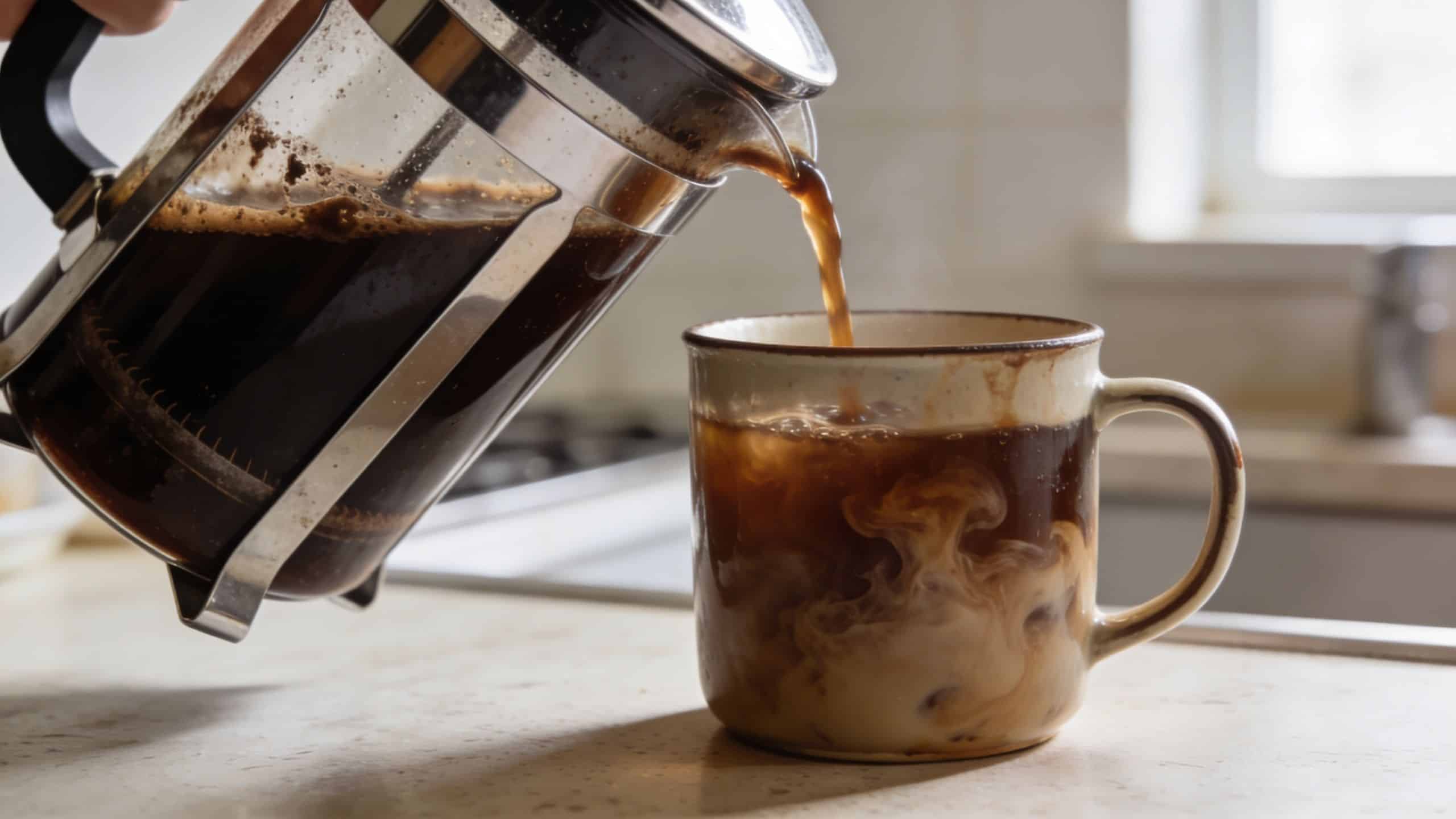
One common scenario goes like this. Someone uses the same coffee they keep around for a drip machine or reusable pod, scoops it into the press, adds hot water, waits a while, plunges, and hopes for café-style results. The coffee comes out dark and strong-looking, but the flavor is harsh, the texture is murky, and the bottom of the mug holds a layer of sludge.
The usual mistake
The press isn’t broken. The method is unforgiving when the coffee is wrong for it.
French press brewing uses immersion, not a fast pass through a paper filter. That means the coffee sits in hot water long enough for problems to show up clearly. If the grind is too fine, extraction runs too far and the mesh lets more fines through. If the bean choice is poor for this style, the cup turns muddy or oddly dull instead of deep and rounded.
Practical rule: If your French press coffee tastes both bitter and dirty, suspect bean choice and grind size before you blame water temperature or the press itself.
A lot of bitter coffee complaints sound like bean problems but are really method mismatches. That’s why guides focused on general bitterness can still help you diagnose the cup. If you want a broader look at the causes, PureHQ has a helpful piece on why coffee tastes bitter.
Why this gets worse in Keurig homes
Keurig-heavy kitchens usually keep coffee in forms that are convenient for quick brewing. That convenience doesn’t translate well to a French press. The same coffee that behaves acceptably in a pod or drip basket often struggles in immersion.
Here’s what tends to fail:
- Pre-ground drip coffee clogs the brew with fines and pushes the cup toward bitterness.
- Very light roasts can taste muted rather than vibrant.
- Old coffee loses the aromatics that make French press taste layered instead of blunt.
The fix starts with the bean, not with fancy technique. Once the bean matches the brew method, the rest becomes much easier.
The Anatomy of a Perfect French Press Bean
A French press rewards beans that stay expressive in full immersion. For a Keurig owner trying press coffee for the first time, that usually means choosing differently than you would for pods or pre-ground drip coffee. Convenience coffee is often built for speed and consistency. French press coffee tastes better when the bean can handle longer contact with water and a metal filter that lets oils through.
Roast level matters most
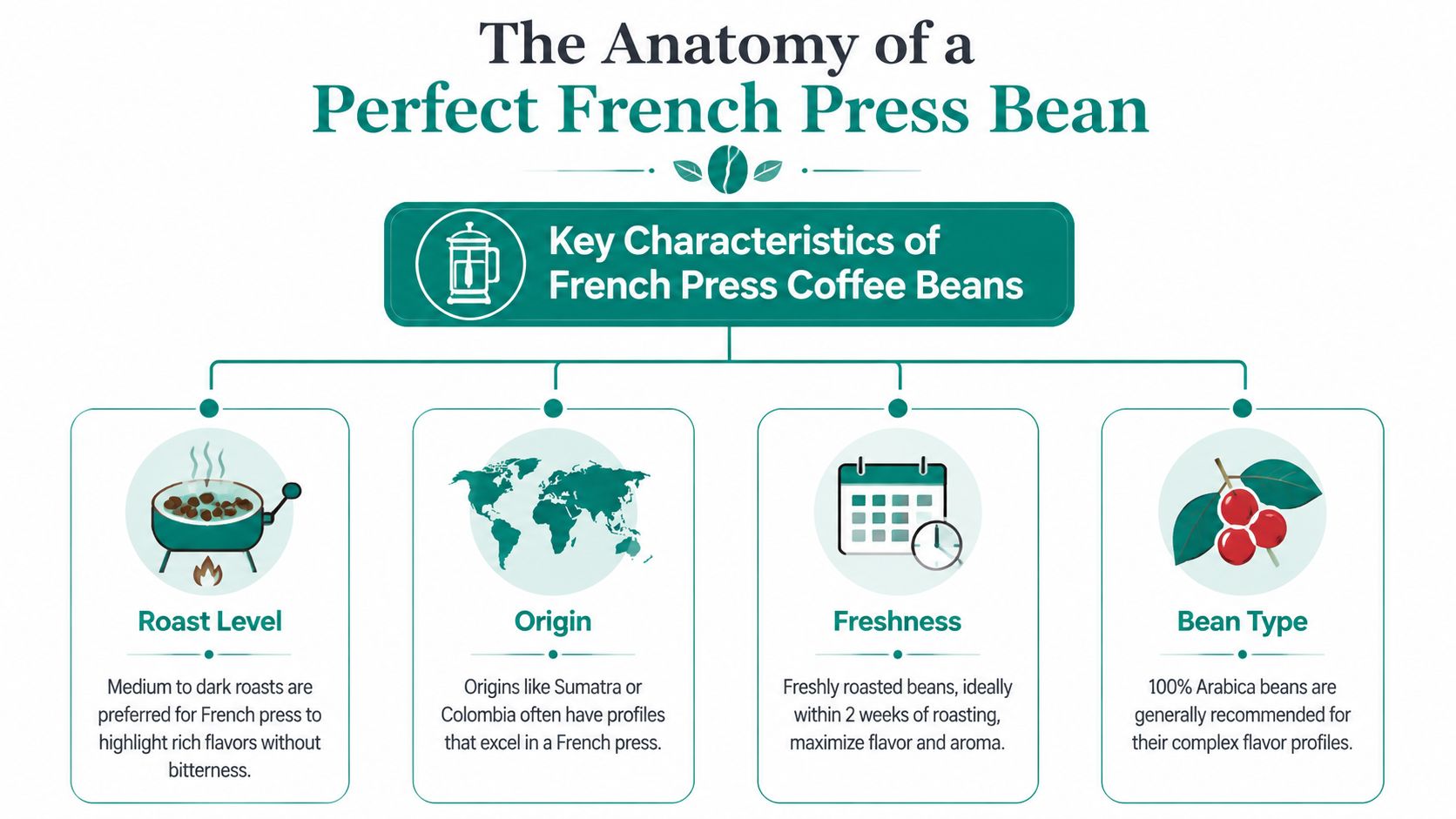
Roast level is the first thing to get right. As noted earlier by ICT Coffee, medium to dark roasts tend to perform better in French press, and coffees from origins such as Colombia and Ethiopia can hold their character well in immersion when the roast profile suits the method. That lines up with what shows up in the cup. Medium and medium-dark beans usually give you chocolate, caramel, nuts, spice, and ripe fruit with enough weight to feel satisfying instead of thin.
Light roasts are not off-limits. They just ask more from the brewer. In a paper-filter brew, a bright light roast can taste crisp and layered. In a French press, that same coffee can lose definition if the water is too hard, the grind throws too many fines, or the roast is so light that the body overwhelms the delicate notes.
That trade-off matters in Keurig homes. If you are used to the cleaner, simpler profile of pod coffee, a medium roast is usually the easiest place to start with French press.
Origin shapes body, sweetness, and sediment perception
Origin affects more than flavor notes. It also changes how the coffee feels in a press, especially once oils and a little sediment make it into the cup.
A few origin patterns are useful:
- Colombian coffees often bring balance, cocoa, and red-fruit sweetness.
- Brazilian coffees usually brew rounder, nuttier, and heavier.
- Guatemalan coffees often combine depth with a firmer structure.
- Ethiopian coffees can be excellent in a press if they are roasted for sweetness and body, not just sparkle.
Sediment is where many buyers get confused. They blame the press, but bean choice plays a part. Some coffees taste pleasant even with a touch of fines in the cup. Others turn harsh or dusty fast. Naturals and heavier-bodied coffees can feel richer in French press, but they can also make the cup seem muddier if the grind is uneven. Washed coffees often taste cleaner, which helps if you already know you are sensitive to sludge at the bottom of the mug.
If you enjoy Ethiopian character but want to compare how another immersion style presents it, Dashi's flavorful cold brew is a useful contrast.
Freshness and processing
Buy whole beans when possible. That matters even more in a French press than many Keurig users expect, because immersion brewing exposes stale coffee quickly. Once coffee is ground, aromatics fade faster and the cup gets flatter, woodier, and less sweet.
Processing is a secondary clue, but it helps. Washed coffees usually brew with more clarity. Natural and honey-processed coffees often bring more fruit and a heavier texture. In a French press, those differences come through clearly because the metal filter keeps more oils in the cup.
The practical target is simple. Choose a fresh whole-bean coffee with a medium or medium-dark roast, then match it with a proper coarse grind. If you need a visual reference for that grind size, PureHQ’s guide to grinding coffee correctly for a French press is worth keeping handy.
Buy for brew method, not label hype. A fresh medium roast that suits immersion will usually beat an expensive bean roasted for brighter, cleaner filter methods.
Mastering the Grind and Brew for Full Flavor
You can buy a good bag of beans and still end up with a harsh, silty cup. That usually happens when the grind is off, the water is poor, or the brewed coffee sits in the press too long. French press is forgiving in some ways, but it exposes sloppy prep fast. That can be frustrating if your normal routine is a Keurig, where the pod handles much of the dosing and grind for you.
Get the grind right first
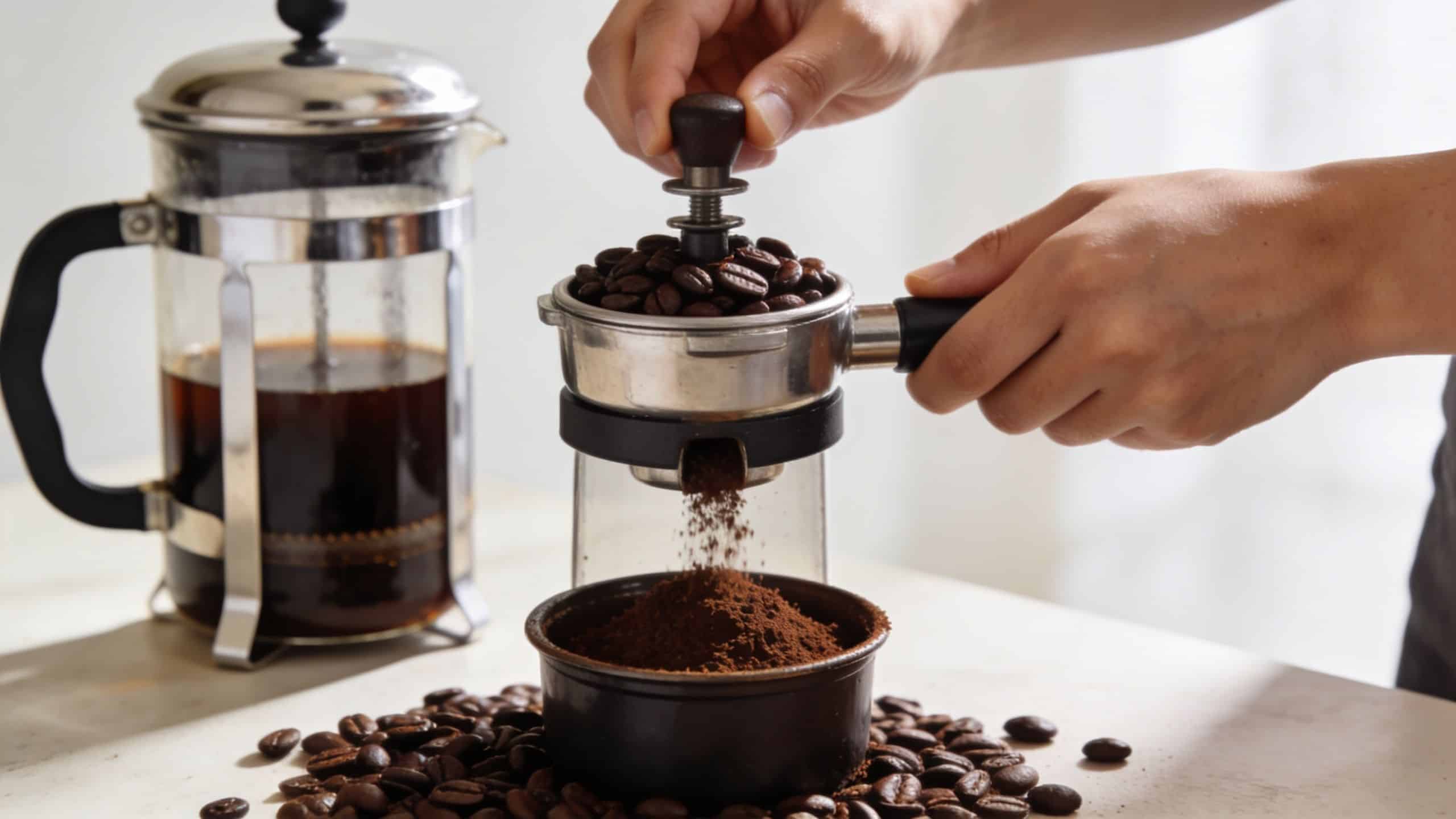
French press needs a coarse grind, roughly the size of sea salt. Finer grounds extract too quickly and slip through the mesh more easily, which gives you bitterness and that muddy layer at the bottom of the mug. Coarser, more even particles brew more slowly and leave the cup fuller without turning gritty.
The grinder matters as much as the bean. A burr grinder produces a tighter range of particle sizes, so extraction stays more even from first sip to last. Blade grinders chop irregularly, and French press makes that problem obvious because the larger pieces under-extract while the dust over-extracts.
For a closer look at burr grinder settings and visual grind targets, PureHQ’s guide on how to grind coffee for a French press is a useful reference.
If your kitchen is built around a Keurig, this is usually the first adjustment. One pre-ground coffee rarely works well in both machines. Keurig-style coffee is often too fine for immersion brewing, so trying to use one grind for both methods usually gives you a weaker pod cup or a sludgy French press cup, sometimes both.
A simple brew recipe that works
Use this baseline and adjust one variable at a time:
- Coffee dose: Start with 1 ounce (28 grams) of coarse coffee for 15 ounces (450 mL) of water.
- Water: Use hot water just off the boil. Filtered water helps more than many beginners expect, especially if your tap water adds chlorine taste or mineral harshness.
- Steep time: Start at 4 minutes.
- Press: Lower the plunger slowly and stop forcing it if you feel heavy resistance.
That recipe lines up with the brewing guidance in Verena Street’s French press guide, which also notes that a coarse grind is the right starting point for this method.
Water quality deserves more attention than it gets. Keurig owners often notice stale pods before they notice bad water, because pod coffee can hide some flaws. French press does the opposite. It leaves more oils and texture in the cup, so off flavors from water show up clearly. If one filtration setup serves your Keurig well, use that same filtered water here too.
What works and what doesn’t
Consistency wins.
A French press does not need fancy technique, but it does reward a clean routine. Measure the coffee. Heat decent water. Grind right before brewing. Pour the brewed coffee into mugs or a carafe as soon as the timer ends. Leaving it in the press keeps extraction going and turns a balanced cup dull and bitter.
Sediment is the trade-off many guides skip. Some fines are normal with a metal filter, and a little texture is part of the style. A muddy cup is different. That usually points to too many fines, an uneven grinder, aggressive plunging, or pouring the final ounce from the press where the settled particles collect. I usually leave that last bit behind. You lose a sip or two, but the cup stays cleaner.
If you want a quick visual refresher on technique, this video is a solid companion to the basic method above.
The biggest improvement usually comes from fresher grinding, better water, and a cleaner pour, not from replacing the press itself.
A Practical Guide to Buying Your Beans
Standing in the coffee aisle, most bags look persuasive. Tasting notes sound polished. Terms like bold, smooth, and premium don’t tell you much about whether the coffee will make a good French press.
The better approach is to screen bags by what affects brewing. Roast level comes first. Whole bean comes next. Origin can help you predict the profile. Beyond that, skip marketing language and focus on whether the coffee fits your brew method.
The Keurig household problem
A lot of French press advice assumes you’re building a coffee setup from scratch. That isn’t how many people shop.
According to Emerald Palate’s discussion of French press coffee, many households already centered around Keurig brewing face a practical gap. They’re used to pods or pre-ground coffee and may not be set up for the separate requirements of French press, such as a coarse grind and an emphasis on whole bean freshness. The same source points to the uncertainty around sourcing, storage, and whether one good water filtration setup can support both methods.
That’s precisely the issue. If your weekday routine is pod coffee and your weekend curiosity is French press, you don’t need to overhaul your kitchen. You just need to stop assuming one coffee format serves every brewer equally well.
Whole bean vs pre-ground for French press
Here’s the trade-off in plain terms.
| Attribute | Ideal Choice: Whole Bean Coffee | Common Alternative: Pre-Ground Coffee |
|---|---|---|
| Freshness | Keeps flavor longer until you grind it | Loses aroma faster after grinding |
| Grind control | You can set it coarse for French press | Often ground too fine for immersion |
| Sediment risk | Easier to manage with a consistent burr grind | More likely to create muddy cups |
| Convenience | Requires a grinder and a little effort | Faster and easier to use |
| Best fit for French press | Strong choice for better body and balance | Acceptable only if ground specifically for press |
A lot of buyers object here for one understandable reason: convenience. They don’t want to keep separate coffee for different brewers. In practice, if you care about French press quality, separate coffee is often the cleaner solution. Keep pods or pod-ready coffee for your Keurig. Keep one bag of whole beans for the press.
What to check on the bag
When I’m buying coffee for a press, I look for these things first:
- Roast level Medium or medium-dark is the safest starting point.
- Bean format Whole bean wins if you own a burr grinder.
- Origin information Specific origin usually tells you more than generic branding.
- Storage plan Buy what you’ll use while it still tastes lively.
If you want a broader framework for spotting better coffee before it even hits your grinder, PureHQ’s article on coffee bean quality gives a practical checklist.
Troubleshooting Common French Press Problems
French press problems usually show up in the cup fast. That’s good news because the cause is often easier to identify than people think.
Too much sludge
This is the complaint most guides brush past. The awkward truth is that the flavors many people love in a French press come with a trade-off.
As ColombianCoffee.us explains in its French press bean guide, medium-to-dark roasts are widely preferred because they retain flavorful oils, but higher oil content increases the likelihood of sediment and “mouthfuls of sludge” at the bottom of the cup. That’s why coarse grinding alone doesn’t solve every muddy-cup problem.
What helps:
- Use a cleaner coarse grind with fewer fines.
- Pour gently at the end instead of emptying every last drop.
- Clean the mesh thoroughly so old residue doesn’t add more grit next time.
A French press cup should feel full, not dirty. Body and sludge aren’t the same thing.
Bitter coffee
Bitterness usually points to extraction running too far or to the wrong coffee format for the press. The fastest checks are grind size, steep time, and whether you used pre-ground coffee meant for a different brewer.
If you regularly struggle with both bitterness and stomach discomfort, your issue may not be technique alone. Some drinkers also react poorly to coffee itself, and Maximum Health Products on acid reflux offers a useful non-brewing perspective if that sounds familiar.
Weak or watery coffee
A weak French press usually comes from one of three things: too little coffee, stale coffee, or beans that don’t have enough roast development to stand up in immersion. If your cup tastes thin rather than clean, don’t automatically grind finer. That often makes the brew harsher, not better.
Try this order of operations instead:
- Check freshness first.
- Confirm you’re using whole bean or press-ground coffee.
- Adjust dose before grind if the cup lacks strength.
- Keep your equipment clean so old oils don’t flatten flavor.
This is also where simple maintenance habits help. Good water and clean brewing gear matter whether you use a French press, a Keurig, or both. If your daily setup includes pod machines too, staying on top of filters and descaling makes the coffee side of the kitchen more consistent overall.
Storing, Serving, and Elevating Your Brew
Once you find the best coffee beans for a french press, don’t let storage undo the work.
Keep whole beans in an airtight, opaque container and store that container in a cool, dark place. The goal is to protect the coffee from oxygen, light, heat, and moisture. A counter display jar might look nice, but if it lets in light or air, it works against flavor.
How to serve it well
French press coffee has weight and texture. It pairs best with foods that can handle that richness rather than delicate snacks that disappear beside it.
A few reliable pairings:
- Buttery pastries work well with fuller-bodied coffees.
- Chocolate desserts often match medium-dark roast notes naturally.
- Simple toast or breakfast sandwiches make sense when you want the coffee to stay the focus.
Small habits that improve every cup
The best improvements at this stage are boring, which is exactly why they work.
- Grind only what you need so the bag stays fresher.
- Pour the coffee out after brewing instead of letting it sit in the press.
- Wash the press thoroughly because old oils go rancid and show up in the next batch.
- Pay attention to your water if your coffee tastes dull, harsh, or inconsistent across different brewers.
Clean gear and good water don’t make up for bad beans, but they absolutely protect good beans from tasting worse than they should.
If you use both a French press and a single-serve machine at home, think of your setup as one coffee system, not separate islands. Better coffee, cleaner equipment, and better water all stack together.
If you want cleaner-tasting coffee across every brewer in your kitchen, shop PureHQ Inc. for reusable pods, water filters, and descaling essentials that help your Keurig and other machines stay consistent, easy to maintain, and ready for the next cup.

