
Coffee Machine Care
Hamilton Beach Coffee Maker Parts a Complete Guide 2026

Aug
Your Hamilton Beach coffee maker usually doesn't fail all at once. It starts with a weak stream, a drip that should've been a pour, a lid that won't quite seat, or a pod brew that leaks just enough to ruin the counter and your morning. At that point, the question isn't whether the machine is annoying, it's whether you need a new brewer or just the right Hamilton Beach coffee maker parts.
The good news is that Hamilton Beach built many of its drip and FlexBrew machines like maintainable appliances, not sealed throwaways. Its parts portal and model guides show serviceable pieces such as the lid, swivel showerhead, filter basket, glass carafe, water reservoir, and optional water filter, and the company tells owners to order replacements through its official parts system Hamilton Beach parts portal. That matters because a lot of “broken coffee maker” problems are really one worn component, one clogged path, or one seal that's past its best day.
Your Morning Coffee Rescue Plan
The quickest repair decisions usually come after a bad cup and a rushed assumption. Someone sees coffee drip onto the counter, decides the brewer is finished, and starts looking at a full replacement before checking the carafe, basket, seal, or spray path. That gets expensive fast, and it often leaves the underlying fault in place.
A better approach starts with the symptom and works outward. A cracked carafe points to the pot, not the whole brewer. A weak brew usually points to the showerhead, basket, or water path. A leak on a FlexBrew often comes from a seal or the reservoir interface, not the full pod assembly. The right diagnosis keeps the repair small and keeps you from buying parts you do not need.
I see the same mistake a lot: a homeowner replaces a basket because the coffee tastes weak, then learns the issue was mineral buildup in the spray path. Another common one is blaming the pod side on a FlexBrew when the leak is coming from a tired gasket or a poor reservoir fit. Those are different repairs, and they call for different parts. Matching the symptom to the exact section of the machine is what saves time and money.
A quick guide helps here, and so does a clear breakdown of the machine's working parts, like this parts of a coffee pot guide. Use that kind of reference to separate the brew path from the water reservoir and the hot plate area before you order anything.
Practical rule: Don't buy a part until you can name the symptom, trace it to one section of the brew path, and match it to the exact model.
Start with the obvious wear items, then work inward. That helps you avoid ordering the wrong basket, the wrong carafe, or a pod assembly when all you needed was a seal.
Anatomy of Your Hamilton Beach Coffee Maker
A Hamilton Beach brewer is easier to repair once you treat it as a set of working zones instead of one sealed box. The wet end moves water, the brew path handles grounds or pods, and the hot end keeps finished coffee warm. When one zone fails, the symptom often shows up somewhere else, which is why the machine can look more broken than it really is.

Hamilton Beach's 12-cup model 49630 guide lists 11 distinct serviceable or user-facing parts, including the lid, swivel showerhead, filter basket, glass carafe, and water reservoir. That breakdown matters because it shows how modular these brewers are. The carafe is not just a pitcher, the basket is not just a tray, and the showerhead is not decorative.
The brew path
The brew basket, filter basket holder, removable filter basket, and swivel showerhead do most of the precision work. Hamilton Beach's manuals show these parts are meant to be removed, washed, and returned to service, which fits the way coffee oils and mineral scale collect where hot water first meets grounds Hamilton Beach 12-cup use-and-care guide. If the spray pattern looks uneven or the basket overflows, start here.
The water side
The water reservoir, water window, and optional water filter manage the supply before brewing starts. A reservoir problem usually shows up as leaks, odd fill levels, or a machine that brews inconsistently. On FlexBrew models, the water path gets more specific because the single-serve side uses separate subparts instead of one monolithic adapter.
The serving and warming side
The glass carafe and keep-warm plate are often the first visible parts to be replaced. They are also easy to misread. A cracked pot is obvious, but a cold carafe can come from a hot-plate issue, and a messy pour can come from a damaged lip or lid fit rather than the handle.
A broader visual of the pieces that show up most often in repairs is covered in this coffee pot parts guide. Use it to separate the brew path from the reservoir and warming areas before you order anything.
How to Find Your Model and Part Number
The fastest repair starts with the model number, not the symptom alone. Hamilton Beach sells many similar-looking brewers with different baskets, reservoirs, lids, and pod assemblies, so the brand name by itself won't protect you from ordering the wrong part. That's especially true with FlexBrew machines, where the same family includes multiple brew styles.
Look for the model number on the base, back label, or underside of the machine. On drip brewers, it's often near the serial information or product label. On FlexBrew units, check both the single-serve side and the carafe side label area, because the same machine can use parts from different subassemblies. Once you have that number, use it to pull up the correct parts diagram instead of shopping by appearance alone.
Independent parts sellers make the compatibility problem obvious. They list items by exact factory part number, such as the 990117800 coffeemaker carafe or the 990237500 brew basket for models like the 49976, which proves that the fit depends on the exact model and component, not just the Hamilton Beach logo Goodman's Hamilton Beach coffeemaker parts and accessories. If you've ever wondered why a “Hamilton Beach-compatible” listing didn't work, that's usually why.
Match the symptom to the diagram
Use the model number, then open the parts list and find the failing piece by location and shape. A cracked carafe is simple. A leaking base reservoir is less obvious, but the diagram will tell you whether you need the reservoir, the lid, or a connector piece. On a single-serve model, the diagram may split the adapter into multiple components, which helps you avoid replacing too much at once.
Best fit strategy: Buy by model number plus factory part number, not by generic compatibility wording.
If you're still unsure, compare the part with your old one by mounting points, seal shape, and size. That extra minute saves a return and keeps the repair moving.
OEM vs Aftermarket Parts A Practical Comparison
The argument over OEM versus aftermarket parts usually comes down to fit, cost, and trust. With coffee makers, those trade-offs are real. A carafe that doesn't seat properly or a basket that wobbles can create leaks, weak brewing, or repeated frustration, so the cheapest option isn't always the cheapest outcome.
Hamilton Beach Commercial's own parts listings include separate items like a permanent brew basket and a water filter pod as replaceable accessories, which reinforces the idea that brew-path parts are meant to be serviced independently Hamilton Beach Commercial coffee maker parts. That supports a practical middle ground. Sometimes OEM is worth the extra cost for exact fit, and sometimes a carefully matched aftermarket part is perfectly reasonable if you verify the model and part number first.
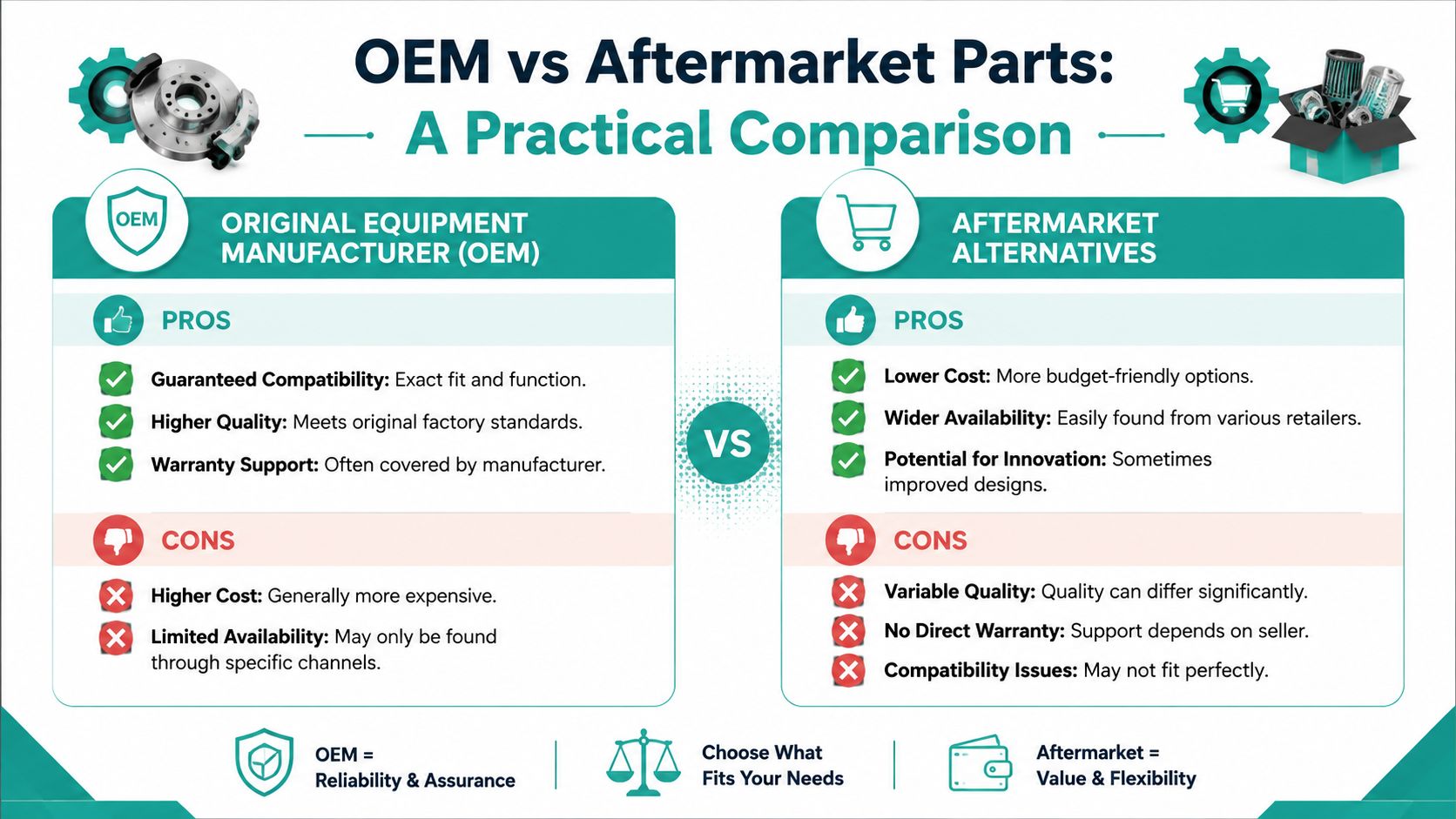
OEM vs. Aftermarket Hamilton Beach Parts
| Attribute | OEM Parts (Original) | Aftermarket Parts (Generic) |
|---|---|---|
| Fit | Built for the exact model | Depends on seller accuracy |
| Confidence | Strong when matched to the model list | Can be good, but check carefully |
| Durability | Matches original factory design | Varies by manufacturer |
| Availability | Sometimes narrower | Often easier to source |
| Cost | Usually higher | Often lower |
| Risk of returns | Lower when ordered correctly | Higher if the listing is vague |
The main objection I hear from customers is simple: “Will a generic part leak?” Sometimes yes, sometimes no. The critical factor is whether the seller lists the exact model range and factory number. If the listing is vague, skip it.
For anyone who wants to verify what's authentic and what's just labeled that way, this product authenticity guide is worth reading before you check out.
Step by Step Guide to Common Repairs
A cracked carafe, a loose seal, or a clogged brew path usually shows itself before you ever open the machine. The fastest fix starts with matching the symptom to the part. That saves money, and it keeps you from replacing assemblies that still work.
Start with the basics that prevent mistakes. Unplug the brewer, let it cool, drain the water, and set the replacement part beside the old one before you remove anything. You'll spot fit problems faster, and you reduce the chance of cracking plastic or spilling hot water during the repair.

Replace a cracked carafe
- Confirm the model match. Read the base label and compare it to the replacement listing, because carafes are a common source of wrong-part orders.
- Inspect the lid and handle fit. A cracked pot often goes with a warped lid or chipped rim, so check the whole serving setup before you throw the old one out.
- Set the new carafe in place. Make sure it sits flat on the warming plate and clears the brew basket without rubbing.
- Run a water-only test. Brew plain water first so you can check the pour path and seating before you waste coffee.
Clean or replace the brew basket path
Weak coffee, splashing, or overflow usually points to the basket, the showerhead, or both. Hamilton Beach's care instructions show that removable wet-end parts are meant to be washed before first use and run through a water-only cycle, so those pieces should be treated as routine service items rather than permanent parts Hamilton Beach 12-cup use-and-care guide. If cleaning does not restore normal flow, replace the basket or showerhead instead of swapping the whole brewer.
- Remove the basket and holder.
- Wash away coffee oils and loose grounds.
- Check the showerhead openings for scale or residue.
- Reinstall and test with water.
Fix a FlexBrew leak at the seal
On FlexBrew units, the single-serve side uses separate parts, including a gray pod holder, a gray needle holder with a black seal, and a piercing needle FlexBrew parts diagram. That detail matters because a leak often comes from the seal, not the whole assembly.
- Check where the water escapes. If it shows up around the pod chamber, inspect the seal first.
- Remove the pod assembly carefully. Do not force the needle area.
- Replace the worn black seal if it is hardened or flattened.
- Test with plain water before brewing a pod.
A replacement seal is often the better buy than a full assembly when the rest of the piece is still in good shape.
If you use reusable pods on compatible Hamilton Beach systems, PureHQ Inc. also publishes guidance on Hamilton Beach coffee maker pods that can help you keep the brew path cleaner during daily use.
Troubleshoot Before You Buy A New Part
A weak brew does not automatically point to a failed part. Coffee makers often get blamed for problems caused by scale, clogged needles, coffee oils, or a basket that was not cleaned well enough. A careful diagnosis can keep you from buying the wrong replacement and wasting time on a machine that only needs cleaning.
Repair forums such as iFixit show repeat reports of Hamilton Beach coffee makers not dispensing or overflowing, and the fixes often come back to clearing clogged needles or descaling rather than replacing hardware iFixit Hamilton Beach Coffee Maker troubleshooting. That pattern matters because many parts complaints are really maintenance problems in disguise.

Quick checks before ordering anything
- Check power first. Make sure the plug is seated properly, and if you need help identifying a standard household plug, understanding common electrical plugs is a useful reference.
- Clean the wet end. Wash the basket, showerhead, and any removable pieces that carry coffee residue or mineral buildup.
- Look for visible wear. Cracks, hardened seals, and chipped rims are real signs that a part should be replaced.
- Reset the machine. Unplug it briefly, then plug it back in and test again.
- Read the manual symptoms carefully. Some error patterns point to cleaning, not failure.
- Confirm the symptom. Weak coffee, overflow, leak, and no brew do not call for the same part.
- Only then buy the part. A confirmed failure is worth fixing. A guessed failure usually is not.
Descaling belongs in the same maintenance routine, especially if the machine brews slowly or output changes from cup to cup. A universal descaling solution and cleaning tablets can restore flow and keep scale from building back up. For more on keeping your machine clean, especially when using reusable pods, see our guide to Hamilton Beach coffee maker pods. That is often a cheaper fix than replacing hardware too early.
Frequently Asked Questions About Parts and Repairs
Will aftermarket parts void my warranty? Warranty terms vary by product and seller, so read the paperwork that came with the brewer before installing anything non-OEM. If the machine is still under warranty, save the original part and keep the replacement receipt.
Can I find parts for an older Hamilton Beach model? Often yes, but the model number and part number still give you the cleanest path. Older machines may require cross-checking with seller diagrams, and exact matching matters most there.
What usually wears out first? In normal use, the carafe, basket, lid, reservoir, and pod seal are among the parts people replace most often because they take heat, handling, and repeated cleaning. Matching the symptom to the part saves time and keeps you from buying hardware you do not need.
Should I replace the whole machine if one part fails? Usually not. Hamilton Beach's parts documentation shows a modular design with replaceable pieces, and that makes individual repair the more sensible first move when the rest of the brewer is sound.
What if the machine still leaks after I replace the part? Check the mating surfaces, the seal orientation, and the model match again. A leak after replacement usually means the wrong part was ordered, the old residue was not cleaned off, or a nearby component is also worn.
PureHQ Inc. carries coffee machine maintenance items that fit this kind of repair-first approach, including reusable pods, filters, and descaling products. If your Hamilton Beach brewer needs a better-fitting accessory or a cleaner brew path, visit PureHQ Inc. and choose the maintenance parts that match your machine and the symptom you are fixing.

