
Coffee Machine Care
Coffee Filter Hamilton Beach
Jul
You don't usually notice the filter until coffee goes sideways. Grounds slip into the cup, the basket overflows on the counter, or the brew comes out thin even though the machine sounds like it's working fine. With a Hamilton Beach brewer, that frustration usually points to one thing, the filter choice or fit is off, and the fix is less mysterious than it seems.
Hamilton Beach is a long-running U.S. brand with a corporate history tied to Glen Allen, Virginia, and its coffee makers sit in a broad mainstream installed base rather than a niche corner. That matters because the same brand can use different filter formats across basket brewers, single-serve models, and water-treatment kits, so “coffee filter Hamilton Beach” is really a compatibility question first and a taste question second. The good news is that once you understand the filter type, the brewer style, and the water quality in your kitchen, the cup usually improves fast.
The Hidden Cause of Your Morning Coffee Frustration
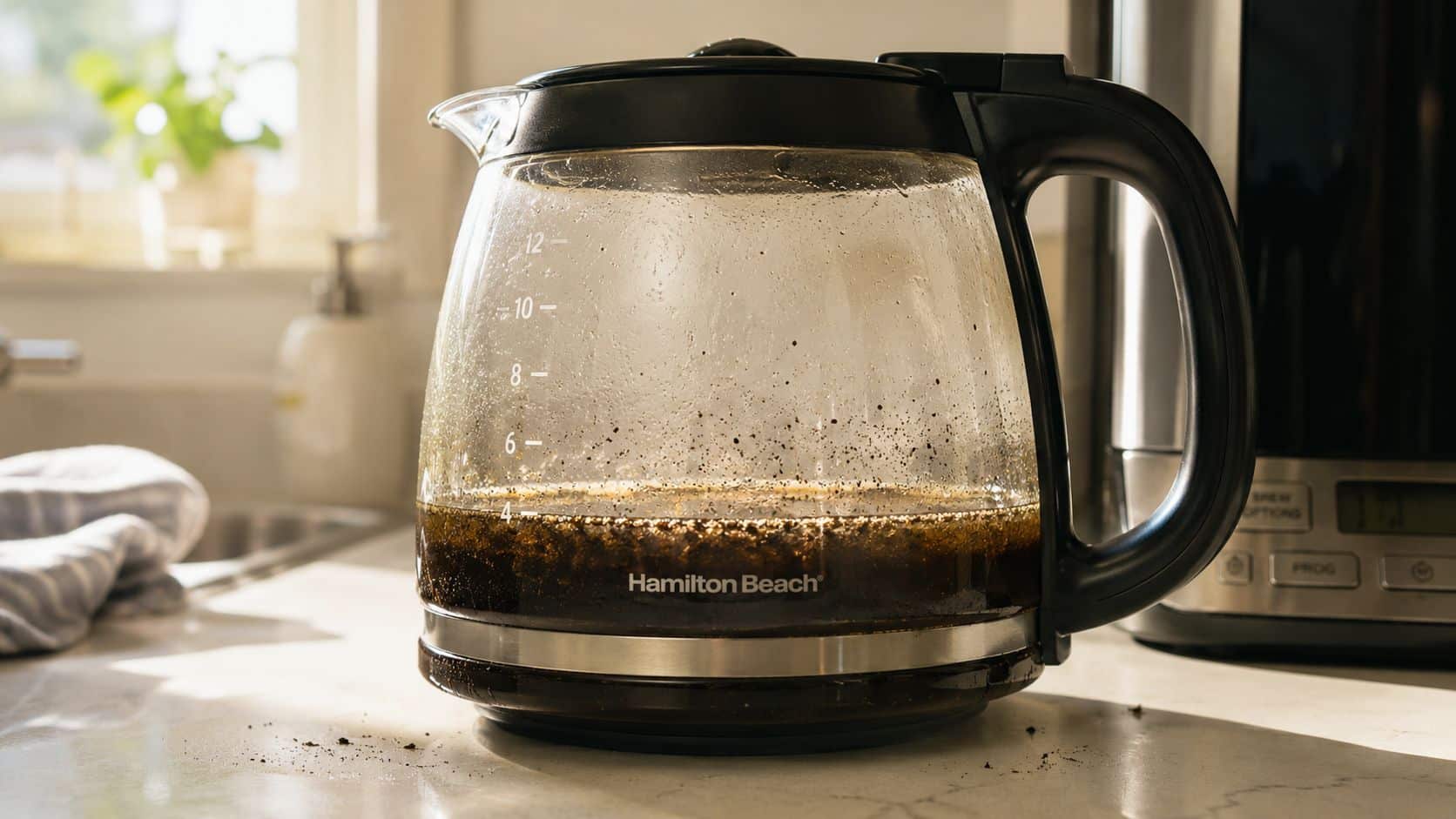
The mess usually starts small. A paper filter folds wrong, a reusable basket sits a little high, or the grind runs too fine for the brew path, and suddenly the counter has a brown ring where your patience used to be. Many Hamilton Beach owners blame the machine, but the culprit is often the filter system doing exactly what it's been asked to do, just not in the right way.
Why the wrong filter feels like a machine problem
Hamilton Beach machines are built around common drip-brewing formats, especially 8- to 12-cup basket-style brewers, and retail listings for reusable basket filters reflect that broad compatibility across the platform. The company's own permanent filter page also shows that a reusable stainless-steel filter can be a direct replacement for paper in some basket machines, while other models use different shapes or no paper at all, depending on the brew side and model design Hamilton Beach company history and product context, Hamilton Beach coffee filters and carafes.
That's why one person gets a clean cup and another gets sludge or overflow from what looks like the same setup. The machine didn't suddenly become unreliable, the fit, filter style, or brew workflow changed the result. If the brew path is clear but the cup still tastes dull or bitter, the problem may sit in the water, not just the basket.
The confusing part is real, but it's solvable
Coffee filters aren't one thing. They span paper, cloth, and permanent metal, plastic, or porcelain designs, and Hamilton Beach owners encounter that whole spectrum in everyday use Coffee filter background. That's useful because it means you can choose for convenience, flavor clarity, cleanup, or waste reduction, but it also means there's no one-size-fits-all answer.
The mistake most make is shopping for “a Hamilton Beach filter” instead of asking what they want the filter to do. If you want less sediment, paper tends to win. If you want lower recurring waste and easier long-term use, permanent filters make more sense. If the coffee tastes flat or stale, the water filter may matter more than the basket at all.
The fix usually starts with one question, what problem are you trying to solve, grounds in the cup, cleanup, or taste?
Paper vs Permanent vs Water Filters Explained
The filter you choose changes more than the way the basket fits. It affects how the coffee tastes, how much cleanup you do, and how hard the machine has to work over time. A Hamilton Beach brewer can make good coffee with paper, permanent, or water filtration, but each one solves a different problem and brings a different trade-off. Once you connect the filter to the result you want, the choice gets much clearer.
Paper filters for clarity and cleanup
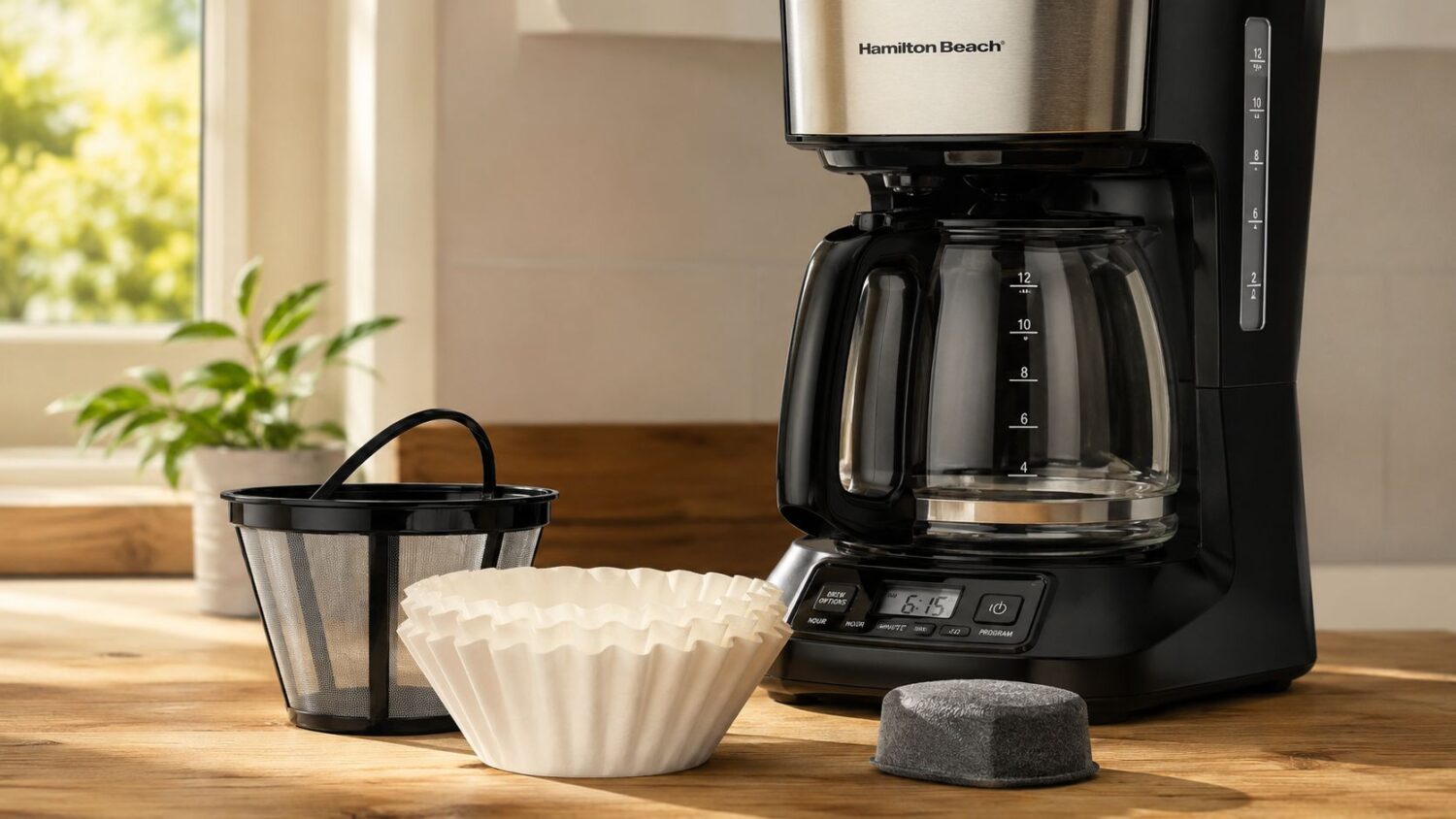
Paper filters make sense when you want a cleaner cup and less sediment in the mug. They also keep the basket cleaner, which matters in a busy kitchen where nobody wants to rinse grounds out before the next brew. Hamilton Beach's FlexBrew guidance notes that some models do not require a paper filter, but a #1 paper cone filter can make cleanup easier and reduce sediment on certain single-serve sides Hamilton Beach FlexBrew guidance.
Paper has a real trade-off. It adds one more thing to keep stocked, and if you do not rinse the filter on some brewers, the first sip can pick up a papery note. For a cup that stays clean and leaves little behind in the basket, paper is the easiest path. If you care more about reuse and cutting disposable waste, it is not the best fit.
Permanent filters for reuse and lower waste
Permanent filters suit people who brew every day and want fewer throwaway parts. Hamilton Beach describes its permanent coffee filters as a dishwasher-safe stainless steel option that won't change coffee flavor Hamilton Beach coffee filters and carafes. Reusable basket filters for Hamilton Beach 8- to 12-cup brewers are also sold as permanent replacements for disposable basket paper filters Reusable 8-12 cup filter listing.
The trade-off shows up in the cup. A permanent mesh filter can let more fines through if the grind is too coarse or the basket is packed too full, so the coffee can taste a little grittier than it would with paper. That is part of the format, not a flaw. Use it when you want durability, less waste, and a fuller brew path, and pair it with a grind that does not fight the mesh.
Water filters for taste and machine health
Water affects flavor before the grounds do. Hamilton Beach's coffeemaker water filter kit is designed to improve coffee flavour by reducing chlorine odour and taste, and the kit includes two water filter pods and one plastic holder for compatible coffeemakers Hamilton Beach water filter kit. A separate replacement charcoal filter listing says activated-carbon media is intended to remove impurities, calcium, lime, chlorine, and odors Hamilton Beach replacement charcoal filter listing. That matters because a paper or permanent basket cannot fix stale water, chlorine bite, or scale buildup.
If the coffee tastes harsh even when the basket is right, the water is the first place to look. That same logic shows up in broader filtration setups, and the overview of types of office water systems helps explain why changing the water changes the cup before anything else does. For a closer look at maintenance and day-to-day trade-offs, the comparison of reusable coffee filter vs paper is useful too.
Practical rule: If the cup is muddy, look at the basket. If the cup tastes metallic, plasticky, or chlorinated, look at the water.
| Filter type | Best for | Main benefit | Main trade-off |
|---|---|---|---|
| Paper | Clean cups and quick cleanup | Less sediment | Ongoing disposables |
| Permanent | Daily brewing and reuse | Lower waste and no paper replacement cycle | More grind sensitivity |
| Water | Taste and machine protection | Better water quality at the source | Needs correct holder and replacement routine |
Ensuring a Perfect Fit for Your Hamilton Beach Model
A filter can look right and still fail at the rim. Hamilton Beach uses several brewer styles, so fit depends on whether you are dealing with a basket carafe machine, a BrewStation-style brewer, or a single-serve design. The brand has a wide presence in North American kitchens, which means there are many machines in use, but it also means the safest move is to verify the exact shape before you buy Hamilton Beach company history and product context.
Start with the model number
The model number is the fastest route to the right filter. Look on the bottom, back panel, or inside the water reservoir area, then match that number against the machine's filter requirements. If the brewer uses a basket, check whether it takes a standard basket insert, a cone shape, or a reusable mesh made for a specific brew chamber.
Hamilton Beach's own guidance for pod and filter use points to the same practical rule. One side of the machine may not need a paper filter at all, while the other side uses a different format or a permanent insert. That means the brand name alone does not tell you enough.
Match the geometry, not just the label
A basket-style filter should sit flat without curling at the rim, pressing into the spray head, or forcing the lid closed. If the filter rides too high, water can pool and overflow. If it sits too loose, grounds can slip around the edge and end up in the carafe.
That is why third-party reusable filters for Hamilton Beach often advertise fit for most 8- to 12-cup basket-style coffeemakers. The compatibility claim tells you the product is built for a mainstream shape, but it does not replace a visual check. Measure the basket opening, compare the sidewall depth, and confirm whether the brewer is a true basket or a cone layout before ordering.
Single-serve sides need extra caution
Single-serve Hamilton Beach machines can accept grounds or pods depending on the model, and the brew chamber may behave differently from the carafe side. If your brewer uses a pod holder or a scoop-style basket, do not assume a regular paper filter will sit correctly just because another Hamilton Beach unit did. The practical test is simple, the insert should drop in cleanly, seal without force, and allow the lid to close naturally.
If you have to press the lid down hard, the filter is probably the wrong fit.
That matters even more with single-serve setups that switch between grounds and pods. The way the chamber is built changes how the coffee flows, and Hamilton Beach coffee maker pods is a useful reference for seeing how much the brew path affects performance within the same brand.
Proper Installation and Brewing Techniques
Even a well-matched filter can brew poorly if you handle it badly. Most Hamilton Beach frustrations come from small setup mistakes, not major equipment failures. The coffee gets better when the filter, grind, and water flow are matched to the brewer instead of fought against it.
Paper filters work best when they're seated cleanly
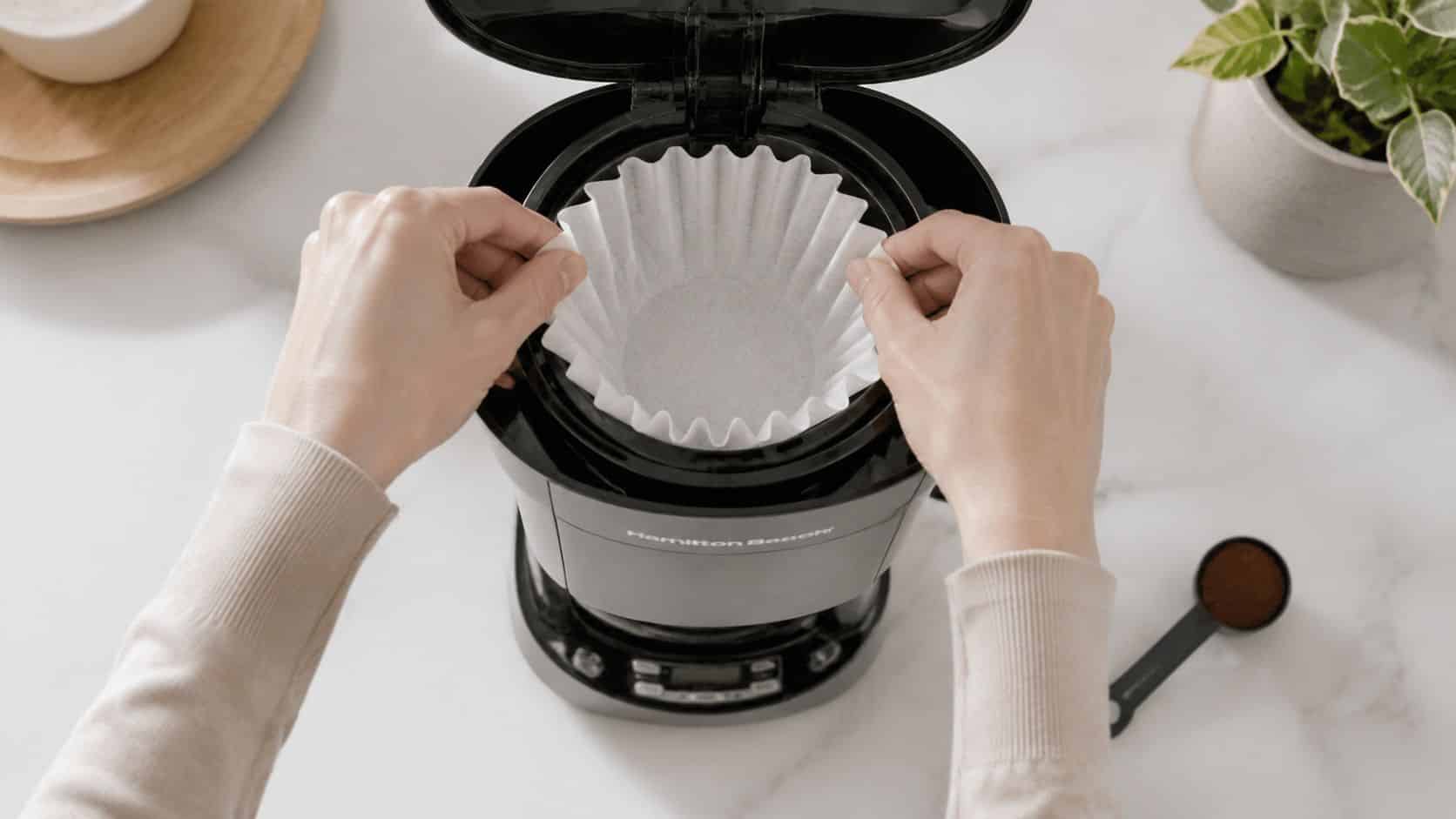
Paper should sit flush against the basket walls with no folds blocking the rim. A quick pre-rinse helps the filter settle and can reduce paper taste, especially if you brew lighter roasts where small off-notes stand out more. If the paper buckles or floats when water hits it, the basket isn't supporting it well enough or the wrong size is in the machine.
For some Hamilton Beach models, a paper filter also makes cleanup easier because the wet grounds lift out in one move. That's the key advantage, not just the filtration itself. Less scraping means less chance of tearing the basket or leaving residue behind for the next brew.
Permanent filters need the right grind and fill level
The reusable stainless-steel filter makes the most sense when you respect the flow path. Use a medium to medium-coarse grind for most drip setups, then avoid packing the basket too tightly. If you overfill, water slows down, the machine can overflow, and the cup may pick up extra fines.
Hamilton Beach's own single-serve guidance says some machines don't require a paper filter, but adding one can reduce sediment and make cleanup easier Hamilton Beach FlexBrew guidance. That principle carries over to permanent filters too. The filter can only do so much if the coffee bed is choking the water or sitting above the rim.
Water filters need correct soaking and seating
The water filter pod does its job only if it's installed in the holder the right way. Soak the cartridge as directed by the brewer or filter kit, place it fully in the plastic holder, and make sure the assembly sits in the reservoir without lifting or drifting. If the holder isn't seated, the water can bypass the media and you'll lose the taste benefit entirely.
The video below is useful if you want to see the filter handling process in a real kitchen setting.
Brew rule worth keeping: A filter fixes flow only when the basket, grind, and water path all agree.
Cleaning and Maintenance for Better Coffee
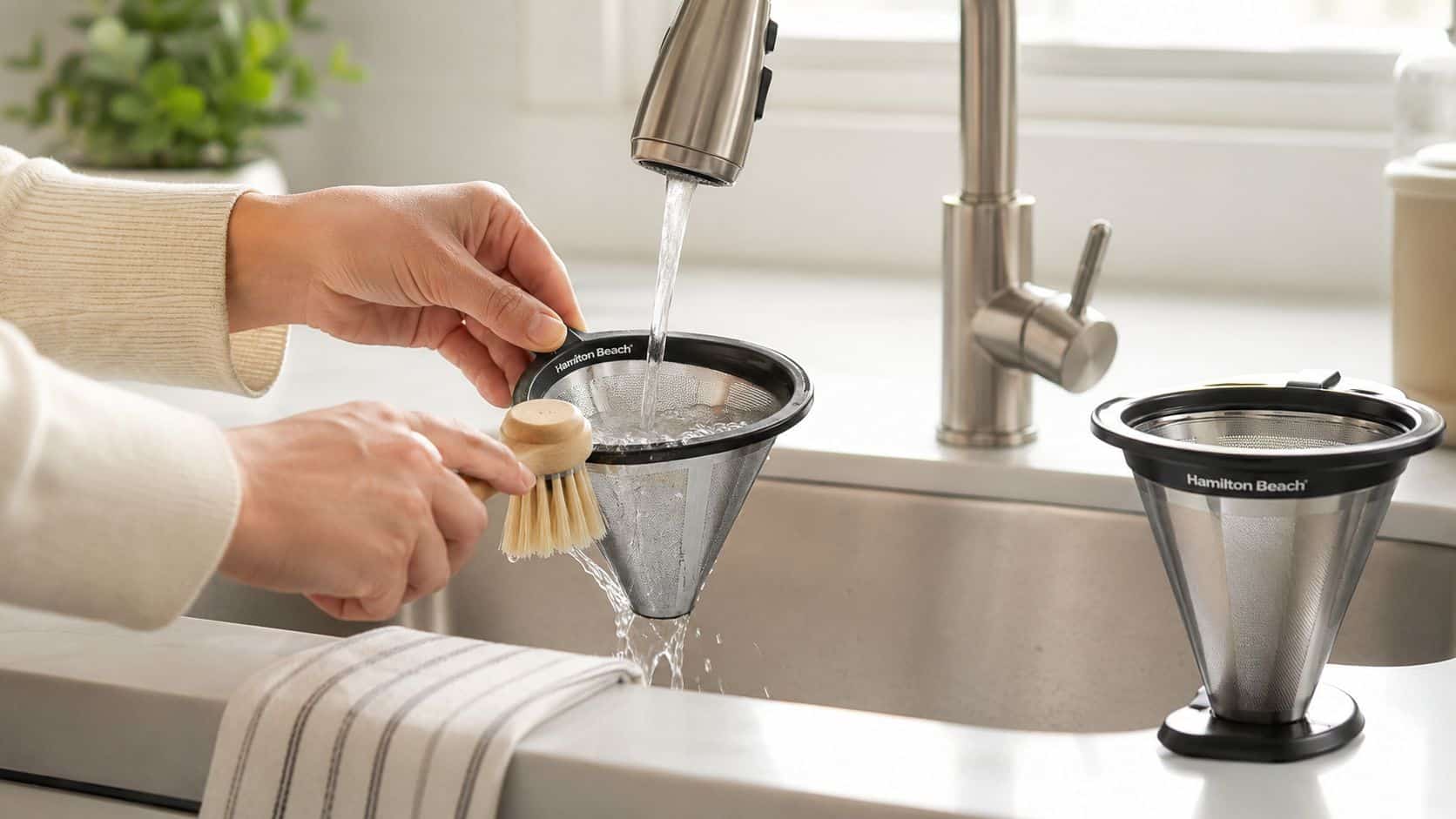
A clean filter cannot rescue a dirty machine. Coffee oils cling to reusable mesh, mineral scale narrows the water path, and stale residue can make a good brew taste flat long before the brewer shows obvious trouble. Hamilton Beach's permanent filter is dishwasher-safe, but hand rinsing after each use still keeps coffee oils from building up between deeper washes.
Daily rinsing protects flavor
Reusable filters should be rinsed soon after brewing while the oils are still soft. Once they dry, the residue gets stickier and can carry bitterness into the next batch. A quick wash also lets you inspect the mesh for damage, trapped grounds, or a bent rim that could affect fit.
If you use a water filter cartridge, keep track of replacement timing so the chlorine-reduction benefit does not fade. The filter only improves taste while the media is still active, and an old cartridge will do little for off-flavor or scale control.
Descale the brewer before the taste turns flat
Mineral buildup is one of the most common reasons a coffee maker starts brewing slower or tasting dull. It affects heat transfer, flow, and cup quality at the same time, so water treatment and descaling belong in the same maintenance routine. For a broader cleaning reference, how to clean coffee maker is a useful companion guide for the deeper upkeep side.
A descaling solution or vinegar-based clean helps clear buildup from inside the machine, especially if your water is hard. That matters even more in homes that rely on reusable filters, because the brew system shows buildup faster when disposable paper is not covering up the problem.
Clean tools make troubleshooting easier
When the basket is clean and the water path is clear, you can diagnose flavor issues more accurately. If the coffee still tastes weak, the grind may be wrong. If it tastes bitter or stale, the water quality may be the culprit. A dirty brewer hides those clues and wastes good coffee while you guess.
Keeping the filter, reservoir, and brew chamber clean does more than protect taste. It helps the machine keep doing the simple job you bought it for, making a reliable cup without drama.
Troubleshooting Common Filter Problems and Next Steps
When Hamilton Beach coffee goes wrong, the fix usually shows up in the symptom. Grounds in the cup, overflow at the basket, and watery coffee each point to a different failure in the filter system. The fastest path is to match the symptom to the most likely cause, then change one variable at a time.
Grounds in the pot
If grounds appear in the carafe or cup, the coffee bed is probably too fine, the basket is overloaded, or the filter isn't seated evenly. A torn paper filter can do it too, especially if the rim folded during brewing. In a reusable basket, inspect the mesh for wear and rinse out any trapped sediment before the next batch.
Water overflowing from the basket
Overflow usually means the flow path is too restricted. That can happen when the grind is too fine, the paper filter is the wrong size, or a permanent basket is packed above the safe fill line. If the brewer is a single-serve model, a pod holder or scoop insert that isn't seated properly can trigger the same mess.
Weak or watery coffee
Weak coffee often means the filter is too open for the grind, the brew size is too large for the dose, or the water itself is the problem. If the basket is fine but the cup still tastes thin, look at the water filter or the reservoir water quality before blaming the beans. Chlorine, scale, and stale water can flatten flavor even when the filter fit is correct Hamilton Beach water filter kit.
| Problem | Likely cause | Best first fix |
|---|---|---|
| Grounds in the cup | Fine grind, torn paper, poor seating | Check fit and use a cleaner grind |
| Overflow | Wrong filter size or overfill | Reduce dose and verify basket shape |
| Watery coffee | Loose extraction or water issues | Tighten grind control and check water treatment |
A quality reusable basket filter gives most daily drinkers the best balance of convenience, cleanup, and durability, especially in the common Hamilton Beach basket format. If you like your coffee cleaner, pair it with paper on busy mornings. If taste is drifting, don't forget the water side, because the brew can't improve if the water is fighting you.
If you're ready to stop guessing and start brewing cleaner coffee, visit PureHQ Inc. to shop compatible reusable filters, water filtration accessories, and maintenance essentials built for better everyday results. A good filter setup should make your Hamilton Beach easier to use, not harder, and PureHQ's lineup is designed to help you get there without wasting coffee or time.

