
Coffee Machine Care
Sustainability Practices: Save Money, Better Coffee
Jun
Coffee habits create more waste than the average kitchen routine suggests, but the bigger sustainability miss is often inside the machine, not in the trash.
Pod waste gets the attention because it is easy to see. The less obvious drain is hard water, scale buildup, and inconsistent brewing temperatures that make a coffee maker work harder, use more energy, and wear out sooner. In practice, that means sustainability is tied to maintenance as much as materials.
The practical approach is simple. Use accessories that cut disposable waste, start with reusable coffee pods that fit your brewer, and pay just as much attention to the water going through the system. Filtered water helps coffee taste better, reduces mineral buildup, and lowers the odds that your machine ends up replaced years earlier than it should.
That matters at home and in small offices. One neglected brewer can turn into extra descaling cycles, slower heating, weaker cups, and an early replacement bill. A well-filtered, well-maintained machine lasts longer, wastes less, and usually costs less to run over time.
Good coffee sustainability is not about making your morning routine harder. It is about removing waste at the source, protecting the equipment you already own, and setting up a coffee station that stays efficient every day.
The Real Cost of Your Morning Coffee Habit
A single-cup routine looks efficient on the counter. Over a year, it usually creates more waste, more replacement parts, and more hidden cost than coffee drinkers expect.
The obvious expense is disposable brewing. Pods, extra packaging, and branded portions turn a cheap daily habit into a steady stream of throwaway materials and repeat purchases. The less obvious expense shows up inside the machine. Poor water quality leaves mineral scale on heating elements and internal lines, which can mean slower heat-up times, less stable brew temperature, more cleaning, and a brewer that reaches the replacement stage sooner than it should.
That second cost gets missed all the time. A pod in the trash is visible. Extra energy use from a scaled machine is not.
Why the waste stays out of sight
Small items rarely feel serious in isolation. A few pods in the bin do not look like much. Neither does a machine that takes a little longer to brew each month, or needs another descale cycle sooner than expected.
Morning routines also protect bad systems. If coffee comes out quickly enough, many home users and small office managers leave the setup alone, even when the taste slips and the machine is clearly working harder than it used to. I see this most often in break rooms. People blame the brewer brand, then replace a machine that mostly needed better water and a simpler maintenance routine.
That replacement cycle matters beyond coffee gear. The same repair-versus-discard logic behind the Georgia electronics circular economy applies here too. Keeping a brewer in service for longer is usually the lower-waste option.
The most expensive coffee habit is the one that hides its waste in both the trash bin and the machine.
Cut the ongoing cost without making mornings harder
Start with the repeatable fixes. Swap disposable capsules for reusable coffee pods for everyday brewing. Then pay equal attention to the water going into the machine.
That combination does more than reduce trash. It lowers buildup, helps the brewer heat and flow the way it was designed to, and reduces the odds that you are paying early for repairs or replacement. For a home kitchen, that can be the difference between a machine that lasts and one that slowly turns into an energy-hungry hassle. For a small office, the savings scale fast because every extra brew cycle magnifies the effects of bad water and neglected maintenance.
What Are Sustainability Practices for Coffee
For coffee drinkers, sustainability practices should mean one thing. You use fewer disposable materials, spend money more efficiently, and keep your machine brewing well for longer.
That definition matters because a lot of “green” advice is vague. Useful coffee sustainability is concrete. It changes what you buy, how often you replace it, and how long your brewer stays in service.
Waste is only one part of the job
Reducing trash is the obvious piece. Reusable pods, durable filters, and less packaging all help. That matters because the waste from daily coffee habits is repetitive. Small choices repeat hundreds of times a year.
But sustainability doesn't stop at the bin. It also includes keeping products in circulation longer. That's one reason broader circular systems matter, whether you're talking about coffee accessories or the kind of repair-and-reuse model discussed in this overview of Georgia electronics circular economy efforts. The same logic applies at the kitchen counter. A machine that lasts longer creates less waste than one replaced early.
The economics have to make sense
People stick with sustainable habits when the habit is also practical. Consumer demand is moving that direction. Arbor reports that 72% of global consumers in 2026 are willing to pay more for products with sustainable credentials, and products marketed as sustainable grew 2.7 times faster than those that were not.
That doesn't mean you should pay more for every “eco” label. It means buyers increasingly expect products to waste less and last longer. In coffee, the best sustainability practices usually lower repeat spending because you buy fewer throwaway items.
Performance counts too
Coffee drinkers won't keep a sustainable setup if the brew tastes worse or cleanup becomes a hassle. That's why performance belongs in the definition.
A good sustainable coffee routine should do three things:
- Reduce disposable waste by replacing single-use parts where it makes sense.
- Lower repeat purchases because durable accessories outlast disposable ones.
- Protect brew quality so the cup still tastes clean, balanced, and consistent.
Practical rule: If a “sustainable” coffee product creates bad coffee, leaks, or extra hassle, most people abandon it. Durability and ease of use are part of sustainability, not separate from it.
The First Step Reusable Coffee Pods
The easiest change for most Keurig or compatible single-serve users is switching from single-use pods to reusable ones.
That's where the biggest visible waste reduction happens, and it's also where many people hit their first objection. They worry about grounds in the cup, poor fit, or a pod that feels flimsy after a few washes.
Why reusable pods work when people actually keep using them
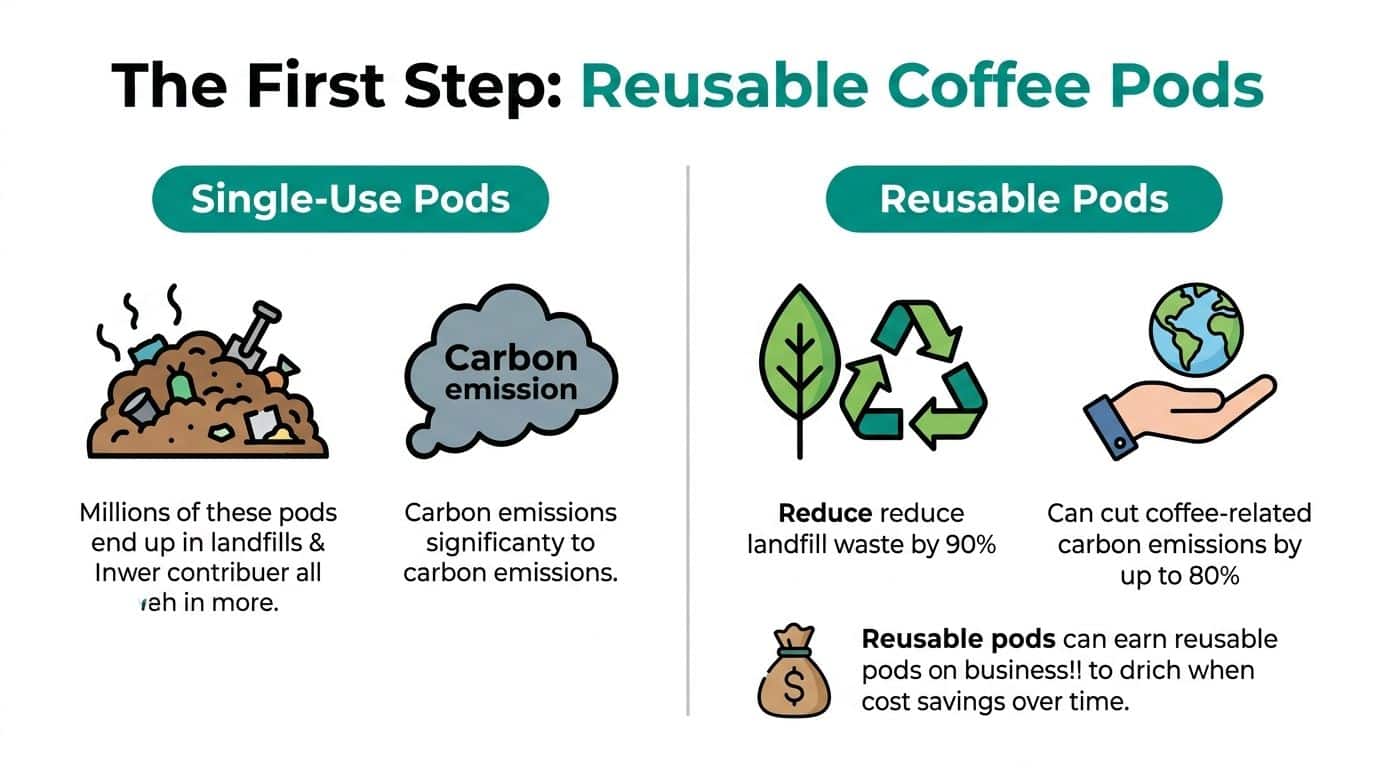
The environmental case gets stronger with repeat use. Reusable pods used over 150 times can reduce per-brew emissions by up to 94% compared with single-use versions. That's the threshold that matters. Not buying a reusable pod, but using it long enough for the footprint advantage to show up.
That's also why material choice matters. A pod that warps, cracks, or stops sealing well won't stay in rotation. Stainless steel usually holds up better over time than thin plastic, especially in busy kitchens and breakrooms.
For Keurig users comparing options, this breakdown of reusable K-Cups for Keurig machines helps narrow down fit and material differences.
Reusable Pods vs. Single-Use K-Cups
| Feature | PureHQ Stainless Steel Pod | Generic Plastic Reusable Pod | Single-Use K-Cup |
|---|---|---|---|
| Material durability | Stainless steel body designed for repeated use | Plastic body can wear faster over time | Disposable after one brew |
| Waste profile | Reusable, reduces repeated pod disposal | Reusable, but lifespan depends on build quality | Creates ongoing single-use waste |
| Cleanup | Rinse and refill, often easier with a knock-out tap | Rinse and refill, sometimes traps grounds in seams | Minimal cleanup, maximum disposal |
| Fit and seal | Typically more stable when made for specific systems | Fit varies widely by manufacturer | Pre-sealed and system-specific |
| Long-term value | Best for users who brew often and want longevity | Lower entry cost, but mixed durability | Highest repeat-purchase burden |
| Coffee flexibility | Use your own grounds | Use your own grounds | Limited to pre-filled options |
The leak and grounds objection
This is the objection that matters most because it kills adoption fast. If a reusable pod leaks once or lets fines through, people go right back to disposables.
In practice, leaks usually come from one of four problems:
- Wrong fit for the machine model
- Overfilling the pod
- Grinding too fine, which can clog flow
- Weak lid or seal design on cheap pods
A well-made stainless steel pod with a secure lid solves a lot of this. So does using the right grind and leaving enough headspace for water to move through the coffee bed. One option in this category is the reusable pod line from PureHQ Inc., which includes stainless steel refillable pods and compatibility-focused accessories for Keurig and Ninja-style systems.
Later in the routine, cleanup matters too. If you want less mess without going back to disposables, paper liners are a reasonable add-on. They don't replace the pod. They just make used grounds easier to dump and rinse.
A quick visual helps here if you want to see the setup in action:
Protecting Your Machine Is Protecting the Planet
Most coffee sustainability advice stays focused on pods. That's incomplete.
A coffee machine that struggles through hard water uses more energy, brews less consistently, and often gets replaced sooner than it should. That replacement cycle creates more waste than is often realized, especially when the machine could have kept running with better water and basic maintenance.
Water quality changes the sustainability math
A 2025 Journal of Cleaner Production study found that 42% of premature coffee machine failures stem from unfiltered water, and that clogged heating elements can push a machine to use up to 30% more energy per brew. That's the hidden waste stream. Not a pod in the trash, but a machine working harder every single morning because minerals keep building up inside it.
That buildup affects more than energy use. It also changes taste. Scale interferes with heating and water flow, so extraction gets less consistent. People often blame the beans when the machine is the underlying problem.
Filtered water doesn't just make coffee taste cleaner. It reduces the mechanical stress that turns a usable brewer into e-waste.
What scale does inside the machine
Minerals in unfiltered water settle where heat is highest. In single-serve brewers, that usually means the heating path and internal water system. Over time, the machine has to push water through narrower passages and heat through mineral deposits.
The result is familiar:
- Longer brew times because the machine works through restriction
- Hotter effort, weaker output because heat transfer gets less efficient
- Early part failure because internal components operate under strain
- More replacement waste when the machine gets discarded instead of maintained
That's why filtration and descaling belong in any serious list of sustainability practices. They extend useful life. They protect cup quality. They cut avoidable energy waste.
A simple maintenance routine that actually gets followed
Individuals don't need a complicated care schedule. They need one they'll stick to.
Use filtered water consistently. Descale on a regular cadence based on your water quality and machine prompts. Rinse reusable accessories before residue hardens. If you want a practical reference, this coffee machine maintenance checklist is the kind of routine that keeps Keurig, Ninja, and espresso-style machines from degrading.
Water filters and descaling solution fit naturally into a sustainable setup because they prevent avoidable replacement. They also improve taste, which is what keeps the routine going. If your coffee station already uses reusable pods, adding filtration and descaling is usually the step that makes the whole system work better.
Easy Wins for a Greener Coffee Station
Once you've handled pods and water, the rest comes down to a few low-effort habits. None of these changes require special equipment, and each one makes the coffee station a little less wasteful.
Use your machine's energy-saving settings
A lot of brewers sit powered on longer than they need to. Turn on auto-off or energy-saver mode if your machine has it. That one setting reduces idle energy waste without changing how you brew.
If your machine doesn't have a reliable timer, make shutting it off part of cleanup. It sounds small because it is small. Small habits are what stick.
Compost used coffee grounds
Coffee grounds are one of the easiest kitchen scraps to keep out of the trash. If you garden, they can become part of a compost mix instead of a wet, heavy waste stream. If you're new to composting, Shopifarm's guide for better garden soil gives a straightforward primer on getting started at home.
Reusable pods make this step easier because the grounds come out in one place. You're not tearing apart disposable packaging to get to them.
Buy coffee in ways that create less packaging
If you have the choice, larger bags of coffee usually create less packaging waste than individually portioned formats. They also give you more control over grind, strength, and freshness.
That doesn't mean every bulk purchase is smarter. Only buy what you'll use while it still tastes good. Waste is still waste, even when it comes in a recyclable bag.
Keep the coffee station easy to maintain
People abandon sustainable routines when cleanup feels annoying. Store your pod, scoop, liners, brush, and grounds container together. Keep the descaler where you can see it. Put the compost bin or knock box near the machine, not across the room.
The greener setup is the one that removes friction. Convenience decides whether a habit lasts.
Sustainability Practices for the Small Office
Small offices have a different problem from homes. They usually want less waste, but they don't want a breakroom system that feels expensive, messy, or hard to manage.
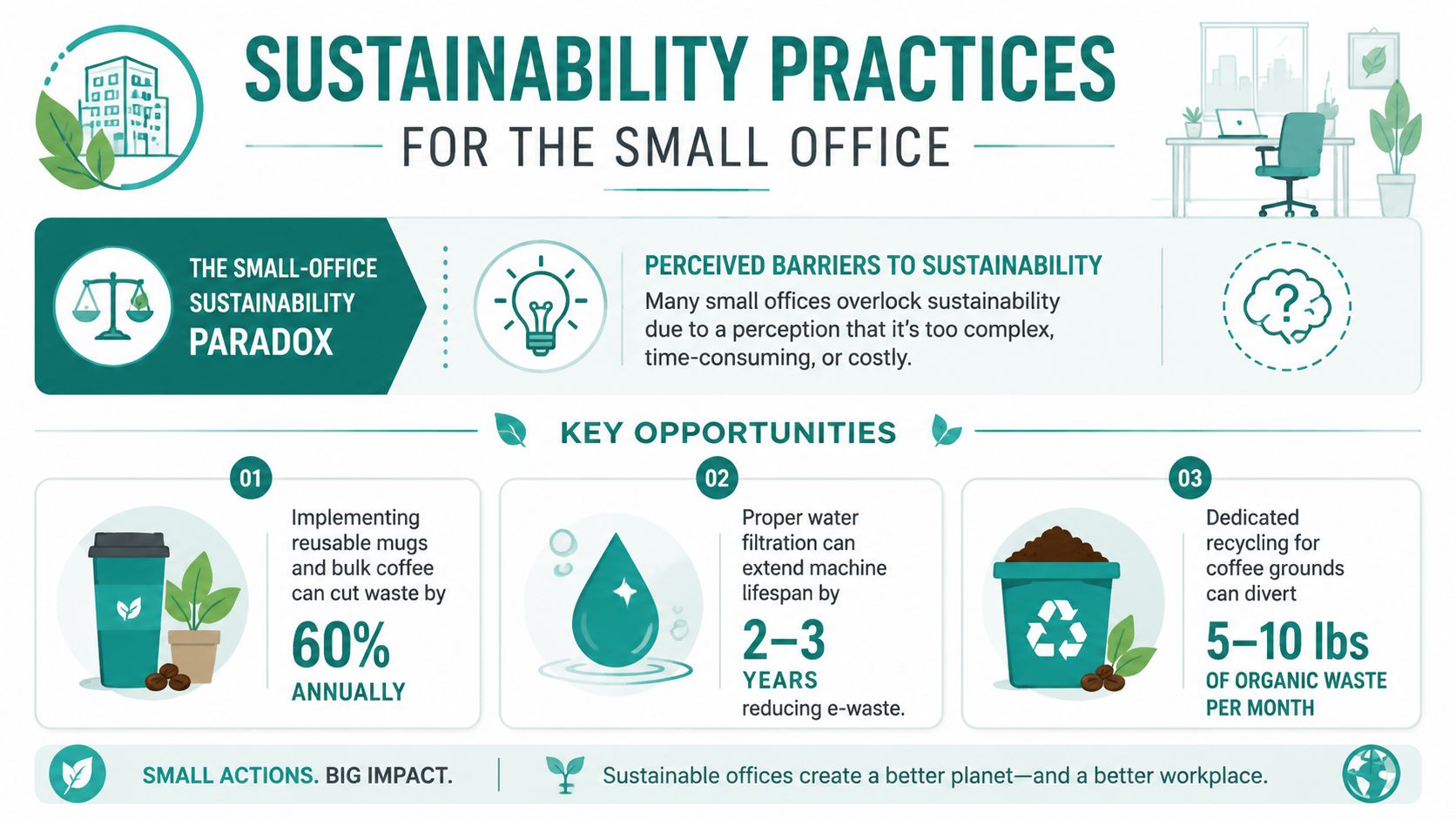
That tension is real. A 2025 EPA review found that 68% of small U.S. businesses skip reusable pod programs due to perceived cost, while 74% of their employees want more eco-friendly coffee options at work. In other words, staff interest is there, but the office manager often assumes the setup will be more trouble than it's worth.
What works in a 5 to 15 person breakroom
The mistake small offices make is copying either a home setup or a large corporate one. Neither fits well. A better system is simple:
- Assign a shared brewing method so people aren't mixing random pod types and accessories.
- Keep one clearly labeled station for reusable pods, grounds disposal, and rinsing.
- Use filtered water so the machine doesn't scale up under heavier weekday use.
- Set one owner for maintenance even if everyone uses the station.
Small offices can learn from hospitality environments that focus on repeatable, low-waste service. The operational mindset in these New Zealand hospitality sustainability insights is useful because it treats sustainability as a daily system, not a one-time purchase.
How to make the business case
For a small office manager, the strongest argument usually isn't moral. It's operational. Reusable brewing reduces recurring disposable waste. Filtered water helps protect the machine. A cleaner process also gives employees a visible sign that the office is trying to align convenience with less waste.
The most practical pitch sounds like this:
- Employees already want greener options. The demand side exists.
- The station doesn't need a full redesign. It needs compatible accessories and a simple routine.
- Machine care matters more in offices. Shared brewers get used harder and neglected faster.
A good small-office coffee setup should survive rushed mornings, uneven cleanup habits, and multiple users who won't read instructions. That means durable reusable pods, obvious storage, and maintenance supplies that don't require guesswork.
Brew a Better Cup for You and the Planet
The useful version of coffee sustainability isn't about guilt. It's about building a setup that wastes less and works better.
Reusable pods cut the stream of throwaway coffee waste. Filtered water helps the machine heat and brew more efficiently. Descaling and routine cleaning keep a brewer in service longer instead of letting mineral buildup push it toward failure. Put together, those are practical sustainability practices because they reduce waste, protect your equipment, and make the coffee taste better.
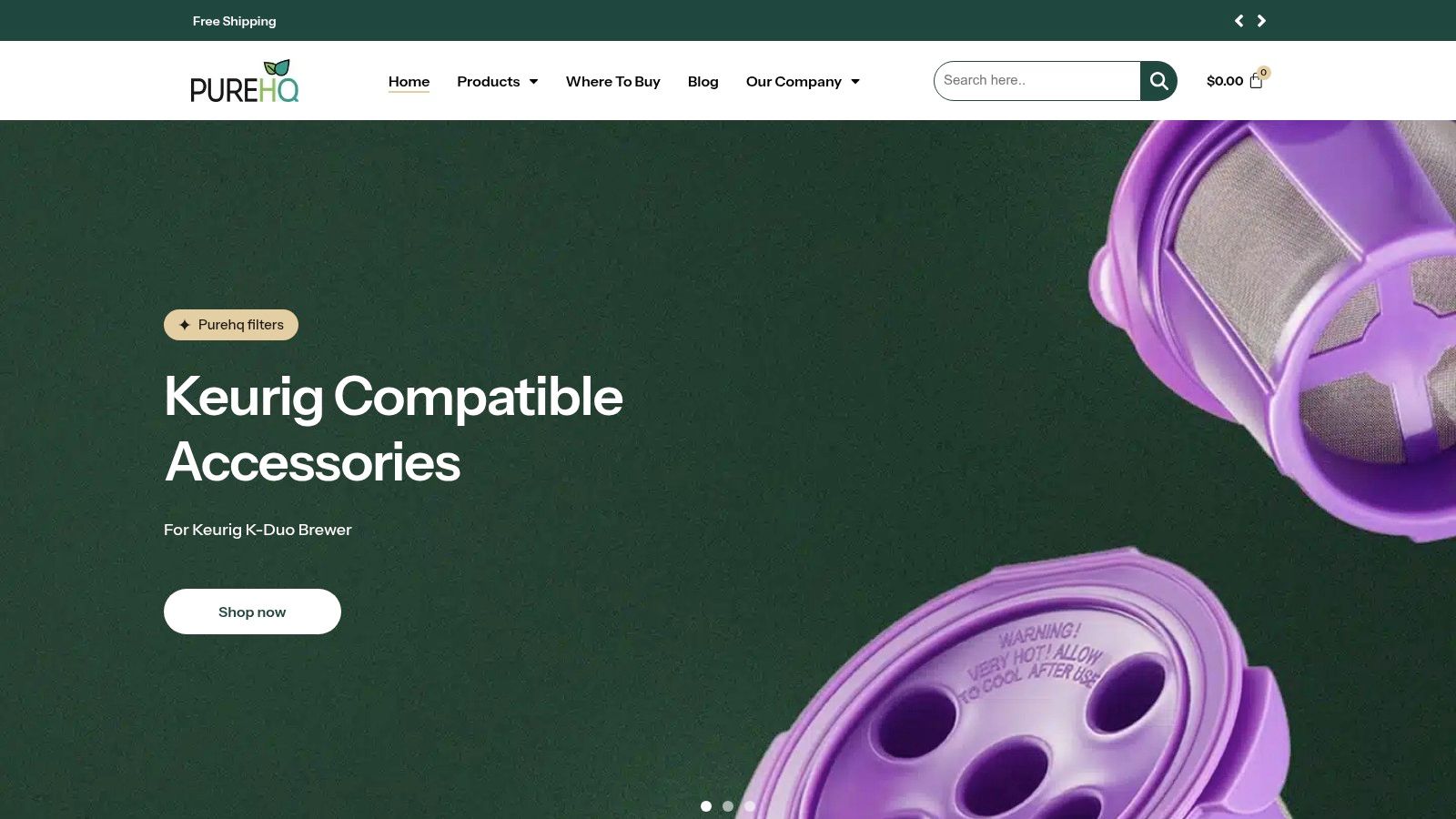
The biggest shift is mental. Stop thinking of sustainability as only what you throw away. Start thinking about what you keep in use. A reusable pod that seals well, a filter that reduces buildup, and a descaling habit that protects the brewer all matter because replacement is waste too.
If you want better coffee with less trash and fewer machine problems, start with the parts of the routine you control every day. That's where gains happen.
If you're ready to make your coffee routine simpler and more sustainable, shop PureHQ Inc. for reusable pods, water filters, and descaling accessories that help home brewers and small offices cut waste, protect their machines, and keep every cup tasting clean.

