
Coffee Machine Care
Keurig Coffee Filter Replacement A Simple Guide
Apr
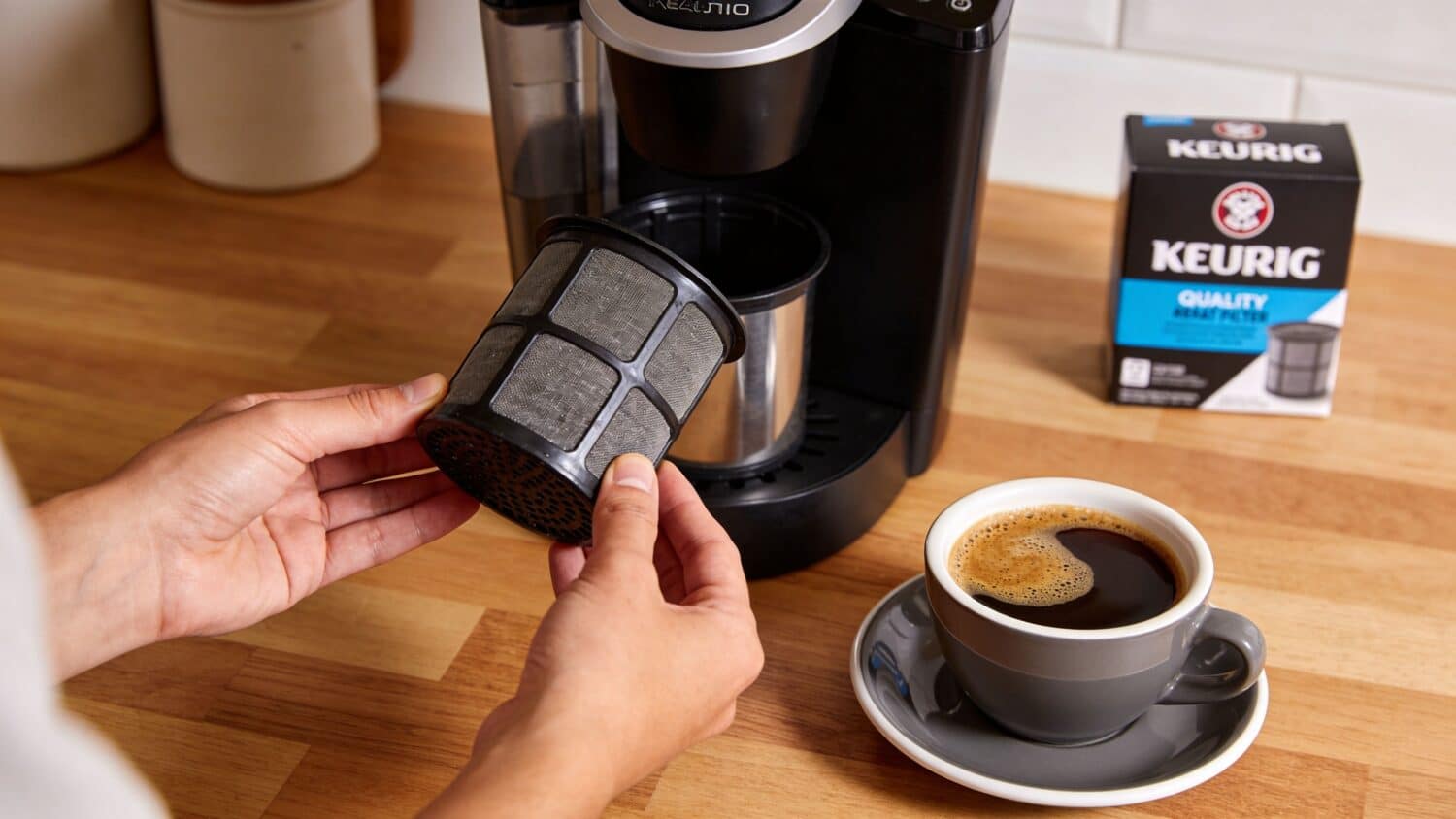
Your Keurig usually doesn't announce that the water filter is spent. It just starts making coffee that tastes dull, slightly bitter, or weirdly flat. A lot of people blame the pod, the beans, or the machine itself. In practice, the filter is often the part that's been ignored the longest.
A proper keurig coffee filter replacement fixes two problems at once. It helps restore cleaner flavor, and it helps your machine deal with the water going through it every day. If you've got a K-Classic, K-Elite, K-Supreme, K-Slim, or K-Duo, the details matter because the holder style and fit issues are different across those machines.
Why Your Perfect Coffee Suddenly Tastes Wrong
The most common version of this problem is simple. Your coffee was fine a few weeks ago, and now it tastes tired. You clean the pod area. You try a different roast. You wonder if the brewer is aging out. Meanwhile, the actual issue is sitting in the reservoir.
Keurig water filter cartridges need replacement every 2 months or after 60 tank refills for performance and taste, according to the Keurig 6-pack water filter refill listing at Walmart. That's the maintenance step many owners forget because the machine still turns on, still brews, and still looks fine from the outside.
What bad filter water tastes like
A tired filter usually shows up in the cup before it shows up anywhere else. You might notice:
- A flatter cup: Coffee loses some of its brightness and tastes muted.
- A rough finish: The sip ends with a slight bitterness or stale edge.
- Inconsistent brews: One cup seems okay, the next tastes off.
Old filters don't always fail dramatically. They often fail quietly, one disappointing cup at a time.
Why people miss it
Most Keurig owners think about descaling only after the machine slows down or throws a warning. The water filter gets even less attention because it's hidden in the tank. That makes it easy to overlook when you're moving fast in the morning.
If your coffee tastes off even after a fresh filter, the machine may also need scale removal. This guide on descaling a Keurig machine for a better coffee taste is a useful next step when flavor problems don't disappear after filter replacement.
The upside is that this is one of the easiest Keurig maintenance jobs to fix. A few minutes in the reservoir usually gets you much closer to the clean cup you expected in the first place.
Find and Remove Your Old Keurig Filter
The part that confuses people isn't the filter itself. It's finding the right holder and opening it without forcing the plastic the wrong way. Keurig changed the layout across models, so the removal process feels different depending on whether your machine uses a side reservoir or a rear reservoir.
Side-reservoir models
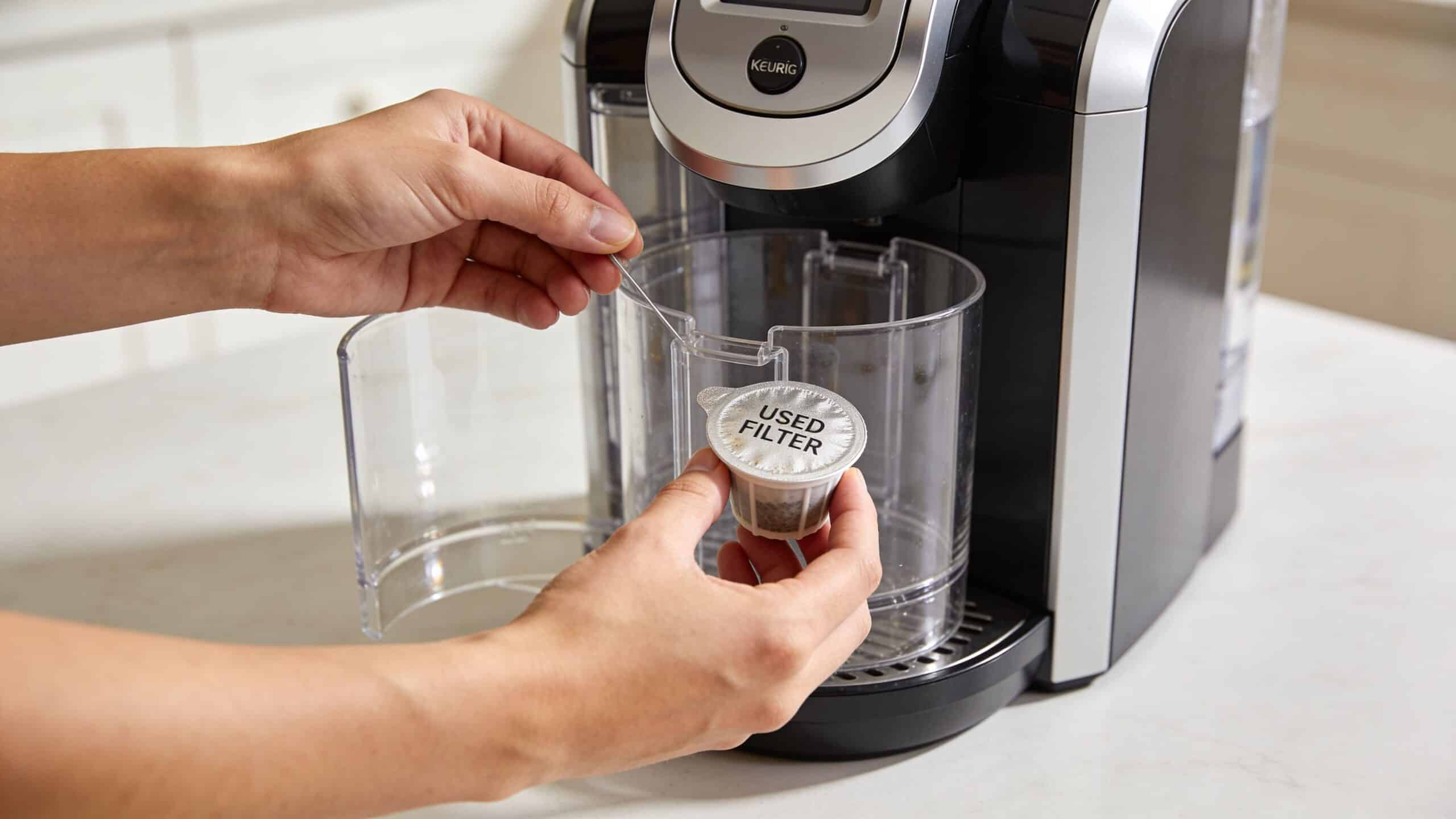
Machines like the K-Classic, K-Elite, and K-Select usually use a taller handle-style holder inside the water tank. Remove the reservoir lid, look down into the tank, and pull the holder straight up.
Once it's out, separate the holder over the sink so any loose debris stays contained. If the plastic feels stuck, don't twist it hard. These holders are built to come apart with a press-and-pull motion, not brute force.
Rear-reservoir models
On models like the K-Supreme, K-Slim, and K-Duo, the holder is often shorter and more compact. It's still inside the reservoir, but it can sit lower and feel less obvious at first glance. Reach into the tank, grip the holder body, and pull it up carefully.
Often, people assume they have the wrong part because the newer holder doesn't look like the tall one shown in older tutorials. The machine may be fine. The design is just different.
The step that causes the most trouble
When you open the holder, press both side tabs simultaneously while pulling the upper and lower sections apart, as shown in this filter replacement tutorial. That same expert analysis notes that up to 15% of users struggle with this step because they don't apply enough force in the right direction.
Practical rule: Press both tabs first, then pull straight apart. Twisting usually makes the job harder.
A few removal habits help:
- Empty the reservoir first. Wet plastic is harder to grip, and spills make the job annoying.
- Pull straight, not sideways. Side pressure can stress the tabs.
- Rinse the holder after removing the old cartridge. Old residue can keep the new filter from seating cleanly.
If your holder still feels awkward, this walkthrough on how to clean Keurig filter helps clarify what the parts should look like before reassembly.
A stuck holder doesn't mean your Keurig is broken. It usually means the tabs need a firmer, more even press than anticipated.
How to Install a New Filter for the Best Taste
Putting a new cartridge into the holder isn't the whole job. The filter needs to be prepped, seated correctly, and flushed through the machine. Skip that prep, and you're much more likely to get charcoal dust, bitter taste, or the feeling that the replacement didn't do much at all.
Start with the soak
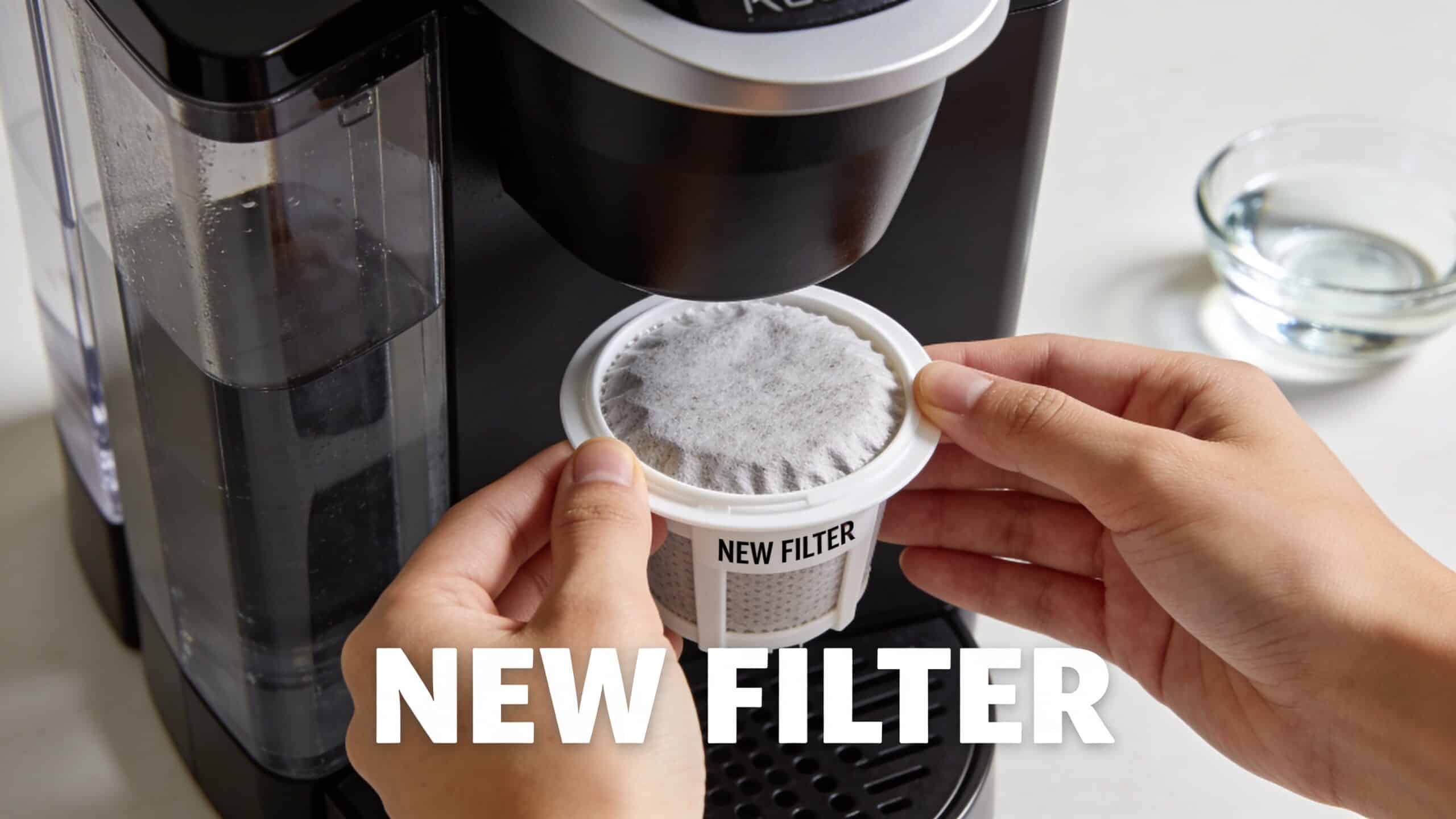
A new cartridge needs a five-minute soak, followed by water-only brew cycles after installation. According to this Keurig filter installation video, soaking the new cartridge and then running two 12oz water-only brew cycles flushes 99% of loose carbon activators and can improve taste clarity by up to 30%, while helping stabilize the water pH for a less bitter brew.
That prep matters more than people think. The filter media needs water contact before it can do its job cleanly.
The installation sequence that works
Use this order and you'll avoid most of the common problems:
- Soak the new filter: Put it in fresh water for five minutes.
- Rinse it well: A quick rinse helps wash away loose carbon.
- Place it into the lower holder: Seat it flat so it doesn't sit crooked.
- Snap the holder shut: Listen and feel for the click.
- Install the holder back into the reservoir: Press it in securely.
- Run two water-only cycles: Use the largest practical brew size close to the guidance above.
If your first cup after replacement tastes dusty, the issue usually isn't the coffee. It's incomplete soaking or an incomplete flush.
What owners of newer Keurigs should watch
K-Supreme and K-Duo owners run into a specific problem. The filter may look installed, but the holder isn't fully seated. If it doesn't click in properly, water can bypass the cartridge path and your brew quality won't improve much.
This visual walk-through is useful if you want to see the fit and flush process in motion:
If you're already doing a keurig coffee filter replacement, it's also a smart time to handle related maintenance. A descaler or cleaning tablet makes sense when the machine has mineral buildup or old taste residue that a fresh filter alone won't remove.
PureHQ vs Generic Filters A Perfect Fit Matters
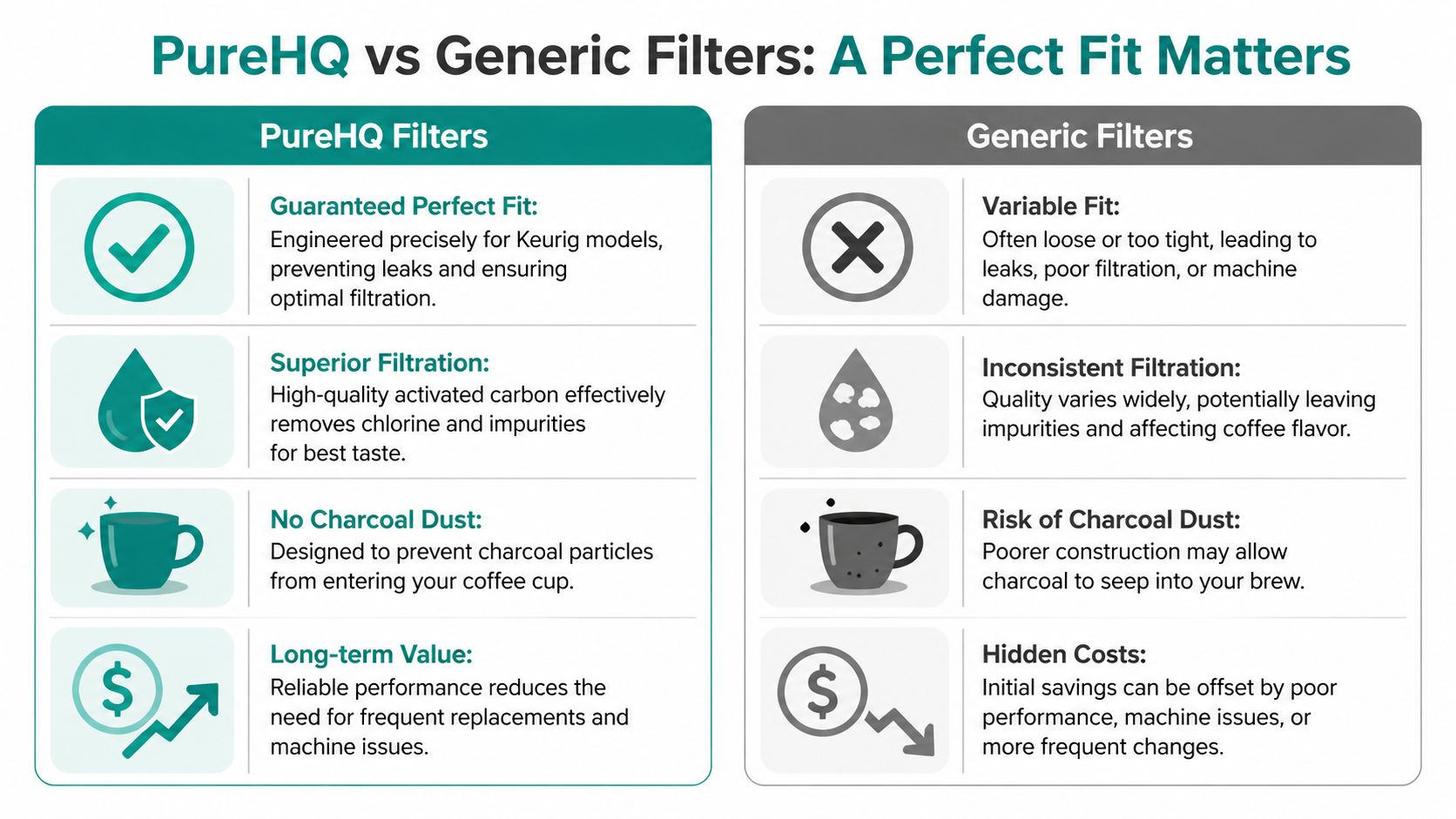
A cheap replacement filter can still be expensive if it leaks, fits loosely, or never seals correctly in the holder. That's the trade-off many Keurig owners discover after buying a bulk generic pack that looked identical online.
User complaints and return patterns frequently show that generic, non-OEM filters fail to snap securely or create a proper seal in newer models like the K-Supreme and K-Duo, according to this compatibility-focused video analysis. That's why so many owners ask why the holder won't click in or why the machine suddenly leaks around the reservoir area after a routine replacement.
Where the difference shows up
The fit problem usually appears in one of three ways:
- Too loose: The filter shifts in the holder and doesn't stay aligned.
- Too tight: You have to force the cartridge in, which stresses the plastic.
- Almost right: It seems seated, but the holder never clicks cleanly into place.
That last one is the most frustrating because it looks fine until the coffee still tastes wrong.
A replacement filter isn't useful if water can slip around it instead of through it.
PureHQ Premium Filters vs. Generic Alternatives
| Feature | PureHQ Filters | Generic Filters |
|---|---|---|
| Fit in Keurig holder | Designed for model compatibility and secure seating | Fit can vary from batch to batch |
| Seal in newer models | Better suited for click-in installation on supported models | More likely to cause snap-in or seal complaints |
| Brew cleanliness | Intended to reduce common issues like loose carbon residue when installed correctly | More likely to draw complaints about dust or inconsistent performance |
| Long-term use | More predictable for regular maintenance routines | Lower upfront cost, but more trial and error |
A common objection is fair: "Aren't generic filters basically the same?" Sometimes they work fine on older machines. On newer reservoir designs, small differences in shape and stiffness matter a lot more.
PureHQ Inc. offers Keurig-compatible activated charcoal water filters for several Keurig systems, including 1.0 and 2.0 style machines, which is useful if you want an alternative to standard retail packs without guessing at random marketplace listings. That matters most for people with K-Supreme and K-Duo models where fit complaints show up more often.
If you also use reusable pods, pairing a properly fitted water filter with routine cleaning usually gives the most consistent results. Filters improve incoming water. Descalers and cleaners handle the buildup that forms deeper inside the machine.
Adjusting Your Replacement Schedule for Hard Water
The standard schedule works as a baseline, but it doesn't fit every kitchen. If your tap water is hard, the filter has a tougher job and your machine collects mineral stress faster.
According to this hard water and Keurig maintenance video, 85% of U.S. households have hard water, and that can speed up filter saturation and create scale buildup that shortens a Keurig's life by 20-30%. That's why the usual "every two months" advice can fall short in real homes.
Signs your water is asking for earlier replacement
You don't need lab testing to notice that your machine is under pressure. Watch for:
- Taste drops early: Coffee starts tasting off well before your normal replacement date.
- Mineral film appears fast: The reservoir or internal parts show scale returning quickly.
- The machine acts sluggish: Brewing and filling feel less smooth than usual.
A more realistic routine
If your water runs hard, replace filters based on what the coffee and machine are telling you, not just the calendar. Households with heavier daily use often need a shorter rhythm than occasional weekend brewers.
Quick check: If flavor slips early and scale returns fast, your water is probably dictating the schedule.
If hard water affects more than your coffee maker, broader home treatment can help. This guide to Lone Oak water softener maintenance gives practical context on keeping whole-home softening systems working properly.
For Keurig-specific upkeep, this article on 7 mistakes you're making with Keurig water filters and how to fix them for better coffee is worth reading if your brewer keeps slipping back into bad taste or scale issues. A filter swap helps incoming water. A maintenance bundle with filters and descaler helps the whole machine stay consistent.
Enjoy Better Coffee Today
A keurig coffee filter replacement isn't complicated, but the details matter. Find the right holder for your model, open it the right way, soak the new cartridge, seat it properly, and flush the machine before brewing coffee again.
That's the difference between a clean cup and another week of wondering why the coffee tastes off.
If you've been fighting weak flavor, bitterness, or confusing fit issues on a K-Supreme or K-Duo, don't overthink it. Replace the filter with one that fits correctly, stick to a schedule that matches your water, and handle descaling when the machine needs it. A few minutes of maintenance usually does more for your daily cup than changing pods ever will.
If you're ready to stop guessing and fix the taste issue at the source, shop Keurig-compatible water filters and maintenance accessories from PureHQ Inc..

