
Coffee Machine Care
Best Coffee Single Cup Filter for Keurig & Ninja
Apr
Single-serve coffee solved one problem and created three more. It made brewing fast, but it also made coffee more expensive, more wasteful, and strangely less predictable once you start paying attention to taste.
That’s why the humble coffee single cup filter's importance is often underestimated. The filter isn’t just a holder for grounds. It controls flow, sediment, oil retention, fit, cleanup, and whether your machine gives you a smooth cup or a watery mess. If you use a Keurig or Ninja, the filter choice often matters more than the machine badge on the front.
Most advice stops at “reusable saves money.” True, but incomplete. The actual trade-offs show up later: after months of daily use, when mesh starts clogging, paper liners run out, lids stop sealing cleanly, and the wrong grind turns a decent brewer into a bitter one. That’s where this guide stays focused.
The Hidden Cost of Your Daily Coffee Habit
Single-cup brewing went mainstream fast. In PurPod’s roundup of single-cup market data, 25% of American coffee drinkers used a single-cup brewer in 2016, and the single-serve capsule sector is projected to reach US$14.2 billion by 2033. Convenience won. Waste came with it.
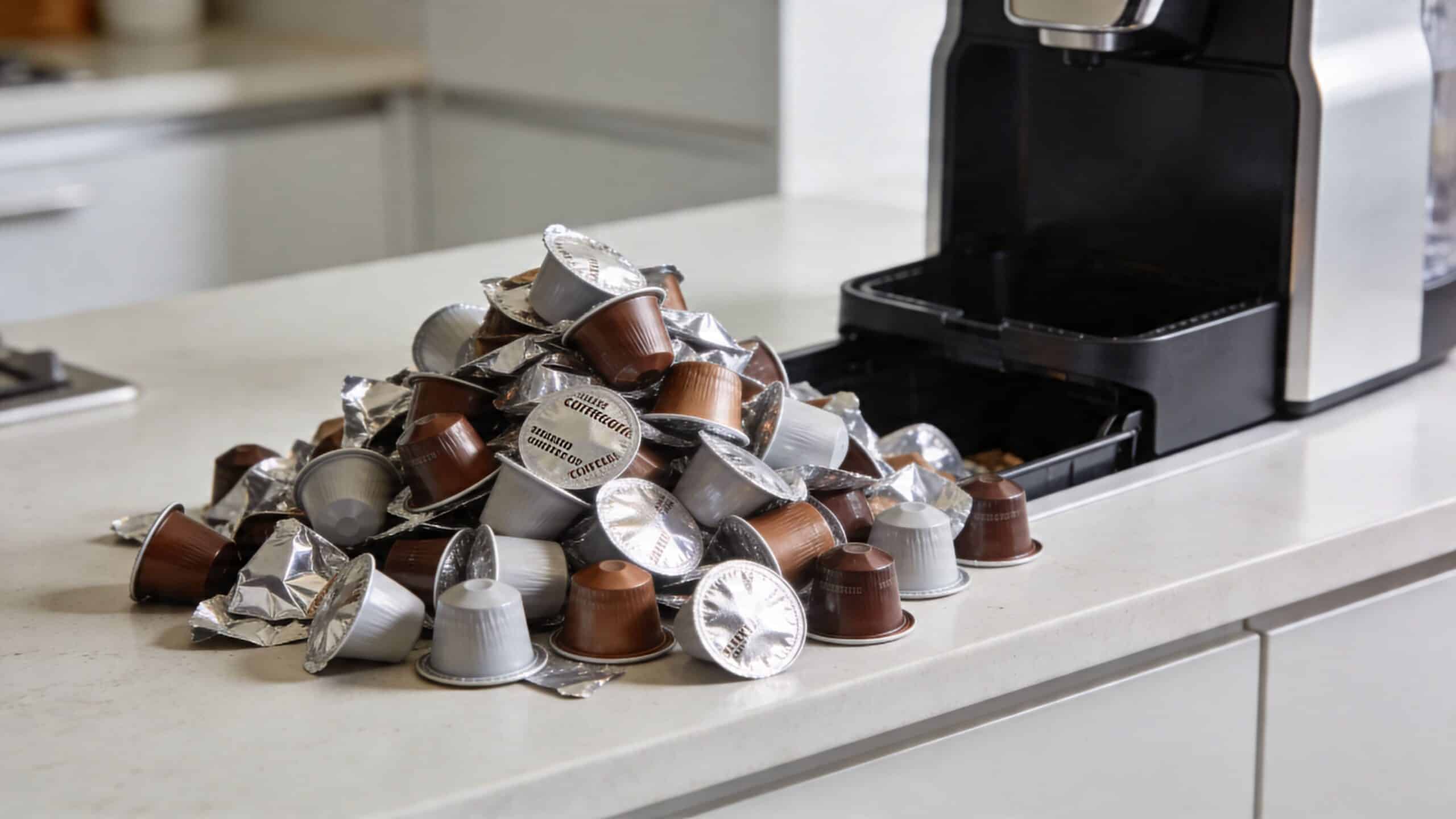
The problem isn’t only the pile of used pods. It’s the habit they create. Drop in pod, press button, repeat. That routine hides the running cost because the purchase happens one sleeve at a time, not as one obvious bill. It also hides the quality ceiling. You’re locked into pre-filled coffee, fixed portions, and whatever freshness is left inside that pod.
Why disposable convenience gets expensive fast
A disposable pod is simple because someone else pre-measured the coffee and sealed it for you. That same convenience limits control over dose, grind, and origin. If the cup tastes thin, stale, or harsh, there’s not much to adjust.
A reusable coffee single cup filter changes that equation. You use your own coffee. You decide how much to fill. You can switch between paper-clean cups and fuller-bodied mesh brews depending on what you want that morning.
For many people, that’s the first real upgrade. Not a new brewer. Just a better insert.
Practical rule: If you already own a working Keurig or Ninja, the cheapest meaningful upgrade is usually the filter system, not the machine.
The waste problem sits right on your counter
Pod waste feels abstract until you empty the trash. Then it doesn’t. A reusable filter won’t make your brewing routine perfect, but it cuts out the constant throwaway cycle and gives you more control over flavor at the same time.
If you want a breakdown focused on the money side, this piece on why daily coffee pods can cost more than people expect is worth reading. The short version is simple: if you brew every day, small per-cup convenience premiums add up.
The good fix is not complicated. Keep the machine. Replace the disposable habit.
How a Single Cup Coffee Filter Works
A single-cup brewer is basically a tiny automatic pour-over system. The machine heats water, pushes it through a compact chamber, and relies on the filter to hold the grounds back while letting brewed coffee pass into the cup.
That sounds simple, but the filter does a lot of engineering work in a small space.
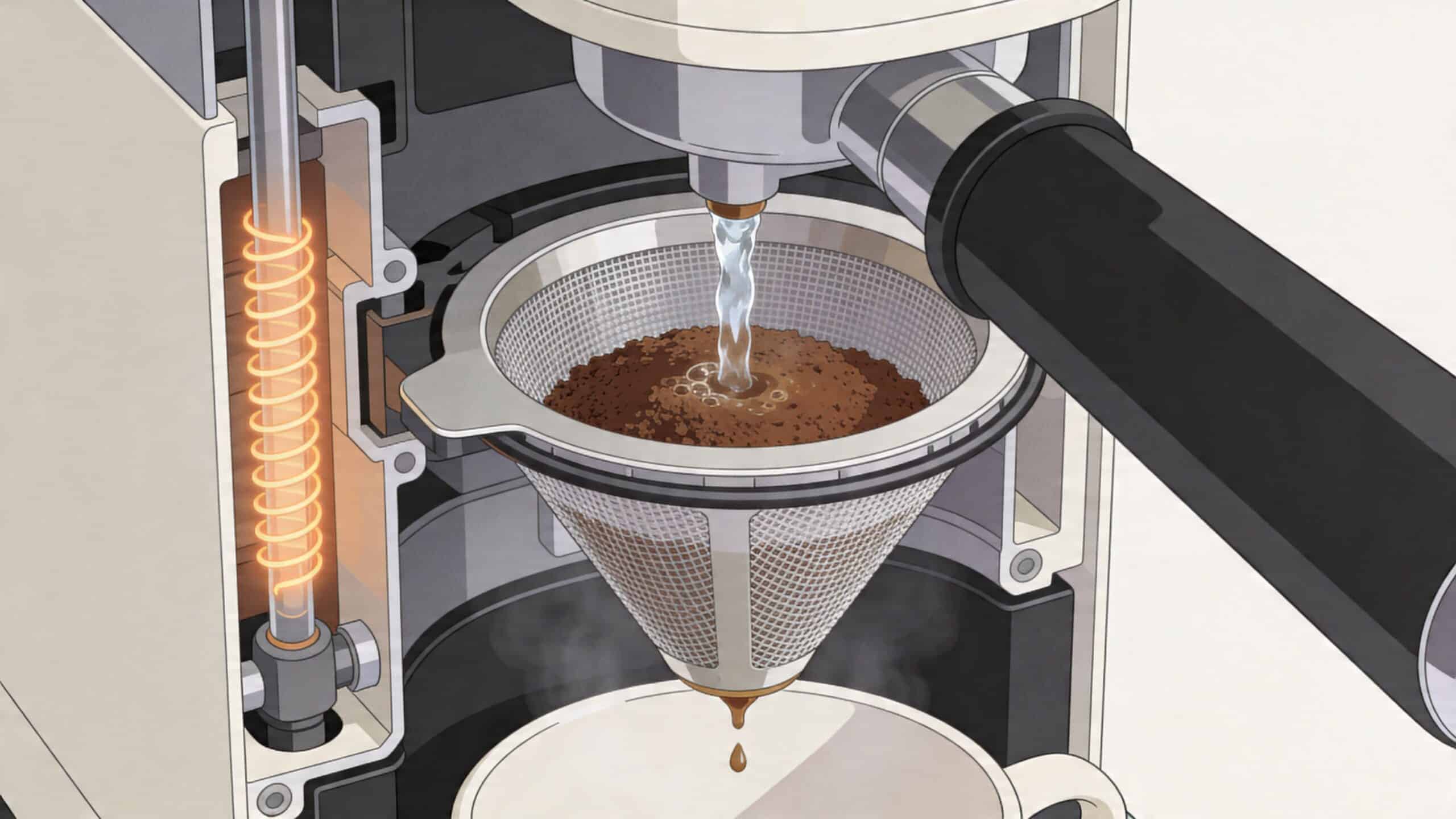
According to Wikipedia’s technical overview of coffee filters, single-cup coffee filters function on microfiltration principles, with filaments around 20 micrometres wide that only permit particles smaller than 10-15 micrometres to pass. That design helps prevent channeling and supports more even water distribution across the coffee bed in a compact brew chamber.
What the filter actually controls
When people talk about “bad reusable pods,” they usually blame the pod. Often the actual issue is extraction control.
The filter affects:
- Flow rate: If water passes too quickly, coffee tastes weak.
- Sediment level: Wider openings let more fine particles through.
- Oil retention: Paper traps more oils. Metal lets more through.
- Pressure behavior: A cramped brew chamber punishes poor fit and poor grind choice.
In a full-size drip machine, you have more room for forgiveness. In a single-cup brewer, a small mistake shows up immediately in the cup.
Why channeling ruins single-cup brewing
Channeling happens when water finds the easiest path through the grounds instead of moving evenly through the whole bed. Once that starts, one part of the coffee gets overworked and another part barely gets extracted.
The result is familiar. Bitter edges, weak center, empty finish.
A good coffee single cup filter helps by distributing flow more evenly and resisting collapse under brewing heat. That’s why cheap mesh inserts often disappoint. They may fit the machine well enough to brew, but they don’t manage flow cleanly enough to brew well.
A reusable pod should brew like a small filter basket, not like a metal cup with random holes punched into it.
Why material matters even before taste
Paper, metal mesh, and hybrid systems all change what reaches the cup. Material also changes daily maintenance. A paper liner gives you easy cleanup because you lift out the spent grounds and toss the liner. Metal mesh keeps waste lower but demands better rinsing and more regular deep cleaning.
That’s the trade-off most buyers miss. The filter isn’t just about compatibility. It’s part brew tool, part maintenance item.
Comparing Filter Types Paper vs Mesh vs Reusable Pods
The fastest way to choose the right coffee single cup filter is to stop asking which type is “best” and start asking what kind of annoyance you can live with. Every option gives you something and takes something back.
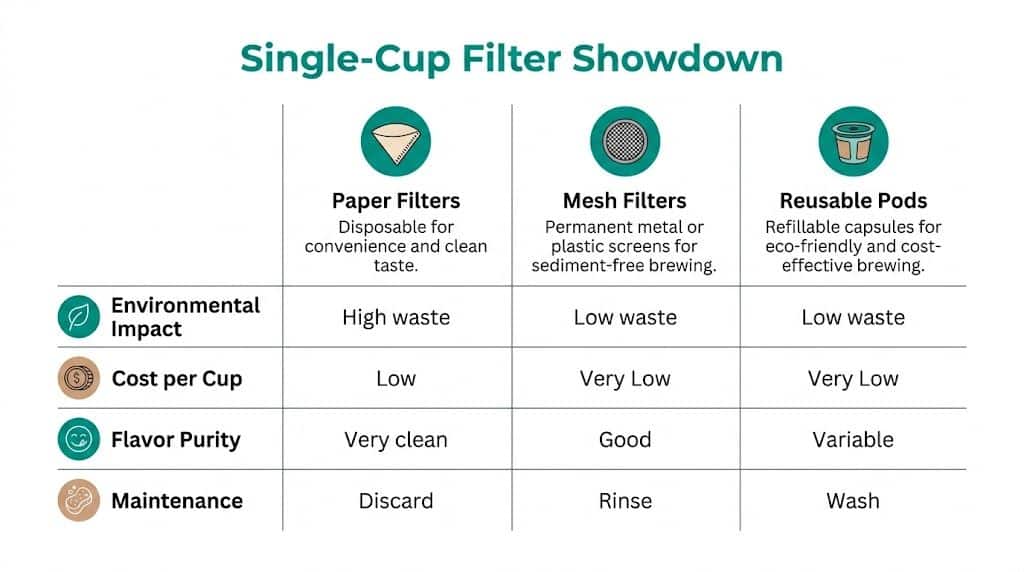
The biggest taste difference comes from what the material does to coffee oils. As noted by Design and Grace’s product explainer on single-cup gold filters, paper filters can absorb up to 30% of coffee oils, which gives a cleaner cup. Metal mesh filters let more oils through for a richer body but need a coarser grind to avoid over-extraction and bitterness.
Quick comparison table
| Filter type | What it does well | Where it falls short | Best for |
|---|---|---|---|
| Paper filters or liners | Clean cup, easy cleanup, fewer fines | Ongoing consumable use, less body | People who want low mess and a bright, tidy cup |
| Mesh filters | Fuller flavor, reusable, simple concept | More sediment, more cleaning, easier to clog | Drinkers who like body and don’t mind upkeep |
| Reusable pods | Flexible, low waste, works with your own coffee | Quality varies heavily by design and fit | Keurig and Ninja owners who want control and lower long-term cost |
Paper filters and liners
Paper is the least dramatic option. That’s a compliment. It hides a lot of mistakes, catches fines, and produces a cup that tastes cleaner and more focused.
If you’ve been fighting muddy brews from a reusable pod, a paper liner often fixes the problem immediately. Cleanup is also easier because the used coffee puck stays contained.
What paper doesn’t do is give you body. If you like a heavier mouthfeel, paper can taste too stripped down.
Mesh filters
Mesh gives you more of the coffee in the cup, including oils that paper would hold back. When the grind is right, that can taste rounder and more satisfying. When the grind is wrong, it turns ugly fast.
Fine coffee in a mesh pod tends to create two common complaints:
- Bitterness from over-extraction
- Sludge or grit in the cup
That’s why so many people think reusable filters are weak or harsh. The filter didn’t fail. The grind was too fine, or the pod was packed too tightly.
If your reusable K-cup tastes both bitter and thin, don’t add more coffee first. Coarsen the grind and loosen the fill.
Integrated reusable pods
This is the category most Keurig and Ninja users end up buying. A reusable pod combines the basket, body, and lid into one piece. It’s practical, but the quality gap between versions is large.
A good pod seals cleanly, sits correctly under the needles, and opens enough flow across the coffee bed. A bad one leaks, clogs, flexes, or leaves you guessing whether the machine or the pod caused the problem.
Some people get the best results with hybrid setups: reusable pod plus paper liner. That softens the main weakness of metal mesh, which is cleanup and fines, while still keeping waste lower than all-disposable brewing. For a side-by-side look at the trade-offs, this guide on reusable coffee filter vs paper is useful.
Premium versus generic filters
Not all “universal” filters are built the same. Here’s the practical difference.
| Feature | Better-built filter | Generic filter |
|---|---|---|
| Seal | Lid closes firmly and stays aligned | Lid can shift or close unevenly |
| Mesh consistency | Even openings for steadier flow | Uneven mesh can pass more fines |
| Cleanup | Rinses without trapping grounds in corners | Grounds stick in seams and hinge areas |
| Fit | Sits correctly in the chamber | May wobble, leak, or trigger errors |
| Longevity | Holds shape through repeated use | Warps, loosens, or deforms sooner |
The price gap only matters once. Daily frustration doesn’t.
Ensuring Compatibility With Your Coffee Machine
Most reusable filter failures aren’t flavor failures. They’re fit failures. The pod leaks, the lid doesn’t seal, the machine closes awkwardly, or the brew comes out weak because the water path isn’t lined up properly.
That’s why compatibility deserves more attention than marketing labels like “universal.”
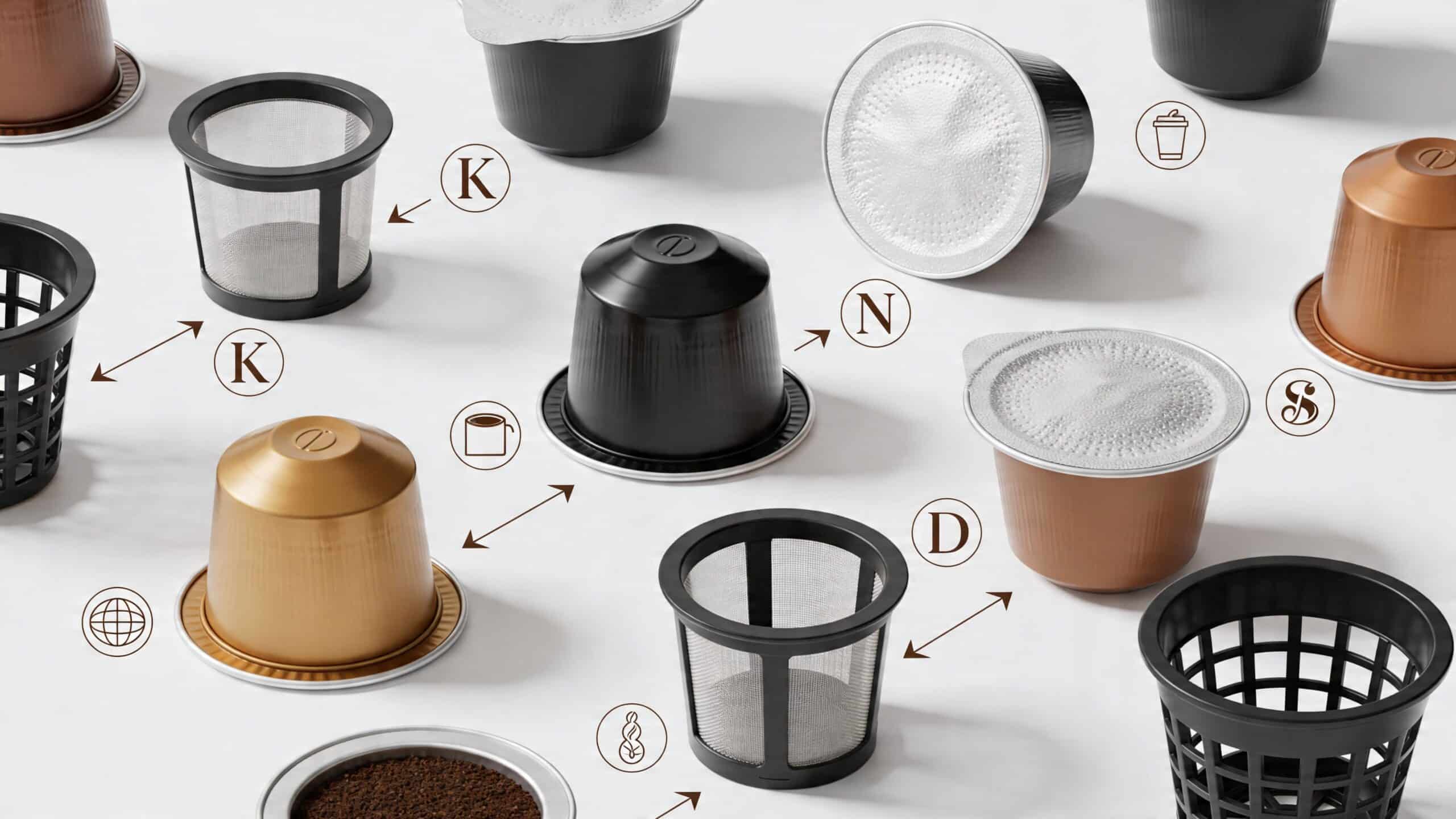
According to the hardware specification listing for a 1-cup filter system, single-cup filter compatibility relies on precise dimensional tolerances, and universal designs for Keurig and Ninja systems must handle different brew chamber depths and needle configurations while using materials rated for over 500 brew cycles.
Why Keurig compatibility gets tricky
Older Keurig systems and newer ones don’t always interact with reusable pods the same way. Needle layout, chamber depth, and lid clearance can differ enough to affect sealing and water flow.
That’s why a pod that “fits” can still brew badly. It may lock into place but fail to meet the top needle cleanly or sit too low for proper puncture and flow.
Common signs of poor compatibility include:
- Splashing during brew
- Machine resistance when closing
- Thin coffee with no obvious grind issue
- Grounds escaping around the lid
Why Ninja systems need equal attention
Ninja DualBrew users run into a similar issue for a different reason. The brewer may accept pod-style accessories, but slight shape or lip differences can affect how water enters and how the pod sits during the cycle.
A reusable filter has to do more than fit the opening. It has to maintain a stable seal during heat and repeated insertion. Cheap plastic bodies and weak hinges tend to show their flaws here first.
What to check before you buy
A better buying checklist is short:
- Match the machine family exactly. Don’t stop at “Keurig” or “Ninja.”
- Check whether the filter is built for your needle style. That matters.
- Look for cycle durability and repeated-use construction. Thin lids and soft rims are warning signs.
- Avoid vague universal claims without model detail.
If you’re trying to sort out Keurig compatibility across Classic and MultiStream-style brewers, this guide on which reusable K-cup fits different Keurig models does a good job of narrowing the fit question.
A reusable pod that forces the brewer shut is not “close enough.” It’s the wrong pod.
Installation and Daily Use A Practical Guide
A reusable coffee single cup filter should take less than a minute to load. If your routine feels fussy, something is off. Usually it’s the grind, the fill level, or the habit of packing the coffee like espresso.
The daily routine that actually works
Start with coffee that’s appropriate for drip-style brewing, not espresso-fine powder. For most reusable pods, a medium to medium-coarse grind is the safe zone. You want water to move through the bed, not sit on top of it.
Then follow this sequence:
- Fill the pod without compressing the coffee. Level it off gently.
- Leave room for the lid to close cleanly. Don’t mound the grounds.
- Check the rim before closing. Stray grounds on the seal cause leaks.
- Seat the pod squarely in the holder. Crooked placement creates weak brews and splatter.
That’s the whole process. The small details matter because single-cup systems have very little margin for error.
What doesn’t work
These are the habits that create most complaints:
- Overpacking the pod: This slows flow and can cause overflow or bitterness.
- Using very fine coffee: This clogs mesh and exaggerates sediment.
- Ignoring the lid seal: Even a few grounds on the rim can break the seal.
- Brewing with poor water: Bad water makes decent coffee taste flat and also adds scale faster.
A charcoal reservoir filter can help if your machine supports one, and a clean water path usually improves taste more than people expect. If you use a Keurig-style system regularly, accessories like reservoir filters, paper liners, and stainless refillable pods can make the daily routine more forgiving without changing machines.
A simple starting point for better cups
If you’re dialling in by trial and error, change one thing at a time.
| Problem in the cup | First change to try |
|---|---|
| Weak and watery | Add slightly more coffee or grind a touch finer |
| Bitter and heavy | Grind coarser and reduce fill density |
| Grounds in cup | Use a liner or switch to slightly coarser grind |
| Slow dripping | Clean mesh and stop using fine grounds |
That approach works better than changing coffee, fill level, and brew size all at once.
Troubleshooting Common Reusable Filter Issues
Reusable filters fail in predictable ways. That’s good news, because predictable problems are fixable. Most don’t require a new machine or a new pod.
The long-term issue people underestimate is maintenance. As noted on Perfect Pod’s compatibility page, hard water affects 85% of U.S. households, and mineral buildup plus fine-grind clogging can degrade reusable filter performance over time. That’s exactly why a filter that worked well at first can start brewing badly later.
Leaks and splashing
If coffee sprays, drips around the pod, or collects in odd places, check the basics first.
- Dirty rim: Grounds stuck on the lip stop a proper seal.
- Warped or loose lid: Repeated heat can expose weak construction.
- Wrong fit for the brewer: Close enough isn’t good enough here.
If the pod is still structurally sound, clean the sealing edge and inspect the hinge area. If the machine itself has scale or residue around the puncture area, fix that too.
Grounds in the cup
This is usually one of three things. The grind is too fine, the mesh is partly clogged, or the filter body has developed wear around the seam or screen.
Try this order:
- Rinse and scrub the mesh thoroughly.
- Brew again with a coarser grind.
- Add a paper liner if you want a cleaner cup without changing coffee.
Clean mesh can still brew badly if scale narrows the openings. Rinsing is not the same as descaling.
Weak coffee from a reusable pod
Weak brew makes people blame the coffee. Often the culprit is the machine because scale changes flow and temperature behavior over time. A clogged pod can do the same.
If your brews keep getting thinner, inspect both the reusable filter and the brewer. Descaling matters. Water quality matters. If you live in a hard water area, regular maintenance is not optional. For anyone comparing filtration options for better water at home, these replacement water filter cartridges give useful background on the role water treatment plays in appliance performance.
The maintenance habit that keeps filters usable
A durable reusable filter still needs routine care. A practical rhythm is simple:
- After each brew: Knock out grounds and rinse immediately.
- Regularly: Use a brush to clear trapped fines from mesh and lid corners.
- When performance drops: Descale the machine and deep-clean the filter.
- If hard water is your norm: Don’t wait for obvious failure before cleaning.
This is where a descaling solution earns its keep. If you brew often, pairing reusable pods with maintenance items like descaler or cleaning tablets is the difference between “worked great at first” and “still works well months later.”
Your Path to a Better Cheaper Cup of Coffee
The smart move usually isn’t replacing your Keurig or Ninja. It’s getting more out of the one you already own. A well-made coffee single cup filter gives you the three things disposable pods can’t give you at once: lower ongoing cost, less waste, and control over how the cup tastes.
The catch is that not all reusable filters solve the same problem. Some prioritize easy cleanup. Some give you more body. Some fit well but trap fines. Some taste good for a while, then become annoying because nobody talks candidly about maintenance. That’s why the long-term trade-offs matter more than the first-week impression.
If you’re comparing options online, it also helps to understand how marketplace pricing works. This explainer on Coupons, Best Deals, or Lightning Deals on Amazon is useful if you’re trying to tell the difference between a real accessory deal and a temporary listing trick.
One practical option in this category is PureHQ Inc., which sells reusable K-cups, paper liners, water filters, and descaling accessories for Keurig and Ninja-compatible setups. The appeal isn’t mystery. It’s that these parts address key friction points: fit, cleanup, sediment control, and routine maintenance.
Choose the filter type that matches how you drink coffee, not the one that sounds nicest in a product title. Then keep it clean, use the right grind, and let the machine do its job.
Ready to stop wasting money on throwaway pods and get better coffee from the machine you already own? Shop reusable filters, paper liners, water filters, and cleaning supplies from PureHQ Inc. and find the right fit for your Keurig or Ninja.

