
Coffee Machine Care
Gold Filter Coffee: A Guide to Better, Bolder Brews
Apr
Millions of home brewers start the day with filter coffee, and a growing share now make it through pod-style machines that accept reusable baskets. That shift sounds convenient until the trade-offs show up in your cup and in your trash.
If you use a Keurig, Ninja DualBrew, or a similar system, the filter matters more than many guides admit. Paper can mute some of the coffee's oils and aroma. Reusable pod baskets with metal mesh let more of those compounds through, but they can also create sediment, overflow, or cleanup headaches if the filter and grind size are not matched to the machine.
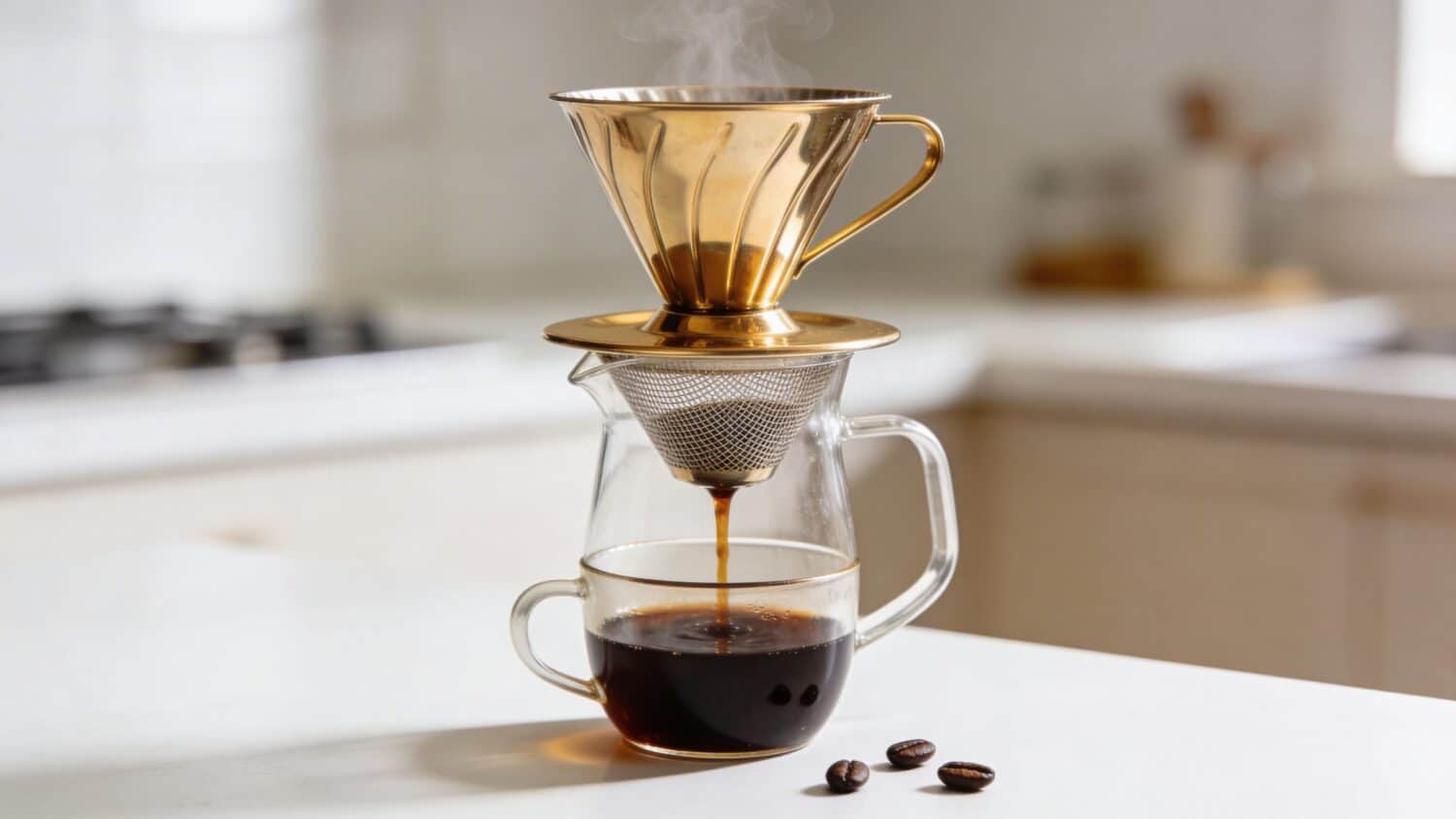
Gold filter coffee sits right in the middle of that problem. It gives reusable pod users a way to cut waste, stop buying stacks of paper inserts, and brew a fuller cup from ground coffee instead of relying only on disposable pods. The idea is simple. A fine metal filter works like a screen door for your brew water. It holds back the grounds while allowing more flavorful oils to pass through than paper usually does.
That sounds promising, but daily brewing has a way of exposing the details. Some gold filters fit one Keurig model and fail in another. Some work well in Ninja systems but need a different grind or fill level to avoid a messy cup.
The good news is that the fix is practical. Once you understand how gold filters change taste, cost, and machine maintenance in pod-based brewers, it gets much easier to choose the right filter and use it well.
The Hidden Cost of Your Morning Coffee
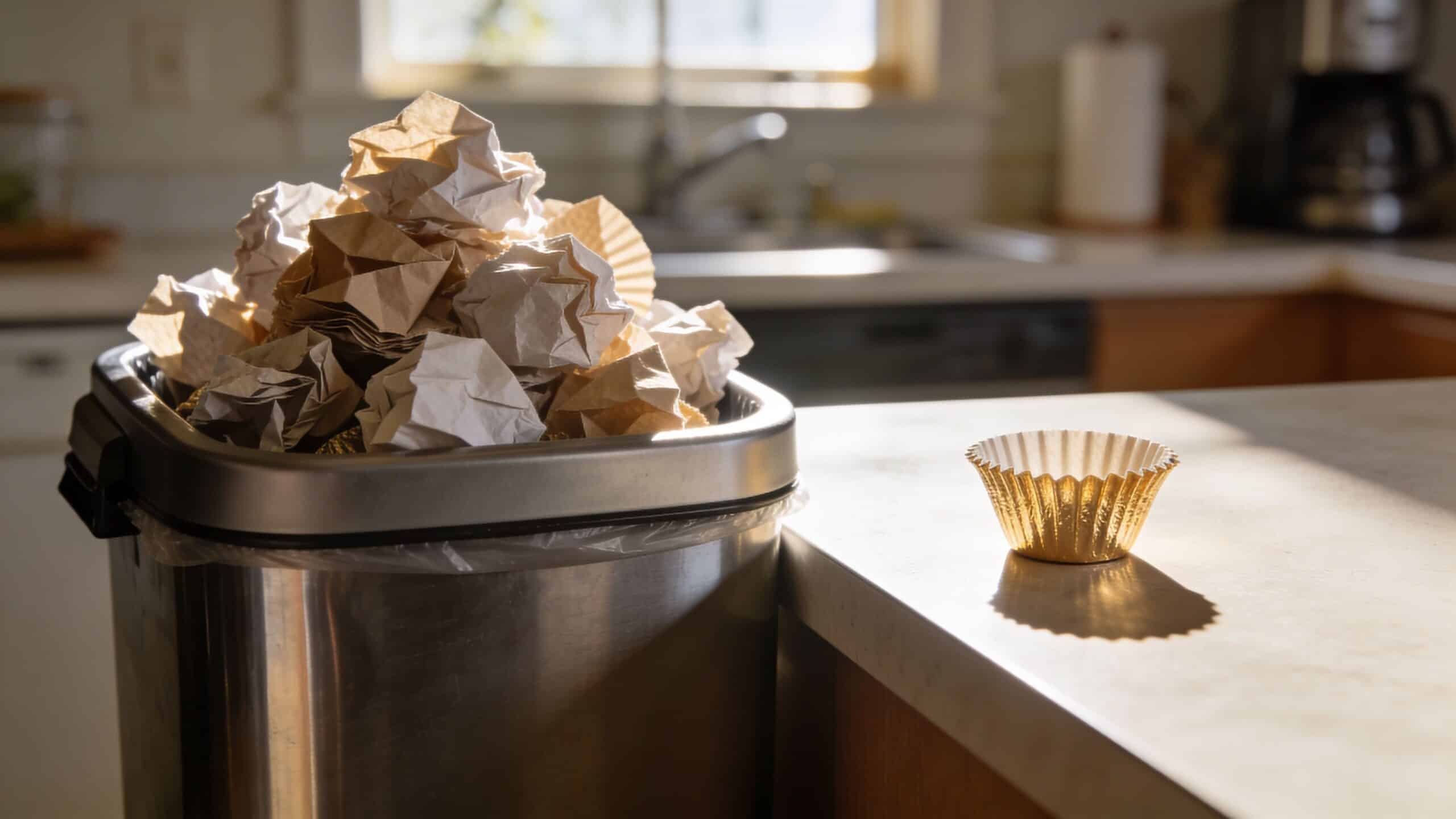
About 300 paper filters a year can pass through one regular coffee routine. In a pod-based setup, that count can feel even more frustrating because the whole point was supposed to be convenience.
A paper filter looks cheap in the box. Its full cost shows up in repetition. You buy it, use it once, throw it away, then buy it again. Gold filters change that cycle because one reusable basket can stay in service for years with basic cleaning.
Paper waste adds up
Small items are easy to ignore. Coffee filters barely register the way shipping boxes or plastic packaging do. But if you brew every morning, they become one more disposable product you have to store, restock, and toss.
That creates a few familiar annoyances:
- You run out at the wrong moment. It usually happens when the water is hot and the grounds are already measured.
- You keep paying for something with a one-brew lifespan. A reusable filter spreads that cost over a much longer stretch of daily use.
- You remove part of the coffee's natural body. Paper catches grounds, but it also holds back oils that help coffee taste rounder and smell richer.
Practical rule: If your coffee smells fuller than it tastes, the filter may be taking some of that character out of the cup.
The habit affects taste and machine behavior
This matters even more in reusable pod systems. A Keurig or Ninja working with a refillable pod already has a small brewing chamber and a short contact time. That setup leaves less room for the filter to get out of the way. If you add paper, you create another barrier between the water and the flavorful parts of the grounds.
A gold filter works more like a fine screen than a sponge. It blocks the larger particles but lets more oils pass through. The result is often a cup with more body and aroma, which is exactly what many pod-machine users want when they switch from disposable pods to fresh grounds.
You can hear that preference in coffee communities too. Reviews of reusable Keurig and Ninja filters often praise a fuller cup from metal mesh, while complaints about paper inserts tend to focus on weak flavor, slow flow, or messy overfilling. That does not mean gold is perfect. It means the filter choice has a bigger effect in pod brewers than many guides admit.
There is also a machine-health angle. Paper liners can bunch, sag, or restrict flow if they are not fitted well inside a reusable pod. In a brewer that pushes water through a compact basket, that can lead to overflow, under-extraction, or extra residue in places you would rather not clean before work. A well-fitted gold filter cuts out that extra disposable layer and makes the system simpler.
What Is a Gold Coffee Filter
A gold coffee filter is a reusable metal filter made with very fine mesh and a nonreactive surface. In practice, that means it works like an extremely fine sieve built for coffee. Water passes through. Most grounds stay behind. More of the coffee’s natural oils make it into the cup than they would with paper.
That design matters even more in reusable pod systems such as Keurig and Ninja brewers. Those machines brew through a small chamber, so every part of the pod affects flow. A gold filter keeps the setup simple. You use one fitted basket instead of adding a disposable paper layer that can change how water moves through the grounds.
Why it is called “gold”
The word gold describes the filter style and finish, not a chunk of solid gold sitting in your brewer.
Higher-end versions usually start with stainless steel mesh, then add a thin nonreactive coating or gold-tone finish to protect the brewing surface from repeated contact with hot, acidic coffee. The goal is practical. A stable surface helps the filter resist corrosion, avoid adding off flavors, and hold up through daily rinsing.
For home brewers, the result is straightforward:
- The filter is reusable
- The mesh stays fine enough to trap larger particles
- The brewing surface remains neutral over time
How the mesh changes the brew
Paper absorbs. Metal strains.
That single difference explains a lot of the confusion around gold filters. A paper filter catches tiny solids and also soaks up some oils. A gold filter mainly separates by size. It blocks the larger grounds while letting more dissolved oils and some micro-fines pass through. That is why coffee from a gold filter often tastes rounder and feels heavier on the tongue.
If you brew in a reusable pod, this matters more than many guides admit. Pod brewers already have short contact time and limited space inside the basket. A filter that lets water move freely can help the coffee taste less flat, especially if you are trying to get closer to the richness of a fresh ground cup instead of the thinner profile many disposable pods produce.
Where gold filters fit in the bigger coffee picture
Reusable metal filters became popular for a simple reason. Coffee drinkers wanted less waste and more flavor retention than paper often gave them. Over time, that idea moved from full-size drip machines into smaller formats, including single-cup brewers and refillable pods.
That is the overlooked point for Keurig, Ninja, and similar systems. In a large drip machine, the filter is one variable among many. In a reusable pod, the filter is part of the pod itself, so its material affects taste, cleanup, and even how smoothly the machine brews. If you want a quick side-by-side breakdown of how reusable filters differ from disposable ones, this guide on reusable coffee filter vs paper gives useful context.
A gold coffee filter, then, is not just a reusable accessory. In pod-based brewing, it is one of the main tools that determines whether your cup tastes thin and fussy or full and straightforward.
Gold vs Paper Filters A Flavor Showdown
A small filter changes the cup more than many pod-brewer owners expect. In a reusable Keurig or Ninja pod, the filter is not just holding grounds. It also controls how much body, aroma, and fine sediment make it into the mug.
Why the cup tastes different
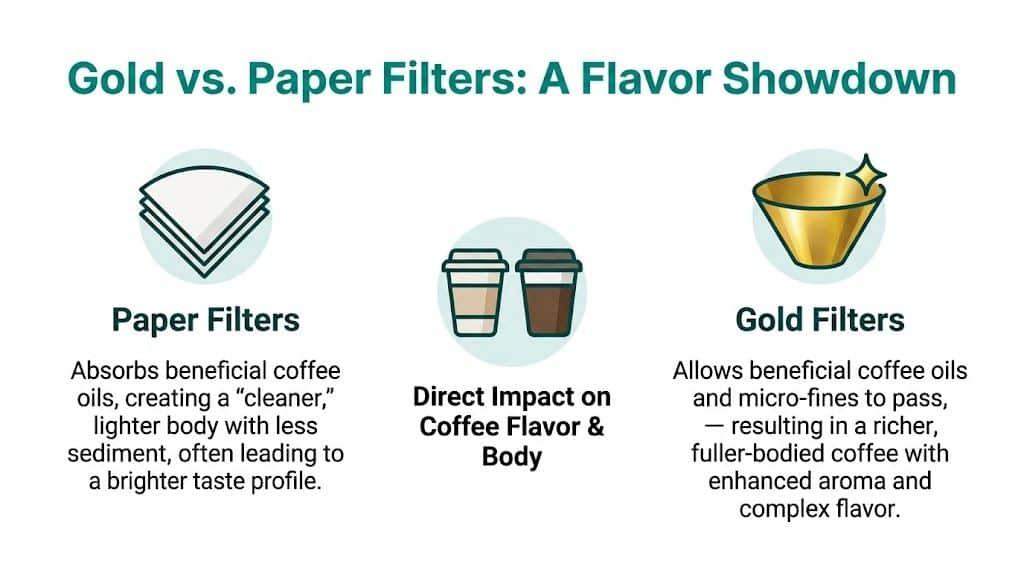
Paper and gold separate coffee solids in different ways. Paper acts like a tighter sieve. Gold mesh works more like a screen door. It still filters the brew, but it lets more tiny dissolved compounds and some micro-fines pass through.
That difference shows up in the cup fast, especially in single-serve machines. Cores Coffee reports that gold-plated mesh can produce up to 20 to 30% more oils in the final cup compared with paper. In simple terms, that usually means more texture, a broader aroma, and a heavier sip.
Paper still has a real advantage. It gives the cup sharper edges and less sediment. If you like coffee that tastes neat and light, paper often wins.
Gold Filter vs. Paper Filter at a Glance
| Feature | Gold Filter | Paper Filter |
|---|---|---|
| Body | Fuller, heavier mouthfeel | Lighter, cleaner mouthfeel |
| Aroma | More aromatic compounds remain in the cup | Cleaner aroma, but with less depth |
| Sediment | Small amount of micro-fines may pass | Very low sediment |
| Cleanup | Needs rinsing after brewing | Filter gets thrown away |
| Waste | Reusable | Single-use |
| Best for | Drinkers who want richness and texture | Drinkers who want clarity and a very clean cup |
What this means in a reusable pod
This is the part many guides skip.
In a full-size drip brewer, a paper filter can still produce a satisfying cup because the brew bed is larger and water has more room to move through evenly. In a reusable K-Cup or Ninja pod basket, space is tight and brew time is short. That setup already limits extraction. A gold filter can help by allowing easier flow and preserving more body, so the coffee tastes less thin.
A practical example helps. If you brew the same medium roast in a paper-lined pod and then in a gold mesh pod, the paper version will usually taste cleaner but narrower. The gold version will usually taste rounder and more café-like, with a little more weight on the tongue. For pod users trying to get closer to the taste of fresh-ground drip coffee, that tradeoff is often worth it.
If you want a broader comparison of reusable and disposable filter styles, this guide on reusable coffee filter vs paper adds useful context.
A gold filter does not hide stale beans or fix a weak recipe. It simply lets more of your coffee reach the cup.
Does gold taste metallic
People ask this for a good reason. No one wants a cup that tastes like a spoon.
A well-made gold filter should taste neutral in normal use. If a brew tastes metallic, the cause is usually something else. Old residue on the mesh, low-quality coating, very fine grounds clogging the filter, or mineral buildup inside the machine are more likely explanations.
That matters for pod brewers in particular. Keurig, Ninja, and similar machines push water through a compact chamber, so any residue or clogging becomes more obvious in flavor. If the filter is clean and fits the pod correctly, the taste difference between gold and paper should be about body and clarity, not metal.
The Practical Pros and Cons of Going Gold
A gold filter usually wins or loses on ordinary weekday mornings. If it saves money but makes cleanup annoying, it ends up in a drawer. If it improves flavor but creates clogs in a reusable pod, the routine falls apart fast.
For Keurig, Ninja, and other pod-style brewers, the tradeoff is more specific than it is with a standard drip machine. You use fewer disposable filters or pods, you get a fuller cup, and you keep one repeatable setup instead of relying on whatever paper insert happens to fit. The catch is simple. Mesh needs a quick rinse, and pod systems punish neglect faster because their brew chambers are small.
The upside is easy to feel
The benefits show up in routine, not theory.
- You stop buying throwaway filters or pods as often. That lowers the ongoing cost of each cup.
- You throw away less. Grounds still go in the trash or compost, but the filter stays in service.
- Your setup becomes more predictable. The same basket or reusable pod produces fewer surprises than switching between paper styles, sizes, or brands.
That consistency matters even more in shared kitchens. One reusable filter is easier to keep stocked than a box of paper inserts that disappears without warning.
The main hesitation is cleanup
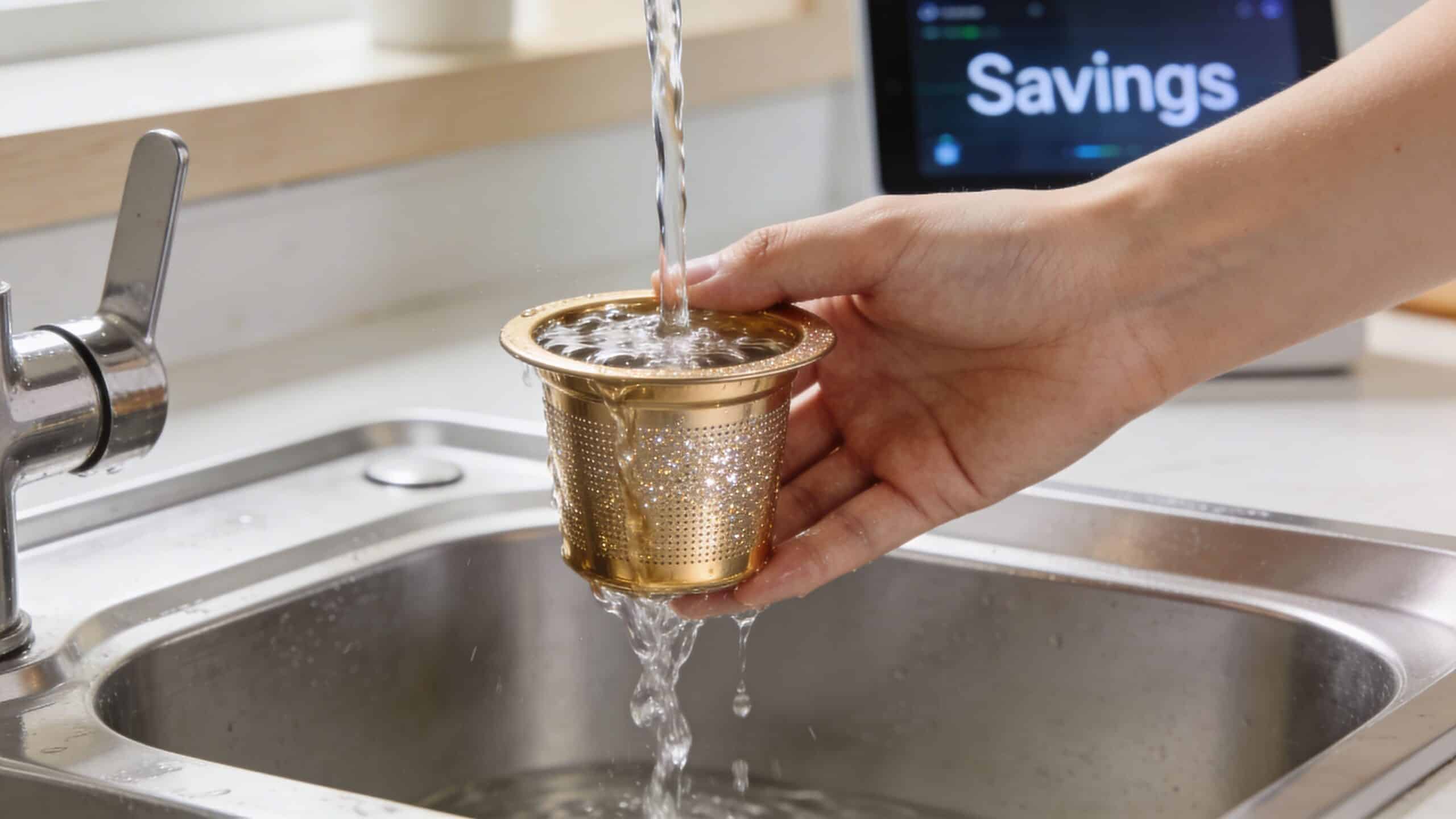
If you are used to paper, cleanup can sound like one more small chore before work. In practice, it is closer to rinsing a fine strainer than scrubbing a pan.
- Tap the used grounds into the trash or compost.
- Rinse the mesh under hot water.
- Look at both sides of the filter for trapped fines.
- Let it air-dry with the rest of your brewing parts.
For daily use, that is often enough.
Quick check: If water starts dripping unevenly or the brew slows down, the mesh likely has oil or fine-particle buildup. Clean it before the next cup.
Deep cleaning matters more in pod systems
Paper filters get thrown away. Gold filters keep working, but only if the mesh stays open. Coffee oils cling to metal over time, and reusable pod systems make that buildup easier to notice. A drip basket may still brew acceptably with some residue. A Keurig-style pod with narrow openings is less forgiving.
A good rule is to rinse after each brew and do a deeper clean on a regular schedule. Warm water and a mild cleaner are usually enough. A soft brush helps if fines stick in the mesh, especially around the edges where pod lids and baskets seal.
Machine fit matters too. If you use a dual-brew machine or pod adapter, a poorly fitting filter can cause weak extraction, overflow, or extra sediment in the cup. If you are comparing basket styles for that kind of setup, this guide to a Breville coffee machine filter can help you match the filter to the brewer.
The practical downside, then, is not that gold filters are hard to live with. It is that they ask for a little consistency. Give them a quick rinse and occasional deeper cleaning, and they usually repay that effort with lower ongoing cost, less waste, and a richer-tasting cup.
Gold Filter Compatibility for Keurig Ninja and Breville
Many articles become unhelpful on this topic.
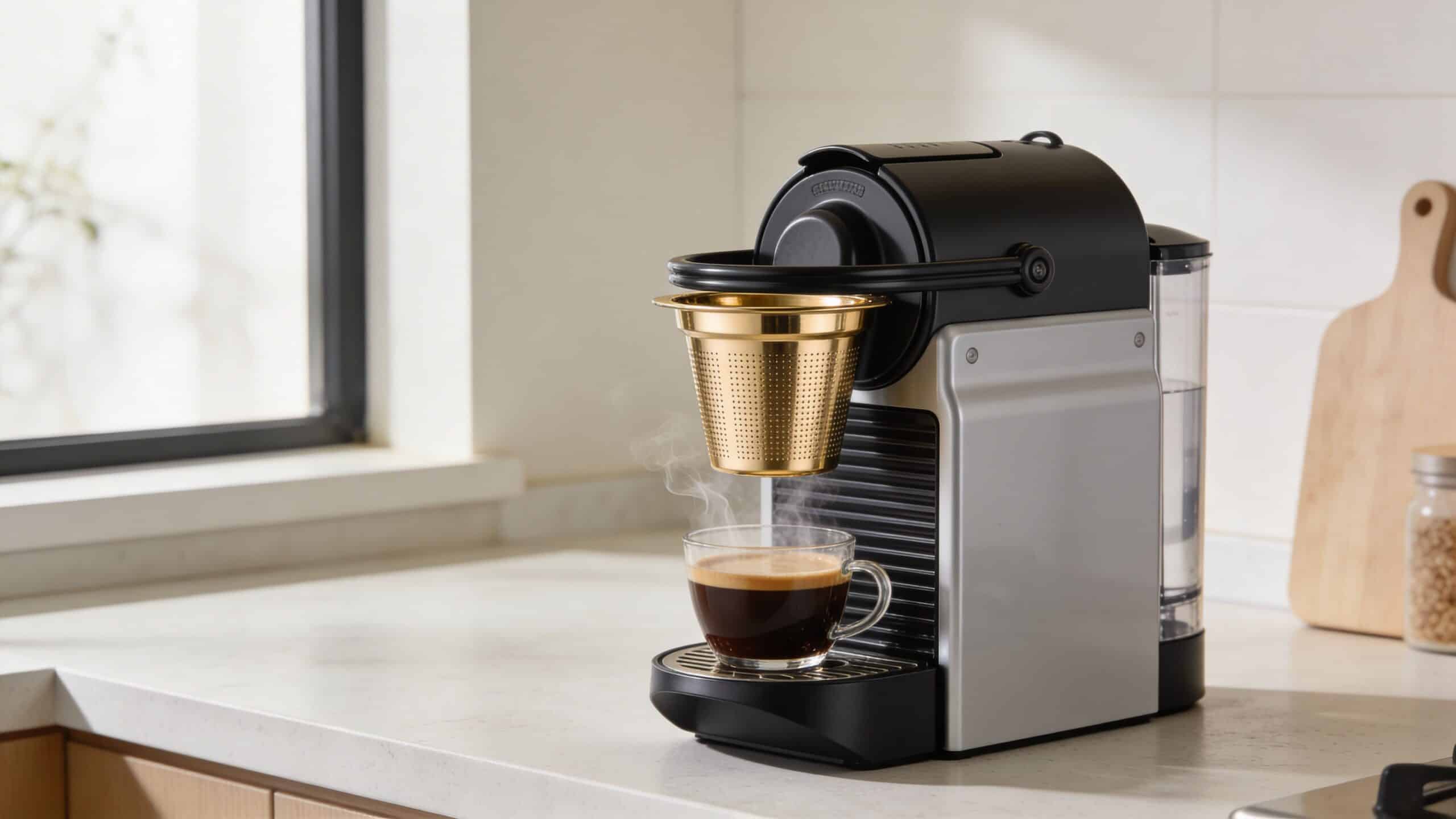
Most gold filter advice focuses on classic drip brewers. Keurig and Ninja owners have a different question. They want to know whether gold filter coffee works in reusable pod systems and dual-brew baskets without leaks, sludge, or weak extraction.
Why pod users need different advice
According to this discussion of the market gap around gold filters for pod users, searches for "Keurig gold filter compatible" were trending up 20% year over year as of 2025, yet independent testing on pod-system taste and brew-pressure effects remains scarce.
That gap matters because pod systems brew differently from open drip baskets. The water path is tighter, the brew chamber is smaller, and the margin for grind mistakes is lower.
Two common ways to use them
For these machines, gold-tone filters usually appear in two formats:
- Reusable pod style filters for single-serve brewing. These replace disposable pods and let you fill your own coffee.
- Carafe basket filters for dual-brew machines. These sit in the basket side of brewers like Keurig K-Duo or Ninja DualBrew models.
Both can work well, but they need the right match between filter shape, grind size, and fill level.
Will grounds leak into the cup
Sometimes, yes. Usually for avoidable reasons.
The most common causes are:
- Grinding too fine. Fine particles slip through mesh more easily and can also slow water flow.
- Overfilling the pod or basket. Grounds swell during brewing, and cramped coffee beds can disrupt flow.
- Using the wrong insert for the machine. A poor fit can affect how water enters and exits the brew chamber.
A medium grind is usually a safer starting point than a fine one. If your cup looks muddy, coarsen the grind slightly before blaming the filter.
In pod systems, "more coffee" doesn't always mean "better coffee." Overfilling often makes the brew less even.
Compatibility and machine care
If you use a gold mesh basket in a dual-brew machine, check the brewer's basket shape carefully. Keurig, Ninja, and Breville each have small differences in fit and depth. A filter designed for one family of machines may sit poorly in another.
For Breville owners, water quality and filter maintenance matter just as much as basket choice. If your machine also uses internal water filtration, this guide to a Breville coffee machine filter helps sort out that side of the setup.
PureHQ Inc. offers a reusable gold tone mesh filter for certain Keurig K-Duo Essentials brewers, which is one example of the kind of model-specific basket pod and dual-brew users should look for rather than assuming all gold filters fit all machines.
Using grounds instead of sealed pods can also leave more residue inside the brewer over time. That's not a reason to avoid gold filters. It just means descaling and routine cleaning become more important, especially if you have hard water or brew several cups a day.
How to Choose and Use Your Gold Filter Correctly
A gold filter can improve your coffee, but only if you buy the right kind and brew to its strengths.
The biggest mistake is treating it exactly like paper. Gold mesh flows differently, holds heat differently, and lets more material into the cup. That means your usual recipe may need a small adjustment.
What to look for before you buy
A solid gold filter should have these traits:
- Stainless steel mesh as the base material, not thin decorative metal.
- A true inert coating such as gold plating or titanium nitride, not a gold-colored finish.
- A shape matched to your brewer, whether that's a reusable K-Cup style insert or a larger basket.
- A fine, even mesh that balances flow with sediment control.
If the product listing is vague about fit, material, or cleaning, be cautious. Pod brewers don't leave much room for sloppy tolerances.
How to brew better with it
Gold filter coffee usually rewards small changes:
- Start with a slightly coarser grind than you would use with paper.
- Avoid packing the coffee tightly.
- Fill within the brewer's recommended range, leaving room for the grounds to expand.
- If the brew tastes harsh, coarsen the grind or lower the brewing intensity if your machine allows it.
- If it tastes weak, increase coffee slightly before making the grind finer.
The point is to keep water moving evenly through the mesh and the grounds.
Why recipe tweaks matter more with gold
A recent brewing discussion cited in this video on evolving brew standards and extraction preferences notes that consumers often prefer a wider range of strengths than the old Golden Cup ideal, and that gold filters can push extraction yields to 22 to 26% because they allow more oils and fine particles through. Without adjusting grind or water temperature, that can create bitterness.
That sounds technical, but the takeaway is simple. Gold filters give you more range, not more forgiveness.
If your first cup tastes heavier and slightly rough, don't give up. Adjust the grind one step coarser. If your Keurig or Ninja reusable setup starts dripping slowly, clean the mesh and review your dose. For pod-machine owners, routine upkeep matters as much as recipe dialing, and this guide on how to clean a Keurig filter is useful when flow starts to change.
Gold filters reward small adjustments. Paper often hides recipe mistakes. Mesh tends to reveal them.
Upgrade Your Brew and Ditch Paper for Good
Gold filter coffee gives you three clear wins. You get a cup with more body and aroma, you stop feeding a constant cycle of disposable filter waste, and you simplify your brewing kit over the long term.
For Keurig, Ninja, and other reusable pod users, the appeal is even stronger. You already chose ground coffee for more control. A gold-tone filter keeps more of that character in the cup instead of letting paper absorb it.
Machine care still matters. Better water helps flavor, and cleaner internals help flow and consistency. If you're sorting out that side of your setup, Water Filter Advisor offers useful advice on water filtration that can help you think through the water side of daily brewing.
If you're tired of buying paper, losing flavor, and guessing which reusable option fits your brewer, a gold filter is a practical upgrade that earns its place quickly.
PureHQ Inc. makes coffee accessories for home brewers who want reusable pods, gold-tone filters, and maintenance supplies matched to specific machines. If you're ready to switch to gold filter coffee, shop PureHQ Inc. and find the right filter for your Keurig, Ninja, or Breville setup.


Pingback: Your Guide to the Permanent Coffee Filter
Pingback: Keurig Duo Reusable K Cup: How to Brew the Perfect Cup (and Carafe!) - PureHQ