
Coffee Machine Care
The Ultimate Guide to the Best Water Filter for Your Espresso Machine in 2026
Mar
Did you know your espresso is more than 98% water? This single, overlooked ingredient is the silent partner in every shot you pull. Unfortunately, the ordinary tap water you're using is likely laced with minerals that are slowly choking the life out of your expensive espresso machine, forming rock-hard scale that can cause over 70% of equipment failures and lead to hundreds of dollars in repairs.
You invested in a premium machine, dreaming of cafe-quality espresso at home. But lately, the shots are inconsistent, tasting flat or bitter. You follow all the steps—grinding fresh beans, tamping perfectly—yet the results are a frustrating gamble. You have a nagging feeling that a hidden enemy is at work, silently sabotaging both your coffee's flavor and your machine's delicate internals. This isn't just about taste; it's about watching your prized investment slowly degrade, moving closer to a costly, inconvenient breakdown with every cup you brew.
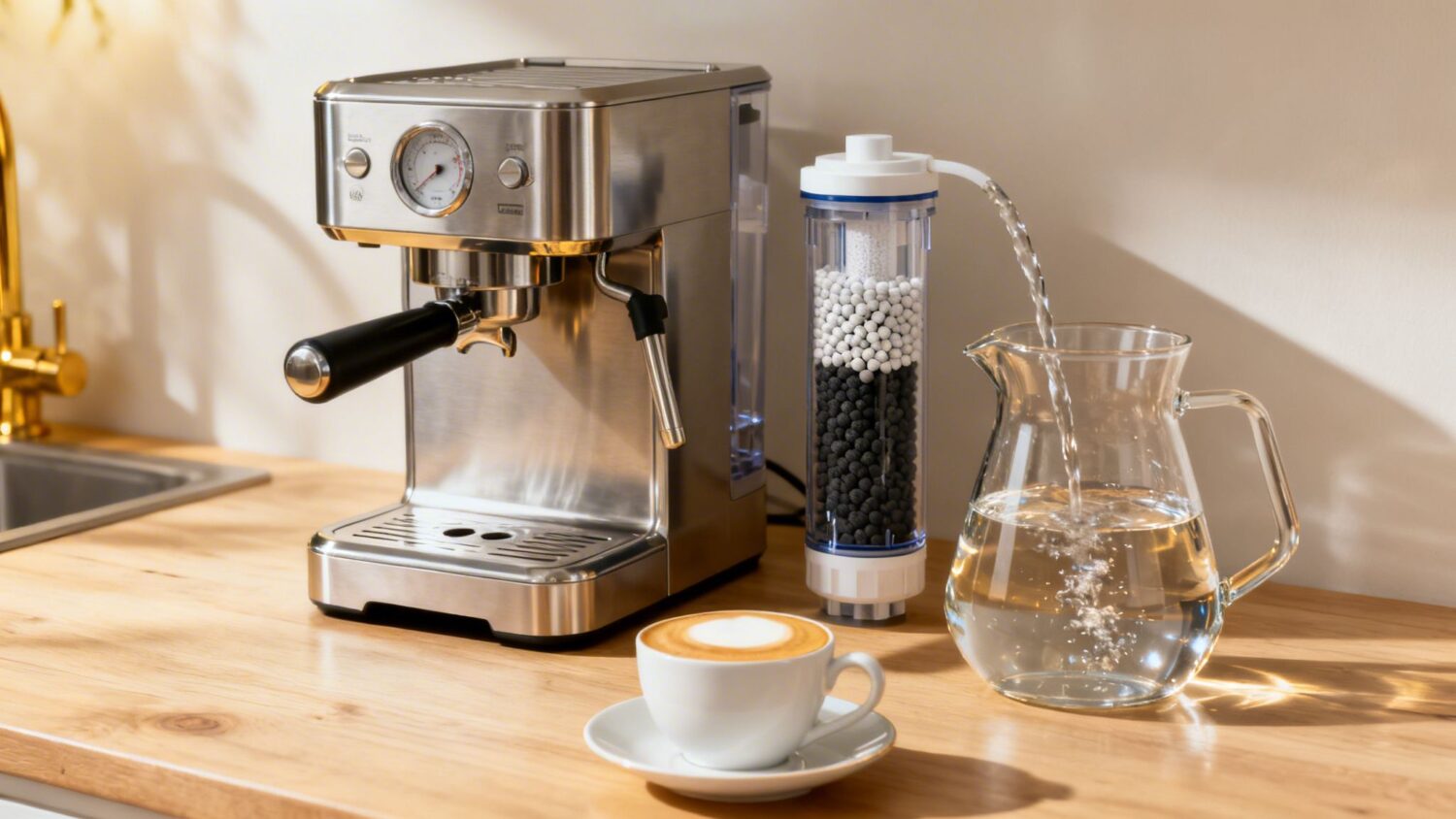
The solution is simpler and more effective than you think: a high-quality water filter specifically designed for your espresso machine. By proactively installing a filter that combines activated charcoal and ion-exchange resin, you can stop limescale before it ever forms, neutralize flavor-killing chlorine, and unlock the true taste of your coffee beans. This single, inexpensive upgrade protects your machine from its number one threat, extending its lifespan and guaranteeing a consistently delicious, perfectly balanced shot of espresso every single time.
Why Your Tap Water Is a Threat to Your Espresso Machine
The water flowing from your faucet isn't just H₂O. It's a complex solution carrying a hidden load of dissolved minerals, primarily calcium and magnesium. While harmless to drink, these minerals become a major threat inside the high-heat, high-pressure environment of an espresso machine, where they precipitate out of the water and bake onto your machine's boiler, pump, and narrow internal tubing. This forms a destructive, rock-hard deposit known as limescale.
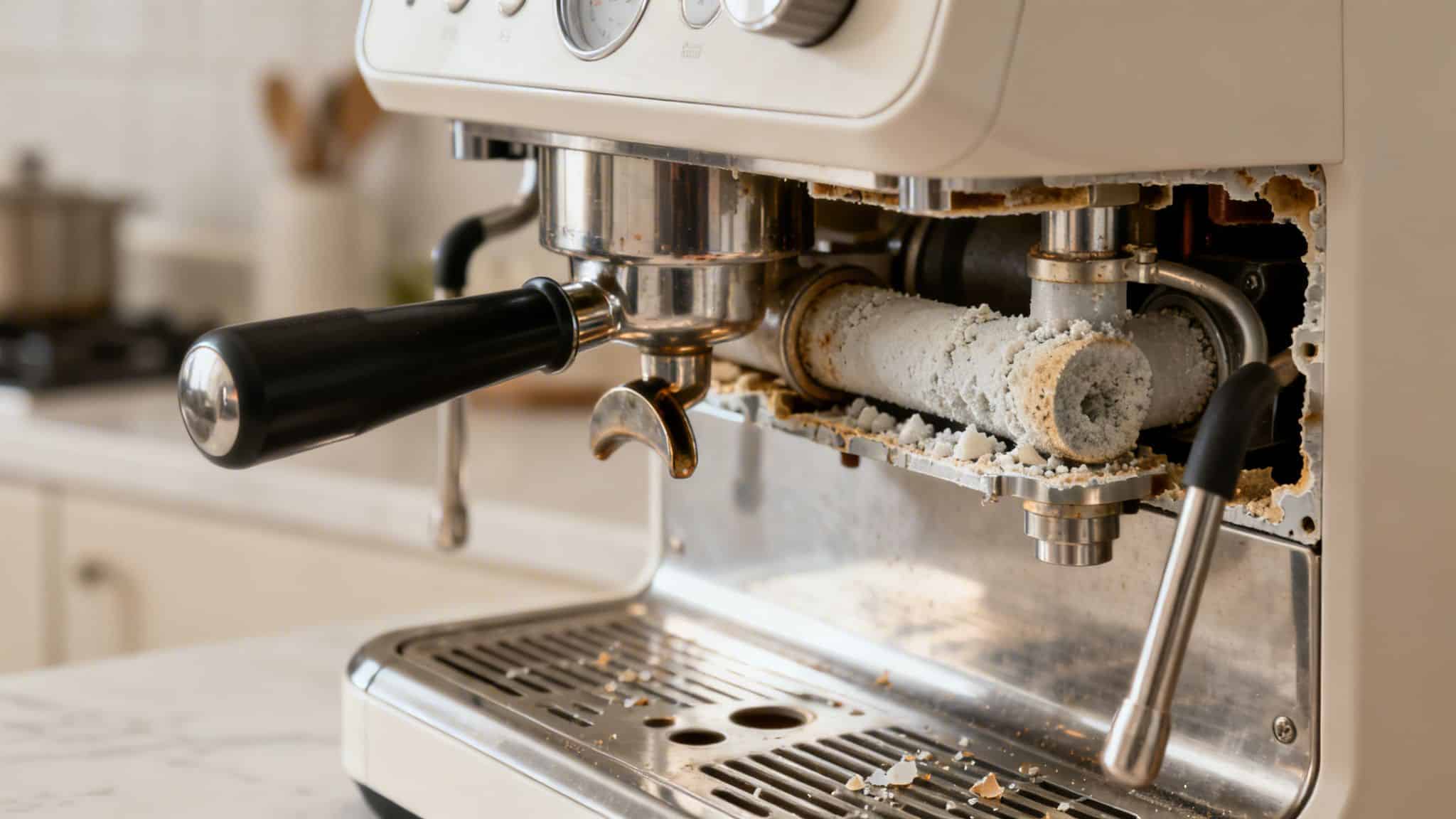
Think of it as plaque hardening in an artery. This scale silently builds up, layer by layer, constricting water flow and insulating the heating element. This forces your machine to work harder to reach temperature and pressure, leading to a cascade of frustrating and expensive problems:
- Inconsistent Shots: Scale buildup disrupts your machine's thermal stability and pressure, making it impossible to pull a consistent shot.
- Pump Strain & Failure: The pump must work significantly harder to push water through clogged passages, dramatically shortening its operational lifespan.
- Costly Repairs: Eventually, a component will fail. Unfiltered water is a leading cause of service calls for issues ranging from no-heat conditions to complete pump failure.
The solution is not to wait for the damage and then react with harsh descaling chemicals. The most effective approach is prevention. A purpose-built water filter acts as your machine's first and best line of defense. Filters using a combination of activated charcoal and ion-exchange resin are engineered to perform two critical tasks: the activated charcoal adsorbs chlorine and other chemicals that ruin flavor, while the ion-exchange resin specifically targets and neutralizes the hardness minerals (calcium and magnesium) that form limescale. Using the right filter can extend your machine's life and cut down on maintenance, though it's still wise to learn how to descale an espresso machine for a complete care routine.
How Water Quality Unlocks Perfect Espresso Flavor
That perfect shot of espresso you’re chasing is more than 98% water, according to coffee chemistry experts. This makes water the single most important—and most overlooked—ingredient in your coffee. Pouring unfiltered tap water over expensive, specialty coffee beans is like trying to paint a masterpiece on a dirty canvas. No matter your skill, the end result will always be compromised by what you started with.
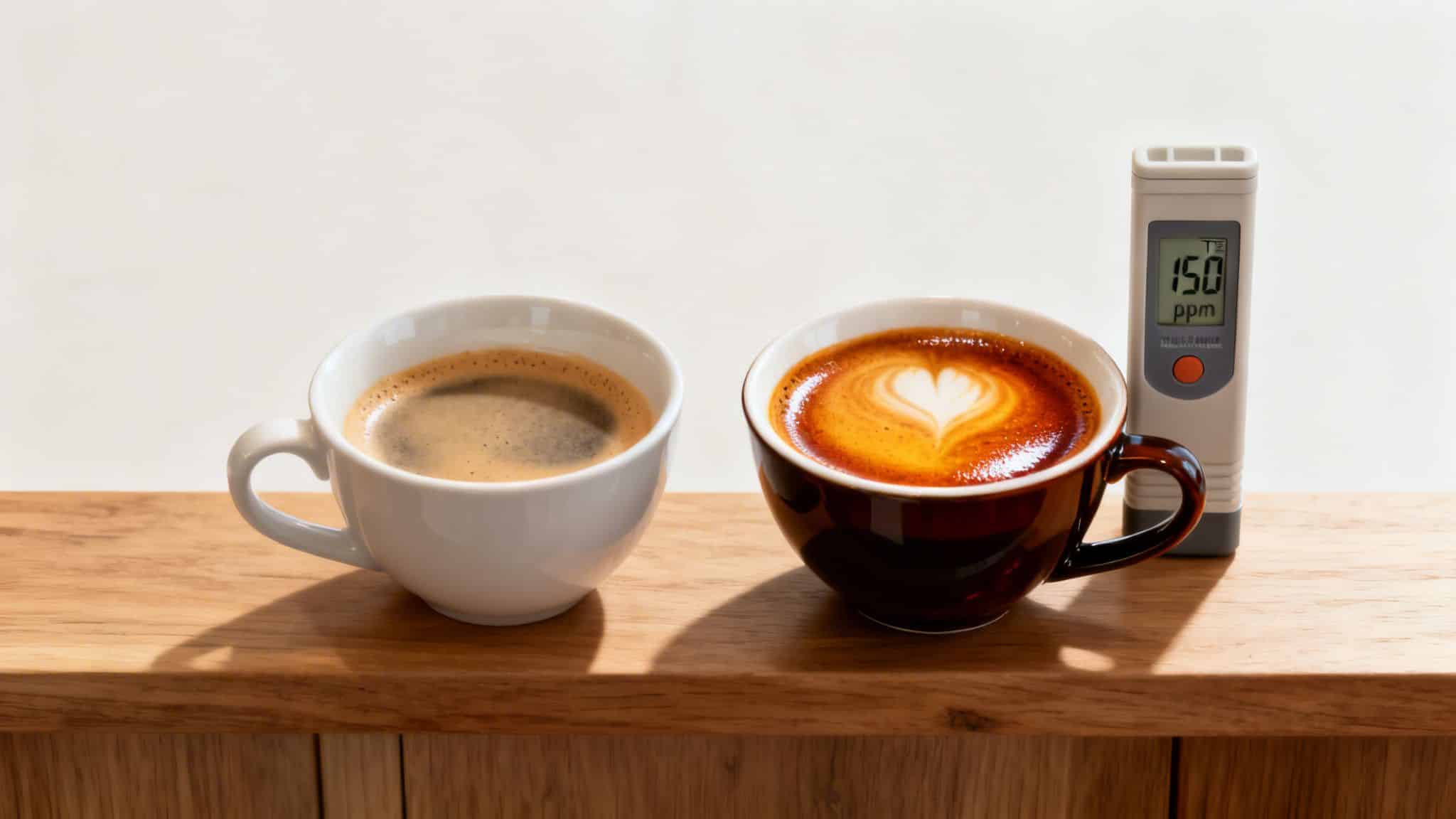
You've got the premium machine and the perfect beans, but your espresso is a guessing game. One day it’s rich and complex, the next it’s bitter, chalky, or just weak. This frustrating inconsistency isn't your fault; it's the invisible culprits in your water supply sabotaging your morning ritual. The goal isn't to use "pure" water, but to achieve a specific, delicate mineral balance that unlocks the incredible flavors your coffee was always meant to have.
The Science of Water and Coffee Extraction
To control your flavor, you must understand the key components in your water and their distinct roles in the final taste of your espresso.
Total Dissolved Solids (TDS)
This is a measure of all the "stuff"—minerals, salts, and metals—dissolved in your water, measured in parts per million (ppm). It provides a crucial snapshot of your water's overall mineral content.
Hardness Minerals (Calcium & Magnesium)
These minerals are essential for good extraction. During the brewing process, calcium and magnesium ions act like flavor magnets, bonding to and pulling out the most desirable flavor compounds—the sweet, fruity, and complex notes—from your coffee grounds. They are critical for a rich taste and full-bodied mouthfeel. However, too much hardness leads to over-extraction, creating harsh, bitter flavors and a chalky aftertaste. This is why finding the best water filter for your espresso machine is about hitting a target, not just removing everything.
Chlorine
Municipal water systems add chlorine as a disinfectant to kill harmful bacteria, a practice mandated for public health. Unfortunately, chlorine has a strong chemical taste that completely overwhelms the delicate aromatic oils in coffee, chemically altering and destroying its flavor.
Finding the Flavor Sweet Spot
The secret to great coffee is not using pure, empty water. Brewing with distilled or heavily filtered reverse osmosis (RO) water will produce a weak, sour, and hollow-tasting shot because there are no minerals in the water to facilitate flavor extraction.
According to the Specialty Coffee Association (SCA), the ideal water for brewing has a TDS of 75-250 ppm and a total hardness of 50-175 ppm CaCO₃. This "sweet spot" provides enough of the good minerals to extract flavor without causing bitterness or scale buildup.
A quality filter system achieves this balance by removing harmful substances like chlorine and taming excessive hardness, leaving just the right amount of beneficial minerals. This transforms your tap water from a liability into your greatest brewing asset, allowing the true character of your coffee beans to shine through in every cup. For more on maintaining this balance, see our guide on coffee maker water filter replacement schedules.
Choosing the Right Filter Technology for Your Water
Once you've tested your water, you can choose the right filtration technology to solve your specific problem. Walking into the world of water filtration can feel intimidating with terms like "ion-exchange" and "reverse osmosis," but the science is straightforward. The key is matching the right tool to your specific water issue.
Using the wrong filter—or no filter at all—is a gamble. You could be stripping out the good minerals that make coffee taste amazing, or you could be allowing scale-causing minerals to march right into your machine’s most delicate parts. Let's break down the main types of filtration to help you choose the best water filter your espresso machine needs.
Activated Charcoal: The Flavor Purifier
Activated charcoal (or carbon) filters are master purifiers, designed to make your water taste and smell great. The porous carbon structure acts like a massive sponge, using adsorption to trap organic chemicals, especially chlorine and chloramine, which are the main culprits behind the "tap water" taste that flattens coffee's delicate flavors.
- Best for: Water that already has low to moderate mineral content but suffers from off-tastes or smells from municipal treatment.
- Limitations: Activated charcoal does not remove dissolved minerals like calcium and magnesium, so it offers no protection against limescale.
- Common Use: Many espresso machine brands, like Breville, integrate charcoal filters into their water tanks. You can learn more in our guide to Breville coffee machine water filters.
Ion-Exchange: The Scale Stopper
If your water tests high for hardness, an ion-exchange filter is your number one defense against limescale. These filters contain resin beads that employ a simple but brilliant chemical swap. The resin grabs onto the scale-forming calcium and magnesium ions and exchanges them for sodium or hydrogen ions, effectively "softening" the water and preventing it from forming damaging scale inside your machine. For those with extremely hard water, a whole-house solution might be necessary, and you can learn more about how to plumb a water softener for a comprehensive approach.
Reverse Osmosis: The Blank Slate
Reverse Osmosis (RO) is the most aggressive form of filtration, using a semipermeable membrane to strip out up to 99% of all total dissolved solids (TDS)—minerals, salts, metals, and microbes. This technology is a significant driver of the global water filter market, which is seeing massive growth as consumers seek total control over water quality. You can read the full research about this expanding market for more details on these trends.
However, for espresso, this creates a problem: the water is too clean. Water with zero minerals tastes flat and can lead to a sour, weak espresso shot because it lacks the mineral content needed for proper extraction. If you use an RO system, you must remineralize the water by adding specific mineral packets to create the ideal brewing water.
How to Test Your Water Quality in Minutes
You have a high-end machine and specialty beans, but every morning you're pouring a complete mystery into your setup. Is your tap water secretly building up rock-hard scale, or is it so soft that your shots are coming out sour and lifeless? Without knowing what’s in your water, choosing the right filter is a total guessing game.
It's time to stop guessing and start measuring. A quick water test takes less time than brewing your coffee and provides the exact data needed to confidently choose the best water filter for your espresso machine, giving you control over both flavor and your equipment's long-term health.
Using a TDS Meter and Test Strips
Two simple tools give you all the information you need:
- TDS Meter: A Total Dissolved Solids (TDS) meter gives you a snapshot of all the minerals and salts in your water, measured in parts per million (ppm). Simply turn it on and dip it in a glass of your tap water for an instant reading. A high TDS is often a red flag for hard water.
- Water Hardness Test Strips: These strips specifically measure General Hardness (GH) by detecting the concentration of calcium and magnesium—the minerals that cause scale. Just dip a strip in your water, wait for the color to change, and match it to the chart on the package.
Once you have your results, you can compare them to the standards set by the Specialty Coffee Association (SCA) for optimal brewing.
| Metric | SCA Target Range | Impact on Espresso |
|---|---|---|
| TDS | 75–250 ppm | Affects body and overall flavor intensity. |
| Hardness (CaCO₃) | 50–175 ppm | Crucial for extracting sweet notes; too high causes scale. |
| pH | 6.5–7.5 | Impacts the balance between sour and bitter notes. |
| Alkalinity | 40–70 ppm | Acts as a buffer to stabilize pH during brewing. |
By comparing your test results to these SCA targets, you can see exactly where your water stands. This isn't just about protecting your machine; it's about creating the perfect canvas for your coffee to shine. Testing your water is the single most empowering step you can take, moving you from frustration to data-driven precision.
Comparing PureHQ Premium Filters to Generic Options
When scrolling online, it’s easy to think all water filters are the same. A generic filter that looks nearly identical to a premium one but costs a few dollars less is tempting. However, this seemingly minor choice can be the difference between a perfect shot and a leaky mess that fails to protect your machine.
You’ve likely read the horror stories in one-star reviews: a customer buys a generic filter that just won’t fit correctly, forcing them to jam it into place. This poor fit allows water to bypass the filter media entirely, rendering it useless, and can even damage the machine's filter housing over time. This common customer objection highlights exactly where a premium filter proves its worth.
Premium vs. Standard Filters: A Head-to-Head Comparison
The real differences lie in material quality, manufacturing precision, and filtration media density. Let’s compare PureHQ filters to standard generic alternatives to see what you're really paying for.
| Feature | PureHQ Premium Filters | Standard/Generic Filters |
|---|---|---|
| Fit and Seal | Precisely molded for a guaranteed leak-free, secure fit in compatible machines. | Often have inconsistent sizing, leading to poor seals, water bypass, or damage to the machine. |
| Material Quality | Made from high-grade, durable, BPA-free plastics for safety and longevity. | May use cheaper, brittle plastics that can crack, warp, or leach chemicals over time. |
| Filtration Media | Uses a high-density, multi-stage charcoal and resin blend for superior removal of chlorine and hardness. | Contains lower-density media with less surface area, resulting in less effective and inconsistent filtration. |
| Taste Impact | Produces noticeably cleaner, brighter-tasting water that allows coffee’s true flavor to shine. | May not fully remove chlorine or can introduce its own off-tastes from loose carbon fines. |
Choosing a premium filter is an investment in consistency, safety, and better coffee. The global demand for reliable purification is clear, with the US water purifier market projected to grow significantly as consumers prioritize quality. You can Learn more about the water filter market trends to see why effective filtration is becoming non-negotiable. For total machine care, remember to pair your filter with a high-quality universal descaling solution to keep the entire water path pristine. Ultimately, opting for a PureHQ premium filter ensures every drop of water is clean and pure, protecting your machine and delivering the delicious foundation your espresso deserves.
Your Espresso Filter Questions, Answered
Navigating the world of espresso machine water filters can be confusing. Let's clear up the most common questions to help you protect your machine and pull a great shot of coffee.
How Do I Know a Filter Will Actually Fit My Machine?
This is a top concern, but it's easily solved. Any reputable filter brand provides a clear compatibility list on its product page, detailing which filters work with specific machine models. Before you buy, cross-reference your machine's model number with that list. This five-second check guarantees a perfect, leak-free fit. PureHQ filters are engineered to exact OEM specifications to ensure a snug, secure seal every time.
Can I Just Use a Keurig Filter in My Espresso Machine?
No. Keurig filters are designed for low-pressure, gravity-fed systems. They cannot handle the intense pressure an espresso machine's pump generates. Using one can restrict flow, strain your pump, and lead to weak, under-extracted shots. Always use a filter specifically designed for high-pressure espresso systems.
Will Filtering My Water Ruin My Espresso's Crema?
This is a common myth. While overly pure water (like distilled or RO) is bad for espresso, a proper water filter doesn't strip out everything. It creates balance. It removes harmful chlorine and excess scale-forming minerals while intentionally leaving behind the beneficial minerals (like magnesium) that are essential for flavor extraction and a stable, beautiful crema. A good filter doesn't ruin your crema—it improves its quality and stability.
How Often Do I Really Need to Change the Filter?
A filter becomes saturated over time and stops working. The correct replacement schedule depends on your water hardness and usage. Here's a reliable guideline:
- Hard Water (120+ ppm): Change every month.
- Moderate Water (60-120 ppm): Change every two months.
- Soft Water (under 60 ppm): Change every three months.
Pairing a fresh filter with a regular descaling routine using a quality descaler is the one-two punch that guarantees your machine runs beautifully for years.
Stop guessing and start tasting the difference that perfectly filtered water makes.
Shop Premium Espresso Machine Water Filters Now

