
Coffee Machine Care
How to Descale an Espresso Machine (Step-by-Step Guide)
Mar
Does your espresso taste weak or sour lately — or is your machine taking longer than usual to pull a shot? The most likely cause is limescale. Tap water contains calcium and magnesium minerals that slowly build up inside your machine’s heating element and pipes, forming a chalky deposit that restricts water flow and drops brewing temperature. The result is under-extracted, sour espresso — and left too long, it can permanently damage the pump.
This internal gunk clogs pipes, insulates heating elements, and forces your machine’s pump to work overtime. The result? Inconsistent temperatures lead to under-extracted, sour coffee. Restricted water flow creates weak, slow shots. And the constant strain wears out vital components, dramatically shortening your machine’s lifespan. Every day you wait, the mineral buildup gets worse, pushing your expensive investment closer to a costly breakdown that could have been easily avoided.
Is Your Espresso Tasting Sour or Pulling Slow?
Protect your expensive espresso machine from permanent scale damage. Restore full pressure and perfect heat in minutes with our professional, odorless descaler.
✓ Safe for Breville, DeLonghi & Jura | ✓ Odorless Formula
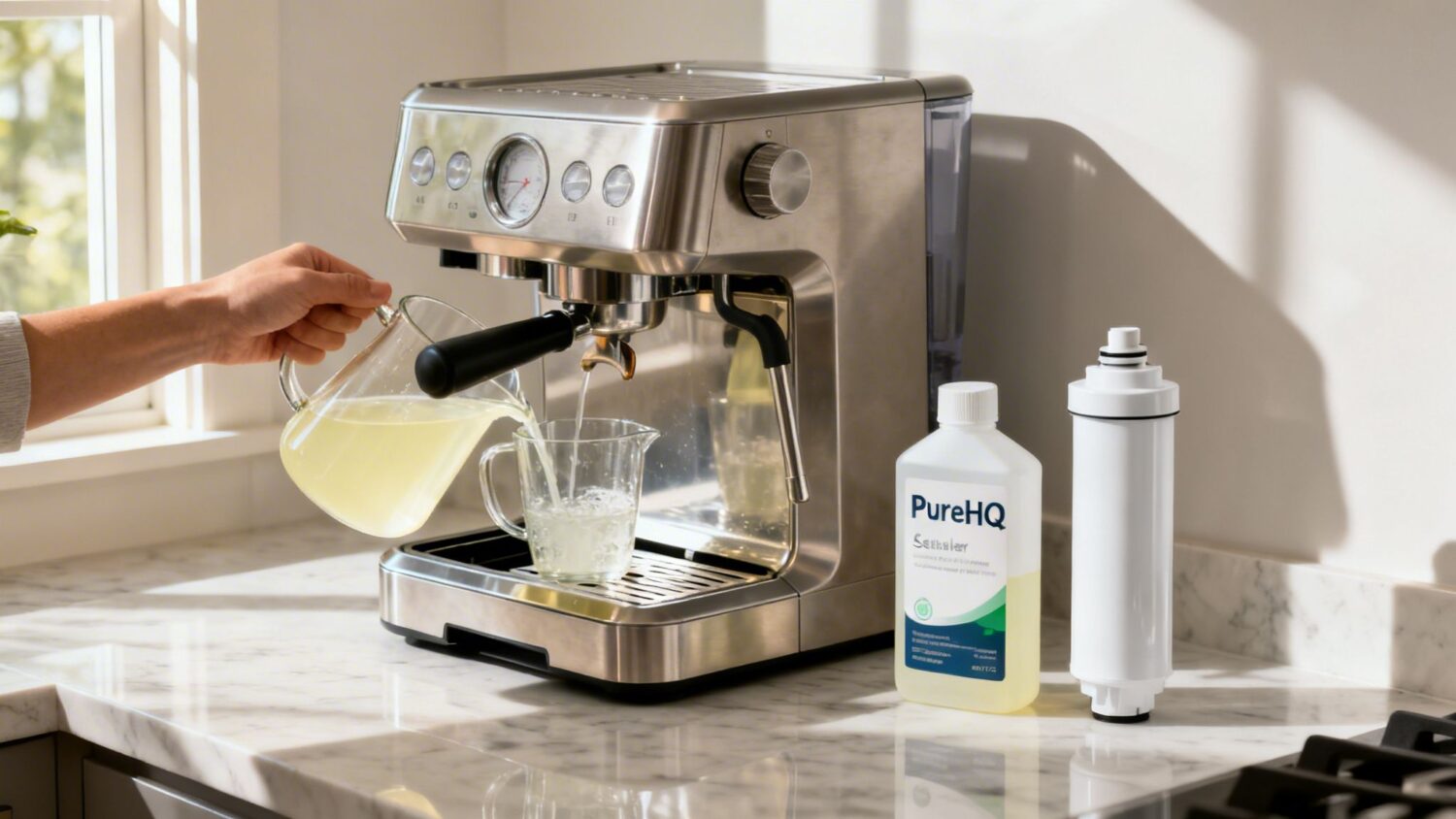
The solution is a simple, 30-minute maintenance routine: descaling. By running a properly formulated descaling solution through your machine every few months, you safely dissolve these harmful mineral deposits, restoring water flow and temperature accuracy. This not only protects your machine from premature failure but also ensures every shot of espresso tastes exactly as rich and flavorful as the roaster intended.
Why You Must Descale Your Espresso Machine
If your morning espresso tastes disappointingly sour or seems to take an eternity to pull a shot, the problem probably isn’t your expensive, single-origin beans. The real culprit is likely mineral scale, a silent saboteur building up inside your beautiful machine. This chalky deposit, better known as limescale, is just the calcium and magnesium that’s naturally present in your water.
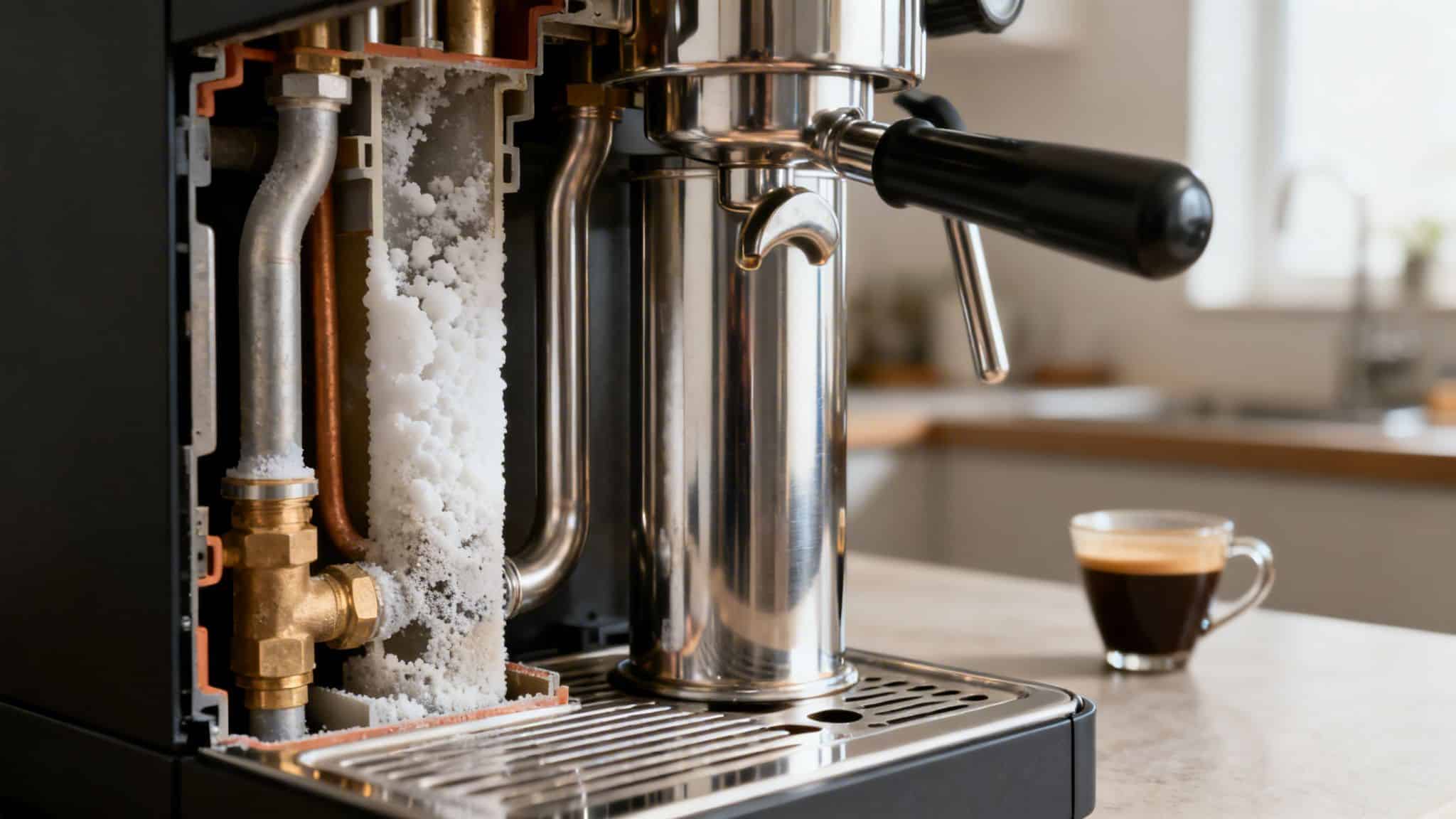
This internal gunk is more than just an ugly nuisance; it’s actively harming your machine and ruining your coffee. As scale accumulates, it kicks off a chain reaction of problems that only get worse over time.
The Consequences of Neglecting Descaling
The damage from limescale starts subtly. You might first notice your espresso shots aren’t consistently hot anymore, or maybe the pressure gauge seems to be acting up. That’s because the mineral layer is coating the heating element, acting as an insulator and forcing it to work harder and less efficiently.
This leads to a cascade of issues:
- Poor Temperature Control: The machine can’t hold the ideal brewing temperature, which results in under-extracted, sour-tasting coffee. Nobody wants that.
- Reduced Water Flow: Scale builds up and chokes the internal pipes and valves, restricting water flow and leading to frustratingly slow, weak shots.
- Increased Strain on Components: The pump has to go into overdrive just to push water through those constricted pathways, leading to premature wear and tear on your machine’s most vital parts.
Eventually, this neglect leads to breakdowns that hit your wallet hard. Appliance service reports have shown that a staggering 40% of espresso machine failures are directly caused by a lack of regular descaling. What starts as a simple maintenance task can quickly turn into a repair bill costing hundreds of dollars—or worse, the need for a whole new machine. You can dig into more data on limescale’s impact by checking out various market analysis reports.
The Simple Solution to a Damaging Problem
Luckily, the fix is both straightforward and incredibly effective. Regularly learning how to descale your espresso machine is the single most important maintenance routine you can adopt. Using a high-quality, properly formulated descaling solution will safely dissolve these harmful mineral deposits without damaging the delicate internal components like seals and O-rings.
By investing just 30 minutes every couple of months, you protect your investment, ensure every shot of espresso tastes exactly the way the roaster intended, and keep your machine running reliably for years to come. For an even more proactive approach, pairing descaling with a good water filter can dramatically reduce mineral buildup from the get-go.
Choosing the Right Descaling Solution
When that descale light comes on, it’s tempting to reach for a common pantry item: white vinegar. It’s cheap, acidic, and seems like a logical quick fix. However, using vinegar to descale a precision appliance like an espresso machine is a significant gamble that can cause irreversible damage.
The aggressive acetic acid in vinegar attacks more than just mineral scale; it can degrade the soft rubber gaskets, seals, and aluminum components inside your machine. Over time, these parts become brittle, leading to leaks, pressure loss, and eventually, catastrophic failure. A small leak might seem minor, but it can quickly result in costly water damage or electrical issues. Furthermore, vinegar’s strong odor is notoriously difficult to rinse out completely, leaving a pungent aftertaste that can taint your coffee for days.
A purpose-built commercial descaler provides a powerful, engineered solution without the risks. These products are specifically formulated to dissolve tough limescale efficiently while being gentle on your machine’s delicate internal parts. They use food-grade acids like citric or sulfamic acid, which are highly effective against mineral deposits but won’t harm sensitive metals and seals. Premium descalers also contain corrosion inhibitors, which add a protective layer to internal components during the cleaning process. This ensures your machine is not only clean but also protected, preserving its longevity and performance.
Descaling Solution Showdown: Premium Descaler vs. DIY Vinegar
We understand the objection: “Why pay for a descaler when vinegar is cheap?” But when a single repair from vinegar-induced damage can cost hundreds of dollars, the small investment in a proper descaler becomes clear. A high-quality solution is designed for safety and compatibility, preventing the very issues that DIY methods can create.
Here’s a direct comparison addressing common concerns:
| Feature | PureHQ Commercial Descaler | DIY White Vinegar Solution |
|---|---|---|
| Effectiveness | Formulated with specific acids (like citric and sulfamic) to efficiently dissolve tough mineral scale without residue. | Moderately effective on light scale but can struggle with heavy buildup, often requiring multiple, lengthy cycles. |
| Machine Safety | Contains corrosion inhibitors to protect internal metals, seals, and O-rings from acid damage. Safe for all machine types. | The strong acetic acid can degrade rubber gaskets, aluminum components, and other soft metals, increasing the risk of leaks and failure. |
| Rinsing & Odor | Odorless and designed to rinse away cleanly, leaving no aftertaste in your coffee. | Leaves a strong, pungent odor that can be difficult to fully rinse out, potentially tainting your first few cups of coffee. |
| Long-Term Impact | Protects your investment by maintaining machine health, ensuring longevity and consistent performance. | Creates a risk of long-term, cumulative damage that can shorten your machine’s lifespan and lead to expensive repairs. |
A premium, food-grade descaler isn’t an expense; it’s a small investment that pays off in flavor, performance, and peace of mind.
🏆 The Professional Choice
Don’t risk a $500+ espresso machine repair just to save a few dollars on vinegar. Our proprietary formula uses gentle, food-safe acids with corrosion inhibitors to protect your internal seals while melting away scale.
Prefer zero measuring? Try our drop-in Descaling Tablets instead →To further improve your coffee’s taste and reduce how often you need to descale, consider installing a compatible water filter to remove minerals at the source. For a deeper dive, learn more about finding the best descaler for your coffee machine in our detailed guide.
How to Descale an Espresso Machine: A Step-by-Step Guide
That descale light is on, isn’t it? Or maybe your shots are pulling a little slow, tasting a little flat. The thought of actually doing the descaling feels like a whole project, and you’re worried about using the wrong stuff, messing up a step, or—worst of all—damaging the delicate guts of your beloved espresso machine.
It’s a common feeling. So you put it off. Meanwhile, limescale is silently building up inside the heating element and pipes, slowly choking your machine’s performance. Every day you wait, the mineral gunk gets thicker, your coffee quality drops, and the risk of a pricey breakdown creeps higher. You didn’t buy a fantastic machine to stress over maintenance or drink lukewarm, subpar espresso.
But what if you had a clear, no-stress guide? This process is simpler than it seems and takes about 30 minutes. Once you understand the core steps, you can confidently descale any machine—whether it’s a super-automatic, semi-automatic, or pod-based model—and restore its performance.
First Things First: Prep Your Machine
Before you add any descaler, a few preparatory steps ensure the solution can work effectively. Start by removing the water reservoir, emptying it completely, and taking out the water filter if one is installed. Running a descaling solution through a charcoal filter can damage it and render it ineffective.
Next, remove the portafilter and clear any old coffee grounds from the group head. Empty and rinse the drip tray. Your goal is to create a clean, unobstructed path for the descaling solution to travel through the machine’s internal system.
Mixing and Running the Descaler
Now it’s time to mix the solution. Always follow the instructions provided on the descaler’s packaging for the correct water-to-solution ratio. For most liquid descalers like PureHQ Descaling Solution, you will pour the entire bottle into the empty water tank and add a specified amount of fresh water, typically around 32 ounces (1 liter). Give the tank a gentle swirl to ensure it’s mixed.
With the solution prepared and the tank back in place, you are ready to begin the descaling cycle. The exact procedure will vary depending on your type of machine.
Descaling Super-Automatic and Semi-Automatic Machines
Many modern machines from brands like Breville, De’Longhi, and Jura feature an automated descaling program. When the machine prompts you to descale, you simply follow the on-screen instructions. The machine will automatically pulse the solution through its boiler and internal pipes. Place a large container under the group head and steam wand to catch the solution as it dispenses.
If your machine is a more traditional semi-automatic or manual model without a guided descaling mode, you will control the process yourself:
- Turn the machine on and allow it to heat up.
- Place a large bowl under the group head and run about half of the solution through it.
- Next, dispense another quarter of the solution through the steam wand.
- Turn the machine off and let it sit for 20 minutes. This “soaking” period allows the descaler to dissolve stubborn mineral deposits.
Handling Pod-Based Machines
Descaling a Nespresso or Keurig machine follows the same manual process. After mixing the solution in the water tank, place a large mug under the spout and run several brew cycles (without a pod) until half the solution is used. Let the machine sit for a 20-minute soak, then run the remaining solution through.
This quick flowchart breaks down the commercial vs. DIY descaler debate.
As you can see, while vinegar is handy, a purpose-built descaler is much safer and more effective for your machine’s sensitive metal and plastic parts.
The Most Important Step: Rinsing
After the descaler has worked its magic, you must rinse the machine thoroughly to remove any residual solution, which can impart a chemical taste to your coffee.
Remove the water reservoir and wash it with soap and water. Refill it with fresh, clean water. Run the entire tank of fresh water through the machine, alternating between the group head, steam wand, and any hot water spouts. To be certain all traces of the descaler are gone, we recommend repeating this rinse with a second full tank of fresh water. For a machine like a Breville, our detailed guide on cleaning your Breville espresso machine has some great model-specific rinsing tips.
The global coffee machine market is projected to reach $10.19 billion by 2033, reflecting how seriously people take their home brewing setups. With 60% of North American households having hard water, using a good descaler is a must. Once rinsing is complete, pull one “sacrificial” shot of espresso and discard it as a final check. Now your machine is clean, efficient, and ready to brew.
Determining Your Descaling Schedule
You’ve mastered how to descale your espresso machine, but just as critical is knowing when to do it. Waiting for the descale light to come on or guessing based on taste can lead to inconsistent coffee and put your machine at risk. An incorrect schedule means you’re either descaling too often and wasting supplies, or not enough, allowing limescale to slowly damage your machine’s internal components.
The truth is, there’s no universal rule. Your ideal descaling frequency is determined by a few key factors specific to your environment and habits. Getting this cadence right is the secret to maintaining peak performance and extending the life of your machine.
The Factors That Actually Matter
Three main elements determine how often you need to descale. The most important is water hardness. Hard water is rich in minerals like calcium and magnesium, the primary components of limescale. The harder your water, the faster scale will accumulate. You can determine your water’s hardness in minutes using inexpensive test strips available at hardware stores or online.
Your daily usage is the second factor. A machine that pulls ten shots a day will accumulate mineral deposits much faster than one used only on weekends. The more water that passes through the heating element, the more minerals are left behind.
Finally, water filtration acts as your first line of defense. Using a charcoal water filter in your machine’s reservoir removes many minerals before they can form scale. This proactive measure not only produces a clearer and more vibrant cup profile but also significantly extends the time between required descaling cycles. Unchecked scale can reduce a machine’s efficiency by up to 40%, forcing it to work harder and increasing energy consumption. This is why the coffee machine descaler market continues to grow as consumers seek to protect their investments.
Recommended Descaling Frequency Based on Water Hardness and Usage
Use this table as a starting point to establish a reliable descaling routine. Remember that even if your machine has an indicator light, you may need to descale more frequently in areas with very hard water.
| Water Hardness | Daily Usage | Recommended Descaling Frequency |
|---|---|---|
| Soft Water | Light (1-2 shots/day) | Every 4-6 Months |
| Moderately Hard | Light (1-2 shots/day) | Every 2-3 Months |
| Hard Water | Light (1-2 shots/day) | Every 1-2 Months |
| Soft Water | Heavy (3+ shots/day) | Every 3-4 Months |
| Moderately Hard | Heavy (3+ shots/day) | Every 1-2 Months |
| Hard Water | Heavy (3+ shots/day) | Monthly |
Create a maintenance schedule based on this framework to protect your machine’s health and ensure consistently great coffee. For more general advice, see our guide on how often to clean your coffee maker.
How to Fix Common Descaling Issues
You followed the instructions, ran the cycle, and rinsed thoroughly—but now the descale light is still on, or your first shot of espresso tastes strange. It’s a frustrating setback, but these common issues are almost always easy to fix.
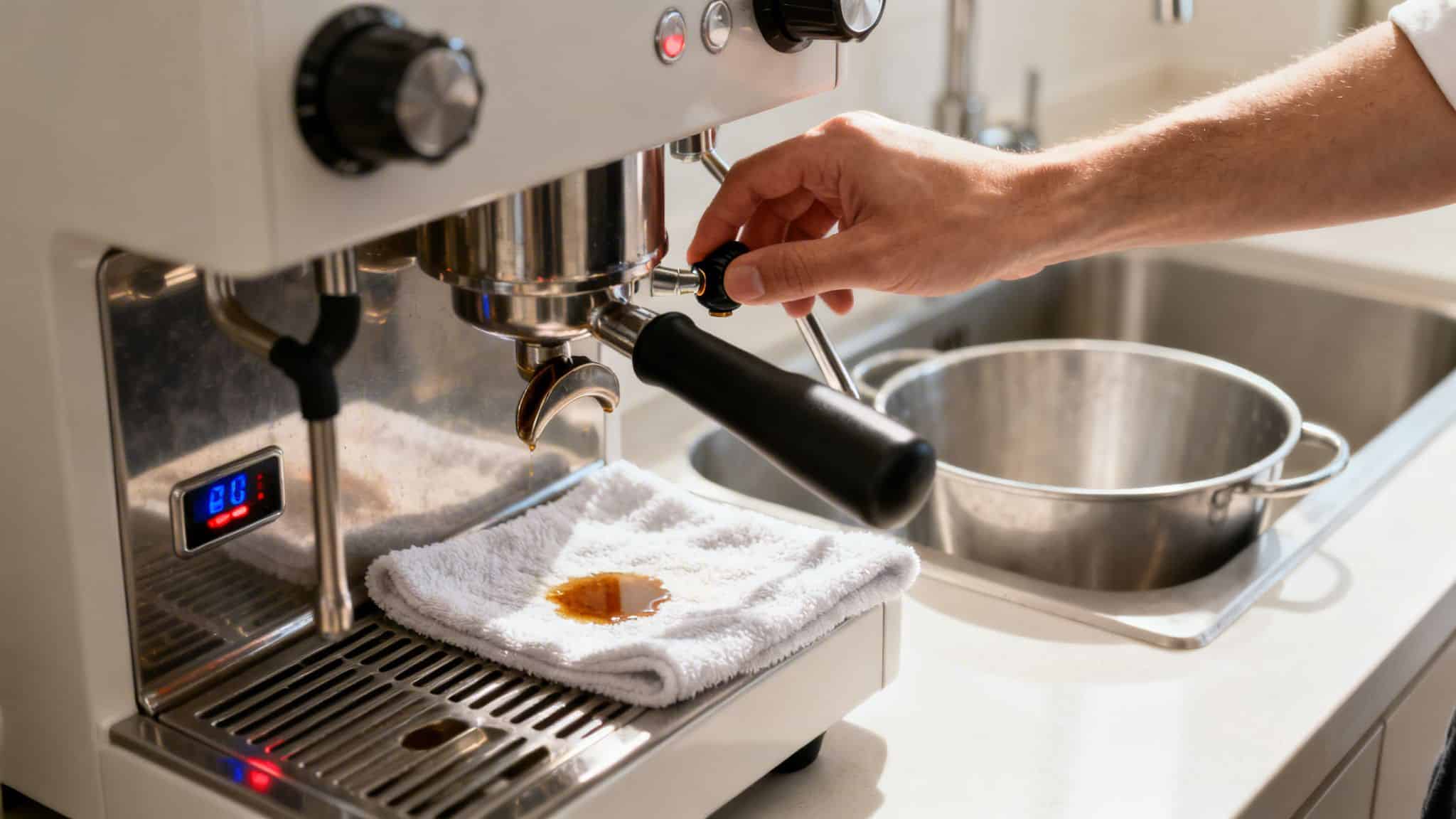
Encountering a problem after descaling doesn’t mean you’ve damaged your machine. It usually just means a step was missed or needs to be repeated. Knowing how to troubleshoot these hiccups will help you resolve them quickly and get back to brewing perfect coffee.
That Pesky Descale Light Won’t Turn Off
This is the most frequent post-descaling complaint. The machine’s internal counter simply failed to register that the cycle was completed.
Here are a few solutions:
- Run a Full Rinse Cycle: Many machines require the entire water tank to be emptied during both the descaling and rinsing phases to reset the light. If you stopped the rinse early, the sensor may think the process is incomplete. Try running one more full tank of fresh water through the system.
- Check the Manual: Some models have a specific button sequence to manually reset the alert. A quick look at your manufacturer’s guide will provide the exact instructions.
- Do a Power Cycle: Turn the machine off, unplug it for about a minute, then plug it back in. This simple reboot can often clear a confused sensor.
Your Coffee Tastes “Off” After Descaling
A chemical or “off” taste in your coffee is almost always caused by residual descaling solution. While our descalers are food-safe when rinsed, they will ruin the taste of your coffee if not fully flushed out.
The fix is simple: rinse, rinse, and rinse again. Run at least two full reservoirs of fresh water through the machine, flushing both the group head and the steam wand. Then, pull a “sacrificial” shot of espresso and discard it to ensure any lingering traces are gone. For a more proactive approach, consistently using a high-quality water filter makes a huge difference, removing impurities that create off-flavors.
Your Espresso Machine Descaling Questions Answered
Even after following a guide, you might still have lingering questions. Conflicting advice online, from DIY “hacks” to debates over rinsing, can create uncertainty. We’ve answered the most common questions with clear, factual information so you can maintain your machine with complete confidence.
Can I Use Vinegar to Descale My Breville Machine?
The definitive answer is no. This applies not only to Breville machines but to all high-quality espresso machines. While vinegar’s acetic acid can dissolve minerals, it is also highly corrosive to the delicate internal components of your appliance. Breville’s own manuals explicitly warn against using vinegar for this reason.
The acid attacks rubber seals, O-rings, and aluminum parts, causing them to become brittle and fail over time. This can lead to leaks, loss of pressure, and ultimately, expensive repairs that far exceed the cost of a proper descaling solution. A formulated descaler uses gentle yet effective acids that are tough on scale but safe for your machine.
What Really Happens If I Don’t Descale My Machine?
Ignoring your machine’s descale indicator is a gamble. Initially, you’ll notice a decline in coffee quality—shots may taste flat or sour because limescale on the heating element is preventing proper water temperature.
As the scale thickens, it clogs internal pipes and valves, forcing the pump to work harder to push water through. This strain leads to premature component failure. Data from appliance service centers indicates that up to 40% of machine breakdowns are a direct result of scale buildup. What starts as a minor taste issue can end in a completely dead machine. As noted on coffee enthusiast blogs, clean equipment is fundamental to great flavor, as mineral residue imparts a “chalky taste” to espresso.
Is Descaling Solution Safe for All Espresso Machine Brands?
Yes, a high-quality, universal descaling solution is formulated to be safe and effective for all major brands, including De’Longhi, Jura, Nespresso, and Keurig. Reputable descalers are non-toxic, biodegradable, and rinse away completely, ensuring no residue or aftertaste is left behind to interfere with the pure flavor of your coffee.
Ensure every shot of espresso is perfect and protect your machine for years to come. PureHQ offers premium, food-grade descaling solutions and water filters engineered to keep your espresso machine running like new.
The Complete Espresso Machine Care Kit
Don’t let mineral buildup ruin another shot of espresso or destroy your machine’s internal pump. Stock up on professional liquid descaler or grab replacement espresso filters below.


Pingback: The Ultimate Guide to the Best Water Filter for Your Espresso Machine in 2026