
Coffee Machine Care
Is This What Your Morning Coffee Should Taste Like?
Mar
That daily cup from your automatic machine costs you about $0.75 in pods, adding up to over $270 a year for what often ends up being a bland, watery brew. You buy premium beans dreaming of a rich, aromatic experience, but the machine delivers the same disappointing, generic coffee day after day. It’s a frustrating cycle of spending more for a subpar experience, all while contributing to a mountain of plastic waste.
The Hidden Cost of Convenience

The convenience of pod machines and automatic brewers comes at a steep price, not just for your wallet, but for flavor and the environment. Paper filters and pod systems are designed for speed, but they trap the coffee’s natural, flavorful oils, stripping away the very essence of what makes a great cup. The single-use pods create a staggering amount of plastic waste, and the cost per cup adds up quickly, turning a simple pleasure into a pricey daily ritual.
The problem runs deeper than just taste. Many common coffee beans can contain mycotoxins, naturally occurring compounds that can develop during processing. According to the World Health Organization (WHO), exposure to these can lead to a variety of adverse health effects. While many commercial coffees are tested, having full control over your brewing process allows you to prioritize high-quality, freshly ground beans, giving you peace of mind about what's in your cup.
This leaves you stuck in a frustrating loop:
- Flavor Compromise: Paper filters and plastic pods absorb the delicate oils that create a full-bodied, aromatic taste.
- Growing Waste: Single-use pods pile up in landfills, a major environmental concern.
- Hidden Costs: You pay a premium for convenience but get a less-than-premium cup of coffee in return.
You’re left searching for a better way—a method that delivers incredible flavor without the waste and high cost, putting you back in control of your coffee.
What Is a French Press? The Simple Solution for Better Coffee

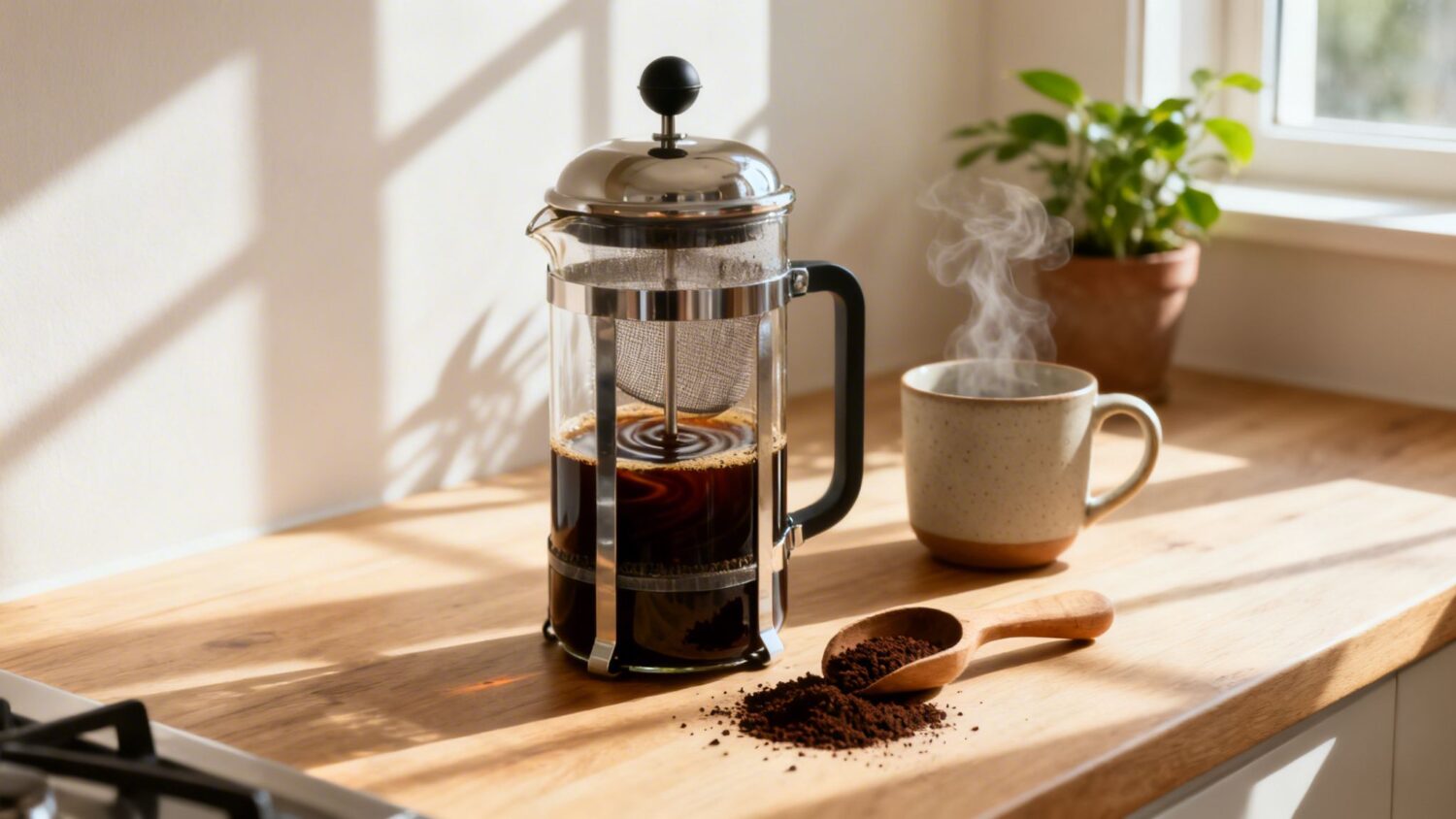
The French press is a manual coffee maker that uses immersion brewing to produce a rich, full-bodied cup. Instead of water passing through grounds, a French press steeps coarse coffee grounds directly in hot water, much like making tea. After a few minutes, a plunger with a fine metal mesh filter separates the grounds from the brewed coffee.
This direct-contact method is the key to unlocking superior flavor. Unlike paper filters that absorb the coffee bean's natural oils, the metal filter in a French press allows these aromatic oils and microscopic coffee particles to pass into your cup. The result is an exceptionally robust coffee with a velvety texture and deep, complex notes that automatic machines simply can't replicate.
By design, a French press produces zero waste from disposable pods or paper filters, making it a sustainable choice. For more on this, our guide on reusable vs. paper coffee filters offers a detailed comparison. This simple, effective brewer empowers you to take control of every element, from water temperature to brew time, ensuring a perfect cup tailored to your exact preferences.
Understanding Your French Press Components

The elegant design of a French press is what makes it so effective. It consists of three main parts that work together to create a superior brew: the carafe, the lid, and the plunger assembly.
The Carafe and Lid
The carafe is the beaker where the coffee grounds and hot water steep. While glass carafes are classic, many users prefer insulated stainless steel models for their durability and superior heat retention. A snug-fitting lid sits on top to trap heat and prevent splashes during the brewing process.
The Plunger and Filter Assembly
This is the heart of the French press. The plunger assembly pushes the coffee grounds to the bottom of the carafe after brewing is complete. It includes:
- The Rod and Knob: The handle you use to press the filter down.
- The Spiral Plate: A spring-loaded disc that holds the filter screen tightly against the carafe’s inner wall.
- The Mesh Filter: A fine metal screen that separates the grounds from the liquid. This filter allows flavorful oils and fine particles to pass through, creating the signature heavy body of French press coffee.
A high-quality, multi-layer filter is crucial for preventing sediment in your cup. Regular cleaning is also essential for maintaining pure flavor. To keep all your coffee makers free from mineral buildup and oily residue, using a universal descaling solution periodically ensures every cup tastes fresh.
How to Brew Perfect French Press Coffee

Do you worry that brewing with a French press is too complicated? Many people feel intimidated, fearing a bitter, weak, or sludgy result. This hesitation keeps them tied to their automatic machines, missing out on the rich, full-bodied experience that immersion brewing provides. But mastering the French press is far easier than you think. By controlling four key variables—ratio, grind, temperature, and time—you can transform brewing from a guessing game into a simple ritual that delivers amazing results every time.
Mastering the Four Key Elements
- Coffee-to-Water Ratio: Start with a 1:15 ratio—1 gram of coffee for every 15 grams of water. For a 34 oz (1-liter) press, this is about 60 grams of coffee (8 tablespoons) and 900 grams of water. A simple kitchen scale removes all guesswork. For more details, explore our guide on the perfect water-to-coffee ratio.
- Grind Size: Use a coarse, even grind, similar in texture to coarse sea salt. A fine grind will slip through the filter, creating a muddy, over-extracted, and bitter cup.
- Water Temperature: The ideal temperature is between 195°F and 205°F. To achieve this without a thermometer, bring water to a boil, then let it rest for 30-60 seconds before pouring.
- Steep Time: A four-minute steep is the gold standard. Less time results in a weak brew, while more time can make it bitter.
A Simple Step-by-Step Brewing Guide
- Step 1: Add Grounds: Pour your coarse coffee grounds into the empty carafe.
- Step 2: Bloom the Coffee: Start a four-minute timer and pour just enough hot water to wet all the grounds. Wait 30 seconds for the coffee to "bloom" as it releases trapped gases.
- Step 3: Add Remaining Water: Pour in the rest of the hot water and stir gently.
- Step 4: Steep: Place the lid and plunger on top but do not press down. Let the coffee steep until the timer reaches four minutes.
- Step 5: Press and Pour: Slowly and steadily press the plunger all the way down. Pour all the coffee into mugs immediately to prevent it from becoming bitter.
French Press vs. Standard Coffee Makers
Sticking with a familiar drip machine or pod brewer often means accepting a compromise on flavor and cost. The bland taste of drip coffee and the high expense and environmental guilt of single-use pods can make your morning ritual feel unsatisfying. You're missing out on the incredible flavor locked inside your beans.
The French press offers a solution by putting you in full control of the brewing process. It’s a different approach to coffee, one that prioritizes full-bodied flavor and sustainability, allowing you to brew a cup that finally meets your standards.
Brewing Method Comparison: PureHQ vs. Standard Options
Choosing a coffee maker impacts taste, cost, and your environmental footprint. Here’s how a quality French press compares to common alternatives.
| Feature | PureHQ French Press | Standard Glass Press | Keurig (Single-Use Pods) |
|---|---|---|---|
| Flavor Profile | Rich, full-bodied, robust | Good, but can be inconsistent | Weak, often watery |
| Durability | High (double-wall stainless steel) | Low (fragile borosilicate glass) | Medium (plastic construction) |
| Heat Retention | Excellent (keeps coffee hot longer) | Poor (loses heat quickly) | Not applicable |
| Filtration | Superior (multi-layer filter prevents sludge) | Standard (single screen may allow grit) | Varies (paper filter in pod) |
| Environmental Impact | Zero waste (reusable) | Zero waste (reusable) | High (plastic pod waste) |
One common objection to the French press is the sediment or "sludge" at the bottom of the cup. This is easily prevented. The PureHQ French press addresses this directly with a durable, multi-layer filtration system that ensures a smooth, grit-free brew. When paired with a coarse grind, it delivers a consistently clean cup. A quality grinder is the perfect accessory to guarantee perfect results every time.
The shift toward sustainable, superior-tasting coffee is clear. The global market for single-use pods is projected to reach nearly $11.9 billion by 2035 according to a coffee maker market analysis, highlighting the massive scale of pod-related waste. By switching to a French press, a household can slash its plastic pod waste by over 90% and enjoy better coffee for a fraction of the cost.
Easy Cleaning and Maintenance for Your French Press
The thought of cleaning out wet coffee grounds can be a major deterrent, causing many to stick with their automatic brewers. This hesitation often leads to improper cleaning, where leftover coffee oils turn rancid and ruin the taste of future brews. That buildup completely defeats the purpose of using a brewer designed for superior flavor.
The good news is that proper cleaning is quick and easy. A simple daily routine and an occasional deep clean will keep your French press in perfect condition, ensuring every cup tastes fresh and vibrant.
Daily Cleaning in Three Quick Steps
- Remove the Grounds: Fill the carafe halfway with water, swirl, and dump the slurry into a compost bin or a fine-mesh sieve. Avoid pouring grounds down the sink to prevent plumbing issues.
- Rinse and Disassemble: Unscrew the bottom of the plunger to separate the filter and spiral plate.
- Wash and Dry: Wash all parts with warm, soapy water, rinse thoroughly, and let them air dry completely before reassembly.
For a more thorough clean to remove stubborn oils and mineral scale, follow the detailed steps in our guide on how to clean your coffee maker. Using a descaling solution regularly will dissolve buildup and keep your press performing like new.
Ready to elevate your coffee experience with a brewer that combines superior taste, durability, and zero-waste design?
Shop Our French Press Collection Now
Your French Press Questions, Answered
Here are answers to some of the most common questions about using a French press.
Why Is My French Press Coffee Gritty or Muddy?
Grit is almost always caused by a coffee grind that is too fine, allowing particles to pass through the mesh filter. To fix this, use a quality burr grinder on its coarsest setting. Also, ensure your filter screen is not bent or damaged, as this can create gaps for grounds to escape.
Can I Make Cold Brew in a French Press?
Yes, a French press is perfect for making cold brew. Combine coarse coffee grounds with cold, filtered water in the carafe, stir, and refrigerate for 12 to 24 hours. Afterward, slowly press the plunger down to separate the grounds, and your rich cold brew concentrate is ready.
Is a Stainless Steel French Press Better Than Glass?
It depends on your priorities. Glass carafes are classic but fragile and lose heat quickly. Insulated stainless steel models are far more durable and offer superior heat retention, keeping your coffee hot much longer. For durability and performance, stainless steel is the superior choice.
How Do I Avoid Making Bitter Coffee?
Bitterness is a sign of over-extraction. This typically happens for three reasons: steeping for longer than the recommended 4 minutes, using water that is too hot (above 205°F), or using a grind that is too fine. Control these three variables for a perfectly balanced cup.
At PureHQ, we believe a better morning starts with a better cup of coffee. It’s time to move beyond wasteful pods and lackluster automatic brewers. Elevate your daily ritual with a brewer that puts rich flavor, lasting quality, and sustainability first.
Shop the PureHQ French Press Collection Today


Pingback: A Guide to the Best Grind for French Press Coffee
Pingback: French Press Coffee Ratio Tablespoons: Your Guide to a Perfect Brew
Pingback: The Perfect Solo Cup: How to Make French Press Coffee for One