
Coffee Machine Care
Water to Coffee Ratio: Master the Perfect Brew
Feb
Have you ever made a fantastic cup of coffee, only to brew a bitter, watery mess the very next day with the same beans and machine? This daily gamble on your morning coffee isn't bad luck; it's a symptom of the single most overlooked variable in brewing: the water-to-coffee ratio.
This inconsistency is more than just a minor annoyance. One day your coffee is rich and balanced, the next it's sour or harsh, turning a simple pleasure into a daily frustration. You're left wondering what went wrong, wasting good coffee and starting your day with a disappointing cup. This guessing game not only ruins the taste but can also harm your machine, as incorrect water levels lead to mineral and oil buildup that requires more frequent cleaning.
The solution is simpler than you think. By understanding and controlling the water-to-coffee ratio, you can stop brewing by accident and start brewing with intention. According to the Specialty Coffee Association (SCA), the industry benchmark for a perfectly balanced cup is a 1:18 ratio—that is, 1 gram of coffee for every 18 grams of water. Mastering this balance is the key to unlocking consistently delicious coffee, every single time.
Why Your Morning Coffee Tastes So Inconsistent
It’s a frustratingly common morning ritual, isn't it? One day, your coffee is perfect—rich, aromatic, and exactly what you needed. The next day, using the same beans and the same machine, you get a cup that's watery, sour, or horribly bitter.
This daily gamble isn't just bad luck. It almost always comes down to the single most overlooked part of brewing: the water-to-coffee ratio. When this crucial balance is off, you end up with one of two bad outcomes.
The Problem of Extraction
Think of brewing coffee like steeping tea. The hot water is your solvent, and its job is to pull all the delicious flavor compounds out of the coffee grounds. How much water you use directly controls how much flavor gets pulled out.
- Under-extraction: Got a weak, sour, and unsatisfying cup? You probably used too little coffee for the amount of water. The water rushed through the grounds too quickly to grab onto the good stuff.
- Over-extraction: Is your coffee harsh and bitter? That's what happens when there's too much coffee for the water. The small amount of water gets oversaturated and starts yanking out all the unpleasant, astringent compounds you don't want.
This guessing game wastes good coffee and can put a serious damper on your morning. You're left wondering what went wrong, turning a simple pleasure into a daily frustration.
Beyond just taste, inconsistent brewing habits can hurt your machine. Guessing at water levels and leaving behind soupy grounds can lead to mineral and oil buildup. Before you know it, you're having to descale your coffee maker way too often. If you need a refresher, check out our guide on how to clean your coffee maker.
The fix is way easier than you think. By ditching the scoop and starting to measure with purpose, you take back control over extraction. Nailing a consistent water-to-coffee ratio is the most powerful change you can make for better-tasting coffee, and it helps keep your machine running healthier for longer. It's the key to unlocking that perfect cup, every single time.
Understanding the Golden Ratio for Coffee Brewing
Ever tried baking a cake without a recipe? You might get lucky once, but you’ll never get the same result twice. Brewing coffee is a lot like that. The "Golden Ratio" isn't just some fancy coffee-snob term—it's the universal, science-backed recipe for pulling the best possible flavor out of your beans, every single time.
This isn’t just an arbitrary number someone made up. It's a carefully determined sweet spot that ensures you extract all the good stuff—like sweet caramels and bright fruits—without pulling out the harsh, bitter compounds that can ruin a cup. When you get this balance right, you stop brewing by accident and start brewing with intention.
The Science Behind the Perfect Cup
Think of brewing as a simple chemical reaction. Water is your solvent, and the coffee grounds are packed with flavor. The right water to coffee ratio gives the water just enough muscle to dissolve those delicious flavor compounds without getting overloaded and starting to pull out the nasty, bitter stuff.
Too little coffee, and you get a weak, sour, and unsatisfying cup. Too much, and it’s like a punch in the face—overly aggressive and harsh.
The Specialty Coffee Association (SCA) nailed down a benchmark for this perfect balance, calling it the Golden Cup Standard. Following their guidelines is the most reliable way to hit that balanced, aromatic, and deeply satisfying cup we're all chasing. The SCA's official recommendation is a 1:18 coffee-to-water ratio. That means for every 1 gram of coffee, you should use 18 grams (or milliliters) of water.
You can explore the guide to brewing ratios to dig deeper into how this benchmark helps create consistently amazing coffee.
What the Golden Ratio Looks Like in Practice
While 1:18 is the industry gold standard, it’s really just a starting point. Your own taste, the specific beans you're using, and your brew method will all play a part. Most coffee lovers find their perfect cup somewhere in the 1:16 to 1:18 range.
Here’s what that means for your morning coffee:
- For a Stronger Cup (1:16): Use 1 gram of coffee for every 16 grams of water. This packs a bit more punch and gives you a bolder, more intense flavor.
- For the SCA Standard (1:18): Use 1 gram of coffee for every 18 grams of water. This is the sweet spot for a perfectly balanced, clean, and flavorful brew.
The real magic of the Golden Ratio is that it gives you a reliable foundation. It takes the guesswork out of your morning routine, so you can stop wasting coffee and start making consistently great cups.
Once you get a feel for this core principle, you’ll be able to troubleshoot and tweak your brew like a pro. Instead of wondering why your coffee tastes different every day, you’ll know exactly how to adjust the water to coffee ratio to get the precise flavor you’re looking for.
Essential Ratios for Popular Home Brewing Methods
Alright, let's bring the theory of the "golden ratio" from the coffee lab right to your kitchen counter. It’s time to actually put these numbers to work. Every brewing method is a little different—some, like a French press, immerse the grounds completely, while others, like a drip machine, just pass water through them. This means the perfect water to coffee ratio needs a small tweak depending on your machine.
Think of it like cooking. You wouldn't cook a steak in the oven at the same temperature and for the same time as you would on a grill, right? It's the same idea here. Your coffee maker's design is the key to figuring out the best ratio for a fantastic cup.
Let's break down the best starting points for the most common brewers you've got at home.
Drip Coffee Makers and Pour-Over
For both your trusty automatic drip machine and a manual pour-over setup, that "Golden Ratio" we've been talking about is your absolute best friend. These methods work by letting water flow down through a bed of coffee grounds, so getting that balance just right is everything.
A fantastic place to start for either method is a 1:17 ratio. That’s one gram of coffee for every 17 grams of water. This recipe almost always gives you a clean, balanced cup that lets the coffee's natural flavors shine. If you find you like your coffee a bit more punchy, you can easily tighten it up to a 1:16 ratio.
This simple visual is the benchmark for most brew methods and what coffee pros aim for.
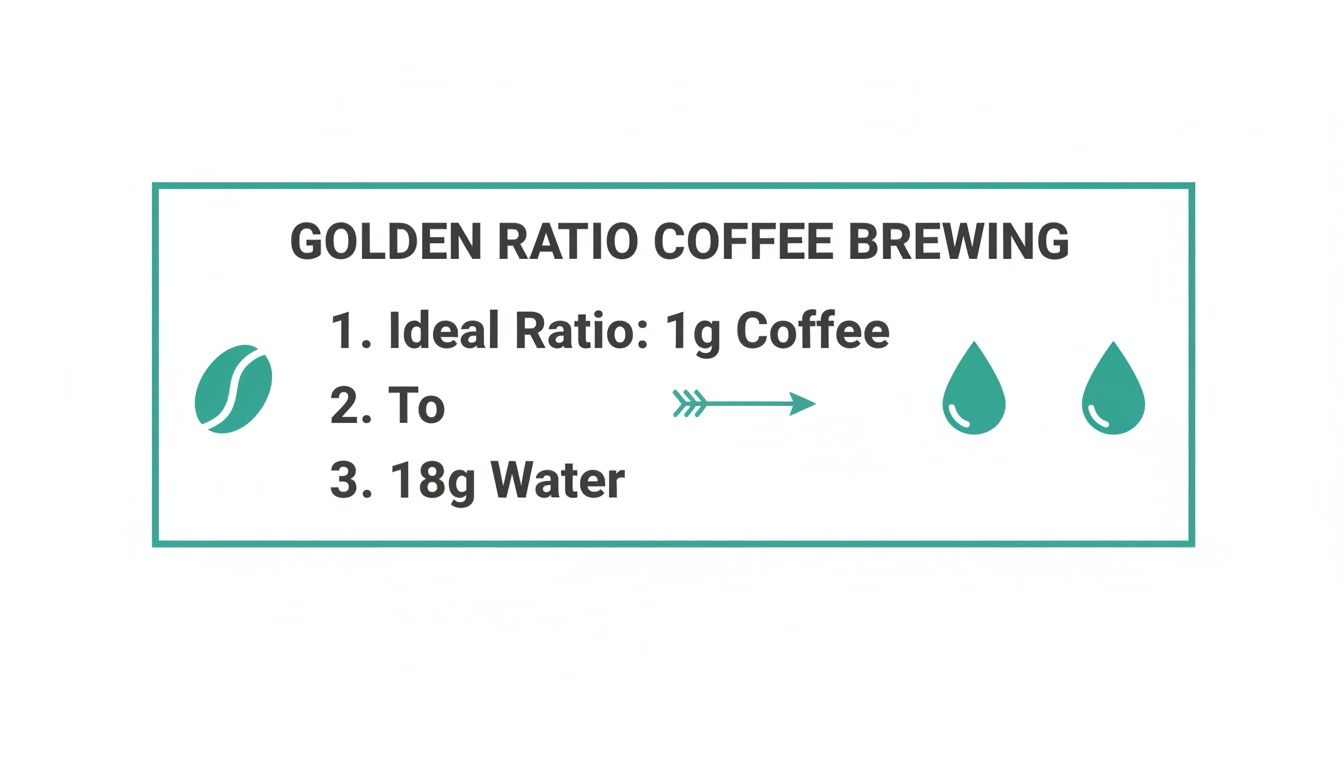
This simple equation—1 gram of coffee to 18 grams of water—is really the foundation for getting that perfect extraction that coffee experts rave about.
French Press and Cold Brew
Now for immersion methods, where the coffee grounds hang out and steep directly in the water for a while. These need a totally different game plan. Because the grounds and water are in contact for so much longer, you need a stronger, more concentrated ratio to pull out that rich, full-bodied flavor.
- French Press: For this classic brewer, a 1:15 ratio is the perfect starting point. The slightly higher coffee concentration holds up beautifully during the typical 4-minute steep time, giving you that bold, robust flavor the French press is famous for.
- Cold Brew: This one's a marathon, not a sprint. Since cold brew steeps for 12-24 hours without any heat, it needs a much, much stronger ratio to extract all that goodness. Start with a 1:8 ratio to create a potent concentrate that you can dilute with water or milk later.
Single-Serve Machines Like Keurig
Ah, the Keurig. Single-serve machines are tricky. They're incredibly fast and convenient, but that often comes at the cost of a good cup of coffee, leading to that notoriously weak brew. The problem is almost always a bad water to coffee ratio—the machine forces way too much water through a tiny amount of coffee.
The secret to a genuinely great Keurig cup? Ditch the disposable pods and take back control with a reusable one. It lets you add the right amount of coffee for your chosen cup size, finally unlocking a strong, satisfying brew.
Here are the exact starting amounts to load up a reusable K-Cup, aiming for that much better 1:15 ratio:
- For a 6 oz cup: Use 12 grams of coffee (that’s about 2.5 tablespoons)
- For an 8 oz cup: Use 15 grams of coffee (about 3 tablespoons)
- For a 10 oz cup: Use 19 grams of coffee (about 4 tablespoons)
A word of warning: the quality of your reusable pod matters. A lot. Cheaper ones often have poorly designed mesh that restricts water flow or flimsy hinges that snap. This just leads to clogs, grounds in your mug, and a mess. A well-designed pod ensures water flows evenly through all the grounds, giving you a full-flavored extraction every time. For even easier cleanup, you can use disposable paper liners inside your pod.
Ready to unlock your Keurig's true potential?
Shop PureHQ Reusable K-Cups today and take control of your brew.
Recommended Starting Ratios by Brew Method
Feeling a bit overwhelmed by the numbers? Don't be. Use this quick-reference guide to find the ideal starting water-to-coffee ratio for your favorite brewer.
| Brew Method | Ratio (Coffee:Water) | Grams of Coffee per 8oz (236ml) Water | Notes |
|---|---|---|---|
| Drip / Pour-Over | 1:17 | 14g | The "Golden Ratio" for a balanced, clean cup. |
| French Press | 1:15 | 16g | A slightly stronger ratio for a robust, full-bodied brew. |
| Cold Brew | 1:8 | 30g | Creates a strong concentrate designed for dilution. |
| Reusable K-Cup | 1:15 | 15g | The key to overcoming weak, watery single-serve coffee. |
Remember, these are just starting points! Your personal taste is what matters most, so feel free to adjust these numbers until you find the perfect cup for you.
How to Measure for Perfect Brewing Consistency
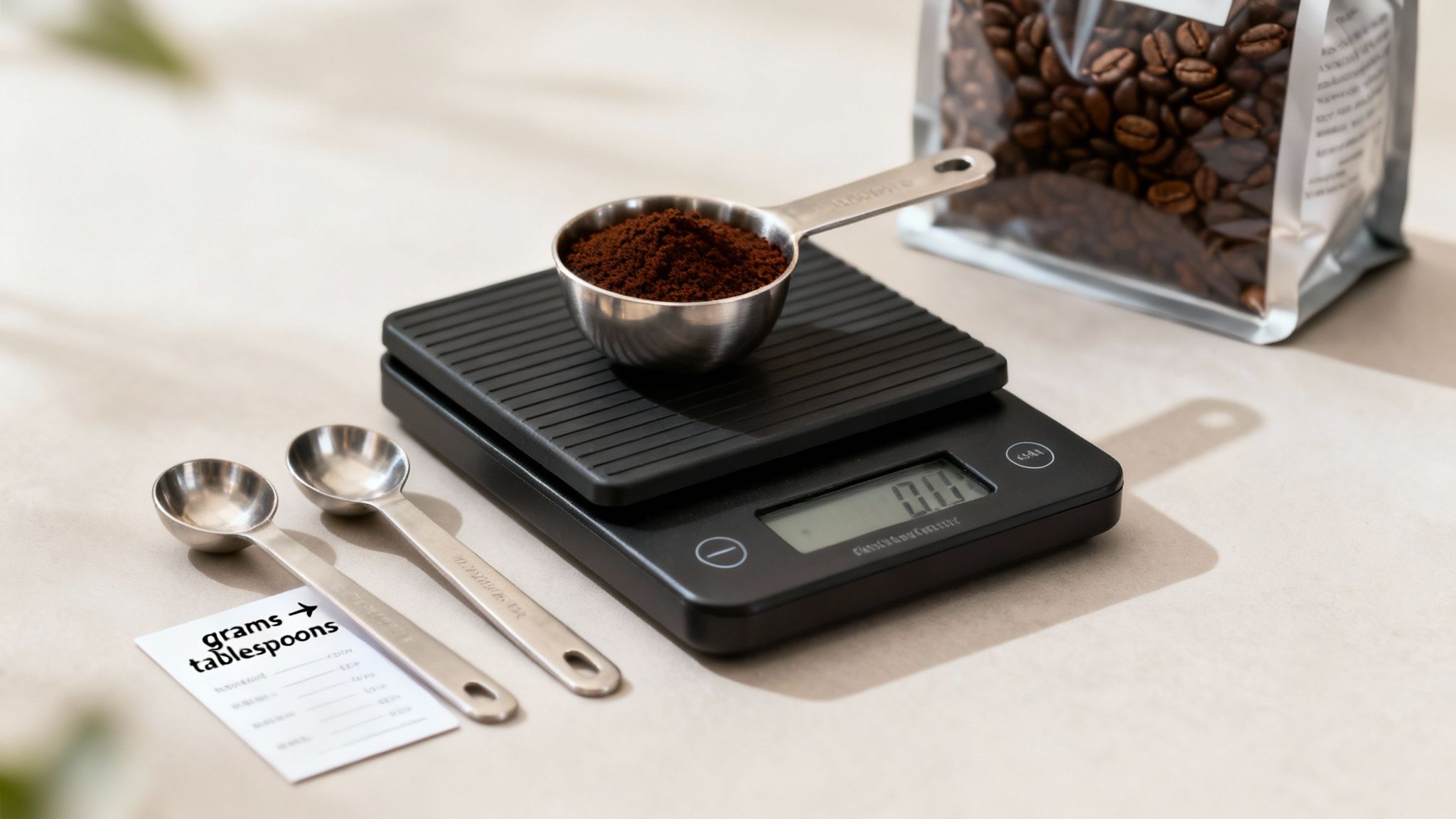
Knowing the perfect water-to-coffee ratio is one thing. Nailing it every single morning is a whole different ballgame. The biggest hurdle between a pretty good cup and a truly great one often boils down to a single, simple step: how you measure.
Eyeballing your coffee grounds with a scoop is a recipe for frustration. It introduces a massive variable, making it almost impossible to replicate that one amazing brew you accidentally made last Tuesday.
One day your scoop is slightly heaping, the next it’s perfectly level. That tiny difference can completely swing the final taste from rich and balanced to weak and sour. You’re left wondering what went wrong, but the culprit is often just the imprecise tool in your hand.
Sure, a digital kitchen scale is the gold standard for accuracy—measuring in grams removes all the guesswork. But you don't need one to get dramatically better results. The real solution is just understanding how to translate weight to volume with the tools you already have in your kitchen drawer.
From Grams to Tablespoons
Not all coffee is created equal. A scoop of dense, light-roasted beans weighs more than the same scoop of fluffy, dark-roasted beans. To get that perfect brew every time, knowing the baseline for how many tablespoons per cup of coffee is the best place to start.
Here’s a quick conversion chart to help you turn those ideal gram measurements into level tablespoons. As a rule of thumb, one level tablespoon of whole bean coffee weighs about 5 grams.
| Grams of Coffee | Approx. Level Tablespoons | Ideal For (8 oz Cup) |
|---|---|---|
| 14g | ~2.75 tbsp | Drip / Pour-Over (1:17) |
| 15g | 3 tbsp | Reusable K-Cup (1:15) |
| 16g | ~3.25 tbsp | French Press (1:15) |
Remember: Always measure your coffee before you brew. Using level, not heaping, tablespoons is the key to getting repeatable results day after day. This tiny change in technique makes a massive difference in taste.
Don't Forget the Water
Of course, the coffee grounds are only half of the equation. Measuring your water is just as critical. Most brewers have markings on the carafe or water reservoir, but keep in mind that about 10% of that water gets absorbed by the grounds and never even makes it into your cup.
The quality of that water plays a huge role, too. Tap water can be loaded with chlorine or minerals that introduce off-flavors, masking the delicate notes of your coffee beans. For a truly clean and vibrant taste, always start with fresh, filtered water.
Using a high-quality charcoal water filter in your machine is a simple step that protects both your coffee's flavor and your brewer's internal parts. It ensures no impurities can spoil the final taste of your perfectly measured brew. Getting a handle on your ratios is even more impactful when you're using reusable K-Cups, which you can learn more about in our article on Keurig tips.
Fine-Tuning Your Ratio to Match Your Taste
You’ve followed the golden ratio, measured everything perfectly, and brewed a cup that should be amazing—but something still tastes a little… off. It's that frustrating feeling when you do everything "right" but still don't get the flavor you were hoping for.
If you've ever felt like you're just one tiny step away from a great cup of coffee, you're not alone. The recommended ratios are fantastic starting points, but they don't know you. They don't account for your personal taste or the unique quirks of your coffee beans.
This is where you stop being a recipe-follower and start becoming a true home barista. The solution is learning to "read" your coffee by taste and make small, confident adjustments. Once you know what to listen for, you can dial in the perfect cup, every single time.
How to Adjust Your Brew by Taste
Think of it like this: the way your coffee tastes is telling you exactly what it needs. You just have to learn its language. This simple cause-and-effect guide is your key.
If your coffee tastes weak, sour, or overly acidic…
- Problem: This is the classic sign of under-extraction. The water didn't have enough contact time with the coffee grounds to pull out all the good stuff—the sugars and deeper flavors.
- Solution: You need more extraction. The easiest fix is to strengthen your water to coffee ratio by using a bit more coffee. For example, move from a 1:18 ratio to a 1:17. Another option is to use a slightly finer grind, which slows the water down and gives it more time to work its magic.
If your coffee tastes bitter, harsh, or astringent…
- Problem: You've got over-extraction. The water hung around for too long and started pulling out the harsh, bitter compounds you definitely don't want in your cup.
- Solution: You need less extraction. Try using a little less coffee (going from a 1:16 to a 1:17 ratio) or switch to a slightly coarser grind. This lets the water pass through more quickly, leaving those bitter notes behind.
This diagnostic approach is a game-changer for Keurig users with reusable pods. If your brew tastes watery, the first and most effective change is to simply add more grounds. That one tweak can take a disappointing cup and turn it into something rich and satisfying.
Why PureHQ Reusable K-Cups Offer Superior Control
Let’s be honest: achieving the perfect water to coffee ratio in a Keurig can feel impossible. The biggest roadblock is something disposable pods take away from you completely: control. You can follow every rule, but if your pod only holds a pre-measured, skimpy amount of coffee, you’re stuck. You’re forced to choose convenience over a cup of coffee you actually enjoy.
If you’ve ever used a flimsy, generic reusable pod that clogs—or worse, a disposable one that serves up a consistently watery cup—you know the frustration. The machine shoves a large volume of water through way too few grounds, resulting in severe under-extraction. What you get is a thin, bland cup that’s a waste of good coffee beans.
This is exactly why we engineered PureHQ Reusable K-Cups. They’re designed to give you back full authority over your brew. The secret is in the robust design and premium stainless steel mesh, which work together to promote optimal water flow for a full, even extraction every single time. We specifically tackled the number one complaint—leaks and poor fit—by building a pod with a secure lid and durable construction that prevents messy grounds from ending up in your cup.
PureHQ Reusable K-Cups vs The Alternatives
The difference between a great cup and a disappointing one boils down to thoughtful engineering. A poorly designed reusable pod can be just as bad as a disposable one, creating more headaches than it solves.
Here's a quick look at how they stack up:
| Feature | PureHQ Reusable K-Cups | Generic Reusable Pods | Disposable K-Cups |
|---|---|---|---|
| Ratio Control | Fully adjustable; add enough coffee for a strong 1:15 ratio. | Limited capacity often prevents adding enough grounds for a strong brew. | Fixed, non-adjustable amount, usually resulting in a weak, watery ratio. |
| Durability & Fit | High-grade, durable construction with a secure-fit lid to prevent leaks. | Often made with flimsy plastic and weak hinges that break or warp easily. | Single-use design contributes to significant plastic waste. |
| Taste & Extraction | Fine stainless steel mesh ensures even water flow for a rich, full-bodied taste. | Inconsistent mesh can clog, leading to grounds in your cup and poor extraction. | Fast brew cycle through minimal grounds results in a watery, under-extracted cup. |
This attention to detail is what solves the most common frustrations. The durable build and secure-fit lid are there to prevent leaks and keep annoying coffee grounds from sneaking into your cup. And for an even easier cleanup, you can pair the pods with our disposable paper liners.
By giving you total control over your water to coffee ratio, our reusable Keurig cups don't just elevate the taste of your daily coffee—they also deliver serious cost savings and cut down on environmental waste.
Ready to finally take control of your Keurig brew?
Shop PureHQ Reusable K-Cups today.
Your Top Water-to-Coffee Ratio Questions, Answered
Even with the best guides, a few questions always seem to bubble up when you're trying to lock in that perfect water-to-coffee ratio. Let's clear up some of the common sticking points.
Does My Coffee’s Roast Level Change the Ratio?
Yes, but probably not as much as you think. While our recommended ratios are a fantastic starting point, you might find yourself tweaking things slightly depending on the beans.
Darker roasts are less dense. This means a tablespoon of dark roast actually weighs less than a tablespoon of a light roast. A digital scale is the only way to get true consistency and remove that variable. Taste-wise, you might also find that a slightly stronger ratio, like 1:16, really makes the delicate, bright notes of a light roast pop.
Do I Need a Different Ratio for Iced Coffee?
Absolutely. Nobody wants a watery, sad glass of iced coffee. The secret is to brew a concentrate first.
A great starting point is to double your coffee grounds for the same amount of water, aiming for a potent 1:8 or 1:9 ratio. You then pour this super-strong brew over a full glass of ice. As the ice melts, it dilutes the coffee to the perfect drinking strength without ever tasting weak or thin.
My Ratio Is Perfect, but Does Water Quality Really Matter?
It matters more than almost anything else. Remember, your finished coffee is over 98% water.
If your tap water is loaded with chlorine or has a high mineral content, it’s going to introduce some funky, off-flavors that completely mask your coffee's real character. Using a quality water filter—like the charcoal filters in many coffee machines—strips out these impurities. This gives you a clean, neutral canvas that lets your coffee’s natural flavors be the star of the show.
At PureHQ Inc., we believe great coffee starts with great control. Our reusable K-Cups, premium filters, and maintenance accessories are engineered to help you achieve the perfect brew every single time.
Shop the entire PureHQ collection today and master your morning coffee.

