
Coffee Machine Care
Your Guide to the Permanent Coffee Filter
Apr
A permanent coffee filter sounds like a small swap. In practice, it changes three things that people care about every morning: taste, cleanup, and whether the filter fits the machine they own.
That fit issue matters more than most guides admit. Generic drip-brewer advice doesn’t help much when you’re using a Keurig reusable pod, a K-Duo, or a Ninja DualBrew and the actual problems are sediment in the cup, water bypass, weak extraction, or a lid that doesn’t seat cleanly. The good news is that these problems are usually fixable if you match the right filter design to the brewer and clean it like a piece of brewing equipment, not just a kitchen strainer.
The Hidden Cost of Your Daily Paper Filter
Filter coffee accounts for about 80% of global coffee consumption, according to Special Coffee Italy’s look at filter coffee’s global popularity. That scale changes how you should think about a humble coffee filter. A disposable item used in the world’s dominant brew method stops being trivial.
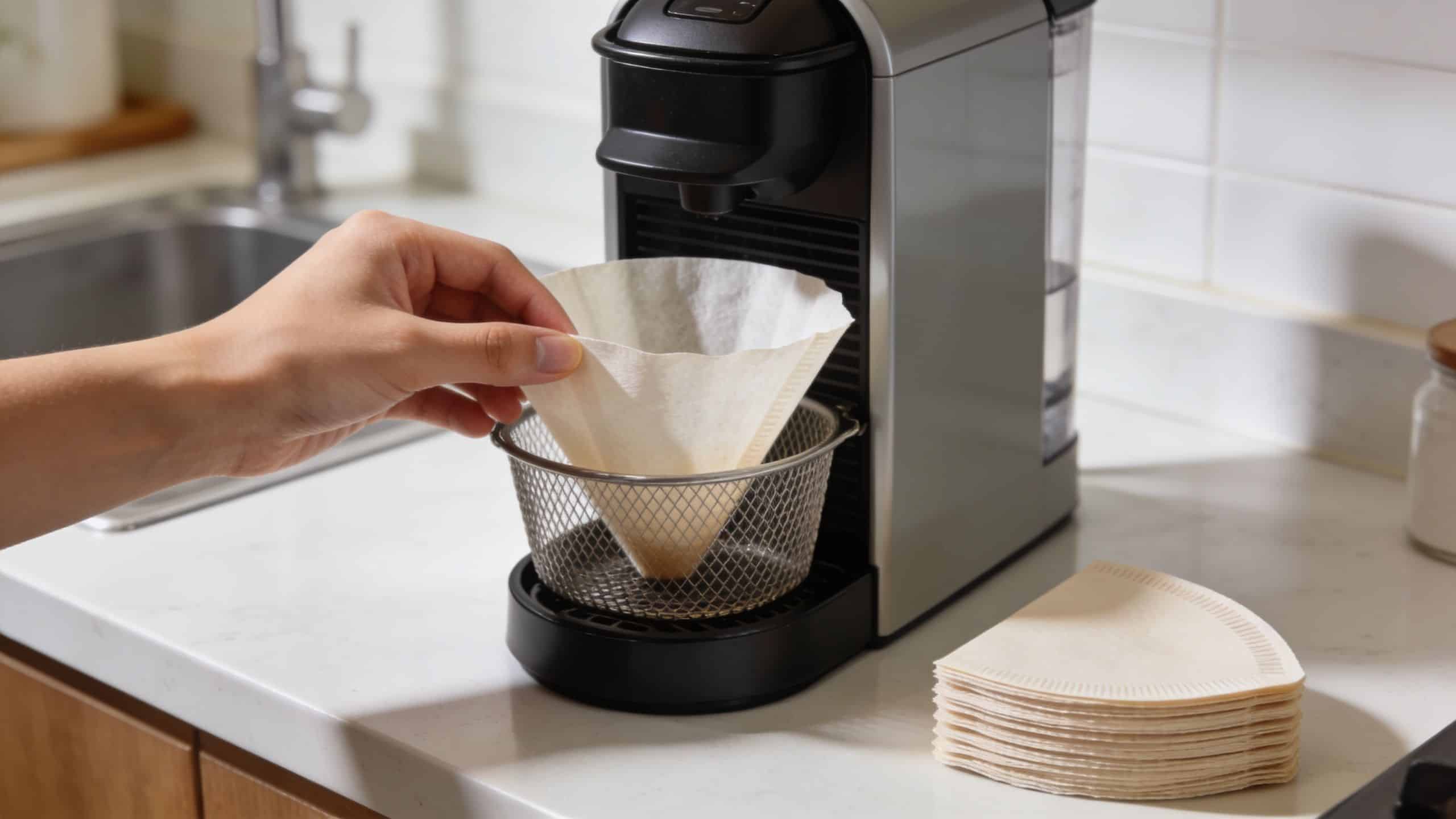
Paper filters feel cheap because you buy them in stacks. The recurring cost shows up in repetition. You buy them again, store them again, and throw them away again. If you care about reducing single-use waste across the kitchen, HYDAWAY's guide to plastic swaps is a useful companion read because it frames the same habit problem from a broader daily-use perspective.
Where paper filters fall short
Paper does one job very well. It catches fine particles and keeps the cup clean. But it also creates friction in the routine.
- You can run out at the worst time. The machine still works. Your coffee plan doesn’t.
- You keep buying the same consumable. That’s not exciting spending, but it keeps happening.
- You create a daily throwaway habit. One filter seems minor. Years of them don’t.
There’s also the cup profile. Many coffee drinkers like paper because it produces a cleaner brew. Others find that paper strips out some of the body they want. If you prefer a heavier, rounder cup, a permanent coffee filter usually gets you closer.
Practical rule: If you like French press texture but want less sludge, a metal permanent coffee filter is often the sweet spot.
Why reusable filters keep gaining ground
A good permanent coffee filter solves an obvious problem. You stop treating filtration as a disposable event. Instead, the filter becomes part of the brewer.
That matters even more in homes with pod machines. Keurig and Ninja users often want to brew their own grounds without being locked into throwaway pods, but they also don’t want mess, leaks, or a muddy cup. A well-made reusable filter can deliver that. A sloppy one creates frustration fast.
The shift is simple. You trade a recurring paper habit for a reusable part that needs a rinse and occasional deep cleaning. That’s a generally favorable trade. You get less waste, fewer emergency “we’re out of filters” moments, and a fuller-bodied brew.
Understanding Permanent Filter Materials and Designs
The modern paper filter dates to July 8, 1908, when Melitta Bentz received a patent for her invention, as outlined in the history of the coffee filter. That invention solved grounds in the cup. It also normalized the idea that coffee filtration should be disposable. The permanent coffee filter pushes the category in the other direction.
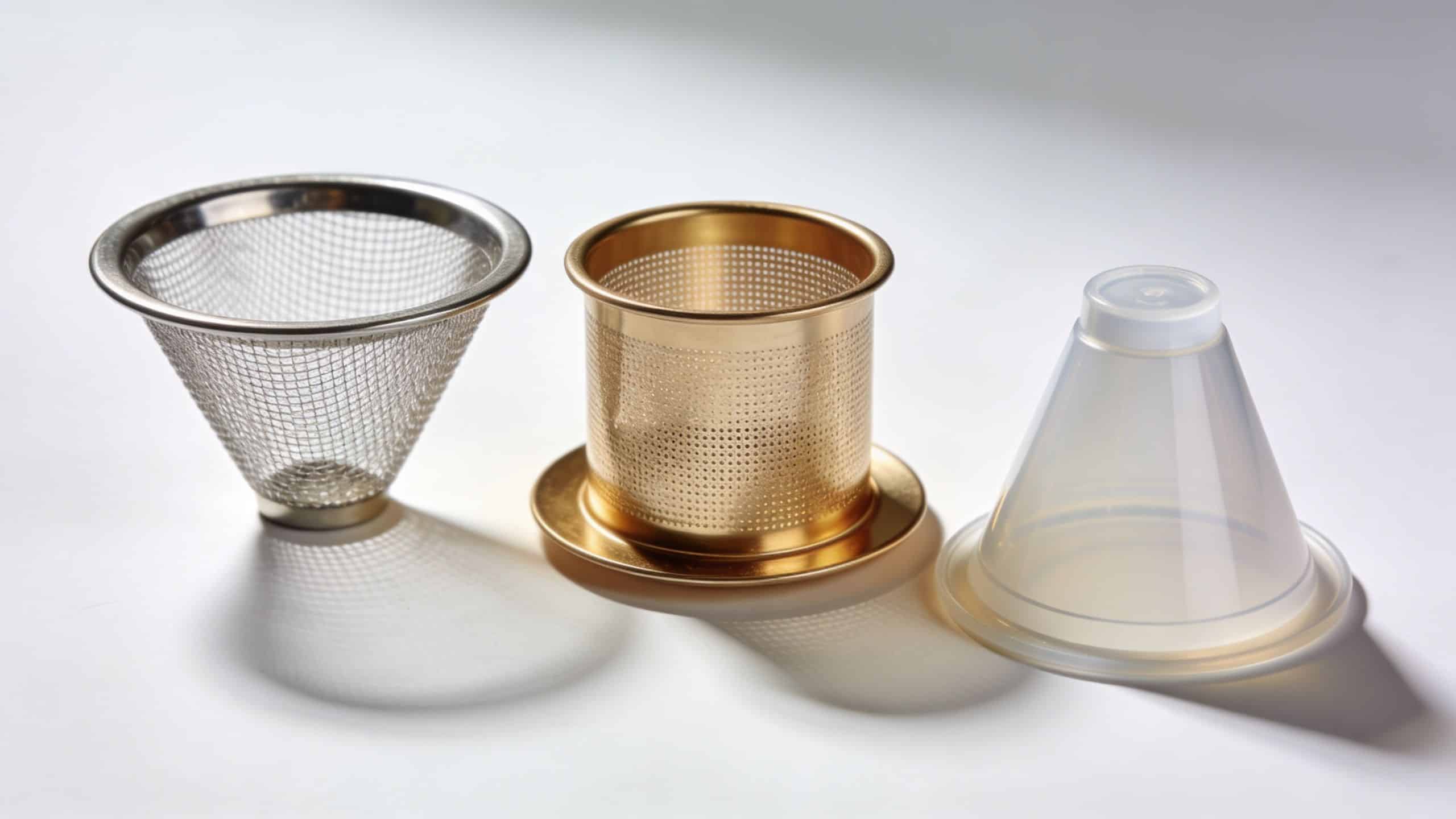
Stainless steel, gold-tone, and nylon
Most reusable filters fall into a few practical categories.
Stainless steel
Stainless steel is the workhorse. It’s durable, easy to rinse, and common in cone filters, basket filters, and reusable pod inserts. In the permanent-filter market, stainless options are often associated with SUS304-grade construction in compatibility discussions, especially where fit and tolerance matter.
What works:
- Daily durability
- Good heat resistance
- Wide availability across drip and pod systems
What doesn’t:
- Cheap mesh can be inconsistent
- Fine residue can cling if you only rinse and never deep-clean
- Poorly formed seams can trap oils
Gold-tone
Gold-tone filters are usually metal filters with a gold-colored finish or coating rather than solid gold. People buy them for the same main reason they buy stainless. Reuse. In practical brewing, the appeal is often the combination of a metal-filter cup profile with a smoother, more refined basket design.
If you want a deeper dive into how gold-style filters affect brewing and maintenance, PureHQ’s article on gold filter coffee is a helpful reference.
Nylon mesh
Nylon mesh shows up in many factory-included basket filters and some lower-cost reusable systems. It’s lightweight and usually easy to handle. It can also work well if the mesh is fine and the frame is rigid.
Its weak point is feel and long-term confidence. Nylon can stain, hold onto oils, and feel less substantial than metal. For a breakroom machine or a daily home brewer, many people eventually move from nylon to metal because it feels more stable and easier to trust.
A reusable filter should feel like part of the brewer, not like a floppy accessory you’re hoping won’t collapse during cleanup.
Cone, basket, disc, and pod formats
Shape matters as much as material.
| Design | Common use | What it does well | Common failure point |
|---|---|---|---|
| Cone filter | Drip brewers and pour-over | Directs water through a deeper bed of grounds | Wrong size causes poor seating |
| Basket filter | Flat-bottom drip machines | Broad, even bed for batch brewing | Cheap mesh lets fines through |
| Disc filter | Small specialty brewers | Compact filtration in tight brew chambers | Easy to clog if grind is too fine |
| Reusable pod filter | Keurig and similar systems | Lets you use your own grounds in single-serve brewers | Lid, rim, or chamber mismatch |
Why pod-machine filters are their own category
Many articles stop too early on this topic. A permanent coffee filter for a 10-cup drip machine is usually forgiving. A reusable pod for a Keurig or a filter insert for a Ninja system is not.
The brew chamber is smaller. The water path is tighter. The lid and rim geometry matter more. A slightly wrong fit can let water slip around the grounds instead of through them, which gives you a weak cup and often leaves a wet, messy basket behind.
That’s why reusable pod systems should be treated less like generic coffee accessories and more like brewer-specific parts.
Paper vs Permanent Filters A Detailed Comparison
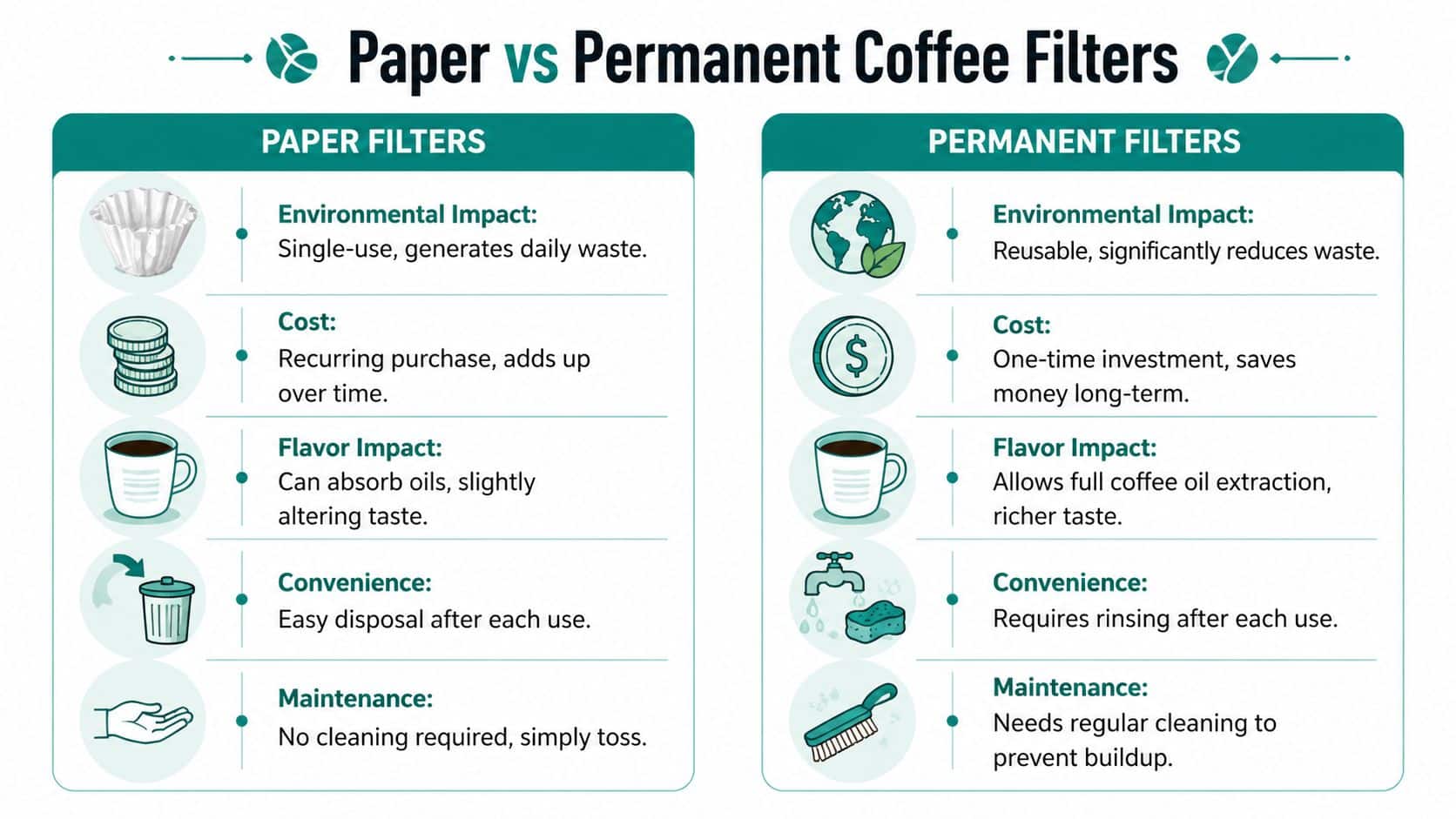
Choosing between paper and a permanent coffee filter isn’t a morality test. It’s a trade-off decision. Some people want the cleanest possible cup and don’t mind disposables. Others want more body, less waste, and fewer repeat purchases.
Comparison by the things that actually matter
Flavor
Paper filters hold back more oils and very fine particles. That usually gives you a cleaner cup with less sediment and lighter body.
Permanent filters let more of the coffee through. That usually means more aroma, more texture, and a fuller mouthfeel. If you drink darker roasts or coffees with chocolate and nut notes, metal filtration often flatters them.
The downside is obvious. A poor permanent filter, or a good one used with the wrong grind, can put fines in the cup.
Cost pattern
Paper spreads the cost across repeated purchases. A permanent coffee filter shifts that spending forward into one accessory you keep using.
I’m not attaching a payback number here because the right figure depends on how often you brew, what paper filters you buy, and whether you’re replacing drip filters, K-Cups, or both. The practical point is simpler: reusable filtration moves you from recurring purchase behavior to maintenance behavior.
Waste
Paper creates a predictable stream of throwaway material. A permanent filter reduces that stream because the filter stays in rotation.
That doesn’t mean reusable equals zero effort. It means the work moves from shopping and disposal to rinsing and occasional deep cleaning.
Convenience
Paper wins if your standard is “dump and walk away.” Permanent wins if your standard is “don’t make me keep buying filters.”
Neither is universally more convenient. It depends on which annoyance bothers you more.
Paper is low-cleanup. Permanent is low-replenishment.
Comparison table
Comparison: Permanent vs. Paper Coffee Filters
| Feature | Permanent Filter (e.g., PureHQ Gold-Tone) | Disposable Paper Filter |
|---|---|---|
| Flavor profile | Fuller body, more oils pass through | Cleaner cup, lighter body |
| Sediment control | Depends on mesh quality and grind size | Usually stronger at catching fines |
| Ongoing use | Reused repeatedly | Replaced every brew |
| Cleanup | Needs rinsing and periodic deep cleaning | Toss after brewing |
| Fit sensitivity | High in pod systems and model-specific brewers | Usually simpler in standard drip formats |
| Waste | Lower day-to-day filter waste | Ongoing disposable waste |
| Best for | People using favorite grounds regularly | People prioritizing clean cups and no cleanup |
Premium versus generic reusable filters
Not all permanent filters behave the same. Cheap ones fail in predictable ways.
| Filter type | Premium build | Generic alternative |
|---|---|---|
| Mesh quality | Finer, more consistent mesh | Uneven mesh, more fines in cup |
| Rim and seal | More precise seating | Gaps that allow bypass |
| Frame strength | Holds shape after repeated use | Warps or flexes under use |
| Lid closure in pod systems | Cleaner seal and steadier extraction | Loose fit, leaks, or weak coffee |
| Cleanup | Smoother surfaces, fewer oil traps | More creases and hard-to-rinse joints |
A common objection about leaks and grounds
“Reusable filters leak” is only half true.
A well-sized filter doesn’t usually leak on its own. Most leak complaints come from one of four causes:
- The filter doesn’t match the brewer geometry
- The grind is too fine for the mesh
- The basket is overfilled
- The lid or rim isn’t seated flat
That matters a lot in Keurig and Ninja machines because the water path is compact. With a classic drip basket, a small mismatch may still brew. In a pod chamber, the same mismatch can wreck extraction.
So the honest answer is this: a permanent coffee filter can outperform paper for many users, but only if the design matches the machine and the user is willing to clean it properly.
Finding the Right Fit for Your Coffee Machine
The fastest way to hate a permanent coffee filter is to buy the wrong one. Fit decides whether the filter brews cleanly or turns your morning into a puddle-and-grounds problem.
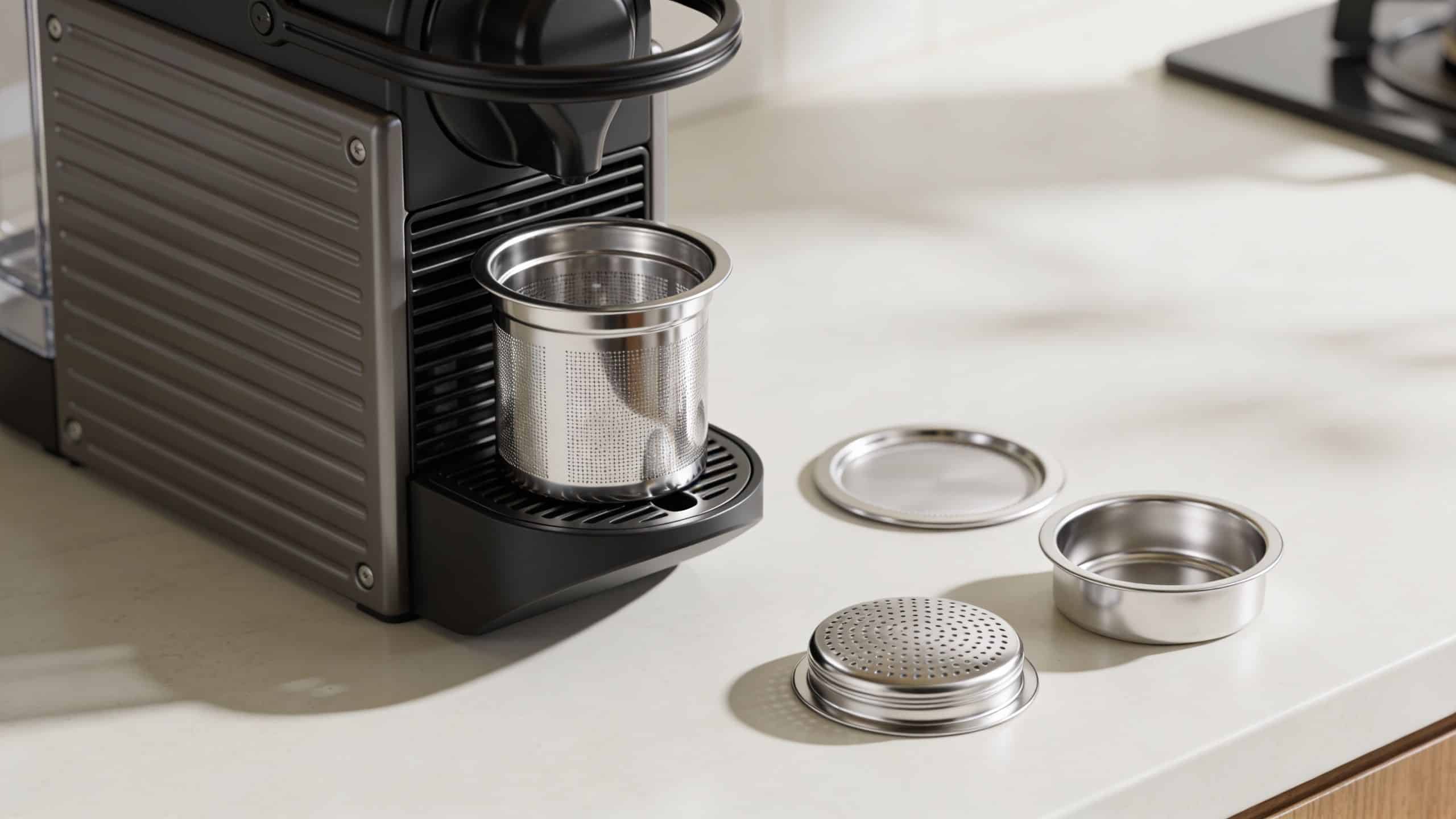
The compatibility side is more technical than most coffee advice admits. According to Genuine Origin’s guide to coffee filters, #4 cone filters are the standard for most 8 to 10 cup machines, while pod-based systems like Keurig and Ninja DualBrew need precisely matched integrated filters to avoid water bypass and grounds leakage. That same guide also notes that material choices such as stainless steel with SUS304-grade specifications and nylon mesh affect fit and performance.
Standard drip machines
For classic drip brewers, start with shape, then size.
- #1 filters fit very small brewers and single-cup cone systems.
- #2 filters are common in smaller drip machines.
- #4 filters are the familiar standard for many 8 to 10 cup brewers.
- #6 filters are for larger-capacity brewers.
If your brewer uses a flat-bottom basket instead of a cone, don’t force a cone filter into it just because the volume seems similar. The basket and holder geometry control how the water flows. Wrong shape means poor seating, and poor seating means bypass.
Keurig systems
Keurig-compatible permanent filters are their own lane. You’re not just buying mesh. You’re buying a pod-shaped brew chamber insert that has to work with the needle area, chamber depth, lid pressure, and exit flow.
When shopping for Keurig reusable pods, check these points in order:
Exact brewer family
K-Classic, K-Supreme, K-Slim, K-Duo, and related models don’t all handle reusable pods the same way.Lid profile
If the lid sits too tall or closes unevenly, extraction suffers fast.Basket depth
Too shallow and you under-dose. Too deep and you encourage channeling if the water stream doesn’t spread well.Mesh fineness
Pod chambers punish excess fines more than roomy drip baskets do.
One practical option in this category is a brewer-specific reusable pod system such as the Keurig-compatible accessories sold by PureHQ, including filters designed for models like K-Classic, K-Supreme, K-Slim, and K-Duo. The relevant point isn’t branding. It’s that reusable pod filters need machine-specific geometry rather than one-size-fits-all promises.
If a reusable pod listing says it fits “most machines,” slow down and verify your exact brewer.
Ninja DualBrew and dual-format brewers
Ninja DualBrew users need to think in two modes. The pod side has compact-chamber demands similar to Keurig. The carafe side acts more like a conventional drip system.
That means one household may need:
- A correctly sized reusable pod filter for single-serve brewing
- A basket or gold-tone carafe filter for batch brewing
The mistake I see most often is assuming that success on the carafe side translates to the pod side. It doesn’t. A carafe basket can tolerate a little variation. A pod chamber usually won’t.
One more fit issue people overlook
A permanent filter protects the brew path from paper dependence. It doesn’t protect the machine from hard-water buildup. If you’re dialing in a reusable setup for a Keurig or Ninja, pair it with the right water filtration and periodic descaling. Fit keeps extraction on track. Water quality and scale control keep the machine itself from drifting over time.
How to Properly Clean and Maintain Your Permanent Filter
A permanent coffee filter doesn’t fail all at once. It usually gets worse in slow, annoying ways. The cup tastes flatter. The mesh drains slower. The filter starts smelling faintly stale even after a rinse.
That pattern matches what many users report. A 2025 UC Davis finding cited in Marley’s Monsters’ discussion of reusable coffee filters says 25% of reusable metal filter users reported stale tastes after six months due to micro-residue. That’s the primary maintenance issue. Not obvious grime. Residue you stop noticing until the coffee starts tasting tired.
Daily cleaning that actually works
Daily care should be short. If it becomes a chore, people stop doing it.
Use this routine right after brewing:
- Dump grounds promptly. Don’t let wet grounds sit in the mesh.
- Rinse with hot water from both sides. Back-flushing the mesh helps push out trapped particles.
- Rub the inside gently with your fingers or a soft brush. Focus on seams, corners, and the base.
- Air-dry fully before storing. A closed, damp pod or basket develops odor faster.
For pod filters, open the lid fully and rinse the hinge area too. That’s a common trap for coffee paste.
Deep cleaning for oil buildup
Rinsing removes loose grounds. It does not reliably remove coffee oils.
A deeper clean on a regular cadence helps preserve flavor neutrality:
- Soak the filter in warm water with a mild cleaning agent you trust for coffee equipment.
- Brush the mesh lightly, especially around rims and folded edges.
- Rinse until there’s no remaining scent from the cleaning solution.
- Let it dry completely before the next brew.
Some users use vinegar or baking soda routines at home. Those can help with residue and odor when used carefully, but they still need thorough rinsing. If you’re cleaning a Keurig accessory specifically, PureHQ’s guide on how to clean a Keurig filter gives a machine-relevant walkthrough.
Don’t judge a filter by how it looks. Judge it by how it smells and how the coffee drains through it.
What not to do
A lot of premature filter problems come from aggressive cleaning.
- Don’t mash the mesh with metal utensils. You can distort it.
- Don’t leave coffee oils to bake on. Heat plus residue creates stubborn odor.
- Don’t store a damp reusable pod closed. That’s how stale smells linger.
- Don’t assume the machine cleans the filter. It only pushes water through it.
For complete maintenance, clean the filter and descale the brewer on the same schedule. The filter handles grounds and oils. It doesn’t stop mineral deposits inside the machine. If your coffee starts tasting off and the filter is clean, scale is the next suspect.
Troubleshooting Common Permanent Filter Problems
Most permanent coffee filter complaints fall into three buckets. Grounds in the cup. Weak coffee. Overflow or messy brewing. The pattern gets sharper in pod systems, where tolerances are tighter and bad assumptions show up quickly.
The troubleshooting gap is real for Keurig and Ninja users. As noted in Brew Express’s discussion of permanent coffee filter issues, pod-machine users often deal with unique problems such as sediment buildup in K-Supreme or K-Duo models, and those problems can often be reduced by using correctly sized grounds and reusable pods built for the specific chamber.
Grounds in the cup
If you’re getting sediment, start with the coffee, not the machine.
Common causes:
- Grind is too fine
- Basket is overfilled
- Mesh is damaged or warped
- Filter is the wrong fit for the chamber
In Keurig-style reusable pods, pre-ground espresso coffee is a common offender. It’s often too fine for mesh pod filtration and can slip through or clog the basket.
Weak or watery coffee
Weak coffee usually means water didn’t move through the grounds the way you expected.
Check these first:
- The filter may be sitting too loosely
- The grounds may be too coarse
- You may be underfilling the basket
- The lid may not be closing flush
With pod brewers, bypass is the big issue. Water takes the easy route. If the pod rim, lid, or chamber alignment is off, some water skirts the coffee bed instead of extracting through it.
A weak reusable-pod brew often points to fit before it points to coffee quality.
Overflow, backup, or slow draining
If the brewer backs up, don’t keep running test brews without changing anything. You’ll just repeat the same clog.
Look for:
- Oil and fines packed into the mesh
- A grind that’s too fine for the filter design
- Too much coffee in the basket
- A machine that needs descaling
Often, a lot of people give up on reusable filters unfairly. The filter gets blamed for a machine that’s partially scaled or for coffee that’s ground for paper rather than mesh. Reset the variables one by one. Clean filter. Correct dose. Slightly coarser grind. Confirm fit.
If you do that and the problem remains, the filter itself may be a bad match for your brewer.
Your Checklist for a Better Brew and a Healthier Planet
A good permanent coffee filter should make your routine simpler after the first few uses, not fussier. If it tastes better but leaks, it’s the wrong filter. If it fits but makes stale coffee after a while, it needs a real cleaning routine. If it works in a drip basket but fails in a pod chamber, the geometry is wrong for that machine.
Use this buying checklist before you order:
- Match the machine first. Identify whether you need a drip cone, flat-bottom basket, reusable pod, or dual-brew setup.
- Confirm the exact fit. Keurig and Ninja systems reward precision and punish guesswork.
- Choose the material for your priorities. Stainless steel favors durability. Gold-tone style filters appeal to users who want a metal basket with a refined cup profile. Nylon works, but many users outgrow it.
- Inspect the build. Look for a rigid frame, clean seams, and mesh that won’t flex easily.
- Plan the maintenance. Reusable only works well if you’ll rinse it after brewing and deep-clean it before residue changes the taste.
If sustainability is part of the reason you’re switching, PureHQ’s article on sustainable reusable coffee filters is a useful next read.
The right permanent coffee filter does three things at once. It reduces daily waste, lets you brew your own grounds with more control, and gives you a fuller cup than paper usually will. The wrong one gives you sludge, leaks, and regret. Buy for fit first, then flavor.
If you’re ready to upgrade from disposable filters to a cleaner reusable setup, shop PureHQ Inc. for Keurig-compatible reusable pods, Ninja-friendly accessories, gold-tone baskets, water filters, and descaling supplies that help your brewer stay consistent.

