
Coffee Machine Care
Keurig Descaling Solution Alternative: Your Guide to a Better Brew
Jan
Did you know that up to 85% of U.S. households have hard water? That means every time you brew, invisible mineral deposits are slowly strangling your Keurig from the inside, creating a breeding ground for bacteria and ruining the taste of your coffee. The solution isn't just cleaning; it's effective, safe descaling.
The Hidden Problem Clogging Your Coffee Maker
That bitter, off-taste ruining your morning coffee isn't just a bad batch of beans. It's a warning sign from your Keurig. Inside its delicate tubing and heating element, a cement-like layer of limescale is forming. This forces your machine to work harder, leading to annoyingly slow brews, lukewarm coffee, and eventually, a total breakdown. You bought your Keurig for convenience, but now it’s becoming a source of daily frustration.
The problem gets worse. This hidden scale buildup can become a hotspot for bacteria and mold. Every cup you brew is forced through these contaminated pathways, picking up gross flavors and who knows what else. You're left wondering if your daily ritual is even healthy, and the thought of overpaying for the official descaling solution just adds insult to injury.
The answer is a reliable, budget-friendly Keurig descaling solution alternative. A quality universal descaler is engineered to dissolve mineral gunk without damaging your machine’s sensitive internal parts or leaving a nasty aftertaste. It restores your brewer to peak performance, ensuring every cup is hot, fast, and delicious—just the way it should be.
The Real Cost of Neglecting Your Machine
Many Keurig owners worry that using a non-brand descaler might cause leaks or damage internal components. However, the far greater risk comes from not descaling at all. As scale accumulates, it creates blockages that force the pump to work under extreme pressure, a common cause of leaks and premature mechanical failure. Proper maintenance isn't just about taste; it's about protecting your investment. And don't forget that clean water is the first step; using high-quality PureHQ water filters can significantly reduce mineral buildup between cleanings.
Skipping this crucial task leads to a few predictable outcomes:
- Awful Coffee Flavor: Mineral deposits, especially calcium and magnesium, mess with the coffee extraction process, leaving you with a dull, bitter, or sour cup.
- Painfully Slow Brew Times: Clogged water lines are like a traffic jam for your coffee. Your machine takes forever to heat up and dispense, totally disrupting your morning.
- Permanent Damage: Over time, limescale can cause irreversible damage to the heating element and pump, basically sending your brewer to an early grave.
The fastest way to ruin a perfectly good cup of coffee is to use a dirty machine. It's that simple. The small effort of regular cleaning makes a massive difference in both taste and how long your Keurig will last.
To prevent weird tastes and keep your brewing gear truly clean, you can also use methods like bottle cleaning tablets for a fresher taste. Of course, knowing when to clean is just as important. You can learn more about the ideal schedule in our guide on how to clean your coffee maker.
The good news? You don't need to shell out for the official Keurig brand solution to get a deep clean. This guide will walk you through safe, effective, and budget-friendly Keurig descaling solution alternative options that deliver professional results. We'll compare the top contenders—from commercial formulas to DIY mixes—so you can make a smart choice that protects your machine and your wallet.
A Head-to-Head Comparison of Descaling Solutions
Choosing the right descaler feels overwhelming. You've got the pricey official solution, the risky DIY vinegar hack, and a dozen other products all making the same promises. The real issue isn't just cleaning; it's finding a solution that won't damage your machine, void your warranty, or leave a lingering chemical taste that ruins your coffee.
You hesitate, wondering if cheap vinegar is too harsh and will slowly eat away at the internal seals. On the flip side, is the expensive official solution truly necessary, or are you just paying for the brand name? This indecision leads to inaction, and all the while, that limescale continues its destructive march inside your brewer.
The solution is to find the sweet spot between performance, cost, and machine safety. A high-quality universal descaler like PureHQ delivers the power of the official brand without the premium price tag. It's formulated to be tough on scale but gentle on your machine, giving you a professional-grade clean with complete peace of mind.
Keurig Descaler Alternatives Comparison Chart
To make things easier, let's put these options side-by-side. This chart breaks down the key differences at a glance, helping you see where each solution shines—or falls short.
| Descaling Option | Effectiveness | Average Cost Per Use | Machine Safety | Best For |
|---|---|---|---|---|
| Official Keurig Solution | High | $8 – $14 | Excellent | Brand purists who want a guaranteed, no-fuss solution. |
| PureHQ Universal Solution | High | $3 – $5 | Excellent | Getting official-grade results without the brand-name price. |
| White Vinegar | Low to Moderate | < $1 | Risky | A last-resort option when nothing else is available. |
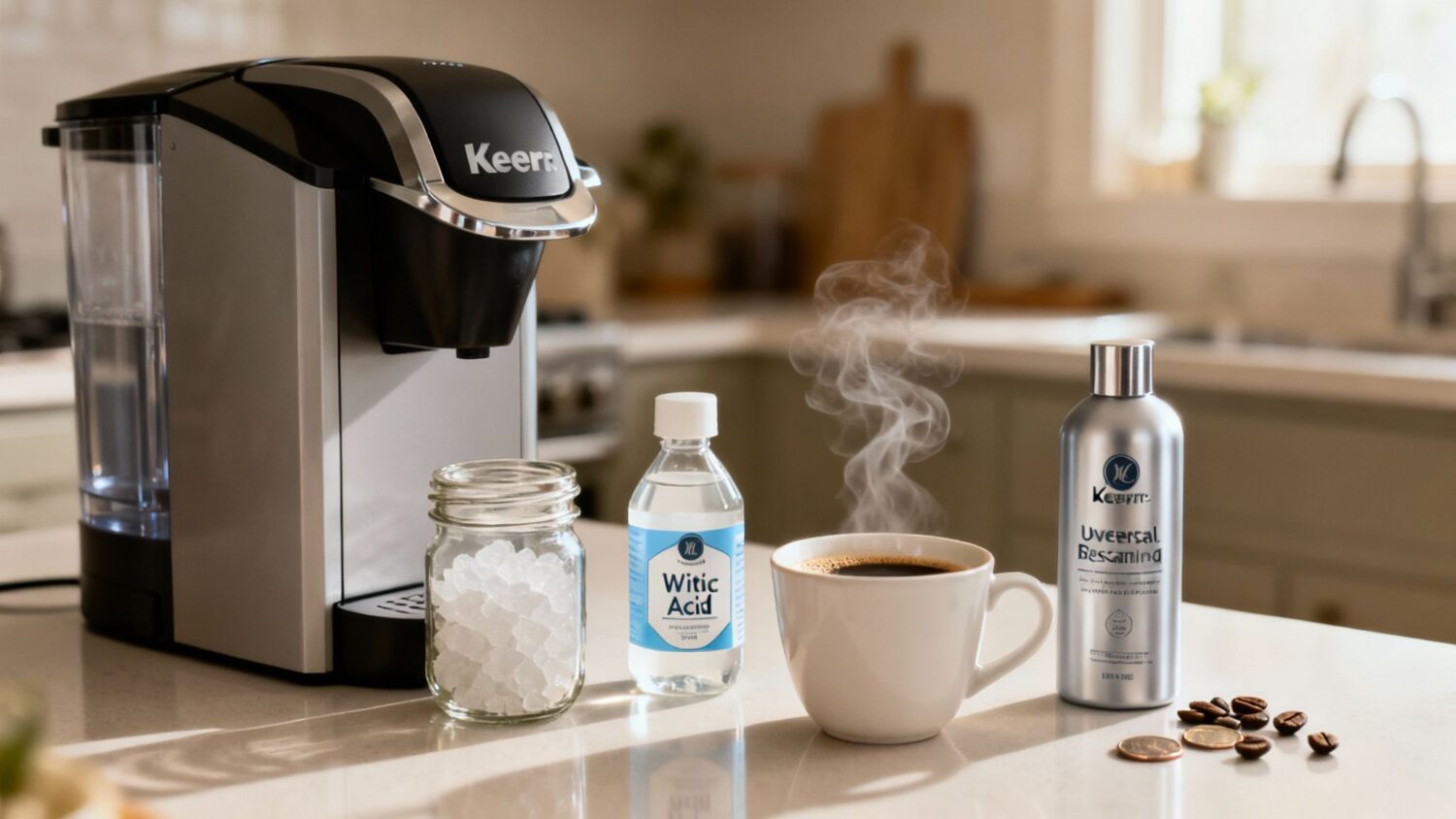
| Citric Acid | High | $1 – $2 | Good | DIY enthusiasts looking for a cheap, effective, and odorless clean. |
As you can see, while vinegar is cheap, its lower effectiveness and potential risks to your machine's components make it a gamble. One common objection we hear is about potential leaks. The truth is, leaks are far more likely to be caused by pressure buildup from neglected scale than by a quality, non-corrosive cleaning solution like PureHQ's, which is designed to protect those very components. This leaves universal descalers and citric acid as the clear front-runners for balancing performance, safety, and value.
A Look at the Bigger Picture
The demand for these products isn't just some niche trend; it's a massive market. The global coffee machine descaler market was valued at USD 310.8 million and is projected to smash USD 480.0 million by 2033.
What's driving this? The incredible popularity of at-home brewing. Over 70 million Keurigs have been sold in the U.S. alone. And since hard water affects 85% of U.S. households, limescale buildup is a huge problem—it can slash your machine's efficiency by up to 50% if you ignore it. This makes a good descaler a household necessity.
If your coffee is tasting off or brewing slowly, it's often the first sign that a descaling is long overdue. This chart can help you diagnose what's going on.
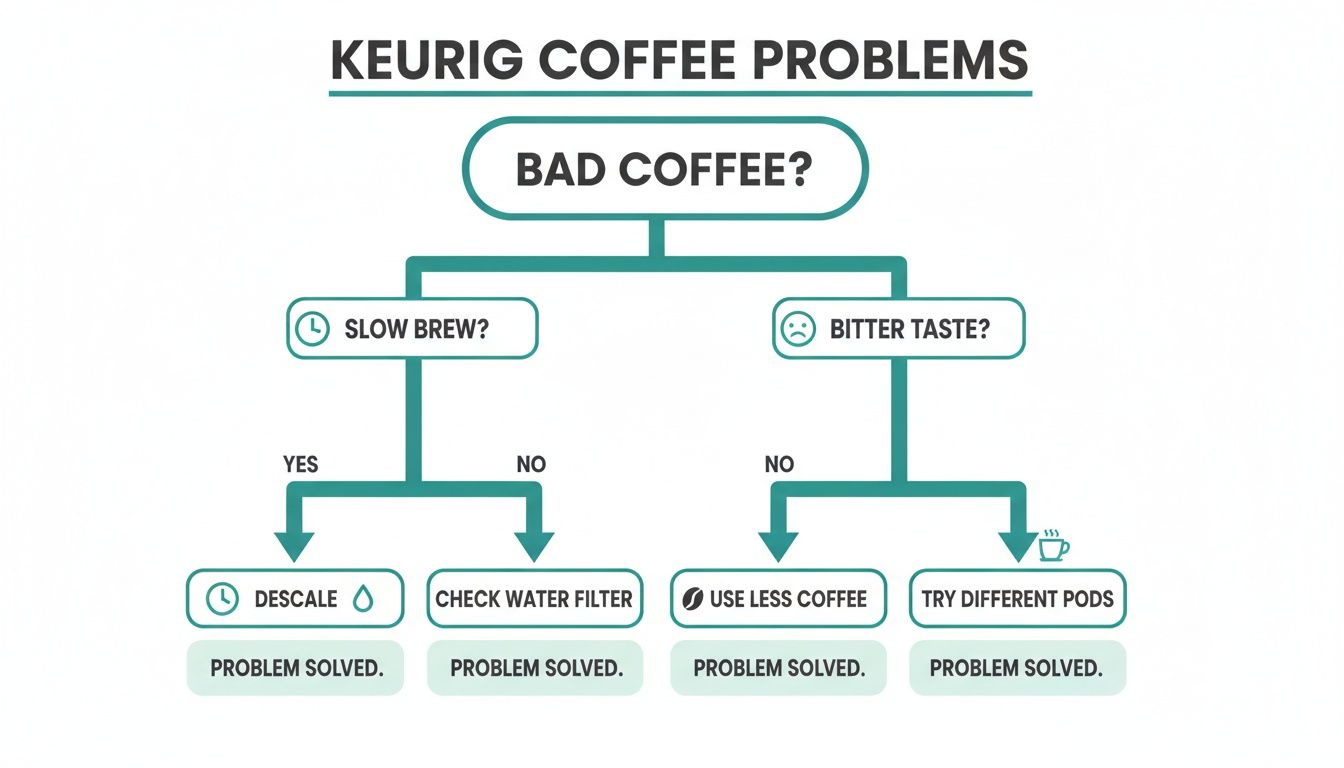
As the flowchart shows, whether your coffee tastes bad or your brew is slow, the root cause often points right back to internal buildup that only a thorough descaling can fix. For a deeper dive, check out our guide on the best descaler for a coffee machine. Ultimately, the best choice nails the balance between power, safety, and price. Citric acid and a universal descaler like PureHQ come out on top as the smartest options.
A universal descaler offers the best of both worlds: the targeted, machine-safe formulation of an official product combined with the value of a DIY approach. It's the smart, simple way to protect your investment.
Choosing a premium universal descaler means you’re not compromising on performance or safety. These solutions are formulated to bring your machine back to peak condition, making sure every cup tastes exactly the way it should.
How to Descale Your Keurig Like a Pro
That blinking "Descale" light on your Keurig is easy to ignore, but doing so is a recipe for disaster. It's a silent warning that your machine is struggling, its pump straining against mineral buildup and its heating element fighting to reach the right temperature. You're left with slow, lukewarm brews and a coffee that tastes disappointingly dull.
The frustration is real. You invested in a machine for quality and convenience, and now it's failing on both counts. You know you need to descale it, but the process seems complicated, and you're worried about using the wrong product and causing a leak or permanent damage.
The fix is a simple, routine deep clean that anyone can handle. A quality universal descaling solution takes all the guesswork out of the process. We’ll walk you through the exact steps to restore your Keurig to factory-fresh condition, ensuring a faster, hotter, and better-tasting cup of coffee every single time.
Prepping Your Brewer For a Deep Clean
Before you pour in any cleaning solution, a few prep steps are essential. This isn’t just busy work—it ensures the descaler can reach every nook and cranny inside your machine for the most effective clean possible.
First things first: power off and unplug your Keurig. It's a simple safety measure that should be second nature. Next, empty the water reservoir completely. Starting with an empty tank means your descaling solution won't get diluted, giving it maximum cleaning power.
Now, take a peek inside the K-Cup pod holder and make sure you didn’t leave a pod in there from your last brew. Pop out the pod holder and the drip tray, and give them a quick wash in the sink with warm, soapy water. While you're at it, check the exit needle for any stuck coffee grounds and gently clear it out with a paperclip if needed.
Finally—and this is critical—if you use a charcoal water filter, you must remove it. The acidic descaling solution will destroy the filter on contact, making it totally useless. Just set it aside and plan to pop in a fresh one after the cleaning and rinsing are done.
Creating and Introducing Your Descaling Mix
With your machine prepped and ready, it's time to mix your chosen Keurig descaling solution alternative. Whether you're using a commercial formula or going the DIY route with citric acid will determine your next move.
For a Commercial Descaler (like PureHQ):
These are made for convenience. Just pour the entire bottle of descaler into the empty water reservoir. Then, fill that same empty bottle with fresh water and pour that in, too. This gives you the perfect pre-measured ratio for one cleaning cycle—no guesswork required.
For a DIY Citric Acid Solution:
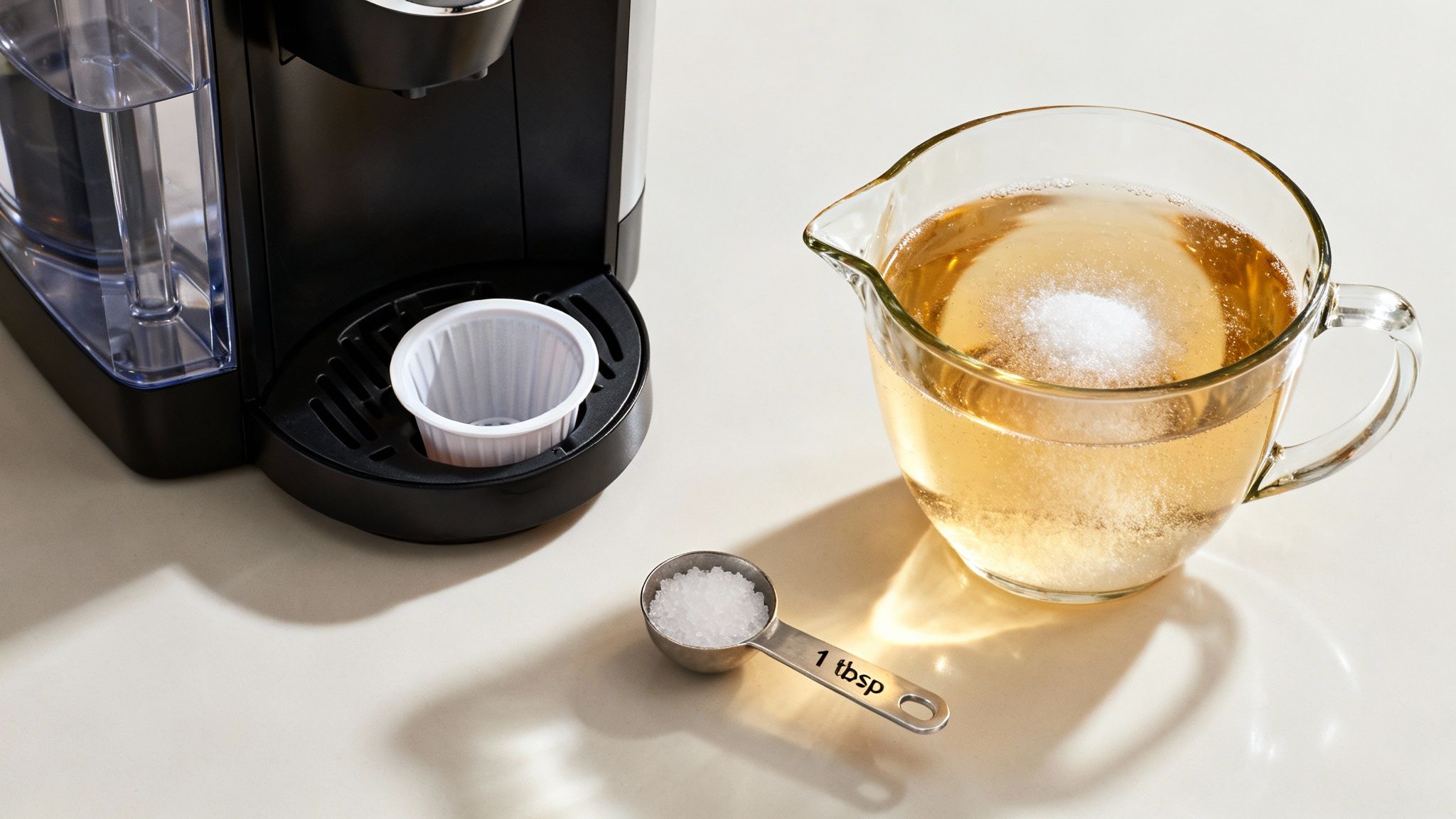
Citric acid works wonders but needs to be measured correctly. The go-to recipe is 1 to 2 tablespoons of citric acid powder mixed into about 4 cups of warm water. Stir until every last crystal has completely dissolved. Warm water helps speed this up, preventing tiny, undissolved particles from clogging your machine's internal lines. Pour this solution into the empty reservoir.
Pro Tip: Never use boiling water to mix your solution. Warm water is perfect for dissolving the citric acid and is much safer for your brewer’s plastic parts. Undissolved crystals are the #1 cause of clogs when descaling with a DIY mix.
Running the Cleansing and Rinsing Cycles
Alright, this is the main event. Grab a large ceramic mug (don't use your favorite travel mug, just in case) and place it on the drip tray. Plug in and power on your Keurig.
Once the machine is heated up, run a cleaning brew using the largest cup size setting. Remember, no K-Cup pod. The brewer will dispense the hot, acidic solution into your mug. Carefully dump the hot liquid down the sink and put the mug back.
Keep running these cleansing brews one after another until the "Add Water" light kicks on. This is what does the real work, circulating the solution through the heating element and needles to dissolve all that gunk.
Once the reservoir is empty, let the brewer sit for about 30 minutes (if using a commercial solution) or up to an hour if you're tackling heavy scale with citric acid. This gives the solution time to break down any really stubborn deposits.
Now, it's time to rinse. Remove the water reservoir and wash it thoroughly with soap and water to get rid of any leftover solution. Fill it to the max line with fresh, clean water.
Start running freshwater rinse cycles, again using the largest cup setting. The goal here is to completely flush every trace of the descaler from the system. You’ll need to run at least 12-15 rinse cycles. It sounds like a lot, but this is the most important step to make sure your next coffee doesn't have a funky, chemical aftertaste. For those who like a structured approach, following an equipment preventive maintenance checklist can ensure no step is missed.
If you're curious about other DIY methods, you can read our guide on how to clean your Keurig with vinegar, though we find citric acid or a commercial descaler gives much better results without the lingering smell.
Once the rinsing is complete and the water runs clear and odor-free, you're done. Pop in a new charcoal filter, and you’re ready to brew a faster, hotter, and way better-tasting cup of coffee. To nail that perfect clean every time, shop our PureHQ Universal Descaling Solution and taste the difference yourself.
Common Descaling Mistakes (And How to Fix Them)
You followed all the steps, ran the cycles, and you’re ready for that perfect, clean-tasting cup of coffee. But when you hit "brew," you get a sour tang, or worse—the dreaded "Descale" light is still stubbornly glowing. This common frustration turns a simple maintenance task into a confusing chore.
The problem isn't always the descaling solution; it's often small, avoidable mistakes made along the way. These missteps can leave behind nasty residue, fail to clear the warning light, or even cause long-term damage to your brewer's sensitive internal parts. It’s enough to make you want to give up on descaling altogether.
But don't worry—most of the time, the solution is just knowing what not to do. By avoiding a few common pitfalls, you can ensure a flawless descaling process that leaves your machine running like new and your coffee tasting exactly as it should.
Using an Overly Strong Vinegar Solution
Plenty of people reach for white vinegar as a cheap Keurig descaling solution alternative, but using it too strong or too often can be a costly mistake. While it’s certainly acidic, vinegar wasn't formulated for coffee machines. Its aggressive nature can slowly eat away at the rubber seals, O-rings, and plastic tubing inside your Keurig.
Over time, this can lead to brittleness, cracking, and eventually, leaks. Saving a few bucks on a descaler just isn't worth the price of a whole new machine. Your best bet is to stick to a balanced, non-corrosive commercial descaler or a properly measured citric acid mix for a safe and effective clean.
A successful descaling is as much about protecting your machine's delicate components as it is about removing scale. Harsh, unbalanced acids do more harm than good in the long run.
Not Rinsing the Machine Enough
This is probably the single most common mistake, and it directly torpedoes the taste of your coffee. After you run a descaling solution through your brewer, you have to flush the system thoroughly with fresh water. Skimping on this step is a surefire way to leave acidic residue behind.
The result? Your next several cups of coffee will have a distinct chemical or sour aftertaste. It takes more than just one or two rinses to get it all out.
- Minimum Rinse Cycles: Plan on running at least 12 to 15 full rinse cycles using the largest cup size your machine offers.
- Taste and Smell Test: After rinsing, brew a cup of plain hot water and taste it. If you detect any off-flavors at all, keep rinsing until the water is completely clean and neutral.
This ensures every last trace of the descaler is gone, leaving you with nothing but pure coffee flavor.
Forgetting to Remove the Water Filter
This is a critical but often overlooked step. If you have a charcoal water filter sitting in your reservoir, you must remove it before you begin the descaling process. The acidic solution will instantly ruin the filter, stripping it of its ability to purify water.
Even worse, a damaged filter can start shedding its charcoal granules into the system, which can lead to clogs and other mechanical headaches. Always, always take the filter out and set it aside. Once you’ve finished all the descaling and rinsing cycles, you can pop in a fresh one. Pairing your clean machine with high-quality PureHQ water filters is a great way to slow down future mineral buildup from the start.
The Descale Light Is Still On
Finishing the entire cleaning process only to see that "Descale" light still lit is incredibly frustrating. This is a known quirk, especially with Keurig 2.0 and K-Supreme models, which have more sensitive internal sensors.
Often, the issue is that the machine's internal counter simply hasn't registered that a full descaling cycle was completed. The fix is usually to repeat the process, but with a specific sequence: make sure you use the entire volume of the descaling solution and freshwater rinse without interruption. Sometimes, just powering the machine off and on can help reset the sensor.
A quality descaler formulated for modern machines, like PureHQ's Universal Descaling Solution, often communicates better with these sensitive systems. Shop now to ensure your next clean goes off without a hitch.
Why a Universal Descaler Is Your Best Option
Is your morning coffee ritual starting to feel like a gamble? One day it’s perfect, the next it’s weak, lukewarm, and has a weird, chalky aftertaste. You might blame the beans or your water, but the real culprit is almost always limescale buildup slowly strangling your machine from the inside. This isn't just an annoyance; it's a sign your brewer is struggling. You bought a Keurig for quick, reliable coffee, yet now you find yourself waiting longer for a brew that barely hits the right temperature. It's maddening.
You’ve probably considered DIY fixes like vinegar, but the thought of that sour smell ruining your expensive coffee pods for weeks is a major turn-off. Plus, you’ve heard the horror stories about harsh acids causing leaks—a risk nobody wants to take with their pricey machine.
The answer isn't to overpay for the official brand or risk your brewer with kitchen chemistry. A high-quality universal descaling solution offers the perfect balance: professional-grade cleaning power that’s specifically formulated to be gentle on your brewer's internal parts. This is your best Keurig descaling solution alternative for getting back to peak performance with total peace of mind.
The Power of a Purpose-Built Formula
Universal descalers are engineered with one goal: to obliterate mineral deposits without harming the sensitive guts of your coffee maker. Unlike the blunt instrument of vinegar, these solutions use a careful blend of acids that are tough on scale but safe for the rubber seals, gaskets, and metal heating elements inside brewers from Keurig, Nespresso, and Ninja.
The benefits are immediate and obvious:
- Richer Coffee Taste: By stripping away the mineral layer that messes with heat and water flow, you unlock the true flavor of your coffee.
- Longer Machine Lifespan: Regular, safe descaling prevents strain on the pump and heating element, which can seriously extend the life of your investment.
- Faster, Quieter Brews: A clean machine just works better. It heats water quickly and dispenses it smoothly without all the groaning and sputtering of a clogged system.
Universal Descaler vs. DIY Alternatives
While DIY options seem cheap upfront, they often fall short where it counts. A dedicated universal descaler just provides a more complete and safer clean. Let's put them head-to-head.
| Feature | PureHQ Universal Descaler | DIY Alternatives (Vinegar/Citric Acid) |
|---|---|---|
| Cleaning Power | Formulated to dissolve over 95% of stubborn mineral scale. | Often removes only 60-70% of buildup, leaving deposits behind. |
| Rinsing & Odor | Rinses away completely with no lingering smell or taste. | Vinegar can leave a persistent sour odor that taints coffee for days. |
| Machine Safety | Non-corrosive and pH-balanced to protect internal seals and parts. | Unbalanced acidity in vinegar can degrade rubber components over time. |
| Convenience | Pre-measured for a perfect, no-guesswork cleaning cycle every time. | Requires careful measuring and mixing to be effective and safe. |
The numbers back this up. North America commands 35% of the global descaler market, driven by the fact that 40% of U.S. households own single-serve brewers. Limescale from hard water can slash a machine's performance by a staggering 30-40%, making a powerful descaler essential.
And while the overall descaler market is growing, coffee-specific segments are expanding even faster at 5-7% annually. Research shows that specialized products remove over 95% of scale, compared to just 60-70% for vinegar—which can also risk machine damage and void warranties. You can see more descaler market trends on cognitivemarketresearch.com.
Investing in a quality universal descaler is like taking your machine for a professional tune-up. It restores performance, protects its longevity, and ensures every cup tastes exactly as it should—for a fraction of the cost of the OEM solution.
Ready to get your brewer back to factory-fresh condition and enjoy better-tasting coffee every single day? It’s time to stop gambling with DIY fixes and invest in your machine's health.
Shop the PureHQ Universal Descaling Solution Now and Taste the Difference
Your Keurig Descaling Questions Answered
That official Keurig warranty card sitting in your kitchen drawer might be causing you more stress than it's worth. A shocking number of Keurig owners worry that using any non-Keurig accessory, especially a descaler, will instantly void their warranty. It's a common myth that traps people into buying expensive branded products forever.
This hesitation makes sense. You dropped good money on your brewer and the last thing you want is to damage it or lose support if something goes wrong. The fear is that a different descaling solution could cause a leak or fry some internal component, leaving you with a broken machine and no one to call. It’s a frustrating spot to be in, stuck between saving a few bucks and protecting your investment.
But here’s the good news: that fear is largely unfounded. A high-quality, non-corrosive universal descaler is perfectly safe for your machine. In the United States, an act called the Magnuson-Moss Warranty Act is on your side. It basically says a manufacturer can't legally void your warranty just because you used a third-party part. They'd have to prove that the alternative product was the direct cause of the damage.
Will a Keurig Descaling Solution Alternative Void My Warranty?
So, can you confidently use a product like PureHQ's descaler without looking over your shoulder? Absolutely. As long as you follow the directions, a high-quality, non-corrosive universal descaler is perfectly safe for your machine. These formulas are engineered to be tough on mineral scale but gentle on the internal plastic and metal parts—just like the official stuff.
We often hear from customers worried about leaks after using an alternative. In our experience, leaks are almost always caused by the massive pressure buildup from neglected limescale, not the cleaning solution itself. Think of it this way: regular maintenance with a quality descaler actually prevents the kind of damage that leads to leaks and a machine dying before its time.
How Often Should I Descale My Keurig?
For the best performance and, more importantly, the best-tasting coffee, the general rule is to descale your Keurig every 3 to 6 months. But this isn't a one-size-fits-all schedule. It really depends on your water.
- Hard Water: If you live in an area with hard water (which is the case for a staggering 85% of US households), you’ll want to stick to the shorter end of that timeline. Plan on descaling every 3 months.
- Filtered or Soft Water: Using filtered water or have a whole-house water softener? You can probably stretch it to 6 months without any issues.
And don't forget, using premium charcoal water filters can seriously cut down on mineral buildup between those deep cleans. It makes each descaling session that much more effective.
Ready to confidently maintain your machine without breaking the bank? Stop letting limescale ruin your coffee and risk your machine's lifespan. Take control with a proven, safe, and effective solution.
Shop the PureHQ Universal Descaling Solution Now and Taste the Difference

