
Coffee Machine Care
The Truth About K-Cup Recycling: Why Your Daily Brew Creates a World of Waste
Mar
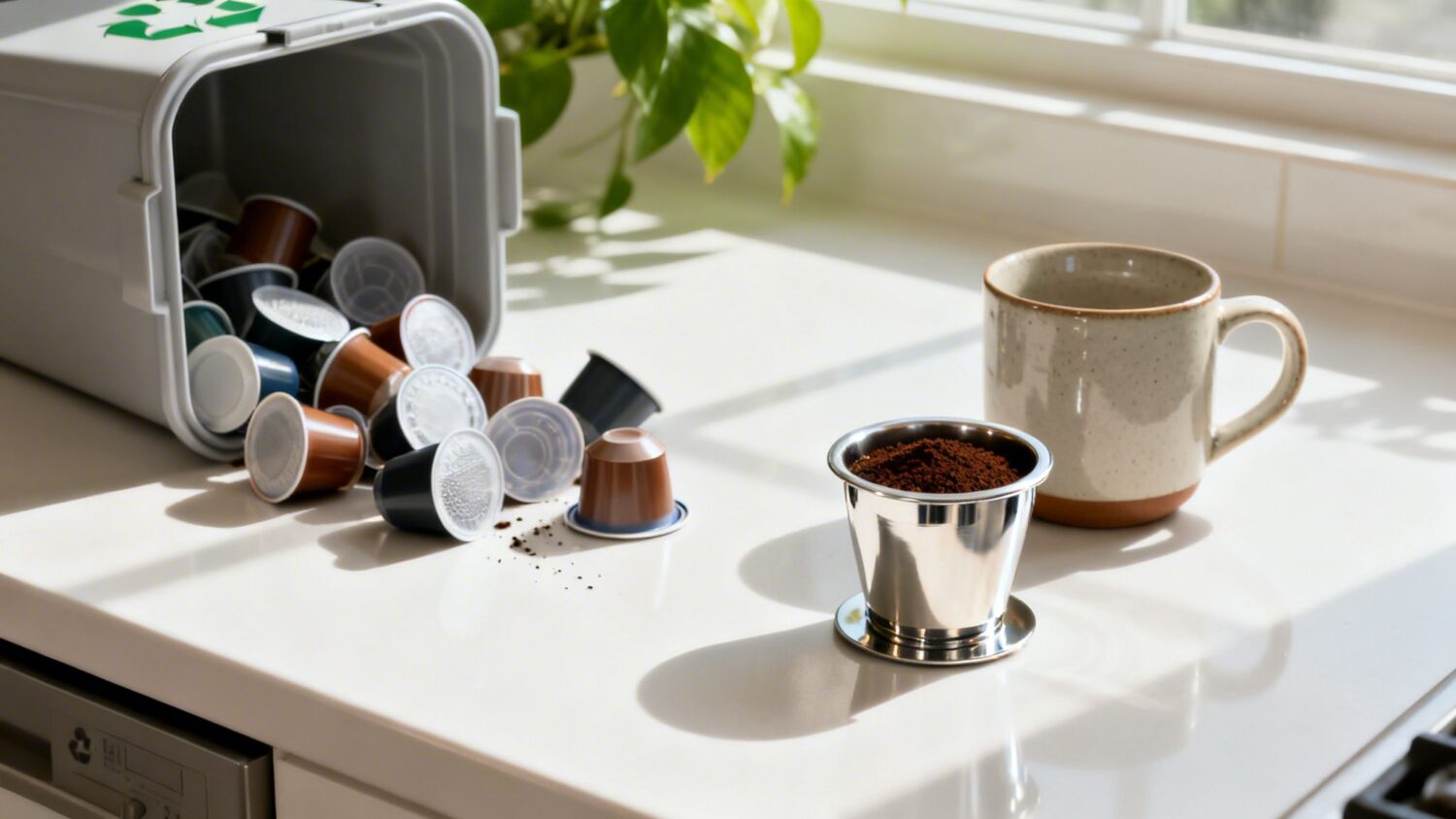
Are you one of the millions who faithfully toss used K-Cups into the recycling bin, hoping you’re doing the right thing for the planet? Here’s a startling fact: the number of K-Cups sent to landfills is enough to wrap around the planet more than 10 times. That single-serve coffee you enjoy in 60 seconds contributes to a mountain of waste that will outlive you by centuries.
The Reality of Your Morning Coffee Routine
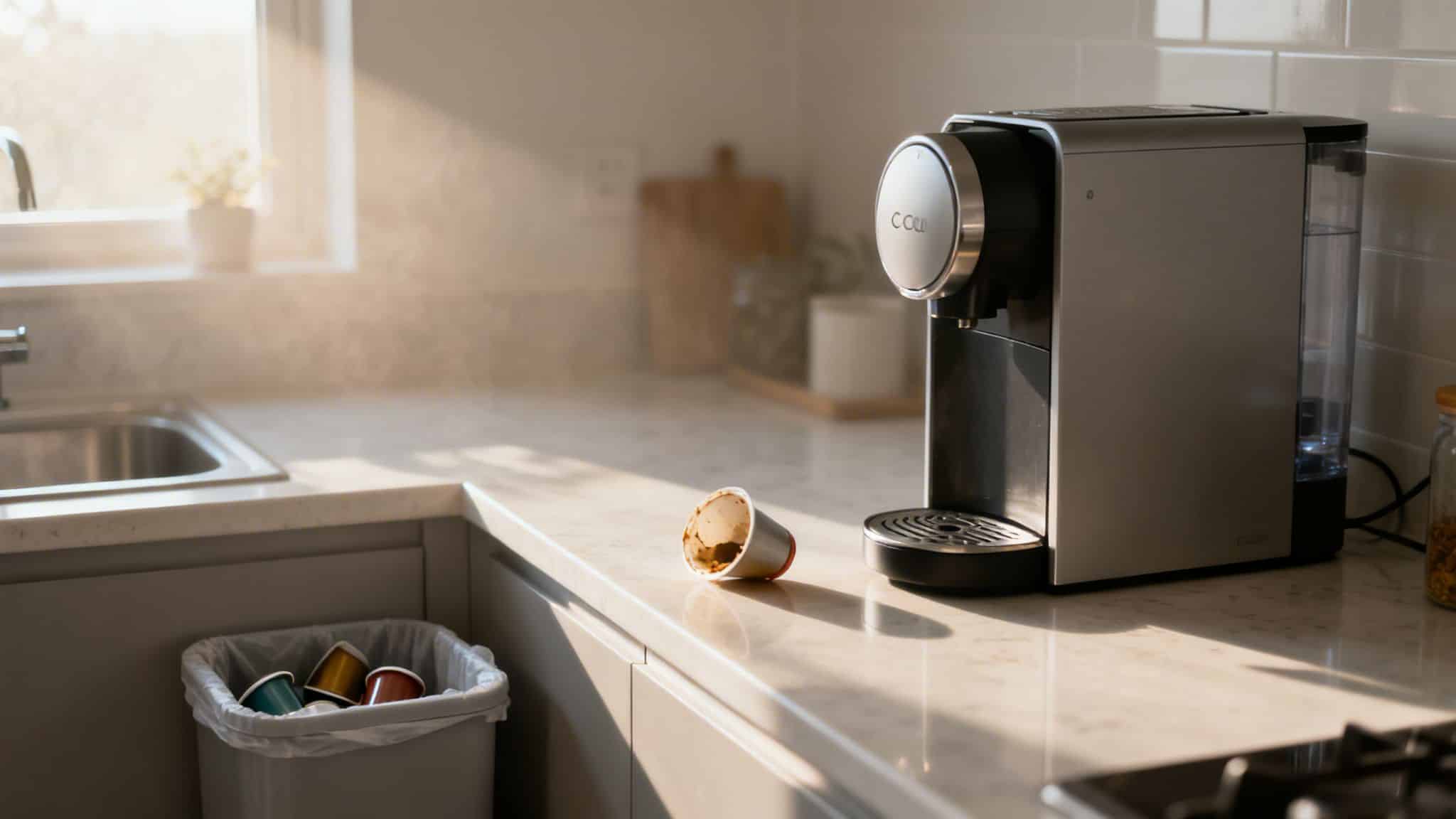
The incredible convenience of single-serve pods has accidentally created a massive waste problem. That daily coffee ritual you love comes with a heavy environmental price tag, and the hard truth is that the vast majority of K-Cups end up in landfills, not recycling centers.
You can feel the frustration. You bought a single-serve brewer for its speed and simplicity, not to become part of a global plastic crisis. Yet, every morning you’re faced with the same dilemma. You stand over the bin, pod in hand, feeling a pang of guilt. Even pods marketed as "recyclable" almost never survive the complex sorting systems at municipal facilities. The promise of sustainability on the box feels like a betrayal when you learn that your efforts are likely for nothing.
This "wish-cycling"—tossing something in the bin and just hoping it gets recycled—is a direct result of a broken system. The problem isn’t that you don't want to do the right thing; it's that the infrastructure makes it nearly impossible for k cup recycling to work as advertised.
The Systemic Failure of K-Cup Recycling
The disconnect between corporate claims and reality is staggering. A K-Cup is a complex mashup of materials—an aluminum lid, a paper filter, organic coffee grounds, and a plastic cup—all fused together. To understand the challenge, you need to know what K-Cups are made of. At a recycling facility, these tiny, contaminated pods are a nightmare.
This issue became so misleading that Keurig Dr Pepper was called out by the U.S. Securities and Exchange Commission (SEC) for its recyclability claims. The SEC noted a massive gap between what's technically possible in a lab and what actually happens in real-world recycling centers, which are not equipped to process the pods. You can read more about the SEC's findings and what it reveals about corporate recycling claims.
This systemic failure has created major pain points for consumers and the planet:
- Growing Landfill Waste: Billions of non-biodegradable plastic pods pile up in landfills annually.
- Wasted Effort: You spend time separating and cleaning pods, only for them to be discarded by sorting machinery.
- Consumer Confusion: Vague marketing leads to a false sense of security, perpetuating the waste cycle.
The Clear and Simple Solution
Despite these challenges, you are not powerless. The good news is that a practical, effective solution exists that lets you enjoy the speed of your single-serve brewer without the environmental guilt. The single most powerful change you can make is to stop creating the waste in the first place by switching to a high-quality reusable K-Cup. This guide will show you why this simple swap is the true answer to the pod waste problem.
Why K-Cup Recycling Fails in Practice
So, you’ve been diligently separating your pods, or maybe just tossing them in the blue bin and hoping for the best. It’s a frustrating position to be in, knowing your good intentions might be going to waste. The truth is, even K-Cups officially labeled as recyclable almost never actually get recycled.
The problem is a combination of flawed design and inadequate infrastructure. At a Material Recovery Facility (MRF), large-scale machinery is designed to sort big items like bottles, jugs, and cardboard. A tiny, lightweight K-Cup simply falls through the cracks. It’s like trying to catch a pebble with a net designed for beach balls. The pod either contaminates other valuable recyclables or gets filtered out and sent directly to the landfill. Most facilities automatically treat them as contamination because it’s cheaper and more efficient than trying to handle them.
Even if a pod survives the initial sort, its multi-material construction makes it a recycling nightmare. For a K-Cup to be properly recycled, it requires manual disassembly—a process that is not feasible on an industrial scale.
This infographic shows exactly why the system is set up to fail.
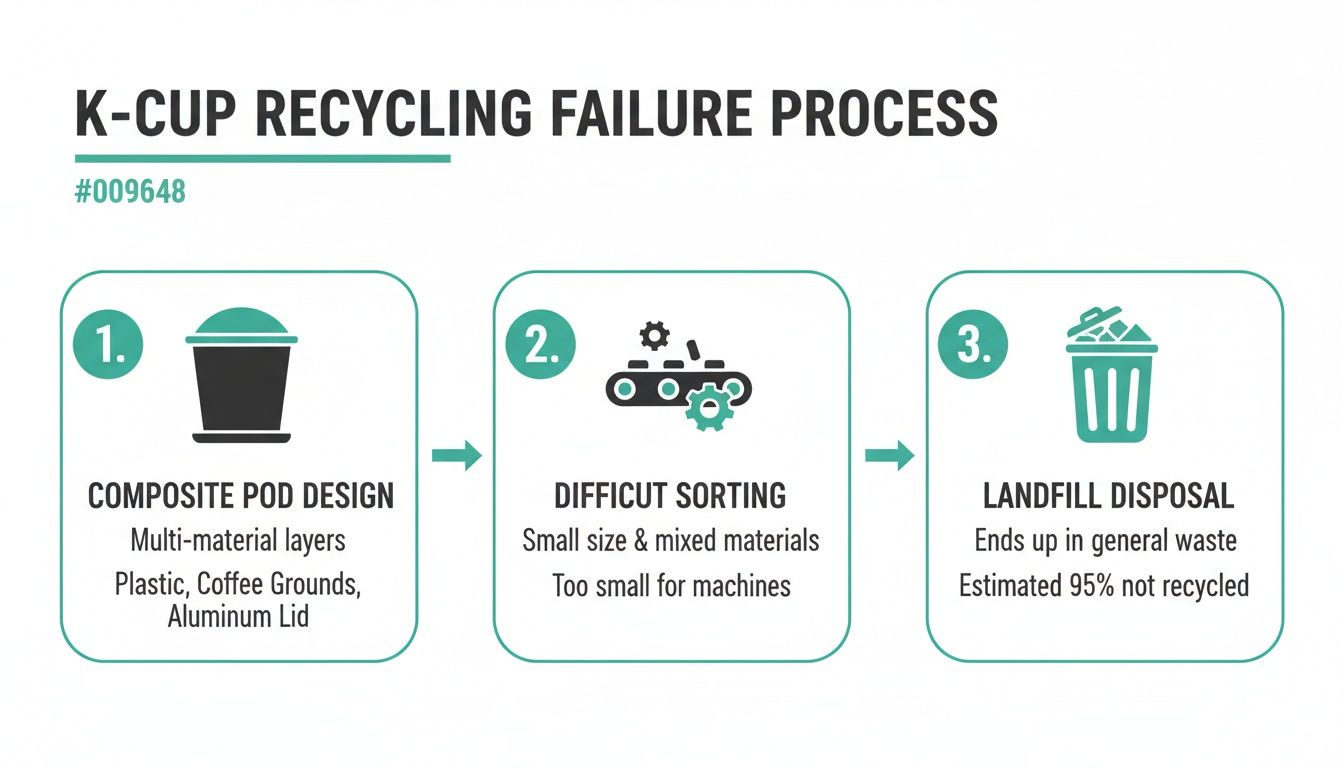
The journey from your bin to the sorting line is short and ineffective. The pod’s size and mixed materials mean it almost always gets tossed out as garbage, undoing all your hard work.
How to Attempt to Recycle a K-Cup
If you absolutely must use disposable pods, manual preparation is the only way to give the plastic cup a fighting chance. However, be aware that even after all this effort, the small plastic cup can still be rejected by sorting equipment.
- Cool & Separate: Let the pod cool completely. Peel off the aluminum lid and discard it; it's too small to be recycled.
- Empty & Compost: Empty the coffee grounds into your compost bin or trash. They cannot be recycled.
- Rinse & Check: Rinse the plastic cup thoroughly. Then, check your local municipality’s list of recycling accepted items. Many programs do not accept #5 plastic (polypropylene) or any items smaller than a yogurt cup.
This tedious process highlights the core problem: the system isn't designed for this type of waste. The only surefire way to solve the k cup recycling issue is to eliminate the pod itself.
The Ultimate Solution: A Reusable K-Cup
After all the peeling, rinsing, and sorting, the hard truth is that recycling single-use pods is a broken system. The single best way to fix the waste problem from your coffee routine? Stop making the waste in the first place. This is where a reusable K-Cup filter becomes the real, lasting solution.
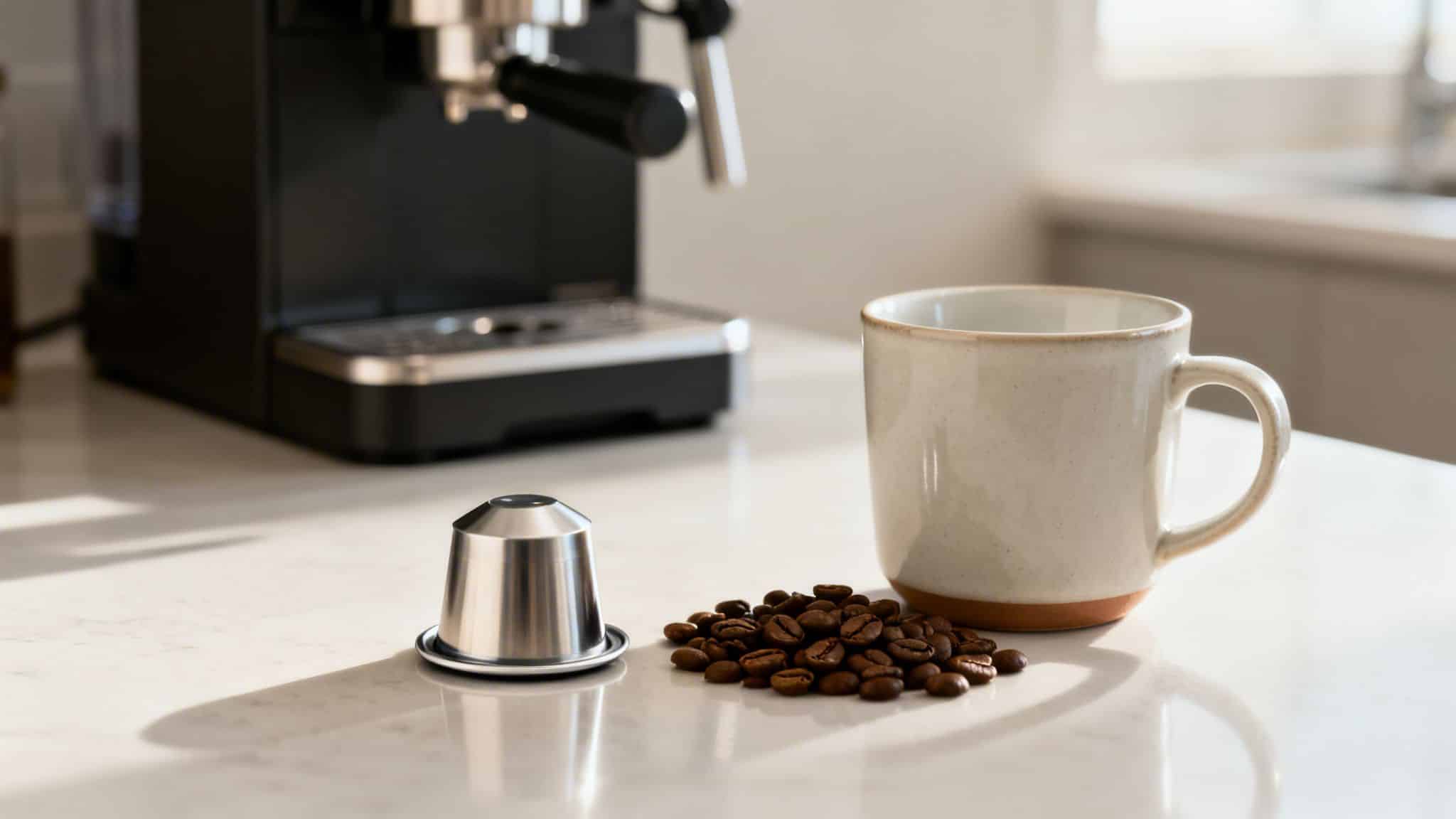
The endless cycle of buying, brewing, and tossing pods creates a mountain of plastic and a nagging sense of environmental guilt. Even with the best intentions, you’re participating in a system that contributes to pollution. The Massachusetts Department of Environmental Protection notes that this kind of single-use packaging is a huge source of waste, requiring major changes to meet waste reduction goals.
A reusable K-Cup allows you to opt out of that broken system entirely. A single reusable pod can replace thousands of plastic ones over its lifetime, making a tangible difference every single morning. This one small change turns your brewer from a closed-off appliance into an open platform for better coffee, giving you the freedom to:
- Choose Any Coffee You Want: Use fresh grounds from your favorite local roaster.
- Get a Fresher, Better-Tasting Cup: Brew with beans ground seconds before for maximum flavor.
- Save a Ton of Money: Buying coffee by the bag is dramatically cheaper than buying pods. A reusable filter often pays for itself in just a few weeks.
If you want a deep dive into picking the perfect one for your machine, check out our guide on the best reusable K-Cups for Keurig.
PureHQ Reusable Pods vs. Standard Generic Pods
Not all reusable filters are created equal. Many people have faced the frustrating mess of a "blowout"—when a cheap pod’s lid fails under pressure and spews coffee grounds everywhere. This common objection stems from flimsy construction, a problem we specifically engineered our PureHQ pods to solve.
Here’s how PureHQ’s premium reusable K-Cups compare to standard generic options:
| Feature | PureHQ Reusable Pods | Standard Generic Pods |
|---|---|---|
| Lid Design | A pressure-sealed O-ring and a reinforced, secure hinge lock tight to prevent leaks and blowouts, even with fine-grind espresso. | A flimsy snap-on lid that often warps from heat or pops open under brewing pressure, creating a huge mess. |
| Material Quality | Made from 100% BPA-free materials with a durable, heat-resistant frame and a high-grade stainless steel micro-mesh filter. | Typically made of cheap, thin plastic that becomes brittle and cracks. The mesh is often weak and prone to clogging or tearing. |
| Brew Performance | The fine micro-mesh filter is designed for optimal water flow, extracting full-bodied flavor without sediment. | Inconsistent mesh size can lead to either weak, watery coffee or a cup full of gritty sludge. |
| Durability | Built to last for hundreds of brews. The robust body and hinge withstand daily use without failing. | Often breaks after only a few months of use, forcing you to buy another and defeating the purpose of a "reusable" product. |
Choosing a well-designed reusable pod from PureHQ makes your transition to a zero-waste routine easy and clean. For an even better cup, remember that fresh water is key. Using a new charcoal water filter in your machine removes impurities like chlorine that can interfere with your coffee's flavor.
By ditching the illusion of K-Cup recycling and embracing a superior alternative, you can finally enjoy the convenience of your single-serve brewer with a clear conscience.
Your Role in the Broader Plastic Problem
That nagging feeling you get when you dispose of a K-Cup is justified. The confusion around K-Cup recycling is a small window into a much larger, more broken system: the global plastic crisis. For decades, we’ve been told that recycling is the answer, but the reality is that our global capacity is completely overwhelmed.
A Systemic Failure on a Global Scale
The numbers are staggering. According to 2022 data from the Organisation for Economic Co-operation and Development (OECD), a jaw-dropping 91% of all plastic waste is not recycled.
Only 9% of the world's plastic gets a second life. The rest is incinerated (19%), sent to sanitary landfills (50%), or dumped in uncontrolled sites (22%). You can learn more about these sobering plastic recycling statistics from The Sustainable Agency. We simply cannot recycle our way out of this mess. The most powerful action we can take is to drastically reduce our consumption of single-use plastics.
From Global Problem to Personal Action
It’s easy to feel powerless in the face of such a massive problem, but this is exactly where your choices matter. The throwaway economy is built on billions of small, daily decisions. By changing those decisions, you start to fix the system. Learning how to reduce plastic pollution in your own life is the first step.
Swapping disposable pods for a reusable K-Cup is a perfect example of this principle in action. Every time you brew a cup, you are making a conscious choice to:
- Take Direct Control: You are no longer relying on a flawed recycling system to handle your waste.
- Reduce Demand: You send a clear message to manufacturers that you prefer sustainable, non-disposable products.
- Inspire Others: Your simple morning habit becomes a powerful example for friends and family.
The path to a less wasteful world is built one intentional step at a time. The solution starts in your kitchen.
Your Path to a Waste-Free Cup of Coffee
You’ve seen the stats and know the frustrating truth: k cup recycling is more of a myth than a reality. It’s a daily dilemma that pits the convenience you love against the waste you hate. You bought a single-serve brewer for its speed and simplicity, not to get stuck in a messy and ineffective cycle of peeling, scooping, and rinsing pods.
Even mail-back programs, while well-intentioned, still rely on a disposable model, using resources to ship and process old pods. You’re left wondering if there’s a truly better way to break the cycle.
The Clear and Simple Solution
There is. Switching to a high-quality reusable pod is the single most powerful change you can make. It puts you back in control. Instead of being a passive part of a wasteful system, you become an active part of the solution. This one change saves you money, gives you access to a world of better coffee, and eliminates your contribution to pod waste for good. We dig into how to make the most of it in our guide on how to use coffee grounds in a Keurig.
It’s time to make a change that’s better for your wallet, your taste buds, and the planet. A reusable pod isn't a compromise; it's a superior way to enjoy coffee. You keep the Keurig convenience you paid for without the environmental guilt.
Ready to make every cup a conscious choice?
Shop Our Collection of Premium Reusable K-Cups and start your journey to a better, waste-free brew today.

