
Coffee Machine Care
How to Reduce Maintenance Costs for Your Coffee Machine
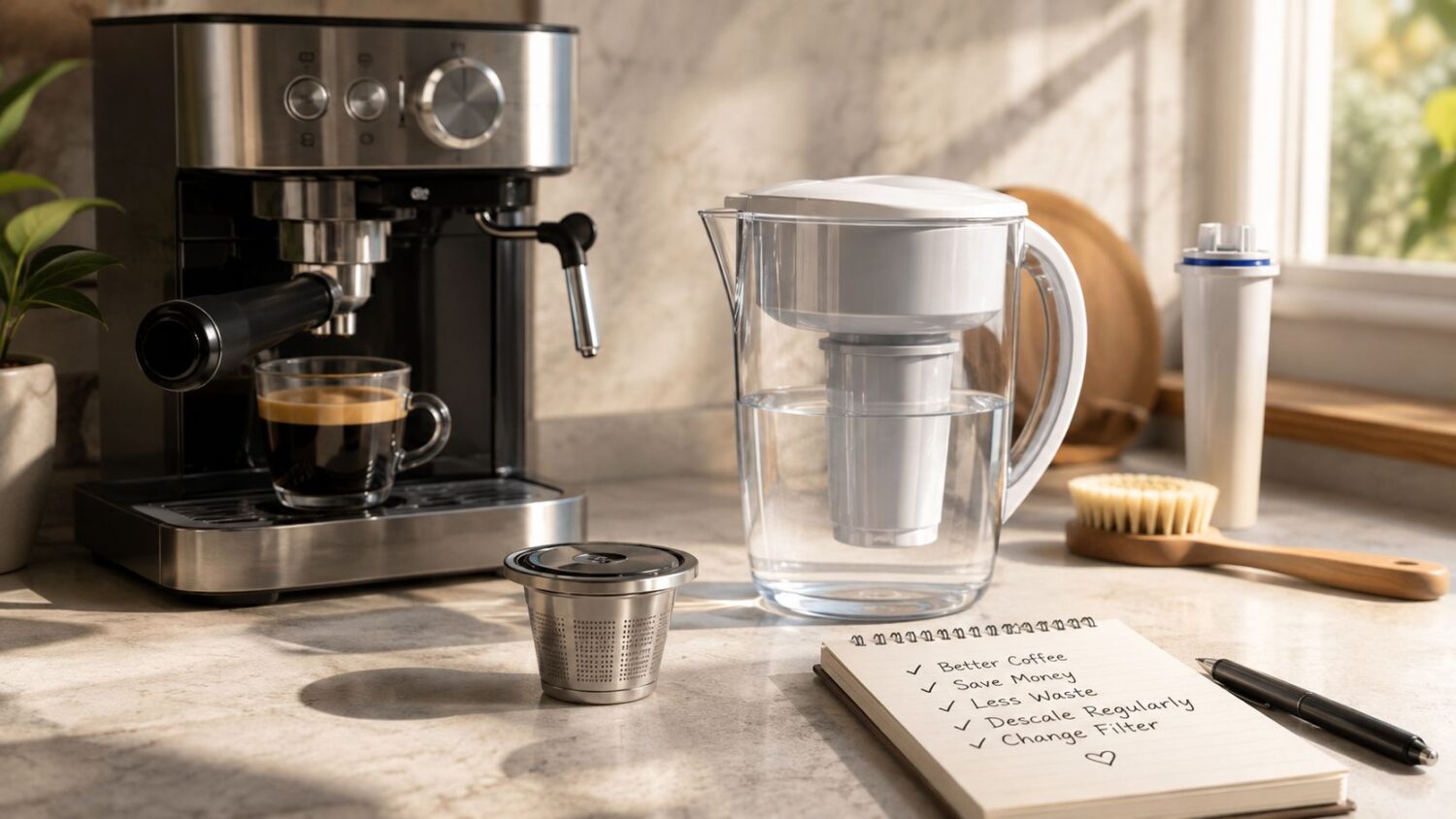
Aug
Maintenance expenses can consume 15% to 40% of total production costs, and operating equipment until it fails can cost up to 10 times more than following a regular maintenance program, according to industry maintenance benchmarks. A coffee machine is smaller than a factory asset, but the failure pattern is familiar: a neglected rinse becomes scale, scale becomes a slow brew, and a slow brew becomes an emergency repair during the busiest part of the morning.
The practical answer to how to reduce maintenance costs isn't to skip cleaning or buy the most complicated software. It's to connect three ordinary habits, control water chemistry, care for reusable pods, and inspect vulnerable parts, so one fix prevents the next failure. That feedback loop keeps a home brewer or small breakroom machine working longer without turning the owner into a technician.
Why Maintenance Costs Spiral When You Ignore Them
At 9:15 on a weekday morning, the machine flashes a descale warning. The pump sounds strained. Someone opens the cupboard and finds the last coffee pod was used yesterday. A second person presses brew anyway, hears the motor labor, and gets a thin stream into a cup. By the time the machine stops altogether, the problem no longer involves one cleaning cycle. It may involve a blocked passage, a damaged seal, wasted coffee, and a service visit.
That chain reaction starts with small changes. Heated hard water can leave mineral deposits inside water passages and around heating components. A dirty entry needle can puncture a pod unevenly, while coffee residue at the exit needle can disrupt flow. A stretched silicone gasket can allow water and grounds to escape around the pod holder instead of passing cleanly through the brew path.
The repair bill is rarely the first cost
The owner sees the final repair invoice, but the machine has already created other costs. Staff lose time troubleshooting it, drinks get remade, emergency parts may be harder to source, and the operator may run the machine under abnormal pressure while trying to keep service moving. A small office may also lose the convenience that justified buying the machine in the first place.
Maintenance costs therefore form a sequence rather than a single line item:
- Water deposits restrict flow and make the pump work harder.
- Residue and blocked needles produce inconsistent extraction and slow brewing.
- Worn seals create leaks, mess, and pressure loss.
- Delayed repairs turn inexpensive cleaning into replacement parts or service labor.
The Forge Reliability guide to maintenance cost reduction makes the broader operational point clearly: planned maintenance protects reliability because teams address developing problems before breakdown work becomes urgent. The same logic applies to a coffee machine on a much smaller scale.
Practical rule: A cheap task performed on schedule is usually less expensive than a complicated repair performed under pressure.
A machine doesn't usually become unusable in one dramatic event. Neglect removes one layer of protection at a time until the owner mistakes accumulated maintenance for normal wear. The right response is a routine that catches scale, residue, leaks, and inventory gaps before they combine.
Building a Routine That Actually Saves Money
A useful routine has to fit the way people brew. A household making two cups a day shouldn't follow the same schedule as a small office serving roughly 30 cups a day. The office needs more frequent emptying, closer attention to water and pod supplies, and faster escalation when flow changes.
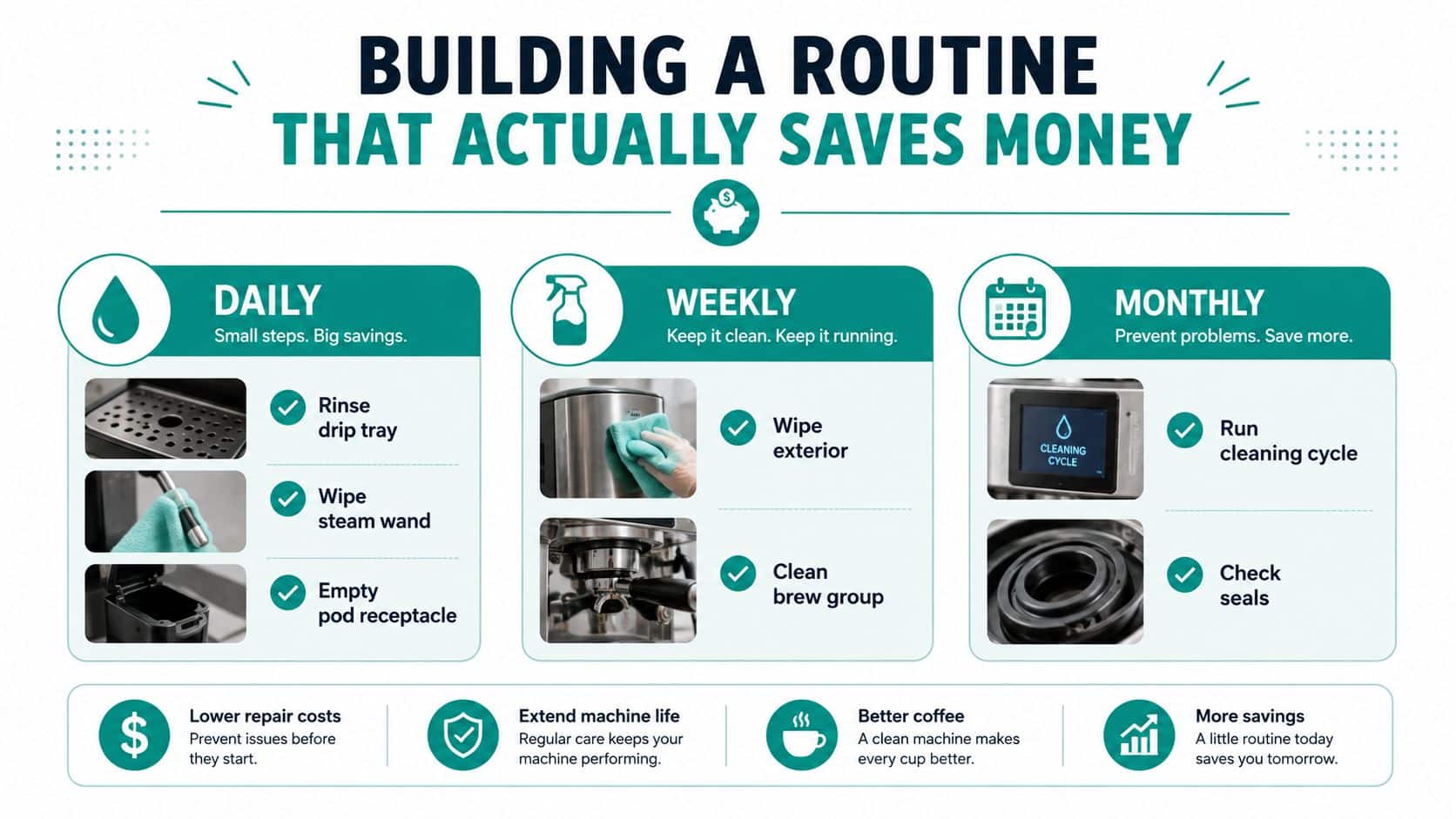
Start with tasks that take moments, then assign deeper work to a predictable day. A printable coffee machine maintenance checklist can turn these actions into a visible handoff instead of relying on memory.
Daily care removes the easy causes of trouble
At the end of the brewing day, rinse the drip tray and empty the used-pod receptacle. Wipe the steam wand immediately after use, if the machine has one, because dried milk residue becomes harder to remove and can create a hygiene problem. Wipe splashes from the exterior and the pod-holder area so leaks remain visible.
A busy office shouldn't wait for the receptacle to overflow or the tray to trigger an alert. Emptying both during the afternoon reset keeps the next morning from starting with a mess and gives the person cleaning the machine a chance to notice unusual grounds, water, or discoloration.
Weekly work should target the brew path
Once a week, run a water-only brew cycle to move loose residue through the machine. Remove and clean the accessible needle assembly according to the manufacturer's instructions, then inspect the pod seal for stretching, flattening, or coffee buildup. Clean the brew group and wipe the exterior with a suitable damp cloth, keeping water away from electrical controls.
A household may stretch this inspection when usage remains light and the machine shows no change in flow. A 30-cup office shouldn't. High use increases the amount of coffee oil, grounds, and water moving through the same small components.
Monthly maintenance needs time, not just effort
Run a complete descale cycle with an approved solution. Manufacturer instructions matter because descaling isn't just a matter of pouring liquid into the reservoir and pressing a button. For example, De'Longhi's official descaling instructions require circulating the solution, allowing it to sit for 20 minutes, repeating the process, and flushing with clean water.
Inspect the reservoir for film or deposits, replace the water filter when its schedule calls for replacement, and record the date. If the machine runs heavily, use changes in taste, flow, sound, and water hardness to tighten the routine rather than following a calendar blindly.
Water Chemistry and What It Does to Your Machine
Water is the root variable most owners overlook. Cleaning removes deposits after they form, but water treatment reduces what enters the machine in the first place.
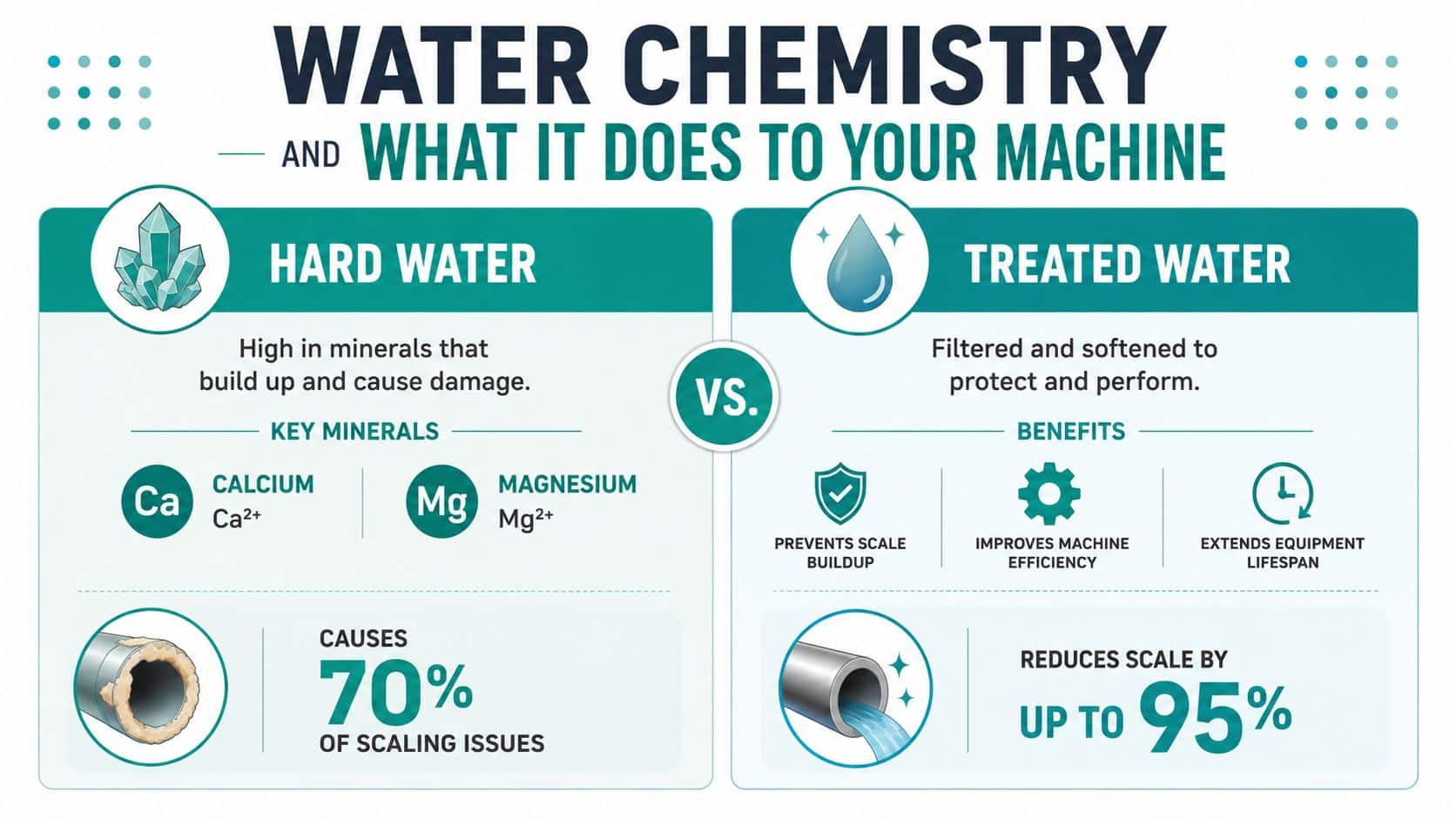
Hard water carries dissolved minerals, including calcium and magnesium. Heating changes the balance of those minerals and can leave scale on internal surfaces. Bicarbonate is especially important for coffee equipment because peer-reviewed research on espresso water quality identifies bicarbonate-containing water as the condition required for alkaline scaling.
That deposit can narrow passages and coat heating surfaces. The machine may take longer to brew, produce less consistent flow, or sound different as the pump works against increased resistance. Those symptoms don't automatically mean the machine needs replacement. They may indicate that the water entering it needs attention.
Choose filtration by the job it must perform
A pitcher filter can improve taste and reduce some impurities, but its mineral reduction depends on the cartridge and the incoming water. Reverse osmosis removes a much broader range of dissolved minerals, although it requires more equipment, produces wastewater, and may remove more mineral content than a coffee setup needs.
A dedicated coffee-machine filter sits between those choices. It targets the water entering the appliance, keeps the setup compact, and can make filter replacement easier to track. The right choice depends on local hardness, available space, water taste, and the machine manufacturer's requirements.
| Option | Mineral reduction | Taste impact | Cost pattern |
|---|---|---|---|
| Pitcher filter | Varies by cartridge and water chemistry | Often improves taste | Lower entry cost, recurring cartridges |
| Reverse osmosis | Broad dissolved-mineral reduction | Can produce a very soft taste | Higher setup and operating complexity |
| Dedicated machine filter | Designed for the appliance's water path | Supports more consistent brewing water | Recurring replacement cost tied to usage |
Don't treat the table as a promise that one method works everywhere. Test the incoming water or use local water guidance, then follow the machine's filter and descaling instructions. A guide to improving coffee-machine water quality can help you compare filtration choices before buying.
Water treatment isn't a substitute for cleaning. It's the upstream control that makes cleaning more effective and can reduce the amount of scale the machine has to carry between service cycles.
Reusable Pods and the Real Cost Per Cup
A reusable pod changes more than the cost of coffee. It changes what enters the brew path, how often the operator handles waste, and how much attention the pod seal receives. A well-fitting stainless steel pod with a sound gasket can provide a consistent interface, while a poorly made plastic pod can flex, leak, or sit unevenly.
The purchase decision should include maintenance, not just the initial price. Reusable designs need rinsing after use, and paper liners or silicone gaskets may need replacement as they become stained, stretched, or difficult to clean. Disposable pods reduce that washing task, but they create a steady waste stream and keep the operator dependent on a stocked supply.
| Factor | Reusable Pod | Disposable Pod |
|---|---|---|
| Upfront cost | Higher, because the pod is purchased as a durable accessory | Lower per individual pod |
| Ongoing coffee cost | Uses loose ground coffee and a washable pod | Requires a new pod for each brew |
| Waste | Lower pod waste, with liners adding a consumable when used | A discarded pod follows every brew |
| Machine interface | Depends heavily on fit, gasket quality, and pod design | Usually follows the disposable pod format |
| Cleaning | Requires rinsing and periodic gasket or liner attention | Less pod washing, but grounds and residue still need machine cleaning |
| Wear considerations | A rigid, correctly sized pod can seat consistently | A damaged or poorly handled pod can still contribute to messy brewing |
The fit and leakage objection is legitimate
Owners often try a cheap reusable pod, see water around the holder, and conclude that every refillable option leaks. That conclusion is too broad. Leakage usually points to a mismatch, an overfilled basket, a damaged gasket, or a pod that doesn't suit the machine's design.
Fill the pod below its maximum line, keep the rim free of grounds, and confirm that the lid closes without force. Check the entry and exit needles for alignment, because a pod cannot seal correctly if those contact points are obstructed. Stainless steel generally holds its shape better than thin plastic, but material alone doesn't guarantee compatibility.
The PureHQ guide to reusable coffee pods is useful when checking pod fit, cleaning, and liner choices for compatible machines. Paper liners can simplify cleanup and help keep fine grounds away from the brew path, while silicone gaskets preserve the seal when the original gasket has become tired.
Treat the pod as part of the maintenance system. A clean, correctly seated pod reduces mess and gives the needles and gasket a more predictable job. A cheap pod that leaks or forces repeated troubleshooting isn't saving money, even if it costs less at checkout.
Inspecting Parts Before They Fail
A quarterly inspection can separate a maintenance problem from a replacement decision. You don't need specialized diagnostic equipment for the first pass. You need good light, a clean cloth, the manufacturer's cleaning guidance, and enough patience to look at the parts that control puncture, sealing, drainage, and flow.
Start with the needles
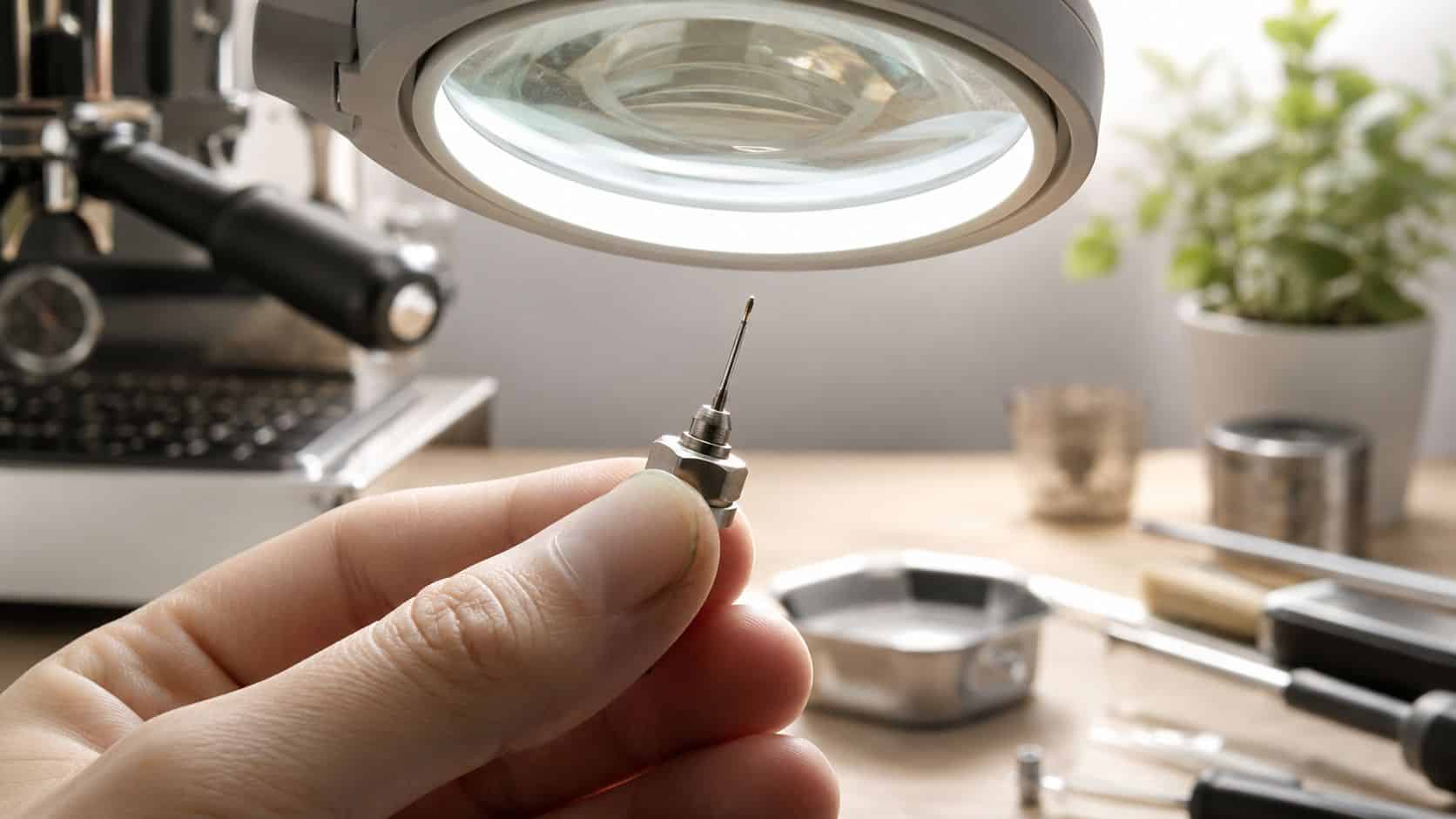
The entry needle punctures the top of the pod. Look for a bent tip, coffee residue, or mineral crust. A blocked entry needle can distort the spray pattern and make the machine appear to have a failing pump.
The exit needle punctures the pod's bottom. Inspect it with the same care, then clean it using the method approved for your model. Don't force a sharp object into a component if the manufacturer warns against that approach. A gentle cleaning can restore flow, but aggressive probing can damage the needle or push debris deeper.
One common scenario looks worse than it is. A user notices slower brew times, hears a change in the pump, and starts shopping for a new machine. The actual culprit is a clogged entry needle, and a careful 60-second cleaning restores normal operation. The time figure describes the scenario, not a guaranteed repair duration for every model.
Check the seal and drainage system
Inspect the silicone gasket around the pod holder for stretching, flattening, cracks, or grounds embedded in the contact surface. A tired gasket can cause leaks and poor pressure, even when the pump and heater remain functional.
Then examine the drip tray and float indicator. Cracks can send water under the machine, while a stuck float can make the machine report a full tray when it isn't full. Dry the area, reseat the parts, and watch for fresh water during the next brew.
Use this checklist:
- Needles: Clear residue and look for bent tips.
- Gasket: Confirm that the seal sits evenly around the pod holder.
- Tray: Check for cracks, warping, and a free-moving float.
- Water path: Look for unusual flow, noise, taste, or leaks.
- Decision point: Replace a worn part when cleaning doesn't restore proper operation.
Don't replace a machine because it behaves like a clogged machine. Inspect the inexpensive contact points first.
Tracking What You Spend and What You Save
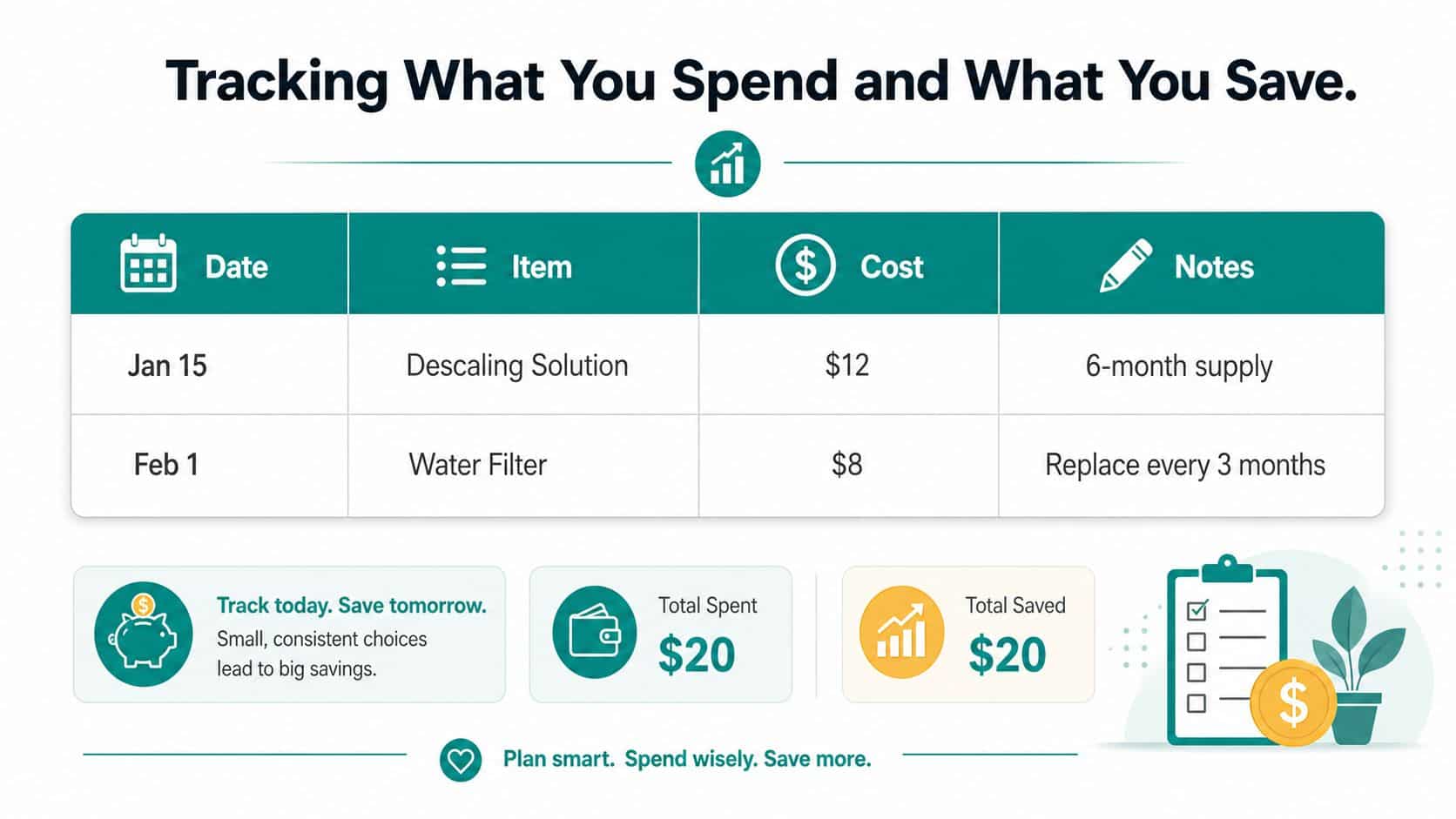
A spreadsheet can answer the question that memory can't: is the routine costing less than the failures it prevents? Create one row for every purchase or maintenance event, then keep the categories consistent.
Use columns for date, item, cost, machine, task, labor time, and notes. Record descaling solution, water filters, cleaning tablets, pod liners, replacement gaskets, needles, and any service call separately. If a staff member spends time cleaning, record the minutes rather than dismissing that work as free.
Build a simple calculation
Assign labor time an internal hourly value that reflects the person's paid time or your own chosen bookkeeping rate. Multiply hours by that rate, then add consumables and parts. Don't pretend the result is exact. The point is to compare the same categories over time.
A useful tracker might look like this:
| Date | Item | Cost | Labor time | Notes |
|---|---|---|---|---|
| January 15 | Descaling solution | Actual purchase cost | Record actual time | Machine and cycle completed |
| February 1 | Water filter | Actual purchase cost | Record actual time | Replacement date noted |
| March 10 | Pod gasket | Actual purchase cost | Record actual time | Replaced after leak inspection |
The supplied budget example in the visual uses $12 for descaling solution and $8 for a water filter, but your spreadsheet should use your actual receipts rather than copying sample values. Compare the running maintenance total with the price of a replacement machine and any documented service invoices.
Measure avoided disruption honestly
Track failed brews, leaks, emergency purchases, and service calls alongside routine spending. If the machine works normally after a cleaning, record the symptom and the action, but don't claim that the cleaning caused a specific dollar saving unless you have a comparable repair or replacement cost.
For larger operations, the logic scales. NIST reported that U.S. manufacturers spent about $50 billion on machinery maintenance and repair in 2016, in a summary published in 2021. The same NIST maintenance-cost analysis reported potential reductions from advanced techniques ranging from 15% to 98%, which illustrates why measurement and condition-based decisions matter even when the equipment is far more complex than a coffee maker.
Smarter Purchasing and a Direct Path Forward
Cost control continues at the purchasing desk. Buying cleaning tablets, descaler, replacement filters, pod liners, and reusable pods in a sensible bundle can reduce reorder friction and make stockouts less likely. It doesn't make every bundle cheaper, so compare the unit cost and confirm that the products suit the exact machine.
Keep receipts, model information, filter changes, descale dates, and part replacements in one folder. A maintenance log gives a service provider a clear history and helps you establish whether a failure followed missed care, normal wear, or a defective component. It also prevents staff from guessing which filter or descaler was used last.
Train the person who presses the button
Small offices don't need a complex maintenance department. They do need one named owner and a short handoff that includes the descale button, filter replacement date, pod filling limit, rinse routine, and escalation rule for leaks or unusual sounds.
Preventive maintenance can reduce emergency work and overtime labor. One industry program summary cites a 40% decrease in unplanned emergency work orders and overtime labor costs after preventive-maintenance improvements. That doesn't guarantee the same result for a coffee machine, but it reinforces the practical priority: reduce emergency work before cutting core cleaning tasks.
Predictive maintenance also has a place, but not as a blanket software purchase. For critical industrial assets, a stepwise program defines failure-critical equipment, adds condition monitoring, establishes operating baselines, flags anomalies, and schedules work when measured degradation crosses a threshold. Industry summaries report 18% to 25% lower maintenance costs, up to 50% less unplanned downtime, and positive return on investment reported by roughly 95% of adopters, with about 27% reaching payback within 12 months in the cited summary at IIoT World. For a coffee machine, the equivalent is simpler: monitor flow, sound, taste, leaks, and water use before buying unnecessary technology.
PureHQ Inc. offers reusable K-Cups, compatible water filters, descaling solutions, cleaning tablets, liners, and related coffee-machine accessories for home brewers and small workplaces. Visit PureHQ Inc. to stock the parts and consumables that support a consistent cleaning, filtration, and pod-care routine.

