
Coffee Machine Care
The Perfect Solo Cup: How to Make French Press Coffee for One
Mar
Making coffee for one should be a simple pleasure. Yet, how often does your solo cup of French press coffee end up weak, bitter, or full of gritty sediment at the bottom? You followed a standard recipe, only to be left with a disappointing brew and a frustrating start to your day. It’s a common problem that wastes good coffee beans and leaves you wondering why your home brew never tastes like the café’s.
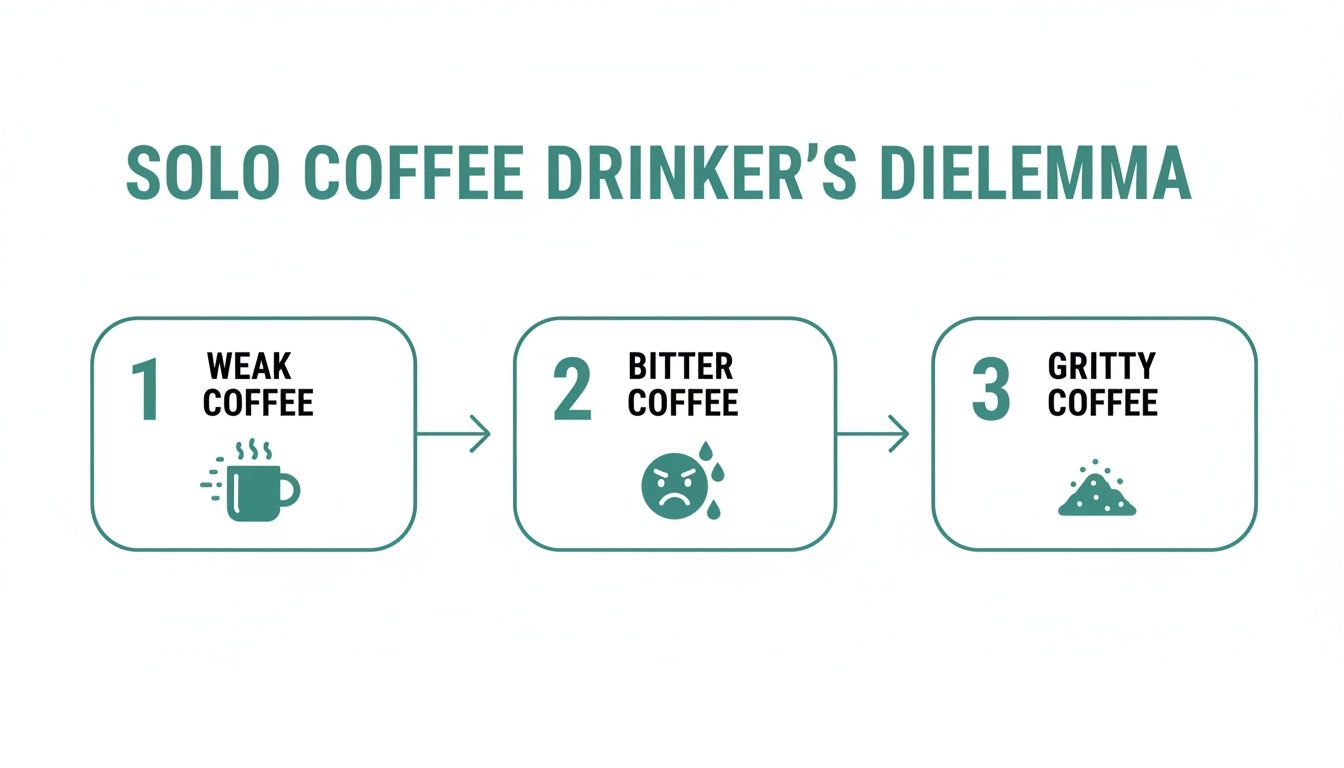
The agitation grows as you realize most guides are designed for a full pot. The brewing physics of a French press—a process known as immersion brewing—simply don't scale down correctly. Halving the ingredients changes the heat retention and extraction dynamics, leading to inconsistent results. This isn't just a matter of preference; the global French press market is projected to reach approximately $1.73 billion by 2033, as detailed by Data Insights Market, indicating a massive shift towards this manual method. Yet, millions of solo coffee drinkers struggle with the same frustrating dilemma every morning.
The solution lies in a specific, repeatable method tailored for a single serving. By mastering a few key variables—ratio, grind, and timing—you can turn that daily frustration into a moment of pure satisfaction. This guide provides the exact blueprint to solve the solo-brewing puzzle, ensuring your French press delivers a rich, full-bodied, and grit-free cup every single time. To understand the fundamentals of the brewer itself, our guide on what a French press coffee maker is is an excellent starting point.
Your Blueprint for the Perfect Single Cup
You’ve tried guessing and adjusting, but your solo coffee is still a gamble. One day it's watery, the next it’s harsh and bitter. This inconsistency is maddening, especially when all you want is one great cup to start your day right. You feel like you're missing a secret that everyone else knows, turning your morning ritual into a source of stress.
This cycle of bad coffee is often rooted in using ratios and techniques meant for larger batches. The thermal mass of a small amount of water is significantly less, causing it to cool too quickly and under-extract the coffee. Or, in an attempt to compensate, you might grind your beans too fine, leading to a sludgy, over-extracted mess that clogs your filter. The frustration builds as you stare into another subpar mug, wondering if it's even possible to get it right.
Here is the precise, step-by-step solution to master the single-serve French press. It’s not about expensive gear; it’s about a repeatable process that guarantees success.
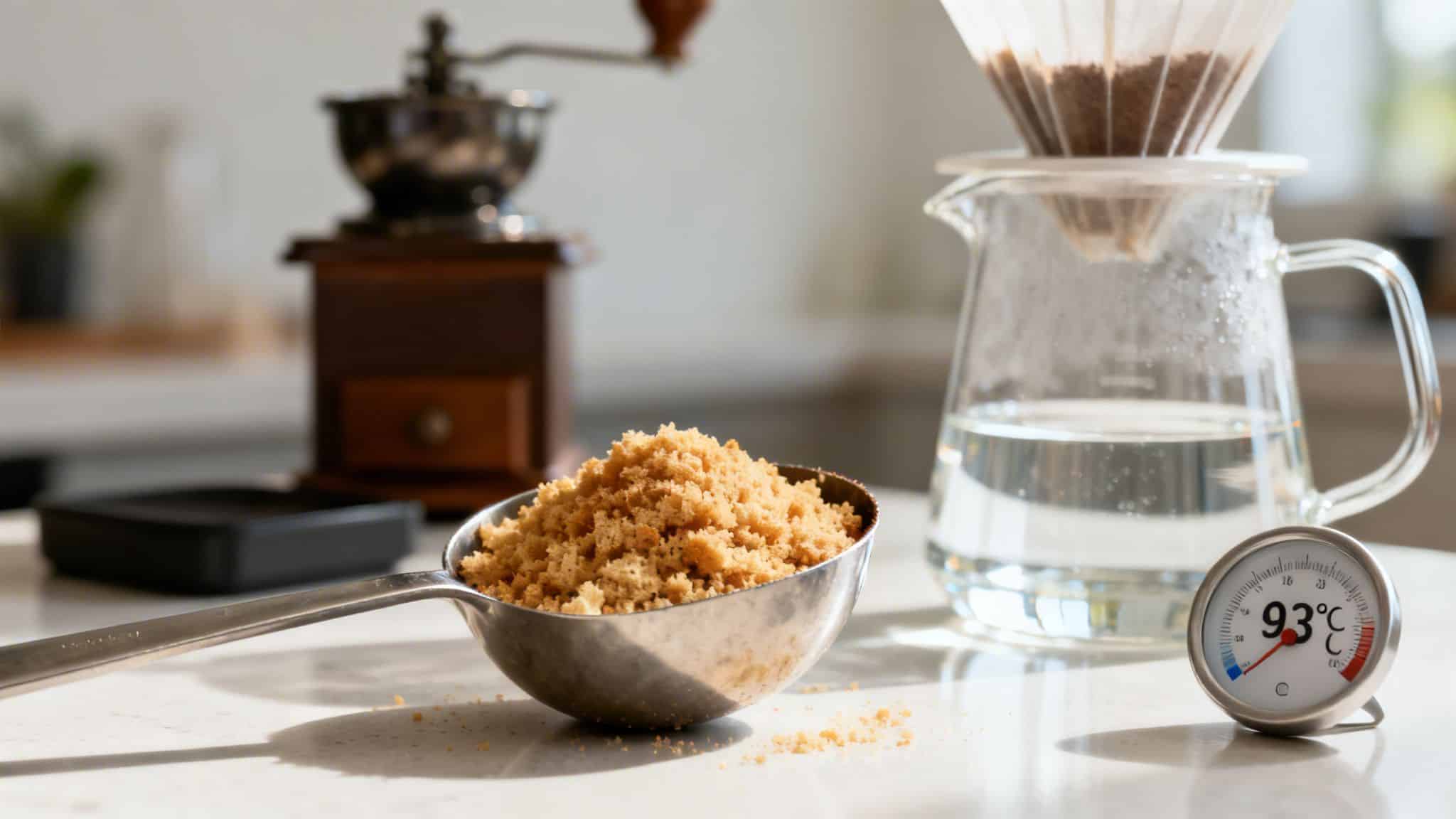
- Measure Your Ingredients: For a perfect 12-ounce mug, use 21 grams of coarsely ground coffee and 300 grams of water. This 1:14 ratio is the key to a rich, full-bodied cup. For a deeper dive, explore our guide to the French press coffee to water ratio.
- Heat Water to the Right Temperature: Your water should be between 195–205°F (90–96°C). Using filtered water ensures no off-tastes interfere with your coffee's flavor.
- Bloom the Coffee: Place your grounds in the press and pour in just enough hot water (about 45 grams) to saturate them. Wait 30 seconds. This step, known as the concept of blooming, releases trapped CO2 gas, which allows for a more even and flavorful extraction.
- Add Remaining Water and Steep: After the bloom, pour in the rest of your water. Place the lid on top but do not plunge. Set a timer for four minutes total (including the bloom time).
- Plunge Slowly and Serve Immediately: When the timer goes off, press the plunger down slowly and steadily. This minimizes agitation of the fine particles. Pour your coffee into a mug immediately to stop the extraction process and prevent bitterness.
This methodical approach eliminates guesswork, ensuring your solo cup is consistently delicious.
Troubleshooting Common French Press Problems
You’ve followed the steps, but your coffee is still not quite right. Perhaps it’s unpleasantly bitter, disappointingly weak, or there’s a dreaded layer of sludge at the bottom of your mug. This is the final hurdle for many solo brewers, a frustrating barrier that makes you question the entire process. You’ve invested time and good beans, only to be met with a flawed cup that ruins the experience.
The agitation comes from the feeling that you're so close, yet so far. A bitter brew often means your grind is too fine or your steep time exceeded four minutes, pulling out unwanted compounds. A weak or sour cup points to the opposite: a grind that's too coarse, not enough coffee, or water that wasn't hot enough. But the most common complaint is the sludge. You might blame your grinder or beans, but the real culprit is often the press itself. Many generic presses use flimsy mesh filters that don't create a tight seal, allowing fine particles to slip past and create a gritty, muddy texture in your final pour. This single flaw can undermine all your efforts.
The solution to these problems lies in small, targeted adjustments and ensuring your equipment is up to the task.
- For Bitterness: Use a coarser grind—like rough sea salt—and be strict with your four-minute steep time.
- For Weakness: Ensure your grind isn't too coarse and double-check that you're using the correct 1:14 coffee-to-water ratio.
- For Sludge: The definitive solution is a high-quality French press with a superior filter system. A durable, multi-layer mesh that seals tightly against the carafe wall is essential for trapping sediment. While a burr grinder provides the necessary coarse, uniform particles, as explained in our guide on how to grind coffee for a French press, it's the filter's seal that provides the final line of defense against sludge.
Premium Press vs. Generic Press: The Filter Difference
| Feature | Premium French Press (PureHQ) | Standard/Generic Press |
|---|---|---|
| Filter Seal | Tight, multi-layer mesh creates a superior seal against the carafe wall, trapping fine particles. | A loose-fitting, single-layer screen often allows grounds to bypass the filter during the plunge. |
| Objection Addressed (Grit) | Directly solves the customer objection of a gritty, muddy cup by preventing sediment from entering the final brew. | Is the primary cause of the common complaint about sludge and sediment in French press coffee. |
| Durability | Built with robust materials designed for longevity and consistent performance. | Often uses flimsy components that can warp or fray, worsening the seal over time. |
| Resulting Brew | A clean, smooth, and full-bodied cup. | A brew that is frequently muddy and unpleasant to drink. |
A well-made filter system is the key to conquering grit and achieving that perfect, clean cup.
Tweaking Your Brew and Keeping Things Clean
You’ve finally perfected your daily single-serving brew, but now a new problem arises: routine. The same delicious cup every day can start to feel monotonous. You crave variety—a bolder kick on tired mornings or a refreshing iced version on a hot afternoon—but feel locked into one method. This feeling of being "stuck" can take the joy out of your coffee ritual.
The frustration is amplified when you see others effortlessly making different styles of coffee, from intense espresso shots to smooth cold brew. You start to wonder if your beloved French press is a one-trick pony, destined only for a single style of hot coffee. The thought of buying more equipment like a high-end espresso machine seems excessive, but the craving for variety persists, making your perfect-but-predictable cup feel limiting.
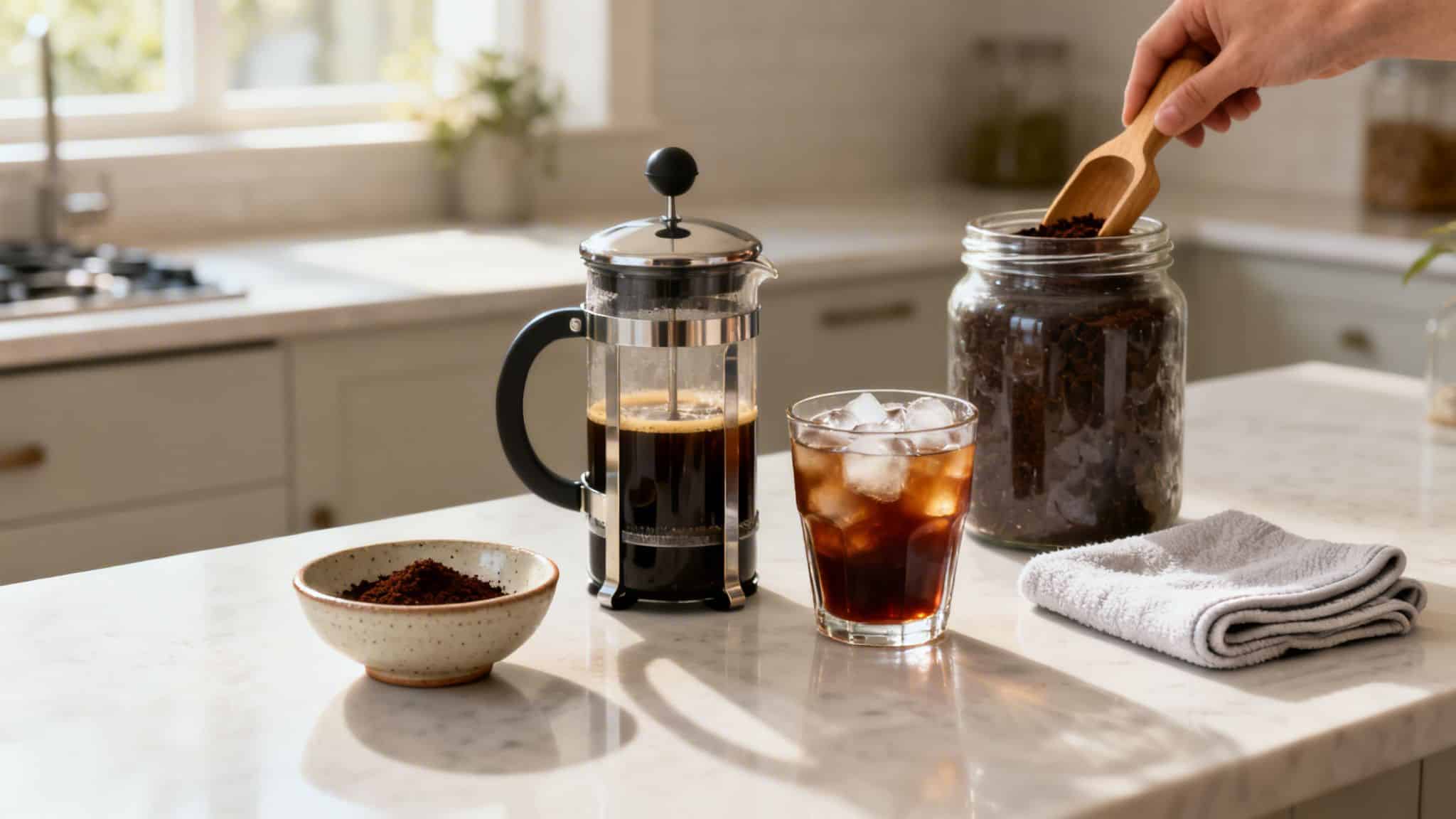
The solution is to unlock the hidden versatility of your French press. For a bolder, more intense cup, simply increase your coffee dose from 21g to 23g while keeping the water volume the same. This small adjustment provides a richer flavor without introducing bitterness. For a refreshing change, make single-serving cold brew by combining coarse grounds with cold, filtered water in your press. Let it steep in the refrigerator for 12-18 hours, then plunge and serve over ice. It’s a simple way to transform your daily brewer into a multi-season tool.
The Effortless Cleanup Routine
Proper maintenance is crucial for great-tasting coffee. After brewing, scrape the used grounds into a compost bin or trash—never wash them down the sink, as this can lead to clogged pipes. To prevent the buildup of rancid coffee oils that can spoil the taste of your brew, a regular deep clean is essential. Efficient maintenance is a key consideration in the coffee industry, as noted by Fortune Business Insights. For a complete cleaning that keeps your equipment in top condition, PureHQ’s universal descaling solutions effectively remove buildup from all your coffee makers. You can also ensure your French press filter screen is in top shape by having replacement filters on hand.
Clearing Up Common French Press Questions
When you're dialing in that perfect single-serving brew, a few questions always pop up. Don't worry, every coffee lover has been there. Here’s the straight-up advice you need to get past those common hurdles.
Can I Use Pre-Ground Coffee in a French Press?
While you can, it's strongly discouraged. Most pre-ground coffee is milled too finely for a French press, which leads to over-extraction (a bitter taste) and a significant amount of sludge in your cup. Grinding whole beans coarsely just before brewing is the single most impactful step for improving your French press coffee.
How Much Coffee for a 12 oz French Press for One?
For a standard 12 oz (350 ml) French press, the ideal recipe is 21 grams of coffee to 300 grams of water. This 1:14 ratio creates a strong, full-bodied cup without being overwhelming and leaves enough room for the blooming and plunging process. Remember to pour all the coffee out immediately after plunging to prevent it from becoming bitter.
Is French Press Coffee Unhealthy?
You may have heard concerns about unfiltered coffee and cholesterol. French press coffee contains compounds called cafestol and kahweol, which can slightly raise LDL ("bad") cholesterol. However, research published by Harvard Health indicates this is primarily a concern for those drinking very large quantities—five or more cups daily. For the average person enjoying one cup a day, the health benefits associated with coffee likely outweigh this risk.
At PureHQ Inc., we believe in elevating every step of your coffee routine. From our premium French presses with superior filters to our universal descaling solutions, we provide the tools you need for a consistently perfect brew.
Explore our full range of coffee accessories and start brewing better coffee today!

