
Coffee Machine Care
Cleaning Tablets Eco Friendly: How to Choose and Use Them

Nov
In fiscal year 2025, products certified through the U.S. Environmental Protection Agency's Safer Choice and Design for the Environment programs reached approximately 2.4 billion pounds of product volume, up 50% from 1.6 billion pounds in fiscal year 2021, according to EPA Safer Choice performance measures. Safer chemistry isn't a fringe experiment anymore. Yet when shoppers search for cleaning tablets eco friendly enough for a daily coffee maker, most boxes still hand them vague leaf icons instead of verifiable proof.
That gap creates a real headache at the kitchen counter. You buy a concentrated tablet to cut plastic waste and keep your brewer tasting fresh, only to wonder whether the dissolved chemicals harm local waterways, linger in your morning mug, or corrode an internal seal. A compact tablet format can trim shipping weight, but it doesn't prove the formula inside is safe or effective.
You don't need a chemistry degree to sort real environmental performance from green packaging. You need a five-check label test, plus an honest look at the two levers that often outweigh the box itself: water temperature and exact dose.
Why Coffee Machine Cleaning Tablets Deserve a Closer Look
Single-use coffee pods leave an enormous footprint. A European Commission LIFE project estimated that approximately 10 billion coffee capsules were sold worldwide in 2010, generating about 120,000 tonnes of waste, including 70,000 tonnes in Europe alone. Many of those capsules bond polyethylene, aluminium, ethylene-vinyl alcohol, and polyethylene terephthalate together, which blocks standard municipal recycling plants from recovering the materials.
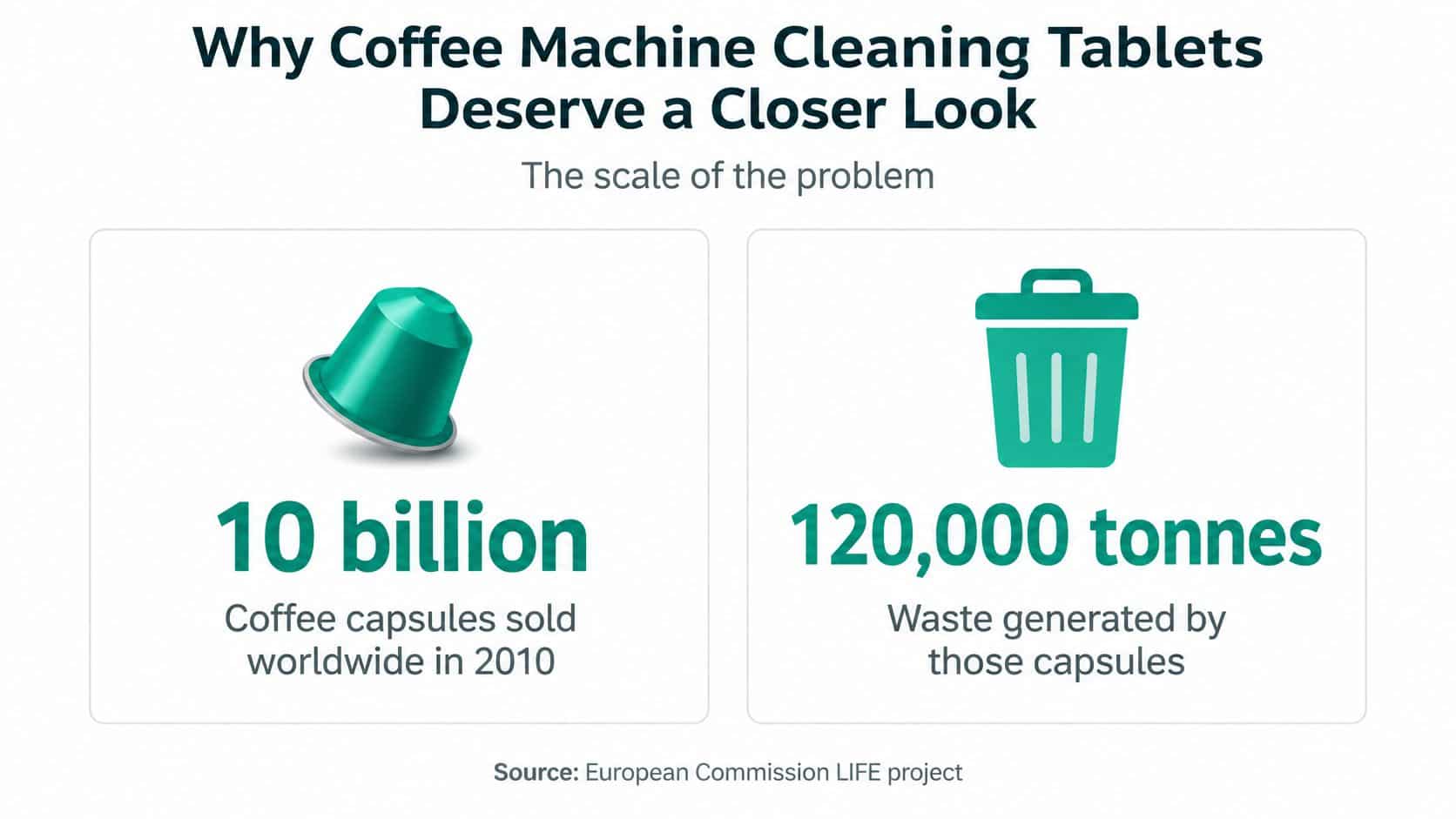
Switching to a reusable pod, drip brewer, or espresso machine sidesteps that waste stream, but only if you keep the equipment running. Every brew deposits bitter coffee oils along brew needles, dispersion screens, and valves, while tap water leaves chalky mineral buildup behind. Ignore that grime, and flow slows down, extraction turns harsh, and frustrated owners end up tossing reusable gear back in a drawer.
The Hidden Dilemma Behind Green Tablet Labels
Regular maintenance keeps reusable coffee gear in service, which is where cleaning tablets step in. Still, swapping a liquid jug for a green-labeled tablet doesn't automatically solve the environmental side of cleaning. Every rinse cycle flushes dissolved surfactants, fragrances, and preservatives straight down the drain, and a tablet built for the wrong appliance can chew through gaskets or leave stubborn film inside a narrow brewing path.
Keeping a reusable brewer alive cuts capsule waste, yet that win shrinks fast if your maintenance tablets send unscreened chemicals into household wastewater or force repeat cleaning cycles.
To judge any box sitting on a shelf or in an online cart, I ignore front-of-pack buzzwords and run five concrete checks:
- Surfactant biodegradability to verify how thoroughly the active cleaners break down after rinsing.
- Full ingredient disclosure so hidden dyes, fragrances, or polymers can't slip past unnoticed.
- Aquatic toxicity limits to keep rinse water from stressing waterways.
- Packaging materials to make sure you aren't trading one kind of waste for unnecessary plastic films.
- Machine-specific directions so you get clean results on the first pass without overdosing.
Pairing those five label checks with smart dosing and water temperature choices shows you what a tablet costs the environment. You can run this exact test on the very next box of cleaning tablets you pick up.
What Makes a Cleaning Tablet Genuinely Eco Friendly
Words like "natural," "plant-based," and "eco-friendly" don't carry a binding technical threshold on a cleaning box. By contrast, the U.S. EPA Safer Choice program, which qualifies nearly 2,000 products, screens every single ingredient against criteria covering human health, aquatic toxicity, environmental persistence, volatile organic compounds (VOCs), product performance, ingredient disclosure, and packaging. VOCs matter indoors and out because volatile cleaning components evaporate into kitchen air and contribute to outdoor smog formation.
When you evaluate cleaning tablets for a coffee machine, ultimate aerobic biodegradability of the surfactant system is the cleanest technical benchmark available. Under EU detergent rules, surfactants must reach at least 60% mineralization within 28 days, breaking down into carbon dioxide, water, and mineral salts under standardized test methods. Primary biodegradation only means a surfactant loses its foaming or surface-active behavior, whereas ultimate biodegradation confirms deeper chemical breakdown after coffee oils wash down the drain.
Why One Biodegradable Ingredient Never Clears the Whole Tablet
Passing a surfactant test doesn't automatically make the full tablet low-impact. Builders, binders, chelating agents, dyes, and polymers require separate review, and consumer product disclosures such as Bajabee's universal cleaning tablet ingredient listing show that formulas marketed as biodegradable or phosphate-free can still include anionic and non-ionic surfactants, added fragrance, and preservatives like sodium benzoate. Phrases such as "septic-safe" and "phosphate-free" stay marketing copy until a brand publishes the ingredients and test standards backing them up.
Aquatic toxicity draws another firm line. Under the EPA Safer Choice standard, ingredients with aquatic-toxicity values below 10 mg/L aren't permitted in direct-release products, and applicable certified products must also meet packaging benchmarks such as at least 95% recycled material. If you also want to understand how cleaner chemistry interacts with food-contact brew paths, our guide to food-grade cleaning products breaks down what matters inside kitchen appliances.
Five Checks for an Eco Friendly Cleaning Tablet
| Check | What Qualifies | Why It Matters | How to Verify |
|---|---|---|---|
| Surfactant biodegradability | At least 60% mineralized within 28 days | Rinse water carries surfactants into wastewater | Request the test method and standard used |
| Full ingredient disclosure | Every ingredient listed, including fragrance and preservatives | Shows builders, dyes, and polymers that need separate review | Read the label and product page |
| Aquatic toxicity | No ingredient with a value below 10 mg/L in direct-release products | Limits harm to waterways from rinse residue | Look for Safer Choice certification or published test data |
| Packaging | Recyclable or minimal material with no extra film layers | Packaging adds waste to every box bought | Check the material list and recycling symbols |
| Machine-specific directions | Dose, water volume, and rinse count for named machine types | Prevents overdosing and repeat cycles | Compare with the machine manual |
Practical test: If a tablet's box and product page fail to back up even one of these five checks, treat its eco-friendly claim as unverified and move on.
Where the Environmental Cost Really Comes From
Are cleaning tablets greener if a weaker formula forces you to run scorching hot water and repeat cycles just to clear coffee oils? Most shoppers stare at cardboard boxes and plastic wrappers first, which makes sense given consumer focus on waste: in November and December 2024, 2,016 U.S. consumers weighed in on sustainable packaging preferences for Shorr's 2025 Sustainable Packaging Consumer Report.
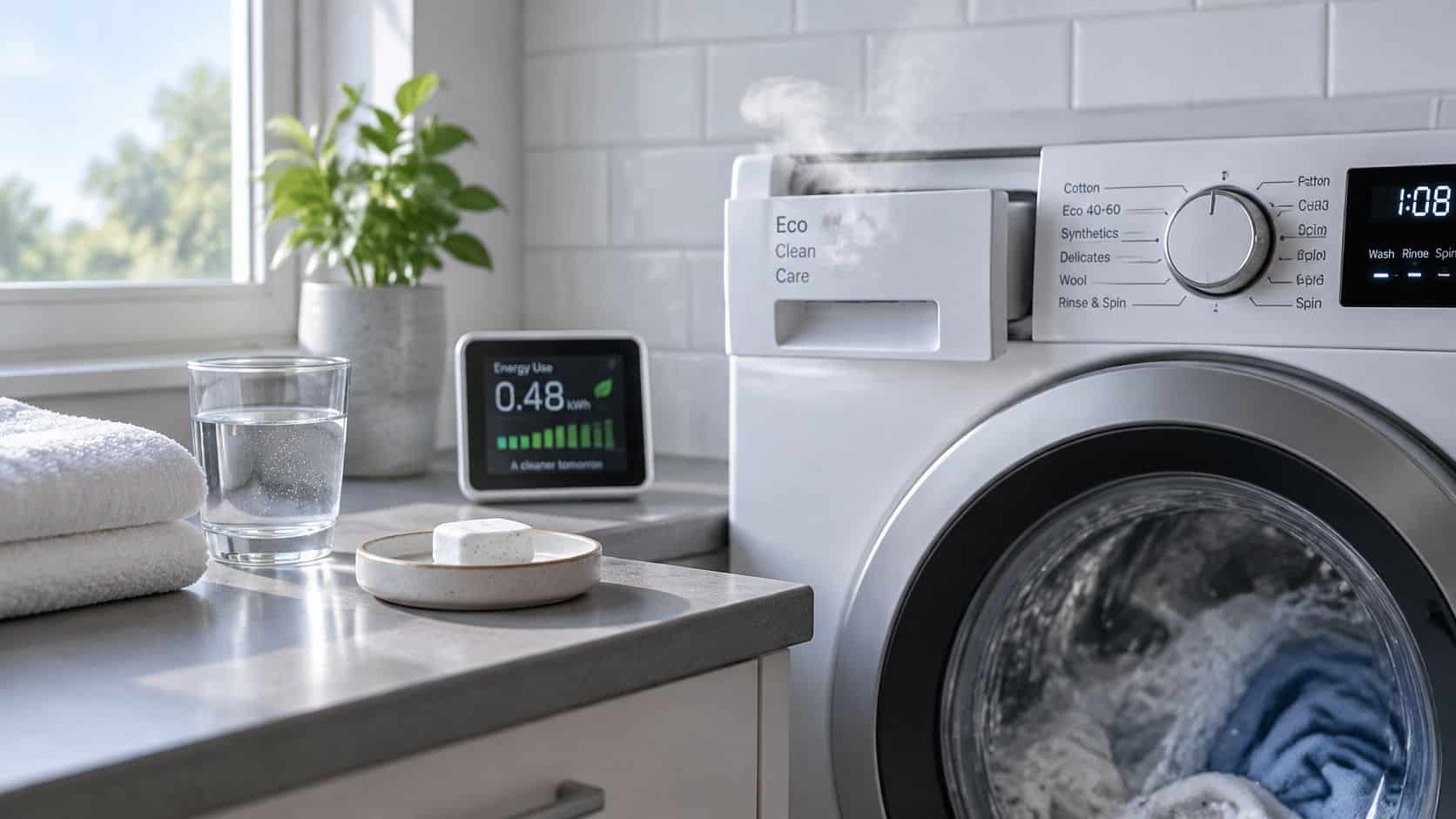
Yet packaging rarely tells the whole environmental story once a cleaner enters your home. A peer-reviewed compilation of household-detergent life-cycle studies published in Environmental Sciences Europe found that the use phase, especially the energy needed to heat water, was the largest contributor to overall environmental impact across the evaluated systems. Shipping a light solid tablet cuts transport weight, but heating tank after tank of extra water can erase that savings fast.
Running a second cleaning tablet because the first left oily residue is like running a dishwasher twice to clean a single plate. You double the chemical discharge, double the water consumed, and double the electricity burned by the brewer's heating element.
How Dose and Film Design Shape Real Footprint
A solid tablet controls dosing only when you match it to the cleaning cycle. In EU detergent guidance, regulators treat the number of tablets as a formal dosage quantity tied to intended cleaning conditions. Drop in two tablets when your brewer calls for one, and you push excess surfactants into wastewater without lifting any more coffee oil. Cut a tablet in half to stretch the box, and leftover oils force an extra cleaning run.
Water-soluble wrappers deserve the same clear-eyed scrutiny. Dissolving in water doesn't prove a wrapper vanishes harmlessly into nature, which is why the newer EU detergent framework is scheduled to extend biodegradability requirements to polymers in detergent films starting 23 March 2032, as noted in that same EU guidance. Until film polymers meet strict breakdown rules, compact moisture-protected tablets in minimal recyclable cartons beat unnecessary extra film layers.
To see how cleaning tablets behave in real household cycles and why proper use matters alongside packaging claims, watch this short walkthrough before your next maintenance cycle.
Three Dosing Rules That Beat Green Packaging Alone
- Match the label's water temperature. Use cold or minimally heated water whenever the tablet's dissolution directions allow it, because heating extra water drives energy consumption faster than cardboard weight ever will.
- Use the exact tablet count printed for your brewer. Follow the stated reservoir volume so concentration stays high enough to break up coffee oils in one cycle.
- Confirm clean results by taste, not guesswork. Brew a plain-water cup after rinsing instead of reflexively dropping in a second tablet "just to be sure."
If you're looking at broader ways to trim waste across daily brewing habits, our overview of coffee maintenance sustainability practices outlines simple habits that pair well with low-impact tablets. In day-to-day coffee care, the lowest-impact tablet is almost always the one that dissolves cleanly at lower temperatures and clears oil buildup on the first pass.
Premium and Generic Tablets Side by Side
Walk down an online marketplace search for coffee cleaner tablets, and two boxes can look nearly identical on screen while behaving very differently inside your brewer. One lists every active ingredient, states compatible machine families, and prints exact rinse counts. The other promises "all-natural coffee cleaning" for every brewer on earth and leaves you guessing how much water to fill.
Premium and Generic Tablets Compared on Five Factors
| Factor | Premium Tablet With Documented Specs | Generic Tablet | What It Means for You |
|---|---|---|---|
| Ingredient disclosure | Full list on label and product page | Often only eco or natural wording | Lets you check surfactants and fragrance |
| Machine compatibility | Named machine types and model families | Often a general claim for all coffee makers | Helps you avoid formulas made for another appliance |
| Independent verification | Named certification or test listing you can look up | Rarely named | Gives you a record you can check |
| Dosing and rinse guidance | Dose, water volume, and rinse count per machine | One generic instruction | Reduces overdosing and residue |
| Packaging | Stated material and recyclability | Often not stated | Shows the waste produced per cycle |
Two Buyer Objections Worth Addressing Directly
The first worry I hear from home brewers is simple: Will a cleaning tablet leave chemical residue in my coffee? In practice, off-tastes almost always happen when someone rushes the rinse phase, not because a properly formulated tablet refuses to wash out. Running the full plain-water rinse count printed on the box flushes loosened coffee oils and detergent from internal lines, and brewing one plain cup of hot water afterward gives you an immediate taste check before you grind fresh beans.
The second worry is machine damage or warranty trouble. Independent safety certification and appliance fit are two separate questions, and buyers often confuse them. For commercial equipment, NSF International's public coffee cleaner listings evaluate cleaners under NSF P152 for health effects and corrosivity across multiple coffee-equipment tablets and powders. That kind of public listing shows what verifiable third-party testing looks like, yet it doesn't certify every tablet on the market or guarantee compatibility with every countertop brewer.
Never assume the word "coffee" on a cleaning box means the formula matches your machine's seals, valves, and internal coatings.
Owners of Keurig, Ninja, Breville, Cuisinart, or home espresso machines should cross-check both the appliance manual and the tablet label before running a cycle. Substituting a heavy-duty commercial espresso backflush tablet into a plastic single-serve reservoir can stress seals and leave you with leaks or voided coverage.
How to Compare Real Cost Per Cleaning Cycle
Price tags mislead shoppers when one brand requires two tablets per clean and another needs just one. Divide the total box price by the number of full cleaning cycles printed on the directions, not by the raw tablet count. A slightly higher upfront box price often costs less per cycle when you factor in documented dosing, zero wasted repeat runs, and safer compatibility with your brewer.
How to Use a Cleaning Tablet Safely, Step by Step
Even the cleanest formula on the market performs poorly if you toss it into a half-empty tank with a water filter still snapped in place. Following a repeatable sequence protects reusable accessories, clears rancid oils in a single run, and keeps cleaner out of your morning cup.
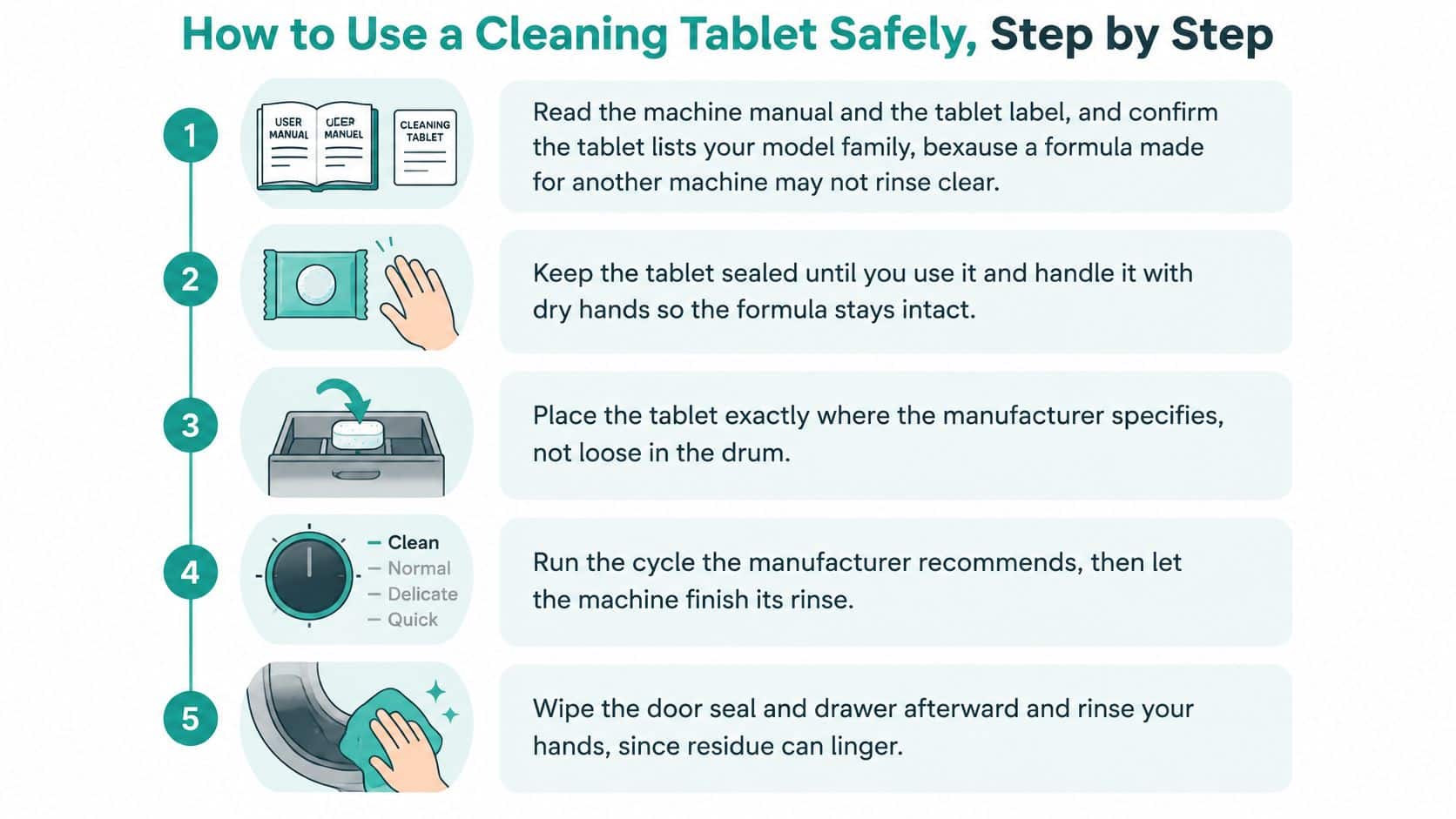
- Check both the machine manual and the tablet label. Confirm the tablet explicitly names your model family before opening the wrapper, because a cleaner engineered for a different brewer can degrade internal seals or coatings.
- Pull out pods, filters, and the drip tray, then empty the reservoir. Removing charcoal water filters and reusable pods prevents cleaning solution from soaking into filter media or screens you plan to keep brewing with. (If your charcoal filter is already nearing replacement, wait until the final rinse finishes before snapping in a fresh one, which also helps slow future mineral buildup.)
- Dissolve the tablet in the exact fresh-water volume printed on the label. Overfilling dilutes the active cleaner and weakens oil removal, while underfilling leaves concentrated solution clinging to narrow tubing.
- Run the cleaning cycle and honor the full contact time. Letting the solution sit for the stated window loosens baked-on coffee oils and scale without requiring hotter water or a second tablet.
- Dump any leftover solution and run every printed fresh-water rinse cycle. Refill the tank with clean tap or filtered water and cycle it through until you hit the exact rinse count on the box so surfactants clear completely.
- Brew one plain cup of hot water and taste it. If you notice bitterness, slickness, or any trace of cleaner, run one extra plain-water rinse instead of starting a second full tablet cycle.
For a repeatable monthly schedule covering needles, reservoirs, and brew baskets, keep our coffee machine maintenance checklist handy near your coffee station.
Safe Handling, Storage, and Label Verification
Keep unused tablets sealed in their original moisture-resistant packaging, handle them with dry hands, and store the box high and dry away from children and pets. Never mix a coffee cleaning tablet with chlorine bleach, vinegar, or a separate liquid descaler in the same tank, because combining cleaning chemicals can create hazardous fumes or damage metal boilers.
When evaluating residue safety on a package, look for recognized third-party screening rather than unverified green slogans. According to EPA guidance on the Safer Choice label, certified products undergo ingredient-by-ingredient review regardless of concentration across hazards including carcinogenicity, reproductive and developmental toxicity, aquatic toxicity, persistence, bioaccumulation, systemic toxicity, asthma sensitization, and skin or respiratory sensitization, while impurities failing those criteria can't exceed 0.01% of the final product. Not every coffee-machine tablet carries that mark, so check the label directly instead of assuming certification.
Wastewater and Private Septic Considerations
In homes connected to municipal sewers, spent cleaning and rinse water drains safely through standard kitchen plumbing when you follow label directions. If your home or small workplace runs on a private septic system, read the label's wastewater instructions carefully and check local septic guidance before scheduling frequent tablet cycles, since drainage soils and tank biology differ from municipal treatment plants.
Confirm Your Machine and Choose Your Tablet Today
Buying smarter doesn't take hours of research once you know what to verify. Before you add any box of cleaning tablets to your cart, run through four quick checks:
- Confirm your machine family in the manual so the tablet's chemistry fits your brewer's valves, gaskets, and brew path.
- Score the label against the five checks covering surfactant biodegradability, complete ingredient disclosure, aquatic toxicity, minimal recyclable packaging, and machine-specific directions.
- Commit to the exact dose and rinse count printed on the package so you get a clean brew path in one cycle without wasting water or energy.
- Store sealed packs safely in a dry cabinet out of reach of kids and pets, separated from bleach or secondary descalers.
When you want cleaning and filtration lined up on the same simple calendar, our Keurig & Breville Descaling and Cleaning Tablets come in a 24-count pack with 6 compatible water filters for $19.95. Keeping fresh replacement filters paired with regular tablet cycles cuts down mineral buildup between cleans, and PureHQ products are trusted by homes nationwide. If your brewer relies on hard tap water and builds heavy scale quickly, pairing routine tablet cleans with a dedicated coffee machine descaler keeps internal heating lines clear even longer.
Check your brewer's model number against the product page and your appliance manual before ordering, because confirmed model fit always comes first. Run every box you consider through the five checks above, and you'll pick a tablet that protects both your coffee maker and the water running out of your sink.
PureHQ Inc. oversees its own manufacturing of reusable pods, water filters, descalers, and maintenance tablets designed to keep Keurig, Breville, Ninja, and other home coffee makers brewing cleanly with less waste. Check your model compatibility and stock up before your next cleaning cycle is due by visiting PureHQ Inc. today.

