
Coffee Machine Care
Coffee Filter Basket Replacement Guide
Aug
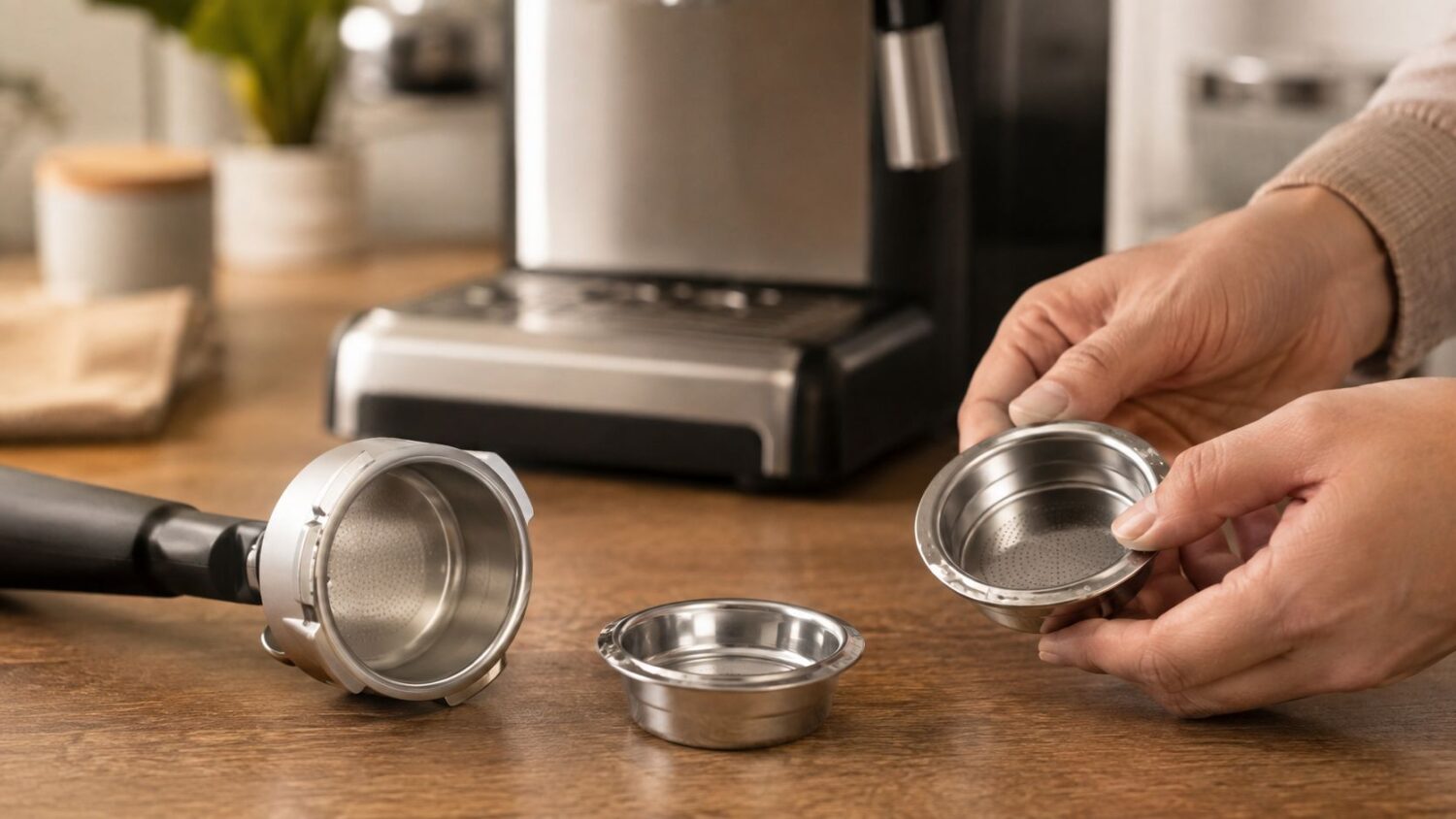
You pull the carafe from the brewer and find grounds in the cup. Or your espresso portafilter will not lock because the basket is slightly too wide. These symptoms often come from a measurement or fit mistake, not a failed machine. Match the basket's diameter, depth, rim shape, and holder style before ordering.
Coffee filter basket replacement is a routine accessory purchase. Amazon currently shows more than 2,000 coffee filter basket results, including listings with 30K+ bought in the past month. Prices range from about $5 for basic parts to roughly $10–$15 for branded or machine-specific replacements, as reflected in this market overview and replacement basket pricing. Drip brewers often require the exact rim and cone shape, while espresso machines also depend on portafilter diameter, basket depth, and single- or double-wall design.
Why Your Coffee Filter Basket Needs Replacing
The failure usually appears during an ordinary morning. A customer lifts a reusable basket to dump the grounds and notices a split along the plastic rim. Another finds that the fine mesh has opened near the base, while someone with an espresso machine discovers the original basket is missing after a move. A quick rinse or improvised paper liner may get coffee on the table, but it won't restore reliable flow.
Heat cycling can fatigue plastic baskets over time. Reusable metal mesh can clog, deform, or lose its integrity, and aggressive scrubbing can damage openings that need to remain consistent. A cracked rim lets water bypass the intended path. A warped basket can sit unevenly in its holder. Damaged mesh allows grounds into the brew and changes how quickly water passes through the coffee bed.
Signs cleaning won't solve the problem
Cleaning may be enough when the basket remains structurally sound but has oily residue or mineral deposits. Rinse it thoroughly, brush the openings gently, and inspect it under good light. If the basket still holds its shape and sits level, a deep clean may restore normal brewing.
Replacement makes more sense when you see:
- Cracks or splits: A visible break in the rim or body can widen during brewing.
- Warping: A basket that rocks, twists, or no longer rests evenly can disrupt flow.
- Open or damaged mesh: Enlarged holes can send grounds into the cup and create uneven extraction.
- Persistent overflow: If the holder is clean and the basket is correctly positioned, overflow may indicate a distorted basket.
- A missing original part: Paper improvisation doesn't reproduce the support, depth, or flow pattern of the intended basket.
Practical rule: Don't glue a cracked basket or force a bent one into place. Hot water, pressure, and an unstable fit make a temporary repair unreliable.
Basket design has also changed from disposable paper-filter use toward reusable metal and machine-specific formats. Current listings include permanent gold-tone filters, legacy drip-brewer replacements, and espresso baskets in standardized diameters, so a brewer can often be repaired without replacing the whole machine. That repairability supports a lower total ownership cost and keeps a functioning appliance in service. (home-machine filter basket selection)
For a useful primer on choosing filtration by brew method, read Cartograph Coffee's guide to brew better coffee with the right filter before ordering a replacement.
Measuring and Identifying the Right Replacement Basket
The safest approach is simple: measure the machine, identify the basket type, then verify the model compatibility. Assuming that every basket is universal creates most ordering problems because diameter, depth, retaining hardware, and holder shape all vary.
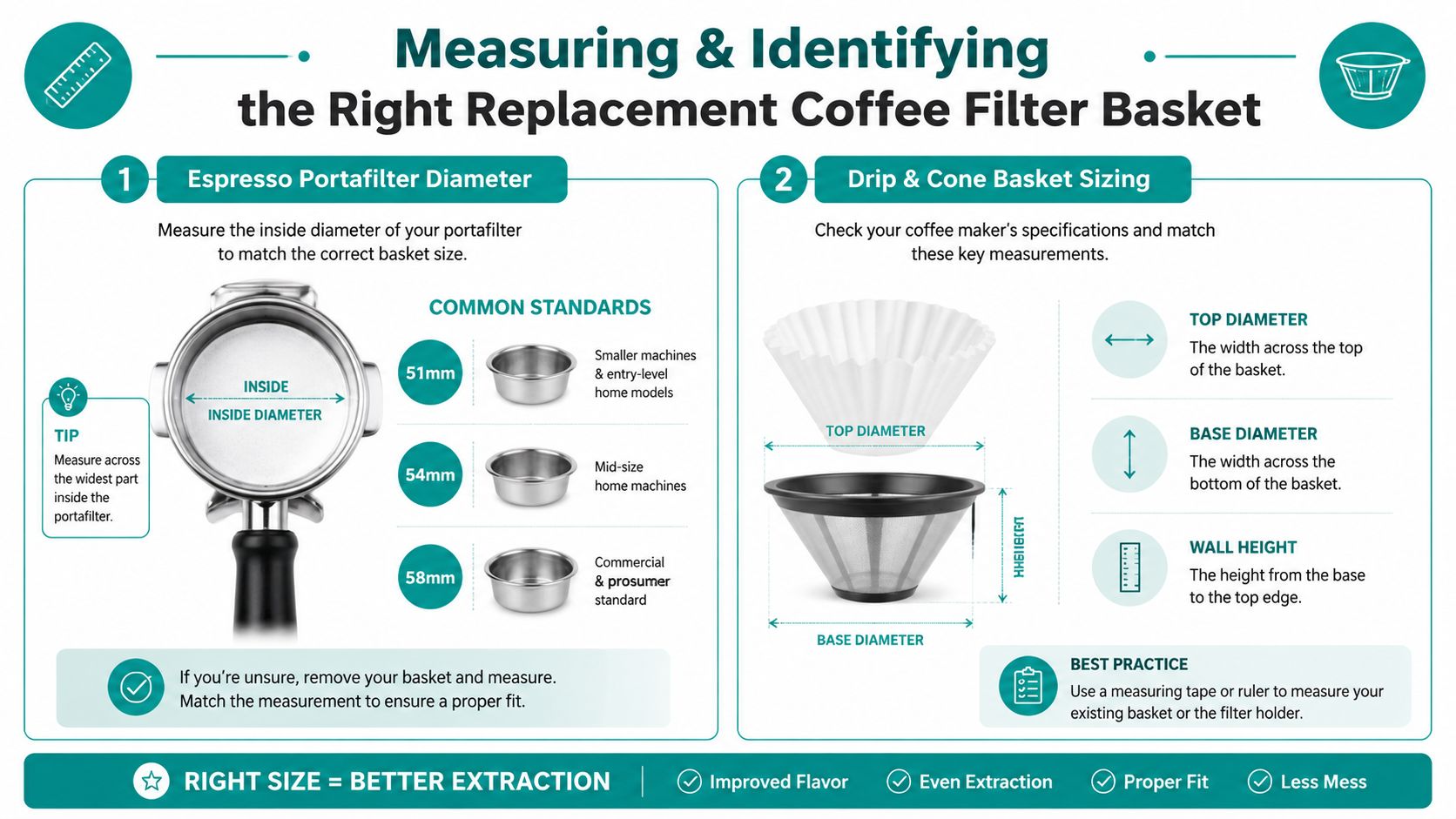
Espresso portafilter measurements
Remove the basket from the portafilter before measuring. Measure the basket's outside diameter across the rim, not the inside brewing surface. Common espresso dimensions include 51 mm, 54 mm, and 58 mm, and the diameter must match the machine's group head and portafilter exactly. (espresso basket sizing guidance)
Depth matters too. A basket can have the correct diameter and still fail if it sits too deep, contacts the shower screen, or leaves insufficient room for the retaining spring. Dose and geometry also vary. For example, 58 mm double-shot baskets are commonly paired with around 14–16 g, while some deep baskets are intended only for bottomless holders. (precision basket specifications)
Drip basket measurements
For a drip brewer, measure the base diameter and wall height. Note whether the basket has a flat bottom, tapered walls, a handle, a side tab, or a specific release notch. Common capacity categories include 4-cup, 8–12-cup, and larger commercial formats, but the capacity label alone doesn't guarantee a physical fit. (drip basket size guidance)
Find the brewer's model number on the underside, rear label, or original manual. Search that model alongside terms such as “replacement filter basket,” then compare the seller's compatibility list with the basket shape and measurements. The coffee maker basket guide from PureHQ Filters is useful when you need to distinguish a carafe basket from a pod holder or a paper-filter support.
Identify the basket style
A permanent gold-tone filter normally has a reusable fine mesh and a rigid frame. A machine-specific replacement basket follows the original brewer's shape and release mechanism. A paper filter holder supports disposable paper and may not include mesh at all.
Don't order based only on the word “universal.” Even a small dimensional mismatch can prevent the basket from seating, alter the seal, or cause overflow. Photograph your old basket beside a ruler, record the model number, and compare the rim, base, height, and locking features before checkout.
Removing and Installing Your New Basket
Installation should be controlled, not forceful. A basket that needs excessive pressure usually has the wrong dimensions, an obstructed groove, or a worn retaining component.
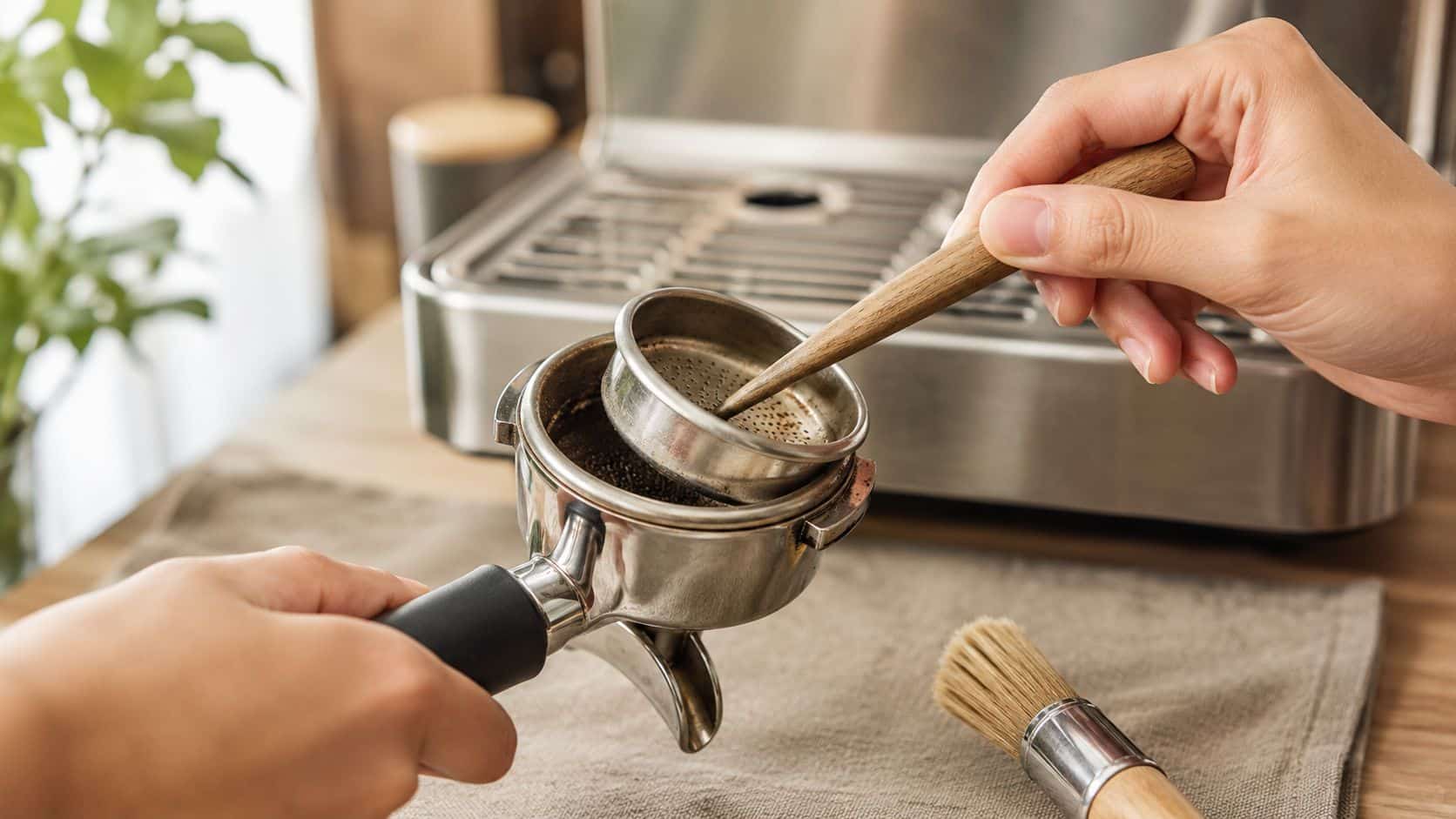
Espresso portafilter sequence
- Remove and cool the portafilter. Take it out of the group head and let the metal cool enough to handle safely. Cooling also reduces the chance of burns from trapped water.
- Release the old basket from the rim or underside. Use your fingers or a purpose-built non-metallic method approved for the portafilter. Metal screwdrivers and knives can scratch the basket seat or deform the rim.
- Clean the groove and walls. Remove coffee oils, grounds, and scale from the recess where the retaining spring holds the basket. A small nylon brush works better than scraping with metal.
- Inspect the retaining spring. If the basket repeatedly falls out, the spring may have lost tension or shifted in its groove.
- Press the new basket in evenly. Start at one side and work around the rim until the basket sits flush. It shouldn't rock, tilt, or leave a visible gap.
- Run a water-only test. Lock the empty portafilter into the machine and brew without coffee. Watch for edge leakage, unusual movement, or water escaping around the rim.
A correct basket should remain stable during the test. Seeping commonly points to a mis-seated basket, an incorrect size, or a retaining spring that needs attention. The espresso portafilter basket replacement sequence follows this cool, remove, clean, seat, and test approach.
Drip brewer installation
Switch the brewer off and remove the carafe and filter holder. Release the old basket according to the machine's mechanism, which may use a lift-out tab, side latch, hinged support, or molded guide. Wash the holder and the area beneath it, then dry both parts before installing the replacement.
Place the new basket into its guide and rotate or press it until every locating tab sits in the matching recess. Check that the rim is level and that the basket doesn't obstruct the lid or drip-stop valve. A basket placed on top of a release tab rather than inside its guide can look correct while directing water over the edge.
If the measurements match but the basket won't seat, compare the old and new parts side by side. Check for a thicker rim, a different base profile, an extra support rib, or a packaging clip that hasn't been removed. Don't sand the basket or bend the holder until the manufacturer confirms that modification is safe. For terminology that helps identify the correct component, consult this guide to the parts of a coffee pot.
OEM Versus Third-Party Replacement Baskets
The right choice depends on how exact the machine's fit needs to be. An OEM basket usually reproduces the original rim, depth, locking geometry, and material specification. A third-party basket can work very well when its dimensions and construction match the brewer, especially for common drip formats, but the product listing needs more scrutiny.
The visible replacement market spans budget parts near $5 and branded or machine-specific options closer to $10–$15. (replacement basket price tiers) Price alone doesn't prove quality, but an unusually vague listing gives you fewer ways to confirm compatibility.
OEM vs Third-Party Basket Comparison
| Factor | OEM Baskets | Third-Party Baskets |
|---|---|---|
| Fit | Built around the manufacturer's specified holder and machine geometry | Fit depends on accurate measurements and a reliable compatibility list |
| Material | Matches the original construction more closely | May use stainless steel, plastic, or a combination, depending on the product |
| Best use | Espresso machines and unusual holders with tight tolerances | Standard drip brewers and common reusable filter formats |
| Price | Often higher, especially for branded or machine-specific parts | Often lower, with quality varying by manufacturer |
| Warranty | Usually easier to document for a warranty claim | Check whether using the part affects coverage and retain the receipt |
| Returns | Compatibility is often clearer through the maker | A strong return policy matters when dimensions are uncertain |
For espresso, OEM is often worth the extra cost when the machine uses a proprietary basket, unusual retaining system, or unusually tight group-head tolerance. Third-party options make more sense when the seller publishes diameter, depth, mesh or hole design, and supported models.
Food-contact material is a meaningful quality indicator. Reusable listings commonly specify food-grade stainless steel and fine mesh, with some products combining stainless steel and plastic. (reusable basket material information) Those details don't guarantee a perfect fit, but they help separate a documented replacement from an unverified generic.
Leaks and poor seating usually result from incorrect dimensions, a damaged rim, or a retaining spring problem. Before blaming the basket, verify the model, measure the old part, inspect the holder, and confirm that the seller accepts returns. If you're comparing parts for another appliance ecosystem, you can also browse EcoQuest Purifiers parts for an example of how replacement categories organize machine-specific components.
Maintenance Tips to Extend Basket Life
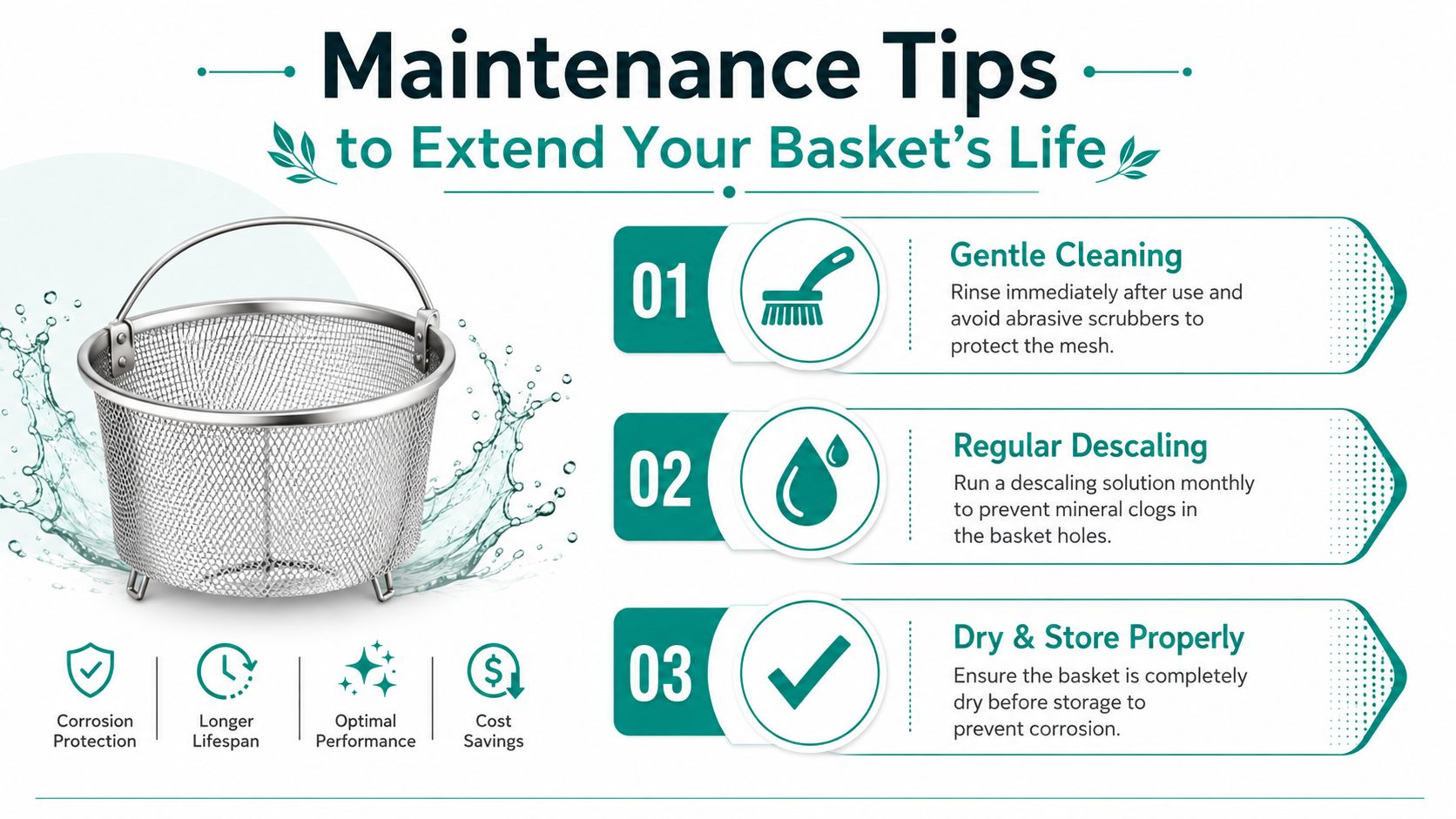
A replacement basket lasts longer when you treat the mesh and seating surfaces as precision parts. Knock out grounds promptly, rinse away residue, and use a soft nylon brush to clear openings. Don't attack fine mesh with abrasive pads, sharp picks, or excessive force because those tools can enlarge holes or bend the frame.
Clean according to the basket material
For stainless steel reusable baskets, rinse immediately after brewing and let water pass through the mesh from the clean side. A mild cleaner can remove coffee oils, but follow the basket and machine manufacturer's directions rather than assuming every detergent is safe. Harsh chemicals can affect finishes, seals, or nearby plastic.
Plastic drip baskets need special care around clips, hinges, and thin rims. Wash away coffee residue without twisting the basket. If a spring tab or drip-stop component sticks, clean the holder and valve area instead of forcing the basket into position.
A clean basket can still be a failed basket. Deep cleaning removes residue, but it won't repair a split rim, distorted base, or permanently opened mesh.
Manage mineral buildup
Mineral deposits can restrict openings and collect in grooves, particularly when the machine uses hard water. Descale the brewer with a solution approved for that model, and follow the product instructions for dilution, contact time, and rinsing. Don't pour an unapproved acid through an espresso machine just because it worked on a kettle.
Pair a basket inspection with machine maintenance when flow slows, the holder develops visible scale, or the basket no longer seats smoothly. A compatible descaler and cleaning tablets can address mineral deposits and coffee oils, while a small nylon brush helps protect the basket during routine care. The coffee machine maintenance checklist can help organize those tasks.
Dry and store carefully
Let a reusable basket drain fully before storing it. Trapped moisture and coffee residue create unpleasant odors and can accelerate corrosion on lower-quality components. Keep a spare in a clean, dry place where the rim won't be crushed by heavier tools.
Replace rather than deep-clean when the mesh has separated, the frame has warped, or the basket still leaks after correct seating. Cleaning restores a sound component. It doesn't restore its original shape.
Get the Right Basket for Your Machine
A replacement fails most often because its measurements are wrong, not because the basket is poor. Make four checks: measure first, identify the basket style, verify compatibility, and install without forcing it. Espresso machines require the correct portafilter diameter and basket depth. Drip brewers may depend on base shape, wall height, capacity format, release features, and model number.
Measure the old basket at the rim and base, then compare its depth and shape with the machine manual or product specification. A photo can hide a rolled rim or a tapered wall, and those differences can stop the basket from seating or let water bypass the grounds.
Price is only part of the buying decision. A cheaper basket may have limited returns, while a branded replacement may offer clearer model compatibility or stronger warranty coverage. Check those terms before ordering, especially if the basket is sold as machine-specific.
PureHQ Inc. offers reusable coffee filter baskets, compatible mesh filters, paper liners, descaling solutions, and cleaning tablets for everyday home and small-office brewing. Visit PureHQ Inc. to match the basket and maintenance supplies to your coffee machine, then review its product FAQs and return policy before purchase.

