
Coffee Machine Care
How to Sprout Coffee Beans the Right Way

Aug
Most advice about sprouted coffee beans starts with the wrong question. People ask how to sprout any coffee bean, then discover too late that green, viable seeds and roasted beans are not the same thing at all. A roasted bean can make a cup of coffee, but it can't grow a coffee plant, and that confusion is where most failed attempts begin.
Coffee itself has a long path from seed to global crop. Historical accounts trace cultivation from an East African and Arabian origin into India around 1600, Europe by 1616, Java by 1699, and South America by 1730, and by 2023 global production of green coffee beans reached 11 million tonnes, with Brazil supplying 31% of the total (coffee bean history and production figures). That broad supply chain matters here because “sprouted coffee” sits on top of the same bean trade, but the word can mean several different things depending on who's talking.
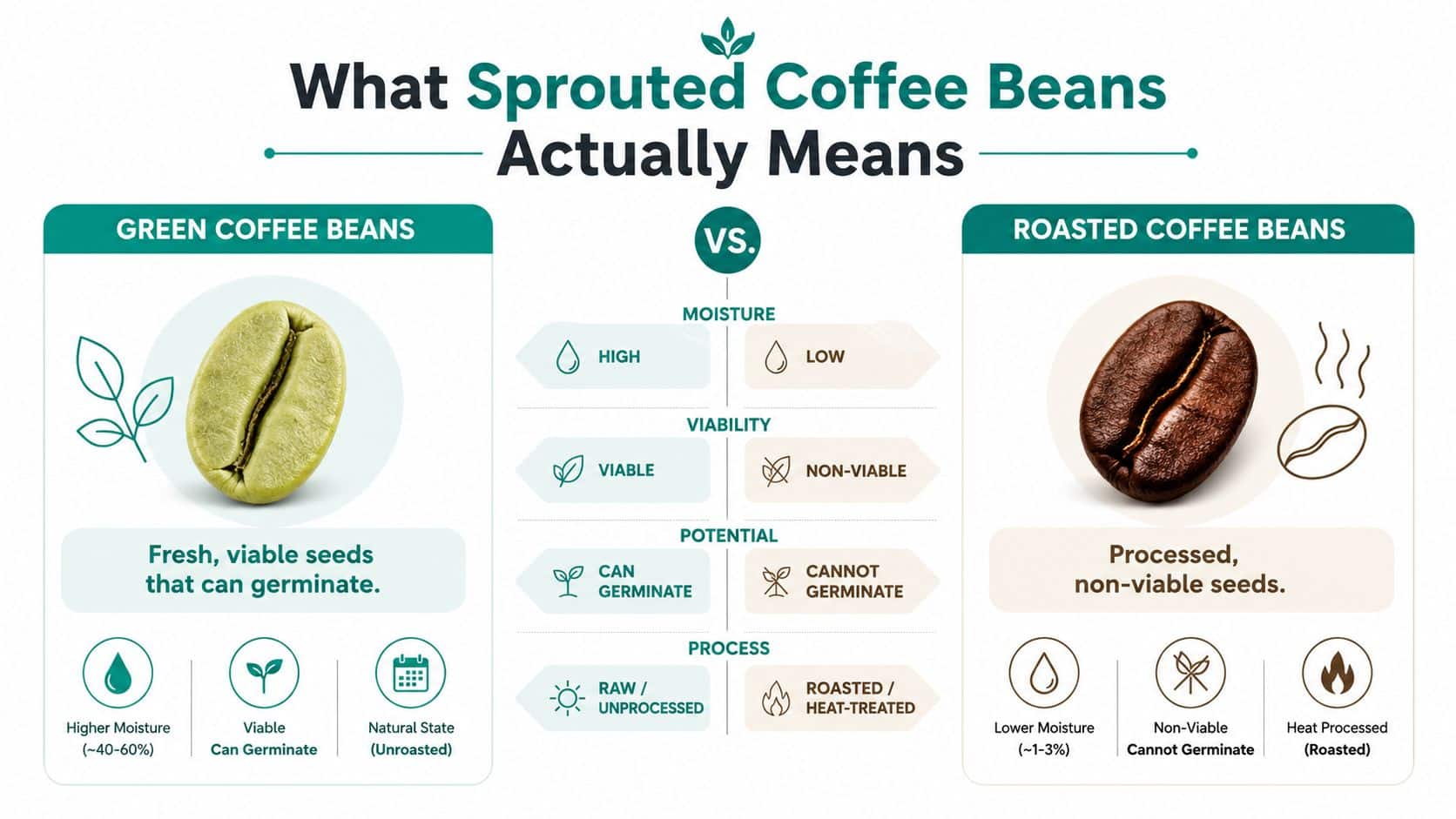
What Sprouted Coffee Beans Actually Means
The biggest mistake is assuming any coffee bean can be sprouted. It can't. In practice, the phrase sprouted coffee beans gets used in three different ways, and each one leads to a different answer, a different buyer, and a different amount of patience.
Three meanings, three outcomes
First, it can mean germinating a fresh green coffee seed so you can grow a coffee plant. That's the botanical meaning, and it only works with green, unroasted, viable seeds. Second, it can mean a processing claim for coffee that has been pre-treated before roasting, which is a very different thing from growing a plant. Third, people sometimes search for “sprouts” and land on unrelated retail results, which adds another layer of confusion.
| Meaning | What It Involves | Typical Time |
|---|---|---|
| Germinating fresh green beans | A viable seed, moisture, warmth, and patience | Weeks to months |
| Sprouted as a processing claim | A pre-roasting handling step for coffee sold as a finished product | Varies by brand |
| Retail or search confusion | A mixed-up query that points to unrelated coffee or grocery results | No fixed timeline |
Practical rule: if the bean is roasted, it's dead as a seed. If you want a plant, start with fresh green coffee or fresh fruit, not grocery-store beans.
That distinction saves a lot of wasted effort. It also tells you which section matters most: growing a plant, evaluating a retail product, or figuring out what the label means before you buy.
The Biology Behind a Coffee Seed Sprouting
A coffee seed is dormant, but not dead. It holds stored energy for early growth, and it responds only when moisture and warmth signal that conditions are safe enough for the embryo to wake. Once that switch flips, the radicle, the first root tip, breaks out and the seed starts becoming a seedling.
Why green beans can wake up and roasted beans can't
The central issue is viability. Green coffee seeds are still living plant material, while roasted beans have been heat-processed past the point where germination is possible, so they will not sprout. That is why advice for fresh seeds does not carry over to a bag of roasted grocery coffee.
The sprouting workflow described in the literature begins with soaking green coffee beans at about 28 to 32 °C for 12 to 36 hours. This warm soak helps the radicle emerge while the seed still has enough internal energy to keep growing (sprouting method details).

Moisture acts like the key, opening the door for germination. Warmth keeps the environment usable, and the seed then decides whether to begin growing. If the bean has already been roasted, the door is gone. The battery is empty.
A sprout is not a flavor trick by itself. It is a biological event, and that matters because biology stops the moment roasting starts.
That is why so many “why won't my beans sprout?” stories end the same way. The bean was never a seed anymore.
Germinating Green Coffee Seeds Step by Step
先把名詞說清楚,這一步處理的是綠咖啡種子的發芽,不是烘焙後的咖啡豆,也不是零售頁面上那種把「sprouted」當行銷字眼的說法。你若要的是一株能長出來的咖啡苗,重點就在種子是否仍然活著,還有你能不能把水分、溫度和空氣維持在它願意開始工作的範圍內。

Start with hydration, then keep conditions steady
先從補水開始。常見做法是把豆子浸在水裡 24 to 48 hours,讓種皮變軟,這樣後續更容易啟動生長 (planting guidance)。另一種做法把環境維持在溫暖的 28 to 32 °C,持續 12 to 36 hours,讓發芽訊號更容易被觸發,同時還保留種子的活性 (food-industry sprouting method)。兩種方法講的是同一件事,咖啡種子需要的是受控的濕度,不是泡在水裡出狀況。
水分控制也不能放鬆。綠咖啡標準常把含水量控制在 12.5% 左右,而咖啡種子發芽相關資料也提到約 10 to 15% 的理想區間,並偏好 12 to 13%,這正好說明這類種子對水分很敏感 (green coffee specification)。水太少,發芽會拖慢。水太多,腐敗風險就上來了。
用排水好的介質,保持溫暖、微濕,而不是整盆濕透。若你想找一個實際的土壤參考,Leaves & Soul 的 fast sprouting soil mixture 提供了一個很接近這類種子需求的鬆散結構範例。
What timing looks like in the real world
新鮮種子大致會在 6 to 8 weeks 發芽,有時會拖到 3 months (planting guide)。另一份咖啡種植說明則提到,依豆子年齡不同,發芽可能需要 2 to 6 months (planting guidance)。這樣的範圍很正常,不代表你在第十天就做錯了。
Practical rule: if your setup stays warm, moist, and airy, you're doing the right thing even when nothing visible has happened yet.
How Sprouting Changes Roasting, Brewing, and Flavor
很多人想要一個直接答案,咖啡種子發芽確實會改變豆子的起始狀態,但你最後喝到的那杯,仍然很大一部分取決於 bean selection 和 roast level。這也是為什麼有些標榜「sprouted coffee」的產品,包裝語氣很強烈,喝起來卻更接近熟悉的咖啡,而不是行銷文案寫得那麼誇張。
What the cup can and can't tell you
許多商業頁面把發芽說得像是自動去除雜質,或讓咖啡變成低酸,但目前可見的材料裡,沒有能直接支撐這些說法的公開對照測試。更穩妥的看法,是把變化拆開來看,是發芽步驟、咖啡品種、處理方式,還是烘焙程度造成了差異。這些都是分開的變因,卻常常被混成同一件事。
如果你是在家比較不同豆子,bean quality 仍然決定了杯中表現的上限。乾淨、挑選得好的豆子,通常比低等級豆子加上花俏標籤更容易得到可預測的結果,無論它有沒有經過發芽步驟。想更清楚理解這個更大的品質問題,可以看這篇 coffee bean quality and what changes in the cup。
Brewing matters more than most labels admit
就算發芽產品真的喝起來有差,沖煮失當也可能把差異蓋掉。礦物質太重的水會壓平明亮感,保養不良的機器也會帶進陳味,把細微風味差異直接蓋過去。這就是為什麼許多家庭沖煮者,最後更容易察覺到的是水質和機器清潔,而不是包裝上的說法。
Practical Germination Timelines
實際操作時,發芽對風味的影響也常跟時間有關。種子若是新鮮且狀態好,處理得當後,後續在烘焙前就會呈現不同的含水與結構感;但如果前段處理不穩,這種差異反而會變成烘焙難度,而不是風味優勢。這就像木材和石頭的差別,前者會吸水、釋水,後者反應慢得多,烘豆時你看到的曲線和聞到的香氣,也會跟著變。
一個合理的疑問是,「如果發芽沒有明確證明風味優勢,為什麼還要買?」答案很簡單,有些買家在意的是特定的製程故事,有些人只在意最後的杯測結果。這兩個目標本來就不同,包裝通常沒有把它說清楚。
Sprouted Green Beans vs Standard Green Beans
If you roast at home, the practical question isn't whether sprouted beans sound interesting. It's whether they behave differently enough to justify the switch. In most cases, the comparison comes down to moisture handling, storage, and how much uncertainty you want in your setup.
| Factor | Sprouted Green Beans | Standard Green Beans |
|---|---|---|
| Starting state | Pre-treated for germination or sold with a sprouted-process claim | Conventional green coffee seed |
| Storage sensitivity | Usually more sensitive because hydration matters more | More forgiving if kept dry and cool |
| Roast behavior | Can vary depending on how the bean was pre-treated | More predictable for most home roasters |
| Consumer objection | “Is this just a gimmick?” | “Why change what already works?” |
The most common objection is that sprouted beans are a gimmick. Sometimes that's fair, especially when the seller doesn't explain what was done to the bean. But a true germinated seed is not the same object as a standard green bean, and the difference starts before roasting, not after.
For brewing, the basics still matter. Clean water and a machine that isn't scaled up help you judge the bean fairly, whether you're using a sprouted lot or a standard green coffee. If you're testing multiple brews, PureHQ Inc. sells coffee accessories such as reusable K-Cups, filters, and maintenance items for compatible home brewers, which can help keep the machine side from muddying the comparison.
Growing a Coffee Plant From Sprouted Seed
Once a seed has broken dormancy, the job changes. You're no longer trying to wake up a bean, you're trying to keep a young plant alive long enough to make true leaves and build roots. That takes gentle handling, steady moisture, and far more patience than one might expect.
Moving from sprout to plant
Transplant the seedling carefully into a pot with a well-draining mix and keep the root zone evenly moist, not waterlogged. Coffee seedlings like warmth and humidity, especially early on, because dry air can slow growth and stress tender leaves. A small pot is usually easier to manage than a big one, since it helps you control water around a young root system.
Don't chase fast growth. Coffee rewards consistency, not dramatic feeding or constant repotting.
The long part comes later. Independent coffee-growing guides report that a coffee plant usually takes about 3 to 4 years before it begins producing significant crops, and Arabica often takes 3 to 5 years to mature (coffee tree lifecycle guide). That timeline is why many home growers treat the plant as a hobby, not a shortcut to a daily household harvest.
What to expect indoors
Indoors, coffee can still be a handsome foliage plant even if it never becomes a meaningful crop. In a non-tropical room, light, humidity, and temperature are usually the limiting factors, not the seed alone. If you do keep one going, regular cleanup around the pot helps, and some growers like to reuse spent grounds in the compost rather than pile them into the planting mix, which is covered in coffee grounds composting guidance.
Understanding the scale of the project is the win. A sprouted coffee seed is the beginning of a long, slow plant, not a fast path to home espresso.
Troubleshooting Slow Germination and Mold
Week two is where most attempts get emotional. The seed looks unchanged, the surface may fuzz up, and impatience starts to sound like evidence. Usually, though, the problem is simpler than it feels.
What the common failures usually mean
If a seed never opens, the first question is viability. Was it green and unroasted, or was it already heat-processed? If the bean was roasted, the answer is baked in.
If you see fuzzy white growth on the seed coat, the environment is probably too wet or too stagnant. Coffee seeds need moisture, but they also need airflow. A seedling that collapses at the soil line usually points to excess moisture or weak early stem growth, while a sprout that stalls at the radicle stage often needs steadier warmth and a cleaner medium.
A quick check before you toss anything
- Confirm the bean was green: Roasted coffee won't germinate.
- Check moisture levels: The medium should feel damp, not muddy.
- Review warmth: Germination slows when conditions drift too cool.
- Look at airflow: Closed containers can trap enough humidity to invite mold.
- Inspect timing carefully: Some seeds take weeks before they show anything visible.
If you've kept the seed in the right moisture range and it still hasn't moved, it may be too old. That's frustrating, but it's also normal with living plant material.
A slow seed isn't always a dead seed. Viability and timing are not the same thing.
Sourcing, Storage, and Your Next Cup
Sprouting starts with the bean you bring home. Use fresh, unroasted green coffee from a source that handles it carefully, because heat, moisture, and age can all reduce viability before the seed ever reaches water or soil. If you are sorting through product pages or search results, remember that “sprouted coffee beans” can mean a living coffee seed, a retail label, or even a branded search term, so the first job is to make sure you have the right material for the result you want.
Storage matters as much as the purchase. Keep green coffee cool, dry, and protected from humidity, since a bean that absorbs moisture in storage can arrive already stressed. A simple rule helps here, airtight storage guidance from airtight coffee storage guidance is useful if you want to keep unused green coffee in better shape for later attempts.
The same careful approach carries into the cup. A bean that was handled gently on the way in often tastes better on the way out, especially if your brewing setup is clean and your water is fresh. A well-maintained brewer, filtered water, and a reusable pod or filter let you evaluate the coffee itself instead of the residue from an older machine.
PureHQ Inc. makes coffee accessories for home brewers who want cleaner, more consistent brewing, including reusable K-Cups, filters, and maintenance items for compatible machines. If you are growing, roasting, or comparing beans with a sharper eye, visit PureHQ Inc. to see accessories that help your machine keep up with your coffee.

