
Coffee Machine Care
Airtight Coffee Storage: Keep Your Brew Fresh
Jul
You can buy good beans on Saturday, forget about them on the counter, and by the next weekend wonder why the coffee tastes dull, thin, and expensive in the wrong way. That isn't bad luck. Once roasted coffee is opened, the National Coffee Association says whole beans are only expected to stay fresh for about 1 to 3 weeks, while opened ground coffee usually holds for just 1 to 2 weeks at room temperature, which is why airtight coffee storage matters so much after the bag gets opened (National Coffee Association guidance).
That short window changes the way you should think about your stash. Coffee isn't a dry good you can toss in a cabinet and forget, it's a perishable food with a freshness curve, and every extra bit of air exposure pulls it farther from the cup you paid for. If you use reusable K-Cups, the problem gets even more obvious, because stale grounds can leave you with a weak brew, more residue, and a machine that never gets the clean, rich extraction you wanted in the first place.
Why Your Coffee Loses Its Flavor Faster Than You Think
The first bad cup usually shows up in a simple way. The aroma feels muted, the sweetness drops away, and what used to smell lively tastes flat before you've even finished the mug. That happens because roasted coffee starts shedding the volatile compounds that carry aroma and flavor as soon as it meets air, light, heat, and moisture.
A lot of people blame the roaster, the grinder, or the brewer first. In practice, storage is often the missing piece, especially after the bag has been opened and the beans are already losing ground. Whole beans keep flavor longer than pre-ground coffee because they expose less surface area to oxygen, which is why bean quality matters so much once the package is open. For a closer look at how freshness affects what ends up in the cup, this PureHQ article on coffee bean quality connects storage habits to the flavor you taste.
One practical move changes the whole routine. Buy less coffee at a time, keep it sealed, and treat every opened bag like something you are trying to preserve, not display.
Practical rule: once coffee is opened, the goal is to slow staling, not stop time.
That matters even more if you brew with reusable K-Cups. Stale coffee doesn't just taste weaker, it also gives you less satisfying extraction and can leave more residue behind in the machine, which means your daily cup and your equipment both take the hit.
Defending Your Beans From Air, Light, Heat, and Moisture
Coffee has four main enemies, and each one attacks flavor in a different way. If you understand the mechanics, storage stops being guesswork and starts looking like a simple protection plan.
Air steals freshness first
Oxygen drives oxidation. As coffee sits exposed, it loses the oils and aromatics that make it smell and taste vivid. That is why a loose clip on a half-open bag is better than nothing, but it still leaves the beans breathing far more than they should.
Light breaks down delicate compounds
Direct light, especially on a clear jar sitting on a counter, works against flavor preservation. Coffee storage guides consistently steer people toward opaque containers because light exposure degrades the profile you're trying to keep intact (coffee storage guidance).
Heat speeds up staling
Heat doesn't just warm the beans, it speeds the chemical breakdown that pushes coffee toward a stale taste. That's why storage near ovens, dishwashers, or sunny counters is a bad trade, even if the container itself looks sturdy.
Moisture invites trouble
Moisture is the quiet one. It can dull flavor, add off-notes, and cause bigger problems if coffee is stored in the wrong place. A completely sealed container matters because a canister that leaks air often leaks humidity too, which is exactly what you don't want.
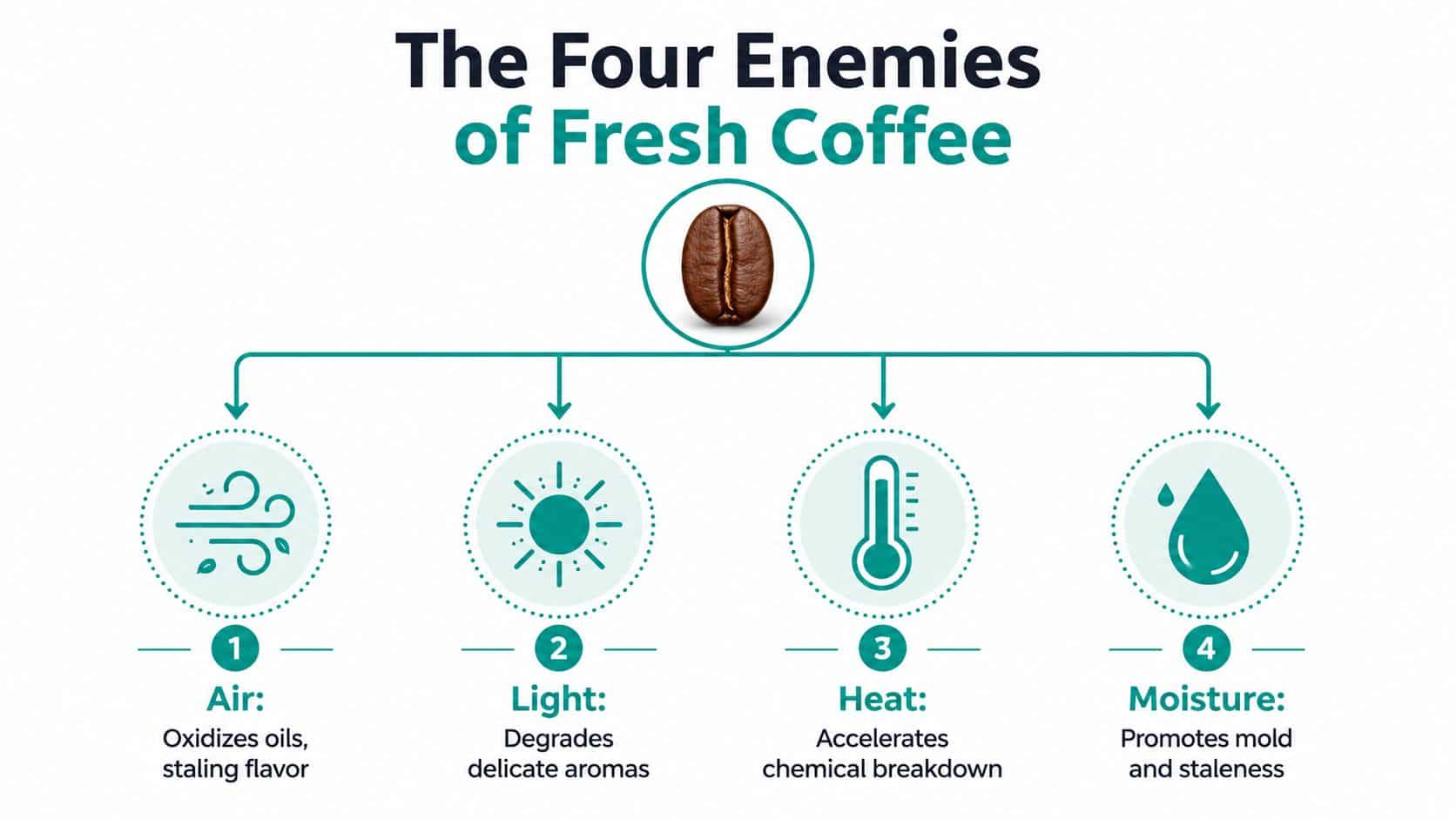
Air, light, heat, and moisture do not work alone. In a warm kitchen, they usually stack up together.
For green coffee, the time horizon is much longer. Properly stored green coffee can stay fresh for about 12 months, and industry guidance cited in trading and handling references recommends a stable storage humidity around 11 to 12.5% plus a cool, dry environment around 20 to 25°C (68 to 77°F) (green coffee storage guidance). That's a trade-level problem, but the logic is the same at home, control exposure and you control degradation.
Choosing Your Ideal Airtight Coffee Container
Start with how you brew. A container for someone who burns through beans every few days should be simple to open, close, and refill, while a slower-paced coffee buyer can justify paying more attention to sealing quality and light protection. The same is true if you keep coffee on hand for reusable K-Cups, because stale grounds do more than flatten flavor, they can leave residue that carries into your machine.
Material choice does most of the work.
Opaque containers protect better than clear ones because they block light before it can break down flavor. Stainless steel and ceramic usually handle that well, while glass only makes sense if it stays in a dark cabinet. For everyday use, daily storage guidance points to opaque, airtight canisters, with ceramic or steel often preferred because they give you better light protection and hold up to repeated kitchen use.
Vacuum sealing and valves are for people who want extra control
Vacuum sealing pulls out more air than a standard latch-top lid, so it helps when you store coffee longer or buy in larger quantities. One-way CO2 valves have a narrower job, they let gas escape without letting much air back in, which suits fresh roasted coffee that is still releasing carbon dioxide. If you open a bag slowly over several days, those features can buy you a little more breathing room.
Size should match how much coffee you use
A giant canister with a lot of empty space inside is a poor fit. Less headspace means less oxygen sitting above the beans, so the smarter choice is a container sized close to your normal purchase amount. That same rule applies to grounds you portion for reusable pods, because smaller batches stay cleaner to handle and are easier to keep fresh between brews.
A food-safe container should also hold up in a real kitchen, not just in a product photo. For material and closure decisions, PureHQ's material selection guide is useful because it focuses on how different materials perform under regular use. If you also want to check how food-contact packaging standards fit into the picture, UK food packaging regulations is a practical reference point.
| Material | Light Protection | Odor Resistance | Durability in Daily Use | Cleaning Ease | Best Fit |
|---|---|---|---|---|---|
| Stainless steel | Strong | Good | High | Easy | Daily storage, travel, repeat opening |
| Ceramic | Strong if opaque | Good | Moderate to high | Easy, but heavier | Countertop storage |
| Glass | Weak unless stored in a dark cabinet | Moderate | Good, but breakable | Very easy | Short-term storage in enclosed spaces |
| Plastic | Depends on quality and opacity | Variable | Moderate | Easy | Budget setups, light use |
A common objection is that a canister feels like one more gadget. Fair point, but a weak seal does the job badly no matter how nice the container looks. Look for silicone or gasket closures, because they keep a tighter seal than standard bag closures and cut down on the oxygen exchange that makes coffee taste tired too quickly. That same tighter seal helps protect ground coffee for reusable pods, where stray air and kitchen humidity can affect both flavor and how clean the brew basket stays over time.
Airtight Canisters vs Coffee Bags A Clear Comparison
A coffee bag is built for shipping and shelf appeal. It is not always built for a kitchen that gets opened, closed, and bumped around all day. Once the seal has been broken a few times, the bag starts losing ground to air, and that is where a dedicated container earns its place on the counter or in the pantry.
The question is not which package looks better. It is which storage method keeps oxygen, light, and moisture away after the coffee has already been opened.
Airtight canisters usually handle that job better in daily use. A clip can hold a bag shut for a while, but the fold changes each time, the closure weakens, and the coffee is still sitting in a thin retail bag that was not made for repeated opening. A canister with a silicone or gasket seal stays more consistent, especially if you are reaching for the coffee every morning or portioning grounds for reusable K-Cups.
That matters for flavor, and it also matters for the machine. Grounds that sit in a loose bag pick up stale notes faster, and they can carry more kitchen odor and humidity into your brew basket. If you use reusable pods, a better seal helps keep the grounds cleaner and more predictable, which gives you a better shot at a steady cup instead of one that tastes flat halfway through the week.
The same trade-off shows up in real use. A bag is fine for coffee you will finish quickly, or for a backup bag that stays tucked away in a dry cabinet. An airtight canister is the better choice when you want one container that gets opened often, closed often, and still keeps the coffee in better shape.
Useful test: if the cabinet smells strongly of coffee every time you open it, the closure is probably letting more aroma out than you want.
For a broader look at home storage options beyond coffee, the Simply Hospitality storage guide is a useful reminder that good containers are chosen for fit, seal, and repeated use, not just appearance. Coffee storage follows the same rule, and that is especially true when you want fresh grounds for both your brewer and your reusable pods.
Best Practices for Day-to-Day Coffee Storage
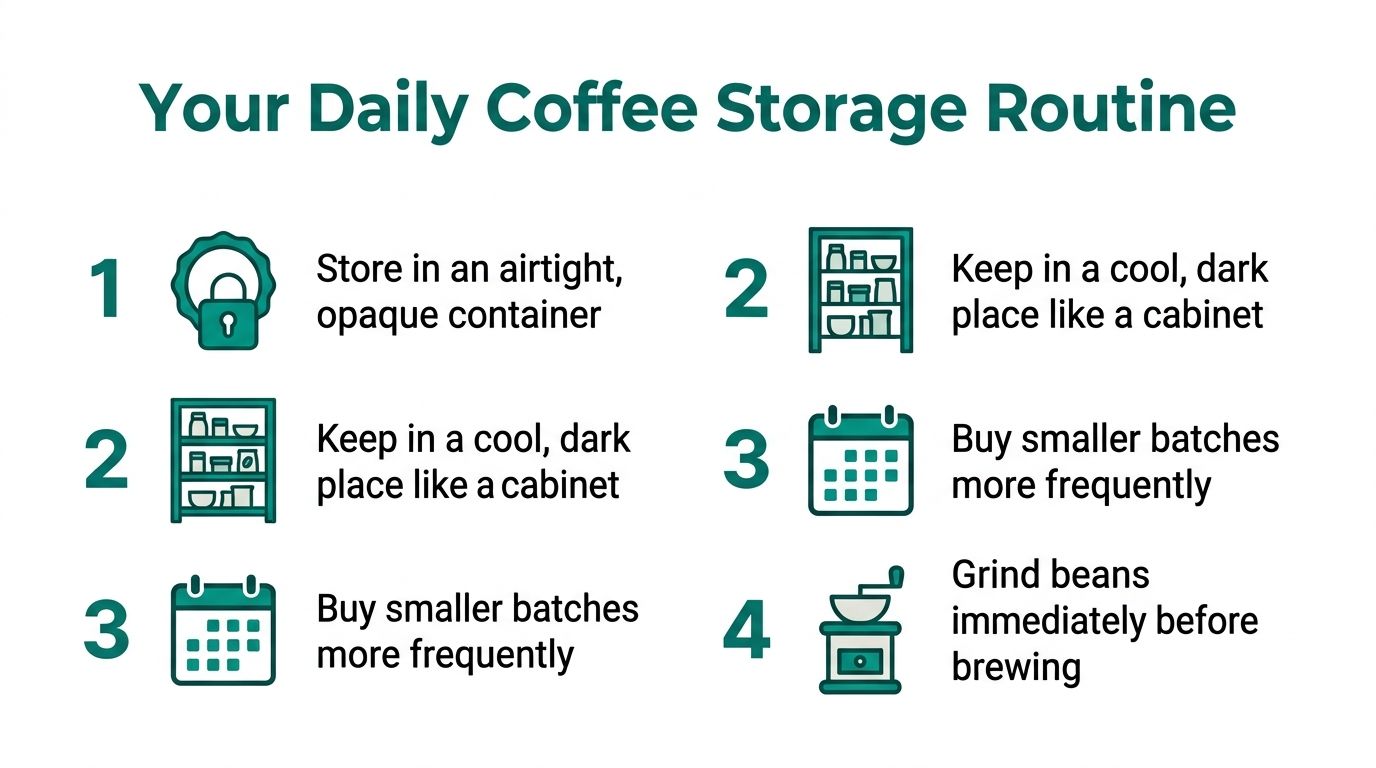
The routine that holds up best is the one you can stick with. Keep coffee in an airtight, opaque container, store it in a cool, dark place, buy smaller batches, and grind only what you need right before brewing. That advice stays basic because the basics are what protect the flavor, and they also help keep stray aromas and moisture out of the coffee you use for reusable K-Cups and your machine.
Make the container work for you
Do not leave a lot of extra air above the coffee. Less headspace means less oxygen working on the beans, and that is one of the simplest ways to keep flavor from fading faster than it should. If you use ground coffee for reusable pods, split it into smaller portions so the rest stays sealed until you need it.
Put it where the kitchen stays calm
A cabinet away from the oven, dishwasher, and direct sunlight is usually the right spot. Pantry storage should stay under 20°C and under 60% relative humidity when possible, and freezing or refrigerating coffee without a gasket-sealed container can bring in moisture and odors that work against the benefit (coffee storage guidance). If you freeze coffee, portion it first, seal it tightly, and do not refreeze a thawed portion.
Keep the routine simple
- Buy smaller batches: Fresh coffee tastes better when it has not been waiting around for weeks.
- Use whole beans when possible: Whole beans stay fresher longer than pre-ground coffee in the same storage conditions.
- Grind right before brewing: Fresh grinding holds onto more aroma and gives you a better extraction.
- Avoid the fridge: It creates odor and moisture problems that coffee picks up quickly.
Frozen coffee can work, but only if the seal is vacuum-sealed and the portions stay dry.
If you are already keeping your brewer in good shape, this is also a smart time to think about a quality filter and regular cleaning supplies. A clean machine will not rescue stale coffee, but it does keep storage mistakes from showing up even more clearly in the cup. For a practical next step, this coffee bar accessories guide can help you match better storage with the rest of your setup.
Upgrade Your Brew With Perfect Coffee Storage
Airtight coffee storage is not about hoarding beans. It's about protecting flavor, keeping waste down, and making sure the coffee you already bought still tastes worth drinking when you brew it. Once you control air, light, heat, and moisture, the rest of the process gets easier, from the first scoop to the last cup.
That matters even more with reusable K-Cups and other home brewing accessories. Fresh grounds flow better, taste cleaner, and help your machine do what it's supposed to do, instead of fighting stale coffee and a muddy extraction. If you want the best result from a reusable setup, the coffee itself has to be as well kept as the brewer.
For more ideas on building a better coffee station at home, PureHQ's coffee bar accessories guide is a useful next stop. Pairing good storage with the right accessories is one of the easiest ways to make everyday coffee taste more deliberate and less accidental.
PureHQ Inc. makes accessories that help home brewers get more from their coffee setup, from reusable K-Cups and water filters to descaling and cleaning essentials. If you want better-tasting coffee and a cleaner machine, visit PureHQ Inc. and explore products designed to work with the way you brew.

