
Coffee Machine Care
Single Serve Coffee Maker Ground Coffee: Your 2026 Brew
Jul
You bought a reusable pod to save money and cut waste, then the first few cups came out thin, bitter, or weirdly short. That frustration is real, and it usually isn't a sign that you're doing everything wrong. It's a sign that single-serve coffee maker ground coffee is unforgiving, because the brewer, the grind, and the fill all have to work together.
Keurig-style capsules aren't instant coffee. They contain genuine roasted and ground coffee, and if you run a pod a second time, you only get lightly colored water, which is why reusable ground-coffee accessories exist in the first place, better strength control and less per-cup waste, as noted by Saneu's K-Cup explanation. If you want a practical overview of pod care alongside the brewing basics, Preventing ruined coffee pods is a useful companion read.
Why Your Reusable Pod Brews Disappointing Coffee
The most frustrating failure looks simple. You fill the pod, lock it in, press brew, and the cup comes out short, weak, or gritty enough to make you wonder whether the machine is broken. The problem is usually not that reusable pods are bad, it's that they expose every small mistake the factory pod used to hide.
The brew is sensitive, not random
Single-serve systems rely on a narrow balance of resistance and flow. If the grounds are too coarse, water moves through too fast and the cup tastes thin. If the grounds are too fine, the pod can choke the flow path and leave you with a disappointing, underfilled cup.
That's why the usual advice, “just use a medium grind,” feels incomplete. A reusable pod doesn't care about generic coffee advice, it cares about how your machine moves water through a specific filter shape and how tightly that bed of grounds is packed.
Practical rule: if your pod setup keeps changing from one cup to the next, the fix is usually consistency, not more coffee.
The other reason people get annoyed is that they expect the pod to behave like a disposable K-Cup. That expectation is fair, because the coffee inside a Keurig-style capsule is real coffee, not instant, but the reusable version asks you to take over some of the engineering the factory used to do for you.
The easiest way to think about it is this. Factory pods hide the variables, reusable pods hand them back to you.
Finding the Perfect Grind for Your Single Serve Brewer
Grind size controls how hard the machine has to work
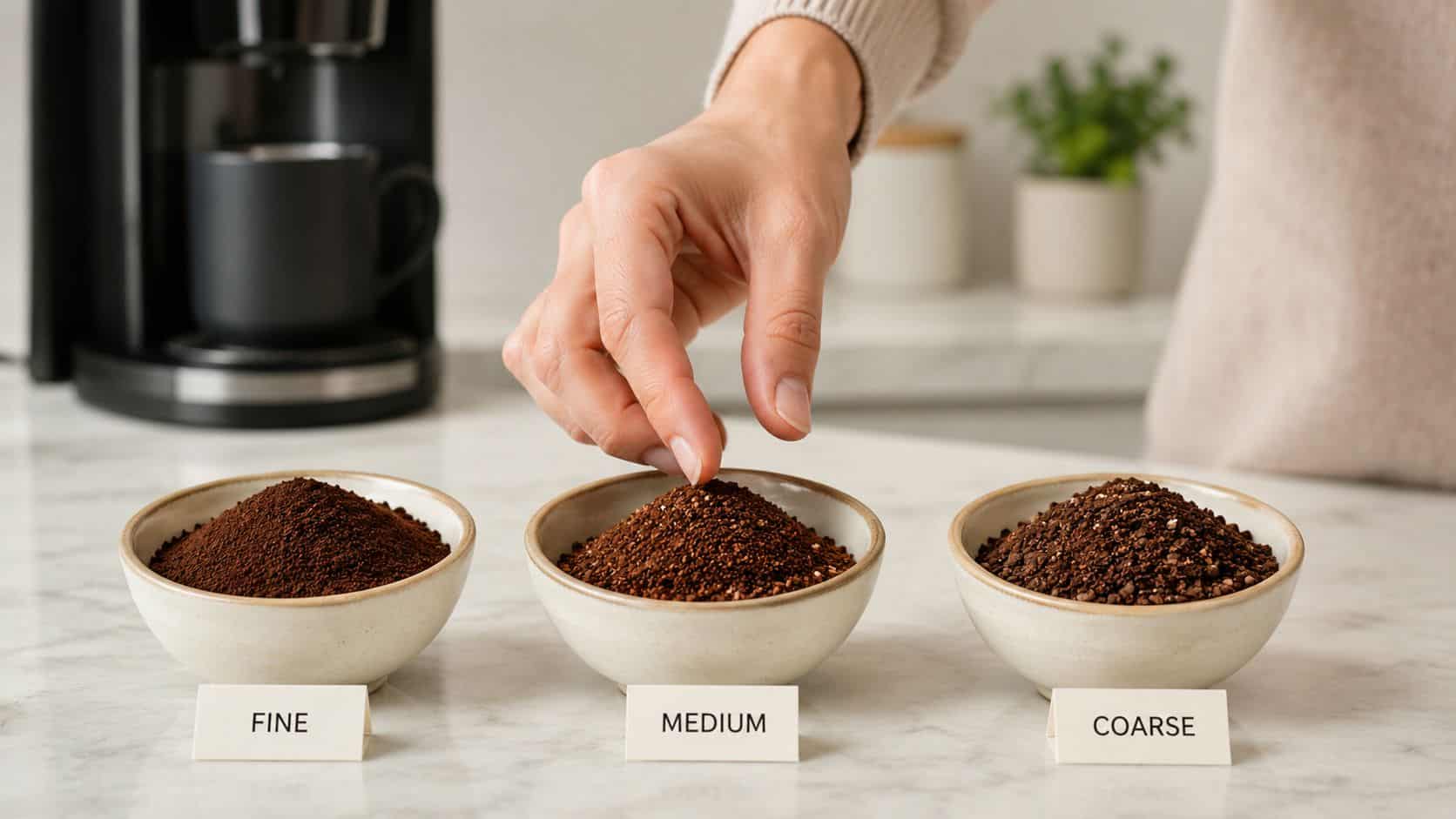
A reusable pod can make good coffee one minute and a frustratingly short cup the next, and grind size is usually the first thing to blame. Fine grounds add resistance, coarse grounds let water rush through, and both can leave you wondering why the machine behaved so differently from one brew to the next. The fix is usually not chasing a magic setting. It is matching the grind to the pod's resistance so the brewer can move water at a steady pace.
A single-serve brewer does not have much forgiveness. In one commercial brewer study, reducing particle size from 1085 μm to 222 μm increased extraction yield by about 63%, and that shows how sharply these machines respond to grind changes, according to PubMed. The same study found that more than 80% of soluble solids were extracted in the first 113 mL, or 4 oz, and the remaining brew volume mostly added bitterness and astringency.
That matters because brew quality can fall apart for two different reasons. A grind that is too coarse can make the cup taste thin and under-extracted. A grind that is too fine can slow the flow enough that the machine stalls, sputters, or stops short of the volume you expected. When that happens, the problem is often resistance in the pod path, not just the grind label on the bag.
What to look for in the cup
Start with the cup, not the grinder. If the coffee runs fast and tastes watery, the grind is probably too coarse. If the machine strains, sputters, or delivers less coffee than expected, the grind may be too fine for the pod design. That is the basic diagnostic I use first, because it points to flow problems before you start changing dose, tamping, or the machine itself.
PureHQ's own grind guidance on what drip grind means lines up with that approach. You do not want an espresso-fine powder in a reusable pod. You want grounds that let water pass evenly while still giving it enough contact time to pull flavor.
A good shop grind for a reusable pod usually sits in the middle of the road, but the exact sweet spot depends on the brewer's flow path. Coffee-processing guidance also emphasizes that single-serve capsules depend on particle-size distribution and density matching the pod's design, not on a one-size-fits-all pile of grounds.
If your brewer keeps giving you inconsistent brew volume, run a water-only test with the reusable pod in place and no coffee. If the machine still brews short, the issue is likely resistance from the pod, basket, or screen instead of the grind itself. If the water flow looks normal, then adjust the grind one step at a time and keep the dose steady until the cup stops swinging from weak to stalled.
How to Fill Reusable Pods for a Flawless Extraction
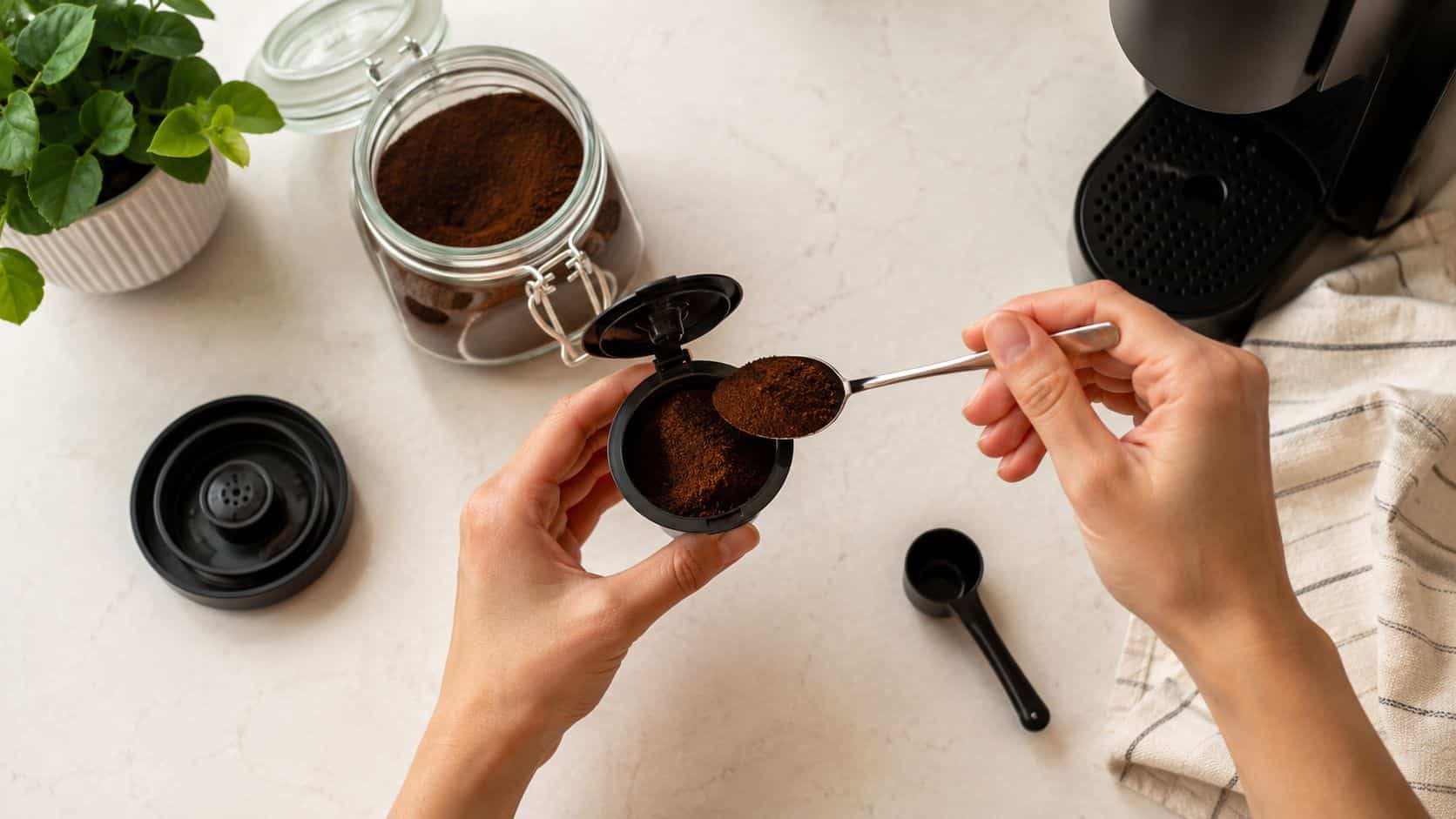
A reusable pod usually fails for a simple reason, the fill is uneven. Too much coffee packed down hard creates resistance, so the brewer can short the cup or sputter through the cycle. Too little coffee leaves too much open space, and water races through without pulling enough flavor.
Fill it like you want water to move evenly
Start with a measured scoop, then level the top without pressing it down hard. The grounds should sit flat in the basket, with no dome above the rim and no hollow pocket in the center. That quick visual check prevents a lot of the clogs and leaks people blame on the machine.
Consistent flow, not compression, is the goal. Coffee-processing guidance points to matching density and particle-size distribution to the pod design, and that lines up with everyday use in a single serve brewer, according to MPE Chicago. A reusable pod does not need force. It needs the same fill every time.
If your cup volume keeps changing, do a water-only test before blaming the grind. Run the reusable pod with no coffee and watch the brew. If the machine still comes up short, the pod, basket, or screen is adding resistance. If the water flows normally, the grind and dose are the next things to adjust.
One small upgrade can make cleanup easier too. Disposable paper liners can help keep fine sediment out of the cup and cut down on scrubbing after each brew, which matters if you use grounds every day. For a practical walkthrough, PureHQ's guide to using coffee grounds in a Keurig is a useful reference.
A simple fill routine that stays consistent
- Measure first: Use the same scoop or spoon each time so the pod is not underfilled one day and overloaded the next.
- Level gently: Tap the side of the pod lightly, then wipe excess grounds from the rim.
- Skip the tamp: Pressure changes flow and can make the pod behave like a clog instead of a filter.
- Watch the rim: Grounds on the seal can cause fit issues, leaks, and messy punctures.
The result should feel boring in the best way. Same dose, same fill, same cup shape, same brewing behavior.
Choosing the Right Reusable Pod for Your Machine
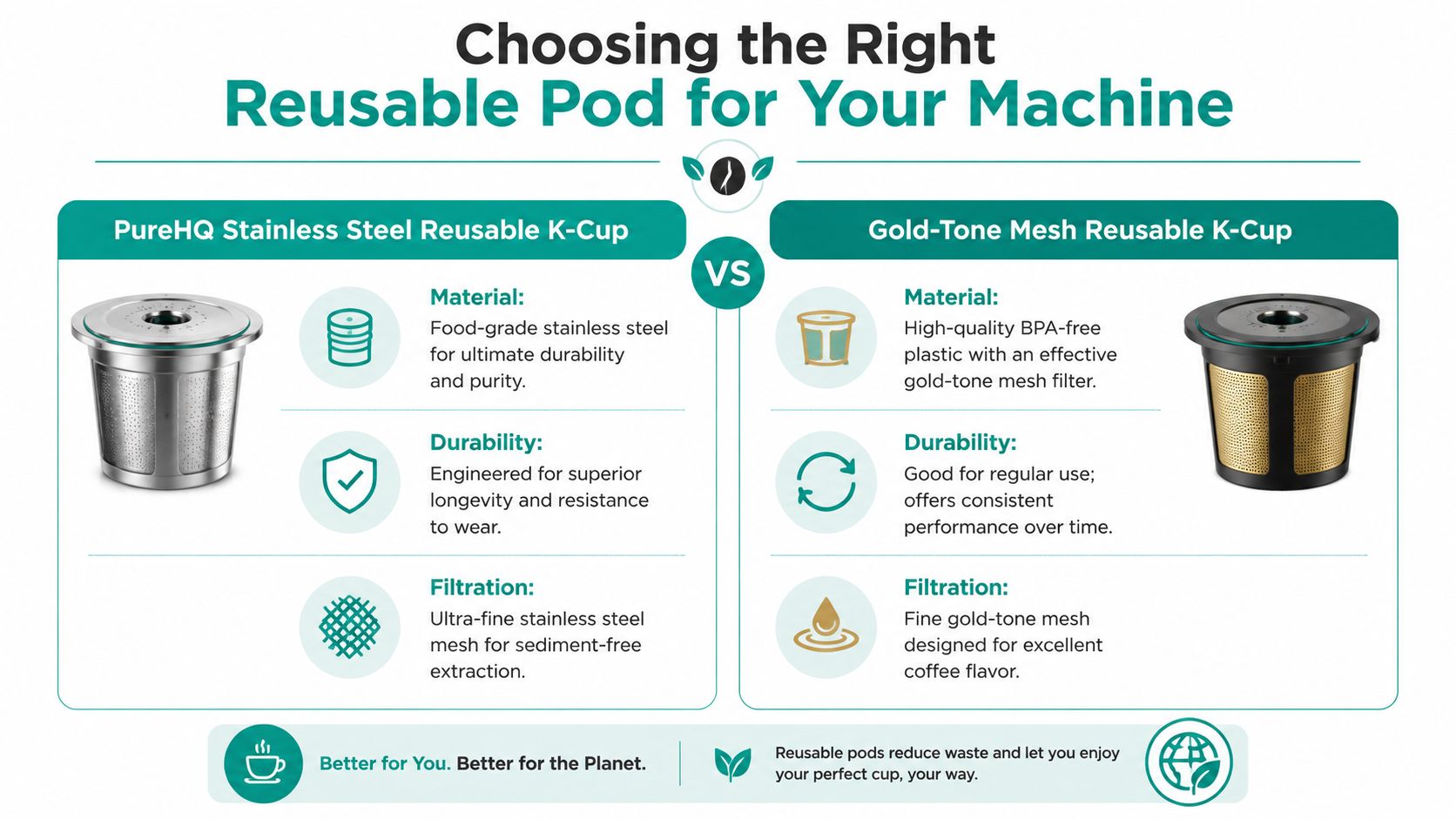
A lot of people blame the coffee when the underlying problem is the pod itself. Cheap reusable pods can fit loosely, clog more easily, or wear out in ways that make the brewer act inconsistent. That turns a simple switch to grounds into a daily annoyance.
What separates a premium pod from a generic one
| Feature | PureHQ Stainless Steel / Gold-Tone Mesh | Generic Plastic Pods |
|---|---|---|
| Fit | Built for a more stable fit in compatible machines | Can vary more from batch to batch |
| Durability | Metal construction resists warping and wear | Plastic parts can feel less rigid over time |
| Filtration | Fine mesh supports cleaner extraction | Screens may clog or let more sediment through |
| Cleanup | Often easier to rinse and reuse | Can stain, bend, or hold odors more easily |
| Long-term value | Better for regular ground-coffee use | Often cheaper upfront, less reassuring over time |
A common objection is durability. People buy a reusable pod to stop wasting money, then get irritated when a low-cost plastic version starts leaking, warping, or letting grounds spill into the cup. That's exactly where a sturdier pod earns its keep, because the brewer needs a stable seal and a dependable filter surface.
PureHQ sells reusable K-Cups and related accessories, including stainless steel refillable pods and compatible filtration items, which makes sense for users who want a more durable setup. The point isn't that every metal pod is automatically perfect, it's that a rigid body and better mesh usually give you fewer surprises when you're brewing with grounds.
Compatibility matters more than marketing
Some brewers also build in their own limits. One documented machine allows pre-ground coffee only for 3, 8, 12, and 16 ounce brews, which shows that cup-size restrictions can be part of the brewer design itself, according to this De'Longhi TrueBrew review. That's a reminder to check what your machine supports before you assume every reusable pod will behave the same way.
If you want a brew path that feels less finicky, choose a pod with a solid seal, a stable mesh, and a fit that doesn't require fiddling. A pod that sits right is usually the difference between a clean cup and a counter full of coffee dust.
Solving Common Ground Coffee Brewing Problems
A half-full cup is a common complaint that sends individuals down the wrong path. They assume the grind must be wrong, then keep changing the coffee while the actual issue sits in the machine or the pod. The fastest way to sort that out is a water-only test.
Use the water-only test before changing the coffee again
Run the brewer with plain water and no pod. If the water volume still comes up short, the problem is more likely mineral buildup, reservoir fit, or a pump or flow issue, according to Smart Helper Guides. If the water-only result is normal, but coffee brews come out short, the issue is usually an overfilled reusable pod or grounds that are too fine and too resistant.
That test saves a lot of wasted coffee. It also keeps you from blaming the bean when the brewer is the thing acting up.
Match the symptom to the likely cause
- Short water-only brew: Look at descaling, reservoir seating, or pump flow.
- Short coffee brew only: Reduce pod fill, loosen the grind, or stop compacting the grounds.
- Grit in the cup: Use a better filter surface or a liner, and check for rim overflow.
- Weak, watery coffee: Move the grind slightly finer or verify that the pod isn't underfilled.
Grounds can also clog parts of the machine. Hamilton Beach documentation notes that grounds can clog a piercing nozzle, which reinforces that the issue is sometimes mechanical rather than purely about flavor. Once you understand that, the fix becomes a lot less mysterious.
The practical move is simple. Test the machine with water, then change one coffee variable at a time. That's how you get out of the loop of random adjustments and back to a brew that lands where you want it.
Long-Term Care for Better Taste and Savings
Reusable pods do save waste, but they also ask more from the user than disposable capsules do. Independent guidance on reusable systems keeps returning to the same point, you need grind management, filtered water, and regular cleaning to get the flavor and lower per-cup cost you wanted in the first place, as noted by Bring Home Next.
Maintenance is part of the value
If mineral buildup is left alone, the brewer starts behaving inconsistently and the coffee tastes flat. Regular descaling matters, especially if cups have started coming out short or the machine seems slower than usual. Clean water helps too, and compatible water filters are a smart add-on for better taste and machine longevity.
The same logic shows up in PureHQ's reusable coffee pods overview, because the value comes from treating the pod as part of a system, not as a one-off accessory. A good pod, clean water, and a simple cleaning schedule usually beat improvisation.
Bottom line: reusable brewing works best when you treat maintenance like a brewing variable, not an afterthought.
If you want to keep the setup simple, the best approach is boring and repeatable. Use the same coffee, keep the pod clean, descale on schedule, and add filtration help where the machine allows it.
A brewer that stays clean also stays easier to diagnose. If the cup starts running short or the flow turns uneven, maintenance is the first place to look before you blame the grounds or buy a new pod.

