
Coffee Machine Care
Peppermint Mocha K Cups: A DIY Guide for Keurig & Ninja
Apr
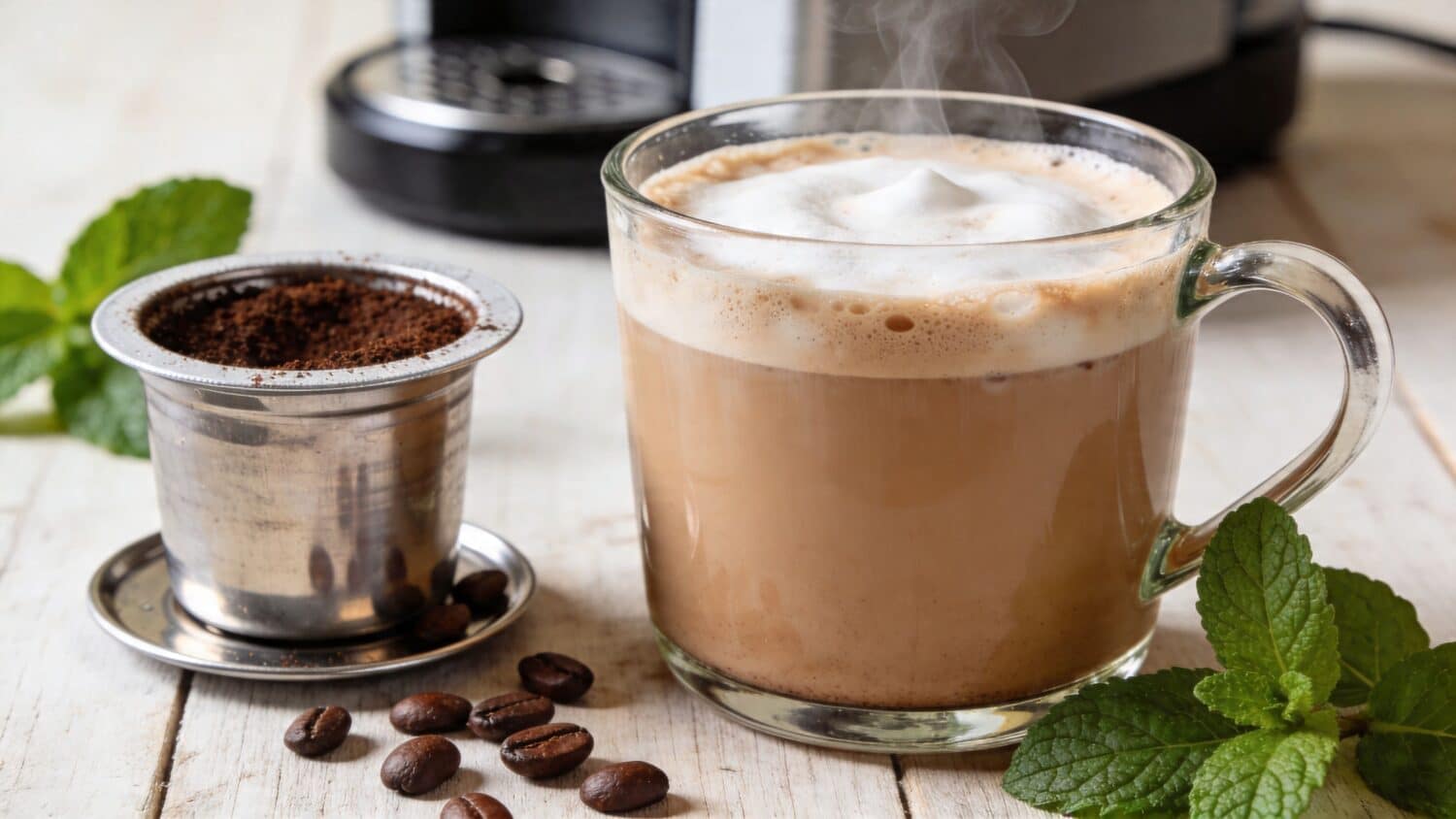
Seasonal peppermint mocha k cups feel convenient until you look at the trade-off. A limited-edition flavor can trigger 15 to 20% seasonal sales spikes in Q4, and that scarcity keeps buyers paying about $0.70 per cup for a drink they can only get for part of the year, according to this product-market summary on Walmart.
That’s the part often accepted too quickly. They assume disposable seasonal pods are the easiest path to a café-style holiday drink. In practice, they’re paying for timing, branding, and convenience while giving up control over strength, sweetness, and ingredient quality.
A reusable pod changes that. It lets you keep the peppermint mocha profile you want, dial the cup to your machine, and stop waiting for holiday inventory to come back.
The Holiday Coffee Dilemma You Can Solve
Seasonal pods train coffee drinkers to buy on the calendar instead of brewing for taste. That works fine until peppermint mocha disappears in January and the only backup plan is hoarding boxes that go stale in the cabinet.

The issue goes beyond price
Store-bought holiday K-Cups solve one problem. They give you speed. They also lock you into somebody else’s recipe, roast level, and flavor balance.
That trade-off shows up in the cup. Pre-filled peppermint mocha style pods often taste pleasant on the first sip, then thin out fast. The mint lands first, the chocolate reads more like sweetness than cocoa, and the coffee itself fades into the background. If you prefer a stronger base, less sugar, or a cleaner peppermint finish, there is very little room to adjust.
The other problem is practical. Disposable seasonal pods turn a drink you may want all year into a product you can only buy for a few weeks, then chase again next season.
Why disposable holiday pods often underdeliver
Peppermint mocha is harder to get right than plain flavored coffee. Cocoa needs body from the coffee. Peppermint needs restraint. Too much mint and the cup tastes medicinal. Too little coffee strength and everything drinks like sweet hot water.
A factory-filled pod cannot adapt to your machine, your mug size, or your taste.
That matters with Keurig brewing. If you run a larger cup size, many seasonal pods lose definition fast. If you add milk, the flavor can flatten even more. I see the same fix repeated at home: people pour in extra creamer or syrup to rescue a weak brew. The drink gets sweeter, but not better.
Practical rule: If peppermint mocha tastes dull, strengthen the coffee base first. Do not start by adding more peppermint or more sweetener.
The better solution for a year-round cup
A reusable K-Cup gives you control where it counts. You choose a coffee with enough body to hold cocoa, then add peppermint and chocolate outside the pod where they stay easy to adjust. That produces a cleaner cup and a much more reliable recipe.
It also cuts the waste and lowers the cost per drink over time, but the bigger win is flavor. You stop settling for a limited seasonal blend and start building a peppermint mocha that fits your machine, your ingredients, and your taste any month of the year.
Assembling Your Perfect Peppermint Mocha Toolkit
The best peppermint mocha starts before brewing. Most weak cups come from bad inputs, not bad machines.
Choose coffee that can hold up to mint and cocoa
Start with a coffee that has enough body to carry flavor. A medium or medium-dark roast usually works best for this style of drink. Too light, and the cup can taste thin. Too dark, and the mint can turn sharp or medicinal.
For reusable pods, grind matters just as much as roast. Aim for a fine grind, but not an espresso-fine powder. You want enough resistance for good extraction without packing the pod so tightly that water struggles to pass through.
A good peppermint mocha base should do three things:
- Stay present under cocoa: The coffee needs to taste like coffee, not just hot flavored water.
- Support peppermint cleanly: Mint should sit on top of the cup, not overwhelm it.
- Work with milk: If you add dairy or a non-dairy option, the roast should still come through.
Build the flavor outside the pod, not inside it
Don’t try to turn the reusable pod into a dessert basket. Keep the pod focused on coffee. Add your peppermint and chocolate components to the mug or mix them into milk separately.
That approach works better because reusable pods brew more cleanly when the coffee bed stays simple. Flavored syrups and powders inside the pod can slow flow, increase residue, and muddy the cup.
Here’s the toolkit I recommend:
- Ground coffee: Medium to medium-dark roast.
- Cocoa: Use unsweetened cocoa or a mocha mix you already like.
- Peppermint flavor: Extract gives tighter control than syrup. Syrup is easier if you want sweetness built in.
- Milk or alternative: Whole milk gives the fullest texture. Oat milk usually gives the smoothest non-dairy result.
- Optional sweetener: Add only after tasting the brewed coffee.
A strong peppermint mocha doesn’t need a lot of mint. It needs enough coffee to keep the drink grounded.
Small choices change the cup fast
Peppermint extract is powerful. Start light. You can always add more after brewing, but you can’t pull it back once the mug tastes like candy cane.
Cocoa also behaves differently depending on what you use. Dry cocoa gives you more control and a more coffee-forward result. Sweet mocha mixes create an easier café-style drink, but they can bury the roast if you use too much.
If you want the drink to taste cleaner, dissolve the cocoa in a little hot water or warm milk before brewing the coffee over it. That prevents clumps and gives you a smoother finish.
Your Step-By-Step Brewing Guide with a Reusable Pod
Getting peppermint mocha right with a reusable pod is mostly about restraint. Don’t overpack the basket. Don’t oversize the brew. Don’t bury the coffee under too many add-ins.
Warm the machine before you ask it for flavor
Cold starts lead to disappointing cups. If your machine has been sitting, run hot water first. That helps stabilize the brew path and gives you a more even extraction.
This matters even more with peppermint mocha because mint and cocoa are easy to flatten when the brew starts unevenly.
If you’re new to refillables, this guide on using coffee grounds in a Keurig is a useful primer on the basic setup.
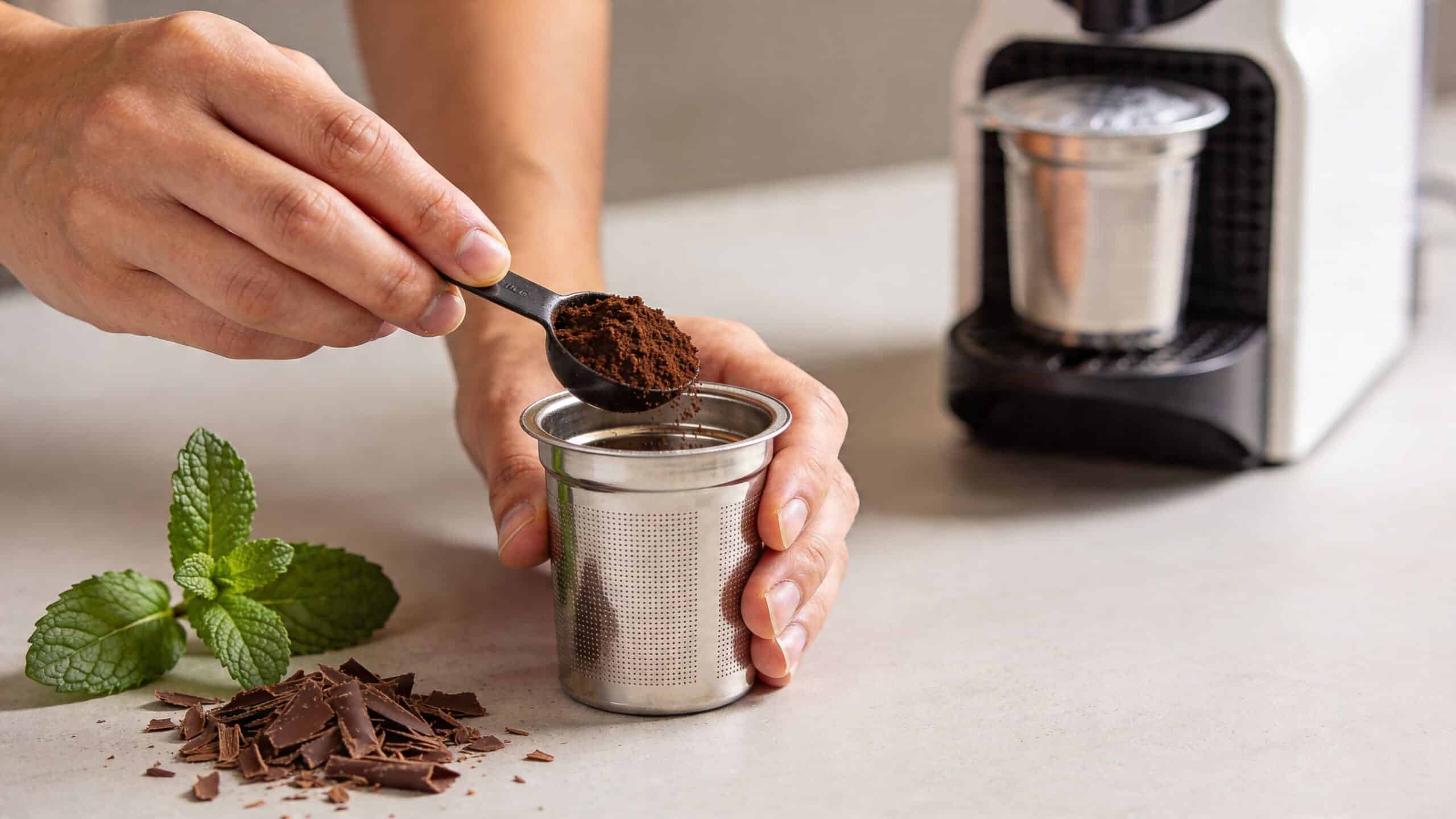
Fill the pod like you mean it, not like you’re packing espresso
The most common mistake is overfilling. People want a stronger cup, so they keep adding grounds until the lid barely closes. That usually backfires.
Use enough coffee to create resistance, but leave room for water to move through the bed. Level the grounds. Don’t mash them down aggressively. A light, even pack works better than brute force.
What works best in practice:
- Use fresh ground coffee: Stale coffee makes the drink taste dull before the peppermint even hits.
- Keep the fill even: Mounds and gaps cause uneven extraction.
- Avoid overpacking: If the pod strains to close, you’ve likely gone too far.
- Prep the mug first: Put cocoa and peppermint in the mug so the brewed coffee hits the flavor base directly.
Brew smaller than you think
Many peppermint mocha k cups lose their charm when brewed in larger sizes. Bigger isn’t better. A large cup often tastes watery, especially when mint is involved.
Keurig technical benchmarks point to an 8 oz brew size at 192°F as the sweet spot for flavor balance, noting that this setting balances mocha extraction and peppermint oil volatility and delivered a balanced profile in over 92% of blind taste tests in the referenced material on Keurig Commercial.
That matches what works at home. The 8 oz setting usually gives enough body for chocolate and enough restraint for mint.
Brew peppermint mocha like a concentrated flavored coffee, then customize the body with milk. Don’t try to get the machine to make the entire café drink in one pass.
If you’re using a Ninja DualBrew, the same principle applies. Choose the setting that gives you a fuller, not oversized, cup. The goal is a compact brew that you can finish with milk.
A quick visual helps if you want to watch the fill-and-brew process in motion:
Finish the drink after the brew, not before it
Once the coffee hits the mug, stir it well. Cocoa and peppermint need help dispersing evenly.
Then adjust with intention:
- For a café-style cup: Add warm milk.
- For more mint: Add a tiny extra drop of peppermint extract.
- For more mocha: Add more dissolved cocoa, not more syrup right away.
- For a sweeter drink: Add sweetener last, after tasting.
If the cup tastes thin, don’t start by adding more flavoring. First reduce brew size next time or use a slightly stronger coffee. If the cup tastes harsh, your grind may be too fine or the pod may be packed too tightly.
What doesn’t work well
A few shortcuts sound smart but rarely improve the cup:
| Habit | What happens |
|---|---|
| Brewing a large mug in one cycle | The coffee tastes diluted and the mint fades |
| Putting syrup directly into the pod | Flow can get messy and cleanup gets worse |
| Tamping too hard | Water struggles to pass evenly |
| Using very dark, oily coffee | The drink can taste muddy instead of crisp |
The best reusable pod routine feels boring in the right way. Same fill. Same brew size. Same finishing method. That’s how you get a peppermint mocha that tastes good in December and still tastes good in March.
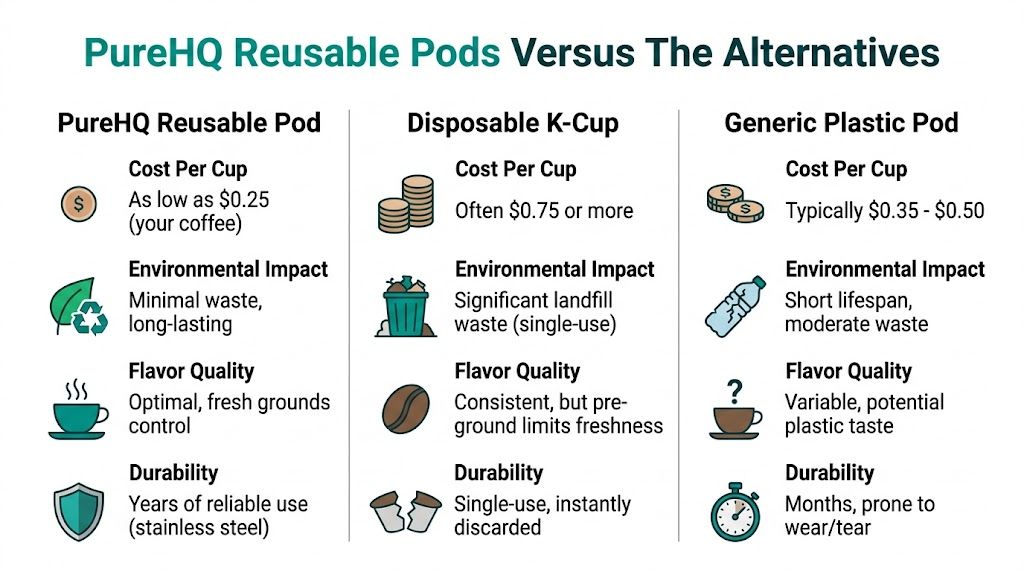
PureHQ Reusable Pods Versus The Alternatives
Seasonal peppermint mocha K-Cups are convenient for one thing. Consistency. The trade-off is that you inherit someone else’s recipe, someone else’s roast choice, and a pile of single-use plastic and foil.
The weak coffee objection deserves a real answer
Weak cups usually come from poor pod design or a bad fit in the brewer, not from the idea of reusable pods itself. I’ve had reusable setups that brewed flat, watery coffee, and the cause was almost always obvious after inspection. The basket was too shallow, the lid sealed poorly, or the pod allowed water to rush through the grounds instead of extracting them evenly.
A good reusable pod solves those problems with better fit, better flow, and a basket you can fill with fresh coffee that suits a peppermint mocha. That matters more than brand-name seasonal flavoring. Once you control the coffee base, you can make the drink stronger, cleaner, and far less sweet than most disposable holiday pods.
Comparison table
| Feature | PureHQ Stainless Steel Pod | Generic Plastic Reusable Pod | Disposable K-Cup |
|---|---|---|---|
| Cost per cup | Uses your own coffee, typically lower long-term | Uses your own coffee, but results vary by design | Around the premium seasonal pod price point |
| Flavor control | High, you control coffee, strength, and recipe | Moderate, but consistency can be hit or miss | Low, recipe is fixed |
| Freshness | Brew with fresh grounds each time | Brew with fresh grounds each time | Pre-ground coffee only |
| Waste | Minimal, one pod used repeatedly | Lower than disposable, but shorter lifespan is common | Single-use waste every cup |
| Durability | Stainless steel holds up well with regular cleaning | Plastic can wear, stain, or warp over time | Discarded after one use |
| Compatibility confidence | Built for repeat use with supported machines | Varies a lot by brand and fit | Usually simple, but not customizable |
Material and fit make a bigger difference than most buyers expect
Stainless steel pods tend to hold their shape better over time. That sounds minor until you’ve dealt with a reusable pod that starts closing crooked or leaking around the lid after a few weeks. Small fit problems show up fast in the cup. Extraction gets uneven, cleanup gets annoying, and the drink loses the clarity that peppermint mocha needs.
Seal material matters too. If you want background on how food-grade silicone is used in kitchen gear, that helps explain why gasket quality affects leak resistance and repeat use.
For a closer look at fit, basket design, and machine compatibility, this guide to the best reusable K-Cup for Keurig is useful.
Cheap reusable pods usually fail in predictable ways. Loose seal. Fussy lid. Trapped grounds in the hinge. Those problems give refillables a bad reputation they do not all deserve.
What each option gets right and wrong
Disposable peppermint mocha K-Cups win on speed. You drop one in and brew. If that is the only goal, they do the job.
They lose on flexibility. If the mint tastes artificial, the chocolate tastes thin, or the roast is weaker than you want, there is not much you can change before brewing. You can only doctor the drink after it lands in the mug.
Generic plastic reusables sit in the middle. Some are fine for occasional use, especially if your standards are modest. Many are inconsistent, and inconsistency is what ruins a drink you plan to make often.
A well-made stainless steel reusable pod costs more at the start, but it pays back in three ways that matter for peppermint mocha. Better flavor control. Lower cost per cup. Less waste every time you brew.
If you want a café-style peppermint mocha all year instead of a limited seasonal shortcut, the reusable pod is the smarter tool.
Troubleshooting Common Peppermint Mocha Hiccups
Most peppermint mocha problems are mechanical, not mysterious. If the cup tastes wrong, there’s usually a clear cause.
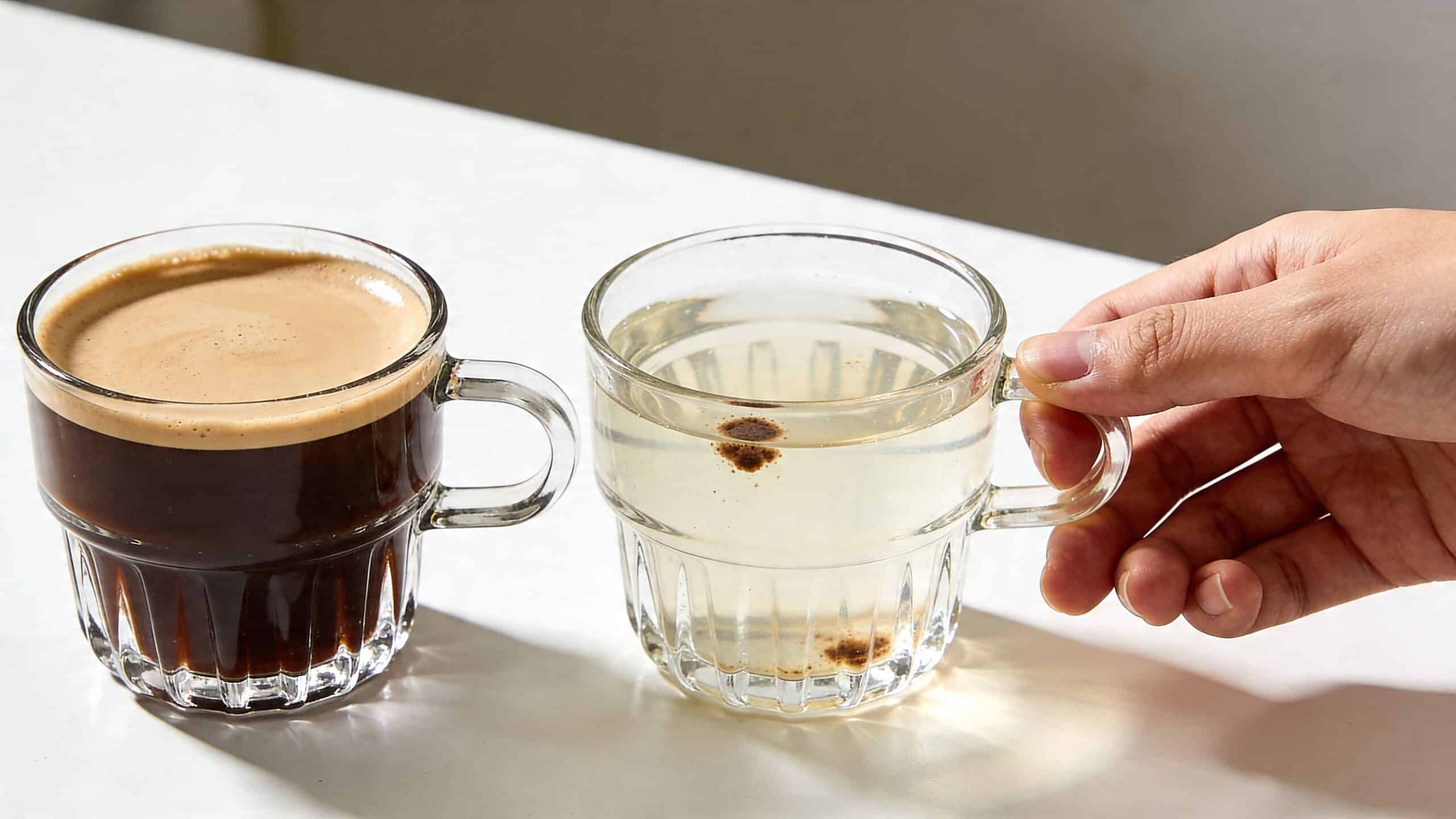
Weak flavor usually starts in the pod
If the drink tastes washed out, check the basics first. Brew size is often too large, or the pod isn’t filled evenly.
A coarse grind can also let water pass too quickly. The result is a cup that smells promising but drinks thin.
Fix it by tightening one variable at a time:
- Reduce brew size: Start with the smaller balanced cup you dialed in earlier.
- Check the fill level: Keep the grounds level and properly seated.
- Refine the grind slightly: Go finer, but not powdery.
- Add milk after brewing: Don’t ask the machine to produce a giant finished latte in one pass.
Grounds in the cup or messy flow
This usually points to a seal issue, a clogged needle, or a pod that was packed unevenly. It can also happen when fines escape from the basket.
Paper liners can help keep the brew cleaner. Regular rinsing helps too. If you’ve gone several brews without cleaning the pod lid and puncture area, do that before changing your coffee recipe.
For more machine-specific tuning, this guide with tips for the best taste and performance using reusable K-Cups in Keurig coffee makers covers the small adjustments that often solve recurring issues.
Newer machines punish poor maintenance faster
The biggest overlooked issue is residue. Mocha and peppermint leave more behind than plain coffee.
According to the cited discussion in SOMM Journal, oily residues from mocha-flavored pods can build up twice as fast in brewing mechanisms, risking a 20 to 30% flow reduction in machines that aren’t regularly descaled, especially on newer models like the K-Supreme and K-Slim where stable water flow matters.
If a peppermint mocha suddenly tastes flatter than it did last week, clean the machine before you blame the beans.
That’s why I treat descaling and brew-path cleaning as flavor maintenance, not just appliance maintenance. If you use flavored coffee often, keeping descaling solution and cleaning tablets on hand is practical, not fussy. Those accessories protect water flow, reduce stale residue, and keep the coffee tasting closer to what you intended.
Your New Year-Round Coffee Ritual
The best part of leaving disposable seasonal pods behind isn’t just the savings. It’s the control.
You stop waiting for a holiday launch. You stop buying extra boxes because the flavor might disappear. You stop settling for a fixed recipe that only tastes right if you doctor it after brewing.
Why the reusable routine sticks
A reusable setup gives you a better daily system:
- You control the cup: Coffee strength, mint level, cocoa intensity, and milk choice all stay in your hands.
- You cut waste: One durable pod replaces a stream of single-use capsules.
- You can brew it anytime: Peppermint mocha becomes a recipe, not a retail event.
That’s the upgrade. You’re no longer trying to copy a seasonal pod. You’re building a drink that fits your taste and your machine.
The long-term trade-off is easy to justify
The economics are hard to ignore. By switching to reusable K-Cups for daily coffee, you can cut per-cup cost from about $0.70 for premium seasonal flavors down to as little as $0.20, while keeping full control over ingredients and taste, based on the verified product-market data referenced earlier.
That doesn’t mean every reusable brew will be perfect on day one. It does mean the process improves fast once you lock in the right grind, fill, and brew size.
And unlike seasonal peppermint mocha k cups, your setup doesn’t vanish after the holiday shelf resets.
The best home coffee habits are the ones that lower cost and improve the cup at the same time.
If you care about flavor, cost, and cutting down on pod waste, a reusable peppermint mocha routine is the obvious next move. Brew a compact, balanced coffee base. Add your chocolate and mint with intention. Keep the machine clean. Repeat.
If you’re ready to make peppermint mocha your year-round drink instead of a short holiday splurge, shop reusable pods and coffee machine accessories from PureHQ Inc.. Their lineup focuses on the parts that improve daily brewing, including refillable K-Cups, paper liners, filters, and descaling supplies for Keurig and Ninja users who want better flavor with less waste.

