
Coffee Machine Care
Your Guide to Finding a Coffee Maker Compatible with K-Cups
Mar
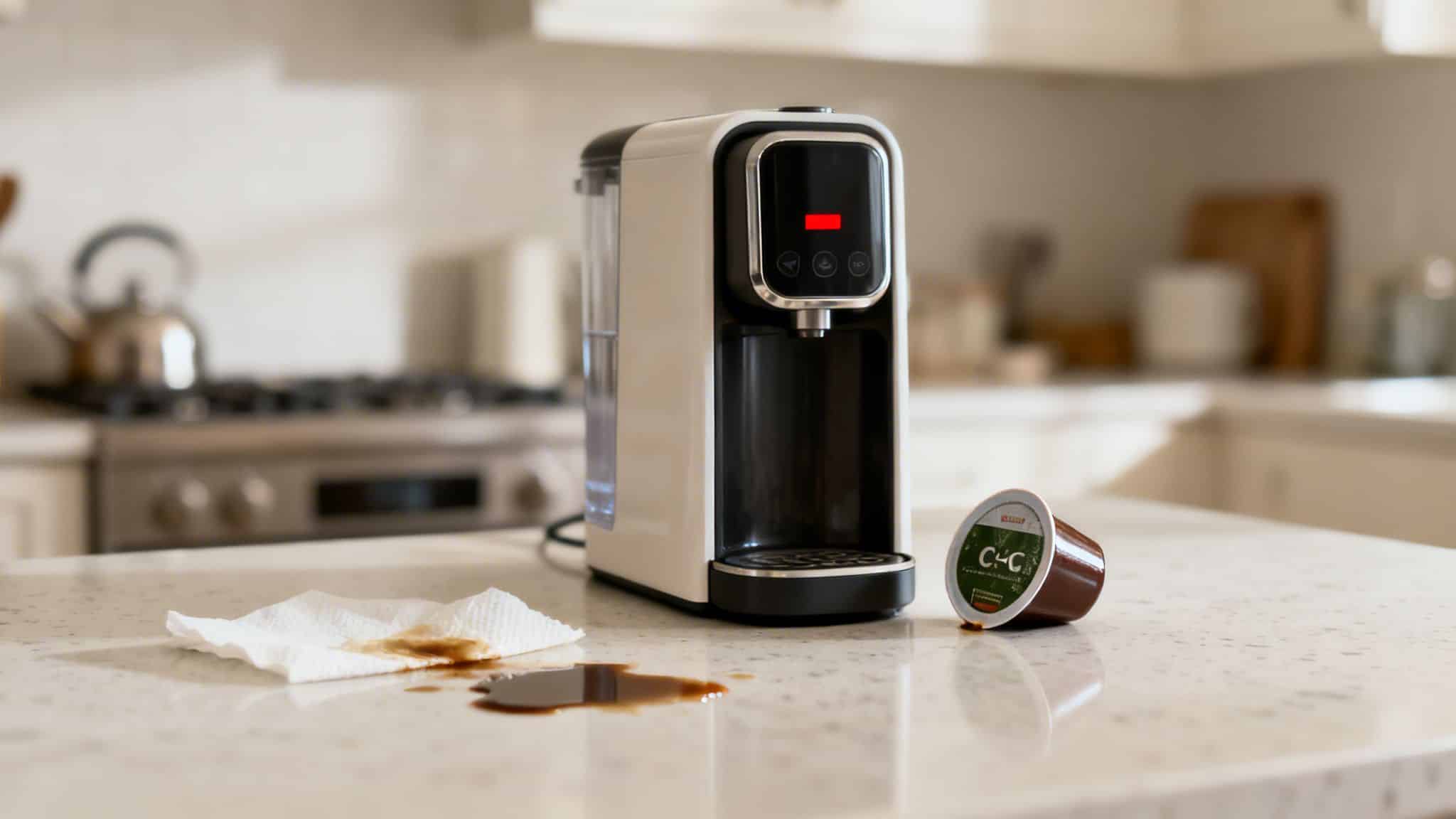
You excitedly pop a new brand of K-Cup into your single-serve brewer, hit the brew button, and instead of a perfect cup, you get an error message. Even worse, hot, murky water gushes out, creating a sticky mess on your counter. This isn't just an occasional glitch; it's a common morning disaster that undermines the very promise of quick, convenient coffee. The single-serve coffee maker market, valued at an estimated $834.45 million in 2024, is booming, yet this basic compatibility issue leaves millions of users frustrated, with a drawer full of useless pods and a serious case of buyer's remorse.
The frustration is maddening. The whole point of a coffee maker compatible with K-Cups is simplicity, but you're trapped in a guessing game. You waste money on pods your machine rejects, you're locked out of trying new craft coffee brands, and you feel guilty about the mountain of plastic waste from single-use pods. This intentional confusion stems from proprietary technology designed to lock you into one brand's ecosystem, stripping away your freedom of choice. It’s enough to make you regret buying the machine in the first place.
But there is a definitive solution that puts you back in control. By understanding the difference between "open" and "closed" brewing systems and using a high-quality reusable pod, you can bypass these restrictions entirely. A well-engineered reusable pod transforms your machine into the versatile, hassle-free brewer it was always meant to be, allowing you to use any ground coffee you desire, save money, and brew a perfect cup, every single time.
What Does "K-Cup Compatible" Actually Mean?
The term "K-Cup compatible" feels straightforward, but it hides a frustrating reality. You bought your brewer expecting it to work with any K-Cup-style pod, only to discover that's not the case. The root of the problem is that "K-Cup" is a trademarked term owned by Keurig. While countless companies produce pods that look identical, many brewers are intentionally designed to reject these unofficial versions, leaving you with brewing errors and wasted money.
This isn't an accident; it's a calculated business strategy. To control the market, some manufacturers install proprietary technology, like pod-scanning sensors, that function as a digital lock. This system forces you to buy their more expensive, officially licensed pods, severely limiting your coffee choices. You're cut off from artisan roasters, budget-friendly brands, and eco-friendly reusable options. You're left staring at a shelf of exciting coffees you can't try, all because your machine's manufacturer decided to make that choice for you.
The solution is to know the difference between an "open system" and a "closed system." Truly compatible brewers, like many from Cuisinart or Hamilton Beach, use a simple mechanical design: if the pod fits, it brews. In contrast, restrictive brewers like the Keurig 2.0 series use pod-scanning tech to block unauthorized pods. The ultimate key to unlocking any machine, however, is a superior reusable pod. For a deeper dive, our guide explains what K-Cups are in more detail.
How to Tell True Compatibility from a Closed System
So, how can you be sure your machine will actually work with the pods you want to use? The easiest way is to know the difference between brewers that are "universally compatible" and those with restrictions.
Universally Compatible Brewers: These machines are the good guys. Think of brands like Cuisinart, Hamilton Beach, or even older Keurig models like the beloved K-Classic. They don't have any fancy pod-scanning tech. Their process is purely mechanical: if the pod fits, it brews. These are perfect if you want total freedom.
Restrictive Brewers: This is where things get tricky. Keurig 2.0, K-Supreme, and some K-Duo models are the main culprits. While they pack in advanced features, their design can be a real pain if you like to use third-party or reusable pods. Workarounds exist, but they're often unreliable.
No matter which type you have, keeping it clean is non-negotiable. Using a good universal descaling solution every few months will keep mineral buildup from clogging your brewer and ruining your coffee's flavor.
Reusable Pods vs. Generic Pods: A Customer Objection
A common objection to reusable pods is that they leak, clog, or simply don't fit, creating a mess instead of a good cup of coffee. This is a valid concern, as many generic reusable pods are poorly made and cause these exact problems. Premium, well-engineered pods, however, are designed to solve these issues.
| Feature Comparison | Generic Reusable Pods | PureHQ Premium Reusable Pods |
|---|---|---|
| Lid Seal (The Leak Objection) | A loose, flimsy plastic lid that lets grounds and hot water escape, making a huge mess. | A tight-sealing silicone O-ring creates a secure, leak-proof fit to prevent blowouts. |
| Filter Mesh | Coarse plastic or thin metal mesh that clogs easily or lets fine grounds slip into your coffee. | Durable, micro-etched stainless steel mesh guarantees optimal water flow and a sediment-free cup. |
| Durability | Made from thin, cheap plastic that warps from the heat, cracks at the hinge, or breaks after a few uses. | Built from robust, 100% BPA-free materials designed for thousands of brews and consistent performance. |
| Compatibility | "One-size-fits-all" designs that often trigger sensor errors or don't fit specific models correctly. | Engineered for a precise fit across a wide range of models, including Keurig 1.0, 2.0, and even Ninja DualBrew systems. |
When you choose a well-engineered reusable pod, you solve the compatibility puzzle once and for all. You unlock the freedom to use any coffee you want, turning your machine into the versatile brewer it was always meant to be.
Ready to take back control of your coffee routine? Shop our collection of PureHQ reusable pods today!
A Brand-by-Brand Guide to Pod Compatibility
Let’s be honest: navigating the world of pod brewers can feel like a guessing game. You bring home a shiny new machine from a brand you trust, only to find it stubbornly rejects your favorite third-party pods or the reusable filter you bought to save a little money. It’s a frustratingly common story. The global K-Cup coffee machine market, valued at $1.2 billion in 2024, is filled with variety, but this diversity often leads to confusion.
This confusion all boils down to one simple fact: not all coffee makers are created equal, even if the box says it’s a coffee maker compatible with K-Cups. Understanding the specific quirks of each major brand is the key to finally getting the hassle-free, predictable brew you were promised from the start.
This chart breaks down the first choice you have to make every single time you buy pods.
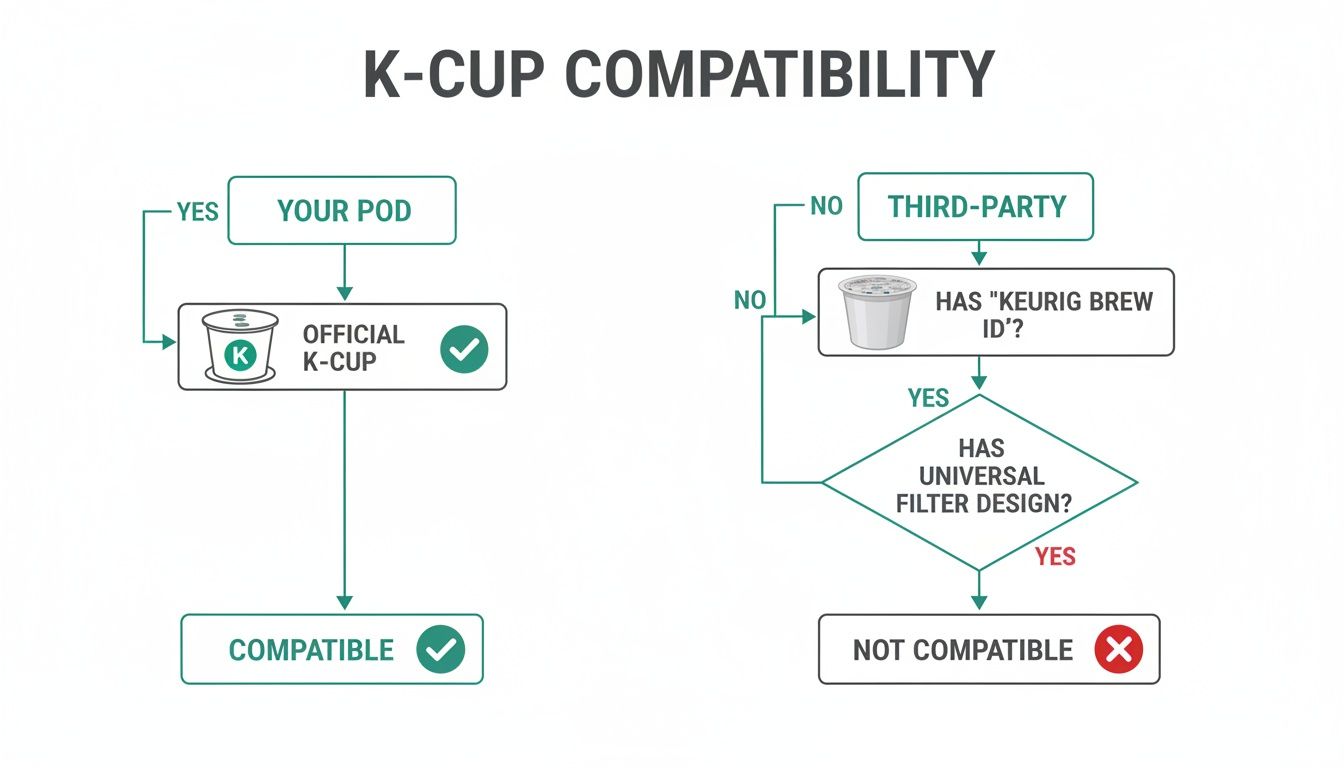
The path you take—official pod versus a third-party one—directly determines whether your machine will actually brew or just flash an error message. It all depends on its internal tech. The solution lies in choosing brewers with open systems or using a high-quality reusable pod designed for your specific model.
Keurig: The Original and Its Offspring
As the company that started it all, Keurig has the widest range of models out there, but that also means they have the most potential for compatibility headaches. Their brewers really fall into two different camps.
The Classics (Universally Compatible): Think of the old-school workhorses like the Keurig K-Classic. These machines are loved for one big reason: they’re simple. They don’t have any fancy pod-scanning technology, which means they’ll brew pretty much any pod that physically fits inside. This open-system approach gives you total freedom to use official K-Cups, cheaper third-party pods, and any reusable cups for Keurig you want without a fuss.
The New Guard (Restrictive Models): The trouble really began with the Keurig 2.0 series. This is when Keurig introduced DRM (Digital Rights Management) technology that looked for special ink on the pod lids to verify they were "official." More recent models like the K-Supreme and some K-Duo brewers use "MultiStream Technology," which punctures the pod with five needles instead of just one. While this does make for a better-tasting cup, it can cause major fit issues with poorly designed third-party or reusable pods that weren't built for it.
Ninja, Cuisinart, and Other Brands
Ninja: The Ninja DualBrew system is praised for its flexibility, handling both grounds and pods. However, its unique pod adapter often causes leaks or errors with generic reusable filters. A specifically designed reusable pod for the Ninja is the only way to guarantee a mess-free, perfect brew.
Cuisinart & Hamilton Beach: These brands generally prioritize user freedom. Most of their single-serve brewers, like the Cuisinart SS-10 or Hamilton Beach FlexBrew, are designed with universal compatibility in mind, skipping the restrictive tech and allowing you to use almost any pod you choose.
No matter what brand you own, keeping the machine's insides clean is critical. Using a universal descaling solution every few months will clear out mineral buildup that can interfere with performance and flavor.
Reusable Pod Comparison: Premium vs. Generic
The most common customer objection to reusable pods is that they cause leaks or don't fit properly. This is often true for generic, one-size-fits-all pods. Premium pods are engineered to solve these exact problems.
| Coffee Maker Brand & Model | Generic Pod Problems | PureHQ Premium Solution |
|---|---|---|
| Keurig K-Supreme, K-Slim (MultiStream) | Leaks and weak brew due to a poor seal against the 5-needle system. | MultiStream-Compatible Pods with a perfect seal ensure proper water flow and prevent messes. |
| Keurig K-Classic, K-Elite (Single Needle) | "Oops" errors and a loose fit that causes inconsistent brewing. | Universal Fit Pods provide a snug fit, eliminating sensor errors for reliable performance. |
| Ninja DualBrew (All Models) | Leaks and brewing errors because the pod doesn't fit the unique adapter shape. | Ninja-Specific Pods are engineered to fit the adapter perfectly, stopping leaks. |
| Cuisinart & Hamilton Beach (Most Models) | Inconsistent brews and potential sensor rejection even in "open-system" brewers. | Universal Fit Pods offer a reliable, consistent brew every time without triggering errors. |
By understanding these brand-specific details, you can finally pick a machine—or a reusable pod—that actually gives you the freedom and variety you’ve been looking for.
Ready to make any machine compatible? Shop our collection of PureHQ reusable pods to unlock your brewer's full potential.
The Real Fix: A Better Reusable Pod
You bought a coffee maker compatible with K-Cups for convenience and choice, but you're stuck with error messages, messy leaks, and a limited selection of expensive, official pods. It's a daily frustration that defeats the whole purpose of single-serve brewing and leaves you feeling trapped and annoyed.
This forces you into a corner. You either pay a premium for branded pods, limiting your coffee horizons, or you try a generic reusable filter and end up with a weak, gritty cup and a brewer full of coffee grounds. With billions of plastic pods ending up in landfills, the environmental guilt adds another layer of dissatisfaction to what should be a simple, enjoyable morning ritual. It's enough to make you question your purchase altogether.
The solution is not a complicated hack but a simple, powerful upgrade: a premium reusable pod. This single accessory eliminates compatibility issues, giving you the freedom to use any ground coffee you want. A well-engineered pod turns your restrictive machine into the open-system brewer it should have been, saving you money, reducing waste, and delivering a far superior cup of coffee.
Comparison: Generic vs. Premium Reusable Pods
Many people have tried cheap, generic reusable filters and been disappointed by leaks and poor performance. This is a common and valid objection. However, premium pods are engineered with superior materials and design to overcome these exact flaws.
| Feature Comparison | Generic Flimsy Pod | PureHQ Premium Reusable Pod |
|---|---|---|
| Seal & Lid (The Leak Objection) | Prone to leaking. The lid often doesn't create a tight seal, causing hot water and grounds to spray inside your brewer—a total mess. | Leak-proof seal. Our pods feature a secure-sealing lid with a silicone O-ring that creates a tight fit to prevent blowouts and ensure all the water flows through the coffee. |
| Filter Mesh | Made from coarse plastic or thin metal that lets fine coffee sediment (sludge) right into your cup for a gritty, unpleasant texture. | Micro-etched stainless steel mesh. This precision filter is fine enough to keep all the grounds contained while letting the flavor flow, delivering a clean, smooth, and full-bodied cup. |
| Construction & Durability | Built from cheap, thin plastic that can warp from heat, crack at the hinge, or even melt over time, potentially leaching unknown chemicals. | Durable, BPA-free construction. We use high-grade, heat-resistant materials designed to handle thousands of brew cycles without degrading, ensuring safety and long-term performance. |
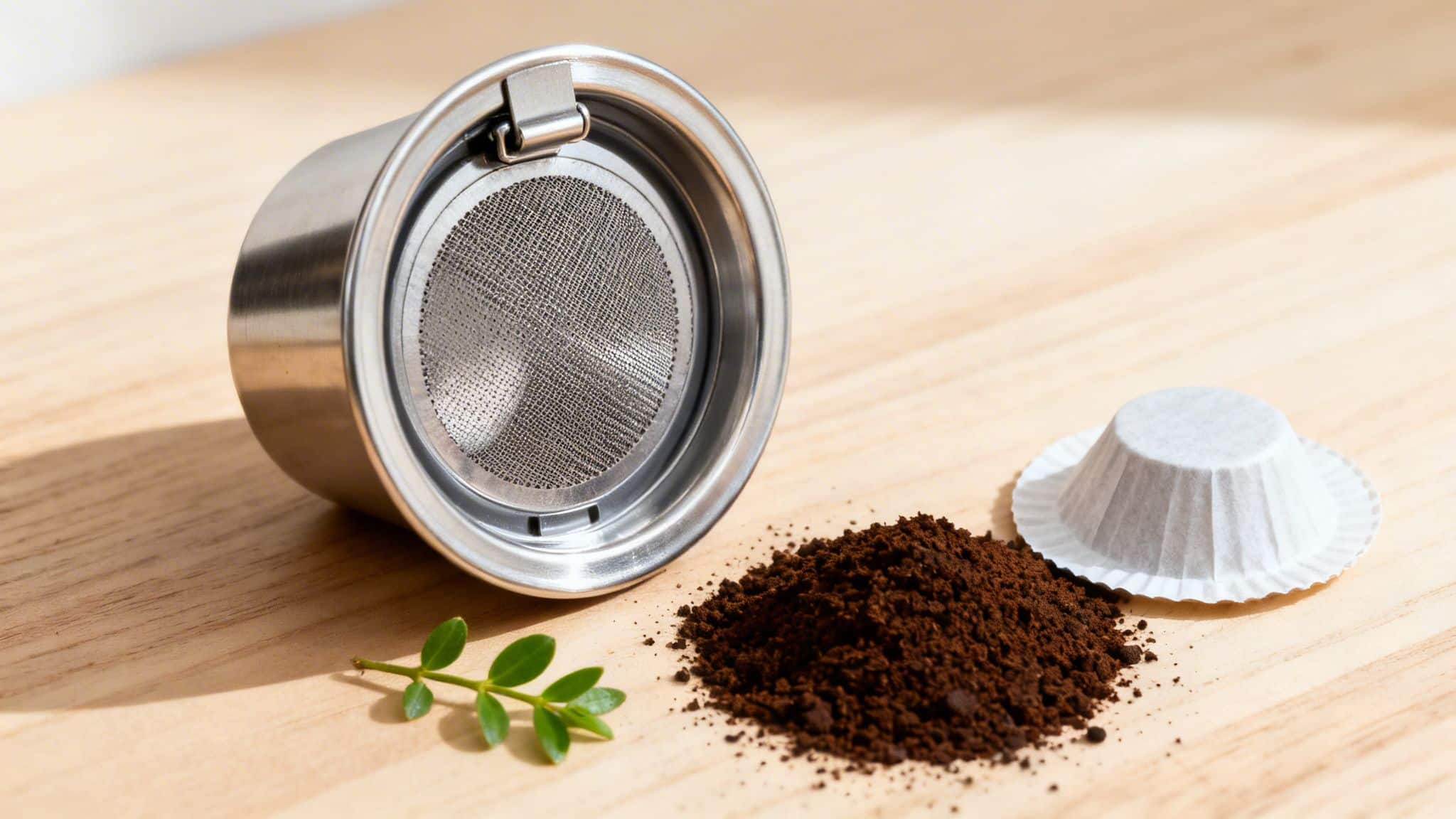
For the ultimate convenience, you can pop a disposable paper liner inside your reusable pod. You get the fresh flavor of your own ground coffee and completely mess-free cleanup. And to keep your machine running like new, don't forget to clean it with a universal descaling solution to get rid of mineral buildup. If you want to dive deeper, check out our in-depth guide to reusable cups for Keurig.
Stop compromising. It's time to start brewing coffee on your own terms.
Shop our collection of PureHQ reusable pods and unlock the full potential of your coffee maker today!
How to Maintain Your Compatible Coffee Maker
Your brewer delivers a perfect, piping-hot cup of coffee. But over time, you notice it's taking longer to brew, and the coffee isn't quite as hot. The flavor seems weak and disappointing. This decline is caused by limescale, a chalky mineral residue from your water that silently builds up inside your machine's heating element and water lines. This problem is nearly universal, as tap water across the country contains these minerals.
This buildup forces your brewer to work harder and at cooler temperatures, choking its performance. That vibrant, rich coffee you love becomes bland and lukewarm. The oils and fine grounds left behind from different coffees only make the problem worse. This isn't just a minor annoyance; it's a slow degradation that shortens your machine's lifespan and ruins the quality of every cup you brew.
The solution is a simple but essential maintenance routine. Regularly descaling your machine removes the mineral buildup, restoring its heating efficiency and brewing speed. This isn't just about cleaning; it's about protecting your investment and ensuring your coffee always tastes its best. This simple step keeps your brewer performing like new and guarantees a perfect, flavorful cup every time.
The Importance of Descaling Your Brewer
Descaling is the process of removing mineral deposits (limescale) that clog the internal heating element and water lines. This buildup forces your machine to work less efficiently, leading to frustrating problems:
- Slower Brew Times: Your “instant” coffee suddenly feels like it’s taking forever.
- Lower Water Temperature: Scale acts like an insulator on the heating element, preventing the water from reaching the ideal 195-205°F range required for proper coffee extraction.
- Weak, Under-Extracted Coffee: When the water isn't hot enough, it can't pull all the rich flavor from your grounds. The result? A sour, bland, or watery cup.
As a rule of thumb, descaling every 3-6 months is perfect. A good, universal descaling solution makes this a breeze. While descaling tackles mineral gunk, a charcoal water filter is also crucial. Most tap water contains chlorine and other impurities that create off-tastes. Swapping out your brewer's filter every two months ensures every cup starts with clean, pure-tasting water. Our detailed guide on Keurig coffee maker maintenance dives even deeper into keeping your machine in top shape.
The coffee pod market, valued at $11.44 billion in 2025, shows how many households rely on these machines. Proper maintenance with accessories like descalers and filters has never been more critical.
Protect your investment and guarantee amazing coffee every time.
Shop our complete collection of PureHQ descaling solutions and water filters today!
Frequently Asked Questions About K-Cup Compatibility
You've got the basics of compatibility down, but a few nagging questions are probably still rattling around in your head every time you go to brew. Let's tackle those common head-scratchers and clear them up for good, so you can finally solve the compatibility puzzle.
Can I Use Any K-Cup in a 'K-Cup Compatible' Machine?
This is the big one, right? Does "compatible" actually mean universal? The frustrating answer is: not always. While a ton of third-party brewers from brands like Cuisinart or Hamilton Beach are built to play nice with almost any standard K-Cup you throw at them, some Keurig models are notoriously picky.
The Keurig 2.0 series, in particular, was famous for its pod-scanning technology that would flat-out reject pods it didn't recognize. The easiest way to sidestep this entire headache and guarantee universal compatibility? A high-quality reusable pod. It’s the one simple accessory that puts you back in control, letting you brew your favorite coffee grounds in virtually any coffee maker compatible with K-cups.
Are Reusable K-Cups a Pain to Clean?
We hear this a lot, and it's a fear usually born from wrestling with old, clunky reusable pods that felt like a science project to clean. The great news is that modern, well-designed reusable pods are a completely different beast.
They're engineered for your sanity. Think smooth interiors with no weird crevices, easy-to-use hinged lids, and durable stainless steel mesh that rinses clean under the tap in just a few seconds. If you want the absolute easiest cleanup possible, you can pop a disposable paper filter inside your reusable pod. You get the freedom of fresh grounds with the simple, no-mess disposal of a single-use pod.
Will Using a Reusable Pod Void My Coffee Maker's Warranty?
This is a huge worry for a lot of people, but you can breathe easy. In the United States, using a third-party accessory like a reusable pod will not automatically void your coffee maker's warranty.
The Magnuson-Moss Warranty Act is a federal law that has your back. It stops manufacturers from forcing you to use only their branded parts to keep your warranty valid. As long as the accessory itself doesn’t directly break the machine, your warranty is safe and sound.
How Often Should I Descale My Brewer?
Think of descaling as a spa day for your coffee maker—it's non-negotiable for its health and for the taste of your coffee. The golden rule is to descale your brewer every 3-6 months.
But, if you live in an area with hard water (water with a high mineral content), you need to be more vigilant. Bump that schedule up to every 2-3 months. This is crucial for preventing the chalky mineral buildup that clogs your machine, slows down brewing, and leaves a funky, sour taste in your coffee. Using filtered water from a good charcoal filter can also help you go longer between descaling sessions.
What about keeping a whole office caffeinated? The needs are different, which is where you might explore choices for office coffee vending machines built for higher volume and different tastes.
Ready to make your coffee routine simpler, more affordable, and way more delicious? The right accessories are everything. Get the perfect brew, every single time, with PureHQ Inc.


Pingback: Master Your keurig k duo essentials: Complete 2026 Guide
Pingback: Keurig and Cuisinart Compared for Home and Office