
Coffee Machine Care
The Perfect Coffee to Water Ratio Drip Guide
Mar
Does your homemade drip coffee swing from bland and watery one day to unpleasantly bitter the next? It’s a frustrating morning ritual when you use the same beans and the same machine, yet the result is always a gamble. This inconsistency often isn't the fault of your coffee maker or the beans; it’s the one variable most people overlook: the coffee to water ratio for your drip brewer.
Relying on random scoops or just eyeballing the grounds is a recipe for disappointment. That weak or harsh cup not only wastes good coffee but can start your day on the wrong foot. The Specialty Coffee Association (SCA) confirms that precision is key, recommending a specific brew ratio to achieve optimal flavor extraction.
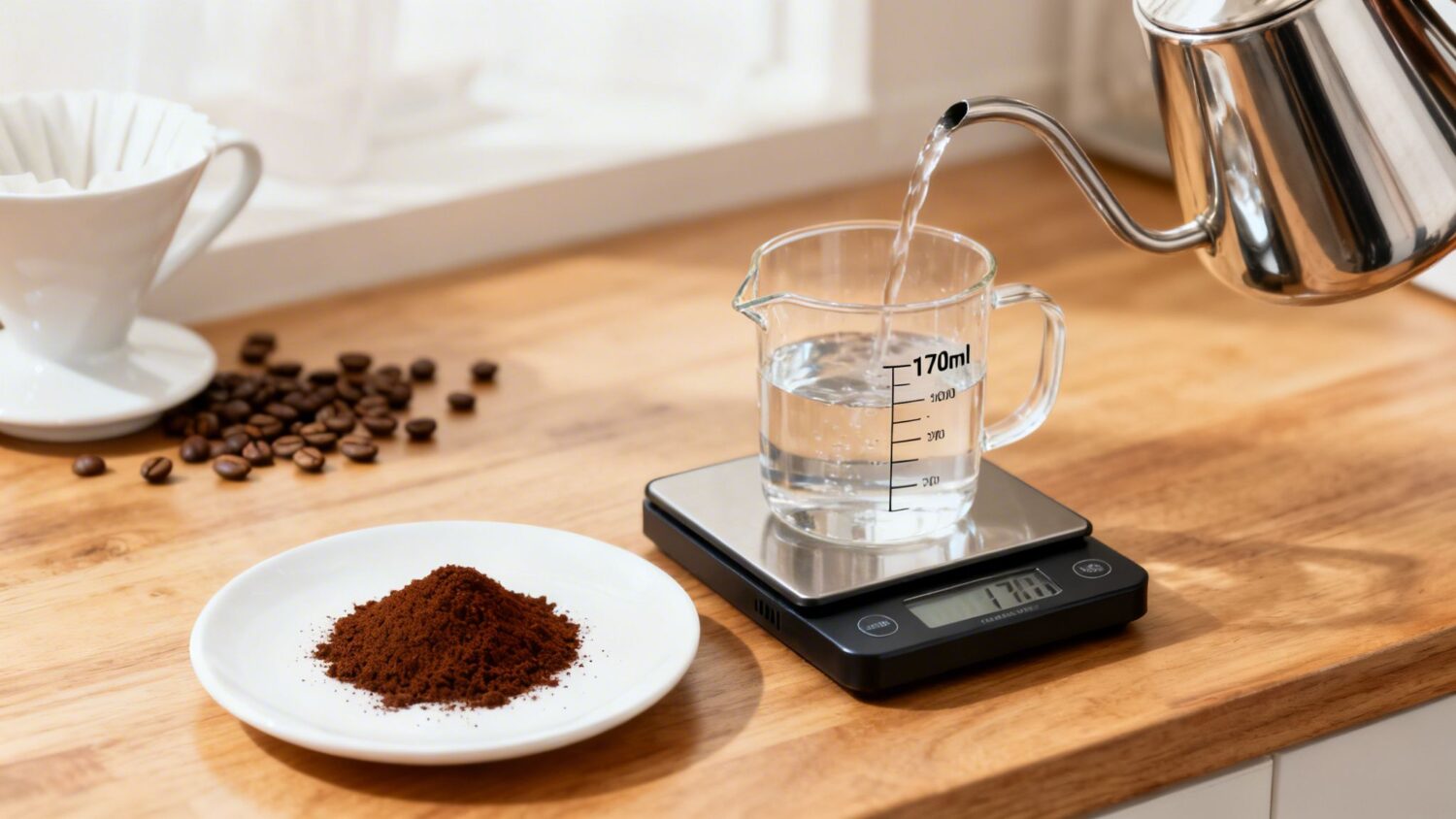
The solution is simpler than you think. By understanding and controlling the ratio of coffee to water—preferably by weight—you eliminate the guesswork. This guide will show you how to master the coffee to water ratio for drip brewing, unlocking balanced, café-quality coffee every single time you press the 'brew' button.
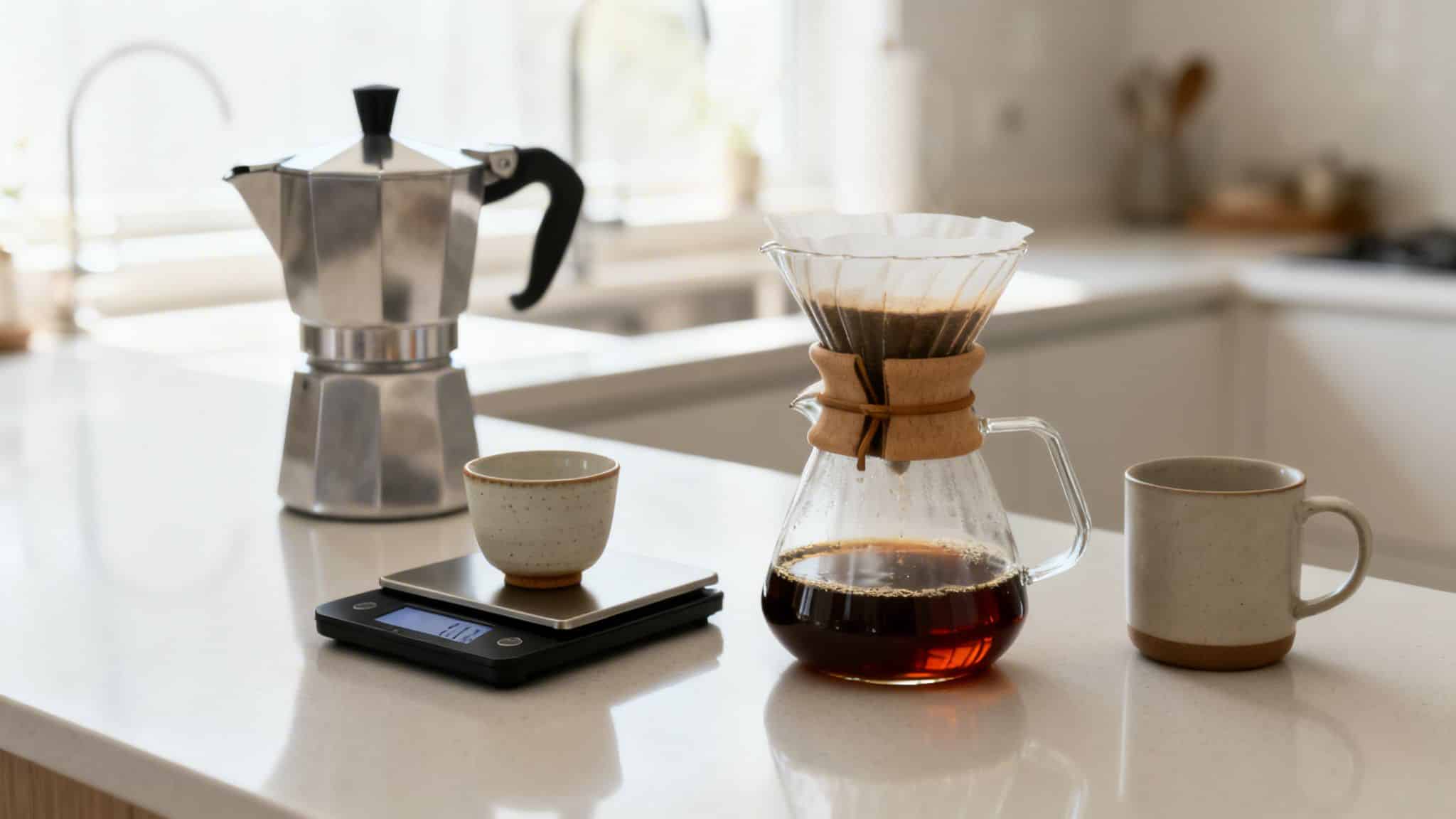
We’ll cover everything from the "golden ratio" to specific tips for brewers like a Keurig with reusable pods or a Ninja carafe. If you want to dive even deeper, you can explore our full guide on the universal principles of the water to coffee ratio as well.
The "Golden Ratio" Isn't Just a Myth
You've probably heard baristas talk about the "golden ratio." It isn't just a fancy term; it's a proven starting point that balances flavor and strength perfectly. Following it ensures you extract all the delicious flavor compounds from your grounds without pulling out the bitter ones that leave a nasty aftertaste.
To make things simple, here's a quick reference table. Use it to find a great starting point for a standard 12 oz mug based on how strong you like your coffee.
Quick Guide to Drip Coffee Ratios by Strength
| Brew Strength | Coffee to Water Ratio | Grams of Coffee (for 12 oz / 355g water) | Resulting Flavor Profile |
|---|---|---|---|
| Weaker / Lighter | 1:18 | ~20g | Bright, clean, highlights delicate notes, less body |
| Standard / Golden | 1:17 | ~21g | Balanced, classic drip coffee flavor, good body |
| Stronger / Bolder | 1:15 | ~24g | Rich, full-bodied, more intense flavor, less nuance |
This table is your launchpad. Start with the standard 1:17 ratio and see how you like it, then adjust up or down a gram or two on your next brew until it tastes perfect to you.
What the Experts Say
To get everyone on the same page, coffee industry pros have set some clear standards. The Specialty Coffee Association (SCA) recommends a coffee-to-water ratio between 1:15 to 1:18 for drip coffee. Most coffee lovers find their sweet spot right in the middle at 1:17. In simple terms, that's 1 gram of coffee for every 17 grams (or milliliters) of water.
The National Coffee Association offers a more traditional take, suggesting one to two tablespoons of grounds for every six ounces of water. But here’s the problem: a scoop of finely ground dark roast weighs a lot more than a scoop of coarsely ground light roast. This is why pros don't use scoops.
The core idea is simple: precision creates consistency. Switching from scoops to a digital scale is the single biggest upgrade you can make to your coffee game. It ensures that whether you're brewing a single mug or a full pot, the taste remains deliciously consistent.
Why Measuring Your Drip Coffee Ratio Matters
Ever feel like you're playing coffee roulette every morning? You use the same scoop, the same beans, the same machine, but one day your brew is perfect, and the next it’s just… sad. You’re not imagining it. That inconsistency is the frustrating reality of using a standard coffee scoop.
Relying on a scoop is like trying to bake a gourmet cake using a random mug to measure flour. You’re setting yourself up for failure. The problem is that scoops measure volume, not weight, and the weight of coffee can be all over the place. A scoop of dense, light-roast beans weighs way more than the same scoop of fluffy, dark-roast beans. And don’t even get us started on grind size—fine grounds pack in much tighter than coarse ones. This one tiny variable is probably sabotaging your coffee and wasting your expensive beans.
The Secret to Great Coffee: Extraction
Here's what it all boils down to: extraction. This is just the fancy word for how water pulls all the delicious, flavorful stuff out of your coffee grounds. Think of it like steeping tea. If you pull the bag out too fast, the tea is weak and sour (under-extracted). Leave it in too long, and it turns harsh and bitter (over-extracted).
The exact same thing happens with your coffee to water ratio for drip brewing. Get it right, and you’re in for a fantastic cup. Get it wrong, and you’re starting your day with disappointment.
The single biggest upgrade you can make to your coffee game is switching from scoops (volume) to a simple kitchen scale (weight). Measuring in grams takes all the guesswork out of the equation. It's the key to brewing a consistently delicious cup, every single time.
This isn’t about being a coffee snob. It’s about taking control of the most important part of your brewing process and finally getting the results you deserve.
Finding That Golden Ratio
When your ratio is off, you get those classic coffee problems. Too much water for the amount of coffee? You get a thin, watery, and sour cup because the water didn't have enough coffee solids to work with.
On the flip side, if you don't use enough water, that small amount has to work overtime, pulling all the nasty, bitter compounds out of the grounds. That’s when you get a harsh, overpowering brew that makes you pucker.
Experts have found the sweet spot. A brew tends to get weak and diluted when the balance goes beyond a 1:18 ratio (that’s one part coffee to eighteen parts water). On the other end, anything below a 1:15 ratio is often unpleasantly strong and bitter. This is true whether you're using a basic Mr. Coffee or a high-end Ninja DualBrew. You can discover more insights on how experts determine the perfect coffee-to-water balance for non-pressurized brewing.
For even better consistency, pair your scale with a well-made reusable filter. A premium gold-tone filter holds its shape perfectly, unlike flimsy paper ones that can collapse and mess up the even flow of water through your grounds. It’s a simple setup that helps guarantee your carefully weighed coffee is brewed perfectly every time.
Shop PureHQ Gold-Tone Reusable Filters Now
How to Perfectly Measure Your Coffee and Water
Getting your coffee to water ratio for drip coffee just right can feel like chasing a ghost. One day your brew is perfect, the next it’s a total dud, even though you used the same number of scoops. Sound familiar? You’re not imagining things. Relying on tablespoons is a surefire way to get inconsistent coffee.
Here's why: scoops measure volume, not weight. A scoop of fine, dark-roast grounds weighs a lot less than the same scoop filled with a coarse, light-roast coffee. That tiny difference is all it takes to completely derail your extraction, turning a potentially amazing cup into a sour, weak, or bitter disappointment. It's time to stop guessing and start brewing with purpose.
The fix is surprisingly simple and affordable: get a digital kitchen scale. This one tool is the absolute key to unlocking consistently delicious coffee, cup after cup. A scale lets you replicate your best brews down to the last gram. No more guesswork.
Measuring by Weight The Right Way
Using a scale is dead simple. The most important button you'll use is the tare function, which resets the display to zero. This genius feature lets you measure only what you’re adding, completely ignoring the weight of the basket or pod.
Here’s all you have to do:
- Place your empty drip basket or reusable pod on the scale.
- Press the tare button. The display will go back to zero.
- Add your coffee grounds until you hit your target weight.
That’s it. This process guarantees your measurements are spot-on, which is the first step toward a beautifully balanced extraction. Get the ratio wrong, and you'll end up with a cup that's either sour (under-extracted) or bitter (over-extracted).
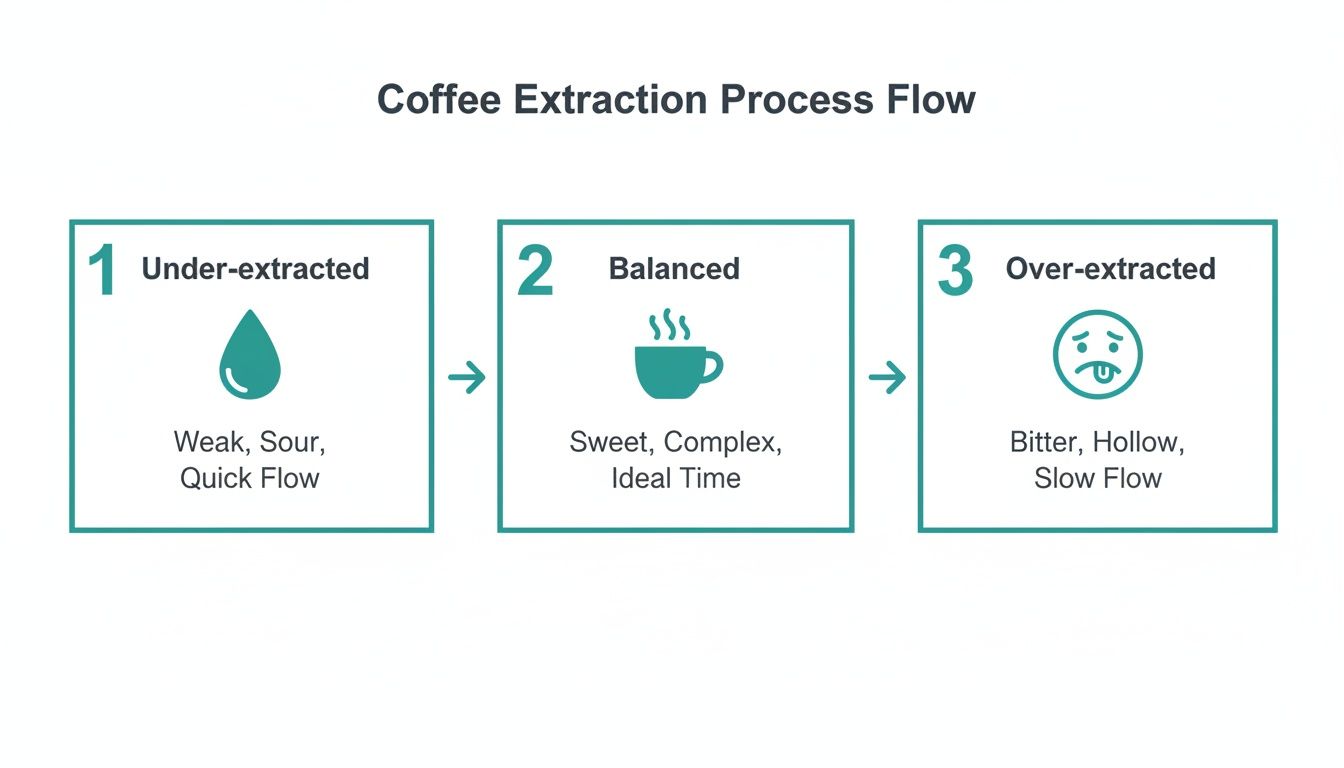
As you can see, that sweet spot in the middle is where the magic happens. It’s the perfect balance between sour and bitter where all the delicious flavors of your coffee truly shine.
From a Single Mug to a Full Pot
Let's put this into practice with the "golden ratio" of 1:17. That’s 1 gram of coffee for every 17 grams of water.
- For a single 12 oz mug (355g water): You’ll need 21g of coffee.
- For a half carafe (approx. 30 oz / 887g water): Use 52g of coffee.
- For a full 12-cup pot (approx. 60 oz / 1774g water): Go with 104g of coffee.
Don't have a scale? In a pinch, you can get by with the old rule of two rounded tablespoons of coffee for every six ounces of water. But remember, this is just an approximation. Investing in a scale is the single best thing you can do for your coffee consistency.
Of course, your ratio is only part of the equation. Using a flimsy paper filter that collapses can ruin even the most perfectly measured coffee by causing water to channel unevenly through the grounds. PureHQ’s Gold-Tone Reusable Filters have a rigid, durable structure that guarantees even water flow, giving you a consistent extraction every single time. And while you're at it, a good descaling solution keeps your machine's water delivery accurate, preventing mineral buildup from throwing off your volume.
Shop PureHQ Gold-Tone Reusable Filters Now
Adjusting the Ratio for Different Drip Brewers
Have you ever switched from a classic Mr. Coffee to a sleek Ninja brewer and found your trusted coffee recipe tastes completely off? It’s a common frustration. You’re left wondering if your favorite beans went stale overnight.
The truth is, your machine plays a huge role in how your coffee to water ratio for drip brewing turns out. Not all drip brewers are built the same, and their design directly impacts the final taste in your cup.
For example, brewers with cone-shaped baskets create a deep bed of coffee grounds, which helps water flow through more slowly and evenly. On the other hand, machines with wide, flat-bottom baskets have a shallower coffee bed, which can sometimes lead to inconsistent extraction. This means a 1:17 ratio that was perfect in one machine might need a little tweak to get that same balanced flavor in another.
The ideal coffee to water ratio also changes quite a bit between brewing styles. While most drip coffee makers land somewhere between a 1:15 to 1:17 standard, other methods have their own sweet spots. French press, for instance, is often brewed stronger at a 1:15 ratio, while a Chemex pour-over might use a 1:16 ratio to bring out more clarity. You can learn more about how different brew methods influence water ratios and see why these small shifts make such a big difference.
Dialing in Single-Serve Brewers
This ratio problem is most obvious with single-serve brewers like Keurig. One of the biggest complaints from people using reusable K-Cups is weak, watery coffee. The pod’s tiny size is the main culprit; it simply can't hold enough coffee to brew a balanced cup with the machine's default water settings.
The fix is to use a stronger coffee to water ratio drip—aiming for something closer to 1:15—and grind your coffee a bit finer than you would for a full pot. This helps the water pull out more flavor during its very short brew time. Unfortunately, this is where many generic reusable pods fall flat. Their flimsy mesh clogs easily, or their weak plastic lids let grounds leak right into your mug.
PureHQ’s reusable K-Cups are engineered to solve this exact problem. Their durable, food-grade construction and optimized mesh design allow for better water flow without clogging, helping you pack in more grounds for a stronger, richer brew that rivals a full-sized drip machine.
PureHQ Reusable Pods vs Standard Generic Pods
When you put them side-by-side, the difference between a well-designed pod and a generic one becomes crystal clear. It's the small details that prevent a frustrating, messy brew.
| Feature | PureHQ Reusable Pods | Standard Generic Pods |
|---|---|---|
| Construction | Durable, BPA-free plastic with a sturdy hinge designed for thousands of uses. | Thin, brittle plastic that can warp or crack after just a few uses. |
| Water Flow | Engineered mesh pattern ensures even saturation and prevents clogging. | Inconsistent mesh often restricts water flow, leading to under-extraction. |
| Seal & Fit | A tight-fitting lid with a silicone O-ring prevents leaks and grounds spillage. | Poorly fitting lids often leak, creating a mess and watery coffee. |
| Brew Quality | Allows for a finer grind and more coffee, producing a stronger, more flavorful cup. | Limited capacity and poor flow result in a notoriously weak and unsatisfying brew. |
Ultimately, a poorly designed pod shouldn't stand between you and a great cup of coffee. By choosing a pod built for performance, you get the strength and flavor you're looking for without the mess.
Shop PureHQ Reusable K-Cups and Brew Stronger Coffee Now
Variables Beyond the Ratio That Impact Your Brew
Ever nail the coffee to water ratio drip perfectly, only for your morning cup to taste… off? It’s a frustrating feeling. When your measurements are on point but the coffee still falls flat, the problem often comes down to two culprits hiding in plain sight: your water and your grind.
Even with the best beans in the world, these two variables can make or break your final brew.
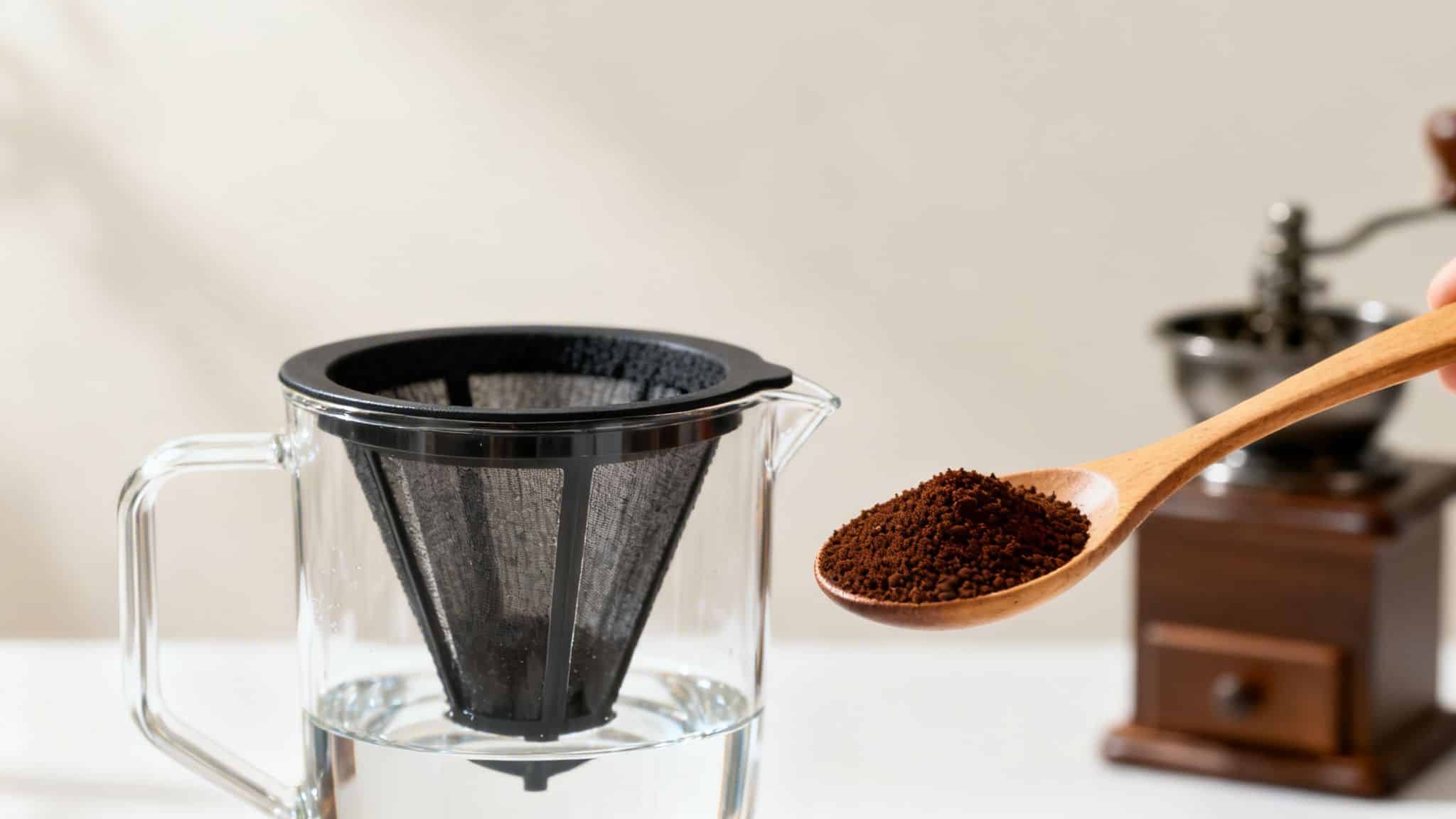
You might not think about it, but your tap water can be an invisible saboteur. Since coffee is roughly 98% water, the quality of that water has a huge impact on flavor. Hard, chlorinated, or mineral-heavy water can introduce unwanted tastes and get in the way of proper extraction, leaving your coffee tasting dull or even bitter.
Using filtered water is a game-changer. It gives you a clean, neutral foundation for brewing, allowing the subtle, delicious flavors of your coffee beans to shine through without anything getting in the way. It's a simple switch that leads to a noticeably cleaner and more balanced cup.
This is especially true for brewers like Keurigs, which are notorious for being sensitive to mineral buildup. A high-quality charcoal water filter ensures every brew starts with pure water, so you’re tasting the coffee, not your plumbing.
Finding the Right Grind Size
The other critical piece of the puzzle is your grind size. Think of it as controlling the speed limit for how fast water passes through your coffee grounds. The right texture is absolutely essential for good extraction, which is why investing in a quality coffee grinder can make a world of difference.
For drip coffee, a medium grind—about the texture of coarse sand—is the gold standard.
- Too Coarse: If your grind looks like rough sea salt, water will rush through it way too fast. This causes under-extraction, and you'll end up with a weak, sour, and watery cup. It just won't have that satisfying depth.
- Too Fine: On the other hand, a powder-fine grind can clog your filter, trapping water in the grounds for too long. This leads to over-extraction, creating a harsh, bitter, and unpleasant taste that can ruin your morning.
Getting that perfect medium grind is a key step toward mastering your daily brew. If you want to dive deeper into how texture impacts automatic drip machines, check out our guide on what defines a drip grind.
By paying attention to both your water quality and your grind size, you take full control of the brewing process. These adjustments work together with your perfected coffee to water ratio drip to finally put an end to bad coffee days for good. For a consistently clean and delicious brew, make sure your machine is equipped with top-tier filtration.
Shop PureHQ Charcoal Water Filters Now
Troubleshooting Your Drip Coffee Brew
So, you did everything by the book. You measured the beans, nailed your coffee to water ratio for drip brewing, and hit the start button. But the first sip is… a letdown. It’s incredibly frustrating when you follow all the rules and the coffee still comes out weak, sour, or horribly bitter.
That disconnect between careful prep and a disappointing cup can make you want to throw in the towel and go back to just eyeballing it. You're left standing there, wondering what went wrong and how you can possibly fix it without wasting more of your favorite beans on another bad batch.
The good news? You don’t need to be a pro barista to figure this out. By learning to recognize a few key flavor clues, you can make simple tweaks to dial in that perfect cup. Think of yourself as your own personal coffee detective.
A Simple Flavor-Fix Guide
Most of the time, brewing problems come down to one thing: extraction. And extraction is controlled by your grind size and your ratio. Use this simple guide to figure out what your coffee is telling you.
If your coffee tastes weak and sour: This is the classic sign of under-extraction. Your grind is almost certainly too coarse, which lets water rush through too fast without grabbing enough of the good stuff.
- The Fix: Go for a finer grind on your next brew. If you’re sure the grind is right, try pulling back on the water just a bit—about 15-20g less should do the trick.
If your coffee tastes harsh and bitter: You're looking at over-extraction. The grind is likely too fine, causing water to get trapped with the grounds for too long. This pulls out all the unpleasant, bitter compounds you don't want. We cover this common problem in depth in our article on why coffee can taste bitter.
- The Fix: Switch to a coarser grind. If you like your current grind setting, simply add 15-20g more water to dilute the brew and bring it back into balance.
Sometimes, the issue isn't your technique but the machine itself. If you notice your brewer is running way slower than it used to, that’s a huge red flag. It’s a clear signal that mineral buildup is clogging its internal parts.
This buildup wreaks havoc on brew temperature and timing, and can even leave a nasty, metallic taste in your cup. Using a universal descaling solution will clear out those mineral deposits and get your machine running like new again. Keeping your brewer clean is every bit as important as perfecting your ratio.
Shop PureHQ Universal Descaling Solution Now
Got Questions About Drip Coffee Ratios? We've Got Answers.
Okay, so you've got the golden ratio down in theory. But what happens when you're standing in front of your coffee maker at 7 AM, scoop in hand? That's when the real-world questions pop up.
Let's clear up some of the most common hangups people have when dialing in their drip coffee.
How Many Tablespoons of Coffee Do I Need for a 12-Cup Pot?
This is probably the most-asked question in all of coffee-dom. For a standard 12-cup machine (which usually brews about 60 ounces), a good starting point is 12 to 15 level tablespoons of ground coffee.
But here’s the catch: a tablespoon measures volume, not weight. A fluffy, dark roast takes up more space than a dense light roast. For truly consistent coffee day after day, a simple digital scale is the best tool you can own.
Does Water Temperature Really Affect My Ratio?
While the temperature doesn't change your ratio of coffee to water, it absolutely changes your extraction. Think of it this way: the ratio is your recipe, but the temperature is how well you cook it.
Your brew water should be between 195-205°F (90-96°C). If it's too cool, your coffee will taste sour and weak, no matter how much coffee you use. If you notice your brew times getting longer or the coffee isn't as hot, your machine's heating element is probably clogged with mineral buildup. It's a sure sign you need to run a descaling solution through it.
Should I Use a Different Ratio for Light vs. Dark Roasts?
Yes and no. The 1:17 ratio is the perfect universal starting line for any roast. Brew a pot, taste it, and then decide if you want to adjust.
- Light Roasts: These beans are denser and a bit harder to extract flavor from. To pull out all those bright, complex notes, you might want to tighten the ratio to 1:16.
- Dark Roasts: These beans are more porous and give up their flavor easily, which also makes them prone to bitterness. You can often get a smoother, less intense cup by loosening the ratio slightly to 1:18.
At PureHQ Inc., we believe great coffee should be simple and accessible. That’s why we create high-quality, durable accessories to perfect your daily brew.
Shop PureHQ and Elevate Your Coffee Today

