
Coffee Machine Care
How to Descale a Keurig Supreme for a Perfect Brew Every Time
Mar
Is your daily coffee ritual being sabotaged by a sputtering, gurgling Keurig that delivers a lukewarm, disappointing cup? This isn’t just an off day for your brewer; it's a clear signal of internal mineral buildup. In fact, over 85% of U.S. households have hard water, meaning the minerals causing this problem are likely flowing from your own tap. Ignoring this can lead to slow brews, weak flavor, and eventual machine failure.
The solution is a simple, effective descaling process that dissolves these performance-killing deposits. By running a specialized cleaning solution through your machine, you can flush out the scale and restore your Keurig Supreme to its former glory, ensuring every cup is as hot and flavorful as the first.
Is Your Keurig Betraying Your Morning Ritual?
That slow, weak brew from your Keurig Supreme isn’t just an annoyance; it's a sign that mineral deposits, known as limescale, are quietly choking your machine from the inside. This buildup forms a chalky layer over the internal heating element and water lines, forcing the brewer to work harder for worse results.
Soon, you’re left with a cup that’s weak, lukewarm, and frankly, a little insulting. The frustration grows as your once-reliable coffee maker becomes a source of morning disappointment. You're left wondering why your expensive machine is failing, not realizing the problem started with your tap water.
Why a Slow Brew Is a Serious Problem
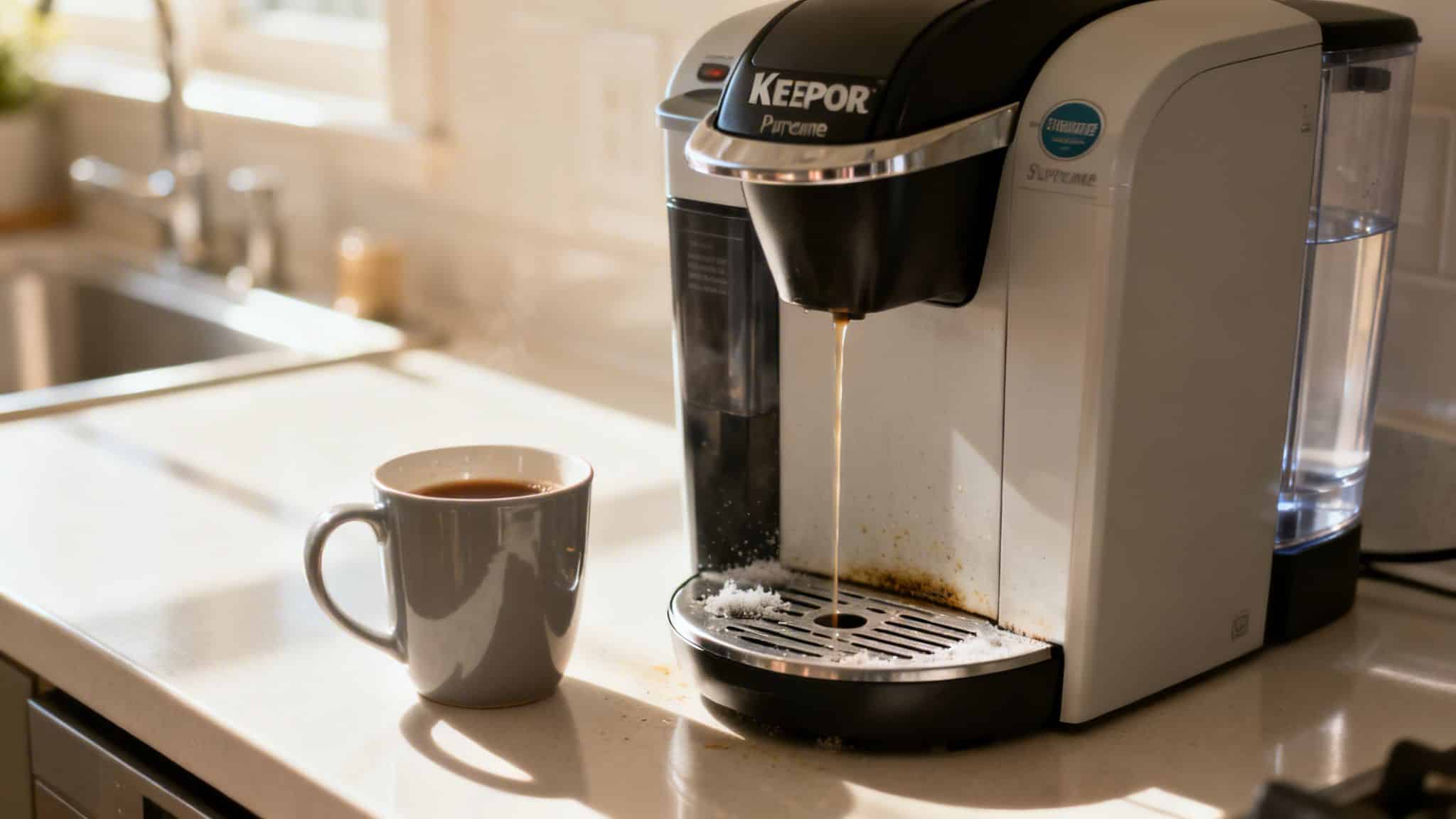
This problem goes deeper than just a bad cup of coffee. As limescale insulates the heating element, your Keurig can no longer reach the optimal brewing temperature, leading to under-extracted, bitter coffee. The clogged pathways also restrict water flow, which is why you suddenly get a half-cup when you selected a full mug.
Ignoring these signs puts immense strain on your machine’s pump and internal components. Keurig officially states that failing to descale your brewer regularly can lead to permanent damage and may even void the warranty. This struggle eventually shortens your brewer's lifespan, forcing an expensive replacement.
The fix is simple: regular descaling. This quick maintenance dissolves the mineral deposits, restoring your Keurig Supreme’s performance. To get your machine back in top shape, you need a descaler that works. While DIY solutions like vinegar exist, they often require endless rinse cycles to remove a lingering aftertaste.
For a reliable clean, PureHQ’s Universal Descaling Solution is formulated to be tough on scale but gentle on your brewer's internal parts, ensuring a complete clean with zero aftertaste. To further prevent scale, using a high-quality water filter is essential.
What Mineral Buildup Is Doing to Your Coffee Maker
That strange gurgling sound from your Keurig Supreme is the sound of your machine struggling. Every time you brew, minerals like calcium and magnesium from your tap water are left behind, forming a chalky deposit called limescale. This buildup silently coats the internal pathways and the heating element, slowly choking your brewer from the inside out.
At first, you won’t notice it. But as the scale thickens, your once-perfect morning ritual becomes a frustrating game of chance. Your machine takes longer to brew, the coffee comes out lukewarm, and the taste is disappointingly weak. You start to resent your machine, not realizing the culprit is hidden inside.
The Warning Signs of Limescale Buildup
Your Keurig Supreme will let you know when it’s struggling with mineral buildup. Ignoring these signals puts serious strain on the machine's internal parts, which Keurig confirms can lead to permanent damage. Watch out for these classic symptoms that mean it's time to descale:
- Slower Brewing Times: The machine seems to take forever as water fights its way through constricted lines.
- Partial Cups: You select an 8oz brew but only get 6oz, a tell-tale sign of restricted water flow.
- Weird Noises: Gurgling or hissing sounds mean the pump is working overtime to push water through clogs.
- Weak or Bitter Coffee: When scale insulates the heating element, it can't get the water to the optimal brewing temperature, resulting in poor extraction. You can learn more about why your coffee tastes bitter and how water temperature plays a role.
Keurig recommends descaling your brewer every 3 months, or more often if you have hard water. Allowing scale to build up can eventually reduce your machine's water flow by up to 50%, wrecking both its performance and its lifespan.
A dedicated descaling formula is the best solution. A quality descaler is made to be tough on limescale while being gentle on your machine's delicate internal parts. It gets the job done without leaving any aftertaste to ruin your next perfect cup. While you're performing maintenance, ensure your machine is equipped with effective PureHQ Water Filters to capture minerals before they can cause buildup.
Your Guide to Descaling the Keurig Supreme
When the "Descale" light illuminates or your coffee just isn't hitting the spot, it's time to tackle the mineral buildup causing the problem. Descaling your Keurig Supreme flushes out the gunk in the internal pathways, restoring your machine so every cup tastes fresh and full-bodied.
This process is straightforward and essential for maintaining your brewer. Let's walk through exactly how to descale your Keurig Supreme correctly.
Prepare the Machine for Descaling
A little prep work makes the process smoother. First, power off your Keurig and unplug it. Remove the water reservoir and drip tray and set them aside.
If you have a Keurig water filter installed, pop it out and set it somewhere safe; you don’t want the descaling solution running through it. This is a perfect moment to check if it's time for a replacement. Using a fresh PureHQ Water Filter after descaling is a great way to prevent future scale buildup.
Mix and Add the Descaling Solution
Grab your descaling solution. For a clean that’s both tough on minerals and safe for your brewer, a product like PureHQ's Universal Descaling Solution is ideal. It’s specifically formulated to dissolve stubborn deposits without being harsh on the machine's sensitive internal parts.
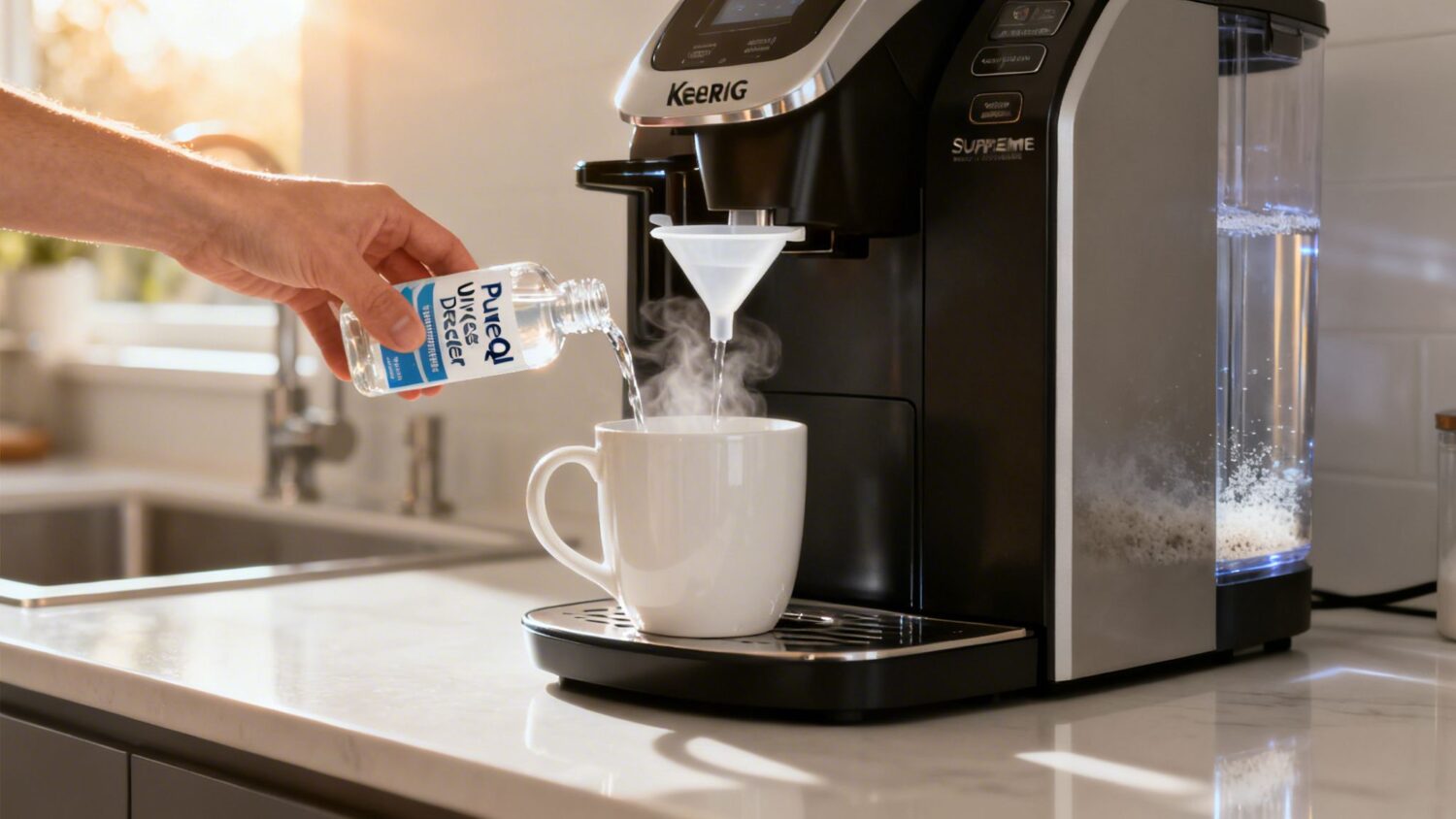
Pour the entire bottle of descaler into the empty water reservoir. Then, fill the empty bottle with fresh water and pour that into the reservoir, too. This achieves the perfect dilution ratio without extra measuring. Snap the reservoir back onto your brewer. While many online guides suggest vinegar, it's often not the best option. For a full breakdown, see our guide on how to clean a Keurig with vinegar to understand why a dedicated solution is superior.
Activate Descale Mode and Run the Cleansing Brew
With the machine plugged in and powered on, place a large ceramic mug on the drip tray. It's critical that you do not insert a K-Cup pod into the holder.
To enter 'Descale Mode' on a Keurig Supreme or Supreme Plus, press and hold both the 8oz and 12oz buttons together for three seconds until the descale light starts flashing. Press the main brew button to start the first cleansing brew. Once finished, carefully dump the hot liquid from the mug into the sink. Repeat this brew-and-empty process until the "Add Water" light illuminates.
Important Takeaway: Do not turn the machine off or unplug it during this process. The Keurig Supreme has an internal sensor that tracks the cycle, and interrupting it can cause the descale light to get "stuck" on even after you're finished, a common issue noted in many user forums.
This mineral buildup is exactly what you're fighting—a slow, creeping blockage that ruins your coffee over time.
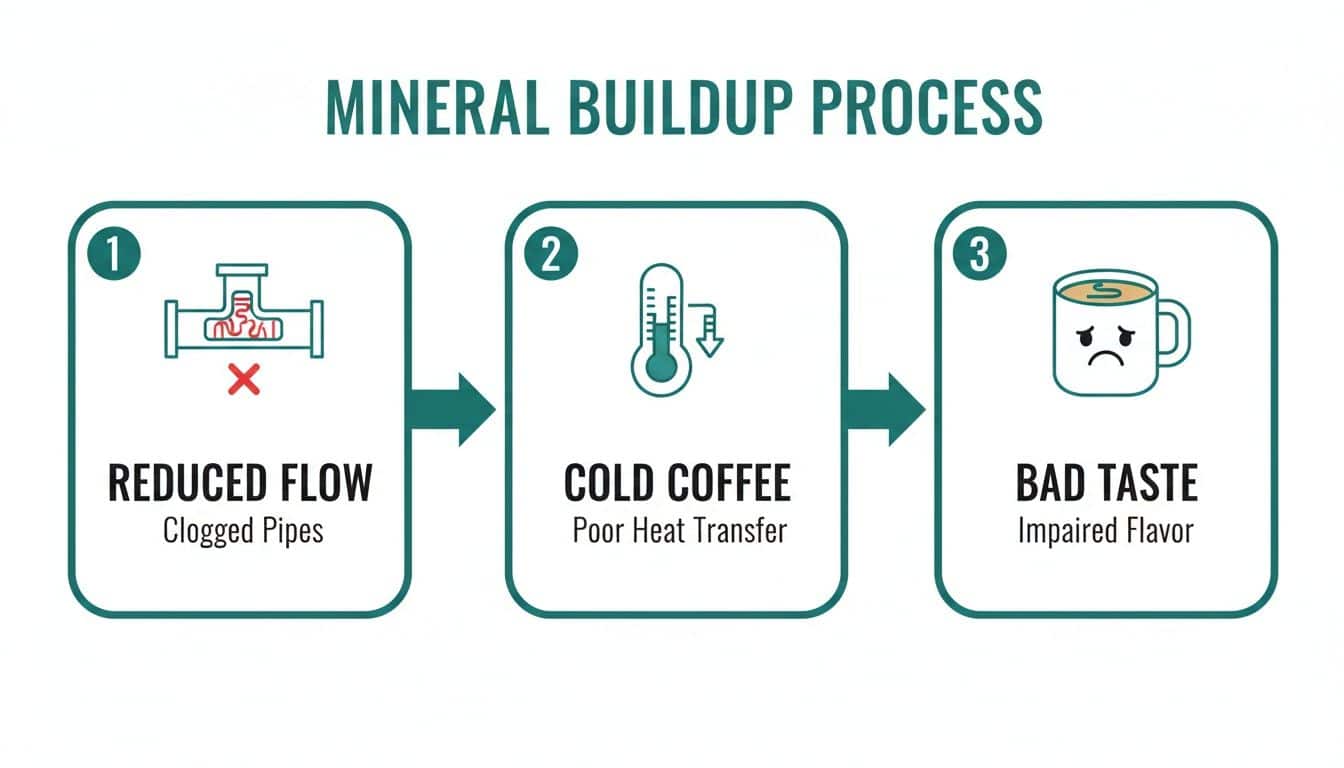
Seeing how it clogs the works and affects flavor shows why regular descaling is non-negotiable.
Complete the Fresh Water Rinse Cycles
Once the "Add Water" light is on, the hard part is over. Now it's time to flush everything out.
Remove the water reservoir, rinse it thoroughly to remove any leftover solution, and fill it to the max fill line with fresh water only. Place it back on the brewer. The descale light should still be flashing. Continue running cleansing brews—Keurig recommends using the 12oz setting—and emptying the mug after each one. You must continue this process until the descale light turns off on its own. This typically takes at least 12 rinse cycles, which is crucial for ensuring no chemical taste remains.
Once that light goes off, you're done! Your Keurig Supreme is descaled and ready to brew delicious coffee again. Don't forget to put your water filter back in before your next brew.
Choosing the Right Descaling Solution for Your Keurig
When it's time to descale your Keurig Supreme, you face a choice: a dedicated commercial descaler or the bottle of white vinegar in your pantry? This decision significantly impacts the cleaning effectiveness, time spent, and ultimately, the taste of your coffee.
Many people hesitate to use a commercial cleaner, fearing it will leave a chemical aftertaste. It’s a valid concern. However, premium formulas are engineered to solve this exact problem. They are strong enough to obliterate stubborn mineral scale but rinse away completely, leaving nothing but a pristine brewer. On the other hand, while vinegar is cheap, it comes with its own set of trade-offs.
The DIY Vinegar Method
You can descale your Keurig with white vinegar by filling the reservoir with a 50/50 mix of vinegar and water. The acetic acid in vinegar helps break down some mineral deposits. However, its biggest drawback is the pungent odor. To completely remove the vinegar smell and taste, you’ll need to run an excessive number of fresh water rinse cycles—often eight or more. Furthermore, Keurig's official guidance warns that using vinegar can damage the internal components of the brewer over time.
Dedicated Descaling Solutions
A commercial descaler is the faster, safer, and more reliable approach. Products like PureHQ’s Universal Descaling Solution are specifically made for coffee machines. They use acids, such as citric acid, that are ruthless on mineral scale but gentle on your Keurig’s internal parts, including its heating element and rubber seals.
Because these solutions are phosphate-free and biodegradable, they rinse out quickly and cleanly. This means fewer rinse cycles and zero risk of your morning coffee tasting like salad dressing. You can learn more about Keurig descaling solution ingredients to see why they work so effectively without leaving a trace.
Descaling Solution Showdown: PureHQ vs. White Vinegar
Choosing between a purpose-built solution and a household hack comes down to effectiveness, safety, and convenience. Here’s a quick breakdown for your Keurig Supreme.
| Feature | PureHQ Universal Descaling Solution | White Vinegar |
|---|---|---|
| Effectiveness | Formulated with citric acid to dissolve heavy mineral buildup quickly and completely. | Moderately effective on light scale; struggles with hardened deposits. |
| Rinse Cycles | Rinses clean with fewer cycles, leaving no odor or aftertaste. | Requires 8+ rinse cycles to remove the strong, lingering odor. |
| Machine Safety | Specifically designed to be gentle on internal brewer components like rubber seals. | Acetic acid can be harsh and may damage internal parts over time, as warned by the manufacturer. |
| Convenience | Pre-mixed and ready to use for a fast, efficient clean. | Requires measuring and mixing, plus a much longer rinsing process. |
While vinegar may seem cost-effective, a dedicated descaler provides a safer, more thorough clean without the hassle or lingering odor. For peace of mind and the best results, a professional-grade descaler is the superior choice for maintaining your Keurig Supreme.
Proactive Maintenance to Prevent Future Buildup
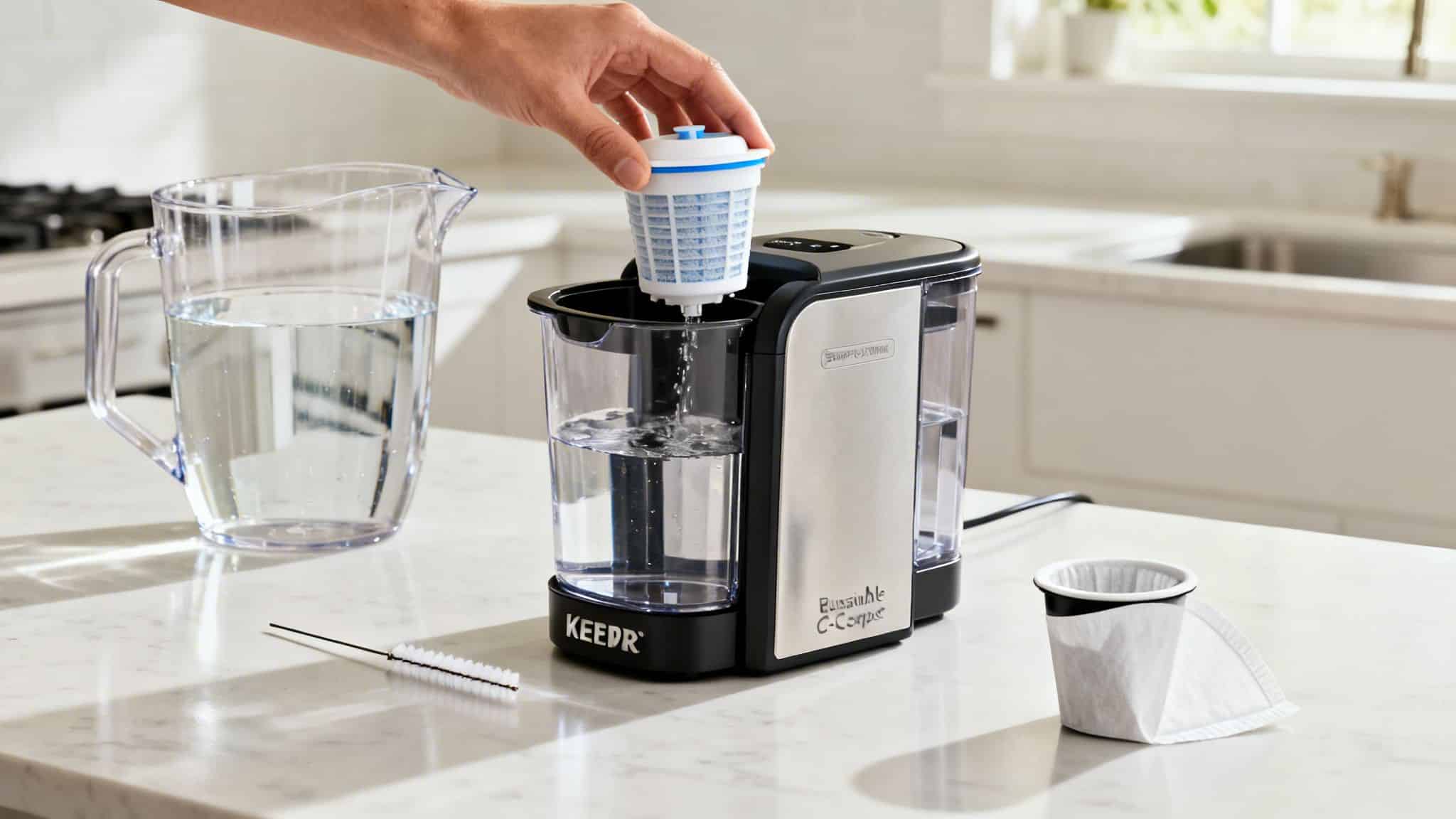
While descaling is an effective fix, preventing mineral scale from forming in the first place is a smarter strategy. This proactive approach protects your machine from the inside out and ensures every cup of coffee tastes exactly as it should. Shifting from preventive versus reactive maintenance can save you from frustrating breakdowns and extend the life of your appliances.
Your best defense against limescale is starting with better water. Since most tap water is loaded with the minerals that cause buildup, filtering them out is the single most powerful step you can take.
Start with High-Quality Water Filtration
Using filtered water is the most effective way to prolong your Keurig's life and extend the time between descaling sessions. Water filters are designed to trap minerals like calcium and magnesium, as well as chlorine, which can negatively affect your coffee’s taste.
A common customer objection regarding generic filters is that they don't fit securely, leading to leaks or allowing unfiltered water to bypass the filter entirely. A perfect fit is critical. PureHQ’s Premium Water Filters are engineered for a precise, leak-free fit inside the Keurig Supreme, guaranteeing that every drop of water entering your brewer is properly filtered. This simple swap dramatically improves the quality of every brew and protects your investment.
Smart Habits to Keep Your Brewer Clean
Beyond filtration, a few easy habits can prevent other common issues, like clogs from coffee grounds. These small actions take seconds but make a huge difference in your machine's daily performance.
- Wipe Down the Needle: Coffee grounds and oils can build up on the entry and exit needles. Once a week, use a paperclip or a needle cleaning tool to gently clear any debris, ensuring a clean puncture and steady flow.
- Use Paper Filters with Reusable Pods: If you use your own coffee grounds in a reusable K-Cup, fine particles can sometimes sneak through the mesh and cause clogs. Pairing PureHQ Reusable K-Cups with disposable paper filters traps these particles, preventing them from entering your machine’s system.
- Empty and Rinse the Reservoir: Don't let water sit in the reservoir for days. Regularly empty and rinse it with warm, soapy water to prevent slimy biofilm from forming.
These proactive steps don't entirely replace the need to descale, but they make it a much less frequent chore. You'll enjoy better-tasting coffee daily and keep your machine running smoothly for years.
Common Keurig Descaling Questions Answered
Even with a perfect process, questions can arise, especially if your Keurig Supreme doesn't cooperate. Let's tackle the most common issues to get your brewer back to 100%.
One of the most frustrating experiences is finishing the entire descaling process only to see that stubborn "Descale" light still blinking. You followed every step, so what gives? This usually means the machine's internal sensor didn't register the full cycle. The fix is often as simple as running a few more fresh water rinses to help the sensor complete its check and turn off the light.
Why Is My Descale Light Still On?
If extra rinses don't work, the light might be "stuck." This is a known quirk where the sensor logic fails to reset. Before giving up, try a quick manual reset. With the machine on, press and hold the 8oz and 12oz buttons together for three to five seconds. If the light shuts off, you’ve successfully reset the alert. This is the go-to fix when the automated cycle fails to register.
Can I Use Any Descaler in My Keurig?
While it’s tempting to use any descaling solution, it’s not the best move for your machine. Your Keurig’s internal parts, like its plastic tubing and metal heating element, can be sensitive. According to Keurig's own documentation, using improper cleaning agents can cause damage. A high-quality, non-corrosive formula like PureHQ's Universal Descaling Solution is a much safer bet. It’s engineered to dissolve tough mineral scale without harming the delicate components inside your brewer, ensuring a clean that's both safe and effective.
How Often Should I Descale with Hard Water?
If your home has hard water, the standard "every three months" rule doesn't apply. Mineral deposits from hard water build up much faster, leading to performance issues sooner. Specialized sources like Water Filter Advisor confirm that water hardness significantly impacts appliance maintenance schedules.
For households with hard water, a more frequent descaling schedule—like every one to two months—is highly recommended. This proactive approach stops severe clogs before they start and keeps your coffee tasting fresh.
Ready to give your Keurig the expert clean it deserves? A clean machine is the first step to better-tasting coffee.
Shop PureHQ’s full range of coffee accessories and taste the difference today.

