
Coffee Machine Care
The Perfect Grind for French Press: A Barista’s Guide
Mar
Ever wonder why your homemade French press coffee tastes harsh, bitter, and full of gritty sludge, no matter how carefully you brew it? It’s a frustrating problem that plagues even seasoned coffee lovers, and it almost always comes down to one critical mistake: using the wrong coffee grind.
This daily disappointment stems from how a French press works. As an immersion brewer, the coffee grounds steep directly in hot water. If your grind is too fine—more like sand than coarse salt—the tiny particles over-extract almost instantly, releasing unpleasant, bitter compounds that ruin the flavor. These fine grounds also clog the mesh filter or slip right through, creating that dreaded muddy texture in your cup. It’s a race to the bottom, and bitterness always wins.
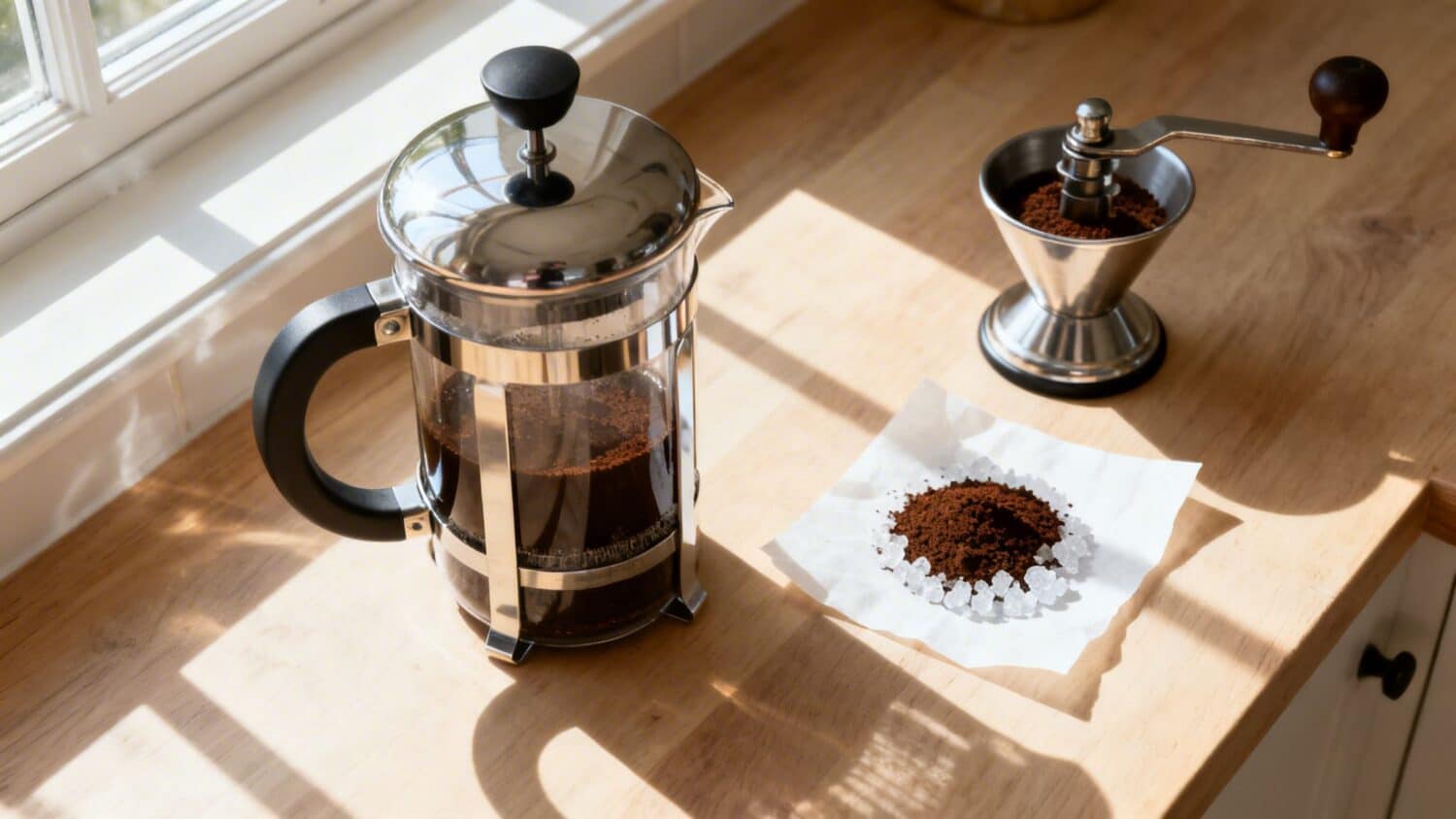
The solution is a uniform, coarse grind for french press, with a consistency similar to coarse sea salt or raw sugar. This allows for an even extraction without releasing excessive bitterness, creating the balanced, full-bodied flavor profile the brewer is celebrated for. This single adjustment transforms your brew from a gritty mess into the rich, clean, and deeply satisfying cup you deserve.
Why Your Grind Is Sabotaging Your French Press Coffee

You carefully prepare a French press, dreaming of that deep, flavorful cup, only to take a sip that’s harsh, bitter, and full of gritty sludge. It’s a problem that plagues even seasoned coffee lovers, and it almost always comes down to one single culprit: the wrong coffee grind.
The frustration is rooted in how a French press actually works. It's an immersion brewer, meaning the coffee grounds steep directly in hot water for several minutes. If your grind is too fine—more like sand or powder—two things go horribly wrong.
The Problem with Fine Grinds
First, those tiny particles over-extract. This happens way too fast, releasing all sorts of unpleasant, bitter compounds long before the rest of the grounds have even had a chance to properly brew. It's a race to the bottom, and bitterness always wins.
Second, those same fine particles will either clog your metal mesh filter or sneak right through it when you plunge. The result is that dreaded muddy texture and a mouthful of sediment in the last sip. It doesn’t just ruin the taste; it makes the whole experience feel sloppy. If you've ever wondered about the different ways your coffee can turn bitter, we have a guide that dives deep into why your coffee tastes bitter.
The Solution is Uniformity
The solution is a uniform, coarse grind. Get a clear picture in your mind of raw sugar or chunky sea salt. That's your target.
A consistent, coarse grind is the foundation of good French press coffee. It allows for an even extraction without releasing excessive bitterness, creating the balanced and full-bodied flavor profile the brewer is celebrated for.
When your grounds are uniformly large, they steep evenly and are easily trapped by the filter. This one simple adjustment can transform your brew from a bitter, gritty mess into the rich, clean, and deeply satisfying cup you were hoping for. With consumers increasingly willing to pay more for quality, as shown in the growing premium coffee market trends, getting your grind right is more important than ever.
By mastering the right grind for french press, you take back control over your coffee’s final flavor and unlock what your brewer can really do.
Choosing Your Grinder for Consistent Results
You can follow every step perfectly, but if your grinder isn't up to snuff, you're just setting yourself up for a frustrating and inconsistent cup of coffee every single morning. It's a familiar pain point for so many home brewers. One day your coffee is weak and sour, the next it’s harsh and bitter, and you have no idea why.
This daily lottery of bad coffee is almost always the fault of one thing: a blade grinder. These common, cheap devices don't actually grind coffee. They smash it to bits with a spinning blade, creating a chaotic mess of giant chunks and super-fine dust. For a French press, this is the absolute worst-case scenario. The dust over-extracts in seconds, turning bitter, while the large chunks barely extract at all, leaving a sour, undeveloped taste. This is precisely why your coffee tastes so muddy and unbalanced.
The solution is switching to a burr grinder. Unlike a blade chopper that just brutalizes beans, a burr grinder mills them between two revolving abrasive surfaces, crushing them into a much more uniform size. This consistency is the single most important factor for a clean, rich, and repeatable grind for french press. Investing in a good burr grinder is the biggest upgrade you can make to your coffee game.
Burr Grinder vs. Blade Grinder for French Press
Let’s put these two grinder types head-to-head. The tool you choose has a direct and immediate impact on the flavor in your cup.
| Feature | Burr Grinder (Premium) | Blade Grinder (Standard Alternative) |
|---|---|---|
| Grind Method | Mills beans to a uniform size between two abrasive burrs. | Chops beans into random sizes with a spinning blade. |
| Particle Consistency | High. Produces even, consistent particles for balanced extraction. | Low. Creates a mix of fine dust and large chunks. |
| Flavor Impact | Clean, rich, and balanced flavor. Reduces bitterness and sediment. | Muddy, unbalanced flavor with both bitter and sour notes. |
| Control | Offers precise, repeatable settings for different brew methods. | No real control; grind size depends on run time. |
| Customer Objection | Higher Initial Cost. Some users hesitate due to the price difference. | Inconsistent Results. A frequent point of frustration and why many users upgrade. |
Once you make the switch to a burr grinder, you'll wonder how you ever lived without it. To keep it working its best, remember to run grinder cleaning tablets through it occasionally to clear out old coffee oils and residue, ensuring every brew tastes fresh.
Shop our selection of premium coffee accessories to get the most out of every cup.
How to Visually Identify the Perfect Coarse Grind
If you’ve ever tried to perfect your French press, you’ve heard the advice "use a coarse grind." And if you’re like most people, you’ve stood over your grinder wondering what that actually means. It’s as helpful as a chef saying "add a pinch of salt"—useless without any real context.
This guesswork is exactly why so many French press brews end up disappointing. Go a little too fine, and your coffee is muddy and harsh, full of tiny dust particles that slip through the filter. Go too coarse, and you get a weak, sour cup because the water couldn't pull out enough flavor. It feels like a guessing game you can’t win.
The secret is to stop guessing and start training your eye. Forget the vague terms and learn what the ideal grind for French press actually looks like. Your target grind should look and feel like coarse sea salt or raw demerara sugar. You want to see distinct, chunky, and mostly uniform particles. When you pinch some between your fingers, it should feel gritty, not sandy or powdery.

To give you an even clearer picture, here’s how the French press grind stacks up against other common sizes and how that impacts your final cup.
Grind Size Visual Guide and Its Impact on Flavor
| Grind Size | Visual Comparison | Impact on French Press Brew |
|---|---|---|
| Coarse | Coarse Sea Salt / Breadcrumbs | Ideal. Allows for even extraction over the 4-minute brew time, resulting in a full-bodied, rich flavor with minimal sediment. |
| Medium-Coarse | Rough Sand | Acceptable, but risky. Can lead to slight over-extraction and bitterness. You might need to shorten your brew time to compensate. |
| Medium | Table Salt | Too Fine. Will over-extract quickly, creating a harsh, bitter taste. The fine particles will also clog the filter and create a muddy cup. |
| Fine | Powdered Sugar | Disaster. This is for espresso. Using it in a French press will result in an undrinkable, sludgy, and intensely bitter brew. |
Seeing the difference side-by-side makes it obvious why that "coarse sea salt" texture is the sweet spot. For a complete overview, this ultimate coffee grind size guide is a fantastic resource to see how the French press grind compares to every other method. Pairing this visual know-how with a high-quality reusable filter for your press will give you an even cleaner, more delicious cup.
Dialing In Your French Press Brew

You did it. You wrestled with your grinder and finally nailed that perfect coarse grind for french press—each particle looks just like a piece of chunky sea salt. So why, after all that work, does your first sip taste… wrong? It’s a gut-wrenching moment when you realize something in your brewing process sabotaged all that careful prep.
More often than not, this frustration boils down to a few small but critical mistakes. Pouring water straight off a rolling boil will scorch your grounds, leaving a burnt, acrid taste. Misfiring on your coffee-to-water ratio gives you a brew that’s either disappointingly weak or so strong it’s undrinkable. Without a solid method, you’re just gambling with your morning coffee.
The fix is to build a consistent, repeatable technique that does justice to your perfect grind. The entire foundation rests on two numbers: water temperature and coffee-to-water ratio. First, aim for a water temperature around 200°F (93°C). To hit this mark, let your kettle sit for about 30 seconds after it boils. Second is the "golden ratio" of 1:15, meaning one part coffee to 15 parts water. For a standard 34 oz (1-liter) French press, that works out to about 60 grams of coffee and 900 grams (or ml) of water. You can learn more about the French press coffee to water ratio in our dedicated guide.
Your Method for a Perfect Brew
Once you have your grind, temperature, and ratio locked in, it's all about the process. Follow these steps for a rich, consistent cup.
- Bloom the Grounds: Pour just enough hot water over the coffee to get it all wet (about twice the weight of the grounds). Now, wait 30 seconds. You'll see the coffee puff up as it releases trapped CO2. This "bloom" is crucial for an even, more flavorful extraction.
- Start the Steep: After the bloom, pour in the rest of your water. Pop the lid on with the plunger pulled all the way up and start a timer for four minutes. This is the sweet spot for a coarse grind.
- Plunge Slowly: When the timer goes off, press the plunger down. Go slow and steady—it should take about 20–30 seconds from top to bottom. Plunging too fast stirs up fine particles and forces them through the filter into your cup.
- Decant Immediately: As soon as you finish plunging, pour all of the coffee out of the press and into your mugs or a separate carafe. Any coffee left sitting on the grounds will keep extracting and turn bitter within minutes.
The enduring love for manual methods like the French press proves that quality and control often trump speed, even as consumer trends in the coffee market show a rise in convenience. Sticking to this methodical approach is your key to unlocking that rich, full-bodied flavor. To keep your equipment in top shape, a high-quality descaler will prevent mineral buildup from ever tainting your perfect cup.
Shop our premium coffee and espresso machine accessories to complete your brewing setup.
Troubleshooting Common French Press Problems
You did everything by the book. You got a good burr grinder, nailed that coarse consistency, and even timed your brew. You take that first sip, ready for coffee bliss, and… it’s just not right. Either it's disappointingly weak and sour or, worse, aggressively bitter and harsh. It’s a frustrating place to be, and it’s enough to make you want to shove your French press in the back of the cabinet for good.
But don't give up. The problem almost always boils down to under-extraction (sour, hollow taste) or over-extraction (harsh, bitter taste). These aren't just fancy barista terms; they're the root cause of your flavor woes. Getting it right is all about finding that perfect middle ground.
The secret is to think like a scientist and only change one variable at a time. This methodical approach is the fastest way to pinpoint what's wrong and finally dial in your perfect recipe.
Diagnosing Your Brew
Is your coffee tasting a little off? Here’s how to figure out what’s happening and—more importantly—how to fix it.
- If your coffee is weak or sour (Under-Extracted): This means the water didn't have enough contact time to pull out the sweet, complex flavors. Your grind is probably a touch too coarse, or your brew time was too short.
- If your coffee is bitter or harsh (Over-Extracted): This classic French press pitfall happens when the water pulls too much out of the coffee, including unpleasant, bitter compounds. Your grind for french press is likely too fine, or you let it steep for too long.
To fix your brew, isolate your variables. First, try adjusting your grind size—go slightly finer if it's sour, or coarser if it's bitter. If that doesn’t do the trick, go back to your original grind setting and adjust your brew time by 30 seconds.
This systematic process of elimination is the key to mastering your specific coffee beans and grinder. One last thing—don't forget about your equipment's health. Mineral buildup from tap water can create off-flavors that have nothing to do with your technique. Using a universal descaler every few months is a simple step to make sure your French press is always ready to produce a clean, delicious cup.
Shop our premium coffee and espresso machine accessories to perfect your brew.
Frequently Asked Questions About French Press Grinding
Getting the grind for french press perfect is a journey. Let's tackle some of the most common "what if" questions that pop into your head right before you start brewing, so you can brew with total confidence every single morning.
Can I Use Pre-Ground Coffee for French Press?
Technically, yes, but you really shouldn't. Most pre-ground coffee is milled to a medium grind for automatic drip machines. Using that in your French press is a recipe for a bitter, silty cup full of sediment because it's simply too fine. If you’re in an absolute pinch, hunt for a bag that is specifically labeled "coarse grind," but know that your best coffee always comes from beans you grind yourself just before brewing.
How Much Coffee Should I Grind at Once?
For the absolute best flavor, you should only grind the exact amount of coffee you need, right before you brew. Coffee starts going stale almost the second it’s ground as its volatile aromatic compounds disappear. Grinding just before brewing has more impact on the quality of your cup than almost any other variable.
Do Different Roasts Need Different Grinds?
Yes, they can. The roast level changes the physical structure of the coffee bean, which affects how it extracts. Lighter roasts are denser and less soluble, so they sometimes benefit from a slightly finer grind to achieve a full, balanced extraction. Conversely, dark roasts are more brittle and porous, so you might need to go a touch coarser than usual to prevent that bitter, burnt taste of over-extraction. Start with your standard coarse setting, but don't be afraid to tweak it based on the beans you're using.
At PureHQ Inc., we believe great coffee starts with the right tools and techniques. From mastering the perfect grind to keeping your equipment pristine, every step matters.
Explore our full range of premium coffee accessories at PureHQ and elevate your daily brew.

