
Coffee Machine Care
How Much Ground Coffee Per Cup A Guide to the Perfect Brew

Feb
Does this sound familiar? You wake up, head to the kitchen, and start your coffee ritual. Monday, the coffee is perfect—rich, aromatic, exactly what you need. Tuesday, using the same beans and the same machine, it’s a watery, disappointing mess. Wednesday, it’s so strong it’s practically sludge. This daily coffee lottery is frustrating, wastes expensive beans, and can sour the start of your day when all you want is a reliable, delicious cup.
The problem isn't your coffee machine or your beans; it's the vague "one scoop per cup" rule that guarantees inconsistency. The solution is simple: swap guesswork for precision. For the perfect cup, the gold standard is to use 1 to 2 tablespoons of ground coffee for every 6 ounces of water. This basic guideline, often called the "golden ratio," is your starting point for a balanced, flavorful brew every single time.
Why Your Coffee-to-Water Ratio is Non-Negotiable
Ever brewed a cup from your favorite beans only for it to taste disappointingly sour and thin? Or worse, so harsh and bitter you can barely finish it? That frustrating inconsistency is a chemistry problem. When you don't use enough coffee, you get under-extraction—the water pulls out only the sour acids, leaving sweetness and body behind. Using too much coffee causes over-extraction, where the water pulls out everything, including undesirable, bitter compounds. This constant guesswork leads to wasted coffee and a ruined morning.
The solution is to control the extraction process with a precise, repeatable measurement. The Specialty Coffee Association (SCA) established the Golden Cup Standard, a globally recognized benchmark for brewing. This standard states that ideal extraction happens when water dissolves 18-22% of the coffee's soluble solids. Fall short, and your coffee is sour; go over, and it's bitter. Sticking to a proven ratio is how you hit this target every time, turning a game of chance into a reliable craft.
The Golden Ratio Explained
Coffee professionals and organizations like the National Coffee Association (NCA) endorse a fantastic starting point to achieve this balance: 1-2 tablespoons (about 10 grams) of ground coffee for every 6 ounces of water. This isn't a random number; it's a proven guideline that helps the 66% of Americans who drink coffee daily, according to the NCA's 2023 National Coffee Data Trends report, get a consistently good cup. Brands like Breville share their own coffee insights that echo this same core principle.
This simple chart breaks down the golden ratio visually.
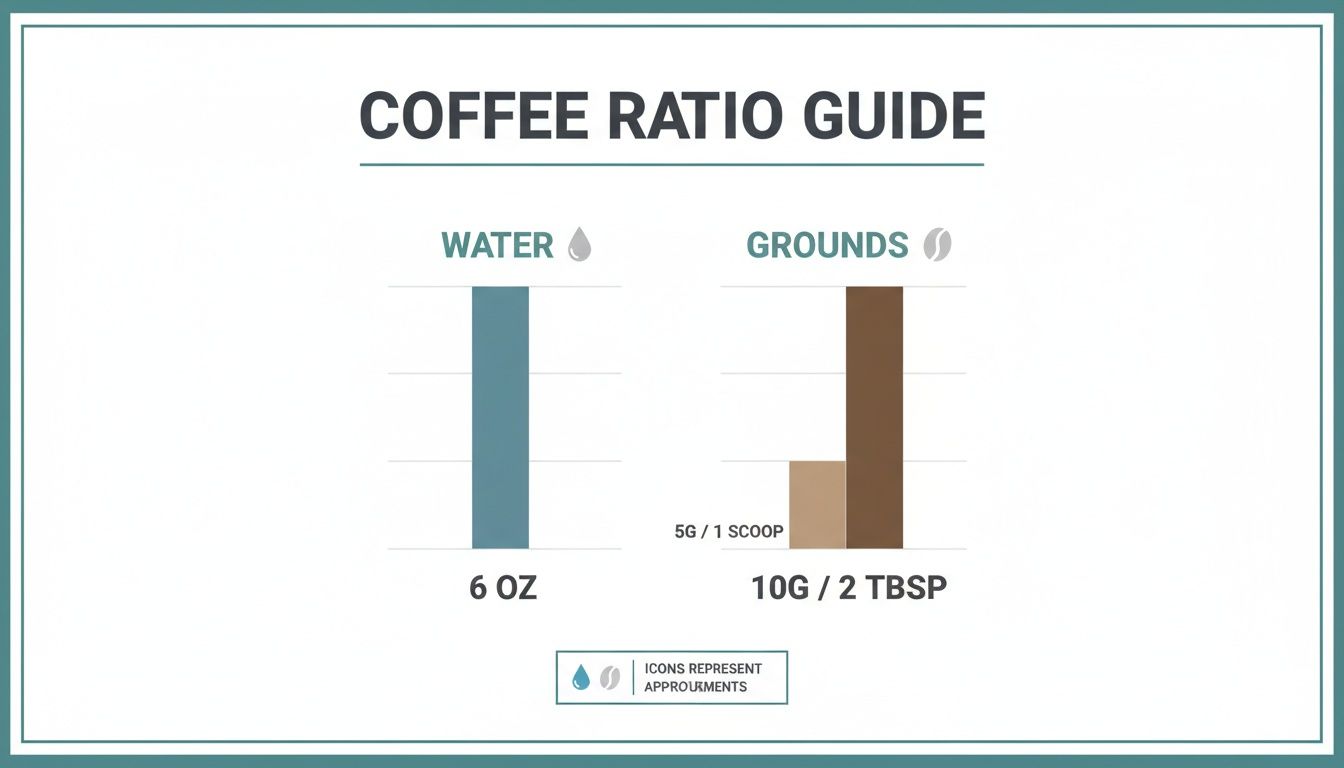
As you can see, it all comes down to the relationship between your three ingredients: water, coffee measured by weight (grams), and coffee measured by volume (tablespoons). Getting this simple formula down is the first real step toward brewing amazing coffee at home, every single time. For more details on why this balance is so crucial, you can discover more insights about coffee brew ratios.
How to Measure Coffee With and Without a Scale
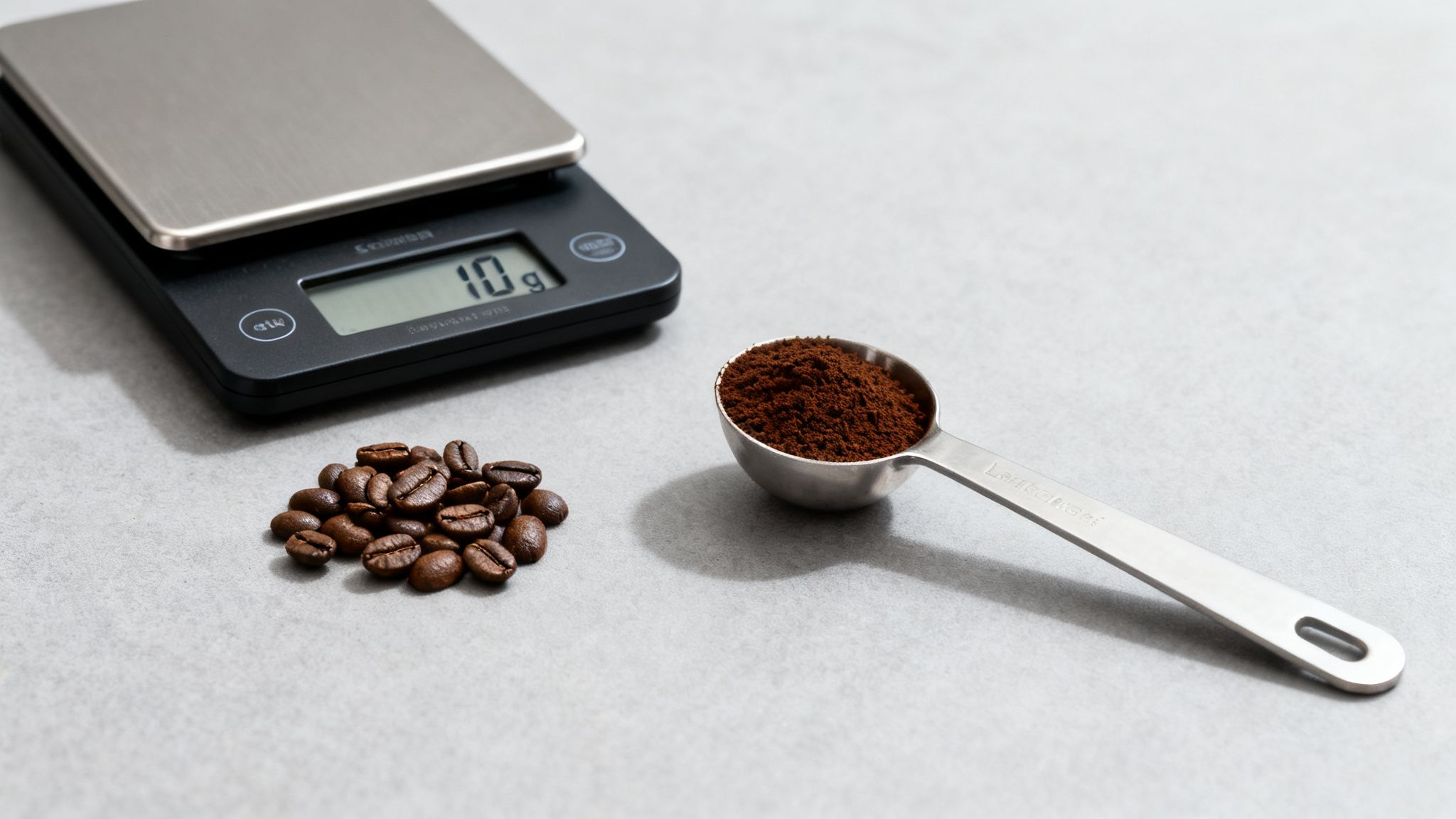
We’ve all been there. Yesterday’s coffee was perfect. Today’s is a watery, undrinkable mess. You followed the old “one scoop per cup” rule, but your morning brew feels like a total lottery, and you’re wasting expensive beans on unpredictable results. The problem isn’t your coffee; it’s the scoop. A heaping tablespoon of finely ground dark roast can weigh significantly more than a level tablespoon of a coarse light roast, swinging your brew between sour and bitter.
The fix is surprisingly simple: prioritize precision. Making one small change—switching from measuring by volume to measuring by weight—is the single best thing you can do for your coffee routine. It eliminates the guesswork and finally gives you control over your brew.
Using a Digital Scale for Perfect Accuracy
A digital scale is the home barista’s best friend because it measures by weight (mass), not volume. This instantly removes variables like grind size and bean density. Just place your filter or brewer on the scale, press the "tare" button to zero it out, and add your ground coffee until you hit your target weight. This consistency allows you to replicate your perfect cup every single morning.
Measuring Consistently Without a Scale
No scale? No problem. You can still dramatically improve your coffee by focusing on consistency.
- Always use the same spoon: Don’t grab a different tablespoon every day. Stick to one.
- Always level your scoops: Use the flat edge of a knife to scrape off the excess grounds.
- Be mindful of your grind: Remember that a scoop of fine grounds is heavier than coarse grounds.
To get you started, here's a handy chart that converts grams to tablespoons for the most common cup sizes. This is a solid starting point for all kinds of coffee measurements.
Coffee Measurement Conversion Chart
| Water (oz) | Water (grams/ml) | Coffee (grams) | Coffee (Tablespoons) |
|---|---|---|---|
| 6 oz | 177g | 10g | 2 tbsp |
| 8 oz | 236g | 14g | 2.5 tbsp |
| 10 oz | 295g | 17g | 3 tbsp |
| 12 oz | 355g | 21g | 4 tbsp |
By using this chart and focusing on a consistent scooping technique, you can finally say goodbye to random results and hello to reliably delicious coffee.
Mastering Your Keurig With Reusable K-Cups
Love the speed of your Keurig but hate the weak coffee and mountain of plastic pods? You’re not alone. Disposable K-Cups are expensive, and they often produce a disappointing, watery brew. It’s a frustrating cycle of paying too much for a subpar cup, all while contributing to a massive environmental problem. You're forced to choose between flavor and speed, or sustainability and your budget, because single-use pods lock you into their pre-packaged grounds.
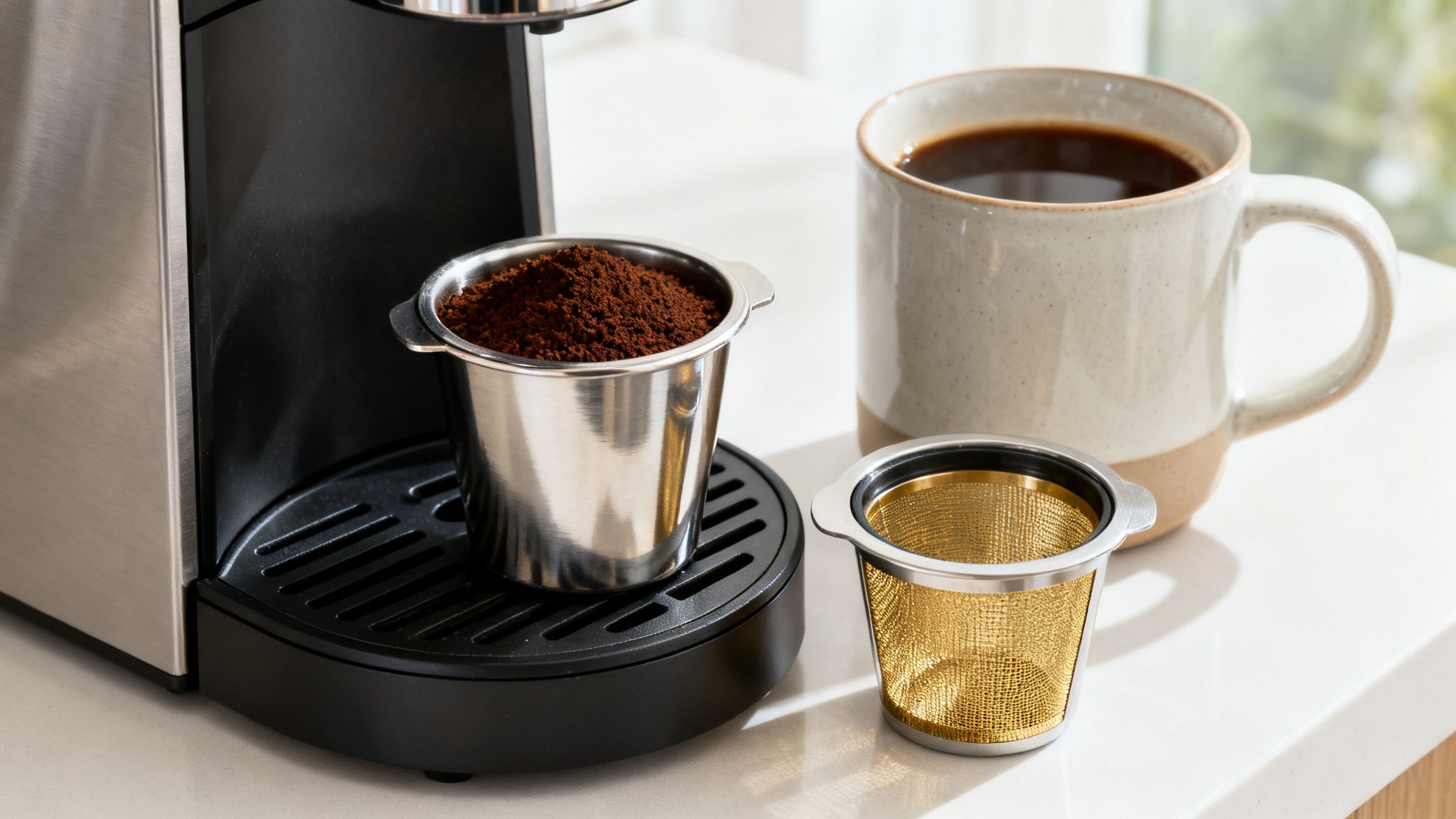
This is where PureHQ's reusable K-Cups change the game. They give you the power to use any ground coffee you want, finally unlocking what your Keurig is truly capable of. For a rich, full-bodied 8 oz cup, the sweet spot is 10-12 grams of coffee. That's about 2 to 2.5 level tablespoons. This simple measurement transforms your machine from a source of weak coffee into a brewer that makes a genuinely satisfying cup. If you want to dive deeper, check out our tips for the best performance using reusable K-Cups.
PureHQ Reusable K-Cups vs Generic Alternatives
Unlike flimsy generic pods that leak grounds into your mug, PureHQ filters are engineered for a perfect brew. Combining them with PureHQ charcoal water filters removes impurities like chlorine that can dull flavor, ensuring the true taste of your beans shines through.
| Feature | PureHQ Reusable K-Cups | Standard Generic Pods |
|---|---|---|
| Material Quality | Durable, BPA-free plastic with a stainless steel mesh filter for a clean, sediment-free brew. | Thin, brittle plastic that often warps or breaks under the heat and pressure of brewing. |
| Lid Seal | A secure, tight-fitting lid with a silicone O-ring prevents leaks and ensures all water is forced through the grounds. | Flimsy lid design that frequently fails, leading to messy grounds overflowing into your coffee and machine. |
| Durability | Built to last for hundreds of uses, offering exceptional long-term value and waste reduction. | Prone to cracking after just a few uses, forcing you to constantly buy replacements. |
| Compatibility | Precisely designed to fit a wide range of Keurig models without causing errors or damage. | Poor fit often leads to brewer errors, improper piercing, or a loose seal that results in a weak, watery cup. |
Stop compromising. By switching to PureHQ, you’re getting a better cup and making a smarter choice for your wallet and the planet.
Adjusting Ratios for Different Brew Methods
Have you ever brewed a French press using the same ratio as your drip machine, only to get a weak, watery cup? This common mistake leads to morning disappointment. You assume one ratio fits all, but that's like using a steak recipe to bake a cake. Each brew method extracts flavor differently due to factors like contact time and water flow. Using the wrong ratio guarantees you're leaving the best parts of your coffee behind in the grounds.
The solution is to think of your ratio not as a rigid rule, but as a starting point you can tweak for each brewer. Understanding how to properly scale a recipe is key here, whether you're making a single mug or a full pot.
Common Ratios for Popular Brewers
Every brew method has a "sweet spot"—a widely accepted ratio that gives you an excellent place to start. From there, you can adjust to perfectly match your taste. For a deeper dive, check out our guide to finding the ideal water to coffee ratio.
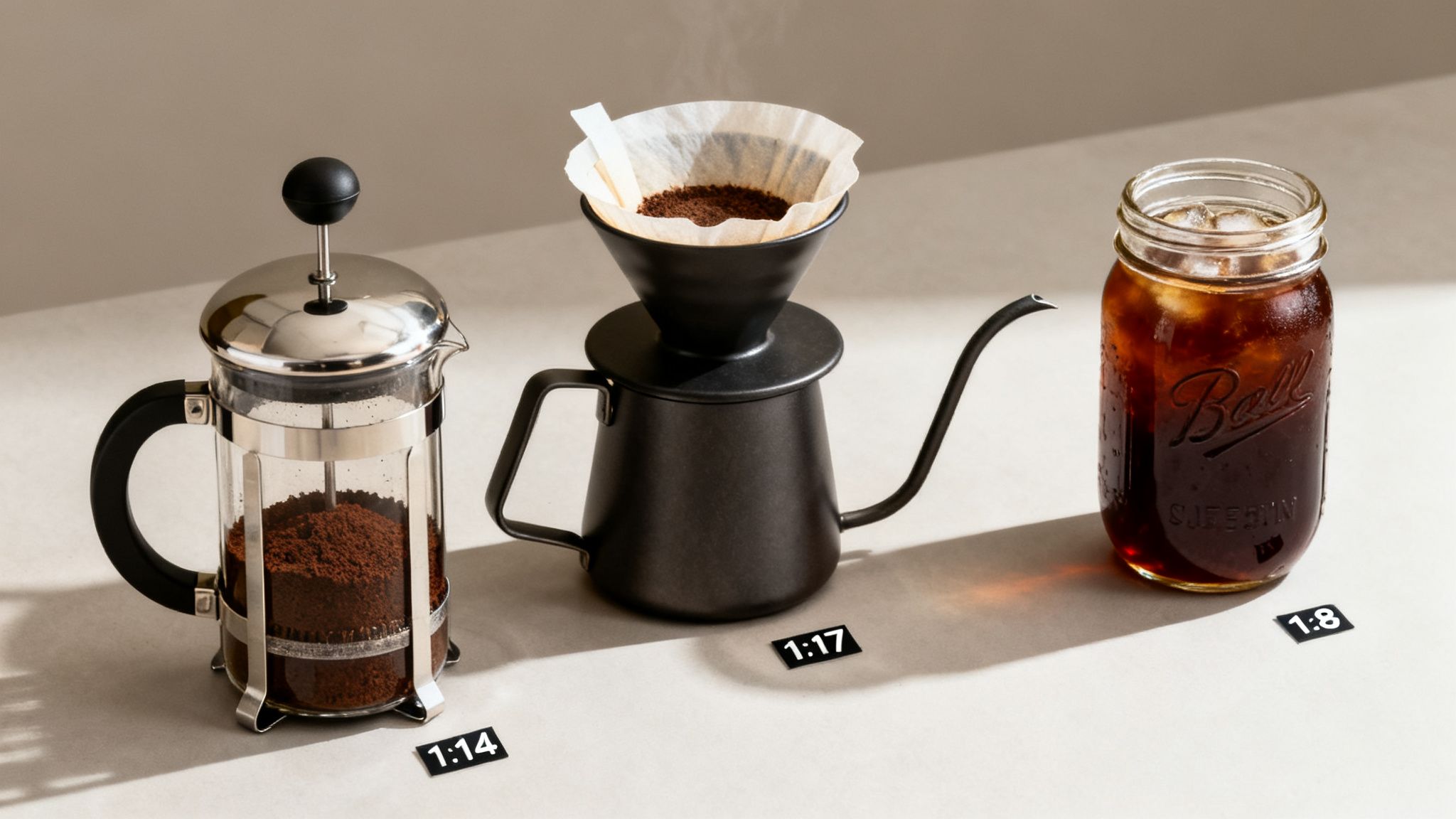
- French Press (Full Immersion): Go stronger with a 1:14 ratio (one gram of coffee per 14 grams of water). The long contact time demands more coffee to create a bold, robust cup.
- Pour-Over (Drip): The industry standard is a more balanced 1:17 ratio. This lets you pull clean, nuanced flavors as the water passes through.
- Cold Brew (Concentrate): This starts with a super-concentrated 1:8 ratio. The long, slow, cold extraction creates a smooth concentrate you'll dilute later with water or milk.
When you match your ratio to your brew method, you stop guessing and start brewing with intention.
Brew Better Coffee, Create Less Waste
Does eyeballing your coffee grounds really make a difference? Those "close enough" scoops add up, leading to inconsistent coffee and wasted money. This isn't just about your kitchen, either. According to a report by the United Nations Environment Programme, households generate the majority of global food waste. Inefficient coffee brewing contributes to this, with millions of tons of spent grounds discarded annually. When you guess your measurements, you often use more coffee than needed, contributing directly to this waste.
The fix is simple: brew with intention. Using the right coffee-to-water ratio is the single biggest step you can take. You'll get more flavor out of every bean, your bag of coffee will last longer, and you'll contribute less to the mountain of waste. You can see the full picture of how much coffee grounds and brewing efficiency matter.
Make a Sustainable Switch
When you combine precise measurements with smart, reusable products like PureHQ’s refillable pods, you tackle the problem from two sides. You stop adding to the billions of plastic pods clogging up landfills and you guarantee every gram of your favorite coffee is brewed to its full potential. This small shift turns your morning routine into a sustainable practice. And if you're looking for more ways to make a difference, learning how to reduce food waste at home can transform your entire kitchen's footprint.
Ready to perfect your brew and eliminate waste for good?
Shop our collection of reusable filters and descalers now.
Your Coffee Ratio Questions Answered
Even with the best gear, figuring out exactly how much ground coffee to use per cup can feel tricky. Let’s tackle some of the most common questions.
Does Grind Size Affect How Much Coffee I Should Use?
Yes, but you should always use the same weight of coffee regardless of grind size for consistency. A finer grind has more surface area and extracts flavor faster. This is why measuring with a tablespoon is unreliable—a scoop of fine-ground coffee weighs more than the same scoop of coarse-ground coffee. The takeaway? Stick to weight for consistency and adjust your brew time based on the grind, not the amount of coffee.
How Do I Calculate the Ratio for a Full 12-Cup Pot?
The "cup" marking on your machine is almost never a standard 8-ounce cup; most manufacturers count a "cup" as 5 or 6 ounces. A typical 12-cup pot actually brews about 60 ounces of water (around 1774 ml). Using the 1:17 golden ratio (1 gram of coffee for every 17 ml of water), you would need about 104 grams of coffee. This is roughly 20-21 level tablespoons. Always check your coffee maker's manual to confirm its "cup" size.
Can I Reuse My Coffee Grounds?
Please don't. A good first brew is designed to extract the ideal 18-22% of desirable flavor compounds. Everything left behind is bitter, woody, and unpleasant. A second brew will only result in a thin, harsh, and disappointing cup.
Ready to master your brew with precision and sustainability? Shop PureHQ reusable K-Cups now for a superior and sustainable coffee experience.

