
Coffee Machine Care
Your Coffee Water Is Dirtier Than You Think: The Fix Is Simple
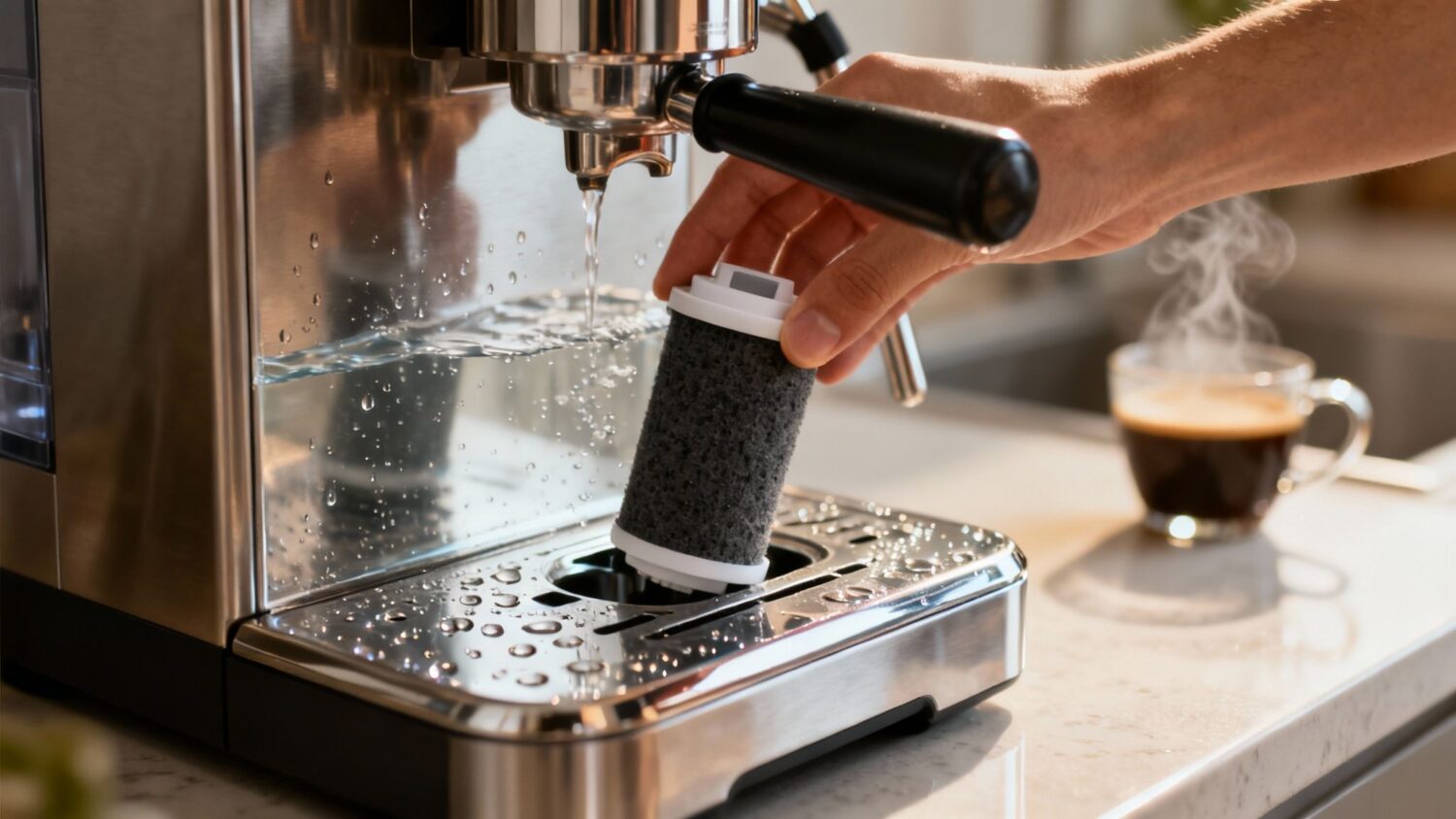
Feb
Did you know that up to 90% of residential water in the U.S. contains measurable levels of chlorine, a chemical that flattens and adds a harsh, bitter note to your coffee? That "off" taste you've been noticing isn't your expensive coffee beans—it's what's lurking in your tap water, slowly ruining your daily brew and damaging your machine from the inside.
This is where the frustration starts. You've invested in a quality coffee maker and premium beans, expecting a rich, delicious cup every morning. Instead, you get a brew that's dull, metallic, or just plain disappointing. You start questioning your machine, your coffee, and your whole morning ritual, turning a simple pleasure into a source of daily agitation. Every lackluster cup is a reminder that something is wrong, slowly strangling your brewer's performance and leaving you with a subpar experience.
The solution is easier and more effective than you think: a high-performance coffee maker water filter replacement. A quality filter acts as the first and most critical line of defense, trapping chlorine, minerals, and other impurities before they ever reach your coffee grounds. It's the single most impactful change you can make to restore pure flavor, protect your investment, and finally get the amazing coffee you deserve.
Why Your Morning Coffee Tastes Off
Ever splash out on some amazing, locally-roasted beans only to brew a cup that tastes bitter, flat, or just a little bit… off? You're not imagining things, and it probably isn't the coffee's fault.
The likely culprit is your water. It’s a frustrating reality for the 85% of U.S. households that have hard water.
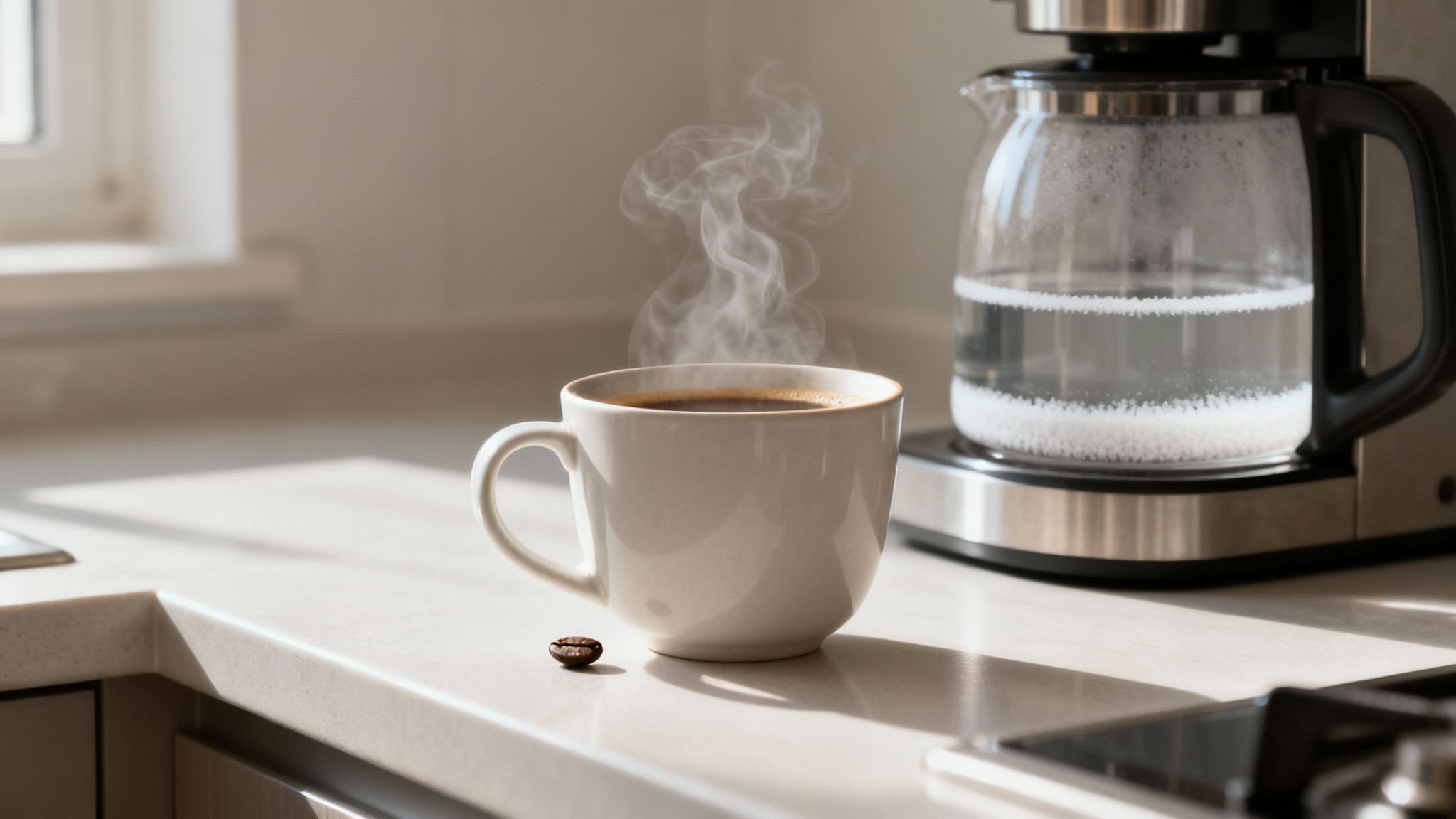
It starts subtly. Minerals like calcium and magnesium, completely invisible in your tap water, begin clinging to your coffee maker's internal parts. This crusty buildup, known as limescale, slowly strangles your machine's performance from the inside out.
The Hidden Damage of Hard Water
Limescale doesn't just mess with the taste; it actively works against your brewer. As it cakes onto the heating element, your machine has to fight harder and burn more energy just to get the water to the right brewing temperature. This constant strain not only shortens its lifespan but also leads to weak, under-extracted coffee.
The global coffee machine market was valued at USD 6.7 billion in 2023, but something as basic as hard water can slash a machine's efficiency by up to 30% in its first year if the filters are ignored.
Thankfully, the fix is ridiculously simple: stick to a consistent coffee maker water filter replacement schedule.
Think of a quality filter as your machine's bodyguard. It traps those minerals and other impurities before they ever have a chance to cause damage. By just swapping out this one small part, you protect your investment and lock in a better-tasting brew every single time. Of course, to truly solve why your morning coffee tastes off, it helps to explore all the ways you can make your water healthier.
Why a Fresh Filter is Your Coffee's Best Friend (and Your Brewer's)
Think about it: what if there was one simple, cheap step you could take to make your coffee taste dramatically better while actually protecting your machine from breaking down?
That’s exactly what a fresh water filter does. It’s the first line of defense, catching problems long before they ever get to your mug or mess with the delicate parts inside your brewer. This little coffee maker water filter replacement is your ticket to a consistently amazing cup.
At its core, the filter is packed with activated carbon, a seriously porous material that acts like a magnet for all the junk in your tap water. It grabs onto the chlorine, sediment, and other gunk that gives coffee that funky, off-taste. By trapping those impurities, it lets the real, aromatic flavors of your beans shine through. The result? A smoother, cleaner, more vibrant brew, every single time.
Taste the Difference, Guard Your Investment
Beyond better flavor, a fresh filter is one of the most important things you can do for your machine's health. Forgetting to change it has a bigger impact than you'd think.
Here's a stat that might surprise you: market data shows that old, forgotten filters are a factor in 35% of all Keurig service calls each year. That's a totally preventable issue that costs coffee lovers over $200 million in repairs across North America alone.
Simply staying on top of filtration can boost your machine’s longevity by up to 50% and cut down on how often you need to descale. You can learn more about how these market trends impact coffee machine owners.
By blocking mineral buildup before it starts, the filter keeps water flowing freely and heating up just right. This prevents the strain that leads to slower brew times, weak coffee, and eventually, a dead machine.
Premium vs. Standard Filters: What Are You Really Getting?
Not all filters are created equal, and knowing the difference helps you make a smarter choice for both your brewer and your wallet.
| Feature | PureHQ Premium Filters | Standard OEM/Generic Filters |
|---|---|---|
| Filtration Media | High-grade, micro-fine activated carbon for maximum impurity removal. | Basic carbon with less surface area, may miss smaller contaminants. |
| Material Quality | Durable, BPA-free plastics with a precision-engineered seal. | Thinner plastics that may degrade or fit loosely over time. |
| Performance | Superior removal of chlorine, odors, and particulates for a cleaner taste. | Moderate impurity removal, taste improvement may be less noticeable. |
| Value | Often available in multi-packs, offering a lower cost-per-filter. | Typically sold individually or in small packs at a higher unit price. |
A common customer objection is, "Will a compatible filter leak or fit poorly?" It's a valid concern. That's why high-quality compatible options from PureHQ are engineered with precision-molded seals to match original specs, ensuring a snug, leak-free fit you can trust. For the ultimate one-two punch in protecting your brewer, pair your new filter with a powerful descaling solution to eliminate any existing mineral buildup.
Choosing the Right Filter for Your Machine
Ever notice a strange, off-putting taste in your daily brew? It's not just a minor annoyance; it’s a clear sign your coffee maker is crying out for help. When you put off a simple coffee maker water filter replacement, things like chlorine and mineral buildup sneak into every cup, completely masking the real flavor of your beans.
It's a frustrating spot to be in. You've invested in a quality machine and good coffee, but the end result is still… disappointing. You start questioning everything. Is it the beans? The grind setting? You might even think about replacing the whole machine, figuring yours is just past its prime. That little bit of agitation grows with every bland cup, turning what should be a cherished morning ritual into a guessing game.
The solution is simple: get a filter that actually purifies your water, instead of just going through the motions. A premium filter is your first and best line of defense against the contaminants that ruin coffee and the scale that destroys machines. A better filter gives you better coffee and a healthier machine. It's an easy win-win.
The Real Difference in Filter Performance
When you're looking for a coffee maker water filter replacement, it’s easy to assume they’re all created equal. They’re not. The materials and engineering behind the filter make a massive difference in both performance and protection. A premium compatible filter isn’t just a generic copy; it's a genuine upgrade.
This difference isn't just theoretical. Think about the U.S. drip coffee maker market—a staggering 62% of Keurig users report a noticeable improvement in coffee taste after switching to premium third-party filters, which can remove up to 99% of impurities. If you're curious, you can discover more insights on the coffee maker market and see just how much filtration impacts user satisfaction.
A better filter doesn’t just improve flavor on its own; it also works hand-in-hand with a quality descaler to give your machine complete protection from the inside out. Don't forget to grab the best descaler for your coffee machine to complete your maintenance toolkit.
How to Replace Your Coffee Maker Water Filter
That moment your coffee starts tasting… off. A little dull, a bit metallic. It's not just a bad morning—it's your coffee machine waving a little white flag. It's struggling against mineral buildup, and that fight starts with an old, overworked water filter.
When you ignore a simple coffee maker water filter replacement, you're not just getting a subpar cup. You’re letting things like chlorine and even heavy metals from older plumbing sneak past the gates and right into your mug. This is where the frustration kicks in. You start second-guessing your expensive coffee beans or even the brewer itself. "Why is my coffee so bitter all of a sudden? Is my machine dying?" That comforting daily ritual quickly becomes a source of dread.
The solution is way easier than you think: a quick filter swap. It's the single most effective thing you can do to bring back that clean, crisp flavor you love and protect the inside of your machine. Let's walk through how to do it for the most popular brewers out there. No jargon, just simple, clear steps.
Preparing Your New Filter for Success
Before you even think about popping that new filter in, there’s one step you absolutely cannot skip: soaking it. This isn't just a suggestion; it’s what activates the activated carbon inside and gets it ready to work.
- Submerge and Soak: Drop the new filter into a bowl of fresh, cold water for at least 5 to 10 minutes. You'll probably see a few little black specks float out. That’s just loose carbon dust, and it's totally normal. Better for it to come out in the bowl than in your first brew!
- Give It a Good Rinse: After its bath, hold the filter under cool, running tap water for about 60 seconds. This final flush washes away any lingering dust, leaving you with a perfectly prepped filter.
This simple prep work ensures the filter is fully saturated and ready to trap impurities from the very first drop. Skipping it can lead to a cloudy first brew and less effective filtration.
Finding and Replacing the Filter in Your Machine
The exact spot for your coffee maker water filter replacement varies a bit from brand to brand, but they're all designed to be pretty straightforward. Here's a rundown for the big names.
For Keurig Brewers (K-Classic, K-Supreme, etc.)
On most Keurigs, the filter lives inside a tall, black plastic cylinder right in the water reservoir. Just lift the reservoir lid, pull the whole holder straight up, and unclip the bottom part to swap out the old filter. Snap the new, prepped filter in, click the holder back together, and drop it back into the tank.For Ninja DualBrew Machines
The Ninja filter is usually tucked into a slide-out holder on the machine's side or back. Just eject the holder, pop out the old filter, and click the new one into place. Slide it back in until it feels secure.For Cuisinart Drip Coffee Makers
Cuisinart brewers typically have their charcoal filter holder sitting right inside the water tank. Lift it out, open the housing, and exchange the old filter for the new one. It's built to be quick and painless.
Once you’ve installed the new filter, always run one full brew cycle with just plain water. Think of it as priming the system. This flushes out any final microscopic carbon bits and guarantees your next cup of coffee is as pure as it gets.
The right filter choice really boils down to three things: taste, machine protection, and overall value.
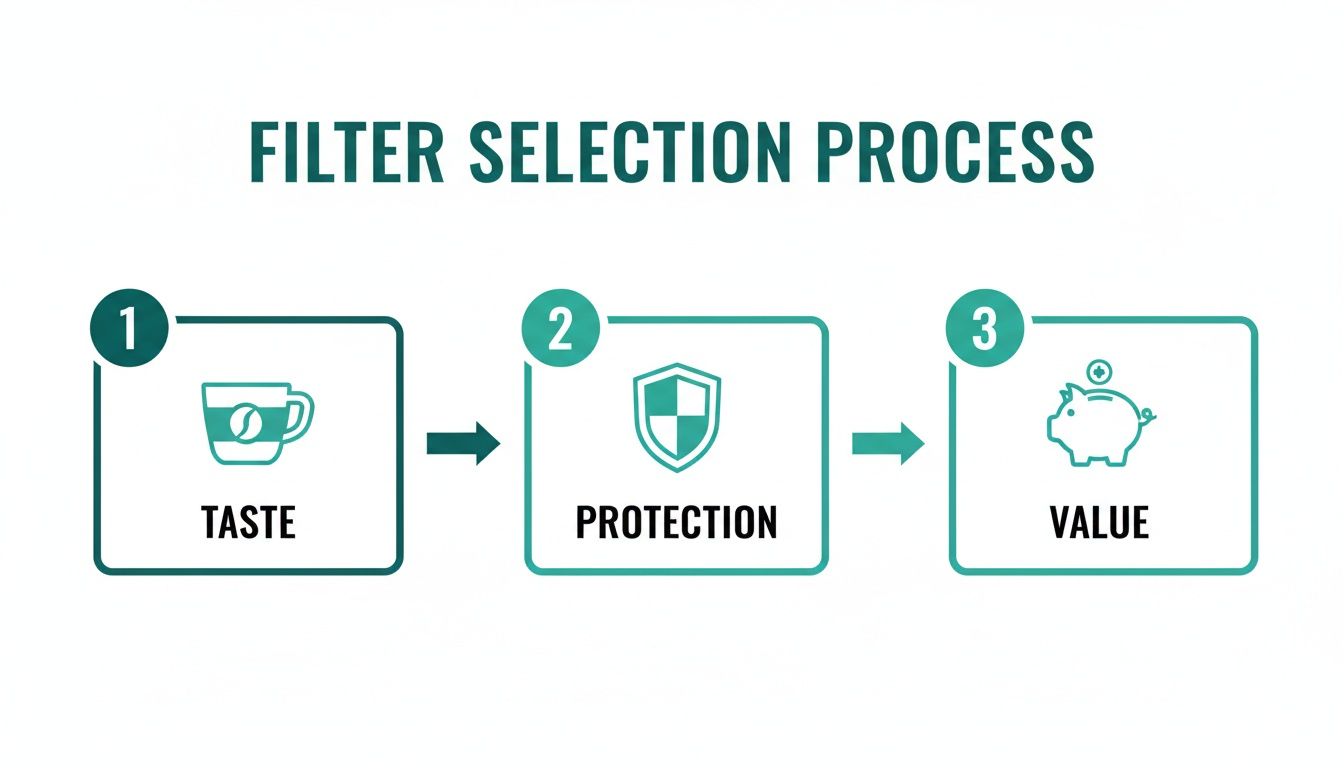
As you can see, a great filter doesn't just make your coffee taste better. It actively protects your machine from scale buildup, which saves you money and hassle in the long run.
Pro Tips for Peak Brewer Performance
Swapping out your water filter is a fantastic first step, but keeping your coffee machine in top-notch condition takes a little more than that. I like to think of it like basic car care—an oil change is non-negotiable, but you still have to check the tires and top off the fluids to keep things running smoothly. The same logic applies right here on your kitchen counter.
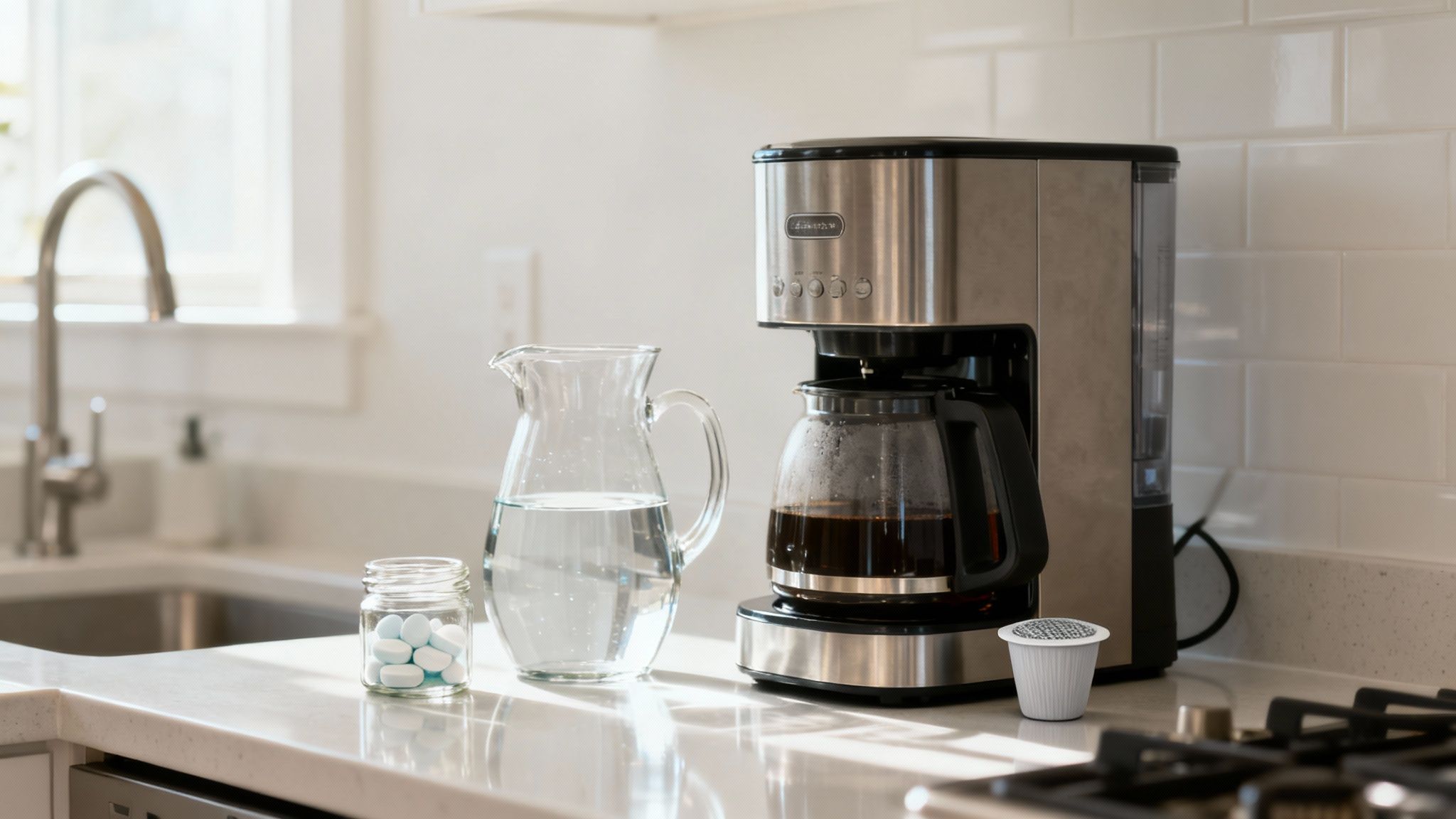
It’s easy to forget the last time you performed a coffee maker water filter replacement, but your machine will start dropping hints. Is it getting louder than usual or taking longer to heat up? Does your morning coffee taste a little… off? Maybe flat or slightly metallic? Those are tell-tale signs that your filter is clogged and fighting a losing battle.
Know When to Make the Swap
Ignoring those signals is a recipe for trouble. Mineral buildup starts to accumulate, which not only ruins your coffee's flavor but also puts some serious strain on your brewer's internal parts, especially the heating element. That constant stress is a fast track to a burnt-out machine.
To stay ahead of the game, I stick to a simple rule of thumb: change the filter every two months or after about 60 brews—whatever comes first. This schedule is the sweet spot for keeping your water clean and your machine happy.
And if you're really looking to perfect your coffee game, remember that a quality filter is just one part of the equation. Pairing it with waste-conscious accessories, like reusable K-cups filled with your favorite ground coffee, lets you create a truly custom brew while cutting down on plastic.
What to Do with Old Filters
Once you've popped in a fresh filter, what's the right way to dispose of the old one? Most coffee maker filters contain charcoal and other materials that your local recycling program probably won't accept.
- Check Locally: While it's rare, some specialized recycling centers might take them. It’s always worth a quick check of your town's guidelines.
- Dispose Responsibly: For most of us, the best and correct option is simply to toss the old filter in your regular trash.
A clean filter is crucial, but it can't fight the limescale that builds up inside your machine over time. That’s a whole different battle. Honestly, staying on top of both filtration and descaling is the ultimate one-two punch for guaranteeing flawless performance and incredible taste, cup after cup.
Common Questions About Coffee Water Filters
Here’s a fun fact you might not want to think about during your morning routine: the same chlorine that keeps swimming pools clean is probably in your tap water. And yes, it’s ending up in your coffee. While it's there to keep things safe, it's notorious for wrecking the delicate flavors of good coffee beans, leaving behind a harsh, almost chemical aftertaste.
This is a classic coffee frustration. You splurge on some amazing single-origin beans, brew a cup, and it just tastes… off. You start wondering if your machine is broken or if you're brewing it wrong. It's enough to turn a cherished daily ritual into a disappointing chore.
The fix is almost always simpler than you think: a fresh coffee maker water filter replacement. The activated carbon inside these little lifesavers is designed to trap chlorine and other impurities before they ever hit your coffee grounds. It’s a direct, easy win for a better-tasting cup, every single time.
Answering Your Top Concerns
We get a lot of the same questions, so let's clear the air on a few common worries.
One of the biggest concerns we hear is about fit. Will a compatible filter actually seal properly? People worry about leaks or a loose connection, which would obviously make the filter pretty useless.
You can relax on that front. Premium compatible filters, like the ones from PureHQ, are specifically engineered to match the original manufacturer’s specs. That means they’re designed for a snug, leak-free fit in popular machines like the Keurig K-Classic or Ninja DualBrew. They snap right into place, just like the original part.
Here's a scenario we see all the time: Someone installs a brand-new filter, but their coffee still tastes bitter or funky. If that's you, the problem likely isn't the filter—it’s a giant red flag that your machine is overdue for a good descaling to get rid of old coffee oils and mineral gunk.
To keep your entire setup in top shape, think of a good descaling solution as the perfect partner to a fresh water filter. And while you’re upgrading your coffee game, grabbing a reusable K-cup is a great way to cut down on waste and dial in your perfect brew strength.
It's Time for Better Coffee, Isn't It?
That weird, slightly bitter aftertaste in your morning coffee? It’s not your imagination, and it’s definitely not the fault of those expensive beans you bought. It's your coffee maker quietly begging for help.
Limescale and chlorine are the secret villains of home brewing. They build up over time, strangling your machine’s heating element and tainting every single cup. You bought a quality brewer to make great coffee, not "just okay" coffee. When each cup is a letdown, it's a frustrating start to the day.
The fix is refreshingly simple. Sticking to a coffee maker water filter replacement schedule is the single biggest thing you can do to bring back that pure, clean taste and keep your machine running like new. You know the why and the how—now it's time to actually taste the difference.
Pro Tip: For a total system reset, pair your new filter with a high-quality descaling solution. It's the one-two punch that gets your brewer back to factory-fresh condition.
Don't let a tiny, overworked filter stand between you and a truly fantastic cup of coffee. Elevate your daily ritual and finally taste what you've been missing.
Shop the full selection of PureHQ premium water filters now and get your machine back to brewing its absolute best.


Pingback: Are You Drinking Contaminated Tap Water In Your Morning Coffee?
Pingback: How to Make Coffee Taste Better With Simple At-Home Fixes
Pingback: The Taste of Your Expensive Coffee is Being Ruined By This One Simple Thing
Pingback: How to Clean a Coffee Maker with Vinegar for Better Tasting Coffee
Pingback: Your Complete Guide to Keurig Coffee Maker Maintenance
Pingback: A Guide to Coffee Bean Quality and How to Taste the Difference
Pingback: K Cup Brewing: Your Guide to a Perfect Cup Every Time - PureHQ
Pingback: Mr Coffee Filter Replacement: A Complete How-To Guide