
Coffee Machine Care
Disposable Filters for K Cups: What You Need to Know
Oct
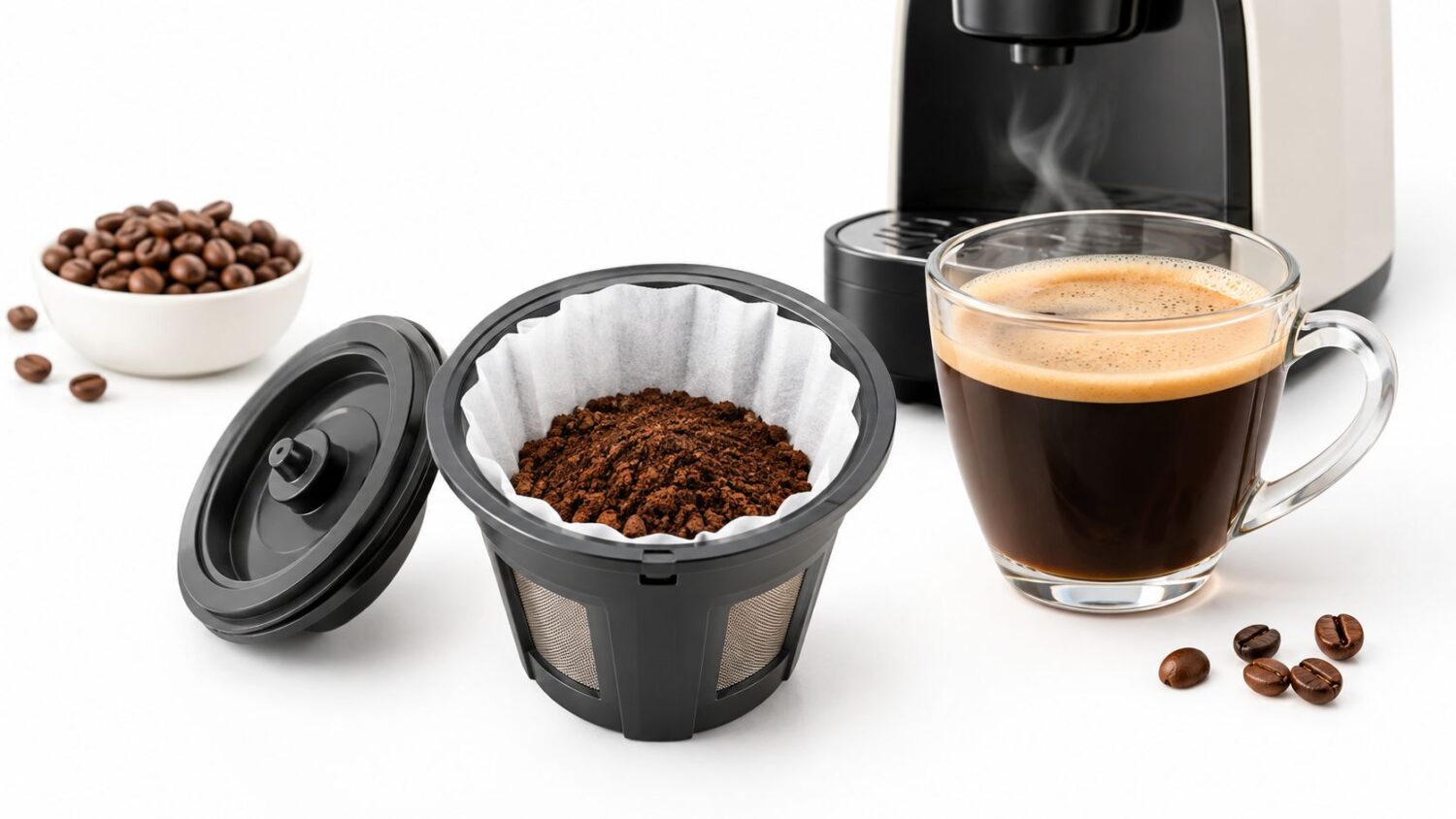
You switched to a reusable pod to use your own coffee and cut plastic waste. Then the morning routine kicks in. You tap wet grounds into the bin, rinse the mesh under the tap, and fish loose coffee out of the sink. The cup itself may taste good, but cleanup is why many reusable pods end up in a drawer. Disposable filters for K-Cups sit inside that reusable holder and change the trade-off. They don't replace the pod, and they aren't automatically the greener choice. They solve specific problems with sediment, flow, and cleanup, if you pick and use them correctly.
Why Your Reusable K-Cup Needs a Paper Filter
You fill your reusable K-Cup with fresh grounds before you've fully woken up. The brewer runs, the coffee smells right, and then you reach the bottom of the mug and find a dark, gritty layer. That's the first frustration. The second comes at the sink, where spent grounds cling to the mesh basket and need rinsing, tapping, and sometimes scrubbing.
A disposable paper liner addresses both moments. You drop the liner into the reusable pod, add coffee, brew as normal, then lift the liner out with the grounds inside. The holder stays largely clean, and the paper catches fine particles that mesh alone can let through.
The Problem Is Fines and Residue
Grinders don't produce perfectly uniform particles. Every batch includes fines, tiny fragments that can pass through stainless steel or plastic mesh. They settle as sludge and make the last sip unpleasant, even when extraction tastes fine.
Mesh also holds onto oils and damp grounds after brewing. If you brew several cups a day, or share a machine at work, that residue builds into a daily chore. A liner contains the grounds in one removable package, so you're not rinsing the basket after every cup.
A paper liner is a companion to the reusable pod, not a substitute for it. The holder provides the structure your brewer needs, and the liner handles containment.
Where This Hybrid Came From
This setup only became widely available after the original K-Cup patent period ended. Keurig was founded in Massachusetts in 1992, the first systems arrived in 1998 for offices, and the original K-Cup technology patents expired in 2012, after which other makers could produce compatible capsules and accessories. Third-party disposable filters for reusable holders grew from that opening.
If you're comparing paper options for other brew methods too, you can find eco-friendly coffee filters in standard drip sizes, but K-Cup liners are cut specifically for a pod. A drip filter folded into a small basket bunches up and can break the lid seal. Purpose-made liners sit flush, which matters for the reasons covered next.
You don't strictly need a liner. If your mesh cup tastes the way you like and cleanup doesn't bother you, skip it. If sludge, mess, or inconsistent cups are pushing you back toward plastic pods, a liner is worth testing.
How Disposable Paper Filters Work Inside a Reusable Pod
Think of the reusable pod as a small filter basket and the paper liner as the filter you'd place inside a drip basket. The pod gives the coffee a rigid container that fits the brewer. The paper gives water a tighter, more uniform path through the grounds.
Technical literature describes coffee-pod filter paper as a non-rigid cellulosic material that holds a measured portion of ground coffee and lets brewing water contact and extract it. That simple job has to happen under pressure, in a tiny chamber, in under a minute or so.
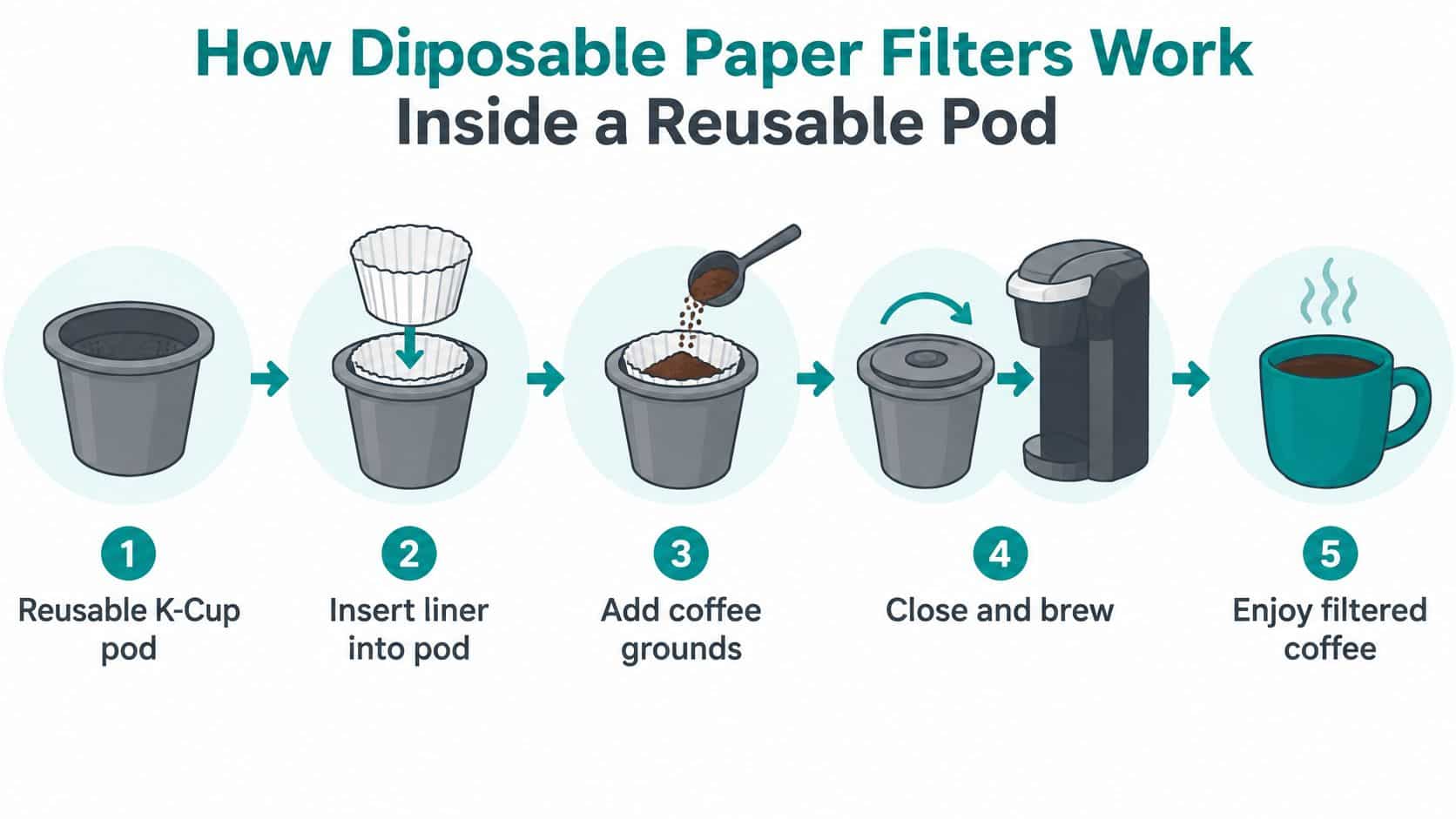
The visual below maps the sequence from empty pod to finished cup.
The Brewing Sequence Step by Step
- Insert the liner first. You place it inside the open pod so it sits against the bottom and sides without bunching. Gaps at the edge let water bypass the coffee.
- Add your grounds. You fill to below the pod rim and leave headspace, because the coffee bed swells when it gets wet.
- Close the lid and brew. The brewer punctures the pod assembly and injects hot water. Water saturates the grounds, extracts flavor, and passes through the paper and mesh into your mug.
- Lift and discard. You open the pod, grab the liner edges, and remove grounds and paper together.
Why Seating Matters
A correctly sized liner sits below the pod rim and doesn't fold across the outlet. Uneven folds create preferential flow channels. Water follows the easiest path, rushes through one section, and leaves other grounds barely extracted. You taste that as a cup that's both weak and bitter, and you'll get a different result next time.
The liner also has to stay clear of the puncture and lid area. If paper bunches under the lid, the seal suffers and grounds can escape. If it collapses into the outlet, flow slows and the brewer may back up.
The holder and liner do different jobs. The holder must match your brewer's geometry and needle alignment. The liner can't make an incompatible holder safe, a distinction that matters when you choose products for your specific model.
Key Filter Attributes That Affect Your Brew
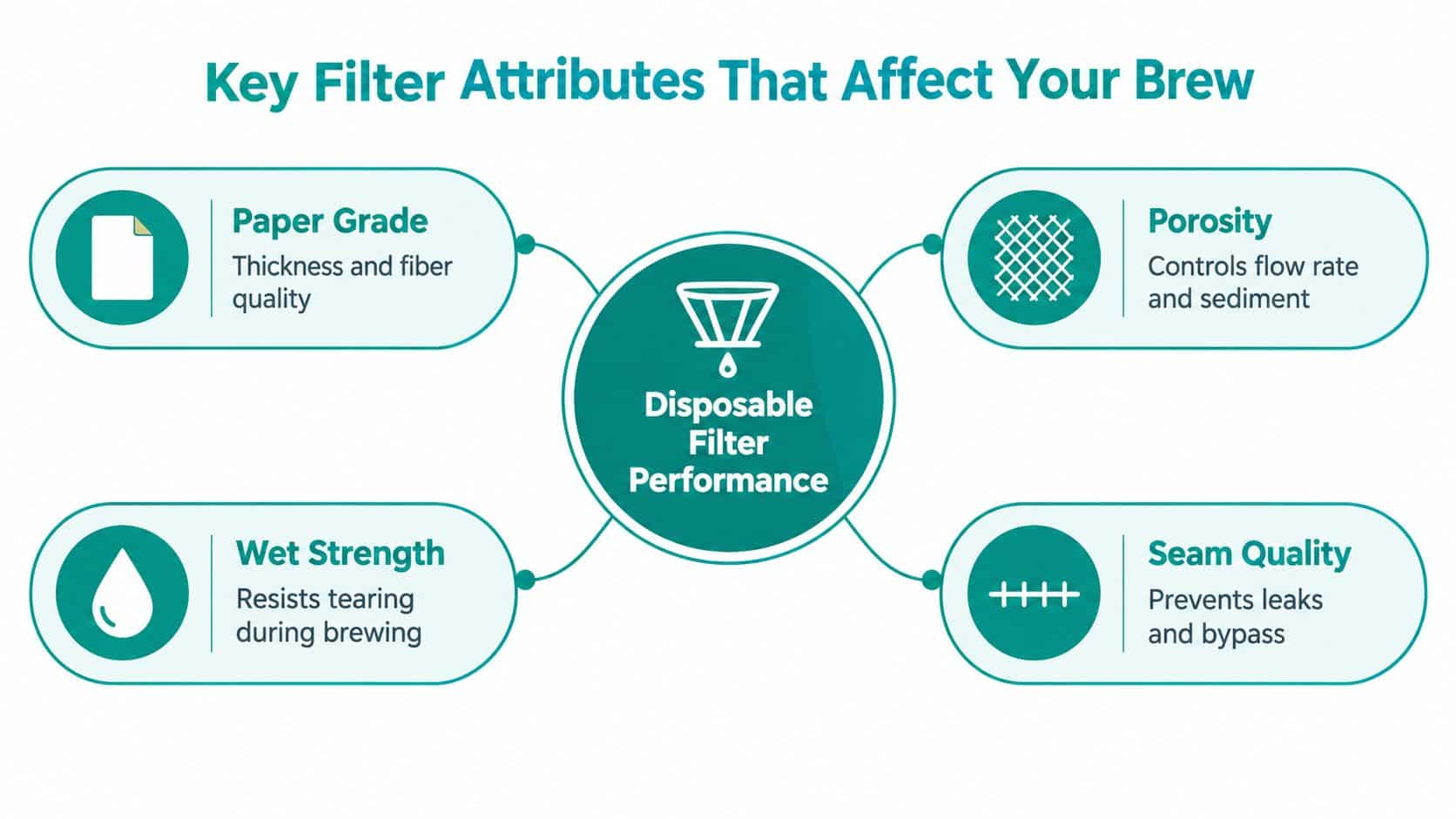
Two liners can look identical in a product photo and brew very differently. Four physical attributes explain most of that gap, and you can evaluate each one without lab equipment.
Porosity Controls Contact Time
Porosity describes how openly water moves through the paper. Technical assessments identify controlled porosity, high wet strength, and taste neutrality as key design attributes in the technical literature on coffee-pod filter paper. If the paper is too open, water accelerates through and produces weak extraction. If it's too restrictive, especially once wet, drainage slows and you risk overflow or inconsistent beverage volume.
You can't measure porosity at home, but you can read its effects. A fast, pale stream suggests too little resistance, often from a coarse grind paired with open paper. A slow drip and water pooling on top suggests too much resistance, often from fine grounds plus dense paper.
Wet Strength and Seam Integrity
Dry paper is easy to make. Paper that holds together when saturated, hot, and pressurized is the test.
- Wet strength: The liner must resist tearing when you lift out heavy, wet grounds. Weak paper splits and dumps coffee back into the pod you were trying to keep clean.
- Seam integrity: The joined edge must hold during the pressure cycle. A failed seam lets grounds bypass the paper, so you get sediment in the cup and mess in the basket.
- Paper grade: Thickness and fiber quality shape both strength and flow. Very thin paper can collapse into the outlet, while heavy paper can choke drainage.
Fit Is a Performance Feature
Fit isn't cosmetic. A liner that's too tall folds over and channels water. A liner that's too small leaves the upper mesh exposed, so fines escape around it. For practical tuning of grind, fill, and seating together, these tips for taste and performance with reusable K-Cups walk through adjustments in order.
Practical rule: Change one variable at a time. If a new liner overflows, go one step coarser on grind before you blame the paper.
Disposable Liners vs Reusable Pods vs Plastic K-Cups
You're really choosing among three systems, not three products. Each one shifts effort, waste, and recurring cost to a different place.
Keurig's own instructions tell users to remove and dispose of the used K-Cup pod after brewing, which defines the plastic pod workflow. You brew, you throw the whole container away, and you never handle loose grounds. A reusable holder changes that mechanic because the durable container stays with you.
| Factor | Bare Reusable Pod | Reusable Pod + Paper Liner | Plastic K-Cup |
|---|---|---|---|
| Cleanup effort | Rinse and occasionally scrub mesh | Lift out liner and grounds together | Remove and discard whole pod |
| Recurring cost | None beyond coffee | One liner per cup | One pod per cup |
| Waste per cup | Spent grounds only | Paper liner plus grounds | Plastic cup, lid, filter, grounds |
| Sediment in cup | Some fines can pass mesh | Paper catches most fines | Internal filter limits sediment |
| Coffee choice | Any ground coffee | Any ground coffee | Pre-packed coffee only |
| Brew consistency | Depends on grind and mesh condition | Depends on liner fit and grind | Factory measured portion |
Reading the Trade-Offs Honestly
A bare reusable pod produces the least filter waste and has no recurring filter cost. You pay with your time at the sink, plus washing water and occasional detergent. For many home users who brew once each morning, that's a fair exchange.
Adding disposable filters for K-Cups reduces that washing task but consumes one liner per brew. You also gain a cleaner cup with less sediment and slightly lighter body, because paper traps more oils than mesh. Whether that's an improvement depends on your taste. Mesh alone gives a heavier mouthfeel that some drinkers prefer.
A plastic K-Cup wins on pure convenience and portion consistency. It loses on coffee choice and on the volume of mixed-material waste per cup. The liner and holder system keeps your coffee choice and removes the plastic cup from each brew, but it doesn't reach zero waste.
Don't assume paper automatically beats mesh on environmental grounds. The honest comparison includes liner production and disposal on one side, and washing water, detergent, and drying time on the other. Your local waste options, covered later, can tip that balance either way.
How to Choose the Right Liner for Your Keurig Model
Compatibility involves more than whether a liner drops into a pod. Lid clearance, pod holder geometry, puncture needle alignment, and brew pressure all interact, and they differ across K-Classic, K-2.0, K-Supreme, K-Slim, and K-Duo generations.
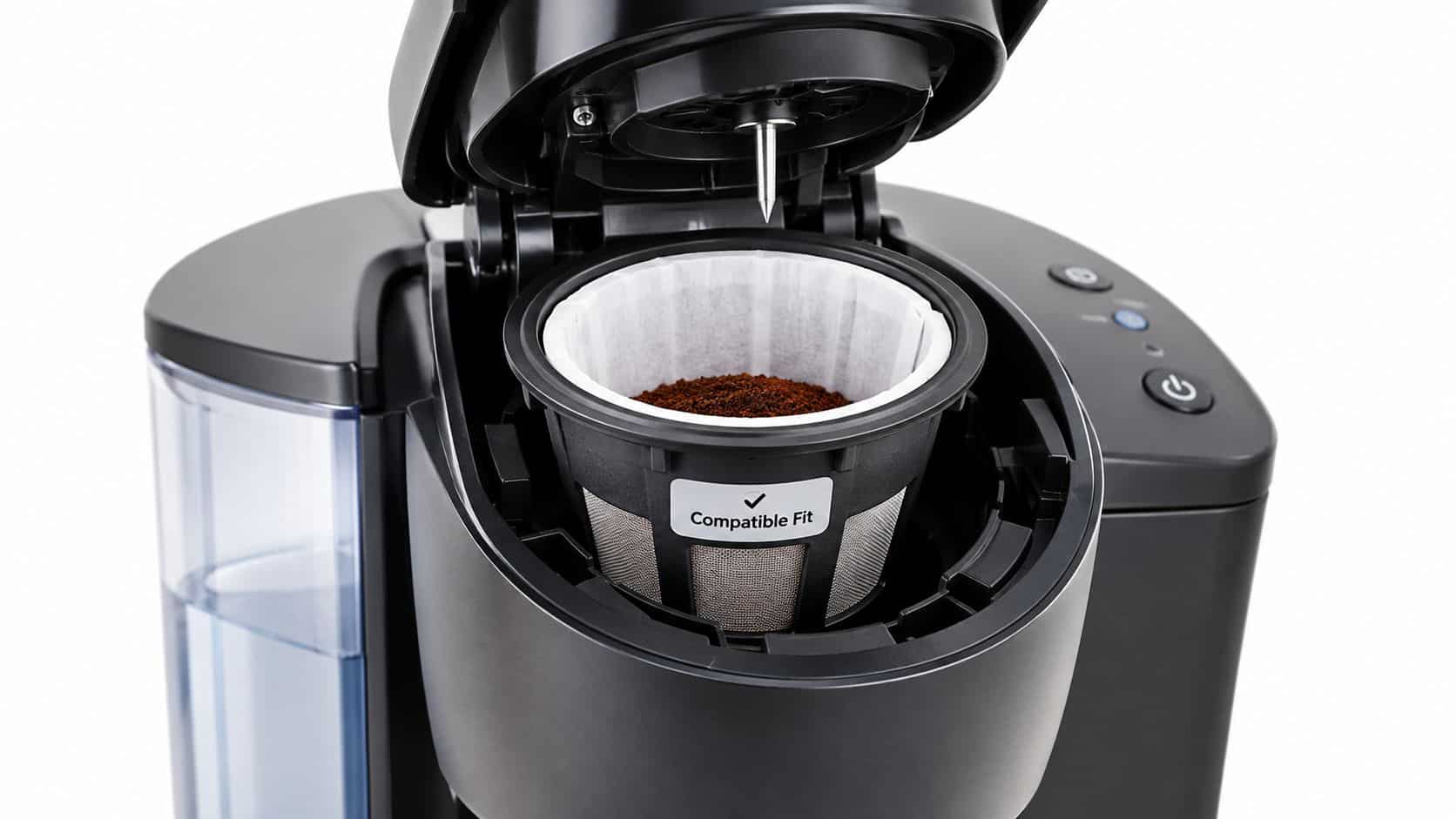
The close-up below shows the reusable filter cup seated in a single-serve brewer, which is the assembly your liner has to fit inside.
Start With the Approved Holder
Keurig's K-Supreme guidance states the brewer works only with the newly designed My K-Cup Universal Reusable Coffee Filter and warns that older or different reusable filter versions may damage the machine. Your liner must fit inside the holder that's correct for your brewer. It can't correct a holder mismatch.
Consumer guidance makes the same point in broader terms, advising you to check your exact brewer model rather than rely on universal fit claims. For a model by model breakdown, this guide on choosing the right reusable K-Cup for different Keurig models covers K-Supreme, K-Slim, K-Mini, and others.
Two situations confuse people most. A K-Duo has both a pod side and a carafe side, and a small pod liner belongs only on the pod side, never in the carafe basket. Fine espresso style grinds also cause trouble, because paper adds resistance and fine particles compact, slowing flow sharply.
The short video below shows the physical handling, which helps you judge clearance before your first brew.
Test Fit Before You Commit
- Dry test first: Seat the empty liner, close the holder lid, and confirm it shuts without force.
- Conservative first brew: Use a medium grind and fill below the maximum line.
- Watch the stream: A steady flow is right. Spurting, pooling, or a mid-cycle stop means you should pause and adjust.
- Stop conditions: Don't continue if water backs up or the brewer handle won't close normally.
Buy a small pack first when you can. Two or three test brews tell you more than any compatibility chart.
What Disposable Really Means for the Environment
Paper feels like the obviously greener material. That intuition skips the system around the paper, and the research on coffee brewing shows why the system matters.
A peer-reviewed life-cycle assessment found that the drip filter method had the greatest environmental impact across all assessed categories, while pod brewing had the lowest impact in six categories, with the quantity of dry coffee used and brewing energy as the two largest contributors. Earlier life-cycle research in that same body of work estimated consumer preparation at approximately 30% of total emissions for the analyzed product, with standby electricity strongly influencing capsule machine results.
Material Determines the Disposal Route
A compostable pod life-cycle assessment measured the filter component at approximately 0.2002 g, representing 6.63% of the assessed pod mass, and identified bleached kraft paper as the principal filter material. Small mass doesn't settle the question, because the used filter is saturated with grounds and its fate depends on local infrastructure.
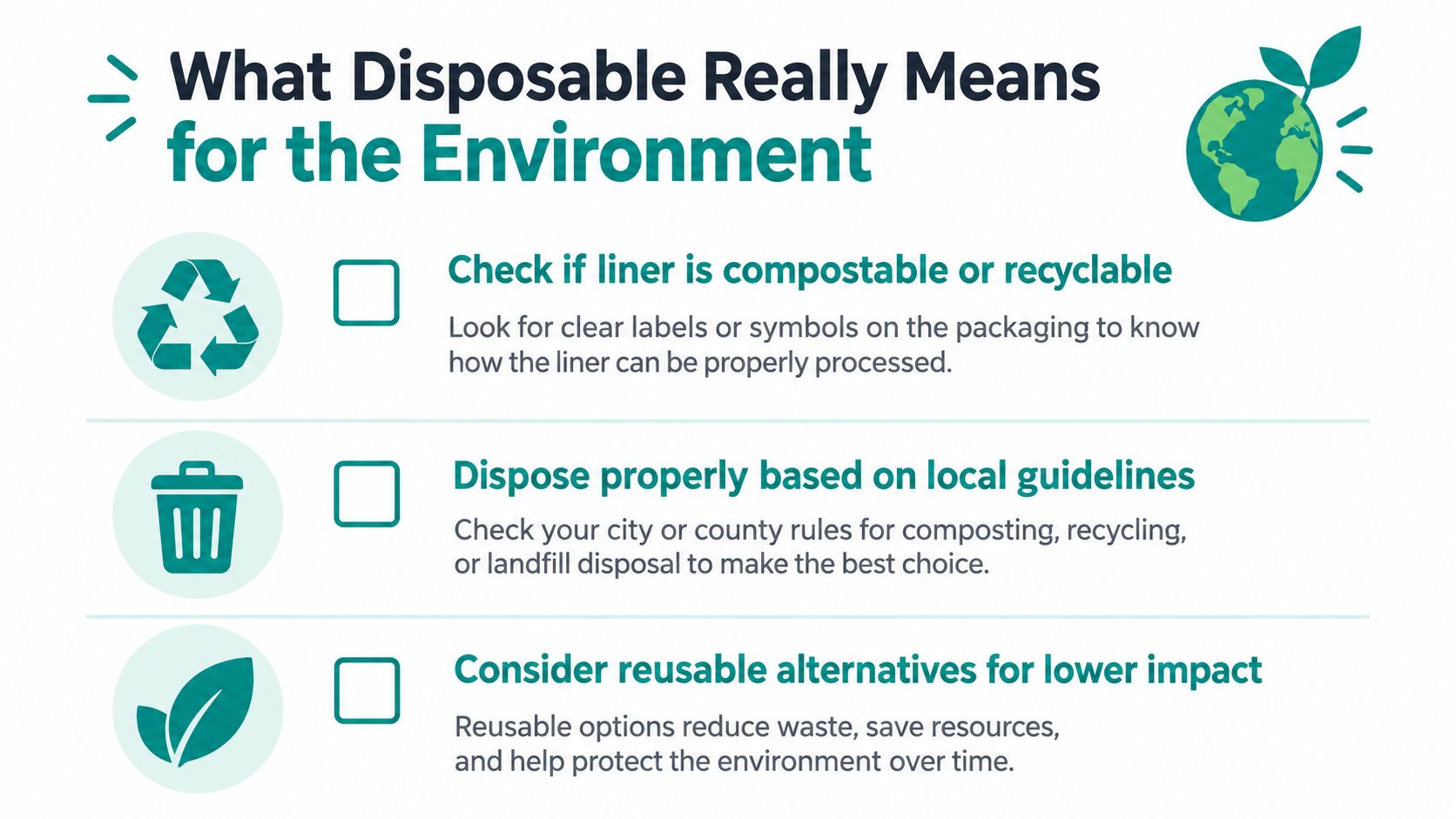
Distinguish uncoated cellulose paper from paper with polymer coatings or heat-seal laminates. Cellulose-only liners are generally more compatible with organics processing. PLA-coated or multilayer constructions may need industrial composting or dedicated handling. Packaging should state the material and conditions clearly instead of using compostable as a universal claim.
Commercial guidance also shows pod components going to different destinations, with paper filters and aluminum lids sometimes sent for energy recovery rather than material recycling. U.S. facilities don't follow one universal standard for pod plastics either, and acceptance varies by municipality.
A Location Aware Decision Tree
- Remove the liner and grounds together after brewing, and let them cool.
- Identify the material from the packaging, coated or uncoated.
- Check your municipal organics rules for coffee filters specifically. For background on pod disposal routes, this overview of K-Cup recycling options explains what programs commonly accept.
- Keep contaminated items out of recycling unless your program explicitly accepts them. Flavored coffee, oils, and residues can disqualify materials.
Two habits matter as much as the liner itself. Measure consistent portions so you don't waste coffee, since coffee quantity drives impact. Turn the brewer off instead of leaving it in standby, because machine energy use can outweigh filter choices.
Common Objections and How to Solve Them
Most complaints about disposable filters for K-Cups trace back to four fathers of failure that you can diagnose quickly. Fit, leaks, tearing, and flow problems each have a distinct cause and a distinct fix.
It Does Not Fit My Brewer
This objection is usually about the holder, not the paper. Verify your exact model first, then confirm the holder is the version your brewer accepts. Test the filled liner by closing the lid gently. If you have to force the handle, something is wrong with the liner height, your fill level, or the holder itself.
If the lid won't close normally, don't brew. Forcing it can misalign the puncture needle and turn a fit problem into a machine problem.
It Leaks Grounds Into My Cup
Leaks mean water or grounds found a path around the paper. Check three things in order. The liner should sit below the pod rim without folding over it. The seam should face a solid wall of the basket rather than the outlet. The coffee bed should sit level, because a mound on one side channels water toward the lower side and can push fines over the edge.
It Tears or Collapses During Brewing
That points to wet strength and paper grade. Thin, generic liners can soften, sag into the outlet, and split when you lift them. A premium liner with stronger fibers and a sound seam costs slightly more per pack, but it survives the pressure cycle and the lift-out. That is the premium versus generic distinction, not branding. You are paying for paper that holds together when saturated and for consistent sizing from one liner to the next.
It Slows or Stops My Brew
Paper adds resistance, so a grind that worked with bare mesh may be too fine once a liner is added. Go one step coarser and reduce your fill slightly. If water still backs up or the brewer stops mid-cycle, stop using that combination. Remove the pod, let it cool, and check whether the liner collapsed across the outlet before you try again with a coarser grind.
Upgrade Your Brewing Routine with PureHQ Liners
You now have a clear picture of what a liner can and can't do. It contains grounds for faster cleanup, catches fines for a cleaner cup, and adds a small recurring cost and one paper item per brew. The remaining question is whether a specific product delivers the attributes that matter, namely controlled porosity, wet strength, seam integrity, and accurate sizing.
PureHQ sells disposable paper filters for reusable K-Cups in 100-count packs, listed as compatible with Keurig and Ninja DualBrew coffee makers. You use them the way this guide describes. Seat the liner, add a medium grind below the rim, brew, then lift the liner and grounds out together.
Building a Complete Routine
A liner works best as part of a matched set. Pair it with the correct reusable holder for your model so fit is handled by the holder and containment by the paper. Then keep the machine itself in shape. A compatible water filter protects taste on the way in, and a descaling solution on a regular schedule removes mineral buildup that no filter can fix. Keep a small brush for the pod holder area, because liners reduce daily rinsing but don't replace scheduled brewer cleaning or descaling.
A Sensible Way to Start
Order one pack and run the test sequence from the model section. Try a medium grind at a conservative fill, watch the stream, and check the bottom of your mug. Then compare cleanup time against your bare pod over a week of normal mornings. That honest trial tells you whether the trade-off suits your household, your taste, and your local compost or waste options.
If the results match what you want, shop the liners directly and stock spare packs with your reusable pod so the routine stays effortless. Check your model, confirm your holder, and make your next cup the test.
Shop disposable filters for K-Cups, reusable pods, water filters, and descaling supplies from PureHQ Inc. to brew your own ground coffee with cleaner cups and simpler cleanup. Visit the store, match the liner and holder to your exact Keurig or Ninja DualBrew model, and order a pack to test this week.

