
Coffee Machine Care
East Timor Coffee: Origins, Flavor, and Brewing Tips
Aug
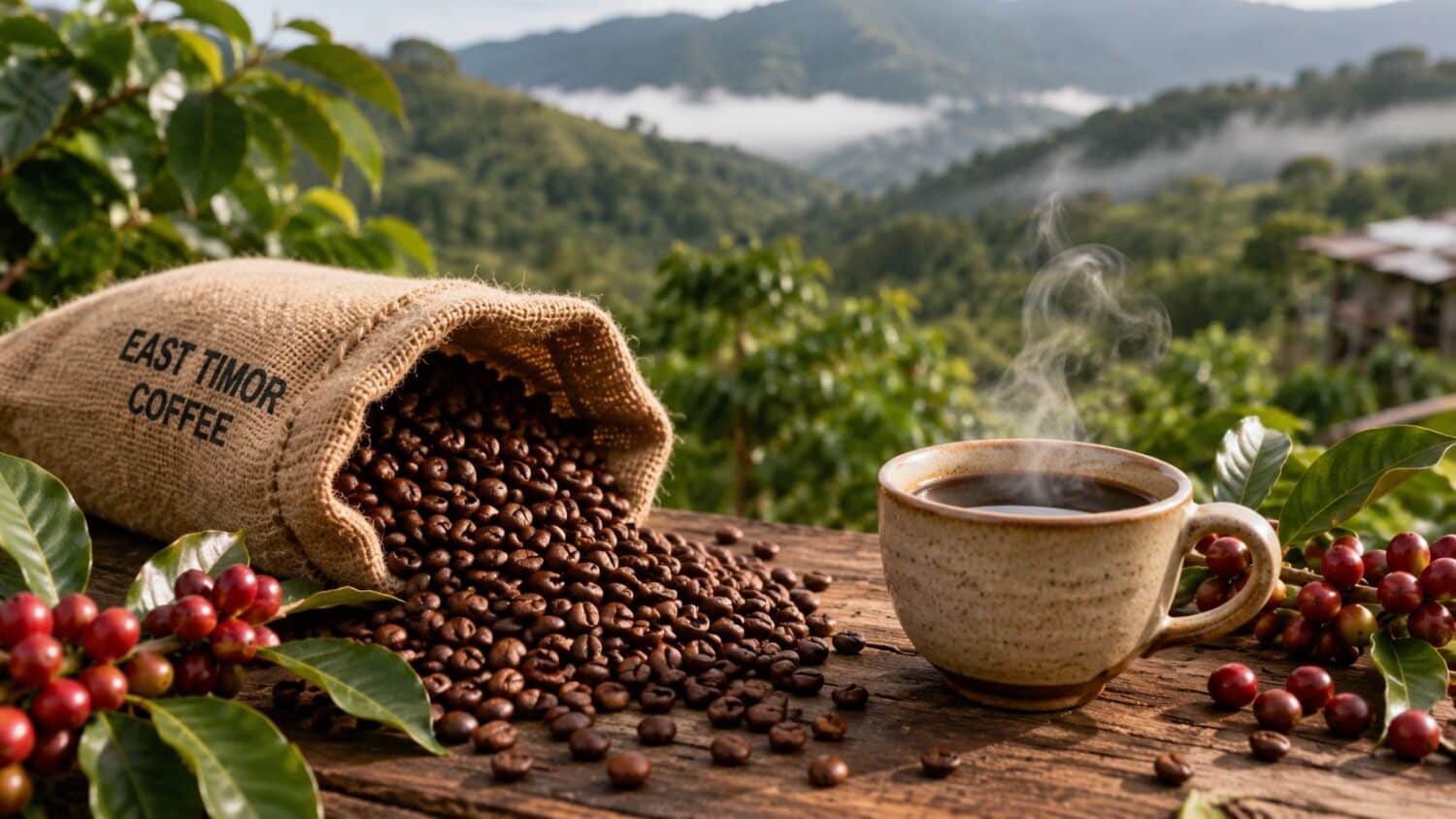
Timor-Leste still produces less than 0.1% of global coffee, yet the country exported 12,000 tons in 2023, mostly to the United States and Europe, according to the WTO. That contrast makes East Timor coffee easy to overlook and hard to dismiss. It's a small origin with a big story, shaped by tinyholder farms, steep mountain terrain, and a genetic legacy that helped global coffee breeding adapt to disease pressure WTO Timor-Leste coffee trade profile.
For home brewers, that matters because origin is never just a label. It affects how the bean behaves in the grinder, how it tastes in the cup, and how much attention your machine needs to keep flavor clean and repeatable. If you've ever wondered why one coffee shines in a reusable pod while another tastes flat or muddy, East Timor coffee is a useful case study.

What Makes East Timor Coffee Worth Knowing
East Timor coffee is worth knowing because small origins can carry outsized meaning. The country's coffee economy rests on smallholders, and the World Bank's earlier sector work found that Ermera alone accounted for 4,562 tons, or 48% of the sample total, out of a national total of 9,900 tons in the districts it measured. That kind of concentration helps explain why one harvest zone can shape so much of the country's supply World Bank coffee sector study.
For a home brewer, that fact is not just trade trivia. A coffee grown and sorted in a tight network of small farms often arrives with more variation in bean size, moisture, and roast response than a blend from a large commercial supply chain. That variation is one reason grind setting, brew method, and even your reusable pod choice matter more than many people expect. If the grind is too fine, water slows down and the cup can turn harsh. If it is too coarse, the coffee can taste thin and under-extracted. Sustainability also shows up here as machine care, because the cleaner your brewer and the better your descaling routine, the easier it is to taste the origin clearly instead of old mineral buildup or residue.
Why the bean has a global footprint beyond volume
The bean's most famous technical contribution is Hibrido de Timor (HdT), a spontaneous Arabica × Coffea canephora hybrid discovered in the 1950s. It combined disease resistance from the canephora side with cup quality closer to Arabica, and it became a parent line for Catimor and Sarchimor breeding programs used around the world Slow Food on Original Hibrido de Timor. That means East Timor coffee matters not only as a drink, but also as a genetic resource that helped shape modern work on disease resistance.
For a buyer or brewer, that history changes how you read the cup. You are not just tasting a rare origin. You are tasting a coffee tradition that sits between survival, adaptation, and export identity. The practical takeaway is simple, East Timor coffee belongs in the same curiosity set as better-known single origins, because it offers more than novelty, as explained in this overview of single-origin coffee.
Practical rule: If a coffee origin has a strong story but weak sourcing channels, treat it as a quality and logistics question, not just a flavor question.
A Brief History of Coffee in Timor-Leste
Coffee in Timor-Leste grew from colonial planting into a post-conflict livelihood crop, and then into a source of global breeding value. That arc explains why East Timor coffee feels local and international at the same time. The country's coffee story has been shaped by plantation history, upheaval, and patient rebuilding, but the most unusual chapter is still the one tied to HdT.
From planting crop to recovery crop
The older coffee economy tied land, labor, and export revenue together long before specialty buyers paid attention. After conflict and disruption, coffee remained one of the few crops that could connect remote farms to cash income without requiring heavy machinery or large estates. That is why the crop still sits at the center of rural livelihood in many districts.
The scientific turning point arrived in the 1950s, when researchers identified Hibrido de Timor as a spontaneous hybrid of Arabica and canephora. Farmers did not plant it to become famous, but breeding programs later used it because its rust resistance solved a problem that coffee growers everywhere understand very well, disease can wipe out a harvest before anyone gets to cup quality. As noted in this guide to coffee bean quality, plant genetics matter most when they are paired with careful sorting, drying, and storage.
Why that history still shows up in the cup
The history matters to home brewers because genetics and processing both affect the final brew. A coffee lineage selected under pressure often brings resilience, but the cup still depends on harvest care, drying, and roast choice. If you roast or brew this origin too aggressively, you can flatten the nuance that makes it valuable in the first place.
That lesson matters beyond the farm. If a producing country has limited market access, the buyer's side has to do more work too, from choosing the right grind to using a reusable pod and keeping the machine descaled so residue does not hide the origin character. A coffee with a strong genetic backstory can still taste flat in the cup if the brewer lets mineral buildup or stale oils take over.
A small origin can still become a scientific landmark. East Timor coffee did that, and it did it without ever becoming a mass-market giant. That combination, rare heritage and modest scale, is what makes the origin worth learning by name rather than filing away as just another Pacific coffee.
Where East Timor Coffee Grows and How It Is Processed
East Timor coffee matters because its story starts with place and plant. The origin is concentrated in a few districts, especially Ermera, Manufahi, Liquiçá, Ainaro, Aileu, and Bobonaro, and the Asian Development Bank reports an average yield of 195 to 204 kg of green coffee per hectare ADB coffee sector plan. Those figures point to a sector that is geographically focused and still produces relatively little compared with many other coffee regions.
The terrain shapes the cup
Most of the coffee comes from smallholders growing at about 1,200 to 1,800 m on steep volcanic slopes, and it is predominantly wet or washed processed. High ground and washed processing work together like a window and a rinse. The altitude helps the cherry mature with more density, while the wash process clears away more of the fruit material that can muddy the cup. The result is usually a brighter structure, moderate acidity, and fuller body.
That structure depends on handling. East Timor also matters to breeders because Hibrido de Timor came from Arabica and Coffea canephora, a genetic mix that later shaped rust-resistant breeding work elsewhere. The same kind of hard-won resilience shows up in the market side too, where limited access and small-scale production mean farmers have less room for careless sorting, uneven drying, or weak storage. A coffee lot can be genetically interesting and still taste tired if the process after harvest is sloppy.
The practical lesson reaches all the way to the kitchen counter. If a producer has limited market access, the home brewer has to do more with the tools at hand, choosing a grind that fits the brew method, using a reusable pod when appropriate, and keeping the machine descaled so mineral buildup does not hide the origin character. Sustainability is not only about how the coffee was grown, it is also about how the brewer protects the machine from residue and stale oils that flatten flavor.
A washed coffee rewards patience. If the drying was uneven, a finer grind will not repair the fault, it will only make it easier to taste. Good bean quality starts with careful picking and continues through sorting, drying, and storage, which is why this guide to coffee bean quality is useful reading for anyone who wants to separate clean lots from tired ones. A well-grown coffee can still drink flat if post-harvest handling falls apart.
Flavor Profile and How It Compares to Other Origins
East Timor coffee usually sits in the middle of the flavor spectrum. It is not the most explosive cup, and it is not the heaviest one either. Grown at higher elevations and often washed processed, it usually shows brighter structure, moderate acidity, and fuller body. That balance suits drinkers who want a cup that feels steady and clear instead of sharply fruity or heavily earthy.
A simple tasting frame
If you like a coffee that feels round without turning dull, East Timor is a strong candidate. If you want a sharper, fruit-driven cup, a washed Kenyan usually gives you a different result. If you want something darker and more syrupy, Brazilian or Sumatran profiles tend to move in that direction more clearly.
| Origin | Body | Acidity | Typical Notes | Best Brew Method |
|---|---|---|---|---|
| East Timor Coffee | Fuller body | Moderate | Balanced, clean, often chocolatey or spicy in a broad sense | Pour-over, reusable pod, drip |
| Washed Kenyan | Lighter to medium | High | Bright, fruit-forward, vivid | Pour-over |
| Brazilian | Medium to heavy | Low to moderate | Nutty, chocolate-leaning, soft | Drip, French press |
| Sumatran | Heavy | Low | Earthy, syrupy, deep | French press, immersion |
The comparison matters because brewing style changes what reaches your palate first. A pour-over can highlight the cleaner side of East Timor coffee, while immersion pulls more body into focus. If you are using a single-serve machine, the goal is not to chase one “best” profile. It is to match the coffee's natural balance with the right grind, a reusable pod when that fits the setup, and water flow that does not overwork the grounds.
A lot of drinkers focus on roast level and stop there, but origin still matters after roasting. A medium roast from East Timor will not taste like a medium roast from Kenya, because the starting material is different. That difference also connects back to the origin's genetics and market structure. Hibrido de Timor gave breeders a hardier path for rust resistance, yet the same coffee still has to pass through small-scale handling, sorting, and drying before it reaches the cup. When those steps are careful, the cup keeps its structure. When they are sloppy, the origin can taste flat no matter how thoughtful the roast is.
Choosing Quality Beans and Recognizing Good Certifications
Buying East Timor coffee gets easier once you stop looking only at the bag art. Start with the source chain. The World Bank survey found that 82% of farmers said their main problem was lack of buyers, while 49% cited lack of transport equipment and 15% cited bad roads World Bank coffee sector survey. Those numbers explain why traceability and direct relationships matter so much in this origin.
What to check before you buy
- Cooperative name: Look for a named cooperative or producer group, not just a country label. Named sourcing usually gives you a better shot at accountability and freshness.
- Freshness cues: Check the roast date first, then look for harvest or crop-year information if the roaster provides it. Older coffee isn't automatically bad, but vague dating makes it harder to judge.
- Certification context: Fair Trade or organic labels can signal structure and standards, but they don't guarantee flavor. They work best when paired with transparent sourcing and recent roast dates.
- Packaging quality: Seal integrity matters. If the bag looks damaged, the coffee may have lost aroma before it reached your kitchen.
Why the buyer chain affects quality
When farmers struggle to find buyers, lots can sit longer than they should, and transportation problems can add more handling points before export. In practical terms, that means a buyer who works through stable cooperative channels often has a better chance of getting a lot that was handled with more care. That doesn't make every cooperative coffee superior, but it does make traceability more meaningful.
Practical rule: If the seller can't tell you who processed the coffee and when it was roasted, you're buying a country name, not a sourcing story.
You don't need to overcomplicate the decision. Pick a cooperative lot, verify the roast date, and read the description for processing details. When those three things line up, East Timor coffee becomes much easier to trust in the cup.
Brewing East Timor Coffee at Home With Keurig and Ninja
A lot of good coffee gets lost here. East Timor coffee has enough body and structure to hold up in a single-serve setup, but only if the grind and pod choice match the machine. A medium grind works well for pour-over, while a medium-fine grind usually performs better in a reusable K-Cup style pod because the brew path is short and pressure-sensitive.
Where the objections usually come from
A weak cup often means the grind is too coarse. A leaky reusable pod usually means the filter doesn't fit properly, the basket is overloaded, or the seal wasn't seated correctly. A plastic note can come from low-grade disposable parts, stale grounds, or water that's carrying too much scale and residue through the machine.
The solution is more mechanical than mystical. Freshly ground coffee, a reusable stainless steel pod, and a clean machine give the bean a better chance to show its natural balance. If you use a Ninja DualBrew or a Keurig system, the same basic idea holds, the machine needs a grind that lets water extract flavor without racing through the bed.
A practical home routine
- Grind just before brewing. Coffee loses aroma quickly after grinding, so freshness matters more than expected.
- Match the grind to the basket. Medium-fine for reusable pods, medium for pour-over style baskets.
- Rinse the reusable pod after use. Old oils cling to mesh and can make the next cup taste flat.
- Descale regularly. Mineral buildup changes water flow, and water flow changes extraction.
For a step-by-step reference on pod use, this guide to brewing with coffee grounds in a Keurig is handy. The broader lesson is that machine care is part of flavor care. If your brewer is scaled up or your pod is mismatched, even a strong origin can taste tired.
That's why accessories matter here. A reusable pod does more than reduce waste, it gives you control over dose and grind. A descaling tablet or cleaner keeps the water path honest, which is exactly what a clean, washed-process coffee needs.
Sustainability, Climate Risk, and Where to Buy
The supply side of East Timor coffee still carries real risk. Market Development Facility estimates that 2025 production reached 8,200 tonnes, a 72% increase from the low-production 2022 to 2024 period, linked to higher global prices and strong domestic demand Market Development Facility report. That rebound is encouraging, but it also reminds buyers that production can swing sharply in a small-origin economy.
Why resilience matters to the cup you brew
Timor-Leste's sector plans emphasize better research, productivity, quality, and value addition, because weather variability, pests, and aging trees all threaten stability. For consumers, that means sustainability isn't only about the farm, it's also about how you brew. A coffee that arrives clean and traceable still needs a machine that doesn't add off-flavors, and that's where good filters, reusable pods, and descaling care become part of the sustainability story.
Food pairings can help this origin click. Dark chocolate plays nicely with its fuller body, almond biscotti lifts the nuttier side, and banana bread softens the cup's structure without hiding it. Those pairings work because the coffee has enough balance to sit beside both sweet and lightly savory foods.
Where to look when you want to buy
Specialty roasters and cooperative direct-trade channels are the most sensible places to start. They're more likely to name the producer, processing method, and roast date, which matters in a small origin where sourcing can be patchy. If you're buying accessories for your brewer, keep maintenance in the same shopping basket as the beans, because a clean brew path protects the cup you worked to source.
PureHQ Inc. makes reusable K-Cups, compatible filters, and coffee machine maintenance accessories that help your brewer keep pace with the coffee you buy. If you want to taste East Timor coffee with better control over grind, extraction, and machine care, visit PureHQ Inc. and choose the reusable pod and descaling tools that fit your setup.

