
Coffee Machine Care
Protein Coffee K Cups: Your Ultimate 2026 Guide
May
You know the drill. The alarm went off late, the coffee maker is blinking, breakfast isn't happening, and now you're trying to solve two jobs with one mug. You want caffeine fast, but you also want something that sticks with you longer than a plain cup of coffee.
That's why protein coffee K-Cups keep showing up in kitchens, offices, and gym bags. They promise one-button convenience with less mess than a blender bottle and less effort than making coffee and breakfast separately. The idea is smart. The execution depends on what's in the pod, how it brews, and whether you're willing to trade some convenience for better control.
The Morning Rush Problem Protein Coffee Solves
A rushed morning usually creates a bad choice. You brew regular coffee and stay hungry, or you make a protein shake and miss the coffee ritual you wanted. Trying to do both often means extra dishes, extra cleanup, and one more thing to forget when you're already running behind.
Protein coffee exists because that friction is real. A single-serve pod can feel like the cleanest fix. Pop it in, press brew, and you're done.

Why the idea caught on
The category moved well beyond novelty. An industry analysis on the protein coffee market valued it at about USD 4.5 billion globally in 2024 and projected USD 14.7 billion by 2034, with North America at about 38% of demand. That lines up with what coffee drinkers already know. Convenience wins when mornings get chaotic.
The appeal isn't hard to understand:
- One cup replaces two tasks by combining coffee and a protein source.
- Cleanup stays simple because there's no blender jar, shaker bottle, or scoop-covered counter.
- The routine feels familiar if you already use a Keurig-style brewer.
Practical rule: If a morning solution adds steps, most people stop using it within a week.
Where people get frustrated
The promise is strong, but protein coffee K-Cups don't automatically make mornings better. Some taste thin. Some brew chalky. Some leave sediment or a weird sweetener aftertaste. Others solve convenience while creating a different problem: you're locked into someone else's formula.
That matters if you care about ingredient quality, sweetness level, or how filling the drink feels.
If your bigger issue is that you're always tired and hungry even when you think your routine is “fine,” Tecton's guide on metabolic health is a useful companion read. It helps explain why a fast breakfast fix sometimes helps, and why it sometimes doesn't.
What Exactly Are Protein Coffee K Cups
A standard coffee pod usually contains ground coffee meant for quick extraction. Protein coffee K-Cups are different. They're built as a hybrid product, closer to a functional drink mix than a classic coffee pod.
In practice, that means the pod often includes coffee plus a protein ingredient and supporting additives that help the drink hold together during a short brew cycle.
What's inside the pod
Most protein coffee pods work like a compact powdered beverage system. Instead of relying only on ground coffee, they may include:
- Coffee material such as instant coffee or coffee components designed to dissolve quickly
- Protein such as whey, collagen, or plant-based protein
- Sweeteners and flavoring to smooth bitterness or mask protein notes
- Mixing aids that help the final cup dissolve more evenly
That's why they behave differently from regular pods. You're not just extracting coffee. You're asking the machine to produce a drink that includes coffee flavor and added nutrition in one pass.
A useful way to think about it
A regular K-Cup is like brewing from a tiny bag of coffee grounds. A protein pod is more like a pre-portioned drink mix built to work inside a pod shell. That difference explains a lot of the quirks people notice, especially texture and aftertaste.
A protein coffee pod can be convenient, but it won't always taste like freshly brewed black coffee because it isn't trying to do the same job.
The format has been around longer than many people think
Protein coffee didn't just appear overnight. Food Business News reported that LonoLife launched a K-Cup format protein coffee in 2016, described as a Kona coffee blend with 10 grams of protein from hydrolyzed collagen. The same report noted that the company's bone broth products were sold in about 1,500 stores and that its bone broth line became one of the bestselling bone broth brands on Amazon in its first year.
That launch mattered because it showed the K-Cup format was becoming a delivery system for functional beverages, not just flavored coffee.
If you like tracking where coffee products are headed more broadly, it's worth taking a look at explore 2026 coffee menu trends from Allied Drinks Systems. It gives helpful context for why drink formats keep blending convenience with added function.
Decoding the Nutrition Label and Ingredients
The front of the box usually sells the idea. The back of the box tells you whether the pod is something you'll enjoy using every day.
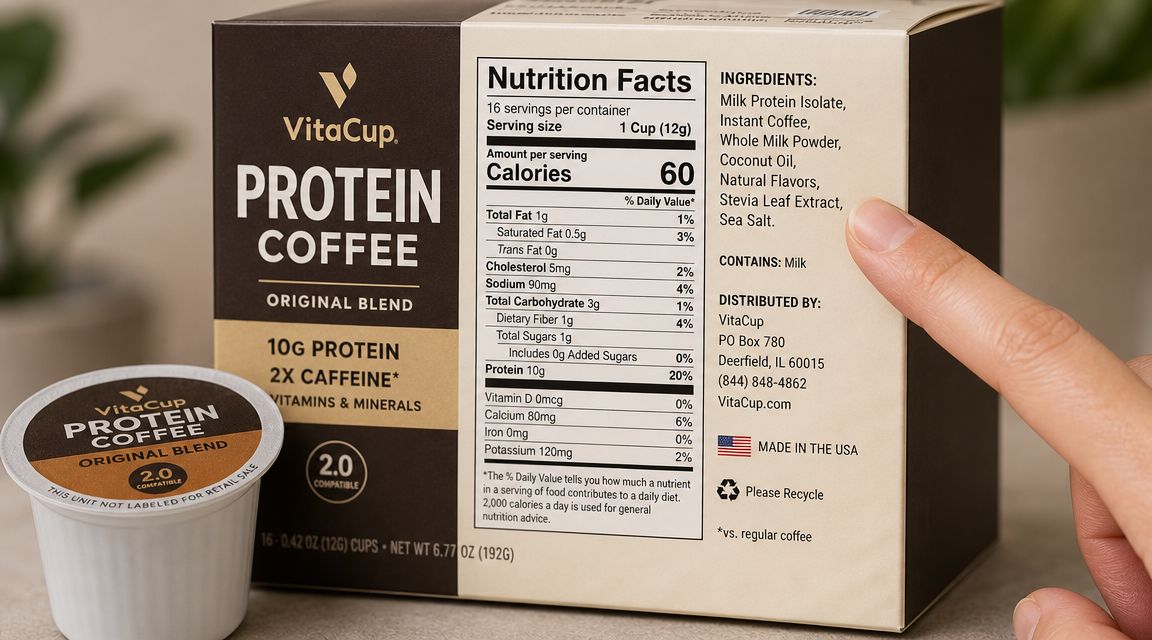
When I look at protein coffee K-Cups, I care less about the marketing line and more about the ingredient order, the protein type, and whether the formula is trying too hard to imitate a sweet café drink.
Start with the protein source
Not all proteins behave the same way in hot coffee.
- Whey-based formulas can create a creamy texture, but some versions clump if the mix isn't designed for hot liquid.
- Collagen-based formulas usually disappear more easily into coffee and tend to be less intrusive on texture.
- Plant-based formulas can work, but they often have a more noticeable body and can push the cup toward grainy if the blend isn't handled well.
None of those options is automatically wrong. The question is whether the formula matches what you want from the cup. If you want something that still drinks like coffee, a lighter-touch protein source often works better. If you want a fuller, more shake-like texture, a heavier formula may be fine.
Then read the rest of the panel
The “protein” part gets the headline, but the supporting ingredients decide whether the cup tastes clean or artificial.
Watch for these trade-offs:
- Sweeteners can smooth the drink fast, but they can also dominate the finish.
- Gums and fillers help texture, though too much can make the coffee feel slick or muddy.
- Flavor systems can rescue bland formulas, but they can also turn every sip into vanilla-chocolate dessert coffee whether you want that or not.
A good habit is to compare the ingredient list with your actual goal. If you want a simple morning coffee with a protein boost, the shortest and least fussy formula usually wins.
For anyone trying to get better at quick label reading, healthier choices for busy consumers from Rip Van is a practical read. It helps you scan labels faster without overthinking every purchase.
Why many people end up making their own
Many regular coffee drinkers often reach the same conclusion. Pre-filled pods are easy, but they limit your choices. If you want your own coffee and your own protein powder, a reusable pod gives you more control over both flavor and ingredients.
If you want the mechanics of that setup, this guide to make your own coffee K-Cups is a solid starting point.
The cleaner the ingredient list, the less likely the cup is to surprise you in a bad way.
Pre-Filled Pods vs The Reusable K-Cup Advantage
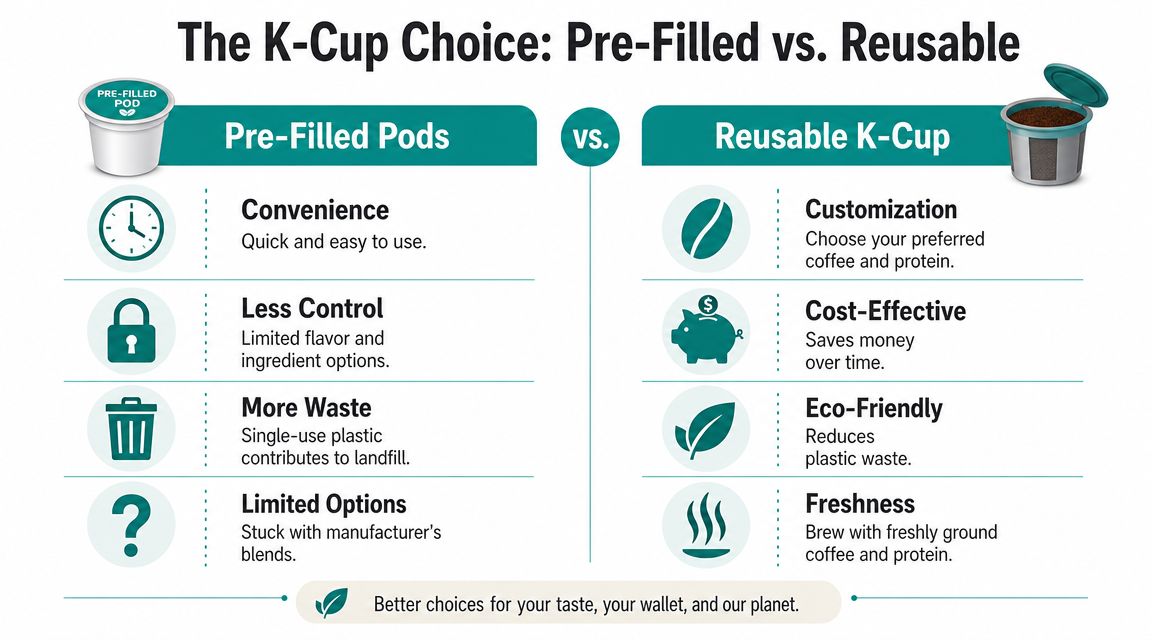
Pre-filled protein pods win on speed. You open the box, brew, and move on. That's the whole pitch.
The problem is that convenience can box you into somebody else's recipe, somebody else's roast, and somebody else's idea of sweetness. If you've ever tried a protein coffee pod that tasted dusty, oddly sweet, or weaker than your normal cup, you've already found the downside.
Side by side trade-offs
| Factor | Pre-Filled Protein K-Cups | DIY with PureHQ Reusable Pod |
|---|---|---|
| Cost per serving | Easy to buy, but you pay for convenience and packaging | More control over ongoing cost because you choose the coffee and protein |
| Ingredient control | Fixed formula | You choose the coffee, protein, and any add-ins |
| Flavor customization | Limited to what the brand makes | Easy to tune roast, strength, sweetness, and texture |
| Protein quality | Depends on the manufacturer's blend | You pick the protein source you trust |
| Environmental impact | More single-use waste | Less pod waste over time |
Why reusable wins for control
A reusable pod shifts the process back in your favor. You can use a coffee you already like, then add a protein powder that behaves well in hot liquid. That means fewer surprises and a better chance of building a cup you'll want to keep drinking.
This setup also helps with a common frustration: not every protein belongs inside the pod itself. Fine powders can pack too tightly, slow water flow, and leave residue behind. A better method is often to brew coffee in the reusable pod, then mix the protein into the cup with a slurry or frother.
The objection people usually raise
Reusable pods have a reputation for being messy, leaky, or inconsistent. That was a fair complaint with some older designs. Poor seals and weak mesh can send grounds into the mug or trigger brewing issues.
A well-made reusable pod reduces that risk with a tighter lid fit, durable mesh, and a shape that works with the machine's puncture and flow pattern. One option in that category is a reusable K-Cup for Keurig systems, which is designed for refillable brewing rather than disposable use.
If you care about taste, reusable pods aren't just a budget move. They're a control move.
What works better in real kitchens
Generally, the strongest routine looks like this:
- Brew your actual coffee in a reusable pod instead of buying pre-filled protein pods you may not enjoy.
- Add protein after brewing so the machine only has to do one job well.
- Keep a small frother nearby if you want a smoother finish without using a blender.
That approach gives you the convenience of single-serve brewing without handing over the whole drink to a manufacturer's formula.
How to Brew the Perfect Cup Every Time
Most brewing problems with protein coffee come from asking a pod brewer to do too much. Keurig-style systems use relatively low pressure and short contact time, so the drink has to move through the pod cleanly. If the formula gets too thick or too packed, the machine struggles and the cup suffers.
That's why product instructions for protein coffee pods commonly recommend brewing with about 8 oz of hot water. That water level is a practical target for proper extraction and helps avoid an overly viscous or sediment-heavy result.
The easiest path to a smoother cup
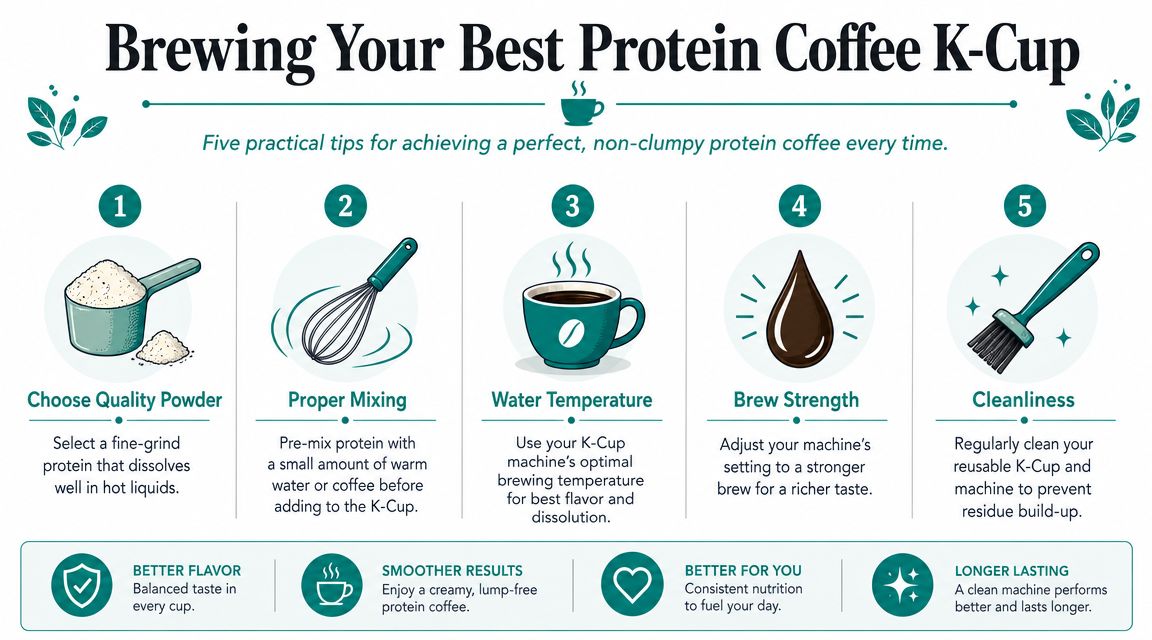
If you want fewer clumps and fewer machine issues, follow this order:
- Brew at the standard cup size. Don't choke the pod with an extra-short setting unless the product specifically supports that style.
- Shake or tap the pod first if you're using a pre-filled protein pod. Settling the contents can help the water move more evenly.
- Mix added protein separately if you're using a reusable pod. A slurry made with a small splash of coffee works better than dumping dry powder into a full mug.
- Stir or froth right away before the drink cools and any powder starts to sit on the bottom.
What to do on Keurig and Ninja systems
Keurig brewers usually respond well to standard-size brewing with a clean needle and unclogged exit path. Ninja DualBrew users should also pay attention to flow consistency, especially when experimenting with reusable pods or finer grinds.
If your machine starts sputtering, dripping slowly, or leaving weak cups, the issue may not be the coffee at all. Powder residue and scale can build up faster when you make functional drinks regularly.
A quick refresher on brew settings and pod technique helps, and this K-Cup brewing guide covers the fundamentals clearly.
Here's a useful visual walkthrough:
Common problems and fixes
Weak coffee
Use a stronger coffee base rather than shrinking the water too aggressively. With reusable pods, a slightly bolder roast often works better than overfilling the basket.Clumping in the mug
Make a paste first with a little warm liquid, then thin it out. This solves more problems than any fancy gadget.Machine errors or slow flow
Clear the puncture area and run a rinse cycle after brewing. That simple cleanup step prevents a lot of repeat trouble.Sediment at the bottom
Some powders don't dissolve well. Switch protein types or move the powder-mixing step outside the brewer.
A clean brewer matters here more than people think. If you use powdered drink components often, regular descaling and occasional cleaning tablets help preserve taste and keep water flowing properly.
Conclusion Your Morning Routine Perfected
Protein coffee K-Cups solve a real problem. You want coffee. You want something more substantial than coffee alone. You don't want another appliance, another bottle to wash, or another rushed compromise before work.
The catch is that convenience products always come with decisions made for you. Pre-filled pods can be handy, but they also lock in the roast, the protein source, the sweetness, and the texture. If any one of those is off, the whole cup feels disappointing.
That's why the reusable route makes more sense for people who plan to stick with protein coffee. You keep the speed of single-serve brewing, but you get far more control over taste, ingredients, and long-term cost. You can brew coffee that tastes like your coffee, then add a protein powder that fits your routine instead of forcing yourself to accept whatever's sealed in a plastic pod.
The process doesn't need to be complicated. Brew a solid cup. Use the right water setting. Mix protein separately if your powder behaves better that way. Clean the machine often enough that residue doesn't build up and ruin the next brew.
That's the version of protein coffee many prefer. It's simpler, more flexible, and a lot easier to dial in once you stop expecting a single disposable pod to do every job perfectly.
If you want a cleaner, more customizable way to make protein coffee at home, shop PureHQ Inc. for reusable K-Cups, brewing accessories, and maintenance essentials that help your machine brew better and last longer.

